When to go
Weather, crowds, and what the season changes about the trip.
Spring
Mild and pleasant, the most comfortable season to walk the grounds.
Pack Light layers, sun protection, and water for the open prison site.
Summer
Hot and humid with little shade on the open prison grounds.
Pack Maximum water, sun shirt, a hat, and an early or late visit.
Fall
Warm, easing days and lower humidity, a good time to visit.
Pack Sun protection, water, and a light layer for cool mornings.
Winter
Cool and quiet, with mild days and the occasional cold snap.
Pack A warm layer, comfortable shoes, and a check of seasonal hours.
Top things to do
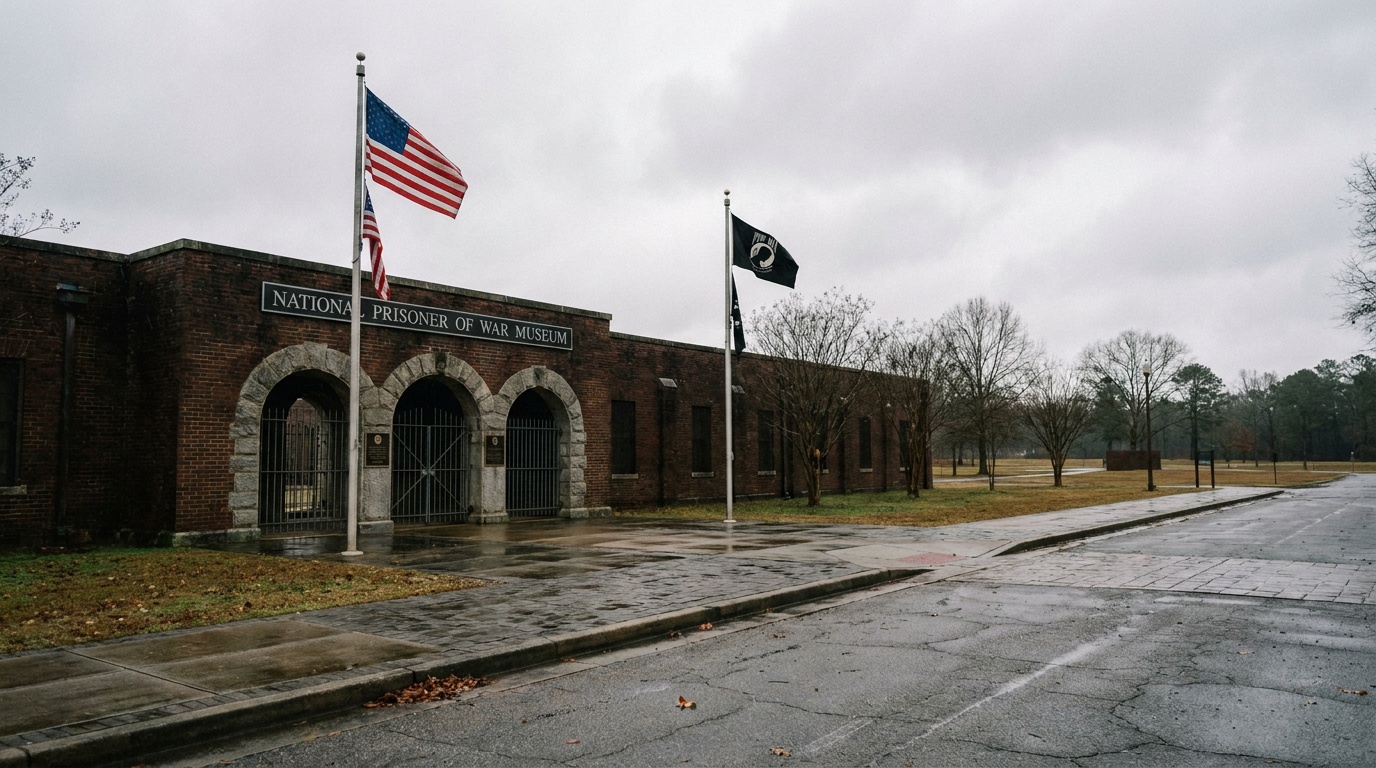
National Prisoner of War Museum
The site's centerpiece: a museum telling the story of all American prisoners of war from the Revolution to today, a sobering and powerful experience.
Camp Sumter prison site
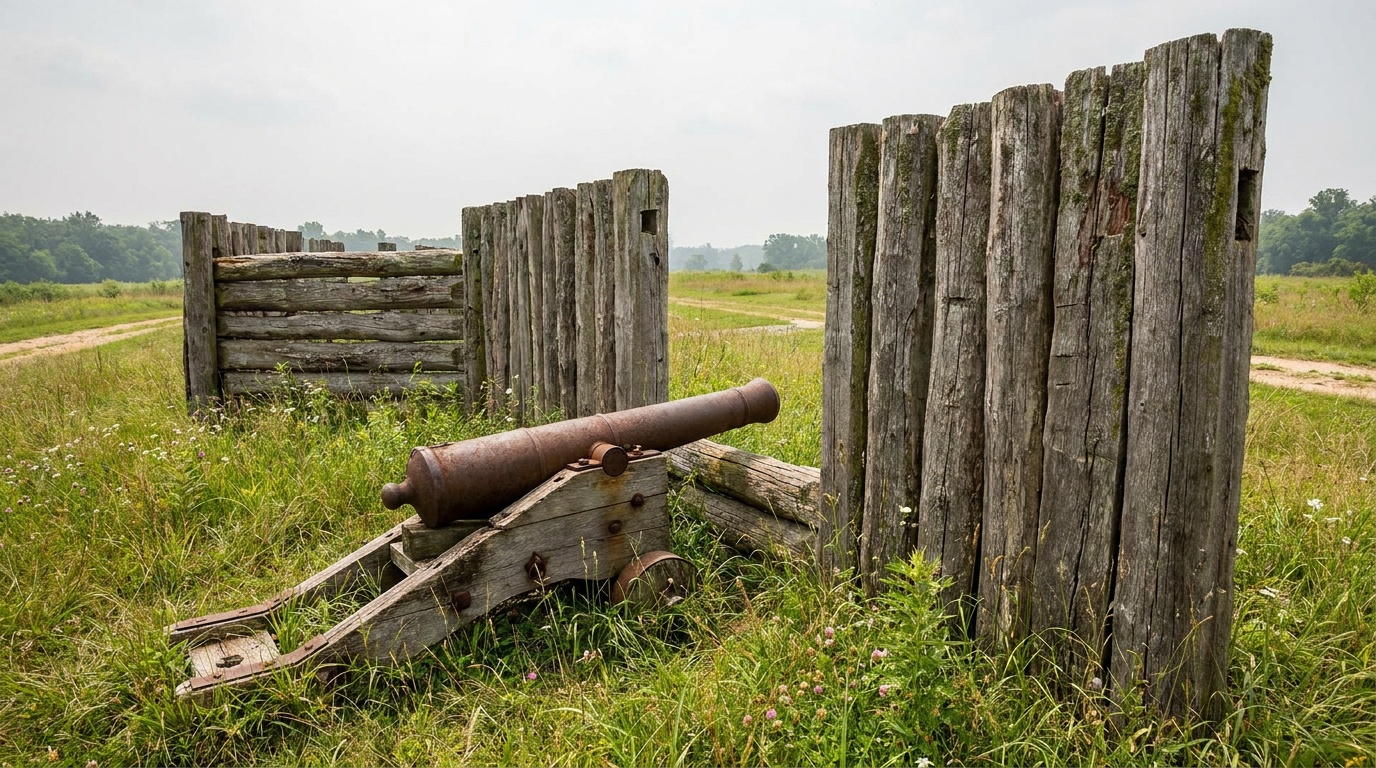
The open field where nearly 13,000 Union prisoners died in 1864 and 1865, with reconstructed stockade sections and a self-guided driving tour around the grounds.
Andersonville National Cemetery
Rows of headstones marking the prisoners who died here, still an active national cemetery where veterans are buried today.
Make National Prisoner of War Museum the timed anchor
Put the timed or highest-demand stop first, then keep the rest of the day close and low-friction. For one day in Andersonville National Historic Site, time National Prisoner of War Museum first, then keep Camp Sumter prison site and Andersonville National Cemetery close enough that the visit still feels relaxed.
- 1Start with National Prisoner of War Museum: The site's centerpiece: a museum telling the story of all American prisoners of war from the Revolution to today, a sobering and powerful experience.
- 2Add Camp Sumter prison site: The open field where nearly 13,000 Union prisoners died in 1864 and 1865, with reconstructed stockade sections and a self-guided driving tour around the grounds.
- 3Use Andersonville National Cemetery as the slower finish before leaving the area.
Where to stay
There is no camping or lodging inside the site. The small town of Andersonville is nearby, and Americus, about 12 miles south, is the closest town with hotels and restaurants. Columbus, about an hour west, has the broadest lodging and the nearest airport. For camping, nearby Georgia state parks such as Georgia Veterans State Park offer developed sites.
Camping reservations
Camping reservations
No camping at the site. Base in Americus or use a nearby Georgia state park.
Andersonville is a free, day-use historic site with no campground and no lodging. There is no reservation to chase; the planning move is to base in Americus or Columbus and use a nearby state park if you want to camp.
Reviewed June 11, 2026
Booking window
No in-park camping or reservations. Camping at nearby Georgia state parks is booked through the Georgia State Parks system.
- The site is day-use only; the prison grounds open 8 a.m. to 5 p.m. and the museum 9:30 a.m. to 4:30 p.m.
- The open prison field has little shade, so bring water and sun protection in summer.
- Georgia Veterans State Park and other area parks offer the nearest developed camping.
Where to book or verify
Official NPS page with hours, the POW museum, and the prison-site tour.
Nearby Georgia state park with developed camping, near Cordele.
Check for federal campground, backcountry, tour, and permit inventory tied to this park.
Campgrounds to know
Georgia Veterans State Park (nearby)
Details- Season
- Open year-round; check current dates.
- Sites
- Developed tent and RV sites with hookups near Cordele, about 40 minutes away.
- One of the nearest developed campgrounds; Americus hotels are the lodging option.
Getting there and practical info
Plan the handoff from arrival to shuttle.
Parking, pedestrian entrances, and shuttle timing decide how calmly the first morning starts.
Getting there
Get to Andersonville National Historic Site, then remove the first-morning friction.
- Nearest airport
- Columbus (CSG) about 1 hour; Atlanta (ATL) about 2.5 hours
- Access rhythm
- Plan the last mile
- Region
- Georgia
Arrival note
Andersonville sits in rural southwest Georgia, off GA 49 between Americus and Montezuma, about 12 miles north of Americus.
Car strategy
Most visitors drive from Columbus, about an hour west, or from Atlanta, about 2.5 hours north.
Car strategy
There is no public transportation, so come by car.
Book ahead
- Rental cars at Columbus (CSG)Paid link, Economybookings
- Guided tours in Andersonville National Historic SitePaid link, Viator
Paid links: we may earn a commission if you book, at no extra cost to you.
Pair this with lodging: sleep where the park transfer is simple, especially if your route needs an early start.
Plan your trip
Turn Andersonville's conditions into water, pack, and sleep-system decisions.
What to pack
Start with the gear decisions this park changes: footing, weather, camping, and water.
Kit Authority
Andersonville National Historic Site packing list
0 of 11 packed. Check items as you pack, then take this list to the store, trailhead, or campsite.
Pack planning
Decide what Andersonville National Historic Site asks of your kit before you start checking boxes.
Use this as a constraint check while you are still shaping the trip. The active checklist becomes useful once your route, dates, and sleep plan are set.
- First constraintHydration and exposureWater, Electrolyte mix, hat, sunscreen, sunglasses, 4 more
- Season checkLayers for conditionsMoisture-wicking base layers, Insulated jacket, Traction devices for ice
Checklist mode
11 items, grouped for the trip you are actually taking.
- Dates and season are set.
- Primary route, campground, or lodge is chosen.
- Water, footwear, and overnight needs are sized.
One researched pick
The first gear decision for Andersonville National Historic Site
An 8x42 binocular is the useful middle ground between reach, field of view, and all-day carry weight.
We may earn a commission from links on this page, at no extra cost to you. Product prices and availability are accurate as of the date/time indicated and are subject to change. Any price and availability information displayed on Amazon at the time of purchase will apply to the purchase of this product.
THE WILDLIFE PICK
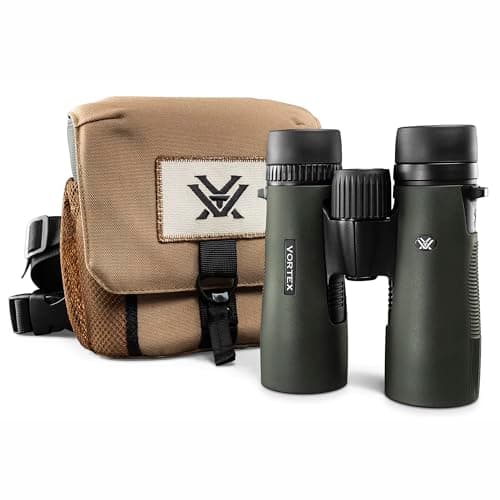
Vortex Diamondback HD 8x42 Binoculars
Best Value
Kit Score 9.0/10
$239.00 Price checked Oct 26, 7:39 AM CDT
Best for: Hikers and birders who want genuine HD optics and a class-leading warranty without paying mid-range prices.
- Exceptional brightness and contrast for the price: measured light transmission outperforms comparably priced models
- Some chromatic aberration visible at the edges of the field in high-contrast scenes
- Magnification
- 8x
- Objective lens
- 42 mm
- Weight
- 21.8 oz (618 g)
- Field of view
- 393 ft at 1,000 yds (7.5 deg)
- Eye relief
- 17 mm
- Waterproof / fogproof
- Yes, argon-purged, O-ring sealed
About this pick
The Diamondback HD delivers HD glass, dielectric and phase-corrected coatings, and a wide 393-foot field of view at a street price well below its MSRP. Reviewers and birders routinely note it performs like binoculars costing twice as much, and Vortex backs it with an unlimited, unconditional transferable warranty.
Strengths
- Exceptional brightness and contrast for the price: measured light transmission outperforms comparably priced models
- Wide field of view aids bird-finding and tracking fast-moving wildlife
- Vortex VIP warranty is unlimited and unconditional, no receipt required
Weaknesses
- Some chromatic aberration visible at the edges of the field in high-contrast scenes
- At 21.8 oz it is on the heavier end for ultralight backpackers
Kit Score breakdown
Gear for Andersonville
The buying guides that match what Andersonville asks of your kit, with our current top picks across budget and use case.
Can you photograph here? Permit and drone rules
Georgia's film office issues no permits (that is municipal), but Georgia DNR runs a formal film and photography application for state parks with a 200 dollar processing fee.
- Permit
- Usually fine for personal shoots; commercial or large productions can need a permit
- Drones
- Commercial drone work requires FAA Part 107
- Land
- Yes: you can photograph what is visible from public space in the US
From our photography sister site, Aperture Authority. Verified 2026-07-01.
Frequently asked questions
How much does Andersonville National Historic Site cost?
It is free. There is no entrance fee and no pass required to visit Andersonville National Historic Site or the National Prisoner of War Museum.
What is the National Prisoner of War Museum?
It is the centerpiece of the site, a museum honoring all American prisoners of war from the Revolutionary War to today. It provides essential context before you tour the Camp Sumter prison grounds where nearly 13,000 prisoners died.
Can you camp at Andersonville?
No. There is no camping or lodging at the site. The nearest developed camping is at Georgia state parks such as Georgia Veterans State Park, and most visitors base in Americus or Columbus.
How long do you need at Andersonville?
Plan two to three hours to see the National Prisoner of War Museum, drive the self-guided tour around the prison site, and visit the national cemetery. The grounds are open with little shade, so bring water in summer.