We may earn a commission from links on this page, at no extra cost to you.
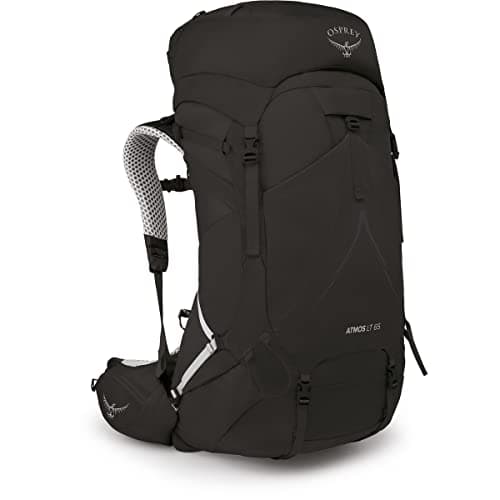
The Osprey Atmos AG LT 65 is the pack we recommend first in our best backpacking backpacks guide, and it is the one most three-season backpackers should look at before anything pricier or lighter. This review covers exactly what you get, the spec details people get wrong, and where it wins or loses against the alternatives.
BEST OVERALL
Osprey Atmos AG LT 65
Kit Score 8.4/10 · Check current price
Buy on AmazonBest for: Three-season backpackers who prioritize back ventilation and all-day comfort over ultralight gram-counting, and plan to carry loads in the 25–40 lb range.
- Top-ranked comfort in independent lab testing, with the suspended mesh back panel consistently praised for heat and pressure-point relief under loads up to 40 lb
- Two torso sizes with 3–4 inches of micro-adjustability and moveable Velcro hip belt padding let most body types dial in a precise fit without a fit specialist
- Suspension feels less structured above 40 lb; heavy haulers moving into 45–50 lb territory may prefer a stiffer frame
Who it is for
This pack fits one buyer especially well: a three-season backpacker who prioritizes back ventilation and all-day comfort over ultralight gram-counting. The Anti-Gravity tensioned mesh runs from the shoulder blades all the way into the hip belt fins, creating a consistent air gap that keeps your back noticeably cooler than foam-contact designs. That is the headline feature, and it is the reason the Atmos has what reviewers describe as a cult-like following.
It is less ideal if you are a heavy hauler regularly carrying 45 to 50 lb. The suspension feels less structured above 40 lb, so loaded expedition trips may want a stiffer frame. It is also a premium buy at around $320, which narrows its appeal for occasional backpackers. If you are still deciding what capacity and fit you need, read how to size a backpacking pack first: torso length, not your height, drives the size you should buy.
Full specifications
| Spec | Detail |
|---|---|
| Kit Score | 8.4 / 10 (researched, not lab-tested) |
| Capacity | 65L (S/M) / 68L (L/XL) |
| Weight | 4 lb 4 oz |
| Torso fit | S/M: 17–20.5 in, L/XL: 19.5–23 in |
| Hip belt | Custom Fit-on-the-Fly with up to 6 in of adjustment |
| Back system | Anti-Gravity tensioned mesh, fully suspended |
| Rain cover | Integrated (included) |
| Materials | High-tenacity recycled nylon, bluesign-approved fabrics |
| Warranty | Lifetime (Osprey All Mighty Guarantee) |
| Price | $300–$340 |
The spec people get wrong: capacity changes with frame size. The S/M carries 65L while the L/XL carries 68L, so the volume on the listing depends on which torso size you select. Plan around the size you will actually buy.
Pros and cons
What it does well:
- The suspended mesh back panel ranks at the top for comfort in independent lab testing, with consistent praise for heat and pressure-point relief under loads up to 40 lb.
- Two torso sizes with 3 to 4 inches of micro-adjustability, plus moveable Velcro hip belt padding, let most body types dial in a precise fit without a fit specialist.
- An integrated rain cover, side-panel zip access, and recycled bluesign-approved fabrics round out a thoughtful, streamlined feature set.
- Osprey's lifetime guarantee backs the high-tenacity nylon construction, so a buckle or seam failure years from now is a repair, not a replacement purchase.
Where it falls short:
- Suspension feels less structured above 40 lb, so heavy haulers moving into 45 to 50 lb territory may prefer a stiffer frame.
- The premium price point, around $320, narrows its appeal for occasional backpackers who could spend far less.
How it compares
Against the Gregory Paragon 58, the trade is weight versus ventilation. The Paragon 58 is one of the lightest packs in its class at 3 lb 8 oz, nearly a pound under the Atmos, and it adds a full-length side-loading zipper at a lower price. What it gives up is airflow: its ventilated foam back panel trails the Atmos suspended mesh on hot summer days, and it tops out at 58L. If you count grams more than you sweat, the Paragon is the lighter call. If a cool back is the priority, the Atmos is the comfort-carry benchmark.
Against the budget option, the Atmos sits well above it on suspension and ventilation. The Kelty Coyote 65 is the lowest-cost way into a structured 65L pack at $130 to $170, and its peripheral steel frame genuinely holds heavy loads, but it is the heaviest pack here at 4 lb 10 oz and its foam back panel cannot match the Atmos for airflow. If you want one pack to carry comfortably across years of three-season trips, the Atmos is worth the step up.
For the full field, including the Deuter Aircontact Core and other picks scored the same way, our best backpacking backpacks guide goes deeper on capacity, frame stiffness, and load ranges. The Atmos is the top overall pick there too.
Frequently asked questions
How much does the Osprey Atmos AG LT 65 weigh?
It weighs 4 lb 4 oz. That is heavier than ultralight packs but lighter and cleaner than the standard Atmos, and the weight buys you the suspended Anti-Gravity mesh back panel that drives its comfort and ventilation. If shaving close to a pound matters more to you than airflow, the Gregory Paragon 58 at 3 lb 8 oz is the lighter alternative.
What is Anti-Gravity suspension on the Atmos?
Anti-Gravity is Osprey's fully suspended back system. A single piece of tensioned trampoline mesh runs from the shoulder blades into the hip belt fins, holding the pack body off your back. That creates a consistent air gap for ventilation and spreads the load over a large contact area, which is why the Atmos ranks at the top for comfort in independent testing.
How do I get the right fit on the Atmos AG LT 65?
Pick your frame size by torso length, not height: S/M fits a 17 to 20.5 inch torso and L/XL fits 19.5 to 23 inches. Each size adds 3 to 4 inches of micro-adjustment, and the Custom Fit-on-the-Fly hip belt offers up to 6 inches of further tuning with moveable Velcro padding. For a full walkthrough, see how to size a backpacking pack.
Is the Osprey Atmos AG LT 65 worth it?
For most three-season backpackers, yes. It earns a Kit Score of 8.4 because it combines top-rated ventilation, all-day comfort on 25 to 40 lb loads, a precise fit system, an included rain cover, and Osprey's lifetime warranty. The main reasons to look elsewhere are if you regularly carry 45 lb or more and want a stiffer frame, or if the roughly $320 price is more than an occasional trip justifies.
Osprey Atmos AG LT 65 vs Gregory Paragon 58: which is better?
The Paragon 58 is lighter at 3 lb 8 oz, costs less, and adds a full-length side zipper, which makes it the better choice for weight-conscious backpackers on shorter trips. The Atmos AG LT 65 carries more volume, ventilates noticeably better through its suspended mesh, and is backed by a lifetime warranty, which makes it the better all-around comfort-carry pack for hot, multi-day three-season backpacking.
For the full field, including budget and premium alternatives scored the same way, see our best backpacking backpacks guide.
Keep going
Related buying guideThe best backpacking backpacks for 3-season trips, 45–65LRelated guides
 Complete hike loadoutDay hike kitBuild the complete kit
Researched, not hands-on tested
Updated Jun 24, 2026Our recommendations draw on manufacturer documentation, retailer listings, owner feedback, and comparisons with alternatives.
As an Amazon Associate I earn from qualifying purchases. We may earn a commission from links here, at no extra cost to you. How we research →
In this review
Related buying guide
The best backpacking backpacks for 3-season trips, 45–65L