A cooling towel costs under $20 and can meaningfully extend your comfortable range in heat above 85°F. The catch is that not all of them work the same way, and the wrong type for your use case feels like a damp rag within 15 minutes.
Our quick picks
How we picked
Every pick here was evaluated against the Kit Score: a weighted breakdown of cooling duration, activation ease, coverage size, packability, and long-term durability based on manufacturer specs and verified owner reviews.
Our top picks
Best overall
BEST OVERALL
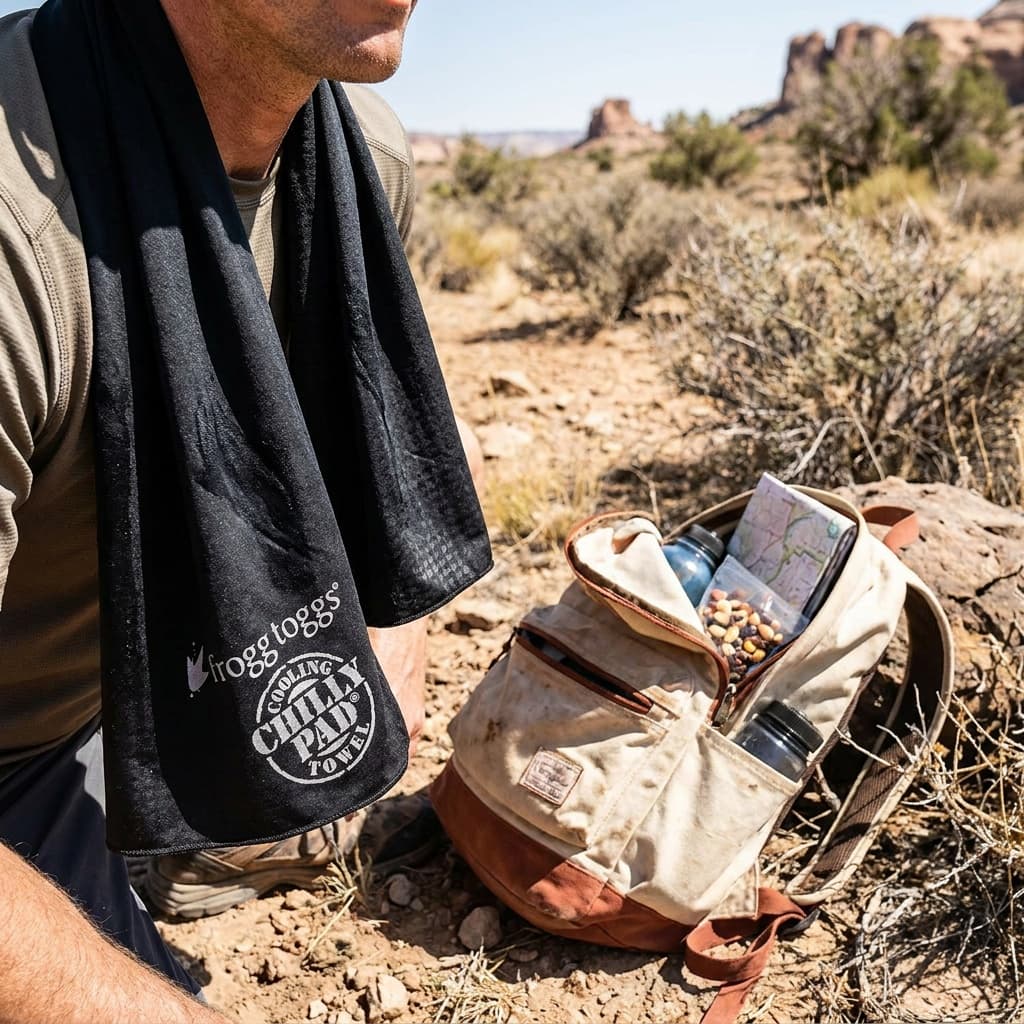
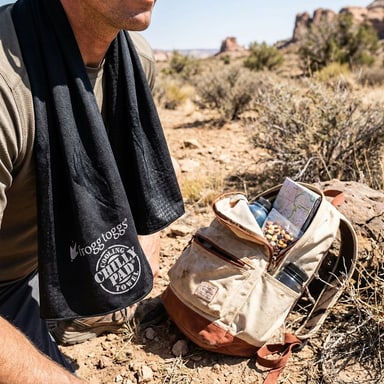
Frogg Toggs Chilly Pad Cooling Towel
Best for: Hikers and outdoor workers who want the widest coverage and longest cooling window at the lowest per-towel cost.
- Wider format covers more body surface than most neck-sized towels, useful for sunshield coverage on exposed trails
- Can develop an odor if stored wet in a sealed bag; requires rinsing after each use
Kit Score 8.7/10 · $16.47 Price checked Oct 23, 6:22 AM CDT · how we score gear
Buy on AmazonProduct details
One of the most field-tested evaporative cooling towels available, with a wide 33-inch length that covers neck and shoulders simultaneously. Frogg Toggs' hyper-evaporative PVA material stays damp to the touch while feeling dry against skin.
- Material
- PVA (polyvinyl alcohol), hyper-evaporative
- Size
- 33" x 13"
- Cooling duration
- 3 to 4 hours per soak depending on conditions
- UV protection
- UPF 50+
- Water absorption
- Up to 8x its own weight
- Care
- Machine washable; air-dry preferred; do not store wet in sealed container
More strengths
- Cooling duration of 3 to 4 hours is among the longest for its price tier
- Enormous number of verified owner reports across hiking, canoeing, construction, and outdoor work confirm consistent real-world performance
Other tradeoffs
- Stiffens when fully dry, similar to other PVA towels
The Frogg Toggs Chilly Pad has been a fixture in hot-weather trail kits for years, and it continues to earn that position on size and price alone. At approximately 12 × 35 inches it is one of the largest towels in this category, which matters if you want to drape coverage across your neck, shoulders, and upper back simultaneously rather than just a strip at the nape.
The Chilly Pad is PVA construction, so the cooling duration is long: 2–4 hours between soaks depending on heat and humidity. Frogg Toggs offers it in a range of colors including high-visibility orange, which has practical value for trail crew and outdoor workers. At $13–$17 it offers the most coverage-per-dollar in this lineup.
Best for: hikers and outdoor workers who want the widest coverage and longest cooling window at the lowest per-towel cost.
Editor pick
EDITOR'S CHOICE
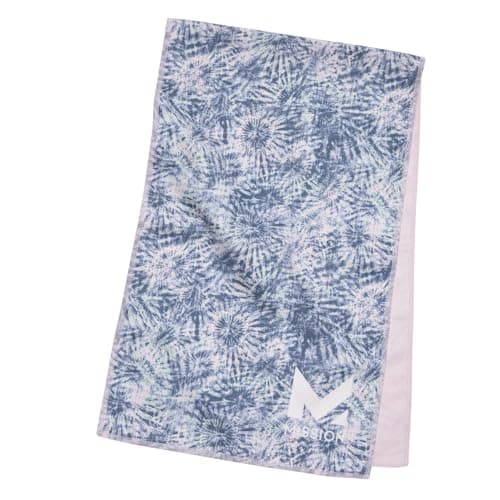
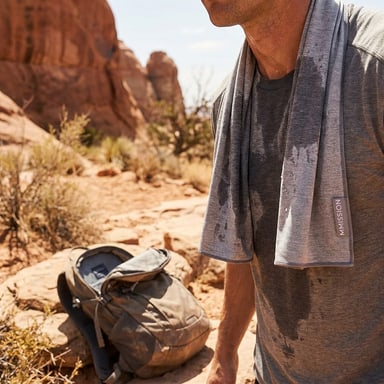
Mission Original Cooling Towel
Best for: Gym users and hikers who prioritize quick activation, soft feel, and easy packability over maximum cooling duration.
- Activates the fastest of the main material types, reaching peak cooling in under 30 seconds from water contact
- Thinner microfiber holds less water than PVA, so cooling windows are shorter in high heat above 90 degrees Fahrenheit
Kit Score 8.0/10 · $16.99 Price checked Oct 23, 6:22 AM CDT · how we score gear
Buy on AmazonProduct details
A brushed microfiber towel that activates in under 30 seconds and cools to roughly 30 degrees below ambient body temperature. Unlike PVA options, it stays soft and pliable when dry, which makes it the most comfortable choice for gym bags and travel.
- Material
- Brushed microfiber (90% polyester, 10% nylon)
- Size
- 10" x 33"
- Cooling duration
- Up to 2 hours per activation
- Activation
- Wet, wring, snap or wave to activate
- UV protection
- UPF 50
- Care
- Machine washable; technology is permanent and does not wash out
More strengths
- Stays soft and foldable when dry, so it packs flat and does not require rewetting just to soften before use
- Machine-washable with odor resistance; cooling performance is built into the fiber, not a coating
Other tradeoffs
- Some owners report cooling effect fades noticeably after 20 to 30 minutes during intense aerobic activity
The Mission Original is microfiber, not PVA, and that distinction shapes everything about how it performs. Activation is nearly instant: soak it, wring it out, and snap it in the air a few times. It is noticeably soft against skin from the first use, which matters if you are pressing it against your face or wearing it across your neck for hours. It folds flat, dries reasonably fast, and packs into a compact zip case that fits a jersey pocket or hip belt pouch.
What microfiber gives up relative to PVA is cooling duration. In sustained heat above 90°F the Mission will need reactivation every 60–90 minutes, roughly half the interval of a PVA towel. For gym sessions or shorter efforts where you have water access at regular intervals, that is a non-issue. For a full-day trail push with limited water, factor in how often you realistically want to re-soak it.
The Mission Original is the cooling towel that actually gets used, because it feels good enough to reach for every time.
Best for: gym users and hikers who prioritize quick activation, soft feel, and easy packability over maximum cooling duration.
Best premium
BEST VALUE
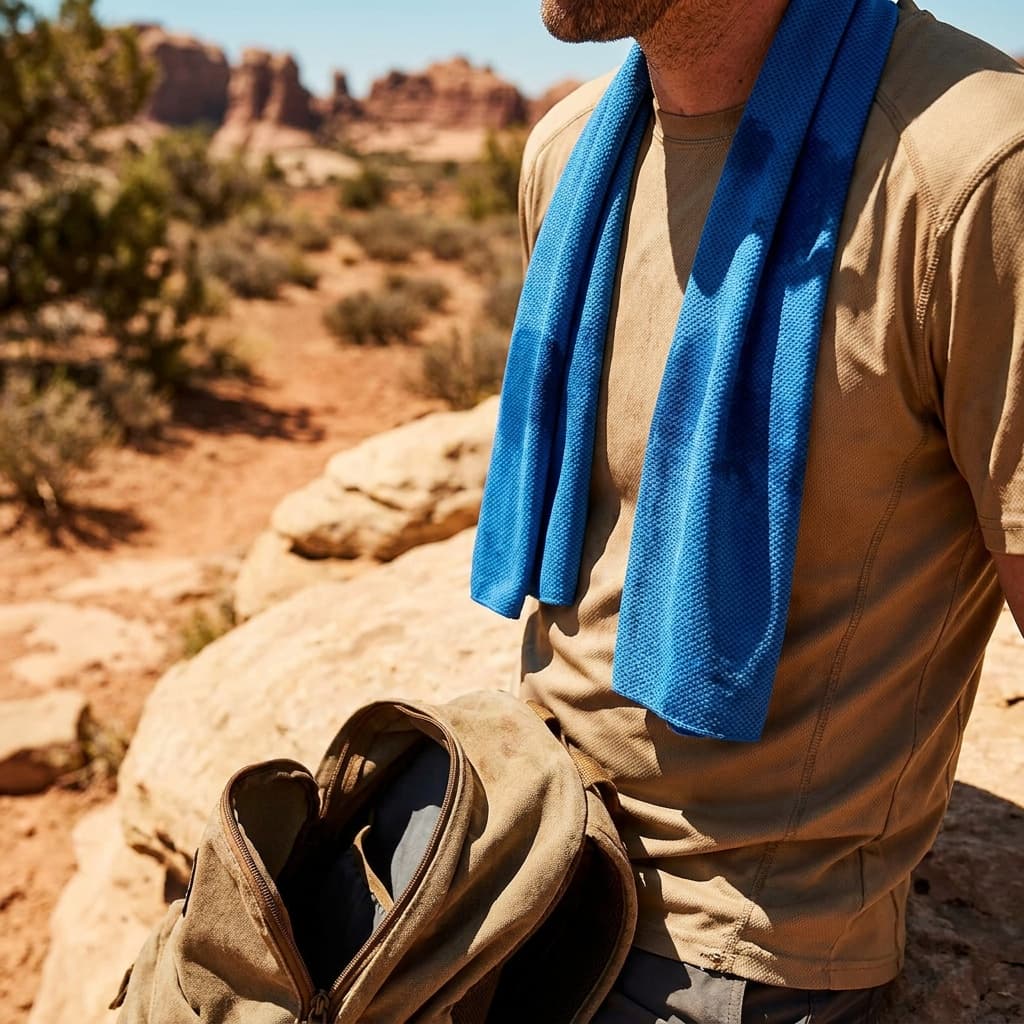
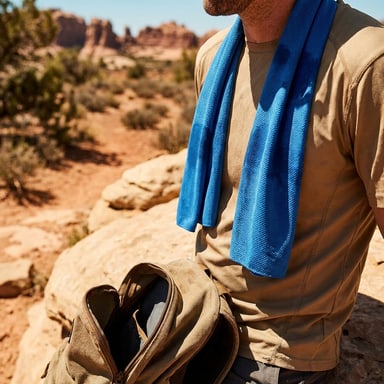
Ergodyne Chill-Its 6602 Evaporative Cooling Towel
Best for: Outdoor workers, trail crew, and hikers covering long sun-exposed miles who need the longest possible cooling window and do not need to minimize pack weight.
- Four-hour cooling duration is the longest consistently verified across independent sources for a single-unit towel
- Heavier and less packable than microfiber options when saturated; better suited to day hikes than ultralight backpacking
Kit Score 8.8/10 · $5.53 Price checked Oct 23, 6:22 AM CDT · how we score gear
Buy on AmazonProduct details
An occupational-grade PVA cooling towel from a safety equipment specialist, built to ANSI worksite standards and widely used in construction, roofing, and landscaping. The 13-inch width and 4-hour cooling window put it at the top of the field for sustained outdoor labor in heat.
- Material
- PVA (polyvinyl alcohol), hyper-evaporative
- Size
- 13" x 29.5"
- Cooling duration
- Up to 4 hours per soak
- Construction
- Work-grade; mold-resistant treatment
- Reactivation
- Soak 1 minute, wring, snap to activate; stores damp or dry
- Care
- Machine washable; air-dry to stiff, rewet to soften
More strengths
- 13-inch width provides broader neck and shoulder coverage than most recreational cooling towels
- Designed for repetitive daily use in occupational heat; 4.3 stars across nearly 8,000 Amazon ratings confirms durability under hard use
Other tradeoffs
- PVA texture feels unusual to users accustomed to microfiber; requires a full-minute soak before first activation
The Ergodyne Chill-Its 6602 is built for occupational use in sustained heat: trail crew, construction, warehouse work, and long days on exposed ridgelines. Like the other PVA picks here, it holds substantially more water than microfiber and delivers the longer cooling window that makes a real difference when you will not pass a creek or water cache for several hours.
Ergodyne designs safety and workwear products as their core business, and the 6602 reflects that: the construction is noticeably more robust than consumer-tier PVA towels, and the size (varies by option, typically 13 × 29 in or larger) provides generous neck and shoulder coverage. At $8–$15 depending on retailer and color it is priced competitively with the other PVA options here, though the premium positioning reflects build quality rather than price.
Best for: outdoor workers, trail crew, and hikers covering long sun-exposed miles who need the longest possible cooling window and do not need to minimize pack weight.
How to choose the right cooling towel
Matching a cooling towel to your actual use case
Decide how long you need it to stay cool
PVA towels (Frogg Toggs, Ergodyne) typically deliver 2–4 hours of effective cooling between soaks. Microfiber (Mission) typically needs reactivation every 60–90 minutes in sustained heat. If your activity involves regular water access, microfiber is fine. If you are covering exposed miles between creek crossings, PVA is the correct category.
Consider where skin contact matters
Microfiber is meaningfully softer against the face, neck, and chest. PVA has a slightly tacky or firm texture that some users find less comfortable for direct skin contact, especially when it is partially dry. If you plan to wear the towel for hours at a time, the Mission's soft feel has real value.
Size up the coverage you actually want
The Frogg Toggs Chilly Pad at 12 × 35 in covers neck, shoulders, and upper chest simultaneously. Smaller towels (typically 10 × 30 in or less) work fine for a strip at the nape. Trail crew and outdoor workers typically prefer larger coverage; gym users often prefer something that fits a kit bag without bulk.
Check how it packs
All four picks here come with some form of case or tube. PVA towels store best kept slightly moist in their tube; a fully dry PVA towel takes longer to reactivate (though it will still reactivate). Microfiber towels dry fully between uses and pack flat. For a gram-conscious kit, weigh the towel and case together: most in this category come in at 4–6 oz total.
Think about reactivation in the field
Reactivating any of these towels requires water. On a dry trail with no stream access and limited carry capacity, every resoak costs water. PVA's longer interval means fewer resoaks per day. If water is tight, PVA is more efficient.
| Product | Kit Score | Price | Best for |
|---|---|---|---|
| Frogg Toggs Chilly Pad Cooling Towel | 8.7 | $16.47 Price checked Oct 23, 6:22 AM CDT | Best for: Hikers and outdoor workers who want the widest coverage and longest cooling window at the lowest per-towel cost. Why it stands out: Wider format covers more body surface than most neck-sized towels, useful for sunshield coverage on exposed trails Tradeoff: Can develop an odor if stored wet in a sealed bag; requires rinsing after each use |
| Mission Original Cooling Towel | 8.0 | $16.99 Price checked Oct 23, 6:22 AM CDT | Best for: Gym users and hikers who prioritize quick activation, soft feel, and easy packability over maximum cooling duration. Why it stands out: Activates the fastest of the main material types, reaching peak cooling in under 30 seconds from water contact Tradeoff: Thinner microfiber holds less water than PVA, so cooling windows are shorter in high heat above 90 degrees Fahrenheit |
| Ergodyne Chill-Its 6602 Evaporative Cooling Towel | 8.8 | $5.53 Price checked Oct 23, 6:22 AM CDT | Best for: Outdoor workers, trail crew, and hikers covering long sun-exposed miles who need the longest possible cooling window and do not need to minimize pack weight. Why it stands out: Four-hour cooling duration is the longest consistently verified across independent sources for a single-unit towel Tradeoff: Heavier and less packable than microfiber options when saturated; better suited to day hikes than ultralight backpacking |
Frogg Toggs Chilly Pad Cooling Towel
- Best for
- Hikers and outdoor workers who want the widest coverage and longest cooling window at the lowest per-towel cost.
- Why it stands out
- Wider format covers more body surface than most neck-sized towels, useful for sunshield coverage on exposed trails
- Tradeoff
- Can develop an odor if stored wet in a sealed bag; requires rinsing after each use
Mission Original Cooling Towel
- Best for
- Gym users and hikers who prioritize quick activation, soft feel, and easy packability over maximum cooling duration.
- Why it stands out
- Activates the fastest of the main material types, reaching peak cooling in under 30 seconds from water contact
- Tradeoff
- Thinner microfiber holds less water than PVA, so cooling windows are shorter in high heat above 90 degrees Fahrenheit
Ergodyne Chill-Its 6602 Evaporative Cooling Towel
- Best for
- Outdoor workers, trail crew, and hikers covering long sun-exposed miles who need the longest possible cooling window and do not need to minimize pack weight.
- Why it stands out
- Four-hour cooling duration is the longest consistently verified across independent sources for a single-unit towel
- Tradeoff
- Heavier and less packable than microfiber options when saturated; better suited to day hikes than ultralight backpacking
PVA vs microfiber: what actually matters
PVA and microfiber are different tools, not better and worse versions of the same thing.
PVA (polyvinyl alcohol) is a synthetic foam polymer that absorbs and holds water at a high ratio relative to its weight. When wet, it releases water slowly through evaporation, which is why cooling duration is longer. When fully dry, it stiffens and can feel brittle. Re-wet it and it immediately returns to full function. This is expected behavior, not a defect.
Microfiber absorbs water quickly, activates fast, feels soft, and dries relatively fast between uses. The cooling effect comes from the same evaporative physics as PVA, but microfiber holds less water by volume, so evaporation proceeds faster and the cooling interval is shorter.
For hot-weather hiking specifically: PVA wins on duration, which is the metric that matters most when your next water source is two miles ahead. For gym, commute, or casual outdoor use where you have easy water access: microfiber's soft feel and fast activation are practical advantages.
Frequently asked questions
How do cooling towels actually work?
Evaporative cooling: when water evaporates from the towel's surface, it draws heat away from whatever is in contact with it, including your skin and the air immediately around it. The effect is most pronounced in low-humidity conditions where evaporation is fast. In high humidity (above 75–80% relative humidity) the cooling benefit is reduced because the air is already near saturation and evaporation slows. In those conditions, the towel still provides some contact cooling but will not feel as dramatically cold as it does in dry heat.
Can I use a cooling towel without extra water on the trail?
You need water to activate or reactivate any cooling towel. A dry PVA towel will not cool you. You can partially offset this by resaturating at the trailhead before you leave and limiting resoaks to stream crossings or planned water sources. PVA's longer cooling interval (2–4 hours) makes it more water-efficient than microfiber in that context. Avoid pouring drinking-water supply on the towel unnecessarily; wet the towel at natural water sources where practical.
How do I store a PVA cooling towel between trips?
Store it slightly damp in its case or tube, not bone dry. A fully dried PVA towel stiffens but will still reactivate; storing it damp just makes the next activation faster. If you are putting it away for more than a few weeks, some users add a small amount of salt to the storage water (roughly half a teaspoon per liter) to inhibit mold growth. Rinse it before use if you do this. Do not store PVA in an airtight container while wet for extended periods without checking for mildew.
Heat management on the trail is mostly about pacing, shade, and hydration. A good cooling towel is a cheap addition that covers the gaps between those things. Browse more hot-weather and summer hiking gear on Kit Authority, or read about how we research and rate gear.
Keep going
Related guides
 Complete hike loadoutDay hike kitBuild the complete kit
Our recommendations draw on manufacturer documentation, retailer listings, owner feedback, and comparisons with alternatives.
As an Amazon Associate I earn from qualifying purchases. We may earn a commission from links here, at no extra cost to you. How we research →