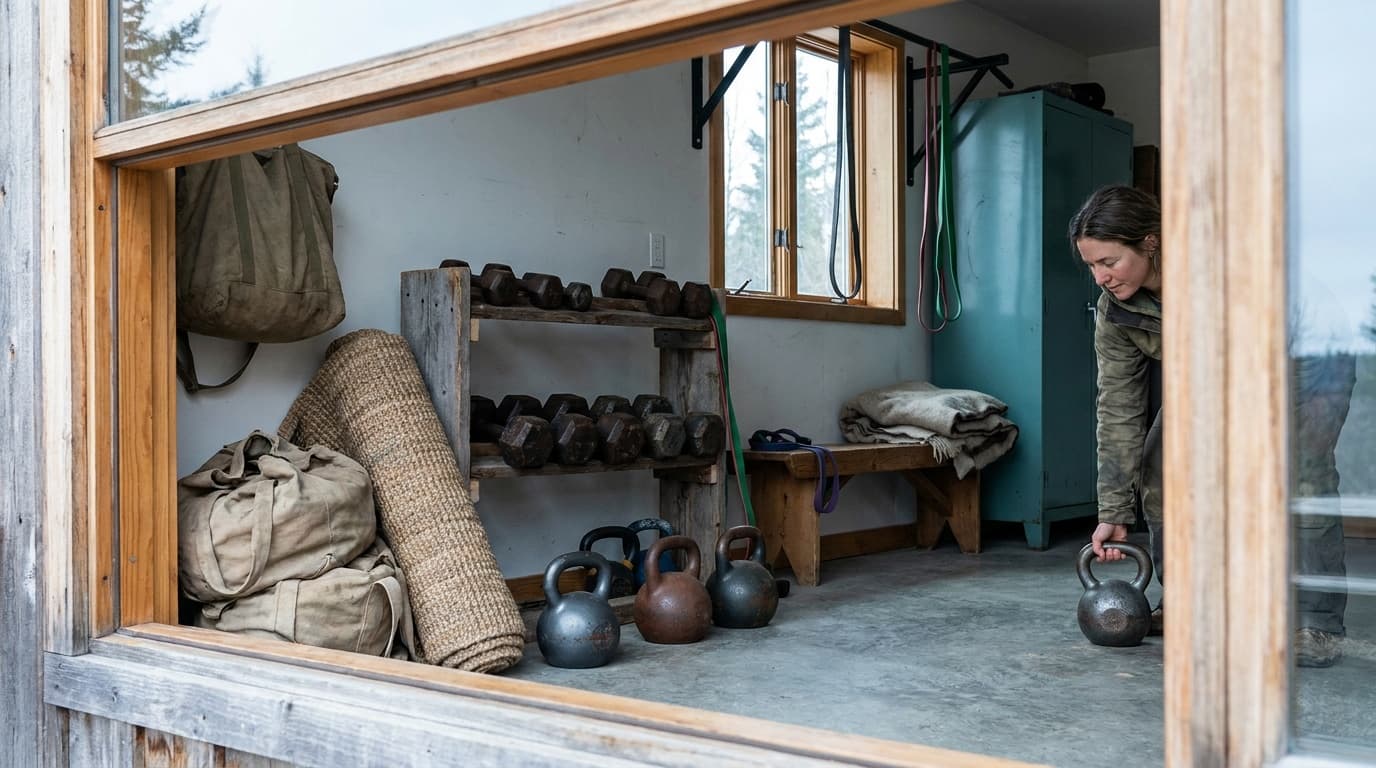
The most common kettlebell mistake is buying the wrong weight before you know the movements. Get this decision right and the bell you buy now will carry you through months of solid foundational training.
Starting weights by experience level
The guidance from Titan Fitness and Onnit head of fitness John Wolf converges on the same practical ranges. These are starting points, not targets to rush toward.
For women: 8–12 kg (18–26 lbs) covers most beginners. If you have no prior strength training history at all, 6 kg (13 lbs) is not a step down. It is the right call. Learning the hip hinge pattern and building shoulder stability under a controlled load is more valuable than grinding through reps with a bell that is too heavy to move well.
For men: 12–16 kg (26–35 lbs) is the realistic range. A man with no training background starts at 12 kg. A man with consistent gym experience, meaning regular lifting for at least several months, typically lands at 16 kg. The 16 kg bell is a meaningful starting point, not a trophy.
Swings and presses need different weights
This is the part most beginners overlook. A kettlebell swing is a hip-hinge power movement that recruits the entire posterior chain: glutes, hamstrings, and lower back working together to drive the bell. An overhead press is a slow, controlled grind that isolates the shoulder and demands strict stability throughout. These two movements do not want the same load.
Ballistic movements (swings, cleans, snatches) generally allow heavier starting loads than grind movements (overhead presses, rows). Lower body exercises like goblet squats allow the heaviest loads of all. That hierarchy holds from day one.
The same person needs different bells for different movements. A strong beginner following a foundational program might use 12 kg for get-ups and 16 kg for swings on the same training day.
A certified StrongFirst instructor described exactly this pattern: even a strong beginner starting the Simple and Sinister program used 12 kg for get-ups and 16 kg for swings. That is not a workaround. It is how kettlebell training is designed to work.
Starting with a single bell for all movements is fine in the first weeks. But plan ahead: most people find they need a second bell within 4–8 weeks once they progress past basic one-bell programming.
Start with one bell, not a set
The temptation to buy a full set upfront is understandable, but it leads to most beginners either overbuying weights they will not reach for months or underbuying and cluttering a garage with bells that are too light to use. StrongFirst Senior Certified Instructor Steve Freides started with a single 16 kg bell and called it sufficient.
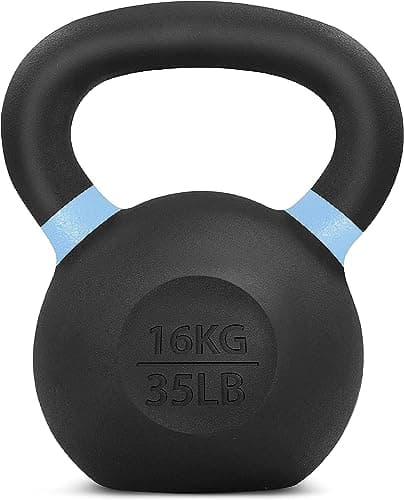
If 16 kg (35 lb) matches your current strength, compare the fixed-weight options in our kettlebell guide and confirm the selected weight before buying. We paused the Lifeline 16 kg pick on October 5, 2026: its old Amazon link selected 4 kg, and the maker's exact 16 kg model was notification-only. If 35 lb is too heavy for clean reps, start lighter rather than forcing the standard size.
How to build your kettlebell kit over time
Week 1–4, one general-purpose bell
Learn the swing, goblet squat, and clean. Use the same bell for everything while you are building the movement patterns. Form comes before load every time.
Week 4–8, assess your movements separately
Notice whether your press or your swing is the limiting factor. If your swings feel controlled and your press is still challenging, stay at your current weight. If your swings feel easy but your press is solid, the second bell is getting closer.
When form is clean across all sets, consider sizing up
The trigger is not a rep count. It is completing all prescribed sets with smooth, controlled technique and still having something left. Kettlebells jump 4 kg at a time, so the next size is a real step up.
Second bell for swings
When you are ready to swing heavier without waiting for your press to catch up, buy one bell at the next size up for swings only. Keep the first bell for pressing and skill work.
When to size up (and when to stay put)
Kettlebells increase in 4 kg (roughly 8–10 lb) increments. That jump is meaningful. There is no gradual ramp the way there is with dumbbells that step up by 2.5 lbs, though an adjustable model like the REP Fitness Adjustable Kettlebell softens the step with smaller increments.
The signal to move up is a quality check, not a rep count target. John Wolf's benchmark from Onnit is completing 5 sets of 6–8 reps with clean form before moving up. More broadly: you can finish all your prescribed sets with smooth, controlled technique, your last few reps feel challenging but not sloppy, and nothing is breaking down in your form by the end of a set. That is the green light.
If you are losing your hip hinge at the top of a swing, letting your lower back round, or your shoulder is creeping toward your ear on a press, the weight is too heavy. Stay put.
Frequently asked questions
Should I use the same kettlebell for swings and overhead presses?
Not once you have been training for a few weeks. Swings are a hip-hinge power movement and recruit your whole posterior chain, so you can handle more load there. Overhead presses isolate the shoulder and require strict stability. Most people end up swinging a bell one or two sizes heavier than they press. Starting with a single bell for everything is fine as a beginner, but plan for a second bell once you get consistent.
How quickly should I expect to move up in weight?
There is no fixed timeline, but a realistic frame is 4–8 weeks at each starting weight before considering a move up. The test is whether you can hit all your sets with clean technique and still have something left. If the last few reps feel easy and your form is solid throughout, it is time. If you are grinding or losing form, stay put. Kettlebells jump 4 kg at a time, so the next size is a real step up.
Do I need a full set of kettlebells or will one bell do?
One bell is enough to start and covers most beginner programming. A single 12 kg or 16 kg bell for men (8 kg for women) handles swings, goblet squats, cleans, and presses in the early weeks. The case for a second bell comes once you are pressing one weight comfortably and want to swing heavier without waiting for your press to catch up. Start with one and add a second only when your training clearly calls for it.
Once you know your starting weight, see our guide to the best kettlebells for specific recommendations across price points and handle quality. Browse all fitness gear or learn how we research and rate every piece of kit on this site.
Recommended gear
Our current top picks from the Best kettlebells for home workouts: cast iron, competition, and adjustable guide, if you are ready to buy.
Best for: Home gym owners who want a durable, versatile cast iron bell with room to build a rack of matched weights over time.
- Grip holds up through high-rep sessions without chalk, even with sweaty hands
- The 39 mm handle diameter can feel thick for lifters with smaller hands, particularly on lighter weights
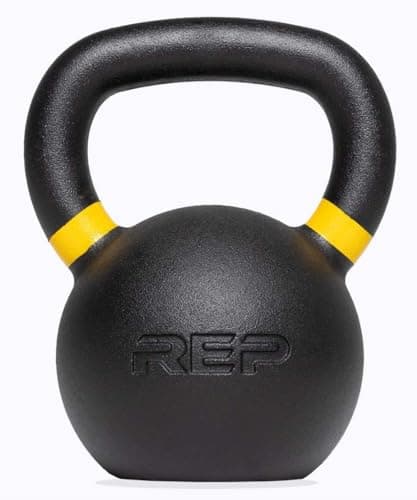
- Type
- Cast iron, gravity die-cast
- Weight range
- 4 – 48 kg (9 – 106 lb)
- Handle diameter
- 39 mm
- Coating
- Matte black powder coat, chip-resistant
- Base
- Machine-finished flat bottom
- Markings
- Dual kg/lb stamps, color-coded handle rings
About this pick
A gravity die-cast bell with a matte powder-coat finish that provides reliable grip without chalk. The wide weight range and consistent manufacturing quality make it a strong single-bell or build-a-set choice for most home gyms.
Strengths
- Grip holds up through high-rep sessions without chalk, even with sweaty hands
- Color-coded handle rings and dual kg/lb markings make weight identification instant
- Available from 4 kg to 48 kg, so you can add bells as you progress without switching brands
Weaknesses
- The 39 mm handle diameter can feel thick for lifters with smaller hands, particularly on lighter weights
- Cast iron requires occasional wipe-down in humid environments to prevent surface rust
Kit Score breakdown
YES4ALL
Yes4All Powder Coated Kettlebell
Best Value
Kit Score 8.2/10
$64.33 Price checked Oct 23, 4:16 PM CDT
Best for: Beginners or budget-focused buyers who want a functional cast iron bell for swings, goblet squats, and presses without committing to a premium price.
- Lowest per-pound cost among quality powder-coated options on Amazon, making it easy to build a starter set
- Quality control is less consistent than premium brands: some owners report minor seam lines or uneven coating on isolated units
- Type
- Cast iron, single-piece no-weld construction
- Weight options
- 9 lb to 80 lb (13 options)
- Handle
- Smooth, slightly textured; chalk-optional
- Coating
- Powder coat, corrosion-resistant
- Base
- Flat bottom for upright storage
- Accuracy
- Weight within 2% of stated
About this pick
A no-frills cast iron bell with a powder coat finish that delivers honest build quality at a price per pound that is hard to beat on Amazon. The slightly textured handle provides grip without being abrasive, and the flat base handles renegade rows cleanly.
Strengths
- Lowest per-pound cost among quality powder-coated options on Amazon, making it easy to build a starter set
- Flat bottom is a practical feature at this price point, enabling push-up and renegade row variations
- Color-coded handle bands make quick weight identification easy in a multi-bell setup
Weaknesses
- Quality control is less consistent than premium brands: some owners report minor seam lines or uneven coating on isolated units
- Handle finish can feel slightly rougher than polished competitors, which matters more on high-rep snatch sets than on swings
Kit Score breakdown
REP FITNESS
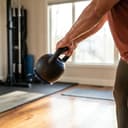
REP Fitness Adjustable Kettlebell
Best for Small Spaces
Kit Score 8.1/10
$219.99 Price checked Oct 23, 4:16 PM CDT
Best for: Home gym owners with limited storage who want a genuine cast iron feel and need one or two bells that cover a full beginner-to-intermediate weight progression.
- Replaces five separate kettlebells, a major advantage in apartments or small home gyms with limited floor space
- 24 kg (53 lb) maximum weight is not enough for advanced lifters who press or deadlift heavier
- Type
- Adjustable, cast iron shell with powder coat
- Weight range
- 8–16 kg or 16–24 kg (5 settings per bell)
- Increments
- 2 kg steps
- Handle diameter
- 34.6 – 35 mm
- Adjustment
- Push-down and twist dial; nylon thermoplastic locking plates
- Base
- Rubber-padded, floor-protective
About this pick
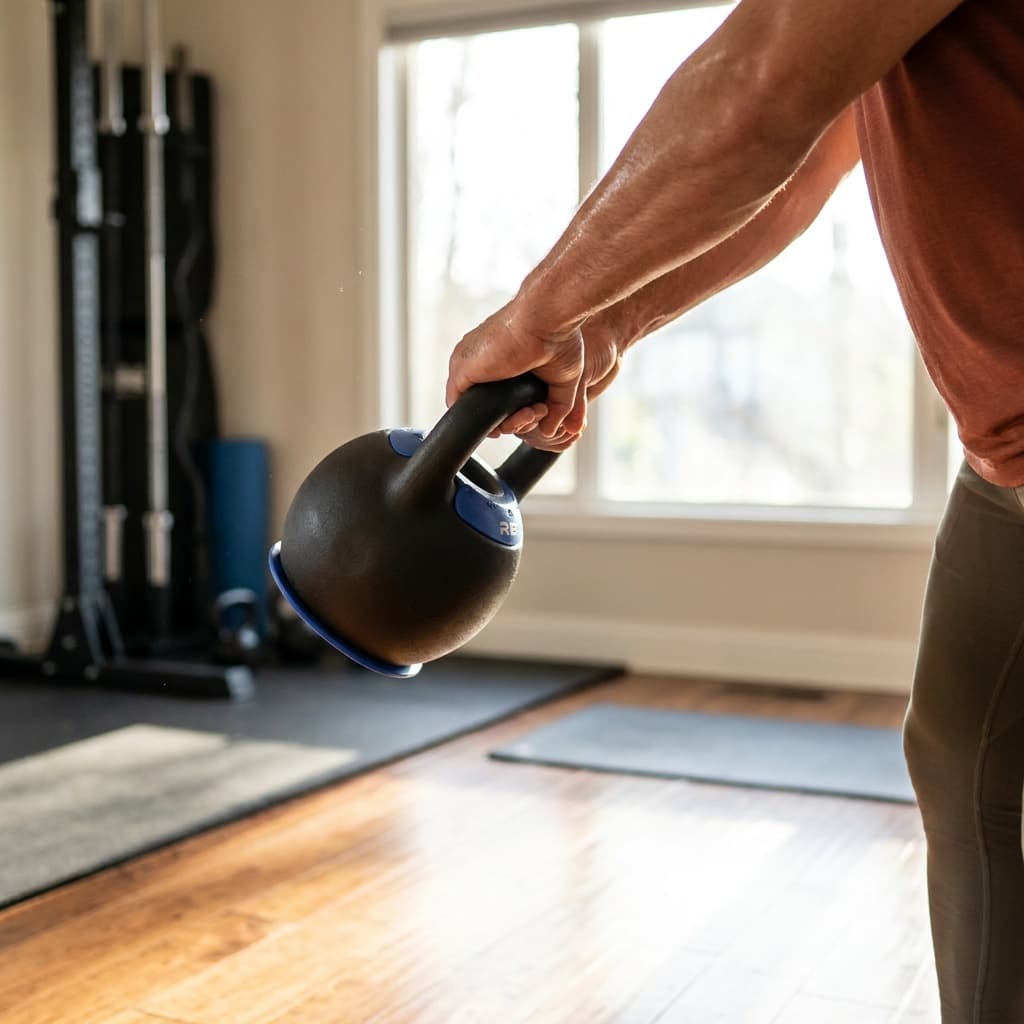
Five kettlebell weights in one bell footprint: push down and twist to change from 8 kg to 16 kg (or 16 kg to 24 kg) in under five seconds. Cast iron shell and matte powder coat give it a feel closer to a traditional kettlebell than any plastic-shell adjustable.
Strengths
- Replaces five separate kettlebells, a major advantage in apartments or small home gyms with limited floor space
- Cast iron construction and matte powder coat feel authentic through swings and presses, unlike cheaper adjustables with plastic bodies
- Minimal plate rattle during dynamic movements due to nylon thermoplastic locking mechanism
Weaknesses
- 24 kg (53 lb) maximum weight is not enough for advanced lifters who press or deadlift heavier
- Plastic adjustment dial is the one component that could fail with rough use; treat it as a precision mechanism, not a gym floor throw
Kit Score breakdown
See all picks in Best kettlebells for home workouts: cast iron, competition, and adjustable
Keep going
Researched, not hands-on tested
Updated Oct 5, 2026Our recommendations draw on manufacturer documentation, retailer listings, owner feedback, and comparisons with alternatives.
As an Amazon Associate I earn from qualifying purchases. We may earn a commission from links here, at no extra cost to you. How we research →