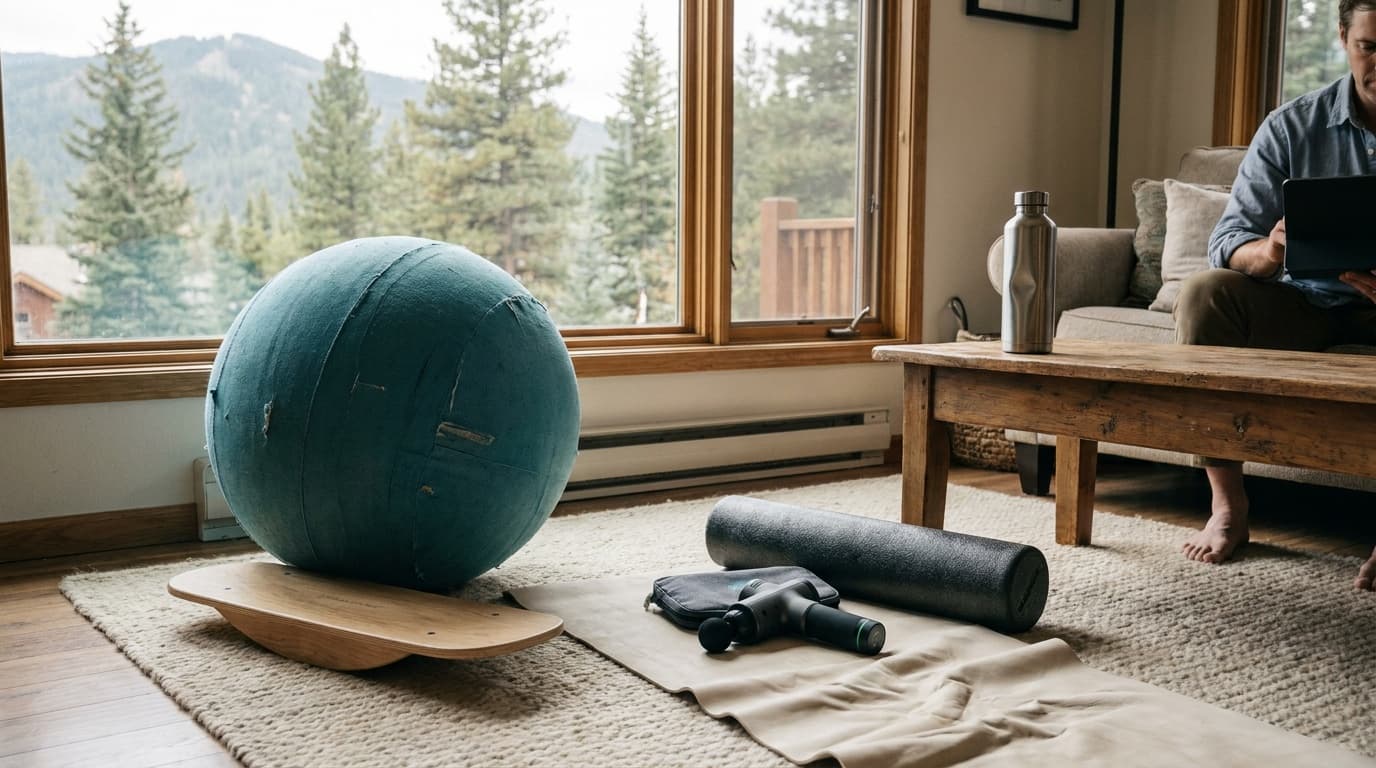
Getting the wrong size exercise ball makes every move harder than it needs to be, and the right size is simpler to find than most guides suggest.
The sizing chart: match your height first
Stability ball sizing is standardized across brands. The diameter printed on the box refers to the ball at full, correct inflation. Use this chart as your starting point.
The 65cm ball covers the widest range of users and is the most commonly sold size; popular options like the Trideer Exercise Ball come in all four diameters. If you are right at a boundary, for example 5 ft 5 or exactly 6 ft, read the seated test section below before you buy, because inseam length and torso proportion can tip you one size in either direction.
The knees-at-90-degrees seated test
The chart gets you close. The seated test confirms the fit.
Inflate the ball to its recommended diameter, sit on it with your feet flat on the floor, and look at your knee angle. Your thighs should be roughly parallel to the floor, with your knees bent at 90 degrees or very slightly above 90 degrees (hips a touch higher than knees). This position lets your spine stack naturally and your core engage without compensating.
If your knees are higher than your hips, the ball is too small. If your legs are nearly straight, the ball is too large. Both positions push your pelvis into a tilt that undermines the whole point of the ball.
A ball that passes the 90-degree seated test in your living room will perform correctly for core work, not just for sitting.
Inflation and firmness: the variable most people ignore
Diameter is not fixed at purchase. How firm you inflate the ball changes its effective sitting height and its feel during exercise. Most manufacturers recommend inflating to the labeled diameter, measured across the widest point with a soft tape measure or a simple box method (place the ball against a wall, mark the top, measure to the floor).
How to inflate to the right height
Start soft
Inflate until the ball holds its round shape but still dents noticeably under pressure.
Measure the diameter
Stand a ruler or tape vertically beside the ball at its widest point. Compare to the labeled size.
Add air in short bursts
Use a hand pump or the inflation needle with a standard sports pump. Stop and re-measure every few pumps.
Do the seated test
Sit on the ball and check the knee angle before declaring it done.
Firm it up for workouts
For dynamic exercises like planks or ball passes, a firmer ball is more stable. For desk use, a slightly softer feel reduces fatigue.
Cold rooms make balls feel softer; warm rooms make them feel firmer. If your home office gets cold in winter, check the inflation before your morning session.
Desk chair vs workout use: different priorities
Using a stability ball as a desk chair is popular, but the sizing logic shifts slightly compared to workout use.
For workout use, the 90-degree knee rule is the target. You want the ball sized so your body is in a neutral, stable position for the specific movement, whether that is a crunch, a bridge, or a wall squat.
For desk chair use, many ergonomists suggest sizing up by one increment if you are on the borderline between two sizes. The reasoning: sitting for extended periods at exactly 90 degrees is fatiguing, and a slightly larger ball keeps your hips a few degrees above your knees, which reduces lumbar compression over a long session. That said, ball chairs are not a substitute for a good ergonomic chair for full workdays. Most evidence supports limiting ball-chair sessions to 30–60 minutes at a time.
If you plan to use one ball for both purposes and you are between sizes, go with the standard workout sizing and adjust firmness for desk sessions rather than buying up.
Anti-burst rating: what it means and why it matters
Anti-burst (also called slow-deflate or burst-resistant) is a manufacturing standard, not a marketing term. An anti-burst ball like the BalanceFrom Anti-Burst Fitness Ball uses thicker PVC with a reinforced structure designed to deflate slowly if punctured rather than popping suddenly. This is the safety feature that matters most if you are doing loaded exercises, sitting on the ball near hard furniture, or using the ball with children.
Look for balls rated to at least 300 lbs (136 kg) static load, with an anti-burst designation from the manufacturer. Professional-grade balls often carry ratings of 2,000 lbs static load. The higher rating reflects thicker material and more rigorous testing, not just marketing headroom. If the product listing does not mention anti-burst or a weight rating, skip it.
Thickness of the PVC wall (typically 2mm for consumer balls, up to 4mm for professional grade) is a reliable quality signal when you can find it in the specs.
Frequently asked questions
Can I use a 65cm ball if I am 5 ft 4?
You can, depending on your leg length. Sit on a fully inflated 65cm ball and check the knee angle. If your knees are well below your hips and your feet are flat, the ball is too large for you. Most people at 5 ft 4 will fit the 55cm ball correctly, but long-legged individuals at that height sometimes prefer the 65cm. The seated test is the definitive answer.
How do I know when my exercise ball needs more air?
The clearest sign is a change in your seated knee angle. If you inflate to the right size, do the seated test, and find your knees are creeping higher than they were, the ball has lost air. Check inflation monthly if you use the ball regularly, and always re-measure after moving or storing the ball in a cold space. A soft, flat-sided appearance when you sit on it is also a reliable visual cue.
Does brand matter for exercise ball sizing?
Sizing is standardized, so a 65cm ball from any reputable brand should inflate to 65cm and perform the same way. Brand differences show up in material quality, anti-burst rating, surface texture, and how well the ball holds air over time. Stick to brands that publish anti-burst ratings and weight limits, and verify that the labeled diameter matches the actual inflated measurement before your first use.
For specific picks across every size and use case, see our guide to the best exercise balls. Browse all fitness guides or read how we research and rate gear.
Recommended gear
Our current top picks from the Best exercise balls for core training and desk sitting (2026) guide, if you are ready to buy.
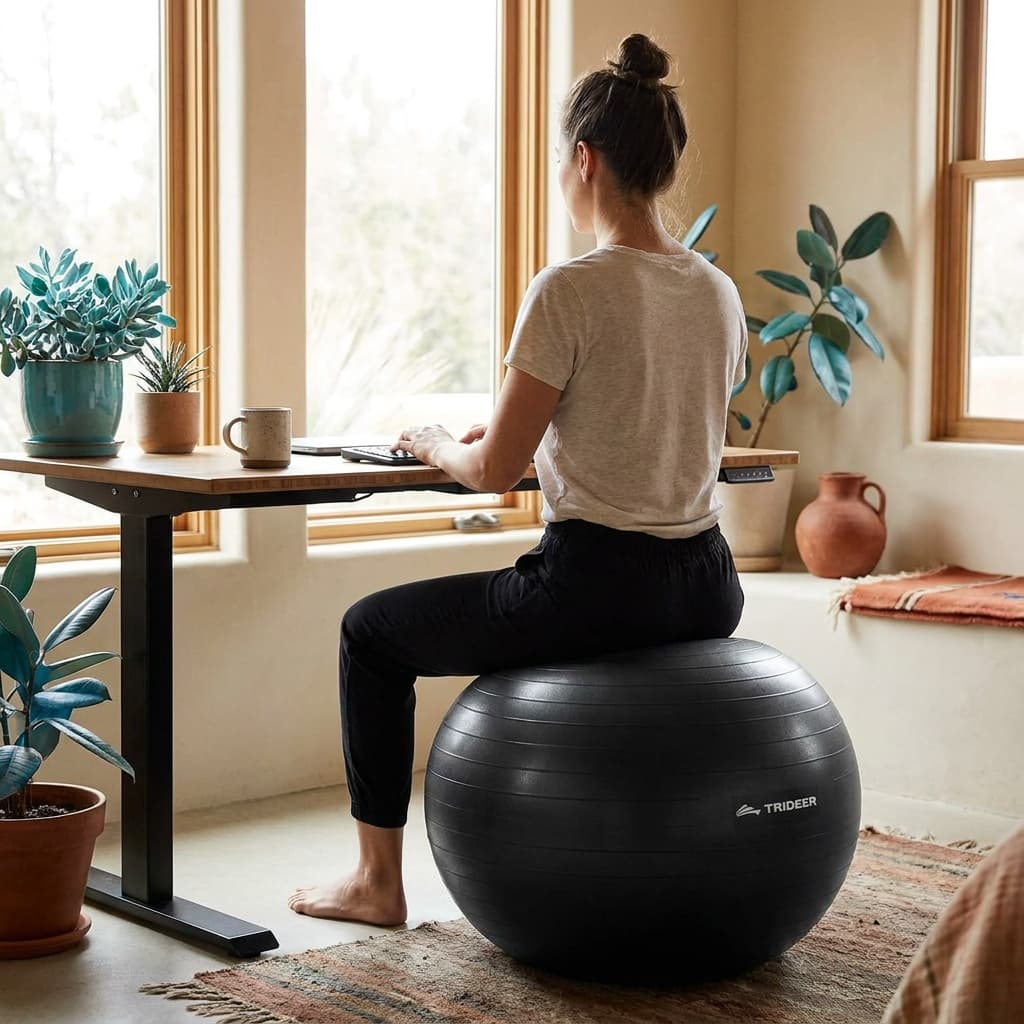
Best for: Most people who want one ball for core training, desk sitting, and occasional physio work, and want proven durability without paying premium prices.
- Anti-burst rating and slow-deflate construction are above category average for the price
- Dynamic weight capacity (330 lb) is lower than the static burst threshold (2200 lb), which limits heavy loaded exercises
- Sizes available
- 45, 55, 65, 75 cm (plus a 23 cm mini version)
- Anti-burst rating
- 2200 lb static load
- Surface
- Textured, non-slip
- Pump included
- Yes, quick-inflation pump
- Deflation type
- Slow-deflate certified (gradual, not sudden)
About this pick
The Trideer Exercise Ball is one of Amazon's top-selling stability balls, with over 53,000 owner ratings at 4.6 stars. Built with a 2200 lb anti-burst rating, it covers the full range of uses from vigorous core work to prolonged desk sitting, and the included pump inflates most sizes in under five minutes.
Strengths
- Anti-burst rating and slow-deflate construction are above category average for the price
- Textured surface reduces sliding on smooth floors during planks and balance drills
- Five size options and a wide color range make it easy to match height and workspace needs
Weaknesses
- Dynamic weight capacity (330 lb) is lower than the static burst threshold (2200 lb), which limits heavy loaded exercises
- Some reviewers note the ball can feel slightly soft at the recommended inflation level for taller users
Kit Score breakdown
THERABAND
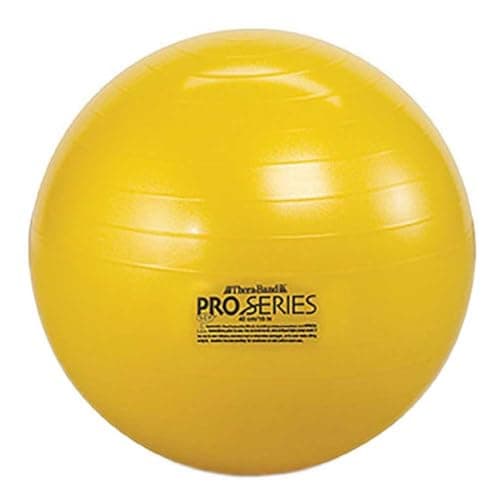
TheraBand Pro Series SCP Exercise Ball
Editor's Choice
Kit Score 8.4/10
$42.29 Price checked Oct 23, 4:16 PM CDT
Best for: Physio patients, rehab users, and serious core trainers who want a clinician-trusted, latex-free ball and are not in a hurry to inflate it.
- Non-latex, phthalate-free construction and bariatric-rated certification make it the right choice for physio, rehab, and users with latex sensitivities
- No pump included; inflating with an adapter adds time and requires a separate pump
- Sizes available
- 55, 65, 75 cm (color-coded by size)
- Weight capacity
- 600 lb (static tested)
- Surface
- Non-slip, non-latex PVC polymer
- Deflation type
- Slow Deflate Advantage: deflates gradually if punctured
- Pump included
- No; inflation adapter and two plugs included
- Certifications
- Phthalate-free, latex-free; bariatric-rated
About this pick
The TheraBand Pro Series SCP is the ball most commonly stocked by physical therapy clinics, built to a higher material specification than consumer-grade options and color-coded by size for easy identification. Its Slow Deflate Advantage is a genuine safety feature: independent testers consistently report the PVC holds firm and deflates predictably rather than popping.
Strengths
- Non-latex, phthalate-free construction and bariatric-rated certification make it the right choice for physio, rehab, and users with latex sensitivities
- Firm, taut feel that independent reviewers describe as ideal for core exercise and seated posture work
- Color coding makes size identification straightforward in multi-ball settings like a clinic or group class
Weaknesses
- No pump included; inflating with an adapter adds time and requires a separate pump
- Manufacturer recommends a 24-hour pre-inflation wait before full use, which is inconvenient compared to pump-and-go competitors
Kit Score breakdown
Best for: First-time buyers, home stretching and light core work, or desk sitting on a tight budget who want basic anti-burst safety and a pump included.
- Lower confirmed-burst rate than most competitors in the budget tier, based on aggregated owner review analysis
- Noticeably soft and squishy construction; independent tests found it measures smaller than the labeled diameter when inflated to the tape mark
- Sizes available
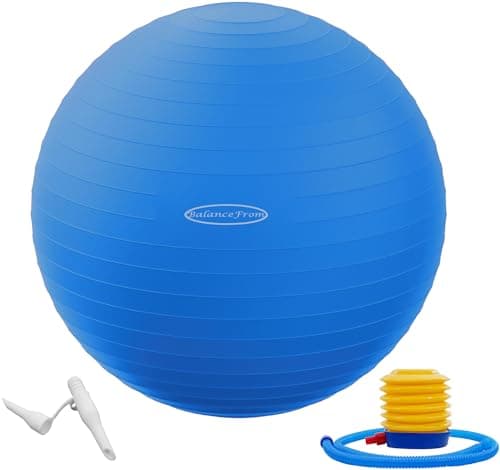
- 55, 65, 75 cm
- Anti-burst rating
- Anti-burst PVC
- Surface
- Slip-resistant texture
- Pump included
- Yes, pump included
- Material
- Anti-burst, slip-resistant PVC
About this pick
The BalanceFrom Anti-Burst Fitness Ball sets the floor for what a stability ball needs to do: it inflates with the included pump, stays inflated, and does not burst suddenly under normal use. At its price point it has fewer burst reports than many competing budget options, and BalanceFrom is a known quantity on Amazon with a long review history.
Strengths
- Lower confirmed-burst rate than most competitors in the budget tier, based on aggregated owner review analysis
- Pump included at no added cost
- BalanceFrom brand has a long track record on Amazon with consistent quality expectations at the budget level
Weaknesses
- Noticeably soft and squishy construction; independent tests found it measures smaller than the labeled diameter when inflated to the tape mark
- Thin walls mean it will not hold up to the firmness that core training on hard gym floors demands
Kit Score breakdown
See all picks in Best exercise balls for core training and desk sitting (2026)
Keep going
Researched, not hands-on tested
Updated Jun 4, 2026Our recommendations draw on manufacturer documentation, retailer listings, owner feedback, and comparisons with alternatives.
As an Amazon Associate I earn from qualifying purchases. We may earn a commission from links here, at no extra cost to you. How we research →