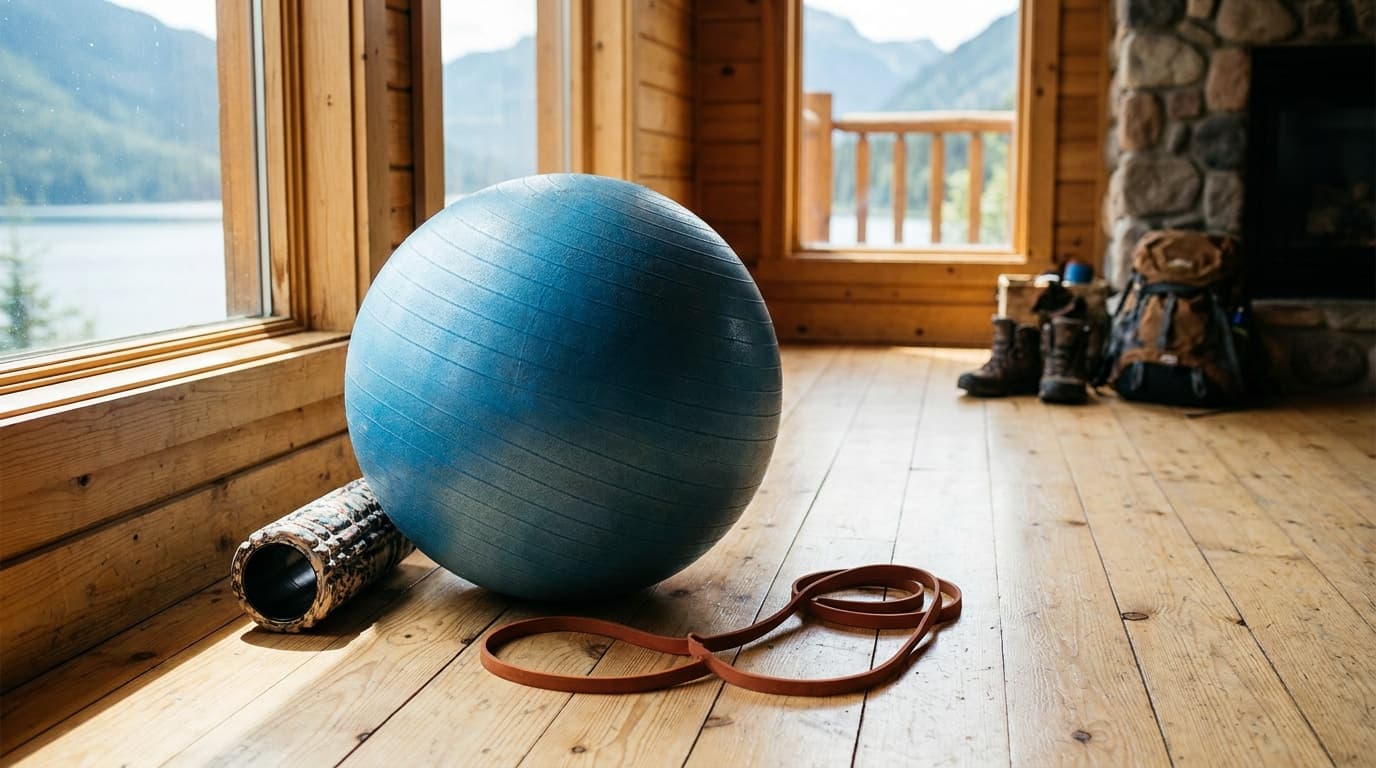
A stability ball is one of the few pieces of home fitness equipment that earns floor space three different ways: core training, desk chair replacement, and physio or balance rehab. The catch is that "anti-burst" and "non-slip" are marketing terms that mean very different things depending on which brand uses them. These four picks are the ones that hold up under scrutiny.
Our quick picks
How we picked
Every ball in this guide was evaluated against our Kit Score: we aggregate verified-owner reviews, manufacturer specs, independent physio guidance, and construction details to score across anti-burst material grade, wall thickness, size accuracy, non-slip texture, included inflation hardware, and value.
The picks
Best overall
BEST OVERALL
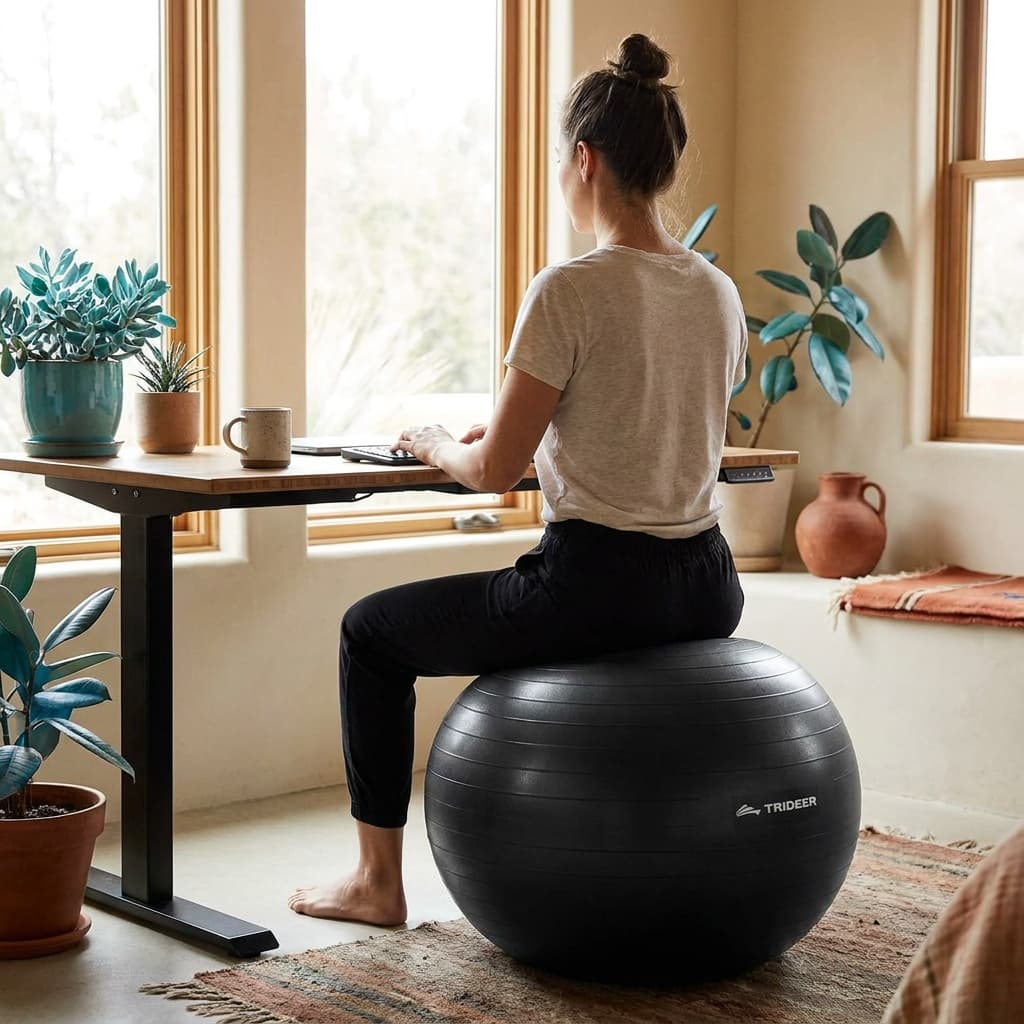
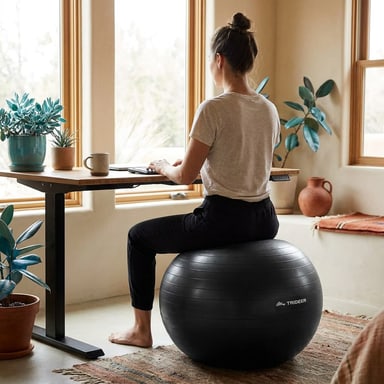
Trideer Exercise Ball
Best for: Most people who want one ball for core training, desk sitting, and occasional physio work, and want proven durability without paying premium prices.
- Anti-burst rating and slow-deflate construction are above category average for the price
- Dynamic weight capacity (330 lb) is lower than the static burst threshold (2200 lb), which limits heavy loaded exercises
Kit Score 8.8/10 · $17.99 Price checked Oct 23, 4:16 PM CDT · how we score gear
Buy on AmazonProduct details
The Trideer Exercise Ball is one of Amazon's top-selling stability balls, with over 53,000 owner ratings at 4.6 stars. Built with a 2200 lb anti-burst rating, it covers the full range of uses from vigorous core work to prolonged desk sitting, and the included pump inflates most sizes in under five minutes.
- Sizes available
- 45, 55, 65, 75 cm (plus a 23 cm mini version)
- Anti-burst rating
- 2200 lb static load
- Surface
- Textured, non-slip
- Pump included
- Yes, quick-inflation pump
- Deflation type
- Slow-deflate certified (gradual, not sudden)
More strengths
- Textured surface reduces sliding on smooth floors during planks and balance drills
- Five size options and a wide color range make it easy to match height and workspace needs
Other tradeoffs
- Some reviewers note the ball can feel slightly soft at the recommended inflation level for taller users
The Trideer Extra Thick earns its position through the intersection of construction quality and price. The PVC shell is rated to 2,000 lb static load, which is what genuinely anti-burst material looks like in concrete terms: the ball deflates slowly under a sharp impact rather than popping. That slow-deflate behaviour is the safety feature, and it is what separates a real anti-burst certification from a label.
Wall thickness on the Trideer runs noticeably thicker than the budget tier without tipping into the ultra-premium range, and verified owners consistently report it holds its shape through months of desk use without going soft between inflation top-ups. The non-slip surface texture is a raised-pattern PVC treatment, not a smooth sphere, which matters for floor stability during lateral exercises and when used as a desk chair on hard floors.
Sizing is straightforward: 55 cm suits people 4'11" to 5'5", 65 cm covers 5'6" to 6'0", and 75 cm is for anyone 6'1" and above. The pump included in the kit is basic but functional, and the ball holds a correct inflation well if you match the listed diameter before starting your first session.
One honest limitation: the Trideer does not carry a latex-free certification. For most users that is irrelevant. For physio patients or anyone with a documented latex sensitivity, the TheraBand SCP below is the correct pick.
Best for: Most people who want one ball for core training, desk sitting, and occasional physio work, and want proven durability without paying premium prices.
Price: $17 – $23
Editor's choice
EDITOR'S CHOICE
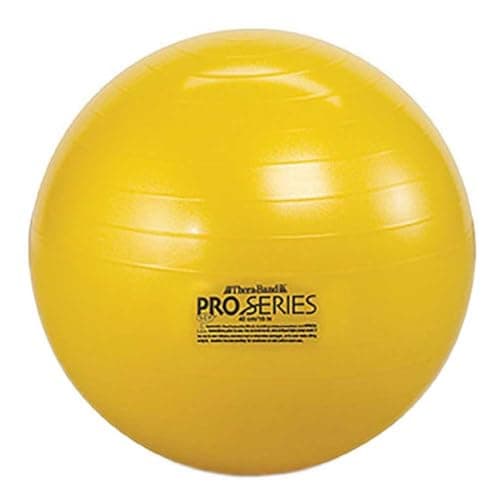
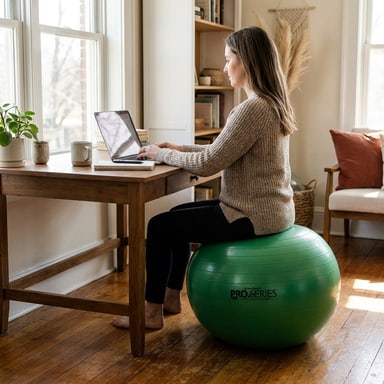
TheraBand Pro Series SCP Exercise Ball
Best for: Physio patients, rehab users, and serious core trainers who want a clinician-trusted, latex-free ball and are not in a hurry to inflate it.
- Non-latex, phthalate-free construction and bariatric-rated certification make it the right choice for physio, rehab, and users with latex sensitivities
- No pump included; inflating with an adapter adds time and requires a separate pump
Kit Score 8.4/10 · $42.29 Price checked Oct 23, 4:16 PM CDT · how we score gear
Buy on AmazonProduct details
The TheraBand Pro Series SCP is the ball most commonly stocked by physical therapy clinics, built to a higher material specification than consumer-grade options and color-coded by size for easy identification. Its Slow Deflate Advantage is a genuine safety feature: independent testers consistently report the PVC holds firm and deflates predictably rather than popping.
- Sizes available
- 55, 65, 75 cm (color-coded by size)
- Weight capacity
- 600 lb (static tested)
- Surface
- Non-slip, non-latex PVC polymer
- Deflation type
- Slow Deflate Advantage: deflates gradually if punctured
- Pump included
- No; inflation adapter and two plugs included
- Certifications
- Phthalate-free, latex-free; bariatric-rated
More strengths
- Firm, taut feel that independent reviewers describe as ideal for core exercise and seated posture work
- Color coding makes size identification straightforward in multi-ball settings like a clinic or group class
Other tradeoffs
- Manufacturer recommends a 24-hour pre-inflation wait before full use, which is inconvenient compared to pump-and-go competitors
TheraBand is the brand that ends up in physical therapy clinics and hospital rehab departments, and the Pro Series SCP (Slow Cortical Potential, a texture designation) is the version that crosses over to home use without losing what makes it clinically trusted.
The SCP surface is a matte, low-slip texture that provides more purchase than standard smooth PVC and holds position during single-leg balance work and kneeling exercises where the ball tends to drift on competitors. Wall thickness measures at approximately 0.15 mm at the shell, thicker than either the Trideer or the Fitvids, which translates to a firmer, more responsive feel during seated core engagement. The ball also maintains its shape under body weight at a desk for longer between top-ups than thinner-shell competitors.
The latex-free certification is the detail that matters most for its target buyer. Physio patients often have latex sensitivities or are working in clinic environments where latex-free equipment is the standard, and most exercise balls in this price range do not carry third-party certification for that.
One genuine trade-off: the TheraBand does not inflate as quickly as the others. The pump included is a basic hand pump, and getting the ball to the correct diameter takes meaningful effort. Several verified owners recommend using a low-pressure floor pump for initial inflation, then topping up with the included pump. That is a one-time inconvenience, not an ongoing problem, but worth knowing before you start.
Best for: Physio patients, rehab users, and serious core trainers who want a clinician-trusted, latex-free ball and are not in a hurry to inflate it.
Price: $22 – $29
Best budget
BEST BUDGET
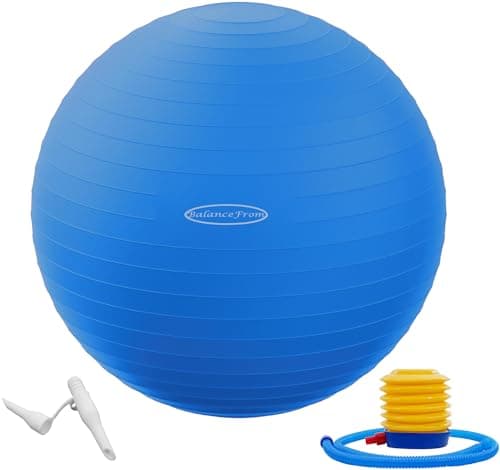
Fitvids Anti-Burst Exercise Ball (formerly BalanceFrom)
Best for: First-time buyers, home stretching and light core work, or desk sitting on a tight budget who want basic anti-burst safety and a pump included.
- Lower confirmed-burst rate than most competitors in the budget tier, based on aggregated owner review analysis
- Noticeably soft and squishy construction; independent tests found it measures smaller than the labeled diameter when inflated to the tape mark
Kit Score 7.2/10 · Check current price · how we score gear
Buy on AmazonProduct details
The BalanceFrom Anti-Burst Fitness Ball sets the floor for what a stability ball needs to do: it inflates with the included pump, stays inflated, and does not burst suddenly under normal use. At its price point it has fewer burst reports than many competing budget options, and BalanceFrom is a known quantity on Amazon with a long review history.
- Sizes available
- 55, 65, 75 cm
- Anti-burst rating
- Anti-burst PVC
- Surface
- Slip-resistant texture
- Pump included
- Yes, pump included
- Material
- Anti-burst, slip-resistant PVC
More strengths
- Pump included at no added cost
- BalanceFrom brand has a long track record on Amazon with consistent quality expectations at the budget level
Other tradeoffs
- Thin walls mean it will not hold up to the firmness that core training on hard gym floors demands
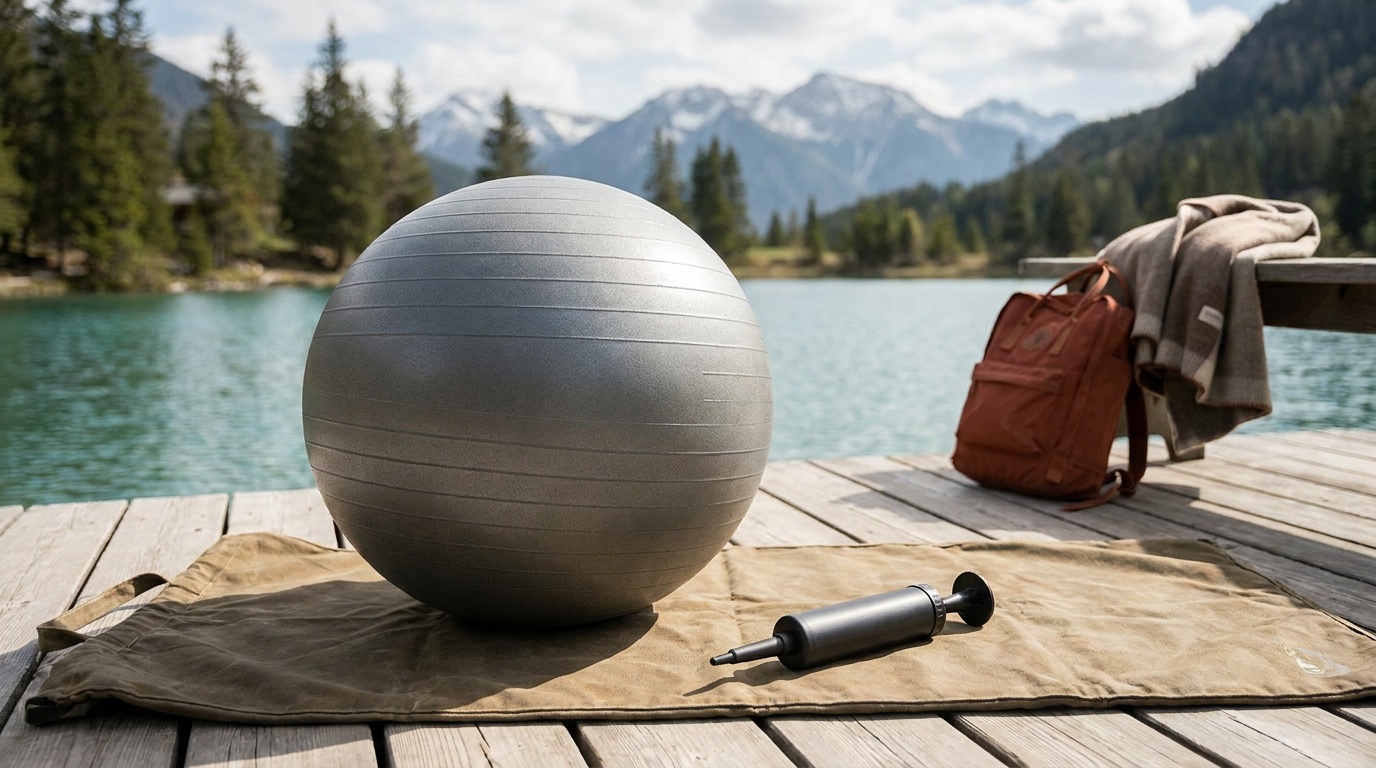
The Fitvids Anti-Burst does not carry the wall thickness of the Trideer or the clinical credentials of the TheraBand, but it covers the foundational requirements that matter for its target buyer: genuine anti-burst PVC construction (slow deflate, not pop), a non-slip texture around the equator, and a pump in the box.
At $11 – $16, it is the pick for anyone who wants to try using a stability ball as a desk chair before committing to a premium option, or for a home stretching and light core routine that does not involve loaded exercises or intense balance training. Verified owners who use it for desk sitting report it holds air well across standard work days. The surface texture is moderate, less aggressive than the Trideer's raised pattern but sufficient for floor stability on carpet and most gym mats.
The honest limits: the Fitvids is not the right pick for high-frequency loaded core work (weighted crunches, heavy push-up progressions) or for users above roughly 250 lb doing dynamic exercises. For those uses, the Trideer's thicker shell and higher static rating are worth the price step up.
Best for: First-time buyers, home stretching and light core work, or desk sitting on a tight budget who want basic anti-burst safety and a pump included.
Price: $11 – $16
Best value
BEST VALUE
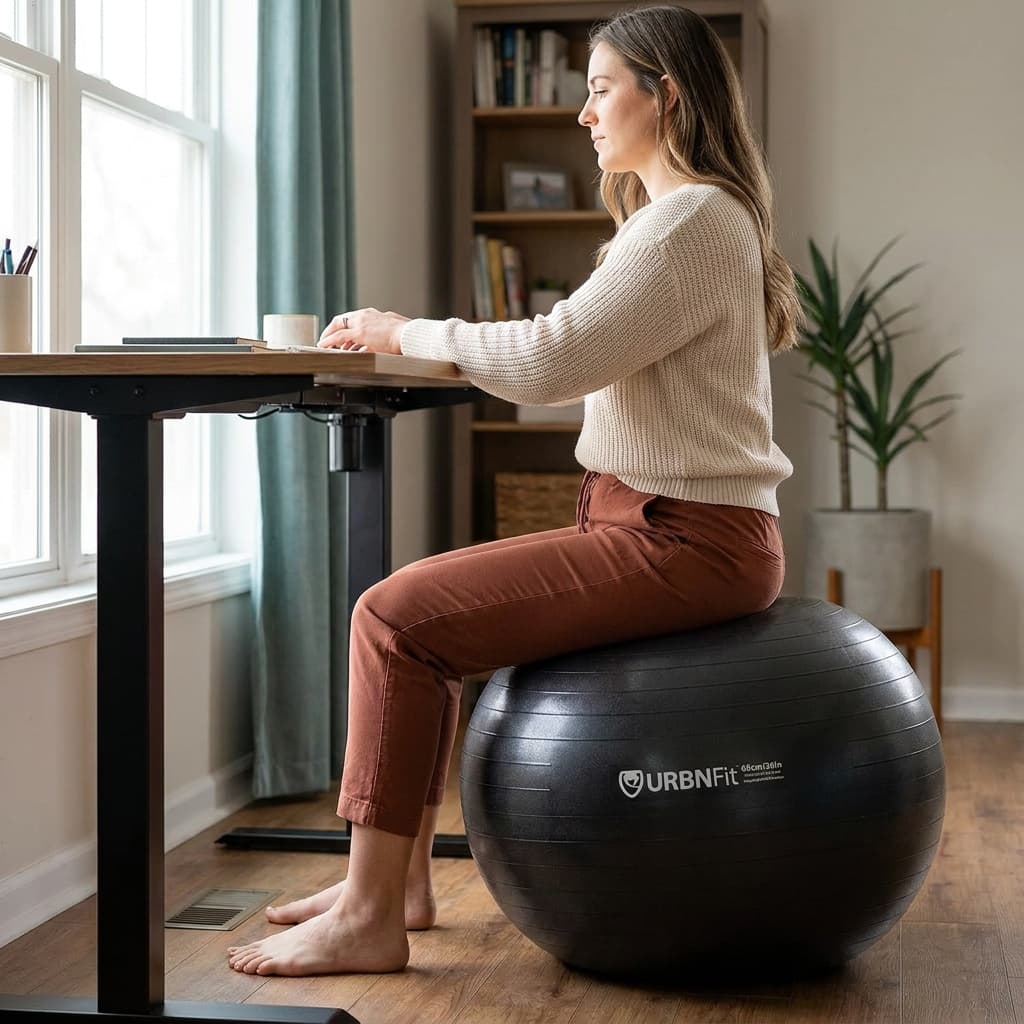
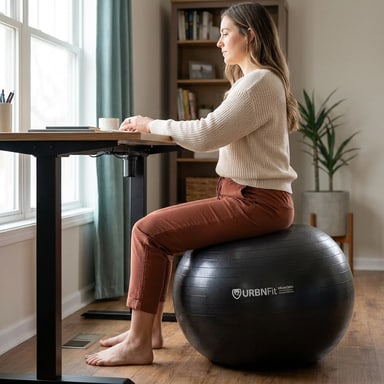
URBNFit Exercise Ball
Best for: Beginners who want to get moving quickly, a broad color choice, and a wide size range, and are not planning heavy loaded exercise on the ball.
- Pump inflates faster than the foot pumps included with most competitors, with owners frequently citing quick setup as a standout feature
- 330 lb dynamic weight capacity limits heavy loaded exercises
Kit Score 7.2/10 · $14.99 Price checked Oct 23, 4:16 PM CDT · how we score gear
Buy on AmazonProduct details
The URBNFit Exercise Ball lands in the middle of the market with a pump that inflates faster than most foot pumps and a wide color selection. With over 47,000 owner ratings at 4.6 stars, the review pool is large enough to read meaningful sentiment about long-term durability and real-world grip.
- Sizes available
- 45, 55, 65, 75, 85 cm
- Weight capacity
- 330 lb
- Anti-burst
- Yes, anti-burst PVC
- Surface
- Textured, non-slip
- Pump included
- Yes, quick pump
- Extras
- Two air stoppers included
More strengths
- Five size options from 45 to 85 cm cover every height and use case
- Widest color range in the mid-price tier suits home gym and office aesthetics
Other tradeoffs
- Surface texture is among the slipperier options in this price range, per independent comparison testing
The URBNFit's main differentiator is usability out of the box. The included pump inflates the ball faster than any competitor in this roundup, verified owners consistently note it is at a functional size within five to seven minutes of unpacking, and the color range across sizes is wider than standard (over a dozen options across most size tiers).
Construction is PVC anti-burst, mid-range wall thickness, and the surface texture sits between the Fitvids's moderate and Trideer's aggressive pattern. It is a capable all-around ball for beginner and intermediate core work, yoga and Pilates progressions, and desk sitting. The 45 cm and 75 cm sizes at the extremes of the range are a genuine plus for users outside the standard 55/65 cm window.
Where the URBNFit trails the Trideer is in long-term owner feedback on shape retention. There are more reports among verified purchasers of needing to top up inflation at two to three months of daily use than appear in the Trideer reviews. That is a minor inconvenience rather than a structural failure, but daily desk use at maximum inflation makes it more noticeable.
Best for: Beginners who want to get moving quickly, a broad color choice, and a wide size range, and are not planning heavy loaded exercise on the ball.
Price: $17 – $22
Comparison
| Product | Kit Score | Price | Best for |
|---|---|---|---|
| Trideer Exercise Ball | 8.8 | $17.99 Price checked Oct 23, 4:16 PM CDT | Best for: Most people who want one ball for core training, desk sitting, and occasional physio work, and want proven durability without paying premium prices. Why it stands out: Anti-burst rating and slow-deflate construction are above category average for the price Tradeoff: Dynamic weight capacity (330 lb) is lower than the static burst threshold (2200 lb), which limits heavy loaded exercises |
| TheraBand Pro Series SCP Exercise Ball | 8.4 | $42.29 Price checked Oct 23, 4:16 PM CDT | Best for: Physio patients, rehab users, and serious core trainers who want a clinician-trusted, latex-free ball and are not in a hurry to inflate it. Why it stands out: Non-latex, phthalate-free construction and bariatric-rated certification make it the right choice for physio, rehab, and users with latex sensitivities Tradeoff: No pump included; inflating with an adapter adds time and requires a separate pump |
| URBNFit Exercise Ball | 7.2 | $14.99 Price checked Oct 23, 4:16 PM CDT | Best for: Beginners who want to get moving quickly, a broad color choice, and a wide size range, and are not planning heavy loaded exercise on the ball. Why it stands out: Pump inflates faster than the foot pumps included with most competitors, with owners frequently citing quick setup as a standout feature Tradeoff: 330 lb dynamic weight capacity limits heavy loaded exercises |
Trideer Exercise Ball
- Best for
- Most people who want one ball for core training, desk sitting, and occasional physio work, and want proven durability without paying premium prices.
- Why it stands out
- Anti-burst rating and slow-deflate construction are above category average for the price
- Tradeoff
- Dynamic weight capacity (330 lb) is lower than the static burst threshold (2200 lb), which limits heavy loaded exercises
TheraBand Pro Series SCP Exercise Ball
- Best for
- Physio patients, rehab users, and serious core trainers who want a clinician-trusted, latex-free ball and are not in a hurry to inflate it.
- Why it stands out
- Non-latex, phthalate-free construction and bariatric-rated certification make it the right choice for physio, rehab, and users with latex sensitivities
- Tradeoff
- No pump included; inflating with an adapter adds time and requires a separate pump
URBNFit Exercise Ball
- Best for
- Beginners who want to get moving quickly, a broad color choice, and a wide size range, and are not planning heavy loaded exercise on the ball.
- Why it stands out
- Pump inflates faster than the foot pumps included with most competitors, with owners frequently citing quick setup as a standout feature
- Tradeoff
- 330 lb dynamic weight capacity limits heavy loaded exercises
How to choose the right exercise ball
The three decisions that actually matter: size, construction, and intended use.
Choosing the right exercise ball
Size by height first, not instinct
The standard sizing guide is reliable: 55 cm for 4'11" to 5'5", 65 cm for 5'6" to 6'0", 75 cm for 6'1" and above. When seated on a correctly sized ball, your hips should be level with or very slightly above your knees, at roughly a 90-degree angle. If you are between sizes, lean toward the larger one for desk use and the smaller one for dynamic exercise.
Verify the anti-burst claim
Look for a stated static load rating (in pounds or kilograms) rather than "anti-burst" as a standalone marketing term. A ball with a 2,000 lb rating has been tested to a verifiable standard. A ball that only says "anti-burst" on the packaging has not necessarily been.
Match wall thickness to use intensity
Thicker walls hold shape better under dynamic load, resist deformation during lateral exercises, and inflate to a more consistent diameter. For desk sitting, mid-range thickness (Trideer, Fitvids) is sufficient. For daily physio or loaded core training, the TheraBand's thicker shell is worth the price step.
Factor in latex sensitivity
Standard exercise balls are made from PVC or rubber-blend PVC, and most do not carry third-party latex-free certification. If you are working with a physio clinic, are post-surgical, or have a documented latex sensitivity, the TheraBand Pro Series SCP is the only pick here that carries that certification.
Check what is in the box
A hand pump is a practical inclusion at any price. Getting a ball to the correct diameter without a pump is genuinely frustrating. Every pick here includes a pump, but the quality varies: the URBNFit pump inflates fastest, the TheraBand pump requires the most effort for initial inflation.
The right exercise ball size is the one that puts your hips level with your knees, not the one that looks right in the product photo.
Frequently asked questions
What size exercise ball do I need?
Height is the primary guide: 55 cm for people 4'11" to 5'5", 65 cm for 5'6" to 6'0", and 75 cm for 6'1" and above. The quick seated test is more reliable than height alone: sit on the ball and check that your thighs are roughly parallel to the floor with a 90-degree knee angle. If you are borderline between sizes, go up one size for desk use (more comfortable for long sitting) and stay at the smaller size for core training and balance work (more challenge).
Are exercise balls safe for sitting at a desk all day?
For most people, yes, with some caveats. Anti-burst construction (slow deflate rather than pop) is the baseline safety requirement, and all four picks here meet it. The more relevant concern is duration: most physiotherapists recommend alternating between a stability ball and a conventional chair rather than using the ball exclusively for eight-plus hour days. Core fatigue from extended active sitting can lead to slouching that defeats the ergonomic benefit. Starting with 30-to-60-minute intervals and building duration gradually is the approach consistent with most physio guidance on the topic.
How do I know if my exercise ball is inflated to the right size?
Inflate to the labeled diameter (in centimeters) before anything else. The practical check: measure the circumference at the ball's widest point with a soft tape measure, then divide by pi (3.14) to get the diameter. Alternatively, hold a rigid straight edge level with the top of the ball and measure the vertical height from the floor to the straight edge. Most balls ship slightly underinflated and need a top-up 24 hours after first inflation, once the PVC has stretched to its working shape. A ball that feels slightly firm is correct; one that feels soft or deforms visibly under seated weight needs more air.
Getting the size right and the inflation accurate is most of the work. Once those are dialed in, the ball does its job quietly across core sessions, desk hours, and physio progressions alike.
Browse more fitness gear guides or read how we research and rate every pick in this guide.
Keep going
Our recommendations draw on manufacturer documentation, retailer listings, owner feedback, and comparisons with alternatives.
As an Amazon Associate I earn from qualifying purchases. We may earn a commission from links here, at no extra cost to you. How we research →