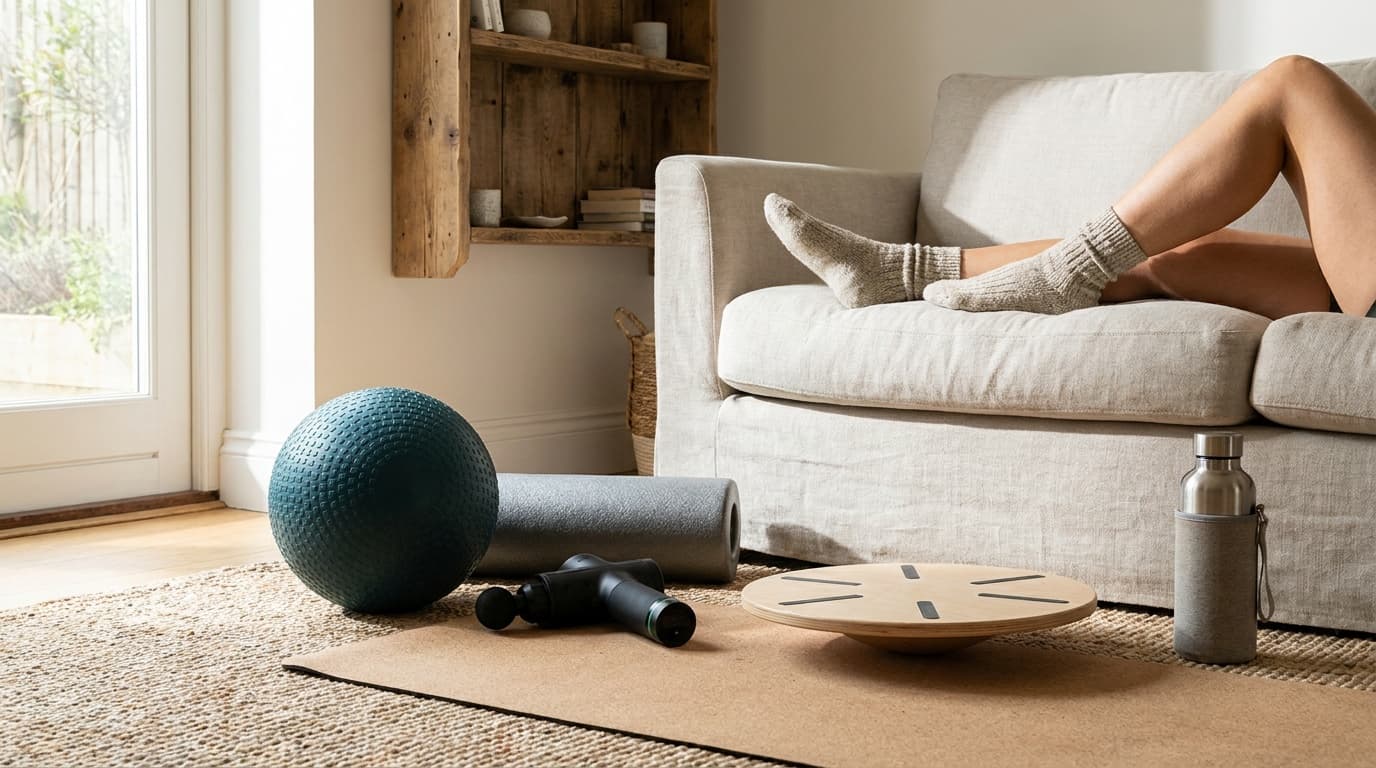
An exercise ball sits in more living rooms than it gets used in, mostly because no one shows beginners the six moves that actually build a foundation. Start here, and you will have a practical routine in under ten minutes of reading.
Choosing the right ball size and pressure
Ball diameter is matched to your height, not your weight. The rule most coaches use: sit on the ball with feet flat, and check that both hips and knees form 90-degree angles. If your hips sit lower than your knees, the ball is too small or underinflated; if your hips ride above your knees, go down a size or release some air.
Underinflated balls feel easier but actually reduce stability training stimulus. Overinflated balls become unstable and can burst under load, which is why an anti-burst rated ball like the Trideer Exercise Ball is the safer choice for loaded movements. Inflate until the ball is firm with a slight give, then recheck the seated height.
The six foundational moves
These six exercises cover the anterior core, posterior chain, hip stabilizers, and legs. Together they form a complete beginner circuit.
Ball crunch. Sit on the ball, walk your feet forward until the ball sits in the curve of your lower back. Cross your arms on your chest or place hands lightly at your temples (never pull the neck). Exhale and crunch up 30–45 degrees, then lower with control. The unstable surface recruits more oblique activity than a floor crunch because your body has to resist lateral sway.
Dead bug. Lie on the floor and hold the ball between your knees and both hands, arms extended toward the ceiling. Lower your right arm and left leg toward the floor simultaneously while keeping the ball pressed firmly between your remaining knee and hand. Return and repeat on the other side. This move teaches spinal bracing under load transfer.
Hamstring curl. Lie on your back, place both heels on top of the ball with legs straight, and lift your hips into a bridge. Keeping the hips up, bend your knees to roll the ball toward you, then extend back out. Lower hips only after the full rep. This is harder than it looks; most beginners need two to three sessions before the movement feels controlled.
Wall squat. Place the ball between your lower back and a flat wall. Walk your feet forward about 18 inches. Squat down until thighs are parallel to the floor, keeping your chest up and knees tracking over toes. The ball rolls up your back as you descend. This is one of the safest squat progressions for beginners because the ball supports spinal alignment throughout the range.
Plank with feet on ball. Start in a push-up position with your shins resting on top of the ball and hands under your shoulders. Hold a rigid plank: neutral spine, no sagging hips, no elevated backside. Begin with 15–20 second holds. The rolling surface of the ball forces constant micro-corrections from your deep stabilizers.
Back extension. Lie face-down over the ball with the ball under your hips and lower abdomen. Walk your hands out slightly and place toes on the floor for stability. Lift your chest away from the ball by contracting your erectors, hold one second at the top, and lower with control. Keep your neck neutral throughout.
The ball does not make easy exercises easier; it makes effective exercises more effective by removing the stable floor your stabilizers were hiding behind.
A simple beginner circuit
Run through these moves in order, two to three times per week with at least one rest day between sessions.
Beginner circuit (3 rounds)
Ball crunch
12–15 reps, 2 seconds up, 3 seconds down
Dead bug
8–10 reps per side, full exhale on each rep
Wall squat
10–12 reps, 3-second descent
Hamstring curl
8–10 reps, keep hips level throughout
Plank with feet on ball
3 x 15–20 second holds
Back extension
10–12 reps, 1-second pause at top
Rest 45–60 seconds between exercises in the first two weeks. As control improves, reduce rest to 30 seconds or add a fourth round rather than adding more reps.
Safety and stabilizing the ball
Falls from an exercise ball are the most common injury mechanism for beginners. Three habits eliminate most risk:
Work near a wall or sturdy furniture for the first two weeks. You are not using the wall as a crutch; you are giving yourself a catch point while your nervous system learns the surface.
Check the floor surface. Hard smooth floors and an exercise ball are a legitimate slip hazard. Use a non-slip mat under the ball whenever you are doing movements that put the ball under load at an angle (hamstring curls, back extensions).
Start every session with a 60-second seated bounce. Sit on the ball and simply bounce lightly in place. This warms up the proprioceptors in your ankles, hips, and spine that the rest of the workout will train. It also gives you immediate feedback: if the ball feels off-center or underinflated, you will notice before you are mid-rep.
Progressing beyond the basics
Once you can complete three rounds of the circuit with good form and no post-session soreness beyond mild muscle fatigue, you have two clean progressions available.
First, add instability: move the plank from shins-on-ball to feet-on-ball (toes only), or attempt the hamstring curl with a single leg. Second, add load: hold a light dumbbell (4–8 kg) during ball crunches or wall squats. Avoid combining both progressions in the same session. Change one variable at a time so you can identify what is and is not working.
Most beginners reach this point in four to six weeks. If you are still struggling with the basic circuit after eight sessions, the most likely culprits are ball size (wrong diameter or underinflated) and breath-holding (exhale on the effort on every rep).
Frequently asked questions
How long should a beginner exercise ball workout be?
Thirty minutes is a realistic target for the full three-round circuit including rest periods. In the first week, two rounds takes most beginners 18–22 minutes. Avoid extending sessions by piling on extra exercises; instead, improve density by reducing rest time as your conditioning builds.
Can I use an exercise ball every day?
The stability demands of ball training stress the same deep stabilizer muscles as heavier compound lifting. Two to three sessions per week with rest days in between gives those muscles time to adapt. Daily use is fine for very light activity like sitting on the ball as a desk chair, but running the full circuit daily will slow your progress and increase overuse risk at the ankles and hips.
<FAQ question="What is the best exercise ball size for a 5'8" person?"> At 5 feet 8 inches (173 cm), a 65 cm ball is the standard recommendation. Confirm the fit by sitting on the ball: both hips and knees should be at 90 degrees with feet flat on the floor. If the ball is new and still breaking in, add a bit more air after the first two sessions since new PVC tends to stretch slightly.
For specific picks that match your height, budget, and use case, see our guide to the best exercise balls. Browse all fitness guides or read how we research and rate gear.
Recommended gear
Our current top picks from the Best exercise balls for core training and desk sitting (2026) guide, if you are ready to buy.
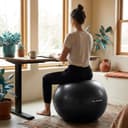
Best for: Most people who want one ball for core training, desk sitting, and occasional physio work, and want proven durability without paying premium prices.
- Anti-burst rating and slow-deflate construction are above category average for the price
- Dynamic weight capacity (330 lb) is lower than the static burst threshold (2200 lb), which limits heavy loaded exercises
- Sizes available
- 45, 55, 65, 75 cm (plus a 23 cm mini version)
- Anti-burst rating
- 2200 lb static load
- Surface
- Textured, non-slip
- Pump included
- Yes, quick-inflation pump
- Deflation type
- Slow-deflate certified (gradual, not sudden)
About this pick
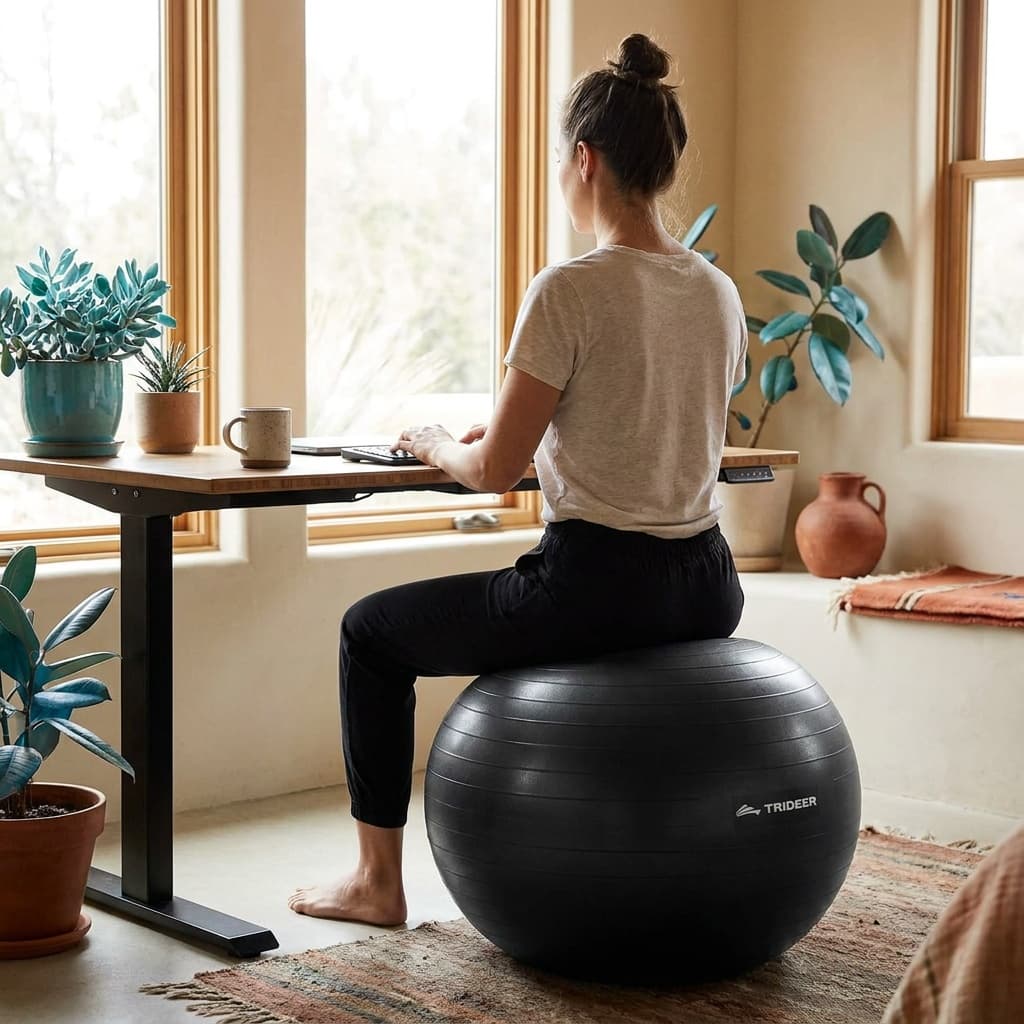
The Trideer Exercise Ball is one of Amazon's top-selling stability balls, with over 53,000 owner ratings at 4.6 stars. Built with a 2200 lb anti-burst rating, it covers the full range of uses from vigorous core work to prolonged desk sitting, and the included pump inflates most sizes in under five minutes.
Strengths
- Anti-burst rating and slow-deflate construction are above category average for the price
- Textured surface reduces sliding on smooth floors during planks and balance drills
- Five size options and a wide color range make it easy to match height and workspace needs
Weaknesses
- Dynamic weight capacity (330 lb) is lower than the static burst threshold (2200 lb), which limits heavy loaded exercises
- Some reviewers note the ball can feel slightly soft at the recommended inflation level for taller users
Kit Score breakdown
THERABAND
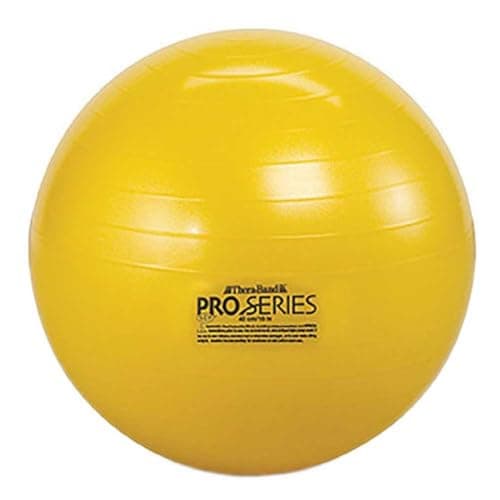
TheraBand Pro Series SCP Exercise Ball
Editor's Choice
Kit Score 8.4/10
$42.29 Price checked Oct 24, 5:42 AM CDT
Best for: Physio patients, rehab users, and serious core trainers who want a clinician-trusted, latex-free ball and are not in a hurry to inflate it.
- Non-latex, phthalate-free construction and bariatric-rated certification make it the right choice for physio, rehab, and users with latex sensitivities
- No pump included; inflating with an adapter adds time and requires a separate pump
- Sizes available
- 55, 65, 75 cm (color-coded by size)
- Weight capacity
- 600 lb (static tested)
- Surface
- Non-slip, non-latex PVC polymer
- Deflation type
- Slow Deflate Advantage: deflates gradually if punctured
- Pump included
- No; inflation adapter and two plugs included
- Certifications
- Phthalate-free, latex-free; bariatric-rated
About this pick
The TheraBand Pro Series SCP is the ball most commonly stocked by physical therapy clinics, built to a higher material specification than consumer-grade options and color-coded by size for easy identification. Its Slow Deflate Advantage is a genuine safety feature: independent testers consistently report the PVC holds firm and deflates predictably rather than popping.
Strengths
- Non-latex, phthalate-free construction and bariatric-rated certification make it the right choice for physio, rehab, and users with latex sensitivities
- Firm, taut feel that independent reviewers describe as ideal for core exercise and seated posture work
- Color coding makes size identification straightforward in multi-ball settings like a clinic or group class
Weaknesses
- No pump included; inflating with an adapter adds time and requires a separate pump
- Manufacturer recommends a 24-hour pre-inflation wait before full use, which is inconvenient compared to pump-and-go competitors
Kit Score breakdown
Best for: First-time buyers, home stretching and light core work, or desk sitting on a tight budget who want basic anti-burst safety and a pump included.
- Lower confirmed-burst rate than most competitors in the budget tier, based on aggregated owner review analysis
- Noticeably soft and squishy construction; independent tests found it measures smaller than the labeled diameter when inflated to the tape mark
- Sizes available
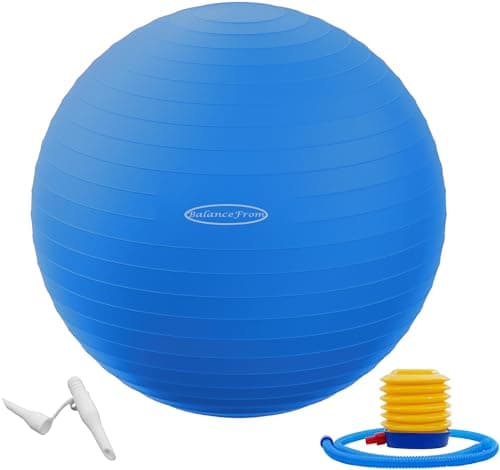
- 55, 65, 75 cm
- Anti-burst rating
- Anti-burst PVC
- Surface
- Slip-resistant texture
- Pump included
- Yes, pump included
- Material
- Anti-burst, slip-resistant PVC
About this pick
The BalanceFrom Anti-Burst Fitness Ball sets the floor for what a stability ball needs to do: it inflates with the included pump, stays inflated, and does not burst suddenly under normal use. At its price point it has fewer burst reports than many competing budget options, and BalanceFrom is a known quantity on Amazon with a long review history.
Strengths
- Lower confirmed-burst rate than most competitors in the budget tier, based on aggregated owner review analysis
- Pump included at no added cost
- BalanceFrom brand has a long track record on Amazon with consistent quality expectations at the budget level
Weaknesses
- Noticeably soft and squishy construction; independent tests found it measures smaller than the labeled diameter when inflated to the tape mark
- Thin walls mean it will not hold up to the firmness that core training on hard gym floors demands
Kit Score breakdown
See all picks in Best exercise balls for core training and desk sitting (2026)
Keep going
Researched, not hands-on tested
Updated Jun 4, 2026Our recommendations draw on manufacturer documentation, retailer listings, owner feedback, and comparisons with alternatives.
As an Amazon Associate I earn from qualifying purchases. We may earn a commission from links here, at no extra cost to you. How we research →