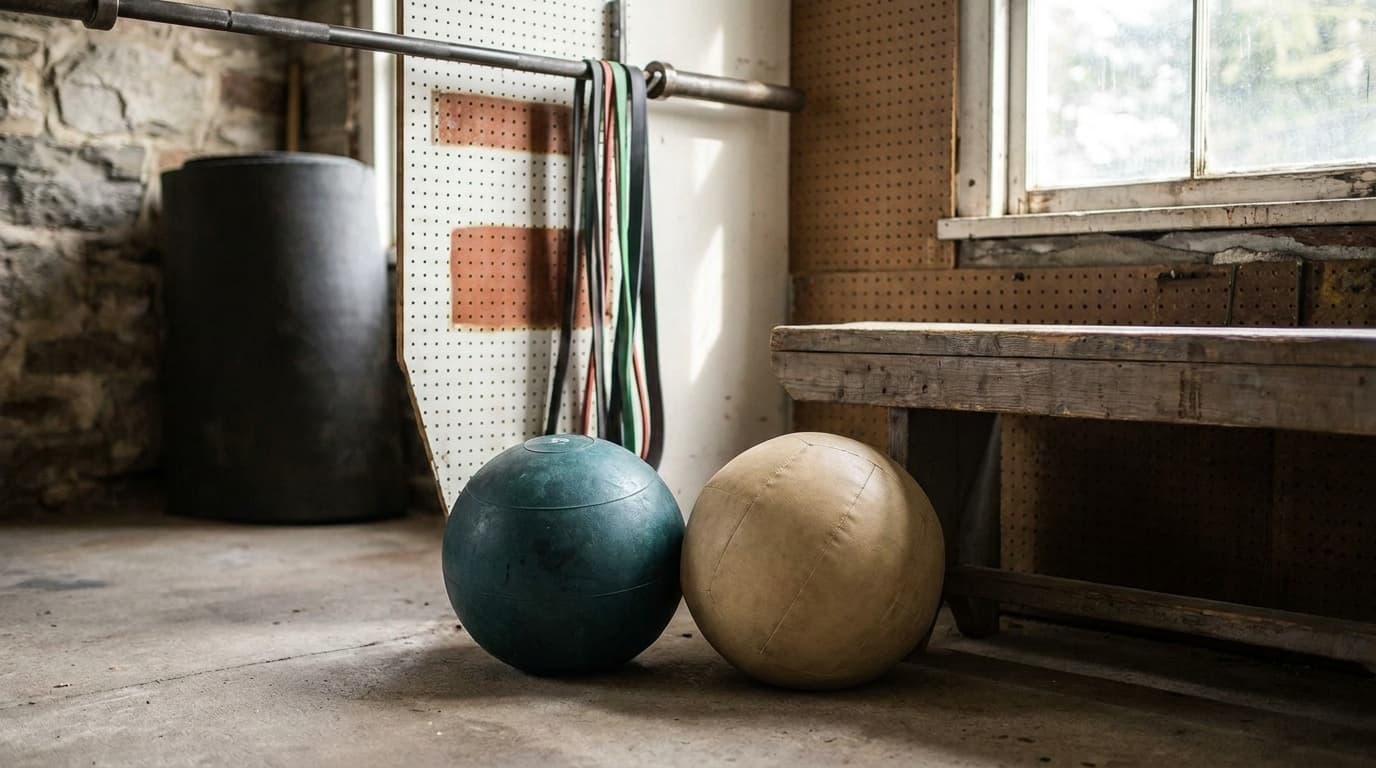
Slam balls and wall balls both look like heavy rubber spheres, but put one in the wrong situation and you will either wreck your equipment or limit your training. Knowing the difference saves you money and makes your workouts more effective.
How they are built
The construction difference explains everything else. A slam ball uses a thick, textured rubber shell packed tightly with sand or similar filler material. That density means virtually zero bounce on impact. The shell is built to take repeated violent contact with concrete, rubber flooring, and turf without cracking or splitting. Most slam balls run 9–11 inches in diameter regardless of weight, so a 20 lb and a 50 lb ball are roughly the same size.
A wall ball uses a softer outer shell, often a textured vinyl or fabric cover, with a padded interior that gives slightly on contact. The ball is noticeably larger, typically 14 inches in diameter for standard sizes, to give you a catchable surface when it comes off the wall. That size and softness let you grip and absorb the rebound quickly for high-rep cycling.
What each ball is designed to do
Slam balls exist for one primary purpose: absorbing explosive power output. Overhead slams, rotational slams, chest passes into the floor, lateral throws against a solid wall. The movement pattern is forceful and terminal. You release the ball with maximum intent, it absorbs the impact, and you pick it up and go again. Because it stays put after each slam, it trains pure power without the distraction of a rebound.
Wall balls are designed around the squat-to-press, the movement that shows up in CrossFit and functional fitness programming under that exact name. You squat, drive out of the hole, and use the momentum to press and release the ball at a target 10 or 12 feet up a wall. The ball rebounds back to you, you catch it, drop into the next squat, and repeat. The controlled bounce is a feature, not a flaw. It sets the rhythm and gives you an immediate load for the next rep.
The bounce is not a design flaw in the wall ball. It is the entire point.
Weight ranges and how to choose
Slam balls run from about 10 lb up to 100 lb or more for specialized use. Most people doing conditioning work train in the 20–40 lb range. Because slams are short and explosive, heavier loads are manageable and common.
Wall balls cover a narrower, lighter range, typically 4–30 lb, with men commonly using 20 lb and women 14 lb in standardized workouts. The overhead pressing component and the need to catch each rep cleanly means you cannot load a wall ball the same way you would a slam ball. The lighter weight also lets you accumulate higher rep counts without breaking down your mechanics.
Choosing the right ball for your goal
Power output
Pick a slam ball. High-force, no-bounce slams train the full power expression without a safety hazard.
Metabolic conditioning
Wall ball. The rebound rhythm makes high-rep cycling efficient and sustainable.
Small space, no wall
Slam ball wins. You need vertical clearance and a solid wall target for wall balls.
CrossFit benchmark workouts
Wall ball, specifically. "Karen" and similar workouts are written for a 14-inch catchable ball.
Strength + conditioning hybrid
Own one of each. They are complementary, not redundant.
Can you substitute one for the other?
Sometimes, with real caveats.
Using a wall ball for slams is risky. The softer shell is not rated for repeated violent ground contact. You will eventually split the seam or rupture the cover, and a heavy ball coming apart mid-session is a problem. If you occasionally do a light overhead toss you need to stop short of, a wall ball survives. Repeated power slams will destroy it.
Using a slam ball for wall ball movements is safer on the equipment but changes the movement. A slam ball's smaller diameter is harder to catch cleanly at the top of a squat-to-press. The lack of rebound means you are absorbing all the energy yourself at the catch, which loads your joints differently and breaks the rhythm that makes wall ball sets efficient. For skill work or low reps it is workable. For a 150-rep conditioning piece, it will feel wrong and slow.
Durability and maintenance
Slam balls are built to last under abuse. The thick rubber shell handles concrete floors, outdoor turf, and the friction of repeated pickup. Quality slam balls from well-known brands, like the REP Weighted Slam Balls, hold up for years of regular training. The main failure mode is a seam split from repeated impact, usually a sign of a low-quality shell rather than normal wear.
Wall balls wear differently. The cover sees friction from the wall surface and catching on rough hands. Higher-end models use reinforced stitching and durable vinyl or ballistic nylon. Cheaper wall balls show wear on the cover seams after a few months of daily use. Storing wall balls off concrete and out of direct UV helps the cover last longer.
Frequently asked questions
Can a slam ball be used as a medicine ball for partner exercises?
Yes, with limits. Slam balls work fine for chest passes, rotational passes, and seated toss variations where the ball stays low or goes to a partner who can absorb it. They are not ideal for overhead partner catches because the lack of bounce gives you no forgiveness on a short throw. For floor-level partner work, the dense shell is actually an advantage since it stays put on a miss.
What is the right weight to start with for slam ball training?
Most beginners do well starting at 20 lb for slams. The movement is explosive and technique matters more than load at first. You want enough weight to feel the resistance and develop power, but not so much that form breaks down. Women often start at 15–20 lb and men at 20–30 lb. Add weight when the ball feels like it leaves your hands without effort rather than when you slam it.
Do wall balls damage walls?
A standard drywall interior wall will show marks and eventually dent from repeated wall ball contact. Most people install a plywood backer, use a dedicated rig wall, or train at a gym with a reinforced target. Concrete, cinder block, and commercial gym walls handle wall ball contact without issue. If you are setting up at home, a 3/4-inch plywood panel mounted to studs is the standard solution.
For specific picks, see our guide to the best slam balls. Browse all fitness guides or read how we research and rate gear.
Recommended gear
Our current top picks from the Best slam balls for conditioning (2026) guide, if you are ready to buy.
Best for: Beginners and intermediate athletes building a conditioning base who want a proven, affordable dead-bounce slam ball delivered fast.
- True dead bounce: sand-filled core keeps the ball planted on impact, letting you focus on rep quality
- Capped at 40 lb, so advanced athletes training heavy will outgrow it
- Shell
- PVC (textured tread)
- Fill
- Sand
- Weight range
- 10–40 lb
- Grip texture
- Raised tread pattern, non-slip
- Bounce
- Dead bounce (no bounce or roll)
- Warranty
- 1 year
About this pick
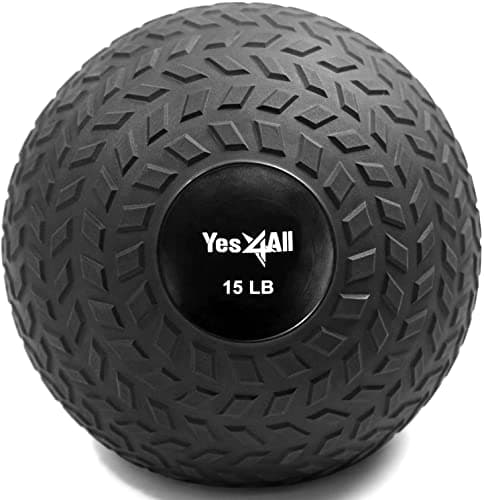
Yes4All's slam ball is one of the most widely reviewed slam balls on Amazon, with a sand-filled dead-bounce design that stays put after each slam. It ships Prime-eligible in seven weight options and covers the full beginner-to-intermediate range.
Strengths
- True dead bounce: sand-filled core keeps the ball planted on impact, letting you focus on rep quality
- Tread grip pattern holds through sweaty sessions without aggressive texture
- Prime-eligible across the full 10–40 lb range
Weaknesses
- Capped at 40 lb, so advanced athletes training heavy will outgrow it
- PVC shell is not as durable as rubber over years of daily commercial use
Kit Score breakdown
REP FITNESS
REP Weighted Slam Balls
BEST VALUE
Kit Score 8.1/10
$24.99 Price checked Oct 23, 4:16 PM CDT
Best for: Athletes who want a durable, grippy no-bounce slam ball from a reputable specialty fitness brand, available in a full weight progression.
- Confirmed in stock across the weight range, sold directly by Rep Fitness on Amazon
- 250 total ratings is a modest review count compared to some competitors
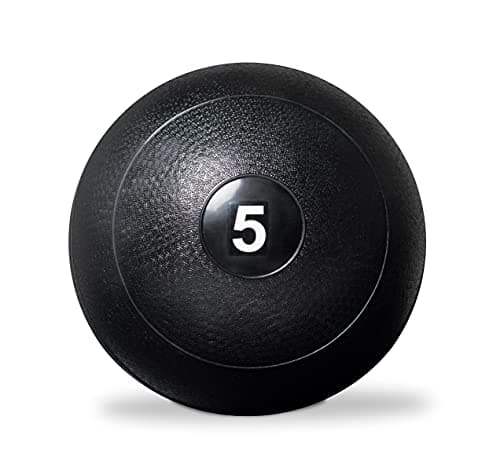
- Shell material
- Textured rubber, sand-filled
- Bounce
- Non-bounce (dead weight)
- Available weights
- 5, 10, 15, 20, 25, 30, 35, 40, 45, 50, 60, 70 lb
- Diameter (5 lb)
- 9 inches
- Amazon rating
- 4.6 out of 5 stars (250 ratings)
- Best Sellers Rank
- #18 in Strength Training Medicine Balls
About this pick
The REP Fitness slam ball pairs a rugged, textured rubber shell with a sand-filled dead-weight core that kills the bounce on every throw. The surface grip holds through sweaty hands, and the range spans 5 to 70 lb so one model covers a full spectrum from beginners to advanced athletes.
Strengths
- Confirmed in stock across the weight range, sold directly by Rep Fitness on Amazon
- Textured rubber shell provides secure grip even when wet or sweaty, per multiple buyer reviews
- Wide weight selection (5 to 70 lb) supports progressive overload without switching products
Weaknesses
- 250 total ratings is a modest review count compared to some competitors
- Price per pound is moderate, not a budget pick for heavier weights
Kit Score breakdown

TITAN FITNESS
Titan Fitness Rubber Slam Ball
EDITOR'S CHOICE
Kit Score 8.5/10
$46.99 Price checked Oct 23, 4:16 PM CDT
Best for: Intermediate to advanced athletes who need a durable, blowout-resistant slam ball they can grow into as training weight increases.
- Hard rubber shell is specifically engineered to resist blowouts, holding up under daily commercial-intensity slam sessions
- A small subset of owner reviews note slight bounce on heavier weight options rather than full dead bounce
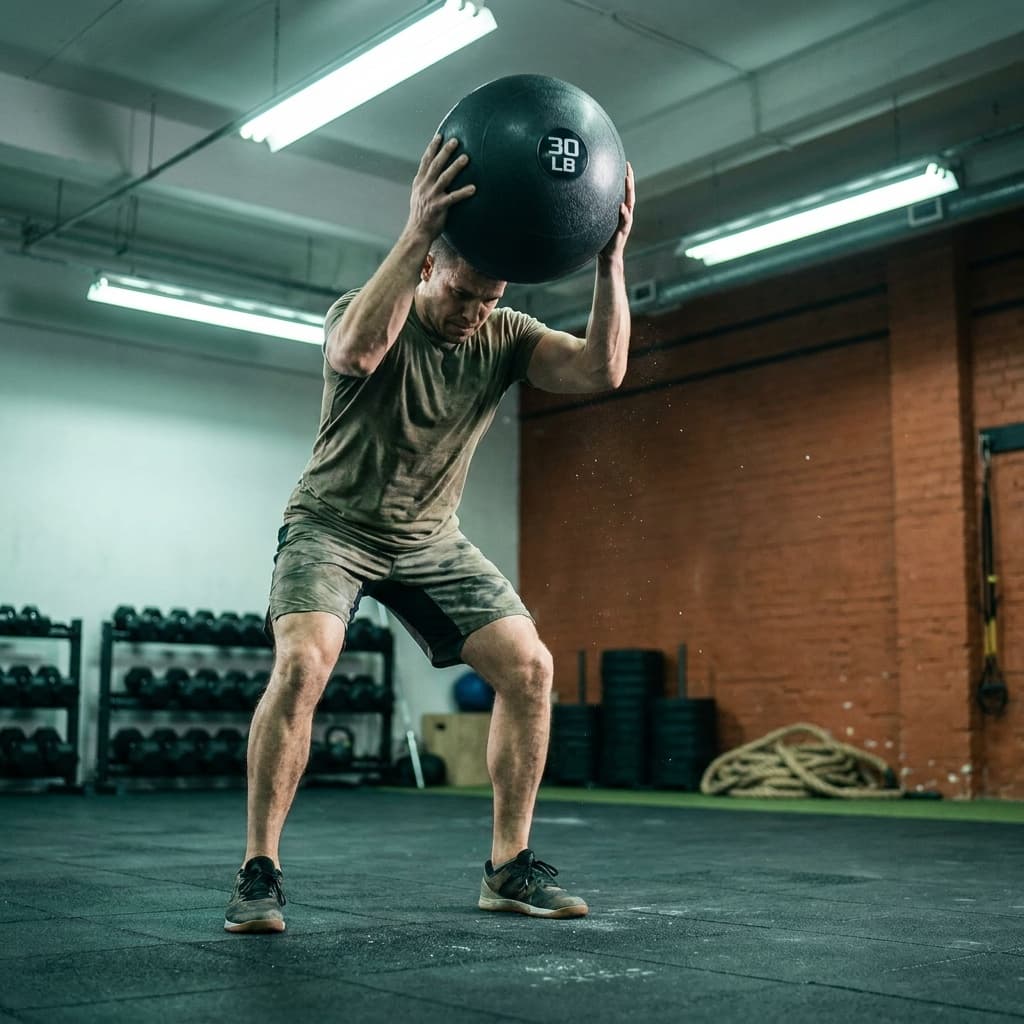
- Shell
- Heavy-duty rubber, blowout-resistant
- Fill
- Sand
- Bounce
- Minimal bounce (dead weight, absorbs impact)
- Weight range
- 10–60 lb
- Grip texture
- Textured rubber surface
- Warranty
- 1 year (Mulberry extension available)
About this pick
Titan Fitness builds this slam ball around a hard rubber shell engineered to prevent blowouts under repeated high-force slamming, with a sand-filled dead-weight core for true no-bounce performance. Available in 10 weight options from 10 to 60 lb, it covers intermediate and advanced training loads.
Strengths
- Hard rubber shell is specifically engineered to resist blowouts, holding up under daily commercial-intensity slam sessions
- Weight range extends to 60 lb, covering advanced athletes in 10 increments (10, 15, 20, 25, 35, 40, 45, 50, 55, 60 lb)
- Priced well below premium brands at equivalent weights while delivering comparable build quality
Weaknesses
- A small subset of owner reviews note slight bounce on heavier weight options rather than full dead bounce
- Rigid rubber texture can feel rough on hands compared to softer PVC alternatives
Kit Score breakdown
Keep going
Researched, not hands-on tested
Updated Jun 4, 2026Our recommendations draw on manufacturer documentation, retailer listings, owner feedback, and comparisons with alternatives.
As an Amazon Associate I earn from qualifying purchases. We may earn a commission from links here, at no extra cost to you. How we research →