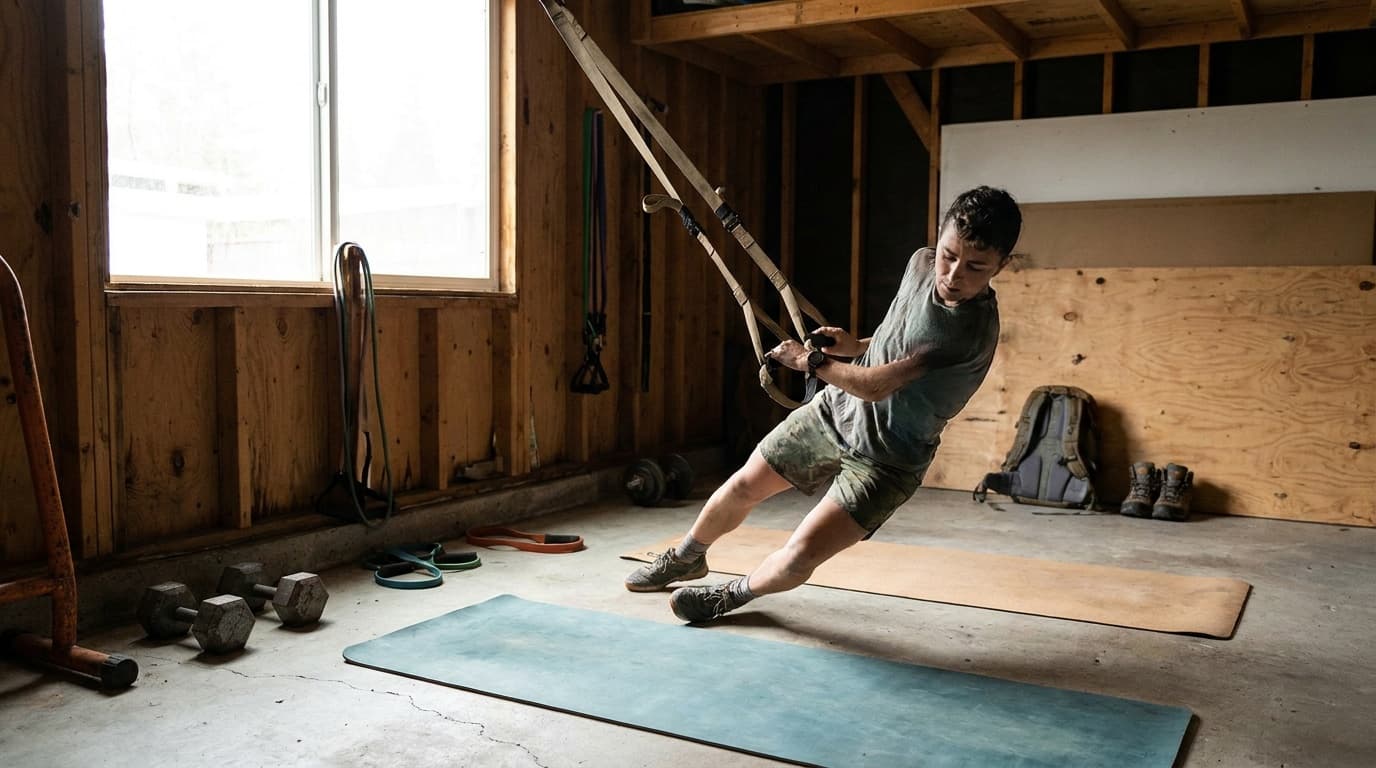
A single anchor point and your own bodyweight are all you need to train your entire body, and a suspension trainer makes both the challenge and the progression completely within your control.
How suspension trainers work
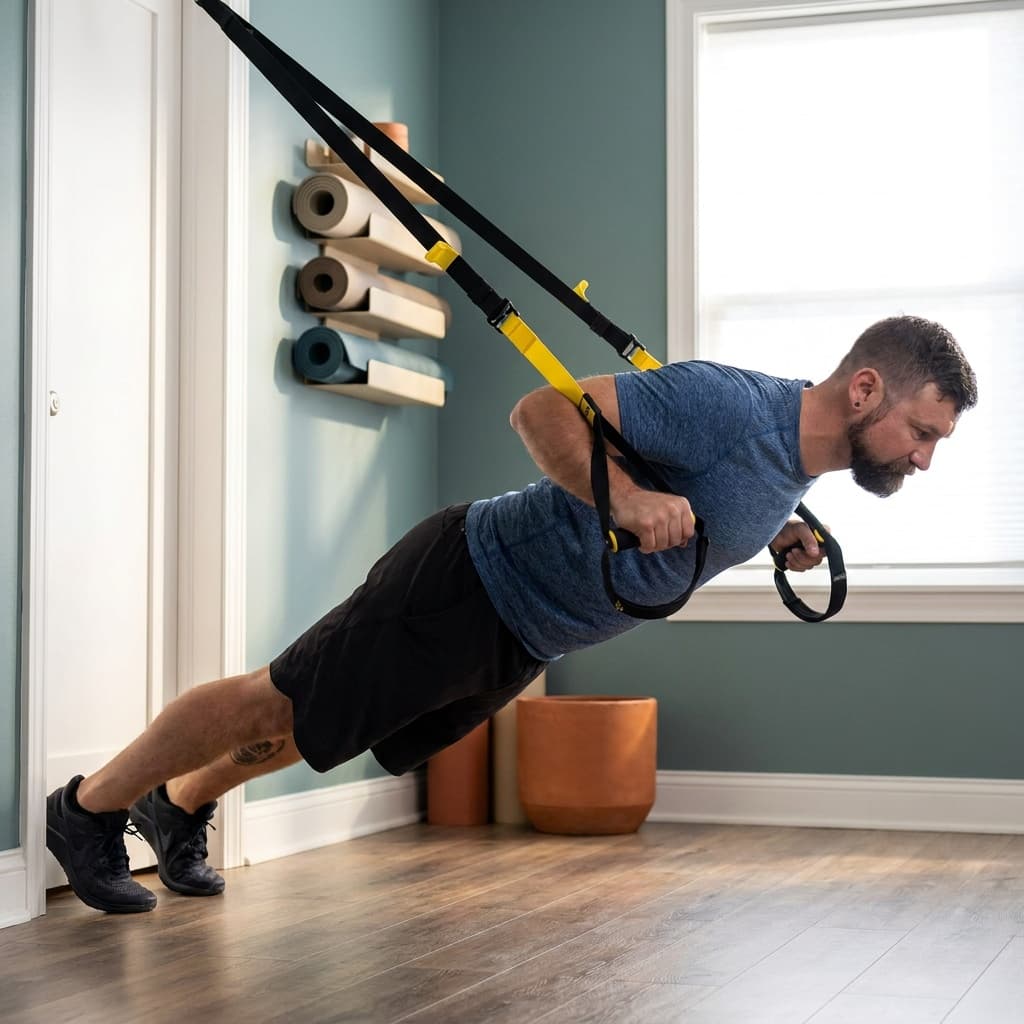
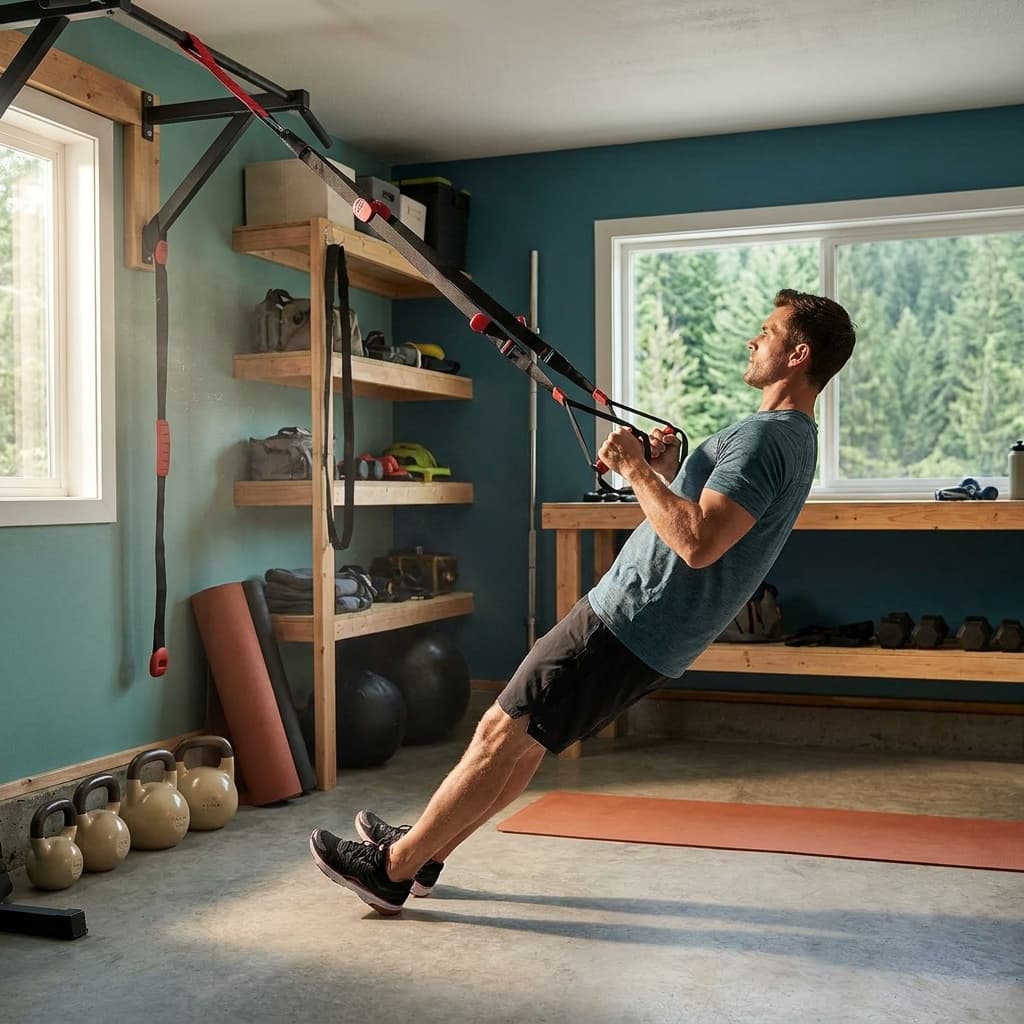
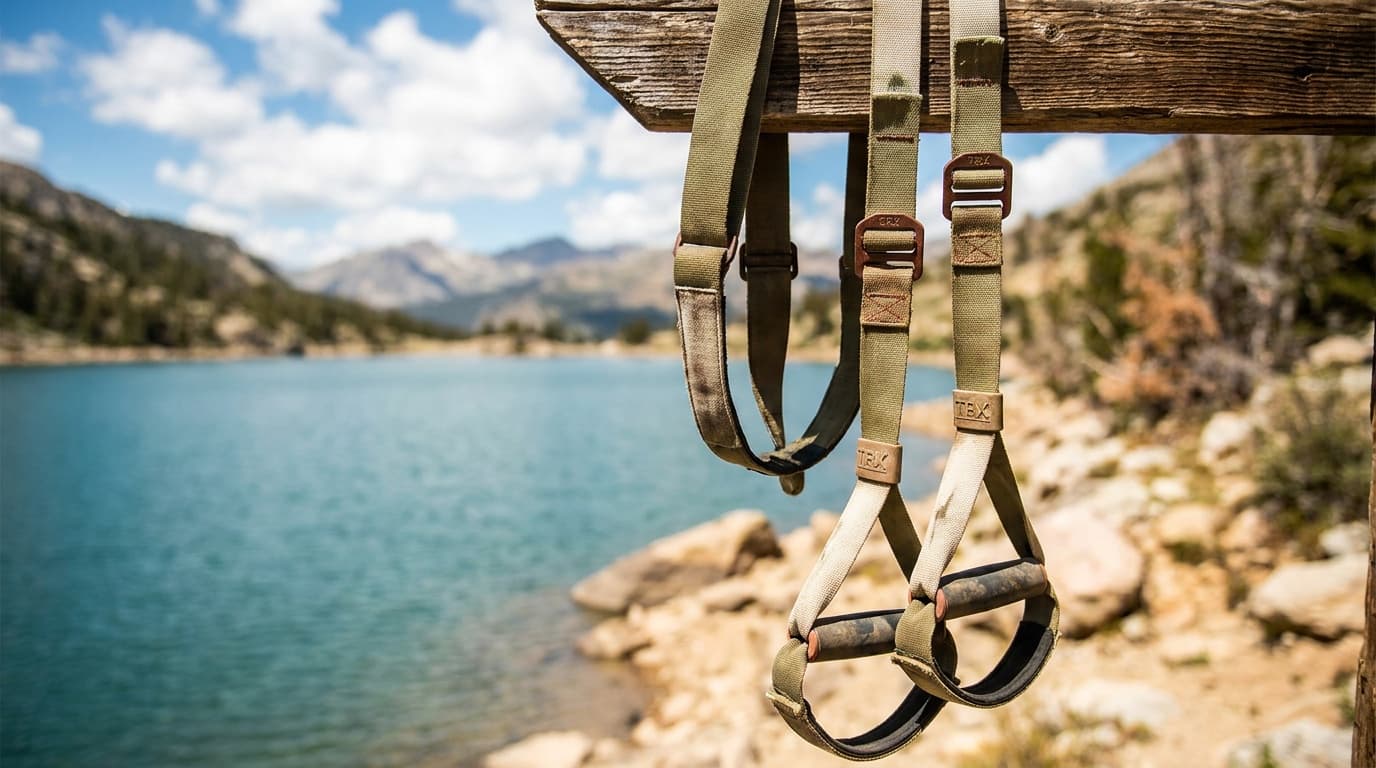
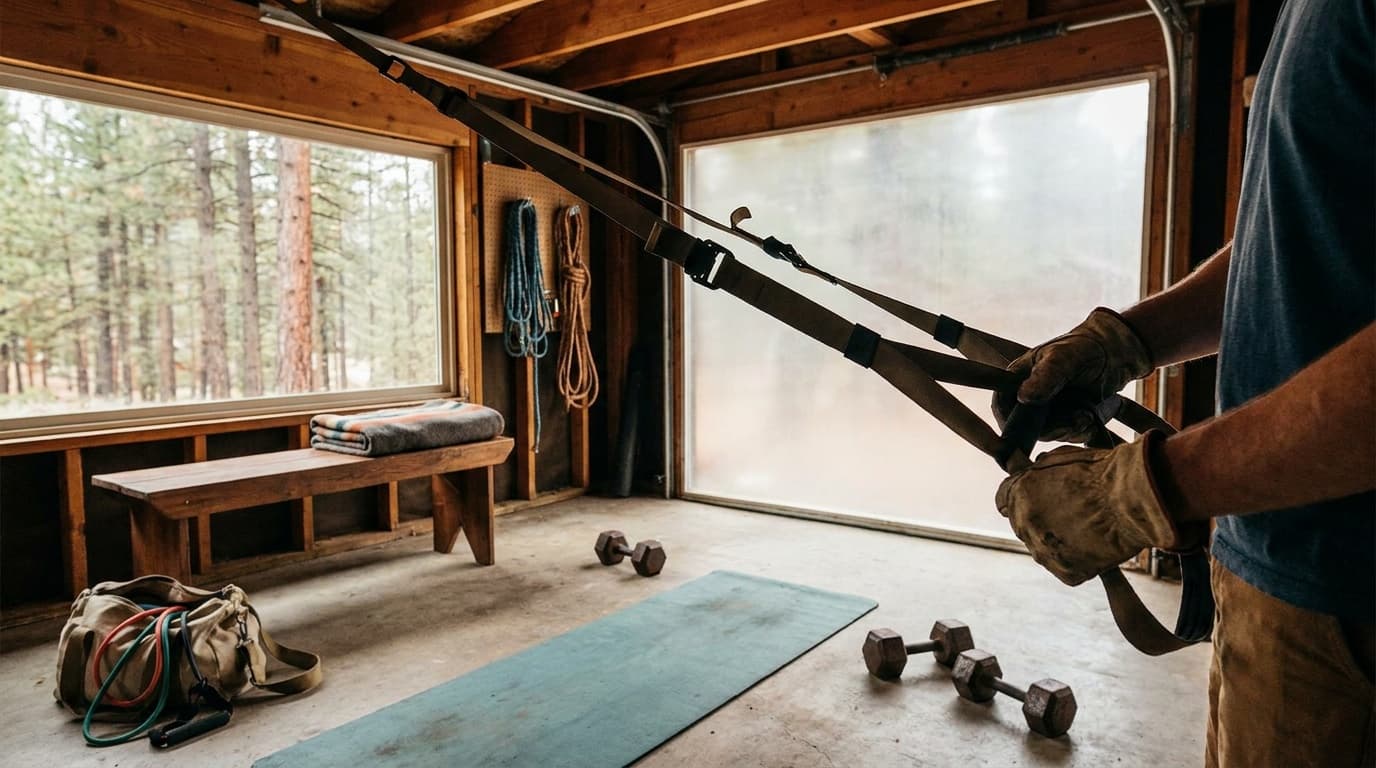
A suspension trainer (the TRX All-In-One Suspension Trainer is the best-known, but most work the same way) anchors to a fixed point above you. You hold handles or place your feet in foot cradles, then use your bodyweight as resistance. The key mechanic is simple: the more your body is angled away from vertical, the harder the exercise becomes. Walk your feet forward under the anchor, and a row gets easier. Walk them back until your body is nearly horizontal, and it becomes genuinely demanding.
This makes suspension training unusually beginner-friendly. You never need to load a barbell or swap plates. You just move your feet.
The five foundational moves
These five exercises cover every major muscle group and teach the control and stability the suspension trainer demands.
1. Suspension row. Face the anchor, hold both handles, lean back until your arms are extended. Pull your chest to your hands, leading with your elbows. Keep your body in a straight line from heels to head. This is your primary upper-back and biceps exercise.
2. Chest press. Face away from the anchor, hold both handles at chest height, lean forward. Lower your chest between your hands, then press back to the start. The further you walk your feet back, the steeper the angle and the harder the press.
3. Squat. Face the anchor, hold handles at arm's length, sit back into a squat. The straps let you keep your torso upright, which is useful while you build hip and ankle mobility. Feet roughly shoulder-width apart, knees tracking over your toes.
4. Hamstring curl. Lie on your back, place your heels in the foot cradles, hips on the floor. Drive your hips up into a bridge, then curl your heels toward your glutes. Lower with control. This targets the hamstrings through both hip extension and knee flexion, a combination most gym machines miss.
5. Suspended plank. Place your forearms or hands in the foot cradles and hold a plank position. The instability forces your core to work harder than a floor plank. Start with 20-second holds and build from there.
Adjusting difficulty: the body-angle system
Before adding reps or rounds, use angle to find the right challenge for each move.
How to scale each move
Easier
Walk your feet away from the anchor (more upright body angle, less bodyweight on the straps)
Moderate
Set up at roughly 45 degrees to the floor for pulling moves, 30–40 degrees for pressing
Harder
Walk your feet toward the anchor (more horizontal, more bodyweight loaded)
Pulling vs. pushing
For rows, feet forward = easier. For chest press, feet forward = easier.
Foot position
Single-leg variations (lift one foot) increase instability at any angle
A useful rule: if you cannot hold a rigid plank position throughout the move, your angle is too steep. Back off until your form is clean, then gradually progress over sessions.
Form breaks down at the hips first. If your hips sag or pike, your angle is wrong, not your strength.
A simple full-body beginner circuit
Do this circuit 2–3 times per week with at least one rest day between sessions. Three rounds takes roughly 25–30 minutes including rest.
For each exercise, choose an angle where you can complete 10–12 controlled reps while maintaining form. Rest 60 seconds after completing all five moves, then repeat.
- Suspension row: 10–12 reps
- Squat: 10–12 reps
- Chest press: 10–12 reps
- Hamstring curl: 8–10 reps (this is harder than it looks)
- Suspended plank: 20–30 second hold
After two weeks at 3 rounds with clean form, you have two progression options: steepen the angle on your weakest moves, or add a fourth round.
Form cues and breathing
The most common errors in suspension training are letting the hips drop out of alignment and holding tension in the shoulders and neck. Both stem from the same cause: the instability overwhelms your core before your limbs fatigue.
For every move, brace your core before you start moving. Think about pulling your ribcage down toward your hips. That single cue fixes most alignment issues.
On breathing: exhale on the exertion phase (the pull in a row, the press away in a chest press, the curl in a hamstring curl). Inhale on the return. This is the standard strength-training breathing pattern and it applies here without modification.
Keep your wrists neutral (not bent back) in the handles. If the straps rotate during a move, you are not engaging the stabilisers that are supposed to be working. Slow down.
Frequently asked questions
How long should I train before adding more complex moves?
Most beginners benefit from 4–6 weeks on the five foundational moves before introducing single-arm rows, pike presses, or Bulgarian split squats. The goal in the first month is building the core stability and body-position awareness that makes harder moves safe and effective, not just accumulating exercise variety.
Can I use a suspension trainer if I have no gym equipment at all?
Yes. A door anchor (usually included or available separately) handles most home setups; budget trainers like the NOSSK TNT Pro are built around one. The door needs to open away from you when you are using it, and the door frame needs to be solid. Outdoor options include a pull-up bar, a sturdy tree branch, or a playground structure. Avoid any anchor point you cannot verify can hold at least twice your bodyweight.
How do I know if the difficulty is right for me?
You should reach mild fatigue by the last 2–3 reps of a set without losing your plank position. If you can do 15 reps easily with perfect form, steepen the angle. If you cannot complete 8 reps without your hips dropping, back off the angle. The right difficulty keeps your technique intact through the final rep.
For specific picks, see our guide to the best suspension trainers. Browse all fitness guides or read how we research and rate gear.
Recommended gear
Our current top picks from the Best suspension trainers for home and travel workouts guide, if you are ready to buy.
TRX
TRX All-In-One Suspension Training System
Best Overall
Kit Score 8.8/10
$189.95 Price checked Oct 23, 6:22 AM CDT
Best for: Anyone who wants a proven, all-environment system that works straight out of the box without extra anchors or accessories.
- Highest owner confidence in the category (4.7 stars across nearly 7,000 reviews) with consistent praise for strap durability and buckle reliability
- Single-strap (Y-shaped) design limits independent arm movement, which some experienced users prefer for unilateral exercises
- Weight capacity
- 700 lbs
- System weight
- 1.7 lbs
- Anchor options
- Door anchor + outdoor suspension anchor (both included)
- Handle material
- Thermoplastic rubber over hard plastic
- Strap material
- Nylon webbing with steel hardware
- Warranty
- 2 years
About this pick
The TRX All-In-One is the benchmark suspension trainer: a single-strap system with both door and outdoor anchors included, 700 lb rated construction, and access to TRX on-demand workouts through the TRX app (30-day free trial included). It sets up in under 60 seconds and works equally well looped over a door, beam, or tree branch.
Strengths
- Highest owner confidence in the category (4.7 stars across nearly 7,000 reviews) with consistent praise for strap durability and buckle reliability
- Both indoor door anchor and outdoor suspension anchor included in the box, so there is no separate purchase needed for travel or backyard use
- 700 lb rated construction and 2-year warranty give long-term peace of mind at a mid-range price
Weaknesses
- Single-strap (Y-shaped) design limits independent arm movement, which some experienced users prefer for unilateral exercises
- TRX app subscription required to unlock the full workout library after the included 30-day free trial
Kit Score breakdown
LIFELINE
Lifeline Jungle Gym XT Suspension Trainer
Editor's Choice
Kit Score 8.8/10
$81.99 Price checked Oct 23, 6:22 AM CDT
Best for: Intermediate and advanced trainees who want independent strap movement for unilateral pressing, chest flies, and asymmetric lower-body work.
- Split-anchor design allows independent arm and leg movement, enabling narrow, neutral, and wide grip variations for up to three times the exercise range of single-anchor systems
- Larger packed footprint than single-strap systems, so it takes up more bag space when traveling
- Strap configuration
- Split anchor (two independent straps)
- Strap length
- 8 ft per strap
- Anchor options
- Two non-scuff door anchors (included) plus Duro-Link for overhead bars
- Foot cradles
- Molded Easy-In foot cradles (shape-retaining)
- Adjustment
- Inline cam buckles with measurement markings
- Weight
- 2.9 lbs packed
About this pick
The Jungle Gym XT uses a patented split-anchor design that lets each arm move independently, opening up unilateral pressing, rowing, and chest-fly variations that a fixed Y-strap cannot replicate. Molded foot cradles retain shape under load, and two door anchors are included so you can anchor to a door frame or swing the system over a pull-up bar or beam without additional hardware.
Strengths
- Split-anchor design allows independent arm and leg movement, enabling narrow, neutral, and wide grip variations for up to three times the exercise range of single-anchor systems
- Shape-retaining molded foot cradles stay in position during lower-body and core work, reducing fumbling mid-set
- Industrial-strength webbing rated for commercial gym use with inline buckles and measurement markings for rapid, repeatable adjustments
Weaknesses
- Larger packed footprint than single-strap systems, so it takes up more bag space when traveling
- No training app or guided workout program included in the box
Kit Score breakdown
NOSSK
NOSSK TNT Pro Suspension Fitness Trainer
Best Budget
Kit Score 8.7/10
$65.95 Price checked Oct 23, 6:22 AM CDT
Best for: Budget-focused buyers and travelers who want solid military-grade construction for full-body suspension training without paying for a brand name.
- First-grade US military webbing (1,500 lb rated) and latex-free rubber grips deliver durability that owners consistently describe as equivalent to trainers costing two to three times the price
- Metal Fit-Link connector introduces deliberate instability to increase core demand, which can be disorienting for beginners still learning movement patterns
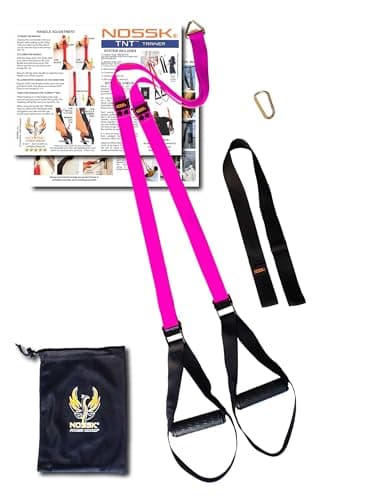
- Weight capacity
- 400 lbs
- Strap length
- 9.5 ft total
- Strap width
- 1.5 in (US military-grade webbing, 1,500 lb rated)
- Anchor options
- 3 ft anchor strap with built-in door anchor (included)
- Handles
- Lay-flat webbing design with latex-free rubber grips
- Foot loops
- Integrated soft non-marring foot loops
About this pick
The NOSSK TNT Pro is made in the USA from first-grade military webbing rated to 1,500 lbs and comes with a built-in door anchor and metal Fit-Link connector. At around $55, it covers every foundational suspension training movement, including push, pull, row, squat, and core work, without the premium brand markup.
Strengths
- First-grade US military webbing (1,500 lb rated) and latex-free rubber grips deliver durability that owners consistently describe as equivalent to trainers costing two to three times the price
- Lay-flat handle design prevents the strap from digging into wrists during rows and curls, a comfort advantage over rounded-handle competitors
- Compact single-strap system with integrated anchor packs into a small drawstring bag, making it one of the lightest options for travel use
Weaknesses
- Metal Fit-Link connector introduces deliberate instability to increase core demand, which can be disorienting for beginners still learning movement patterns
- Only one anchor strap in the box; no outdoor suspension anchor included for tree or beam mounting without an additional purchase
Kit Score breakdown
See all picks in Best suspension trainers for home and travel workouts
Keep going
Researched, not hands-on tested
Updated Jun 4, 2026Our recommendations draw on manufacturer documentation, retailer listings, owner feedback, and comparisons with alternatives.
As an Amazon Associate I earn from qualifying purchases. We may earn a commission from links here, at no extra cost to you. How we research →