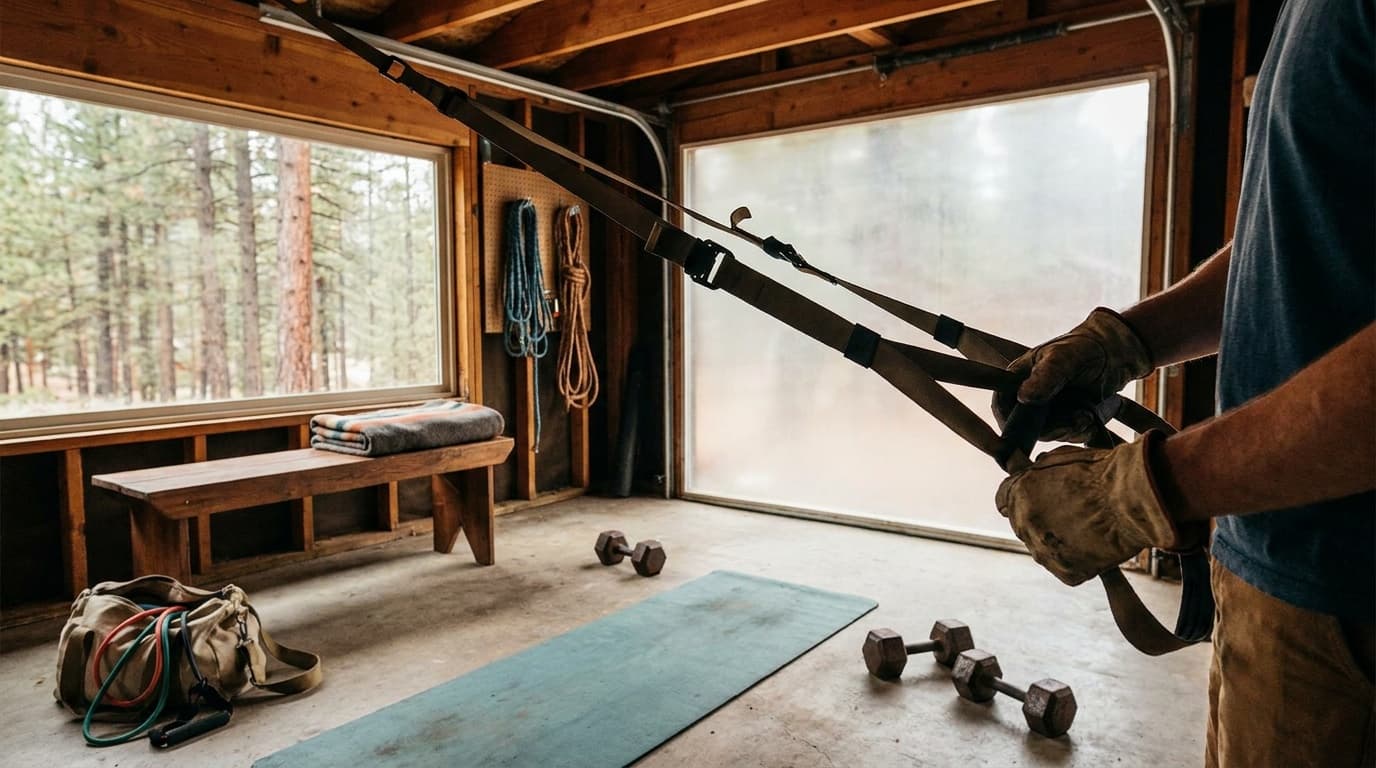
Getting your suspension trainer anchored correctly takes five minutes and matters more than any exercise you'll do on it.
Understanding the anchor options
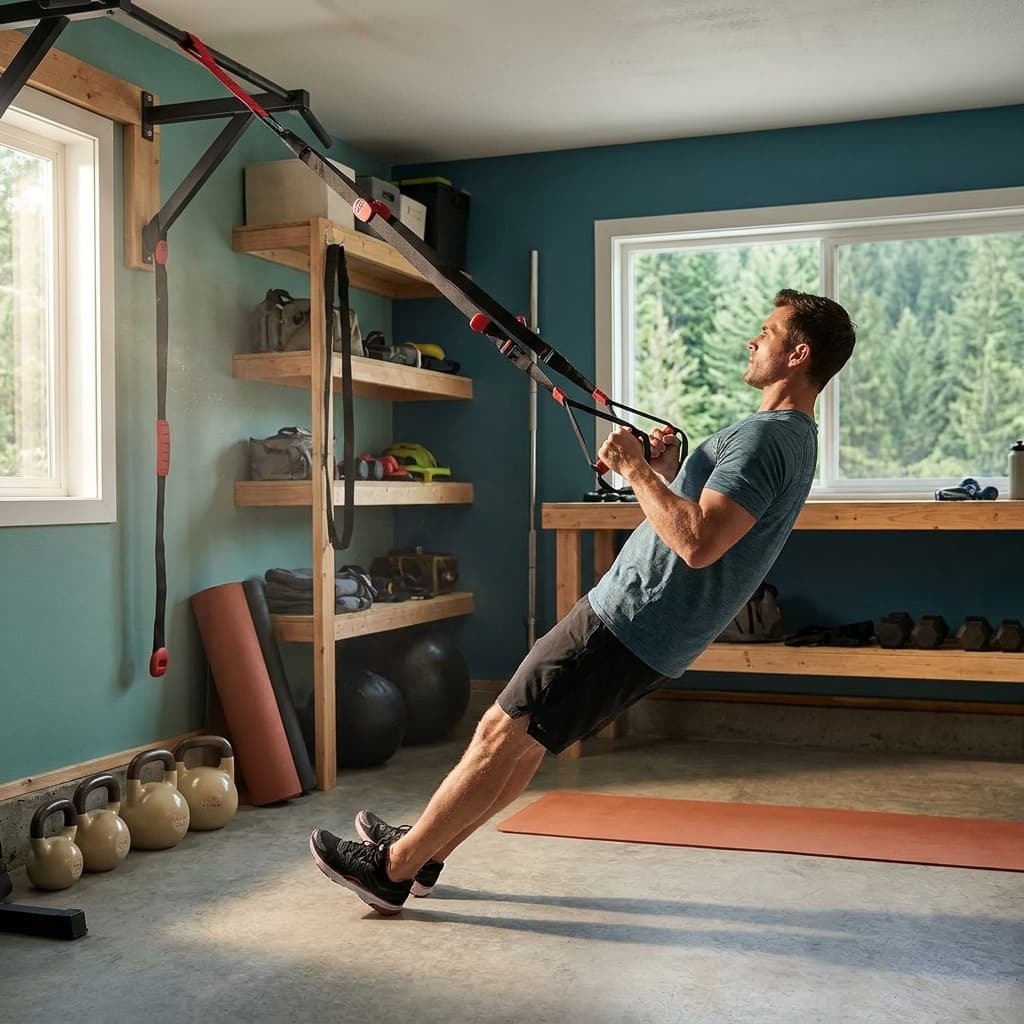
Suspension trainers like the TRX All-In-One Suspension Training System are rated to hold several hundred pounds of dynamic load, but that rating only holds when the anchor point itself is sound. You have four practical setups.
Door anchor (top of door, hinge side). The included door anchor (standard with trainers like the Lifeline Jungle Gym XT) loops over the top edge of the door and the door closes on it, pinching it between door and frame. Key rule: the door must open away from you while you train, so your bodyweight pulls the anchor tighter rather than pulling the door open. Use the hinge side rather than the latch side because the hinge side of the frame is structurally continuous with the wall. A hollow-core interior door will hold most bodyweight rows and presses. For heavy inverted rows or pike pushups at steep angles, move to a sturdier anchor.
Beam, joist, or squat rack. Threading the trainer over an exposed beam or through a rack attachment gives you a fixed, load-rated structure. Most residential lumber joists are graded to 40 lbs per square foot of live load. A single TRX loop concentrates force, but dynamic bodyweight is well within range for a healthy joist. Use a carabiner-and-strap kit or the trainer's integrated loop rather than knotting the strap directly around rough wood.
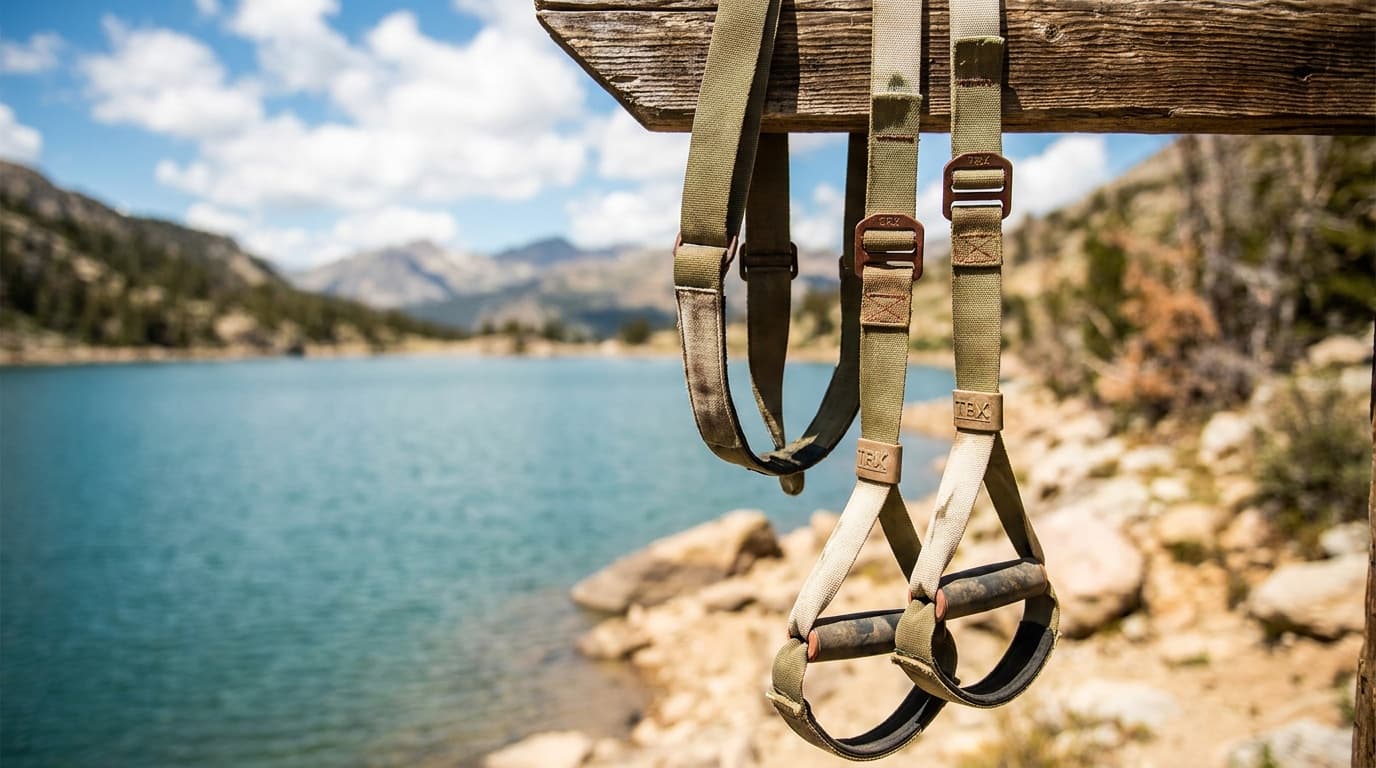
Tree strap. Outdoor training is where suspension trainers earn their reputation for portability. A tree anchor strap (wide nylon, usually 1.5–2 inches) protects bark and distributes force. Choose a live hardwood limb at least 6 inches thick at the point of attachment; avoid dead, cracked, or softwood branches. Attach 7–9 feet off the ground for standard strap length.
Wall mount. A dedicated wall mount bracket bolted into studs gives you a clean, permanent setup with zero door-clearance concerns. Follow the manufacturer's stud-spacing requirement (typically 16 inches on center for US framing) and use the supplied hardware.
Strap length setup
Correct strap length changes with each exercise. Most trainers use a numbered or color-coded adjustment system.
Setting strap length by exercise type
Tall / fully lengthened
rows, face pulls, chest press at shallow angles
Mid-length
squats, lunges, bicep curls, tricep press
Single handle (handles stacked)
pikes, atomic pushups, hamstring curls
Shortened and anchored high
inverted rows with heels on floor
Foot cradles out
suspended planks, fallouts, mountain climbers
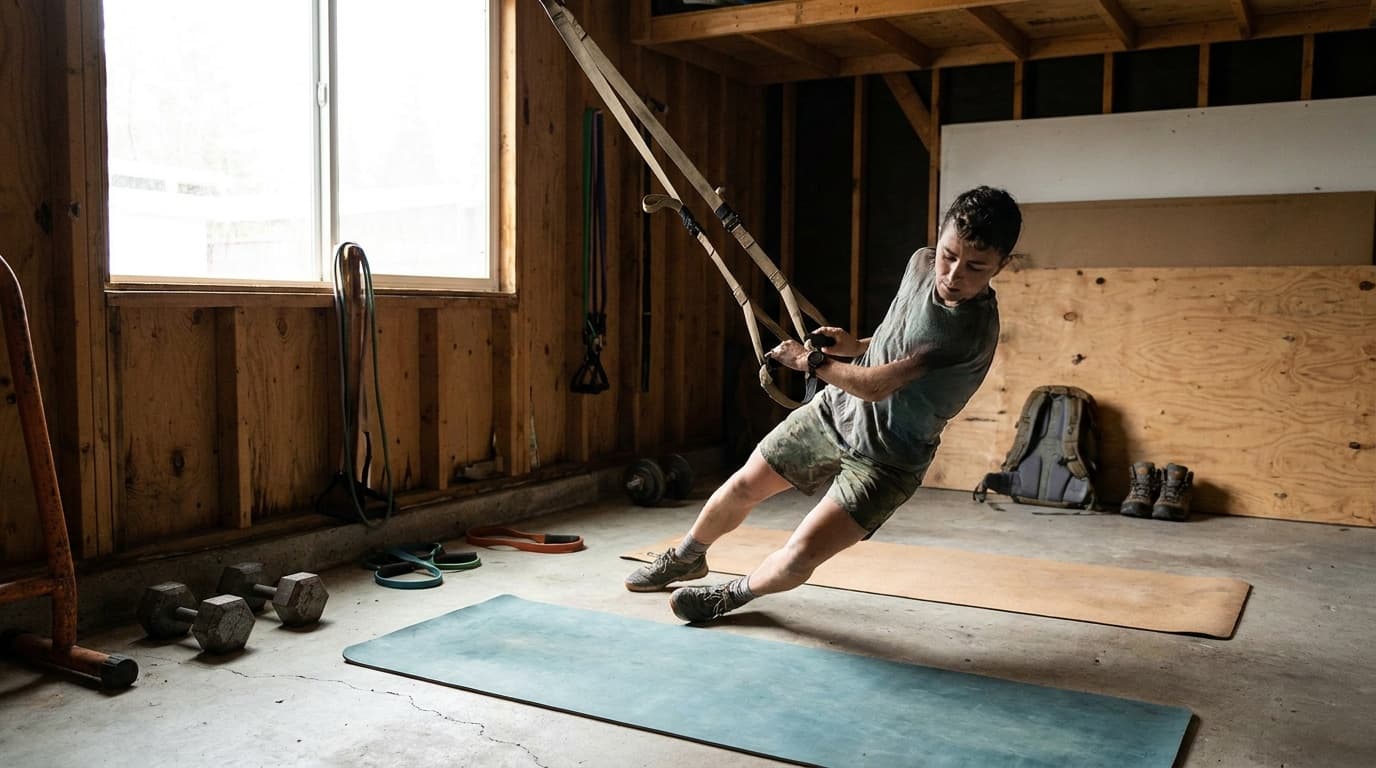
A consistent starting point: for most pressing and pulling movements, adjust so the handles hang at hip height when you stand under the anchor. From there, step forward or back to change difficulty rather than re-adjusting length mid-workout.
Checking the anchor before every session
Before loading any anchor fully, run through a quick check.
- Visually inspect the strap, carabiner, and anchor hardware for fraying, cracking, or corrosion.
- Pull the strap by hand with moderate force. It should not slip, slide, or shift the door anchor position.
- Perform a jump-test: hold the handles, lean back to 45 degrees, and give two short sharp pulls. No movement, no creak from the door frame, no flex in a wall mount means you're clear.
- Check foot position. Your feet should be on a clean, non-slip surface. Suspension training loads are asymmetric; a slip underfoot is a more common injury cause than anchor failure.
The anchor check takes thirty seconds and it's the habit that keeps a ten-dollar piece of nylon from turning into an emergency room visit.
Indoor vs outdoor vs travel: choosing by context
Indoor home gyms: a permanent beam mount or squat rack attachment is worth the one-time setup. You never fumble with a door anchor mid-session, and you can anchor at any height.
Apartments and rentals: the door anchor is the right tool. Use it on an interior door that opens away from your training space. If your apartment has only hollow-core doors throughout, limit exercises to mid-range bodyweight rows and presses rather than advanced inverted or plyometric movements.
Outdoor parks and backyards: a tree strap extension (usually sold separately, 6–12 feet) lets you reach a solid branch and still have full strap travel. Carry a backup carabiner. Wet bark is slippery; move the strap loop a few inches if you feel any slip during setup.
Travel: the door anchor and the trainer's main strap fit in a small bag. Most hotel doors open away from the room and have solid-core construction. Test first, same as always.
Frequently asked questions
Can I use a suspension trainer on a hollow-core door?
Yes for most exercises, with some limits. Hollow-core doors distribute load through the outer face and the top rail. Bodyweight rows, chest presses, and squats are within range. For steep inverted rows or any movement where you're nearly horizontal, the concentrated pull at the top of the door can stress the rail. If you hear creaking or feel the door flex, move to a sturdier anchor.
How high should I anchor a suspension trainer?
Seven to nine feet is the standard range for full strap travel and most exercise variations. At 7 feet you can perform pikes and atomic pushups with feet in the cradles without the handles dragging the floor. Above 9 feet you lose adjustability for shorter users. For a permanent install, 8 feet is a practical middle ground.
Is it safe to anchor a suspension trainer to a tree branch outdoors?
Yes, when the branch meets minimum criteria: live hardwood, at least 6 inches diameter at the point of attachment, no visible cracks or decay, and you use a wide tree-protection strap rather than the suspension strap directly around the bark. Softwood species like pine are less predictable under dynamic load. When in doubt, choose a thicker branch or a different anchor.
For specific picks on which trainers come with the best included anchor hardware, see our guide to the best suspension trainers. Browse all fitness guides or read how we research and rate gear.
Recommended gear
Our current top picks from the Best suspension trainers for home and travel workouts guide, if you are ready to buy.
TRX
TRX All-In-One Suspension Training System
Best Overall
Kit Score 8.8/10
$189.95 Price checked Oct 24, 5:42 AM CDT
Best for: Anyone who wants a proven, all-environment system that works straight out of the box without extra anchors or accessories.
- Highest owner confidence in the category (4.7 stars across nearly 7,000 reviews) with consistent praise for strap durability and buckle reliability
- Single-strap (Y-shaped) design limits independent arm movement, which some experienced users prefer for unilateral exercises
- Weight capacity
- 700 lbs
- System weight
- 1.7 lbs
- Anchor options
- Door anchor + outdoor suspension anchor (both included)
- Handle material
- Thermoplastic rubber over hard plastic
- Strap material
- Nylon webbing with steel hardware
- Warranty
- 2 years
About this pick
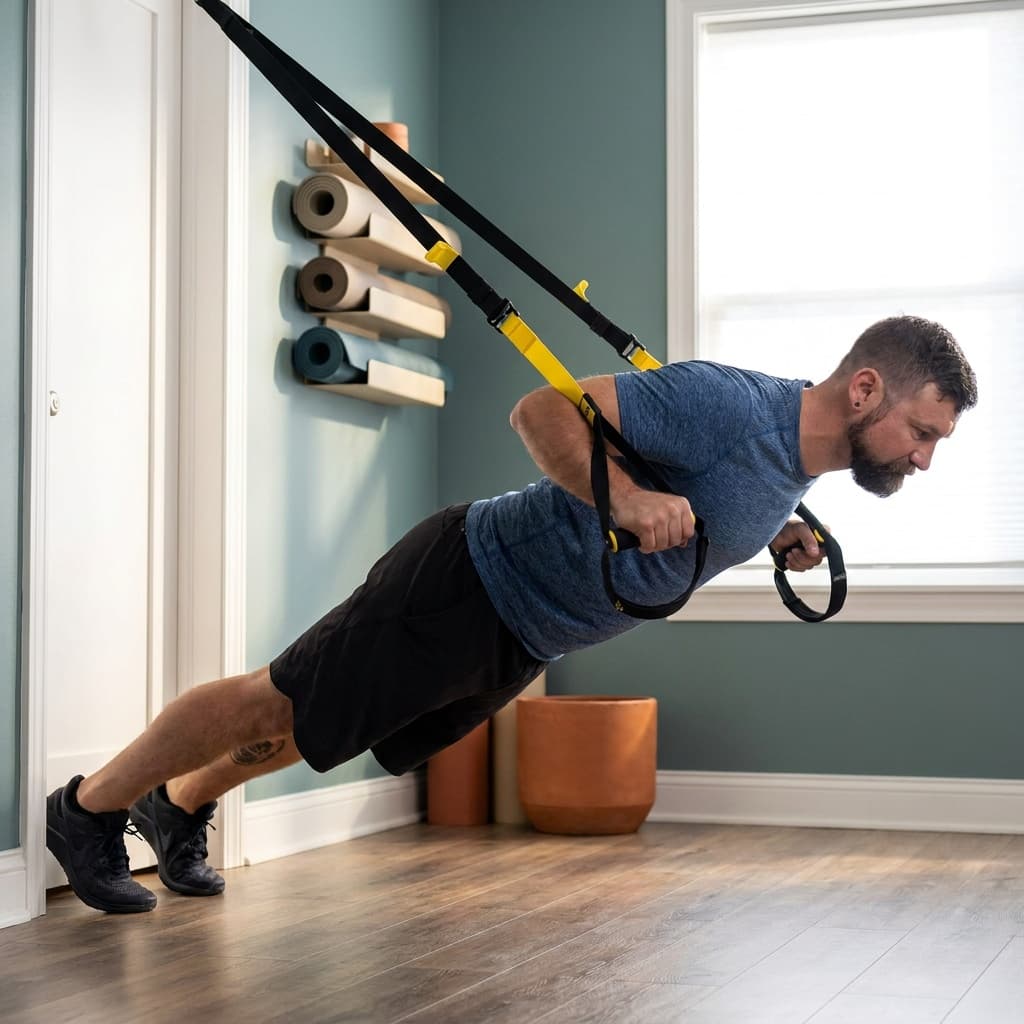
The TRX All-In-One is the benchmark suspension trainer: a single-strap system with both door and outdoor anchors included, 700 lb rated construction, and access to TRX on-demand workouts through the TRX app (30-day free trial included). It sets up in under 60 seconds and works equally well looped over a door, beam, or tree branch.
Strengths
- Highest owner confidence in the category (4.7 stars across nearly 7,000 reviews) with consistent praise for strap durability and buckle reliability
- Both indoor door anchor and outdoor suspension anchor included in the box, so there is no separate purchase needed for travel or backyard use
- 700 lb rated construction and 2-year warranty give long-term peace of mind at a mid-range price
Weaknesses
- Single-strap (Y-shaped) design limits independent arm movement, which some experienced users prefer for unilateral exercises
- TRX app subscription required to unlock the full workout library after the included 30-day free trial
Kit Score breakdown
LIFELINE
Lifeline Jungle Gym XT Suspension Trainer
Editor's Choice
Kit Score 8.8/10
$81.99 Price checked Oct 24, 5:42 AM CDT
Best for: Intermediate and advanced trainees who want independent strap movement for unilateral pressing, chest flies, and asymmetric lower-body work.
- Split-anchor design allows independent arm and leg movement, enabling narrow, neutral, and wide grip variations for up to three times the exercise range of single-anchor systems
- Larger packed footprint than single-strap systems, so it takes up more bag space when traveling
- Strap configuration
- Split anchor (two independent straps)
- Strap length
- 8 ft per strap
- Anchor options
- Two non-scuff door anchors (included) plus Duro-Link for overhead bars
- Foot cradles
- Molded Easy-In foot cradles (shape-retaining)
- Adjustment
- Inline cam buckles with measurement markings
- Weight
- 2.9 lbs packed
About this pick
The Jungle Gym XT uses a patented split-anchor design that lets each arm move independently, opening up unilateral pressing, rowing, and chest-fly variations that a fixed Y-strap cannot replicate. Molded foot cradles retain shape under load, and two door anchors are included so you can anchor to a door frame or swing the system over a pull-up bar or beam without additional hardware.
Strengths
- Split-anchor design allows independent arm and leg movement, enabling narrow, neutral, and wide grip variations for up to three times the exercise range of single-anchor systems
- Shape-retaining molded foot cradles stay in position during lower-body and core work, reducing fumbling mid-set
- Industrial-strength webbing rated for commercial gym use with inline buckles and measurement markings for rapid, repeatable adjustments
Weaknesses
- Larger packed footprint than single-strap systems, so it takes up more bag space when traveling
- No training app or guided workout program included in the box
Kit Score breakdown
NOSSK
NOSSK TNT Pro Suspension Fitness Trainer
Best Budget
Kit Score 8.7/10
$65.95 Price checked Oct 24, 5:42 AM CDT
Best for: Budget-focused buyers and travelers who want solid military-grade construction for full-body suspension training without paying for a brand name.
- First-grade US military webbing (1,500 lb rated) and latex-free rubber grips deliver durability that owners consistently describe as equivalent to trainers costing two to three times the price
- Metal Fit-Link connector introduces deliberate instability to increase core demand, which can be disorienting for beginners still learning movement patterns
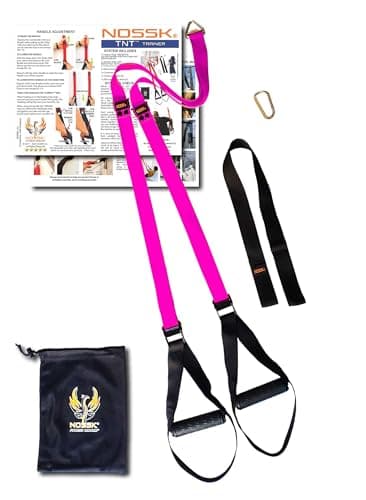
- Weight capacity
- 400 lbs
- Strap length
- 9.5 ft total
- Strap width
- 1.5 in (US military-grade webbing, 1,500 lb rated)
- Anchor options
- 3 ft anchor strap with built-in door anchor (included)
- Handles
- Lay-flat webbing design with latex-free rubber grips
- Foot loops
- Integrated soft non-marring foot loops
About this pick
The NOSSK TNT Pro is made in the USA from first-grade military webbing rated to 1,500 lbs and comes with a built-in door anchor and metal Fit-Link connector. At around $55, it covers every foundational suspension training movement, including push, pull, row, squat, and core work, without the premium brand markup.
Strengths
- First-grade US military webbing (1,500 lb rated) and latex-free rubber grips deliver durability that owners consistently describe as equivalent to trainers costing two to three times the price
- Lay-flat handle design prevents the strap from digging into wrists during rows and curls, a comfort advantage over rounded-handle competitors
- Compact single-strap system with integrated anchor packs into a small drawstring bag, making it one of the lightest options for travel use
Weaknesses
- Metal Fit-Link connector introduces deliberate instability to increase core demand, which can be disorienting for beginners still learning movement patterns
- Only one anchor strap in the box; no outdoor suspension anchor included for tree or beam mounting without an additional purchase
Kit Score breakdown
See all picks in Best suspension trainers for home and travel workouts
Keep going
Researched, not hands-on tested
Updated Jun 4, 2026Our recommendations draw on manufacturer documentation, retailer listings, owner feedback, and comparisons with alternatives.
As an Amazon Associate I earn from qualifying purchases. We may earn a commission from links here, at no extra cost to you. How we research →