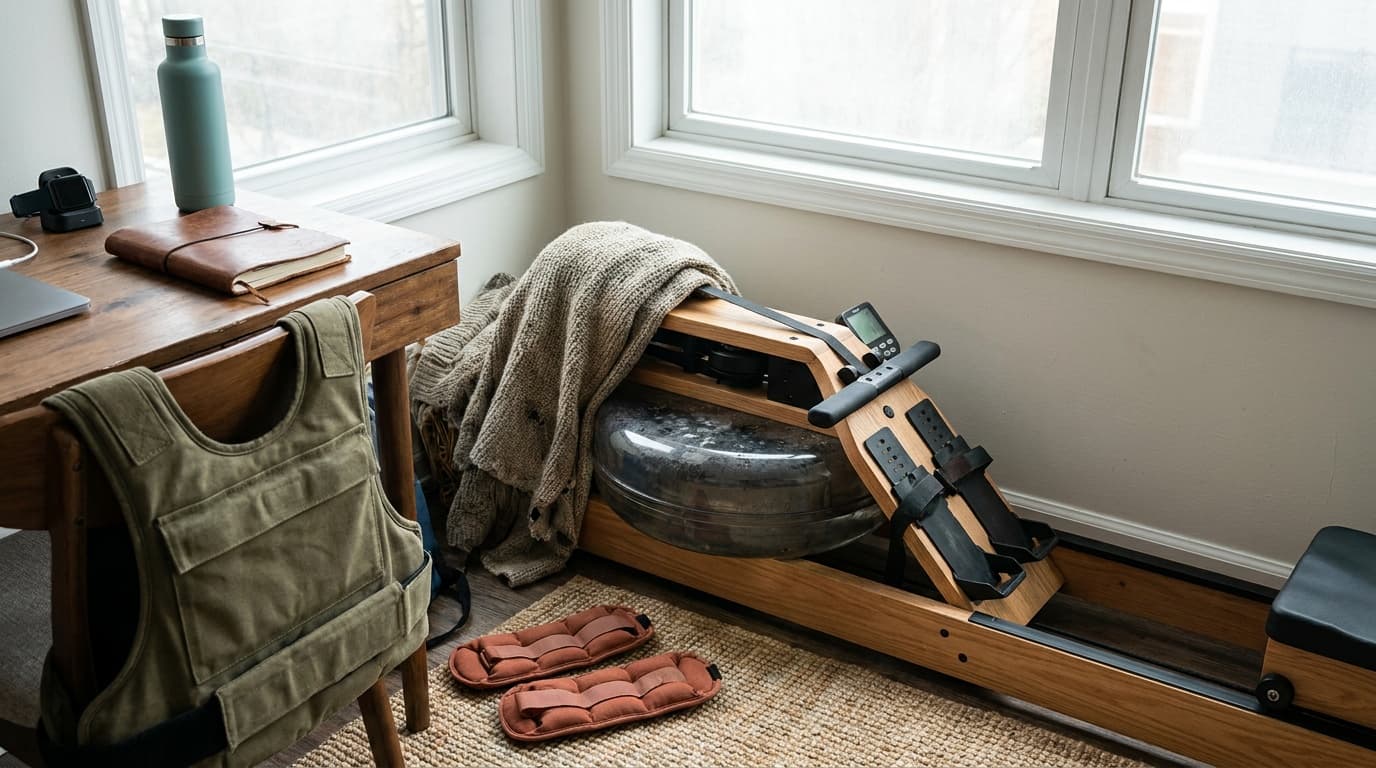
Air and water rowers get harder the harder you pull, magnetic rowers hold whatever level you dial in and run nearly silent, and hydraulic piston rowers are the smallest and cheapest but feel least like real rowing. Concept2 notes that on its air rower "the harder you pull, the more resistance you will feel," and WaterRower says the same logic applies to its water flywheel. The resistance type shapes how a rower feels under load, how loud it runs, and how well it scales as your fitness improves.
Air resistance: scales with every stroke
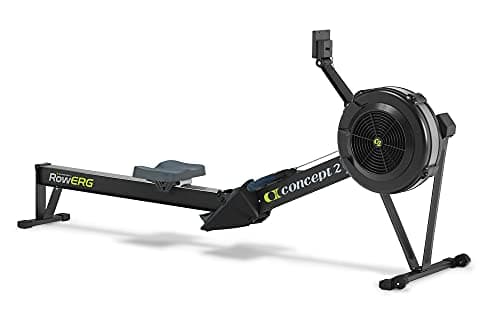
Air rowers use a flywheel with fan blades inside a vented cage. As you pull, the fan spins and displaces air, creating resistance. Pull harder, spin faster, get more resistance. The relationship is direct and immediate.
This self-regulating quality is why air rowers dominate commercial gyms and competitive programs. You do not set a resistance level; the machine simply responds to how hard you row. A long, powerful drive creates significantly more resistance than a short, casual stroke.
The damper lever on a Concept2 is often mistaken for a resistance dial. Concept2 says it changes how the stroke feels, like shifting gears on a bike, but does not directly set the resistance: your pull does.
The tradeoff is noise. The fan generates a whooshing sound that rises with intensity. In a dedicated home gym it is manageable, but in an apartment or shared living space it can be a real problem, particularly during high-intensity intervals.
The PM5 monitor on the Concept2 RowErg measures how fast the flywheel slows between strokes (the drag factor) and uses it to calculate your work, which keeps scores comparable from one machine to the next. That is why Concept2 is the presenting sponsor of the World Rowing Indoor Championships through 2028 and keeps a public records list for its RowErg.
Best for: serious training, interval work, anyone who wants performance data they can compare over time.
Magnetic resistance: quiet and consistent
Magnetic rowers use adjustable magnets near the flywheel to create drag without physical contact. Resistance is set via a dial, lever, or digital console rather than generated by your effort level.
The main advantage is near-silent operation. The magnets never touch the flywheel, so there is no friction, no fan, and no swooshing; what you hear is mostly the seat rolling on the rail. The MERACH Q1S, for example, pairs a quiet magnetic flywheel with 16 resistance levels. This makes magnetic rowers the practical choice for apartments, early-morning sessions when others are sleeping, or office wellness rooms.
The limitation is that resistance does not automatically increase when you pull harder. You row at the level you set. If you want more challenge you have to manually bump the setting. Some newer models use electromagnetic resistance and can simulate a progressive curve, but most consumer-grade magnetic rowers remain fixed at your chosen level.
For steady-state cardio, rehabilitation work, or anyone newer to rowing, this is rarely a problem. For athletes chasing peak power output or doing sprint work, the fixed ceiling per setting can feel limiting.
Best for: apartment dwellers, shared spaces, beginners, rehabilitation, low-impact steady-state cardio.
Water resistance: natural feel, premium experience
Water rowers spin a paddle wheel inside a tank of real water. When you pull, the paddles push through the water, and like air, the harder you pull, the more resistance you feel. The water level is not a difficulty dial. WaterRower says changing it does not change the intensity of your workout; more water simulates a heavier boat and crew, and less water a lighter one. Its standard fill is 17 liters, with 19 liters the maximum.
The feel is distinct. Water has mass and inertia, so the catch (the moment you begin the drive) feels smooth and loaded in a way that air cannot fully replicate. Many experienced rowers describe water rowers as the closest indoor equivalent to rowing on a lake.
The sound is also different: a rhythmic, liquid rushing rather than a mechanical fan whir. Some people find it calming. It is not silent, but it is less aggressive than air.
Water rowers tend to be heavier and more expensive than comparable air or magnetic options. The tank adds weight, and the aesthetic finishes (many, like the WaterRower Walnut, are made with hardwood) push the price up. They also need a little tank care: WaterRower recommends adding a purification tablet every 3 to 6 months (sooner if the rower sits in direct sun) to keep algae out.
Water resistance does not just approximate the feeling of rowing on water, it uses the same physics.
Best for: home gyms where aesthetics matter, experienced rowers who value feel, anyone willing to pay a premium for a smooth, natural stroke.
Hydraulic resistance: compact but limited
Hydraulic rowers use pistons filled with fluid on the handles or arms to create resistance. Adjusting a dial changes the flow of fluid through the piston.
They are the most compact and affordable resistance type, and they dominate the low-price end of the market. A folding hydraulic rower can fit in a closet. On two-piston models each arm works independently, which some people use for rehab or to even out a weaker side.
The limitations are real, though. Most hydraulic rowers use a rowing motion that is more like a push-pull than a true coordinated drive. The stroke mechanics differ enough that they do not build the same muscle memory or movement pattern as a chain-and-seat rower. The stroke is also less smooth than other types, and the pistons can get hot during long sessions, which can lead to leaks over time. Shorter sessions are kinder to the cylinders.
Choosing a resistance type: decision path
Space-limited apartment
Magnetic for silence, or hydraulic if space is extremely tight.
Serious training goals
Air resistance, specifically a Concept2 or comparable flywheel machine.
Premium home gym feel
Water resistance for aesthetics and natural stroke quality.
Budget under $300
Hydraulic is often the only option; set realistic expectations.
Shared home, mixed users
Magnetic handles beginners and casual users equally well.
Best for: very small spaces, tight budgets, light occasional use only.
Where these numbers come from
| Claim | Source | Checked |
|---|---|---|
| On Concept2 air rowers, the harder you pull the more resistance you feel; the damper changes feel, not resistance directly; the PM measures flywheel deceleration (drag factor) to calculate work | Concept2, damper setting and drag factor | 2026-09-25 |
| Concept2 introduced its indoor rower in 1981 and is presenting sponsor of the World Rowing and European Rowing Indoor Championships until 2028 | World Rowing, Concept2 partnership | 2026-09-25 |
| Concept2 RowErg: PM5 monitor with accurate, comparable data, 500 lb user capacity, 9 x 4 ft recommended space | Concept2 listing on Amazon, ASIN B00NH9WEUA | 2026-09-25 |
| Concept2 holds records for the RowErg and SkiErg | Concept2, records | 2026-09-25 |
| WaterRower: water level changes the mass you move, not workout intensity; 17 L standard, 19 L max; purification tablet every 3 to 6 months | WaterRower Support, FAQ | 2026-09-25 |
| WaterRower Walnut: resistance from paddle-like blades in a water-filled flywheel, "the harder you fight, the more resistance you get"; hardwood frame | WaterRower listing on Amazon, ASIN B01N4JL4Q0 | 2026-09-25 |
| MERACH Q1S: magnetic flywheel, 16 resistance levels, marketed as quiet | MERACH listing on Amazon, ASIN B0B2P23DBS | 2026-09-25 |
| Hydraulic piston rowers: smallest footprint, lowest price range, independent arms on two-piston models, pistons can overheat and leak on long sessions; magnetic systems produce no friction | Rowing Machine King, resistance types compared | 2026-09-25 |
Frequently asked questions
Which resistance type is best for weight loss?
All four types deliver a solid cardiovascular workout when used consistently, so resistance type matters less than how often and how hard you train. That said, air resistance naturally scales with effort, which makes it easier to push intensity during interval sessions. Higher intensity generally burns more calories in less time. If that style of training appeals to you, air is a strong fit.
Are water rowers actually quieter than air rowers?
Usually, yes, though noise is partly a matter of taste. Water creates a rhythmic, wave-like sound that many people find less intrusive than the fan noise of an air rower at high intensity. Neither type is silent. Magnetic rowers, with no fan and no friction, remain the quietest option overall. If low noise is your top priority, magnetic is the clear choice.
Can I use a rowing machine every day?
Rowing is relatively low-impact compared to running, so daily use is feasible for many people. The limiting factor is typically muscular recovery, especially in the lower back and legs after high-intensity sessions. Alternating hard days with easier, shorter rows, or mixing in rest days, tends to produce better long-term results than rowing all-out seven days a week. If you have any lower back history, consult a physiotherapist before starting a high-frequency program.
For specific picks across all four resistance types, see our guide to the best rowing machines. Browse all fitness guides or read how we research and rate gear.
Recommended gear
Our current top picks from the Best rowing machines for home 2026: air, water, and magnetic guide, if you are ready to buy.
CONCEPT2
Concept2 RowErg Indoor Rowing Machine
BEST OVERALL
Kit Score 9.4/10
$990.00 Price checked Oct 23, 4:16 PM CDT
Best for: Anyone who wants a proven, maintenance-tolerant machine that performs at every fitness level and holds resale value for years.
- Exceptional 500 lb weight capacity and commercial-grade durability for well under the price of connected rowers
- Hard plastic seat becomes uncomfortable for sessions over 30 minutes without a seat pad
- Resistance type
- Air (adjustable damper, settings 1–10)
- Max user weight
- 500 lb (227 kg)
- Dimensions (in use)
- 96" L x 24" W (8 x 2 ft); 9 x 4 ft recommended for use
- Monitor
- PM5 LCD with Bluetooth and ANT+
- Foldable
- Separates into two pieces for storage
- Frame warranty
- 5 years (2 years on moving parts and monitor)
About this pick
The Concept2 RowErg is the benchmark for indoor rowing, used by Olympic teams and CrossFit facilities worldwide. Air resistance self-adjusts to effort level, so the harder you pull, the more resistance you feel, with no resistance cap for elite athletes.
Strengths
- Exceptional 500 lb weight capacity and commercial-grade durability for well under the price of connected rowers
- PM5 monitor tracks pace, watts, calories, and heart rate; connects via Bluetooth to apps like ErgData and the Concept2 Logbook
- Outstanding owner approval: 4.9/5 stars across 13,000+ Amazon ratings, with negative reviews almost entirely about shipping rather than the machine
Weaknesses
- Hard plastic seat becomes uncomfortable for sessions over 30 minutes without a seat pad
- Chain drive requires light oiling roughly every 50 hours and produces moderate mechanical noise
Kit Score breakdown
MERACH
MERACH Q1S Magnetic Rowing Machine
BEST BUDGET
Kit Score 8.0/10
$189.99 Price checked Oct 23, 4:16 PM CDT
Best for: Home rowers who want a stable, quiet magnetic machine under $200 with room to grow from beginner to moderate intensity workouts.
- In stock with a 4.4-star average across 2,355 Amazon ratings (September 2026)
- At 42 lb it is heavier than ultra-compact budget rowers, so the built-in wheels help but stairs are awkward
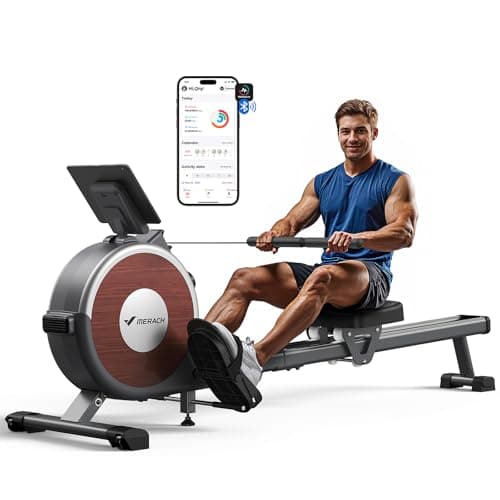
- Resistance type
- Magnetic, 16 levels
- Rail system
- Dual slide rail (aluminum alloy)
- Max user weight
- 350 lb
- Machine weight
- 42 lb
- In-use footprint
- 65 x 19.3 x 24.8 in
- Storage footprint
- 19.3 x 24.8 in (folds upright)
About this pick
The MERACH Q1S is a best-selling magnetic rower on Amazon. Its dual slide rail, modeled after wood-rower geometry, adds lateral stability that single-rail budget rowers lack, and 16 magnetic resistance levels give beginners to intermediate rowers genuine room to progress. The LCD monitor tracks time, strokes, calories, and distance, while Bluetooth pairing with the MERACH or Kinomap app opens structured workouts without a subscription requirement. Assembly is partial out of the box and takes most users under 30 minutes. At 42 lb and with integrated base wheels, it is manageable to reposition, and the upright fold-and-store profile reclaims most of its floor space between sessions.
More specifications
- Max user height
- 6 ft 5 in per the Amazon listing (MERACH's own page says 6 ft 7 in)
- App compatibility
- MERACH app + Kinomap
Strengths
- In stock with a 4.4-star average across 2,355 Amazon ratings (September 2026)
- Dual slide rail design reduces seat wobble and lateral tip risk compared to single-rail competitors at the same price
- 16 resistance levels plus free app compatibility (MERACH and Kinomap) give structured workout options without an ongoing subscription
Weaknesses
- At 42 lb it is heavier than ultra-compact budget rowers, so the built-in wheels help but stairs are awkward
- LCD monitor tracks only basic metrics; users who want split-pace or watt output will need to rely on the paired app rather than the console
Kit Score breakdown
WATERROWER
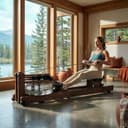
WaterRower Walnut Rowing Machine with S4 BLE Monitor
BEST WATER ROWER
Kit Score 8.6/10
$2,049.00 Price checked Oct 23, 4:16 PM CDT
Best for: Rowers who prioritize a quiet, natural stroke feel and furniture-grade aesthetics, and who do not need a connected screen or class library.
- Water resistance creates a stroke that closely mirrors on-water rowing: smooth, self-regulating, and quiet with a calming water sound rather than mechanical noise
- S4 monitor is functional but basic: Bluetooth pairing, but no touchscreen or guided classes
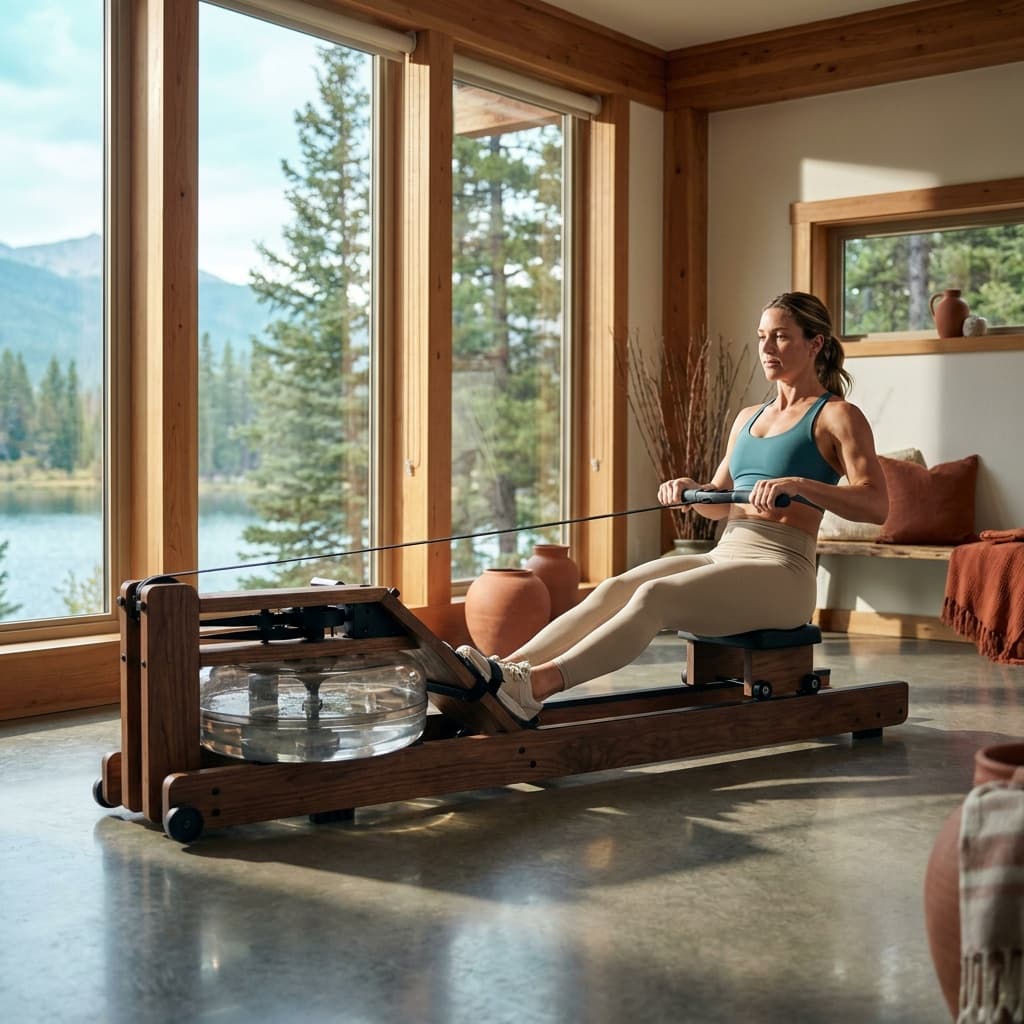
- Resistance type
- Water flywheel (resistance scales with rowing speed)
- Max user weight
- 700 lb per WaterRower's US product details (its technical summary shows 330 lb / 150 kg; Amazon's spec table says 300 lb)
- Dimensions (in use)
- 82" L x 22" W x 20" H
- Monitor
- S4 BLE (Bluetooth; stroke rate, distance, time, intensity)
- Storage
- Stands on end; 103.5 lb with water
- Construction
- Hand-built American Black Walnut, made in Rhode Island
About this pick
The WaterRower Walnut is a handcrafted solid-wood rower built in Rhode Island, with a water-filled flywheel that produces resistance scaling naturally with your effort. The result is one of the smoothest, quietest strokes available in home rowing, along with a machine that doubles as living-room furniture.
More specifications
- Warranty
- 5-year frame, 3-year parts (per WaterRower)
Strengths
- Water resistance creates a stroke that closely mirrors on-water rowing: smooth, self-regulating, and quiet with a calming water sound rather than mechanical noise
- Solid walnut frame at 103.5 lb (with water) feels planted, with few owner reports of flex even under hard rowing
- Stands on end for storage, making it viable for apartments and smaller rooms
Weaknesses
- S4 monitor is functional but basic: Bluetooth pairing, but no touchscreen or guided classes
- Water purification tablet is needed every 3–6 months and the tank requires occasional draining for long-term storage or moving
Kit Score breakdown
See all picks in Best rowing machines for home 2026: air, water, and magnetic
Keep going
Free toolHome Cardio Space CheckerWill a rowing machine, exercise bike, or walking pad fit your room?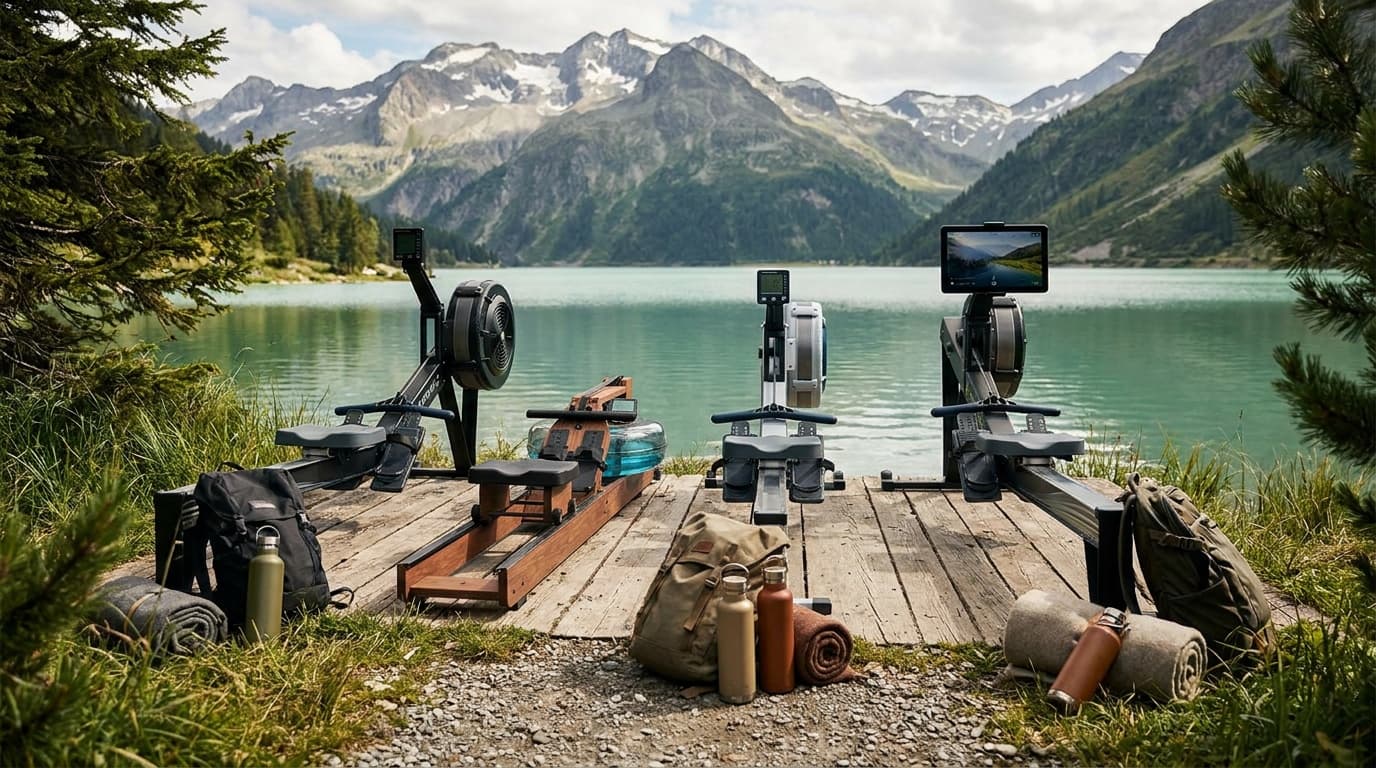
Researched, not hands-on tested
Updated Sep 25, 2026Our recommendations draw on manufacturer documentation, retailer listings, owner feedback, and comparisons with alternatives.
As an Amazon Associate I earn from qualifying purchases. We may earn a commission from links here, at no extra cost to you. How we research →