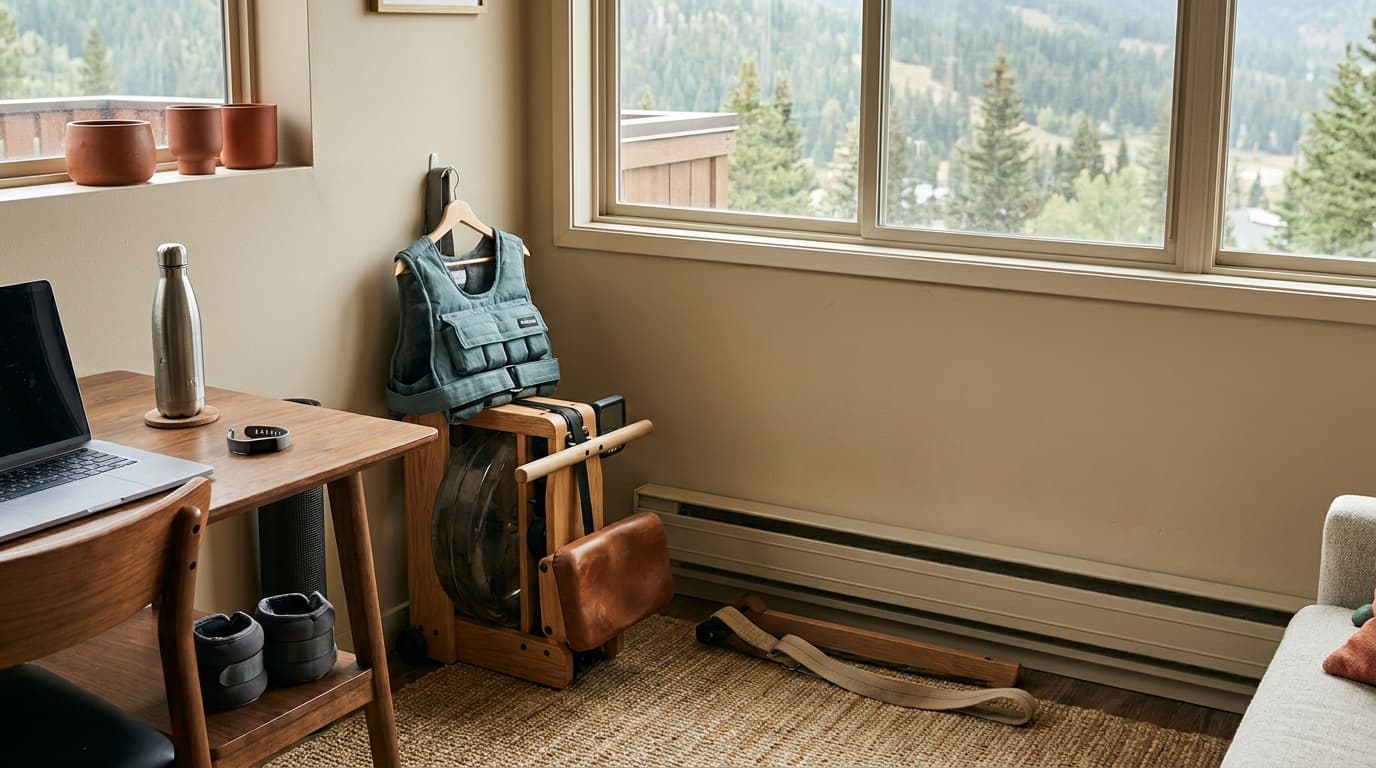
Rowing machines deliver one of the best full-body cardio workouts you can do at home, but the category is cluttered with four distinct resistance types, wildly different price points, and specs that matter a lot more than most buyers realize before they pull the trigger.
Resistance types: what they actually feel like
The resistance mechanism shapes every stroke you take, so get this decision right before anything else.
Air resistance (also called fan or flywheel) uses a spinning cage that creates drag proportional to how hard you pull. The faster you row, the harder it gets. This self-regulating feel is exactly what indoor rowing competitions use, and it is why serious athletes default to air. The trade-off is noise: a spinning fan is audible a room away, which rules it out for early-morning apartment workouts.
Magnetic resistance uses magnets to apply braking force, with no moving air. The stroke feels consistent and slightly linear rather than dynamically increasing, which feels different from water rowing but suits interval training and structured workouts well. Crucially, magnetic rowers like the MERACH Q1S Magnetic Rowing Machine are the quietest option available and work well on upper floors.
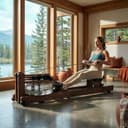
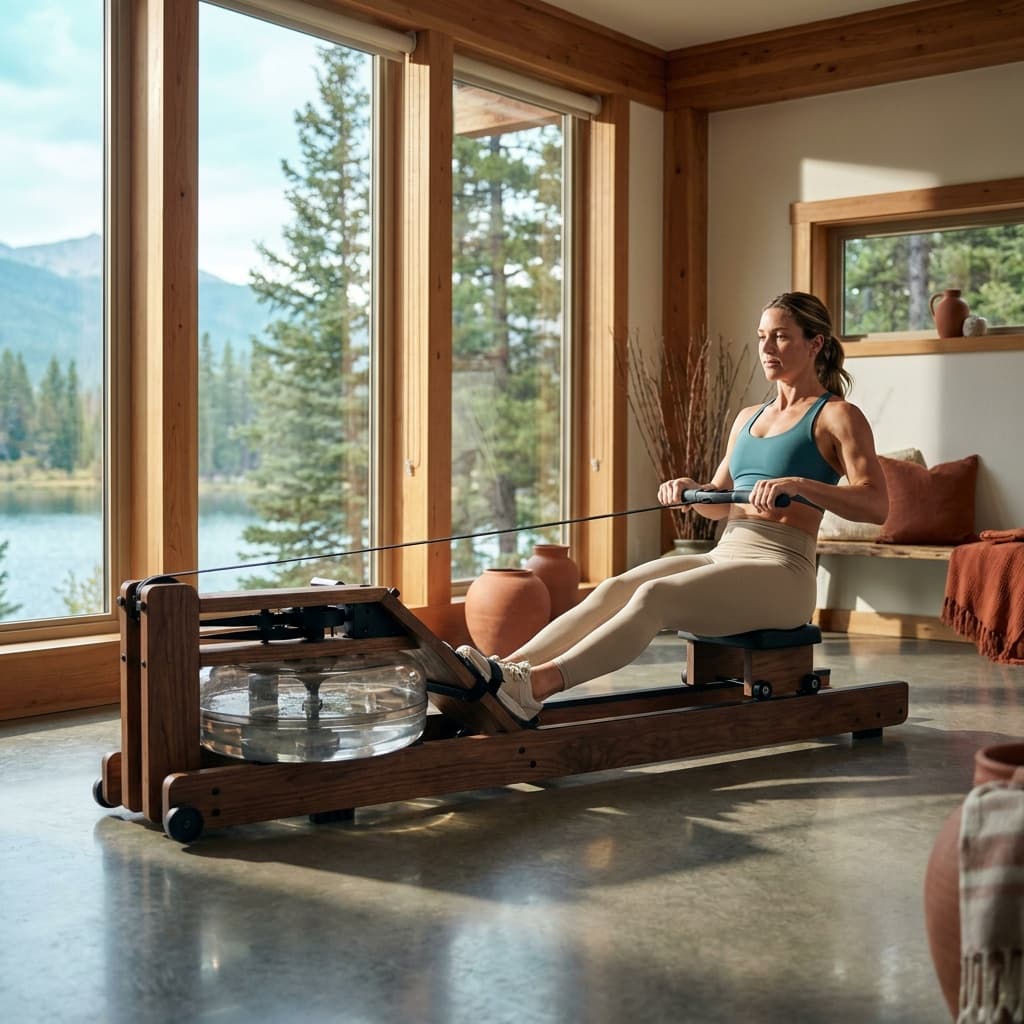
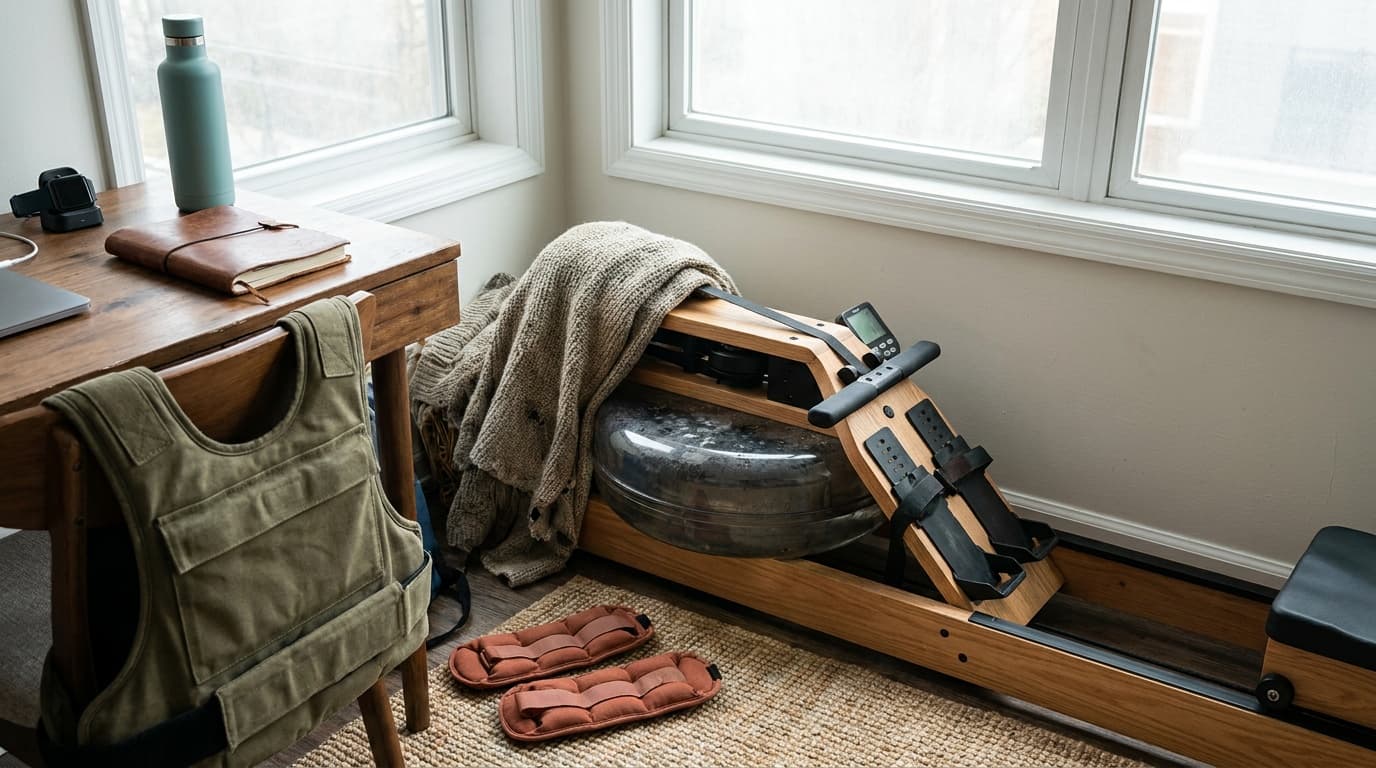
Water resistance places paddles in a water tank. The feel is genuinely smooth and the sound is a low, calming splash rather than a fan roar. Water rowers like the WaterRower Walnut sit in a price band between budget magnetic and air-competition machines and tend to be aesthetically well-built. The resistance increases naturally with stroke rate, similar to air, but you can also adjust the water level to raise or lower baseline resistance.
Hydraulic resistance uses pistons attached to the handles. These machines are compact and inexpensive, but the stroke mechanics force your arms through a constrained arc that does not match real rowing. Fine for light cardio, not a good fit if form and performance matter to you.
Monitor and metrics: what to look for
A rowing machine monitor is only useful if it shows the right number. That number is 500-meter split time: how long it would take you to row 500 meters at your current pace. Watts and stroke rate are secondary. Calorie estimates alone are nearly meaningless for training purposes.
Entry-level monitors often show calories and total meters but bury the split time or omit it. Before buying, look up the specific monitor model and confirm it displays 500m split prominently.
Connected monitors (Concept2 PM5, WaterRower S4, and proprietary screens on higher-end magnetic rowers) add workout logging, interval programming, and in some cases subscription fitness platforms. These features are genuinely useful if you plan to follow structured programming. They are irrelevant if you just want steady-state cardio.
Footprint and foldability
Full-length rowing machines typically run 8–9 feet long and 2 feet wide. That is a significant floor commitment. Most magnetic rowers and some air rowers offer vertical or fold-flat storage that reduces the footprint to roughly the size of a standing desk.
If you are storing in a closet or a small room, look for a machine that folds to under 24 inches in depth and has transport wheels. Water rowers generally do not fold because the tank is structural weight; they store upright but the footprint stays wide.
Also check assembled weight before buying. Water rowers with a full tank can exceed 100 pounds. A heavy machine that does not fold and sits on the third floor is a problem when you eventually move.
Rail length and max user weight
These two specs are the most commonly ignored and the most likely to cause regret for taller or heavier buyers.
Rail length determines how fully you can extend your legs through the drive. Most machines list an overall length, not the actual slide travel. At full compression (catch position) and full extension (finish), a person over 6 feet 3 inches needs a machine with at least 54–56 inches of actual rail travel. Short rails force you into a cramped finish and over time create hip and lower-back strain.
Max user weight ratings are set conservatively by manufacturers and carry real structural implications. Buy at least 20–30 pounds of capacity above your body weight to account for the dynamic loading of each stroke.
Four questions to ask before you buy
Resistance feel
Row at a gym on an air or water machine first if possible; know what stroke feel you prefer before committing.
Monitor spec
Look up the exact model number of the monitor and confirm it shows 500m split time as a primary display.
Rail travel
Find the actual slide length, not the machine's overall footprint; cross-check against your inseam.
Storage path
Measure the doorway and the storage location, then check the machine's folded dimensions and weight.
Budget tiers: what each level actually buys
Under $500: Hydraulic piston machines and entry-level magnetic rowers. Adequate for light, consistent cardio. Expect plastic construction, basic monitors, and limited adjustability. Fine as a first machine if budget is the real constraint.
$500–$1,200: The most useful tier. This range includes solid magnetic rowers with real monitors, mid-range water rowers with wood frames, and used Concept2 Model D units (which frequently appear in this range on resale). Durability improves substantially here, and the stroke feel is meaningfully better.
$1,200 and above: Premium water and air rowers with connected monitors, high weight ratings, and long warranties. The Concept2 Model D and Concept2 RowErg new retail sits at the lower end of this tier. Above $1,500 you are largely paying for aesthetics, connected features, or branded fitness ecosystems.
A used Concept2 from a closing gym often lands in the $500–$800 range and outperforms most new machines at twice the price.
Frequently asked questions
Is a rowing machine good for weight loss?
Rowing burns a meaningful number of calories because it recruits both upper and lower body, but weight loss is primarily driven by sustained caloric deficit over time. A rowing machine supports that goal well if you use it consistently. It is not uniquely better or worse than other sustained cardio equipment for fat loss specifically.
How much space do I actually need for a rowing machine?
Plan for at least 9 feet of clear length and 3 feet of width while in use, plus clearance behind the machine for your feet at the catch position. A foldable magnetic rower can reduce the storage footprint significantly, but you still need the full footprint when rowing.
Can I use a rowing machine every day?
Yes, at moderate intensity. Rowing is relatively low-impact on joints compared to running, and daily use is practical for most people. If you are rowing at high intensity, build in recovery days the same way you would with any compound-movement training.
For specific picks across each budget tier, see our guide to the best rowing machines. Browse all fitness guides or read how we research and rate gear.
Recommended gear
Our current top picks from the Best rowing machines for home 2026: air, water, and magnetic guide, if you are ready to buy.
CONCEPT2
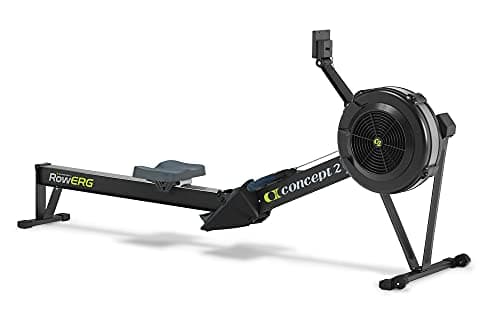
Concept2 RowErg Indoor Rowing Machine
BEST OVERALL
Kit Score 9.4/10
$990.00 Price checked Oct 23, 4:16 PM CDT
Best for: Anyone who wants a proven, maintenance-tolerant machine that performs at every fitness level and holds resale value for years.
- Exceptional 500 lb weight capacity and commercial-grade durability for well under the price of connected rowers
- Hard plastic seat becomes uncomfortable for sessions over 30 minutes without a seat pad
- Resistance type
- Air (adjustable damper, settings 1–10)
- Max user weight
- 500 lb (227 kg)
- Dimensions (in use)
- 96" L x 24" W (8 x 2 ft); 9 x 4 ft recommended for use
- Monitor
- PM5 LCD with Bluetooth and ANT+
- Foldable
- Separates into two pieces for storage
- Frame warranty
- 5 years (2 years on moving parts and monitor)
About this pick
The Concept2 RowErg is the benchmark for indoor rowing, used by Olympic teams and CrossFit facilities worldwide. Air resistance self-adjusts to effort level, so the harder you pull, the more resistance you feel, with no resistance cap for elite athletes.
Strengths
- Exceptional 500 lb weight capacity and commercial-grade durability for well under the price of connected rowers
- PM5 monitor tracks pace, watts, calories, and heart rate; connects via Bluetooth to apps like ErgData and the Concept2 Logbook
- Outstanding owner approval: 4.9/5 stars across 13,000+ Amazon ratings, with negative reviews almost entirely about shipping rather than the machine
Weaknesses
- Hard plastic seat becomes uncomfortable for sessions over 30 minutes without a seat pad
- Chain drive requires light oiling roughly every 50 hours and produces moderate mechanical noise
Kit Score breakdown
MERACH
MERACH Q1S Magnetic Rowing Machine
BEST BUDGET
Kit Score 8.0/10
$189.99 Price checked Oct 23, 4:16 PM CDT
Best for: Home rowers who want a stable, quiet magnetic machine under $200 with room to grow from beginner to moderate intensity workouts.
- In stock with a 4.4-star average across 2,355 Amazon ratings (September 2026)
- At 42 lb it is heavier than ultra-compact budget rowers, so the built-in wheels help but stairs are awkward
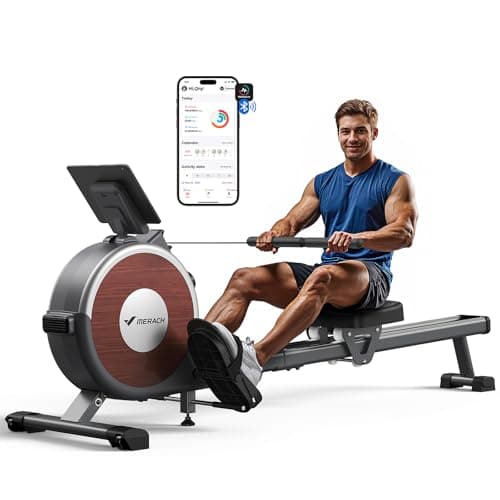
- Resistance type
- Magnetic, 16 levels
- Rail system
- Dual slide rail (aluminum alloy)
- Max user weight
- 350 lb
- Machine weight
- 42 lb
- In-use footprint
- 65 x 19.3 x 24.8 in
- Storage footprint
- 19.3 x 24.8 in (folds upright)
About this pick
The MERACH Q1S is a best-selling magnetic rower on Amazon. Its dual slide rail, modeled after wood-rower geometry, adds lateral stability that single-rail budget rowers lack, and 16 magnetic resistance levels give beginners to intermediate rowers genuine room to progress. The LCD monitor tracks time, strokes, calories, and distance, while Bluetooth pairing with the MERACH or Kinomap app opens structured workouts without a subscription requirement. Assembly is partial out of the box and takes most users under 30 minutes. At 42 lb and with integrated base wheels, it is manageable to reposition, and the upright fold-and-store profile reclaims most of its floor space between sessions.
More specifications
- Max user height
- 6 ft 5 in per the Amazon listing (MERACH's own page says 6 ft 7 in)
- App compatibility
- MERACH app + Kinomap
Strengths
- In stock with a 4.4-star average across 2,355 Amazon ratings (September 2026)
- Dual slide rail design reduces seat wobble and lateral tip risk compared to single-rail competitors at the same price
- 16 resistance levels plus free app compatibility (MERACH and Kinomap) give structured workout options without an ongoing subscription
Weaknesses
- At 42 lb it is heavier than ultra-compact budget rowers, so the built-in wheels help but stairs are awkward
- LCD monitor tracks only basic metrics; users who want split-pace or watt output will need to rely on the paired app rather than the console
Kit Score breakdown
WATERROWER
WaterRower Walnut Rowing Machine with S4 BLE Monitor
BEST WATER ROWER
Kit Score 8.6/10
$2,049.00 Price checked Oct 23, 4:16 PM CDT
Best for: Rowers who prioritize a quiet, natural stroke feel and furniture-grade aesthetics, and who do not need a connected screen or class library.
- Water resistance creates a stroke that closely mirrors on-water rowing: smooth, self-regulating, and quiet with a calming water sound rather than mechanical noise
- S4 monitor is functional but basic: Bluetooth pairing, but no touchscreen or guided classes
- Resistance type
- Water flywheel (resistance scales with rowing speed)
- Max user weight
- 700 lb per WaterRower's US product details (its technical summary shows 330 lb / 150 kg; Amazon's spec table says 300 lb)
- Dimensions (in use)
- 82" L x 22" W x 20" H
- Monitor
- S4 BLE (Bluetooth; stroke rate, distance, time, intensity)
- Storage
- Stands on end; 103.5 lb with water
- Construction
- Hand-built American Black Walnut, made in Rhode Island
About this pick
The WaterRower Walnut is a handcrafted solid-wood rower built in Rhode Island, with a water-filled flywheel that produces resistance scaling naturally with your effort. The result is one of the smoothest, quietest strokes available in home rowing, along with a machine that doubles as living-room furniture.
More specifications
- Warranty
- 5-year frame, 3-year parts (per WaterRower)
Strengths
- Water resistance creates a stroke that closely mirrors on-water rowing: smooth, self-regulating, and quiet with a calming water sound rather than mechanical noise
- Solid walnut frame at 103.5 lb (with water) feels planted, with few owner reports of flex even under hard rowing
- Stands on end for storage, making it viable for apartments and smaller rooms
Weaknesses
- S4 monitor is functional but basic: Bluetooth pairing, but no touchscreen or guided classes
- Water purification tablet is needed every 3–6 months and the tank requires occasional draining for long-term storage or moving
Kit Score breakdown
See all picks in Best rowing machines for home 2026: air, water, and magnetic
Keep going
Free toolHome Cardio Space CheckerWill a rowing machine, exercise bike, or walking pad fit your room?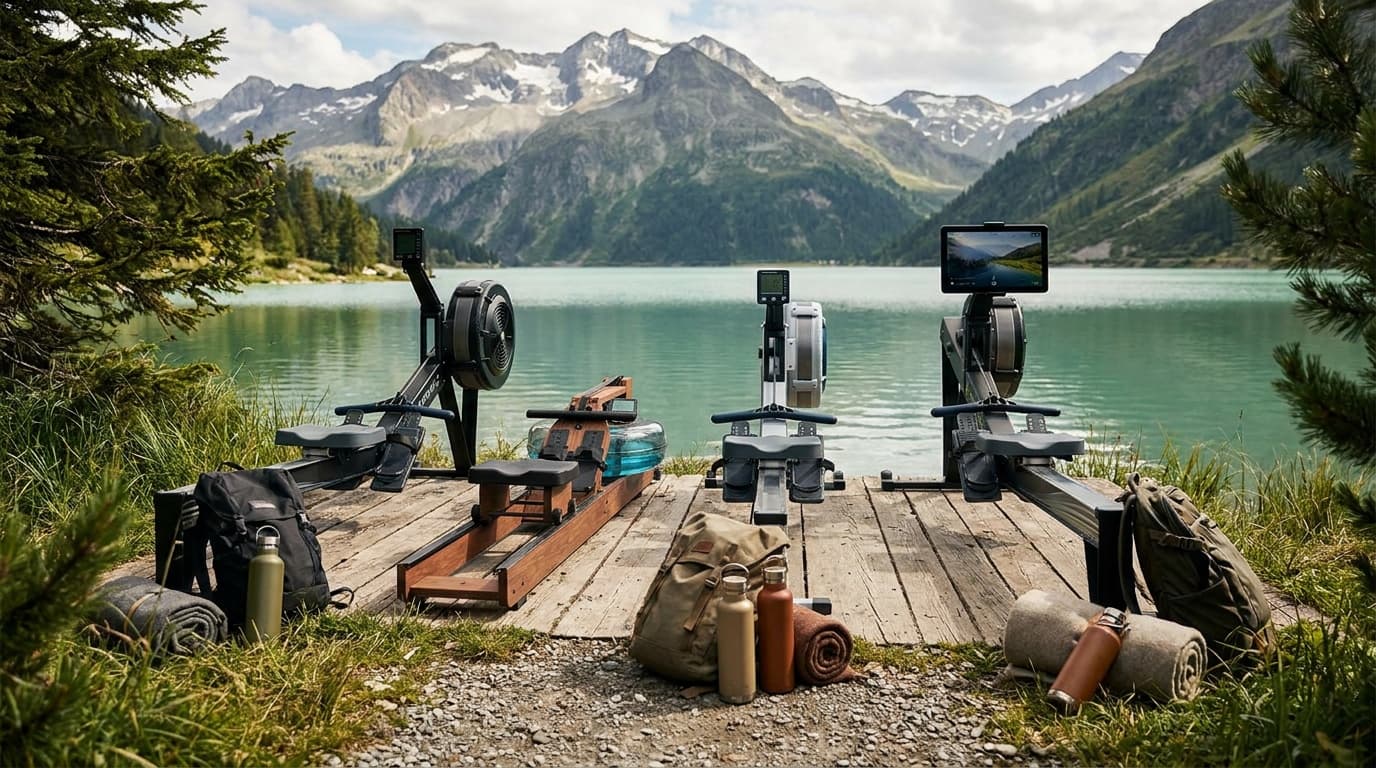
Researched, not hands-on tested
Updated Jun 4, 2026Our recommendations draw on manufacturer documentation, retailer listings, owner feedback, and comparisons with alternatives.
As an Amazon Associate I earn from qualifying purchases. We may earn a commission from links here, at no extra cost to you. How we research →