Resistance bands are the rare piece of fitness equipment that actually belongs in a travel bag. They take up almost no space, cost less than a single gym visit, and cover everything from gentle mobility work to surprisingly heavy rows and pressing. The hard part is knowing which type to buy and which resistance levels will actually challenge you.
Our quick picks
How we picked
Every pick here is rated against the Kit Score: aggregate spec verification, verified-owner review consensus, and cross-referenced expert sources. No product earns a badge on marketing copy alone.
The numbers that matter
Resistance bands fail silently until they snap, and the range printed on a package often ignores how resistance climbs as you stretch. These are the figures worth anchoring on.
Best overall: Whatafit Resistance Bands Set (11pcs)
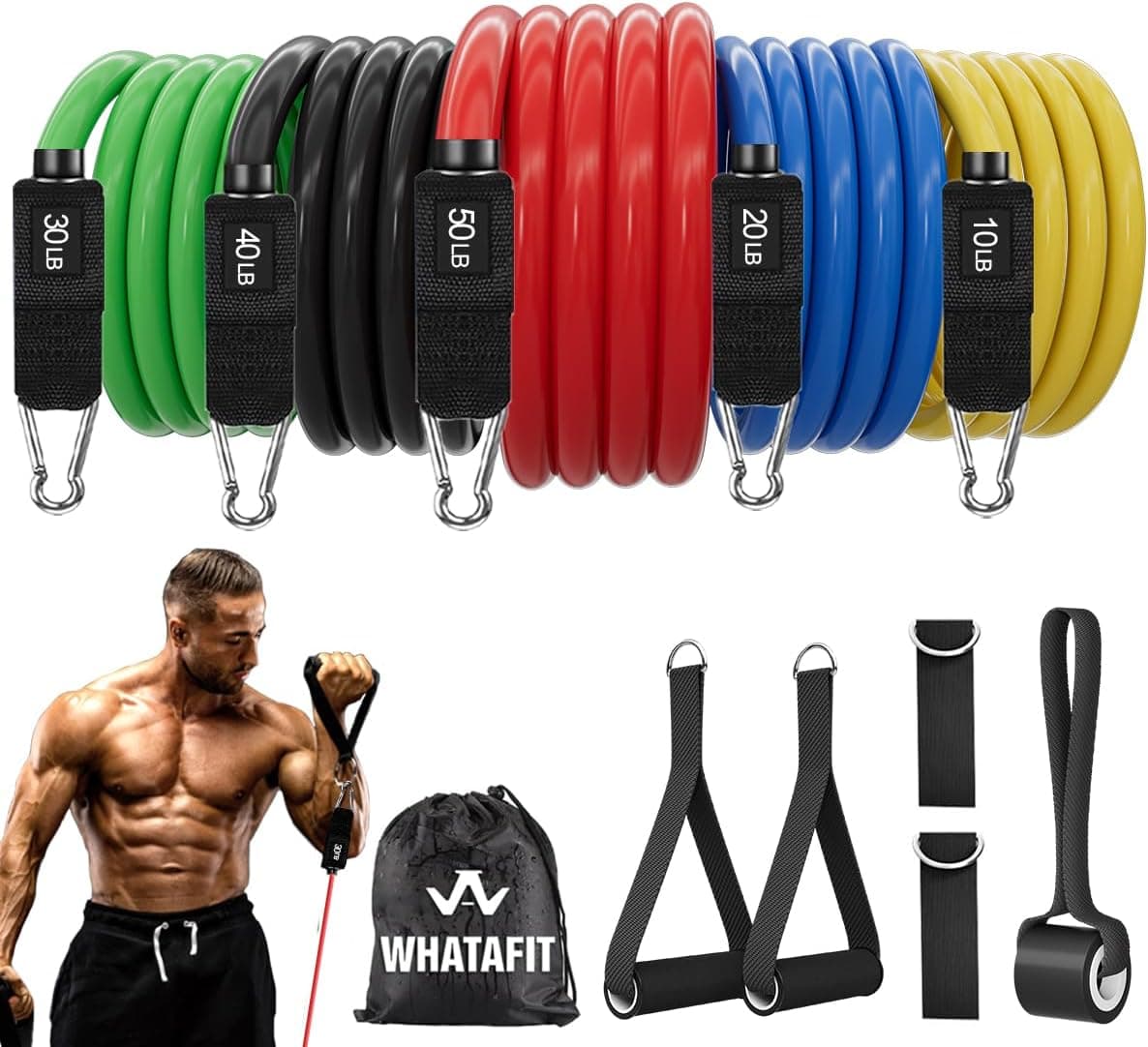
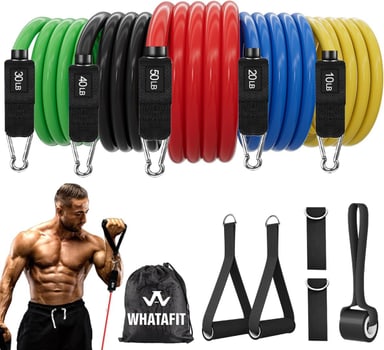
A complete tube-band system at a price most people can buy without overthinking it. Five stackable bands (15–200 lb combined when stacked), foam-grip handles, a door anchor, ankle straps, and a carry bag: everything to run cable-style exercises at home, and most of it packs into a jacket pocket.
The resistance range is wide enough to cover shoulder rehab at the light end and heavy rows and pressing at the top, which is why this kit earns the overall pick over a loops-only set.
BEST OVERALL
Whatafit Resistance Bands Set (11pcs)
Best for: Home gym users who want a single affordable kit that handles everything from shoulder rehab to heavy rows and pressing.
- Five stackable bands let you dial in resistance precisely and add load progressively over months
- The lightest band (10 lbs) can feel stiff for very light mobility or therapy work
Kit Score 8.3/10 · $22.07 Price checked Oct 24, 5:42 AM CDT · how we score gear
Buy on AmazonProduct details
A complete tube-band kit covering the full resistance range from rehab-level pulls to heavy cable-substitute work. Five color-coded bands stack to 150 lbs, and the cushioned foam handles give a cable-machine feel for rows, presses, and curls at home or on the road.
- Type
- Tube bands with handles
- Resistance levels
- 10, 20, 30, 40, 50 lbs (stackable to 150 lbs)
- Material
- 100% natural latex tubes, foam-wrapped handles
- Band length
- 36 inches
- Included accessories
- Door anchor, ankle straps, carry bag
- Pieces in set
- 11 (5 bands, 2 handles, 1 door anchor, 2 ankle straps, 1 carry bag)
More strengths
- Complete kit out of the box: door anchor and ankle straps expand exercise variety without extra purchases
- Natural latex tubes hold up notably better over time than TPE alternatives, with less skin irritation and odor
Other tradeoffs
- Door anchor setup requires an inward-opening door; pull-through style mounting is less stable than a fixed cable station
Best budget: Fit Simplify Resistance Loop Bands
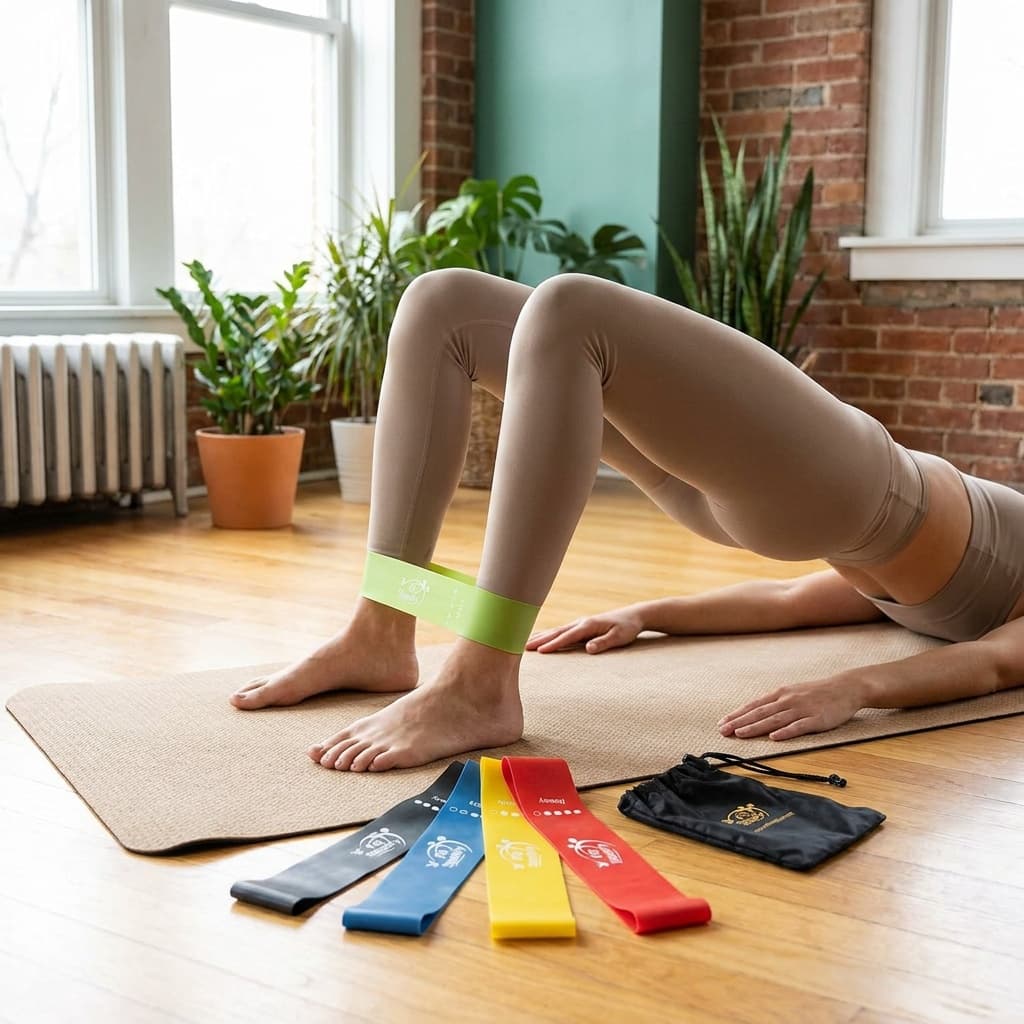
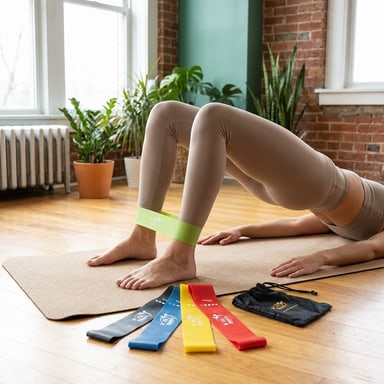
Five flat latex loops, five resistance levels, a carry bag, and a resistance chart. That is the entire product, and it is genuinely enough for glute activation, hip abduction, warm-up circuits, and light lower-body training.
What makes these the travel pick is the form factor: five loops weigh next to nothing and compress into a pouch smaller than a deck of cards. They are not a full training system; they are the kit you actually bring on a trip because there is no reason not to.
BEST BUDGET
Fit Simplify Resistance Loop Exercise Bands, Set of 5
Best for: Anyone who wants a lightweight, always-in-the-bag kit for glute activation, mobility drills, physical therapy, or warm-up circuits at home or while traveling.
- Exceptional price-to-value ratio for a complete five-level loop set with carry bag included
- The lighter resistance loops can curl or bunch during fast lower-body movements
Kit Score 8.4/10 · $9.98 Price checked Oct 24, 5:42 AM CDT · how we score gear
Buy on AmazonProduct details
Five color-coded latex loops cover the full spectrum from gentle hip-activation warm-ups to loaded glute work and physical therapy progressions. The flat, no-roll design stays put around thighs and ankles better than round tube-style loops, and the set is small enough to live in a gym bag permanently.
- Type
- Mini loop (flat, continuous)
- Dimensions
- 12 in. x 2 in. per band
- Resistance range
- Five levels, extra light through extra heavy (pound ratings not published)
- Material
- Latex loop, 12 x 2 in.
- Pieces in set
- 5 color-coded bands plus carry bag and instruction guide
- Included accessories
- Carry bag, illustrated exercise guide
More strengths
- Flat band design resists rolling during lateral walks, clamshells, and hip hinges better than round alternatives
- Ultra-portable: the full set weighs under half a pound and fits in any luggage pocket
Other tradeoffs
- Loop format limits upper-body pulling range and is not suitable as a standalone strength training system
The band that travels with you beats the better band sitting on a shelf at home.
Best premium: Bodylastics Pro Series
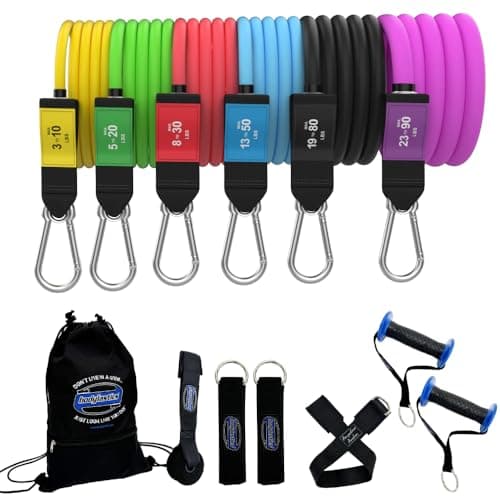
Bodylastics' anti-snap tech is the differentiator here: an inner safety cord inside each tube catches the band if it fails under load, so a snap does not turn into a face or eye injury. At high resistance levels, that matters.
For daily training at heavy loads, the manufacturing quality and the lifetime warranty on the bands justify the price premium over the Whatafit set. Verified-owner reviews consistently flag durability as the standout. If you use resistance bands as a primary training tool rather than a supplement, the Bodylastics set is the one to buy.
BEST PREMIUM
Bodylastics Patented Resistance Band Set with Snap Reduction Tech
Best for: Serious home gym users, frequent travelers, and anyone training at high resistance levels daily who wants the confidence of anti-snap safety tech and a lifetime band warranty.
- Patented internal anti-snap cord is a genuine safety differentiator, not marketing copy: it physically stops a failing tube from snapping back
- Higher price than budget tube-band sets for what is functionally a similar exercise experience
Kit Score 8.6/10 · $61.97 Price checked Oct 24, 5:42 AM CDT · how we score gear
Buy on AmazonProduct details
Bodylastics built its reputation on the patented snap-reduction inner cord: if a latex tube fails, the internal nylon cord stays intact and contains the band instead of letting it whip back. Five resistance levels spanning 3 to 19 lbs stack to 190 lbs total, and the limited lifetime replacement guarantee backs long-term daily use.
- Type
- Tube bands with handles, patented internal safety cord
- Resistance levels
- 3, 5, 8, 13, 19 lbs individually; stackable to 190 lbs
- Material
- Malaysian latex with internal nylon anti-snap cord
- Included accessories
- Handles, ankle straps, door anchor, carry bag
- Safety feature
- Patented internal cord shortens if a tube fails, containing the band
- Warranty
- Limited lifetime replacement guarantee on bands
More strengths
- Five resistance levels spanning 3 to 19 lbs individually stack to 190 lbs, covering everything from light rehab to serious strength work
- Limited lifetime replacement guarantee on bands, and nearly two decades of market presence back the durability claim
Other tradeoffs
- Handles wear faster than the bands themselves; some owners replace handles before bands
Editor's choice: TheraBand Beginner Kit
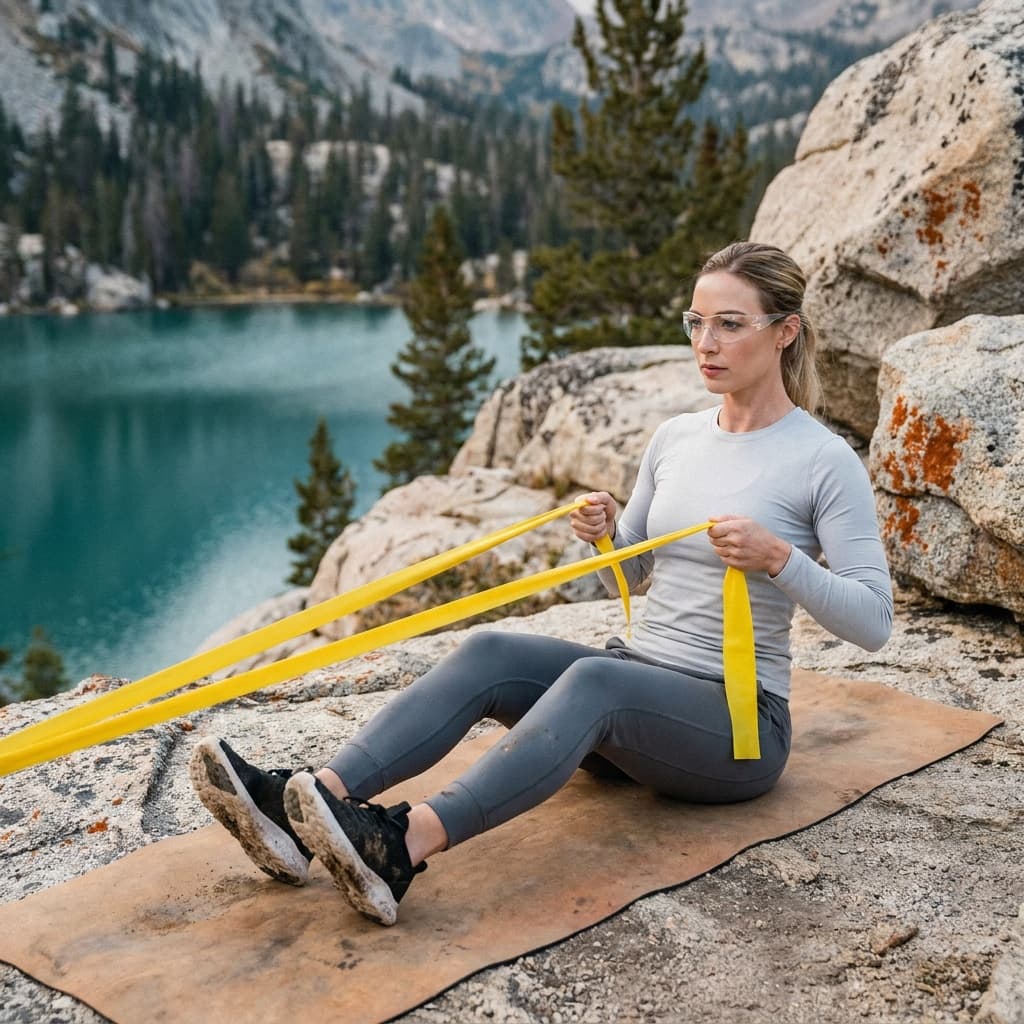
TheraBand is the clinical standard. Physical therapists prescribe specific TheraBand colors because the resistance values are calibrated and consistent across the color system: yellow (extra light), red (light), and green (medium) in the beginner kit, covering roughly 3 to 7 lb of resistance at a standard elongation.
If you are working through a PT-prescribed protocol, recovering from surgery, or dealing with a shoulder or knee issue, this is the kit your provider is thinking of when they say "get some resistance bands." The non-latex option is also available for latex sensitivities.
EDITOR'S CHOICE
TheraBand Resistance Bands Set, Beginner Kit
Best for: Anyone recovering from injury, starting post-surgery rehab, or following a physical therapist's prescribed band program where clinical-grade resistance accuracy and the standard TheraBand color system are required.
- Flat, wide band format distributes resistance across a broad surface area, making it the preferred choice for PT-prescribed shoulder, hip, and knee rehab protocols
- Resistance ceiling is intentionally low: this beginner kit tops out at 6.7 lbs per band, so it is not appropriate for general strength training
Kit Score 8.8/10 · $11.99 Price checked Oct 24, 5:42 AM CDT · how we score gear
Buy on AmazonProduct details
TheraBand invented the color-coded flat therapy band system that physical therapists still prescribe by color today. These 5-foot natural latex bands are the clinical-grade choice for post-surgery rehab, rotator cuff work, and low-load joint mobility: the wide, flat format distributes force evenly, and the resistance consistency batch-to-batch is clinically validated across more than 25 years of use.
- Type
- Flat therapy bands (no handles, no loops)
- Band dimensions
- 5 ft long x 5 in. wide per band
- Resistance levels
- Yellow: 3.0 to 4.3 lbs; Red: 3.7 to 5.5 lbs; Green: 4.6 to 6.7 lbs
- Material
- Natural latex (natural rubber)
- Color coding
- Industry-standard TheraBand progressive resistance color system
- Amazon reviews
- 10,000 or more ratings
More strengths
- Industry-standard color system lets users follow any physical therapy exercise program that references TheraBand colors without guesswork
- Clinically validated resistance consistency: the bands deliver the same force profile across the full length, which matters for rehab where precise load control reduces re-injury risk
Other tradeoffs
- No handles or attachments included; users who want door-anchor or handle setups need to buy those separately or purchase the full set upgrade
How they compare
| Product | Kit Score | Price | Best for |
|---|---|---|---|
| Whatafit Resistance Bands Set (11pcs) | 8.3 | $22.07 Price checked Oct 24, 5:42 AM CDT | Best for: Home gym users who want a single affordable kit that handles everything from shoulder rehab to heavy rows and pressing. Why it stands out: Five stackable bands let you dial in resistance precisely and add load progressively over months Tradeoff: The lightest band (10 lbs) can feel stiff for very light mobility or therapy work |
| Fit Simplify Resistance Loop Exercise Bands, Set of 5 | 8.4 | $9.98 Price checked Oct 24, 5:42 AM CDT | Best for: Anyone who wants a lightweight, always-in-the-bag kit for glute activation, mobility drills, physical therapy, or warm-up circuits at home or while traveling. Why it stands out: Exceptional price-to-value ratio for a complete five-level loop set with carry bag included Tradeoff: The lighter resistance loops can curl or bunch during fast lower-body movements |
| Bodylastics Patented Resistance Band Set with Snap Reduction Tech | 8.6 | $61.97 Price checked Oct 24, 5:42 AM CDT | Best for: Serious home gym users, frequent travelers, and anyone training at high resistance levels daily who wants the confidence of anti-snap safety tech and a lifetime band warranty. Why it stands out: Patented internal anti-snap cord is a genuine safety differentiator, not marketing copy: it physically stops a failing tube from snapping back Tradeoff: Higher price than budget tube-band sets for what is functionally a similar exercise experience |
| TheraBand Resistance Bands Set, Beginner Kit | 8.8 | $11.99 Price checked Oct 24, 5:42 AM CDT | Best for: Anyone recovering from injury, starting post-surgery rehab, or following a physical therapist's prescribed band program where clinical-grade resistance accuracy and the standard TheraBand color system are required. Why it stands out: Flat, wide band format distributes resistance across a broad surface area, making it the preferred choice for PT-prescribed shoulder, hip, and knee rehab protocols Tradeoff: Resistance ceiling is intentionally low: this beginner kit tops out at 6.7 lbs per band, so it is not appropriate for general strength training |
Whatafit Resistance Bands Set (11pcs)
- Best for
- Home gym users who want a single affordable kit that handles everything from shoulder rehab to heavy rows and pressing.
- Why it stands out
- Five stackable bands let you dial in resistance precisely and add load progressively over months
- Tradeoff
- The lightest band (10 lbs) can feel stiff for very light mobility or therapy work
Fit Simplify Resistance Loop Exercise Bands, Set of 5
- Best for
- Anyone who wants a lightweight, always-in-the-bag kit for glute activation, mobility drills, physical therapy, or warm-up circuits at home or while traveling.
- Why it stands out
- Exceptional price-to-value ratio for a complete five-level loop set with carry bag included
- Tradeoff
- The lighter resistance loops can curl or bunch during fast lower-body movements
Bodylastics Patented Resistance Band Set with Snap Reduction Tech
- Best for
- Serious home gym users, frequent travelers, and anyone training at high resistance levels daily who wants the confidence of anti-snap safety tech and a lifetime band warranty.
- Why it stands out
- Patented internal anti-snap cord is a genuine safety differentiator, not marketing copy: it physically stops a failing tube from snapping back
- Tradeoff
- Higher price than budget tube-band sets for what is functionally a similar exercise experience
TheraBand Resistance Bands Set, Beginner Kit
- Best for
- Anyone recovering from injury, starting post-surgery rehab, or following a physical therapist's prescribed band program where clinical-grade resistance accuracy and the standard TheraBand color system are required.
- Why it stands out
- Flat, wide band format distributes resistance across a broad surface area, making it the preferred choice for PT-prescribed shoulder, hip, and knee rehab protocols
- Tradeoff
- Resistance ceiling is intentionally low: this beginner kit tops out at 6.7 lbs per band, so it is not appropriate for general strength training
Loop bands vs tube bands vs therapy bands: which type do you need?
The three types cover different needs, and most people end up wanting at least two.
Match the band type to the goal
Loop bands
Flat latex circles, usually 9 to 12 inches. Best for glute work, hip abduction, lateral walks, and warm-up activation circuits. The go-to for lower body and mobility.
Tube bands with handles
The closest thing to cable machine training in a bag. Handles let you mimic curls, rows, chest press, and shoulder work. Wide resistance range, versatile, and the natural fit for a full home-gym replacement kit.
Therapy bands
Long flat sheets, cut or rolled to length, no handles. The clinical standard for rehab, range-of-motion work, and gentle progressive resistance. Calibrated resistance values matter here more than raw load.

How to choose the right resistance level
Band resistance levels are not standardized across brands, and "medium" from one company may feel like "heavy" from another. Start lighter than you think you need.
Picking your starting resistance
Upper body: start light
For shoulder, arm, and chest movements, most beginners want the lightest or second-lightest band in a set. If you can complete 15 reps with good form, move up.
Lower body: go heavier
Glutes and legs can handle significantly more resistance. The top band in a loop set (often 25 to 35 lb equivalent) is often where experienced trainees land for glute bridges and clamshells.
Stacking tube bands
The Whatafit and Bodylastics sets are designed for stacking: clip two or three bands to a single handle to increase load. This is the most practical way to progress without buying more bands.
Rehab protocols
Follow your provider's prescribed color/resistance level exactly. The value of therapy bands is calibrated precision, and substituting a heavier band to move faster is the mistake most people make.
FAQ
What is the difference between loop bands and tube bands?
Loop bands are flat latex circles, typically used for lower-body and hip work. Tube bands are hollow tubes with handles and anchors, used for cable-style upper-body training. Most home setups benefit from both: loops for glute and mobility work, tubes for pressing and pulling movements.
Are resistance bands good for building muscle?
Yes, within limits. Research supports resistance bands for building strength and muscle, particularly for beginners and intermediate trainees. The progressive overload principle applies: you need to increase resistance over time, either by using a heavier band or stacking bands. For advanced trainees doing heavy compound lifts, bands supplement but do not replace free weights.
How long do resistance bands last?
With proper care (stored out of direct sunlight and heat, not stretched past their rated range), quality latex bands typically last one to three years of regular use. Therapy bands have a shorter useful life because they are often cut and used unprotected. Tube bands with inner safety cords (like the Bodylastics set) have a longer practical lifespan because a cord failure does not mean the band is gone.
For more gear that works at home and on the road, see all fitness picks. Read how we research and rate to understand the methodology behind every pick on this site.
Keep going
Complete loadoutHome calisthenics kitA compact strength and conditioning setup built around five tools that cover pushing, pulling, assistance, cardio, and floor work.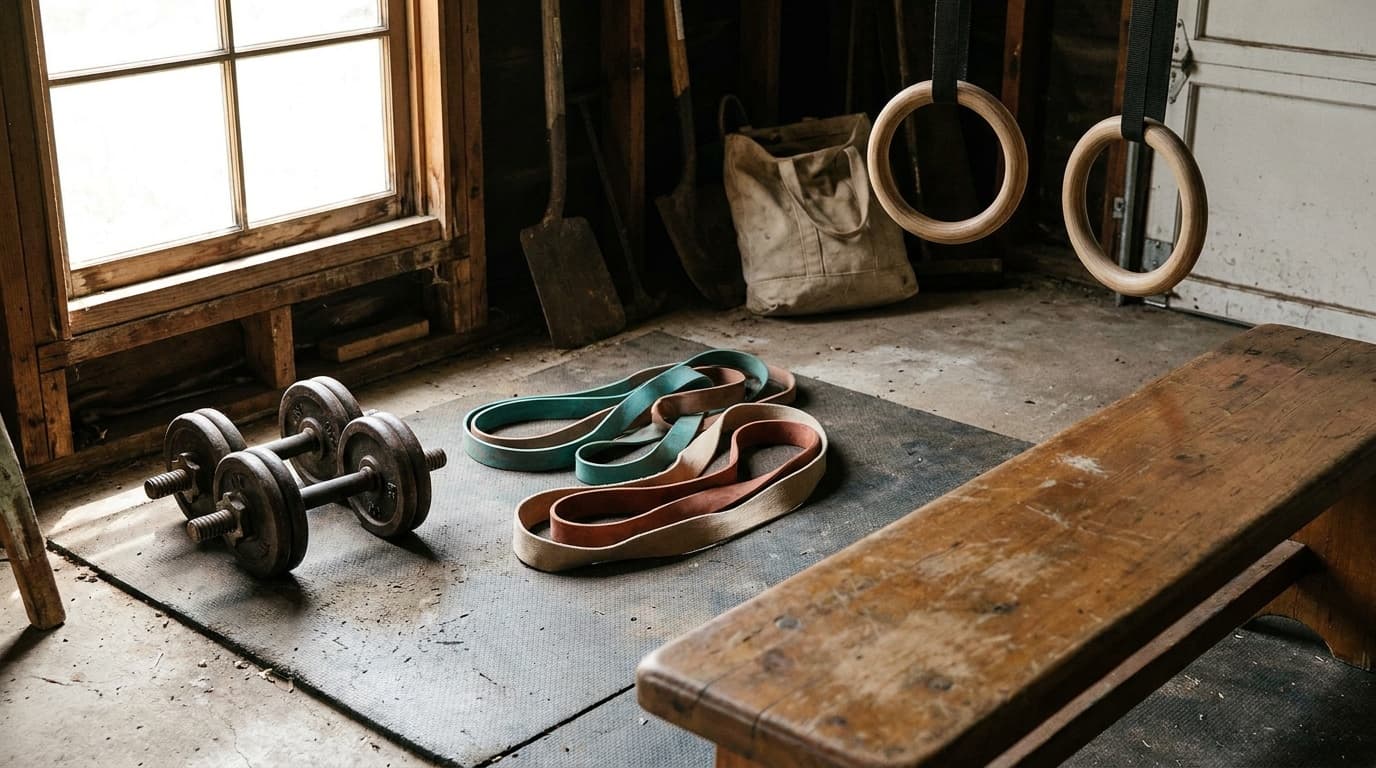

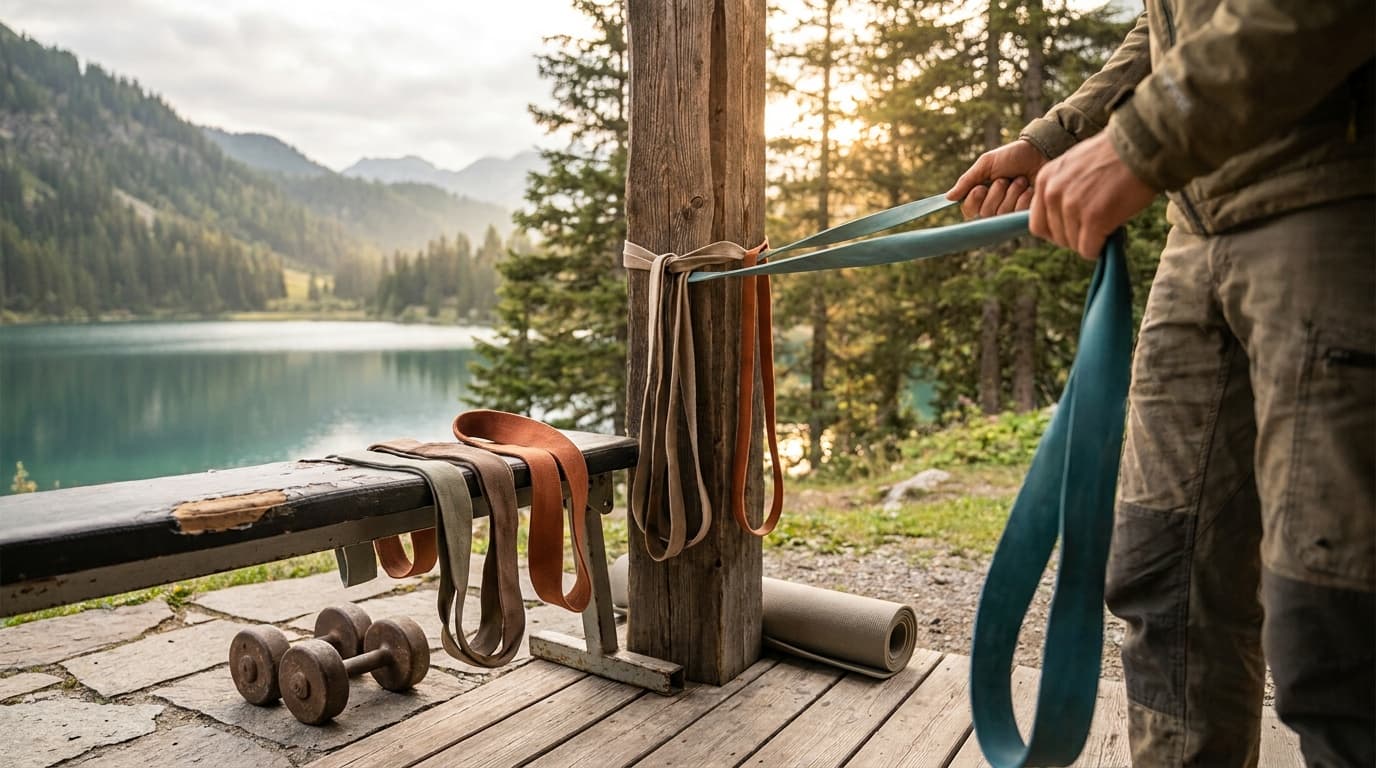
Our recommendations draw on manufacturer documentation, retailer listings, owner feedback, and comparisons with alternatives.
As an Amazon Associate I earn from qualifying purchases. We may earn a commission from links here, at no extra cost to you. How we research →