Buy resistance tubes with handles if you want gym-style upper-body work (rows, presses, pulldowns), because the handles and door anchor copy a cable machine. Buy flat loop bands if your focus is glutes, hips, mobility, or rehab, where the band sits around your thighs or ankles and no grip is needed. If you can only buy one, a tube set covers more exercises: TheFitLife's five tubes are rated from 10 lbs alone to 110 lbs stacked, per the maker.
What each design is actually built for
Resistance tubes are round, hollow latex or rubber cylinders with carabiner clips and foam or plastic handles at each end. Most sets, like the TheFitLife Resistance Bands, include a door anchor, which opens up the full cable-machine menu: lat pulldowns, seated rows, chest flyes, tricep pushdowns, and overhead press. The handle lets you grip hard and load the move the way a cable stack would.
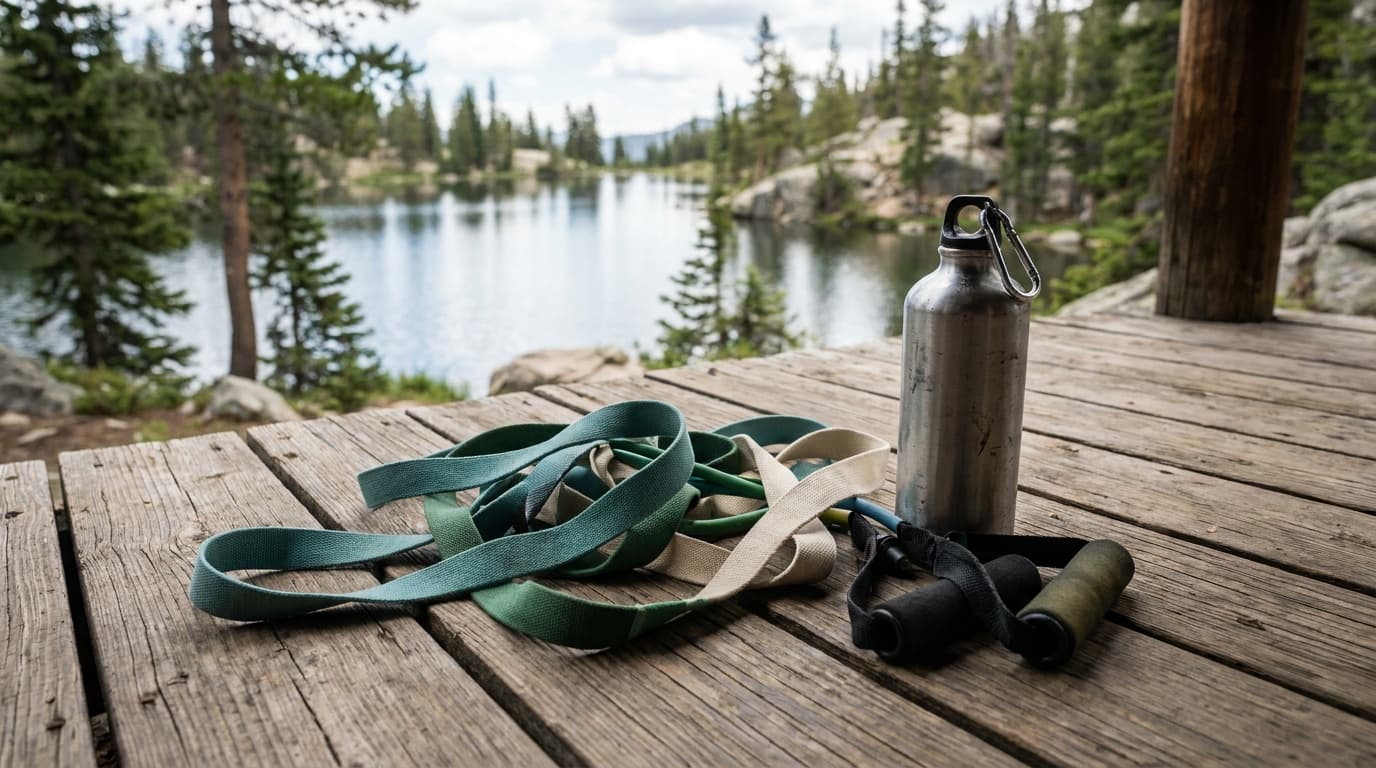
Flat loop bands (also called therapy bands or mini bands), like the Fit Simplify Resistance Loop Bands, are flat strips of latex or fabric. They wrap around ankles, knees, or thighs without a hard attachment point. That geometry is ideal for glute bridges, clamshells, lateral band walks, monster walks, and hip abduction work. They are a staple of rehab and warm-up routines because they apply resistance close to the joint without requiring a hand grip.
Handles, anchors, and exercise range
The door anchor is what gives tubes their gym-like versatility. Loop the anchor over a door, close it, and you have a fixed attachment point at any height. This lets you replicate the movement patterns of a cable machine: high-to-low cable flye for chest, low-to-high for serratus and upper chest, straight pulldown for lats. The handle distributes grip load across four fingers rather than digging into your palm.
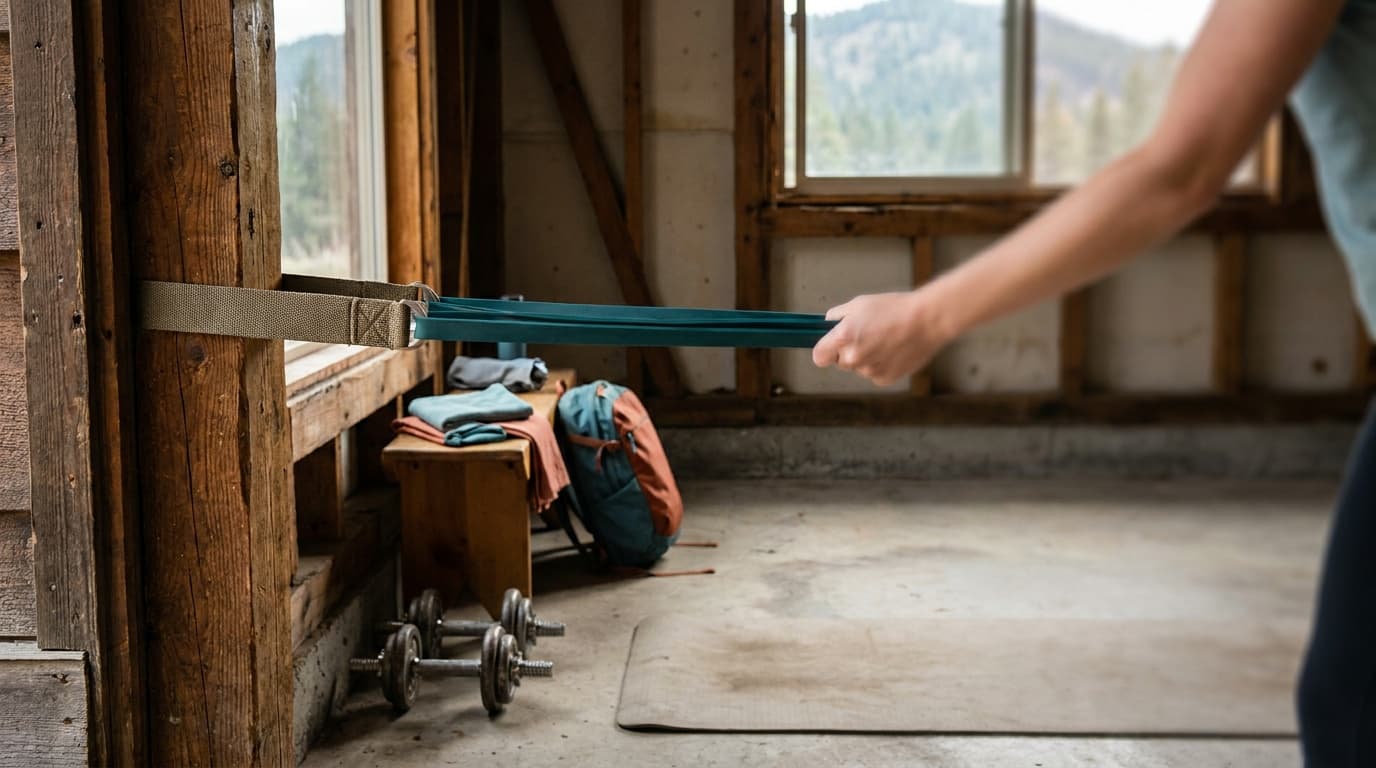
Flat bands have no attachment hardware. You anchor them by stepping on them or wrapping them around a fixed object, but the loop geometry means they are most naturally used around body parts, not in your hand. You can grip a flat band, but it cuts into the palm under real load and the band can snap back if your grip shifts.
What tubes do better than flat bands
Vertical pulling
Lat pulldowns and face pulls with a door anchor replicate cable patterns.
Gripped bilateral work
Chest press and overhead press require something to hold.
Resistance stacking
Clip two or three tubes together for heavier loads without new equipment.
Portable warm-up rows
Wrap the anchor in luggage; hotel-room back work takes two minutes to set up.
Grip training crossover
Heavy tube rows add forearm work that flat bands cannot match.
Durability and snap risk
This is where both formats have real limitations you should know before you buy.
Latex tubes degrade with UV exposure, sweat contact, and repeated over-stretching past their rated length. The point where the clip meets the rubber takes the most stress, and a band that breaks or slips under tension can whip toward your face. TheraBand's safety guidance is to watch the attachment point during every set, wear eye protection, and never use a band in a way that could snap it toward your head. Some brands add a backup: Bodylastics runs a patented inner safety cord through each tube to limit snap-back if the outer tube fails. Retire any tube with a nick, tear, or worn spot near the clip.
Flat bands carry a different risk: edge tears. A nick from a ring or a rough surface propagates into a full split, especially in thin latex therapy bands. TheraBand's rule is simple: keep rings and sharp objects away from the band and discard it as soon as you find a nick or tear. Fabric-covered mini bands (often listed as booty bands) resist edge tears and do not roll up the thigh the way thin latex can. They cost a few dollars more and are worth it for hip work.
Check the clip end of every tube and the edges of every loop before you train. A nicked band is a retired band.
Resistance stacking and progression
One underrated tube advantage is stackable resistance. Most tube sets ship five bands with dual-clip handles that accept several tubes at once. TheFitLife's set, for example, is rated from 10 lbs for one tube to 110 lbs with all five clipped together. Real-world numbers are lower: a 2016 lab study of TheraBand elastic bands found measured tension below the maker's reference values for nearly every band, by up to 44 percent. You can still progress a row or press by adding one tube at a time, which is a clean progression model for home training.
Flat bands do not stack safely around joints. Doubling a mini band around an ankle adds uneven pressure and is a pinch risk. Progression with flat bands means buying a thicker band in the next resistance level, which is why sets usually come in three to five widths.
Who should pick which
Buy a tube set if your goal is upper-body strength work at home, you travel and want a full pulling and pressing menu in a bag, or you are building a home gym on a tight budget and want the widest exercise menu from a single purchase. Tubes are also the right call if you are replacing or supplementing cable machine movements.
Buy flat loop bands if your primary focus is glute development, hip strengthening, or lower-body rehab and prehab. Hip-strengthening programs for knee and hip complaints such as patellofemoral pain commonly use flat loop bands because they load the hip abductors and external rotators in positions that tubes cannot replicate cleanly.
Buy both if you are serious about a complete home training setup. A five-tube set and a three-pack of fabric mini bands together cover the full resistance training spectrum and fit in one small bag.
Frequently asked questions
Can I use resistance tubes for glute work instead of flat bands?
You can wrap a tube around your ankles for lateral walks, but the clip hardware digs in and the round profile slides more than a flat band. For anything anchored at the knee or thigh, a fabric mini band fits the anatomy better and stays in place without adjustment between reps.
How much resistance do I actually need for upper-body work with tubes?
For most people starting out, a 10–20 lb tube covers rows and bicep curls; 20–30 lbs handles lat pulldowns and chest press. Because tube resistance increases toward the end of the range of motion, a band that feels easy in the first few inches provides real challenge at full extension. Start lighter than you think you need.
Are fabric mini bands worth the extra cost over latex loop bands?
Yes, for thigh and hip work. Thin latex can roll up the thigh, and a nicked edge can split. Fabric bands stay flat and resist rolling. For wrist and ankle prehab where the band is off the body between reps, latex is fine.
Where these numbers come from
| Claim | Source | Checked |
|---|---|---|
| TheFitLife tube set: five tubes rated 10 to 110 lbs stacked, door anchor, handles, ankle straps, carry bag | TheFitLife, 110 lb resistance band set | Sep 2026 |
| TheFitLife set stackable to 110 lbs (150 lb version sold separately), natural latex, 1-year warranty | TheFitLife listing on Amazon, ASIN B07KFSCD47 | Sep 2026 |
| Fit Simplify loops: 12 x 2 in., five color-coded levels, carry bag and instruction guide | Fit Simplify listing on Amazon, ASIN B01AVDVHTI | Sep 2026 |
| Band tension rises as the band stretches; measured tension ran below the maker's reference values, by up to 44% | Uchida et al., Thera-Band elastic band tension, J Phys Ther Sci 2016 | Sep 2026 |
| Store out of sunlight, keep away from rings, discard nicked bands, watch the attachment point, wear eye protection | TheraBand, care and safety | Sep 2026 |
| Bodylastics tubes carry a patented inner safety cord | Bodylastics, individual band | Sep 2026 |
Resistance figures are the makers' ratings, not Kit Authority measurements.
For specific picks, see our guide to the best resistance tubes with handles. Browse all fitness guides or read how we research and rate gear.
Recommended gear
Our current top picks from the Best resistance tubes with handles (2026) guide, if you are ready to buy.

WHATAFIT
WHATAFIT Resistance Bands with Handles
Best Overall
Kit Score 8.7/10
$22.07 Price checked Oct 23, 4:16 PM CDT
Best for: Home trainers and travelers who want a full-featured tube set with every accessory included at a budget-friendly price.
- Complete kit out of the box: handles, ankle straps, door anchor, and carry bag with no add-ons needed
- Carabiner clips are small and fiddly when switching bands between exercises, which slows transitions
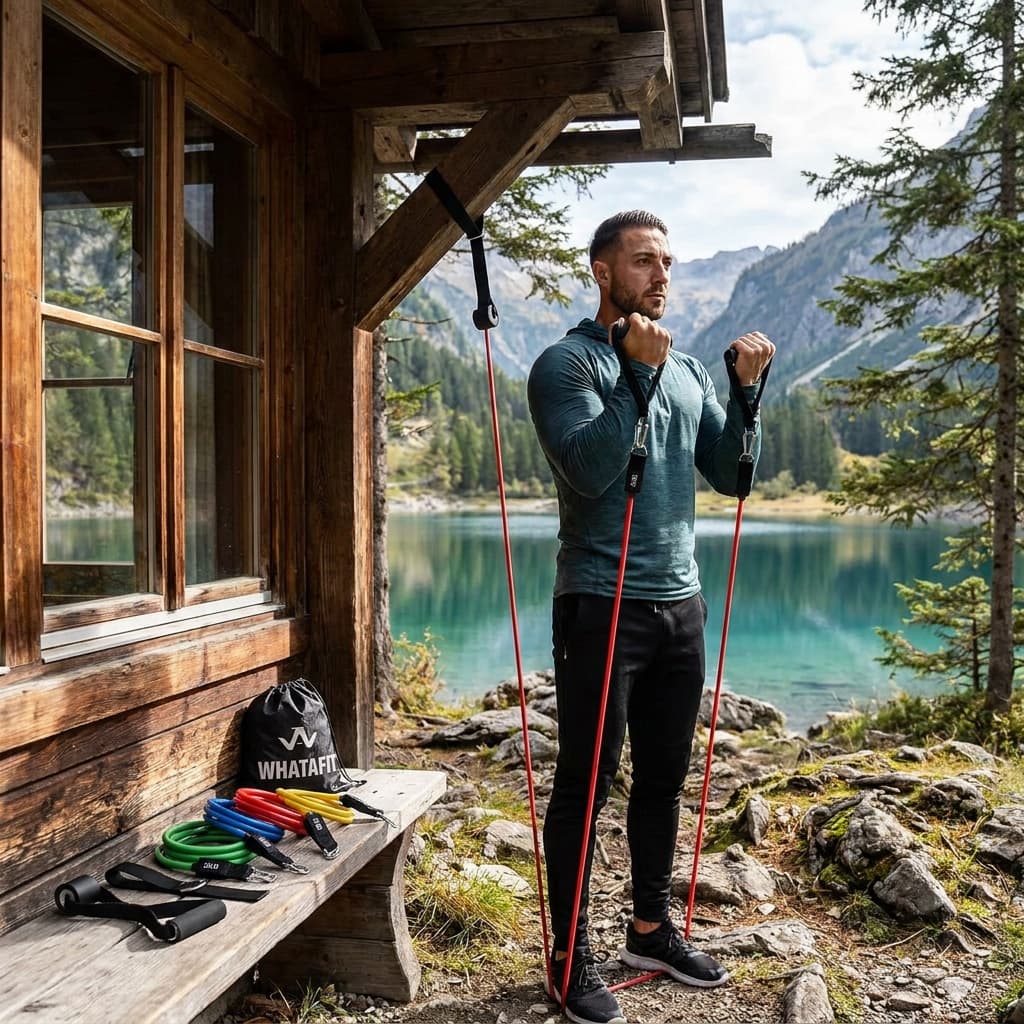
- Resistance levels
- 5 tubes: 10, 20, 30, 40, 50 lbs
- Stackable max
- 150 lbs combined
- Tube material
- 100% natural latex
- Included accessories
- 2 cushioned handles, door anchor, 2 ankle straps, carry bag, exercise guide
About this pick
Five color-coded latex tubes spanning 10 to 50 lbs stack to 150 lbs of combined resistance, paired with cushioned handles, door anchor, and ankle straps for a complete full-body home gym in a carry bag. Amazon's Choice in the category with 4.6 stars across 35,000+ ratings.
Strengths
- Complete kit out of the box: handles, ankle straps, door anchor, and carry bag with no add-ons needed
- Five stackable resistance levels give genuine progression from rehabilitation loads up to moderate strength work
- Priced well below most comparable complete sets, making it accessible for beginners and travelers alike
Weaknesses
- Carabiner clips are small and fiddly when switching bands between exercises, which slows transitions
- No protective inner safety cord, so tubes are more vulnerable to snap-back on overextension than premium competitors
Kit Score breakdown
BODYLASTICS
Bodylastics Patented Resistance Band Set with Snap Reduction Tech
Best Premium
Kit Score 8.6/10
$61.97 Price checked Oct 23, 4:16 PM CDT
Best for: Serious home gym users, frequent travelers, and anyone training at high resistance levels daily who wants the confidence of anti-snap safety tech and a lifetime band warranty.
- Patented internal anti-snap cord is a genuine safety differentiator, not marketing copy: it physically stops a failing tube from snapping back
- Higher price than budget tube-band sets for what is functionally a similar exercise experience
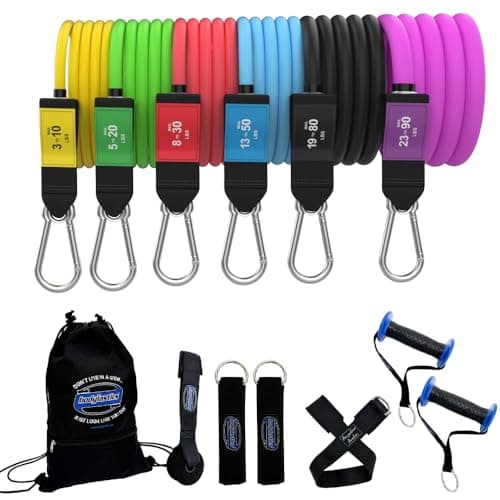
- Type
- Tube bands with handles, patented internal safety cord
- Resistance levels
- 3, 5, 8, 13, 19 lbs individually; stackable to 190 lbs
- Material
- Malaysian latex with internal nylon anti-snap cord
- Included accessories
- Handles, ankle straps, door anchor, carry bag
- Safety feature
- Patented internal cord shortens if a tube fails, containing the band
- Warranty
- Limited lifetime replacement guarantee on bands
About this pick
Bodylastics built its reputation on the patented snap-reduction inner cord: if a latex tube fails, the internal nylon cord stays intact and contains the band instead of letting it whip back. Five resistance levels spanning 3 to 19 lbs stack to 190 lbs total, and the limited lifetime replacement guarantee backs long-term daily use.
Strengths
- Patented internal anti-snap cord is a genuine safety differentiator, not marketing copy: it physically stops a failing tube from snapping back
- Five resistance levels spanning 3 to 19 lbs individually stack to 190 lbs, covering everything from light rehab to serious strength work
- Limited lifetime replacement guarantee on bands, and nearly two decades of market presence back the durability claim
Weaknesses
- Higher price than budget tube-band sets for what is functionally a similar exercise experience
- Handles wear faster than the bands themselves; some owners replace handles before bands
Kit Score breakdown
THEFITLIFE
TheFitLife Exercise Resistance Bands with Handles
Editor's Choice
Kit Score 8.5/10
$25.98 Price checked Oct 23, 4:16 PM CDT
Best for: Intermediate home gym users who prioritize handle comfort and want room to progress into higher resistance tiers without buying a new set.
- Larger-than-average handle diameter and sweatproof foam surface earn consistent praise from owners for grip comfort across long workouts
- Included exercise guide is thin, so beginners without a structured program may not make the most of the set
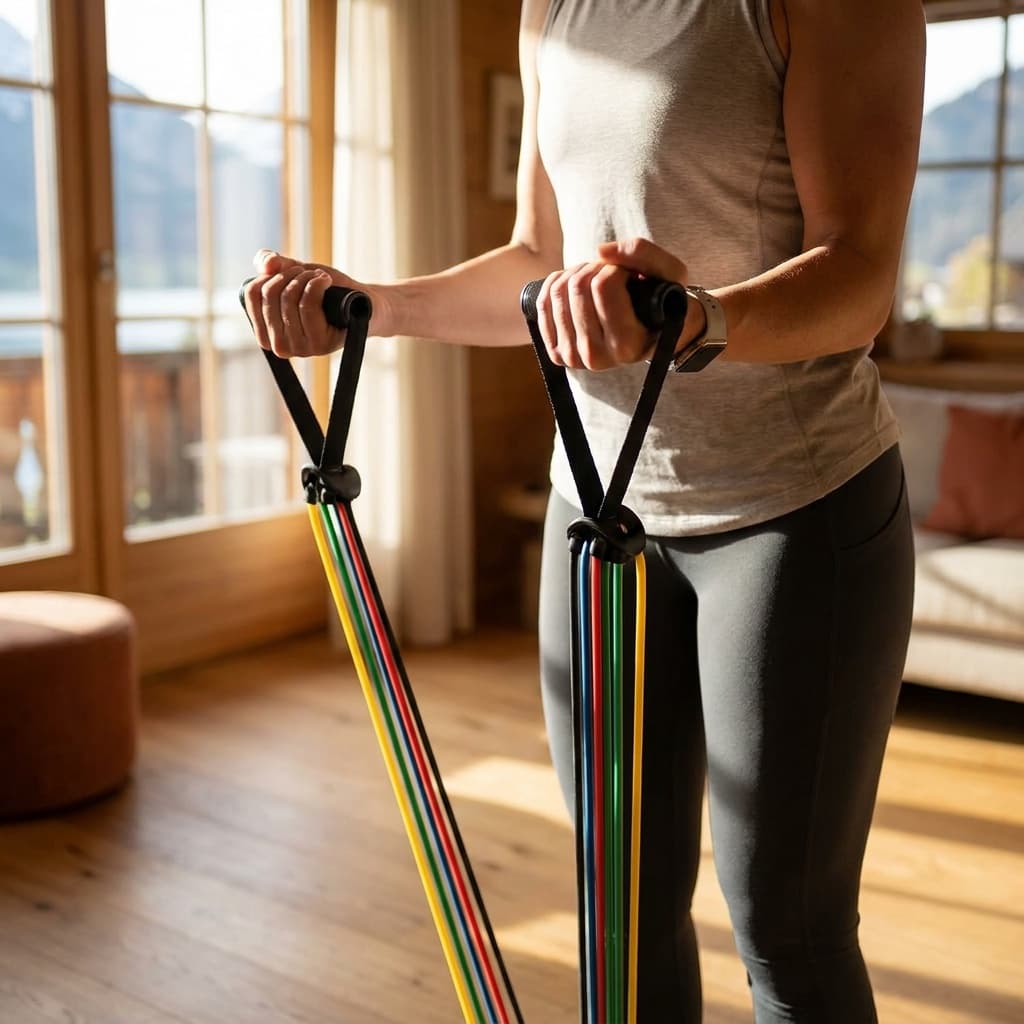
- Resistance levels
- 5 tubes, 10 to 110 lbs stacked on the linked set; a 150 lb version is also sold
- Tube material
- Natural latex, reinforced connection points
- Handle design
- Large, soft sweatproof and skidproof foam handles
- Included accessories
- 2 large handles, door anchor, 2 ankle straps, carry bag
- Notable feature
- Bands marked with equivalent weight for easy selection
About this pick
TheFitLife stands out in a crowded category with larger foam handles praised by owners for comfort and grip retention during sweaty sessions, plus natural latex tubes with reinforced connection points, rated from 10 lbs to 110 lbs stacked (a heavier 150 lb version is also sold). Backed by a 1-year warranty.
Strengths
- Larger-than-average handle diameter and sweatproof foam surface earn consistent praise from owners for grip comfort across long workouts
- Weight-labeled bands eliminate guesswork when selecting resistance for each exercise
- Also sold in a heavier 150 lb version for lifters who outgrow the 110 lb set
Weaknesses
- Included exercise guide is thin, so beginners without a structured program may not make the most of the set
- Higher-resistance variants carry a meaningfully higher price than the base set
Kit Score breakdown
Keep going
Complete loadoutHome calisthenics kitA compact strength and conditioning setup built around five tools that cover pushing, pulling, assistance, cardio, and floor work.
Researched, not hands-on tested
Updated Sep 25, 2026Our recommendations draw on manufacturer documentation, retailer listings, owner feedback, and comparisons with alternatives.
As an Amazon Associate I earn from qualifying purchases. We may earn a commission from links here, at no extra cost to you. How we research →