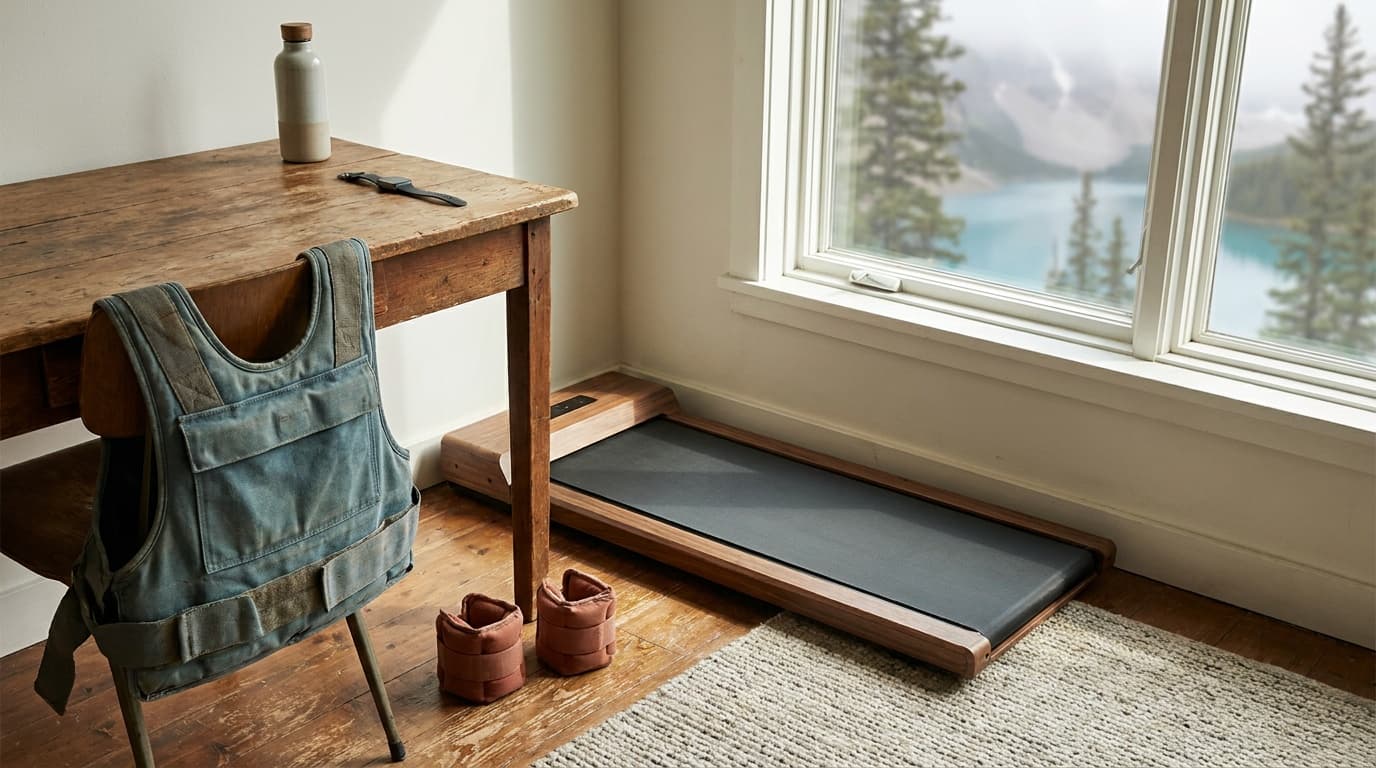
The right exercise bike keeps you consistent; the wrong one becomes a clothes rack. Here is how to cut through the options and find the one that actually fits your training, your body, and your room.
Bike type: the first decision
Three distinct styles dominate the home market, and each serves a different rider.
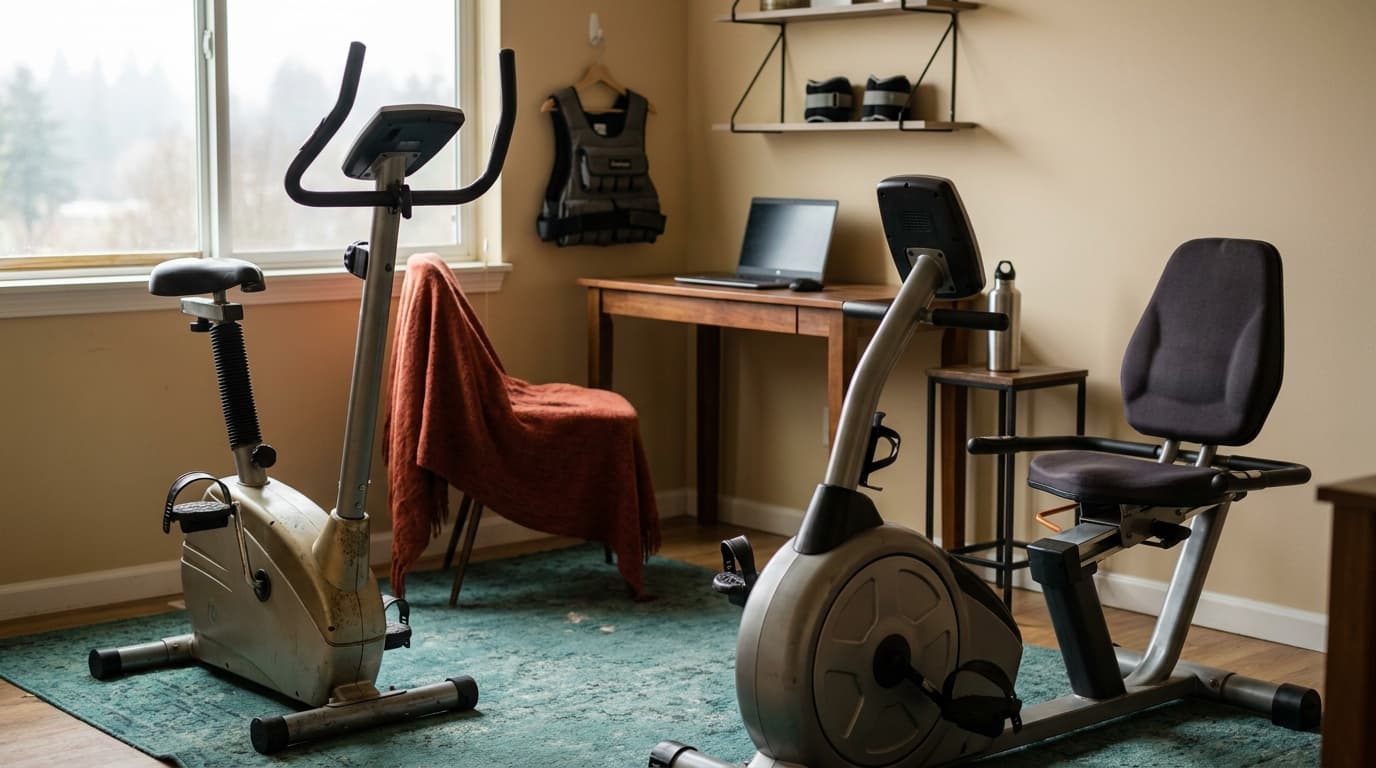
Upright bikes put you in roughly the same position as a road bike: slightly forward, weight through the pedals. They work the quads, glutes, and core stabilizers and suit general aerobic fitness or cross-training alongside other workouts. The seat is narrow and can be uncomfortable for long sessions until you adapt or swap the saddle.
Recumbent bikes have a reclined seat with a backrest and pedals out in front. The supported position removes most spinal loading and reduces hip-flexor stress, making recumbent bikes like the Schwinn 230 Recumbent Bike a strong choice for people managing lower-back pain, recovering from knee surgery, or needing low-impact cardio for the long term. The trade-off is reduced core engagement and a larger floor footprint.
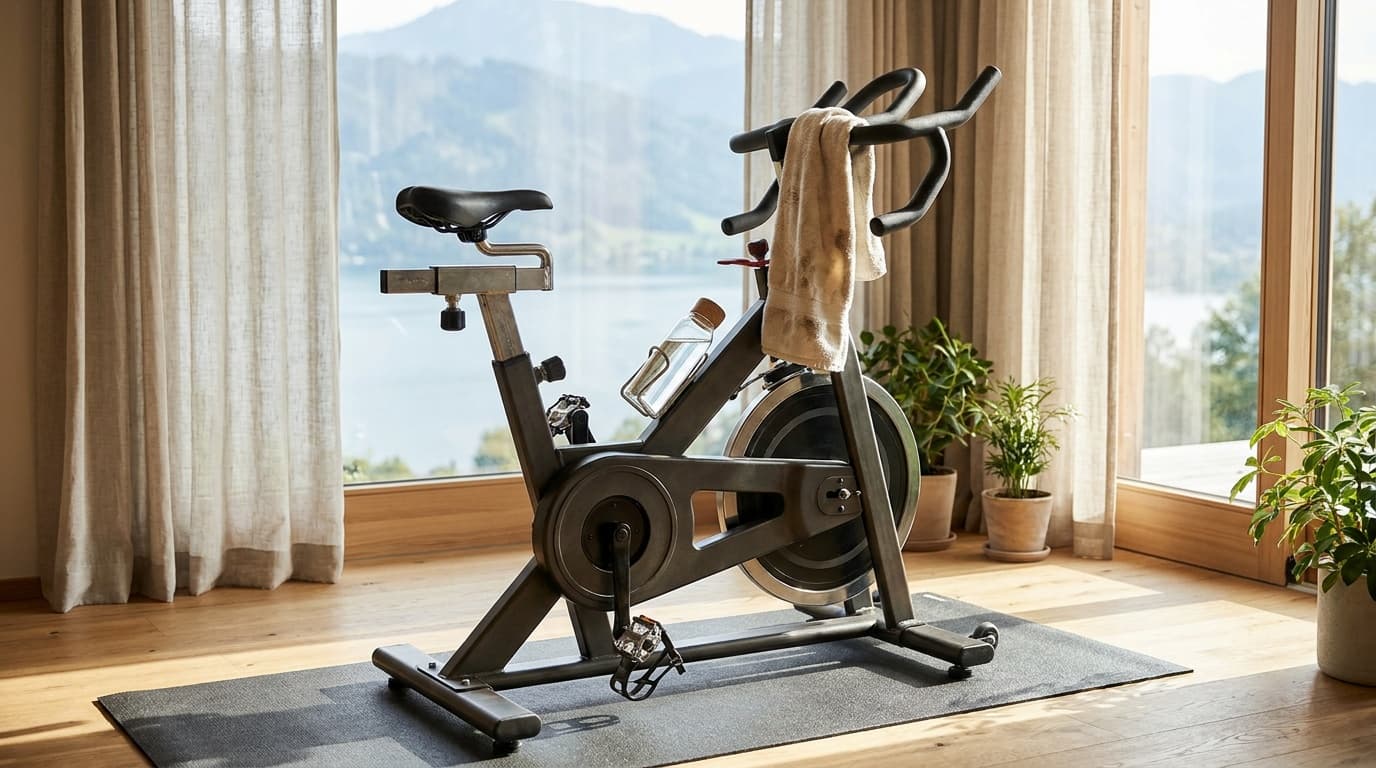
Spin bikes (also called indoor cycling bikes) are built around a heavy flywheel and a riding position that closely mimics a road or track bike. They handle out-of-saddle efforts and hard intervals well, and the feel is the closest you get to real cycling. They require more setup knowledge (fit is critical), and most lack a detailed console, expecting you to pair a phone or tablet instead.
Resistance systems: magnetic vs friction
Friction resistance uses a felt or leather pad pressing against the flywheel. It is cheap to produce and found on budget spin bikes, but it wears out, squeaks, and gives coarse resistance jumps.
Magnetic resistance uses opposing magnets to create drag without contact. It is silent, requires almost no maintenance, and delivers smooth, consistent resistance across the full range. For home use, magnetic is the clear call. Most uprights and recumbents above $300 use magnetic systems; spin bikes start using them reliably around $500.
Within magnetic resistance, direct-contact magnetic (the magnets physically move closer to the flywheel) is common at mid-range. Eddy-current (electromagnetic coil, no moving parts) is quieter still and found on higher-end machines like the Schwinn IC4 or Bowflex C6.
Flywheel weight and ride feel
Flywheel weight is most relevant for spin bikes. A heavier flywheel stores more rotational momentum, smoothing out the dead spot at the top and bottom of each pedal stroke. Light flywheels (under 14 lb) feel choppy and make it harder to maintain cadence. 18–22 lb is the practical threshold for a smooth, natural stroke. Beyond 30 lb, the returns diminish for most riders.
Uprights and recumbents use lighter flywheels (often 7–15 lb) because the geometry and target cadence are different. Do not penalize an upright for a 10 lb flywheel; that spec only matters cross-category when comparing spin bikes.
Console, app connectivity, and Bluetooth
Console depth varies from a basic LCD showing speed, time, and calories to a full Android tablet with live instructor classes. What you actually need depends on how you train.
If you follow structured programs or need coaching to stay motivated, a bike with a built-in screen (Peloton, NordicTrack, Bowflex VeloCore) or solid Bluetooth to a third-party app (Zwift, Peloton app, Apple Fitness+) is worth the premium. If you ride to a playlist and track your own effort, a simple console and a phone holder is plenty.
Key connectivity specs to check: Bluetooth ANT+ dual-band allows simultaneous connection to a heart-rate monitor and a fitness app. Bluetooth FTMS (Fitness Machine Service Protocol) means the bike broadcasts resistance and cadence data in a standard format that Zwift and most training apps can read without a proprietary bridge.
Buying a connected bike you will not use the platform for is paying for a screen you will ignore; buying a dumb bike when you need accountability is the fastest route to skipping sessions.
Seat comfort, adjustability, and max user weight
Seat adjustability matters more than seat padding. At minimum, look for four-way seat adjustment (up/down and fore/aft) so you can set a proper knee angle (25–35 degrees of bend at the bottom of the stroke). Spin bikes often add handlebar height and reach adjustment, which matters for replicating your road fit.
Max user weight ratings on budget bikes are sometimes optimistic. If you are near the stated limit, go one tier up: a 300 lb rated bike used at 290 lb will wear faster and flex in ways you will feel. Reputable brands (Schwinn, Sunny Health, Sole, NordicTrack) tend to publish conservative numbers; treat no-name ratings with more skepticism.
For recumbent bikes specifically, check the seat-to-pedal distance range. Riders above 6'2" or below 5'3" sometimes run out of adjustment on compact frames.
Match bike type to your goal
Joint-friendly daily cardio
Recumbent with magnetic resistance and back support
General fitness and cross-training
Upright with 8+ resistance levels and basic console, like the [Marcy NS-1201U Upright Bike](/api/go?product=marcy-ns-1201u-upright-bike&retailer=amazon&article=how-to-choose-an-exercise-bike)
High-intensity intervals and cycling performance
Spin bike with 18+ lb flywheel and ANT+ Bluetooth
Low-noise apartment riding
Any magnetic bike; eddy-current if budget allows
Family or multi-user household
Four-way adjustable seat; check max weight for all riders
Budget tiers and what changes at each level
Under $300: Friction resistance or light magnetic, minimal console, narrower adjustment range. Workable for casual use; durability is the risk.
$300–$600: Solid magnetic resistance, four-way seat adjustment, basic LCD or Bluetooth, max user weight usually 275–300 lb. The most practical tier for most home riders.
$600–$1,200: Eddy-current resistance, heavier flywheels on spin bikes (20+ lb), dual-band Bluetooth, better bearings and frames, longer warranties. Worth it if you ride more than four times per week.
Above $1,200: Built-in touchscreen with subscription content, auto-resistance adjustment, premium frames. The platform subscription (typically $15–$44/month) is a real ongoing cost to factor into the total.
Frequently asked questions
How much flywheel weight do I actually need on a spin bike?
For most home riders doing mixed steady-state and interval work, 18–22 lb (8–10 kg) delivers a smooth, predictable stroke. Lighter than 14 lb and you will notice the choppiness, especially at higher cadences. Going above 30 lb adds cost and weight without a meaningful training benefit for non-competitive cyclists.
Is a recumbent bike a real workout or just easy cardio?
A recumbent bike can absolutely deliver a genuine cardiovascular workout. Because it reduces perceived exertion (the supported position is more comfortable), some riders underestimate the output. Use a heart-rate monitor or power-based target to make sure you are working at the intended intensity. For people managing back or knee issues, recumbent is often the only option that allows consistent training, which matters far more than the style of bike.
Do I need a Peloton-style subscription to get value from a connected bike?
No. Many well-regarded bikes (Schwinn IC4, Bowflex C6, Sole SB700) include Bluetooth FTMS and ANT+ so you can use Zwift, the Peloton app on your own tablet, or Apple Fitness+ without being locked to a proprietary platform. You pay for the app separately, usually at a lower monthly cost, and you are not tied to one manufacturer's ecosystem if you upgrade bikes later.
For specific picks across every tier and style, see our guide to the best exercise bikes. Browse all fitness guides or read how we research and rate gear.
Recommended gear
Our current top picks from the Best exercise bikes for home cardio (2026) guide, if you are ready to buy.
SCHWINN
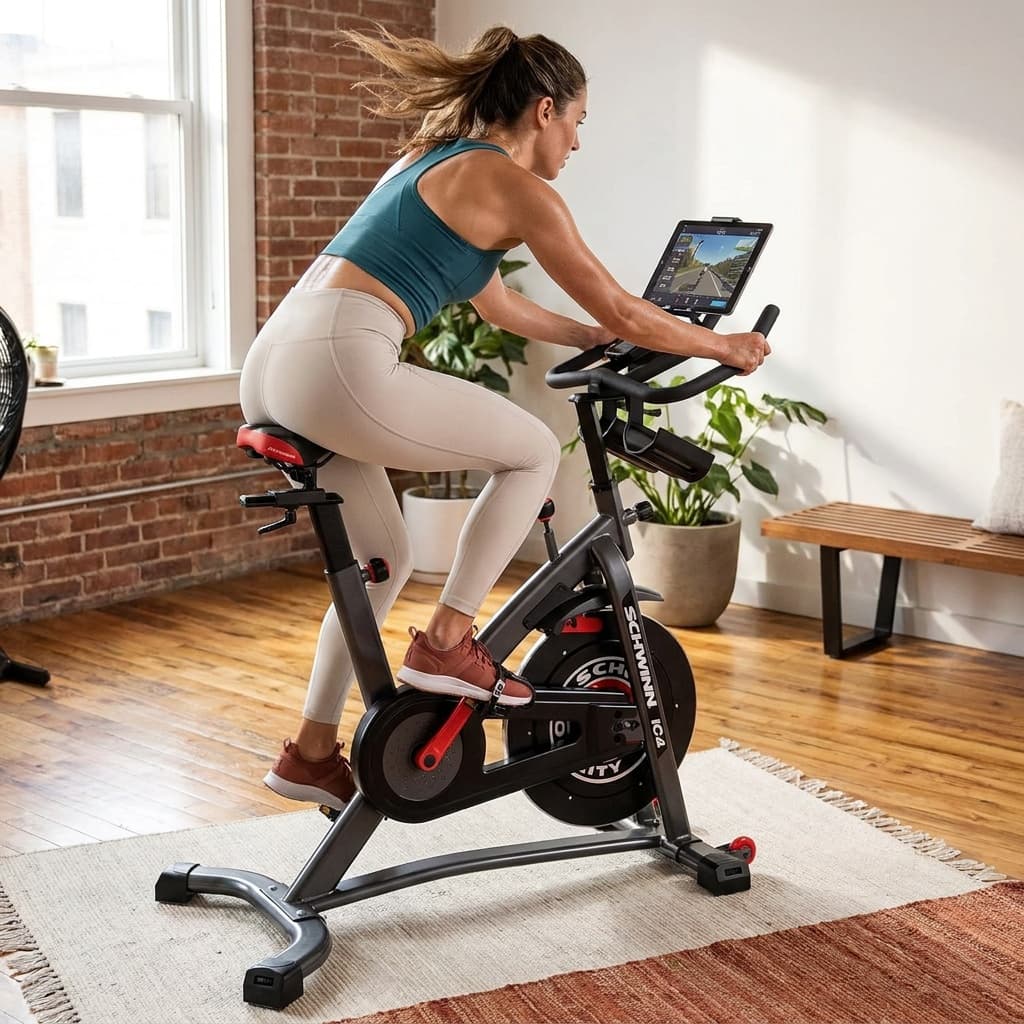
Schwinn IC4 Indoor Cycling Bike
BEST OVERALL
Kit Score 8.5/10
$899.00 Price checked Oct 23, 4:16 PM CDT
Best for: Riders who want a serious cardio and cycling training tool that connects to their preferred app without paying for a proprietary screen.
- Belt drive with magnetic resistance runs quietly; BowFlex lists a 40 lb flywheel for the identical C6 (Schwinn does not publish one)
- Stock saddle is narrow and firm; most serious riders swap it out or add a cover
- Flywheel
- Not published by Schwinn; BowFlex lists 40 lb for the C6, which Wirecutter calls the same bike
- Resistance
- 100 magnetic levels (manual)
- Max user weight
- 330 lb
- Seat/handlebar adjust
- 4-way (vertical + horizontal)
- App compatibility
- JRNY, Peloton, Zwift, Kinomap, Explore the World, Apple Health, Google Fit; Schwinn lists Bluetooth as 'Partial FTMS'; includes Bluetooth HR armband and pair of 3 lb dumbbells
- Dimensions
- 54.6" D x 30.7" W x 51.8" H
About this pick
The IC4 pairs 100 levels of quiet magnetic resistance with dual-sided SPD and toe-cage pedals and Bluetooth (Schwinn calls it partial FTMS) that Schwinn lists as working with JRNY, Peloton, Zwift, Kinomap, and Explore the World. It includes a heart rate armband, a media holder, a USB charging station, and a pair of 3 lb dumbbells, so you get a near-complete studio setup without a mandatory subscription.
Strengths
- Belt drive with magnetic resistance runs quietly; BowFlex lists a 40 lb flywheel for the identical C6 (Schwinn does not publish one)
- Bluetooth pairs with JRNY, Peloton, Zwift, Kinomap, and Explore the World, so you are not locked into one ecosystem
- 4-way adjustable seat and handlebars fit a wide rider range; dual-sided pedals suit both cycling shoes and trainers
Weaknesses
- Stock saddle is narrow and firm; most serious riders swap it out or add a cover
- Manual resistance control means apps cannot auto-adjust intensity mid-workout
Kit Score breakdown
PELOTON
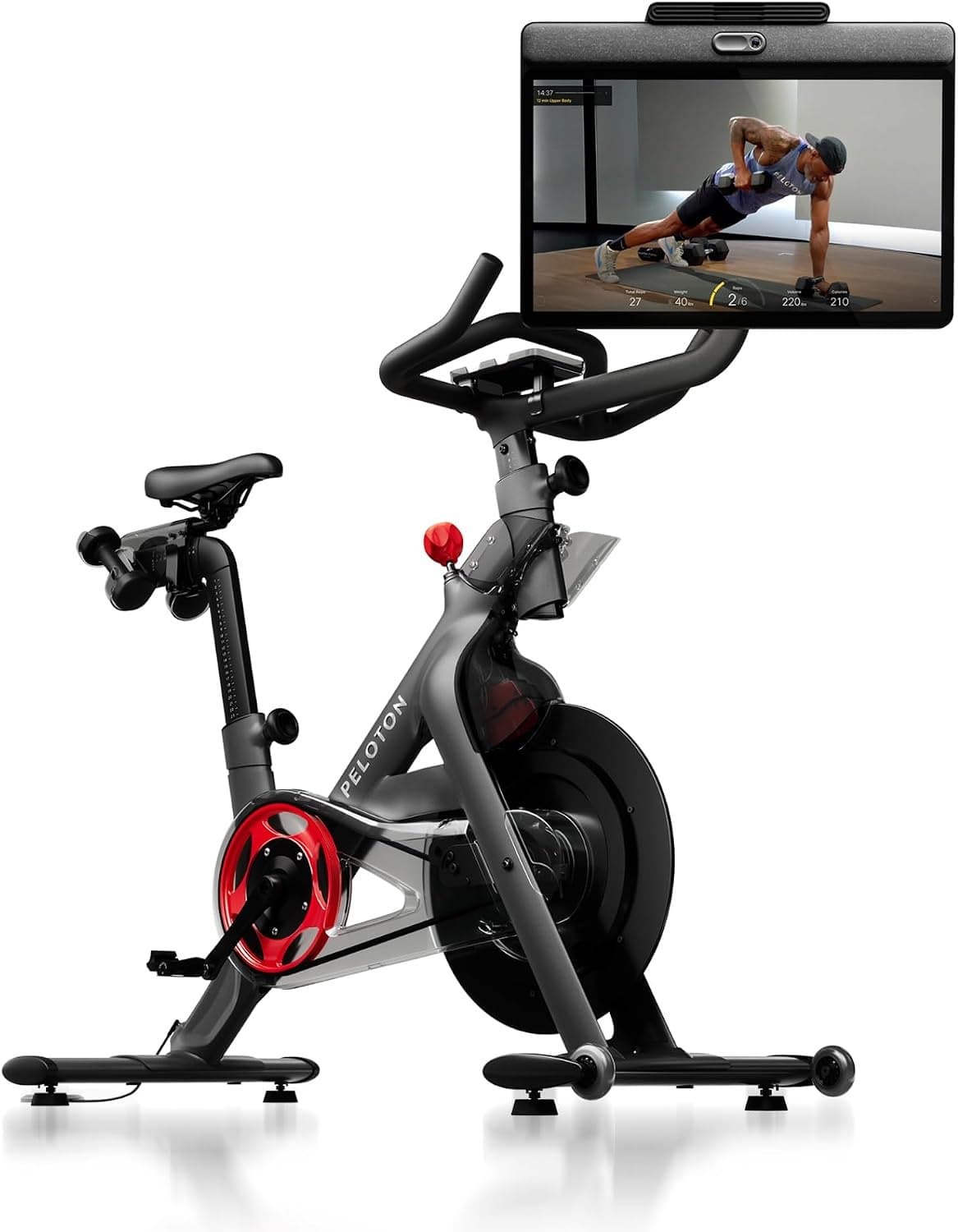
Peloton Cross Training Bike+
BEST CONNECTED
Kit Score 7.7/10
$2,695.00 Price checked Oct 23, 4:16 PM CDT
Best for: Peloton households that ride most days and will use the off-bike strength classes the camera supports.
- Auto-resistance follows the class, so you never reach for the knob
- The most expensive bike in this guide, before the membership
- Resistance
- Magnetic, digital, with auto-resistance that follows class cues
- Max user weight
- 297 lb
- Rider height
- 4 ft 11 in to 6 ft 5 in
- Dimensions
- 54" L x 22" W x 60" H; 144 lb (Peloton)
- Screen and membership
- 23.8" HD swivel touchscreen with movement-tracking camera; paid All-Access Membership required
- Pedals
- Delta-compatible clip-in pedals
About this pick
The Cross Training Bike+ is Peloton's top bike. Its resistance changes automatically to match the instructor's cues, the 23.8-inch screen swivels for floor classes, and a movement-tracking camera counts reps and suggests weights in strength workouts. It fits riders from 4 ft 11 in to 6 ft 5 in and up to 297 lb. Like the standard bike, it needs the All-Access Membership.
More specifications
- Warranty
- 5-year frame, 12 months touchscreen and components
Strengths
- Auto-resistance follows the class, so you never reach for the knob
- Largest screen here, and it swivels for strength and yoga
- Movement-tracking camera and built-in fan
Weaknesses
- The most expensive bike in this guide, before the membership
- 297 lb rider limit and Delta-only pedals
Kit Score breakdown
PELOTON
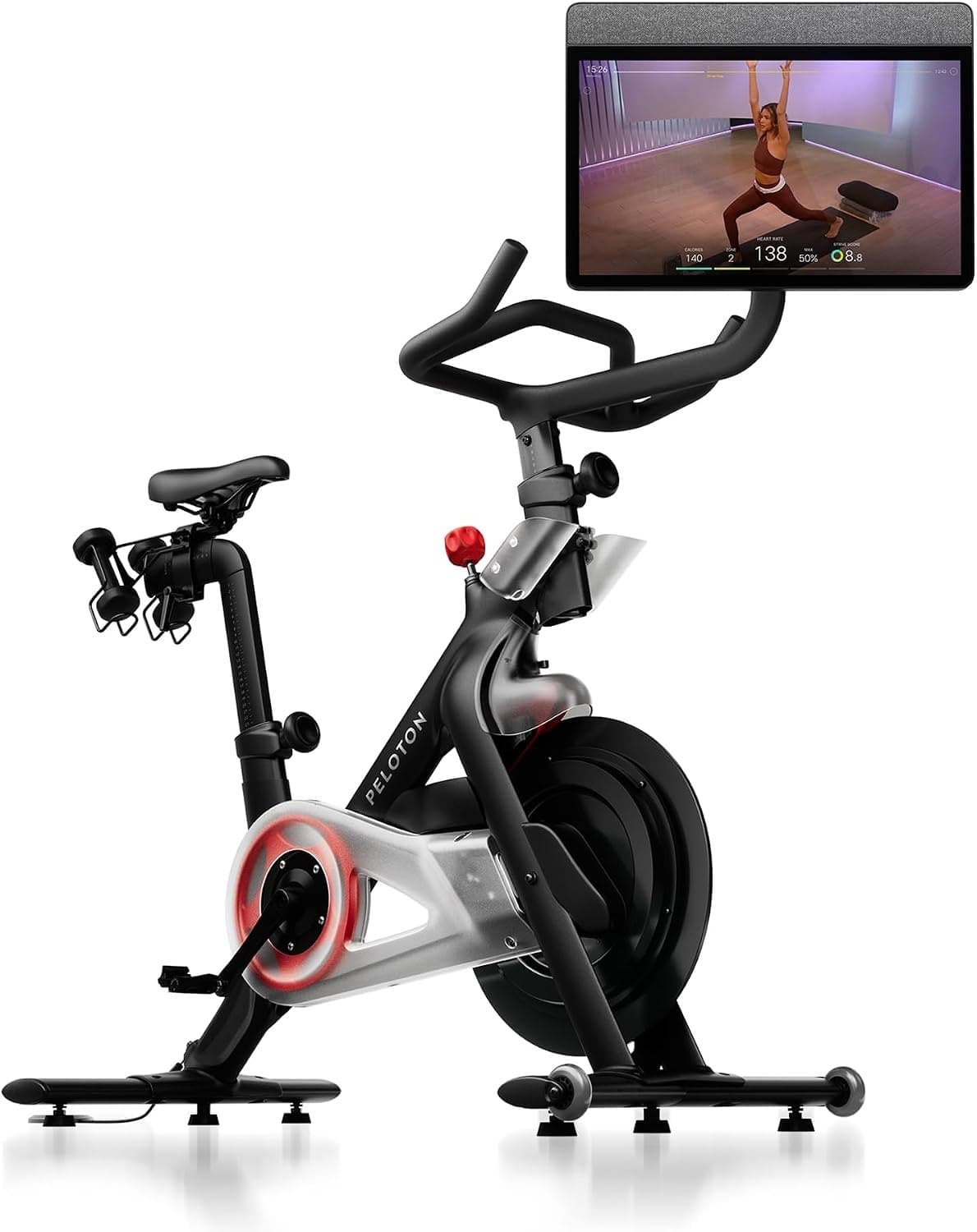
Peloton Cross Training Bike
BEST FOR CLASSES
Kit Score 7.9/10
$1,695.00 Price checked Oct 23, 4:16 PM CDT
Best for: Riders who will actually take classes and want Peloton's instructors, without paying for auto-resistance.
- Peloton's class library, with a swivel screen for off-bike workouts
- The membership is required for Peloton content and costs as much per year as a budget bike
- Resistance
- Magnetic, manual resistance knob
- Max user weight
- 297 lb
- Rider height
- 4 ft 11 in to 6 ft 5 in
- Dimensions
- 54" L x 23" W x 61" H; 129 lb (Peloton)
- Screen and membership
- 21.5" HD swivel touchscreen; paid All-Access Membership required for Peloton content
- Pedals
- Delta-compatible clip-in pedals
About this pick
Peloton's Cross Training Bike replaced the original Peloton Bike in October 2025. It keeps the manual resistance knob but adds a 21.5-inch HD touchscreen that swivels, so the same screen runs strength, yoga, and Pilates classes off the bike. Peloton fits it to riders from 4 ft 11 in to 6 ft 5 in and up to 297 lb on a 54 by 23 inch footprint. Classes need the All-Access Membership.
More specifications
- Warranty
- 5-year frame, 12 months touchscreen and components
Strengths
- Peloton's class library, with a swivel screen for off-bike workouts
- Compact footprint: about 4 by 2 feet
- Sold and shipped by Amazon, with Peloton's 5-year frame warranty
Weaknesses
- The membership is required for Peloton content and costs as much per year as a budget bike
- Delta-compatible pedals mean cycling shoes with Delta cleats, and the 297 lb limit is lower than the Schwinn IC4's 330 lb
Kit Score breakdown
Keep going
Free toolHome Cardio Space CheckerWill a rowing machine, exercise bike, or walking pad fit your room?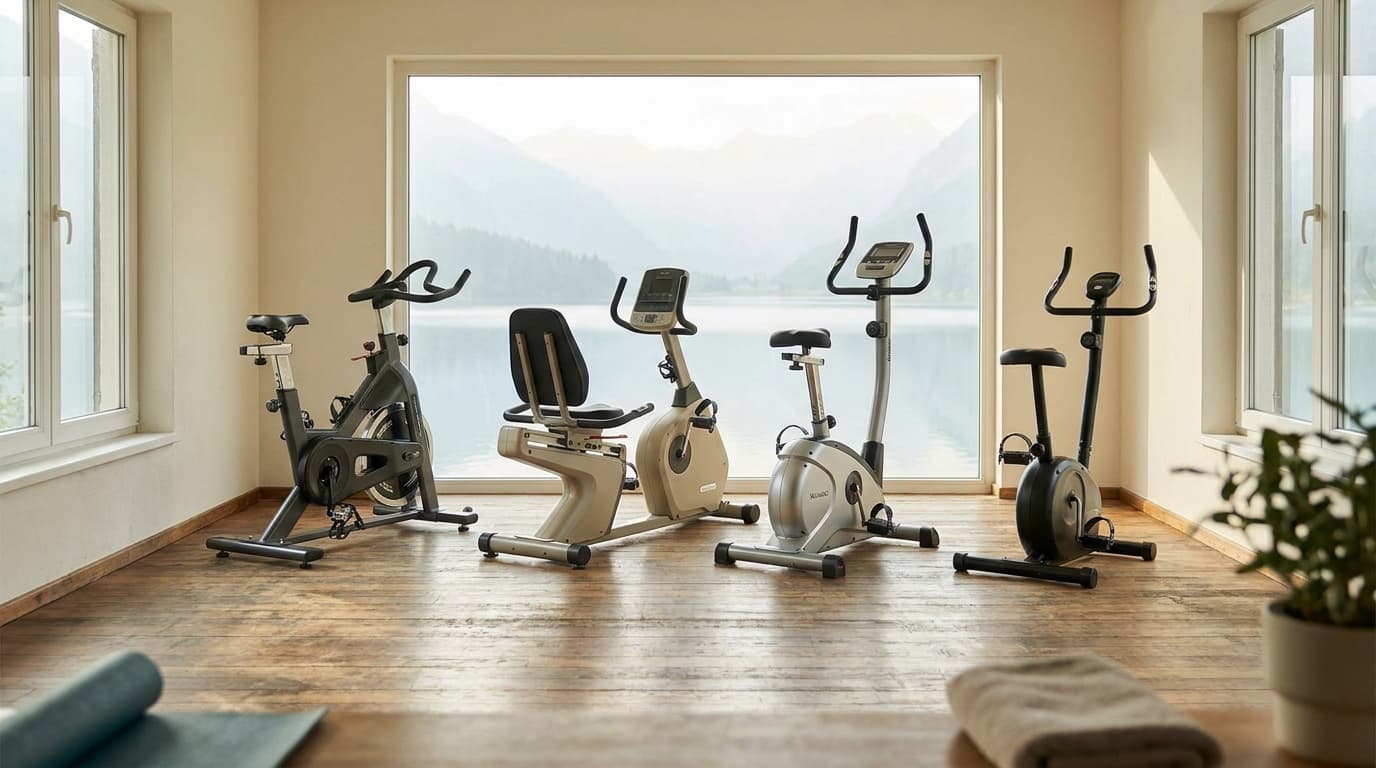
Researched, not hands-on tested
Updated Jun 4, 2026Our recommendations draw on manufacturer documentation, retailer listings, owner feedback, and comparisons with alternatives.
As an Amazon Associate I earn from qualifying purchases. We may earn a commission from links here, at no extra cost to you. How we research →