The right jump rope is the one matched to your goal: a cheap mismatch will trip you, sting your forearms, or quit on you mid-workout. Get the rope type and the length right and almost everything else falls into place.
Match the rope type to what you actually want to do
Four rope materials cover almost every use case, and each trades speed against forgiveness.
PVC / speed cable. A thin plastic-coated steel cable is the workhorse. It is light, fast, and cheap, which makes it the default for general fitness and the go-to for double-unders once you have the rhythm. The downside: a fast rope is less forgiving, so mistimed swings can sting bare skin.
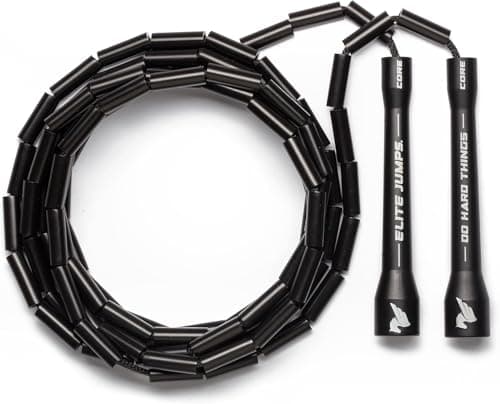
Beaded. Plastic segments threaded over a cord. The beads add audible rhythm and a satisfying click on each pass, and they hold an arc well, which makes beaded ropes like the Elite Jumps Do Hard Things Beaded Jump Rope excellent for learning timing and for crossover footwork. They are slower than cable and the beads can crack on rough concrete over time.
Weighted. Either a heavier rope or weighted handles (commonly 1/4 lb to 1 lb per handle, sometimes more). The extra mass slows the rope, builds shoulder and forearm endurance, and gives you constant feedback on where the rope is. Great for conditioning and beginners who need to feel the swing, poor for max-speed work.
Leather. The traditional boxing-gym rope. It is heavier than thin cable, swings with a steady arc, and is quiet and durable. Leather is the classic choice for boxers and for sustained footwork drills, though it stretches over time and does not like getting wet.
Choose the rope for the workout you want to do most, not the one you hope to do someday.
Size the rope to your height (the rule that fixes most problems)
Most people buy a rope that is too long, then fight a sloppy, dragging arc. Sizing takes ten seconds.
How to size your rope
Step on it
Stand with one foot on the middle of the rope and pull both handles straight up alongside your body.
Beginner length
The handle tops should reach roughly to your armpits. A little extra length is forgiving while you learn.
Experienced length
For speed and double-unders, shorten so the handle tops hit between mid-chest and the sternum. A shorter rope spins faster and clears tighter.
Quick formula
As a starting point, add about 3 feet to your height. A 5'6\" jumper lands near an 8.5 ft rope before fine-tuning.
Dial it in
Adjust in small increments. If the rope slaps the floor hard in front of you, it is too long; if you keep clipping your head or feet, it is too short.
Cable thickness and why it changes the feel
For cable ropes, the diameter of the wire sets the personality of the rope.
Thin cables (around 1.5–2.5 mm, often a coated 2 mm) are light and whip fast, which is why dedicated speed and competition ropes run thin. They reward clean form and punish sloppy form: a thin cable can tangle and is easier to kink or fray if you drag it on rough ground.
Thicker cables (roughly 3–4 mm, or a fabric-wrapped cable) carry more weight, hold a steady arc, and resist tangling. They feel more controllable for beginners and for longer cardio sets, at the cost of top-end speed. If you are deciding between two coated ropes, the thinner one will feel faster and twitchier and the thicker one will feel calmer and more planted.
A practical middle path: a 2.5 mm coated cable is fast enough for double-unders yet forgiving enough to learn on.
Handle bearings: ball vs sealed vs basic
How the cable attaches inside the handle decides how freely the rope spins, and that is the single biggest factor in whether double-unders feel effortless or fight you.
Ball-bearing handles use small bearings so the cable spins almost frictionlessly. They deliver the fastest, smoothest rotation and are the standard for speed ropes and competitive jumpers.
Sealed-bearing handles wrap the bearing against dust and sweat. You give up a hair of raw speed for durability and a longer service life, which is worth it if you train outdoors or sweat heavily.
Basic pivot or screw eyelet connections (no true bearing) are common on entry-level and beaded ropes. They spin well enough for steady cardio and rhythm work, but they slow under fast rotation and can develop play over time.
For double-unders, prioritize a true bearing. For boxing footwork and conditioning, a smooth basic pivot or a leather rope's natural swing is plenty.
So which rope fits you?
Map your goal to a rope and you will not overthink it.
- Total beginner: a lightly weighted or beaded rope sized to the armpits. The slower swing and clear feedback build clean timing faster than a whippy speed cable.
- General fitness and cardio: a PVC or coated-cable rope, adjustable, mid-thickness. It covers steady jumping, intervals, and the occasional fast set.
- Double-unders and speed work: a thin coated cable (around 2–2.5 mm) on ball-bearing handles, like the WOD Nation Adjustable Speed Rope, sized to mid-chest. Light and fast, with a free spin.
- Boxing and conditioning: a leather rope or a weighted system like the Crossrope Get Lean Set. Steady arc, shoulder and forearm endurance, and durability in a busy gym.
Whatever you pick, favor adjustable length. A re-cuttable cable or a re-clamp system lets you shorten the rope as your skill climbs and lets a partner use the same rope.
Frequently asked questions
What is the best jump rope for a complete beginner?
Start with a beaded or lightly weighted rope sized so the handles reach your armpits. Both swing slower and give you clear feedback on where the rope is, which makes it easier to find a steady rhythm. Once your timing is consistent, you can move to a faster coated cable and shorten the length toward mid-chest.
Do I need a weighted rope or a speed rope for double-unders?
For the actual double-under, a light, fast rope on ball-bearing or sealed-bearing handles is ideal because it spins quickly with little wrist effort. Weighted ropes are useful for drilling: the extra mass slows things down and teaches you to feel the rope's position. Many jumpers practice with a slightly weighted rope, then perform with a thin speed cable.
How do I size a jump rope if I cannot find my exact height on a chart?
Use the step-on test: stand on the middle of the rope and pull the handles up your body. Aim for the handle tops at your armpits if you are learning and at mid-chest to sternum if you want speed. As a quick estimate, add about 3 feet to your height, then fine-tune by trimming or re-clamping in small increments until the arc feels clean.
For specific model picks across each rope type, see our guide to the best jump ropes. Browse all fitness guides or read how we research and rate gear.
Recommended gear
Our current top picks from the Best jump ropes: speed, weighted, and beaded picks guide, if you are ready to buy.
WOD NATION
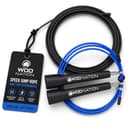
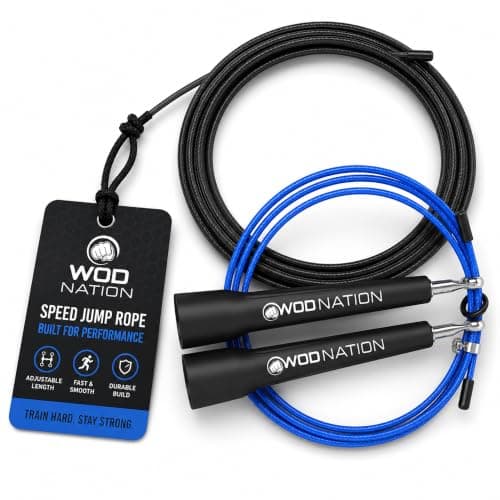
WOD Nation Adjustable Speed Jump Rope
Best Overall
Kit Score 8.7/10
$18.99 Price checked Oct 23, 6:22 AM CDT
Best for: CrossFit conditioning, boxing footwork drills, double-under practice, and anyone who wants a proven speed rope without the premium price tag.
- Consistently rated across a large verified-owner base: 4.5 stars from 14,000-plus ratings
- Coated steel cable frays on concrete within 2 to 3 months of regular outdoor use
- Cable
- UNVERIFIED on maker site: wodnationgear.com returned HTTP 402 and wodnation.com failed TLS; listing/reviewer figures are 2.5 mm coated steel cable, ball-bearing handles
- Handles
- ABS plastic
- Adjustability
- Cut to length; accommodates a wide height range
- Use case
- Speed work, boxing, MMA, CrossFit conditioning
About this pick
The WOD Nation speed rope has held a 4.5-star average across 14,000-plus Amazon ratings, which is a rare combination of volume and consistency at this price. The adjustable alloy steel cable handles speed work and double-under practice reliably without the premium price tag.
Strengths
- Consistently rated across a large verified-owner base: 4.5 stars from 14,000-plus ratings
- Adjustable steel cable supports speed work and double-unders at this price tier
- Exceptional value for CrossFit-level conditioning under $20
Weaknesses
- Coated steel cable frays on concrete within 2 to 3 months of regular outdoor use
- Plastic handles lack the grip feel of knurled aluminum at premium price points
Kit Score breakdown
ELITE JUMPS
Elite Jumps Do Hard Things Beaded Jump Rope
Editor's Choice
Kit Score 8.8/10
$22.99 Price checked Oct 23, 6:22 AM CDT
Best for: Outdoor training on rough surfaces, beginner technique development, boxing footwork rhythms, and anyone building freestyle skills who needs auditory timing feedback.
- Bead-on-polycord construction works on concrete, asphalt, gym floors, and outdoor surfaces where cable ropes fail
- Not suitable for double-unders or high-speed conditioning: slower rotation by design
- Beads
- 1 in shatterproof plastic on 3 mm polycord
- Handles
- Unbreakable polymer, 5 in
- Rope Length
- 10 ft adjustable; fits jumpers up to 6'4"
- Weight
- ~100 g (3.5 oz)
- Surface
- Indoor and outdoor, including rough surfaces
- Origin
- Made in USA (Wenatchee, WA)
About this pick
The Do Hard Things is the standard beaded rope recommended by competitive jump rope coaches for developing rhythm and learning advanced skills. The shatterproof 1-inch beads hold their arc on any surface, give clear auditory feedback on timing, and outlast PVC cable ropes on abrasive concrete or asphalt. Available direct at elitejumps.co.
Strengths
- Bead-on-polycord construction works on concrete, asphalt, gym floors, and outdoor surfaces where cable ropes fail
- Auditory feedback from the beads is a genuine training aid for rhythm development and learning tricks
- Shatterproof beads and unbreakable handles make this the most durable rope under $30
Weaknesses
- Not suitable for double-unders or high-speed conditioning: slower rotation by design
- Beads need to be removed and cord trimmed to adjust length, which requires more effort than a screw-adjust cable rope
Kit Score breakdown
Best for: Cardio-focused training and fat-loss programs where rope weight feedback accelerates learning and the weighted resistance adds upper-body demand to every set.
- Two-rope system at 1/4 lb and 1/2 lb covers both endurance HIIT and foundational cardio in one purchase
- App subscription required to access full workout library beyond the 30-day trial, adding recurring cost
- Ropes Included
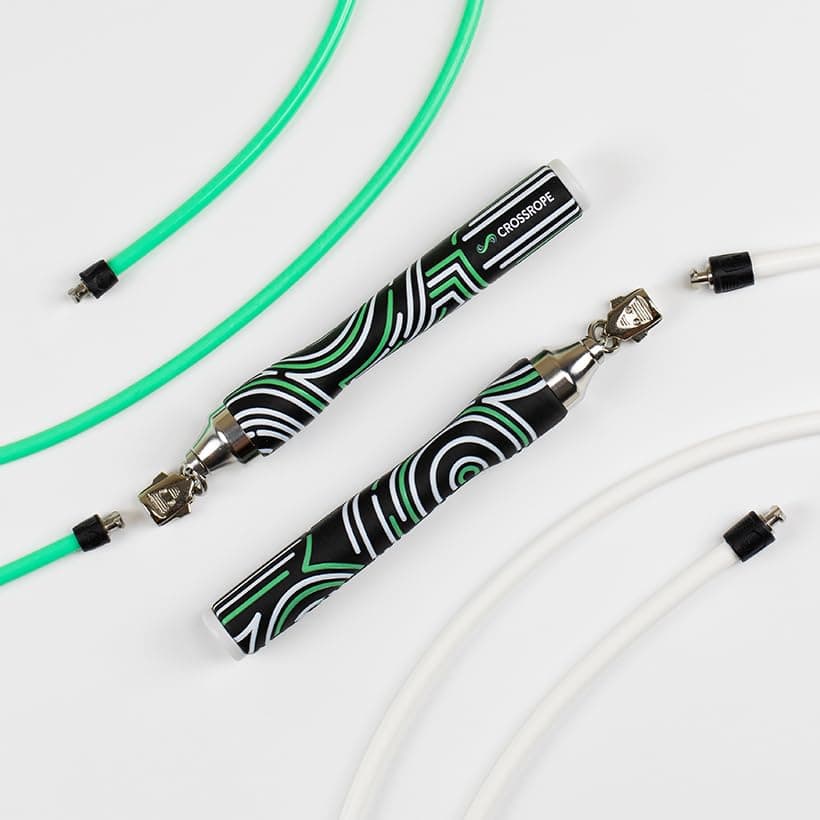
- 1/4 lb (endurance/HIIT) and 1/2 lb (cardio/beginner)
- Handles
- Slim aluminum, fast-clip connection system
- Bearings
- UNVERIFIED: Crossrope's Get Lean Set page does not mention ceramic bearings; it lists Slim handles, Fast Clip connection, lifetime handle warranty, XS-XL sizes (7'6" to 9'6" ropes), $129
- Length
- Adjustable; available in XS through XL sizes
- App
- Crossrope app (30-day free trial included)
- Warranty
- Lifetime handle warranty
About this pick
The Crossrope Get Lean Set pairs two weighted cable ropes with ceramic-bearing handles and a fast-clip system that lets you swap rope weight mid-session. The 1/2 lb rope slows rotation enough to feel each revolution clearly, making it one of the most useful tools for building jump rope cardio from scratch or transitioning beginners toward higher-cadence work.
Strengths
- Two-rope system at 1/4 lb and 1/2 lb covers both endurance HIIT and foundational cardio in one purchase
- Ceramic bearing handles deliver noticeably smoother rotation than most steel-bearing ropes in this price range
- Lifetime handle warranty and fast-clip interchangeability make handles a one-time buy
Weaknesses
- App subscription required to access full workout library beyond the 30-day trial, adding recurring cost
- Price is high relative to single-rope alternatives; harder to justify for pure speed or double-under training
Kit Score breakdown
See all picks in Best jump ropes: speed, weighted, and beaded picks
Keep going
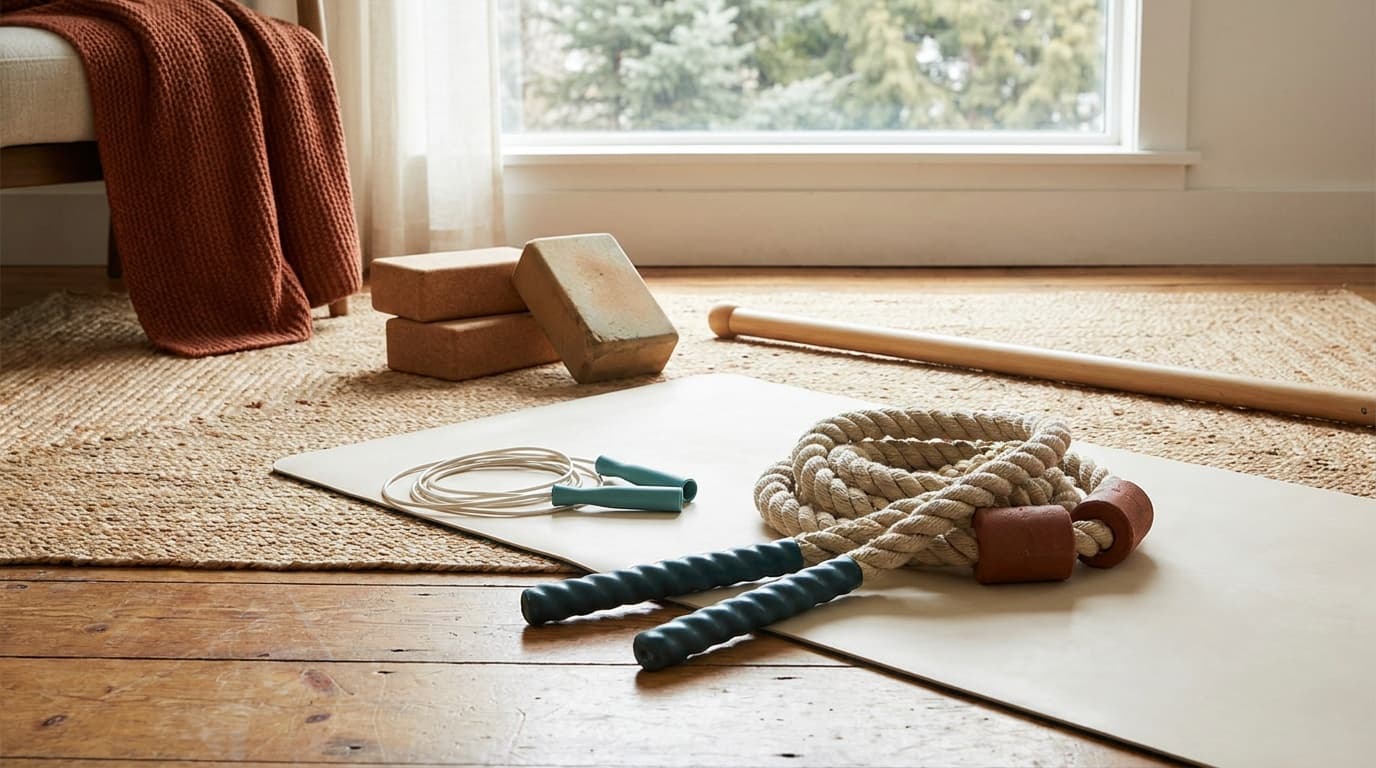
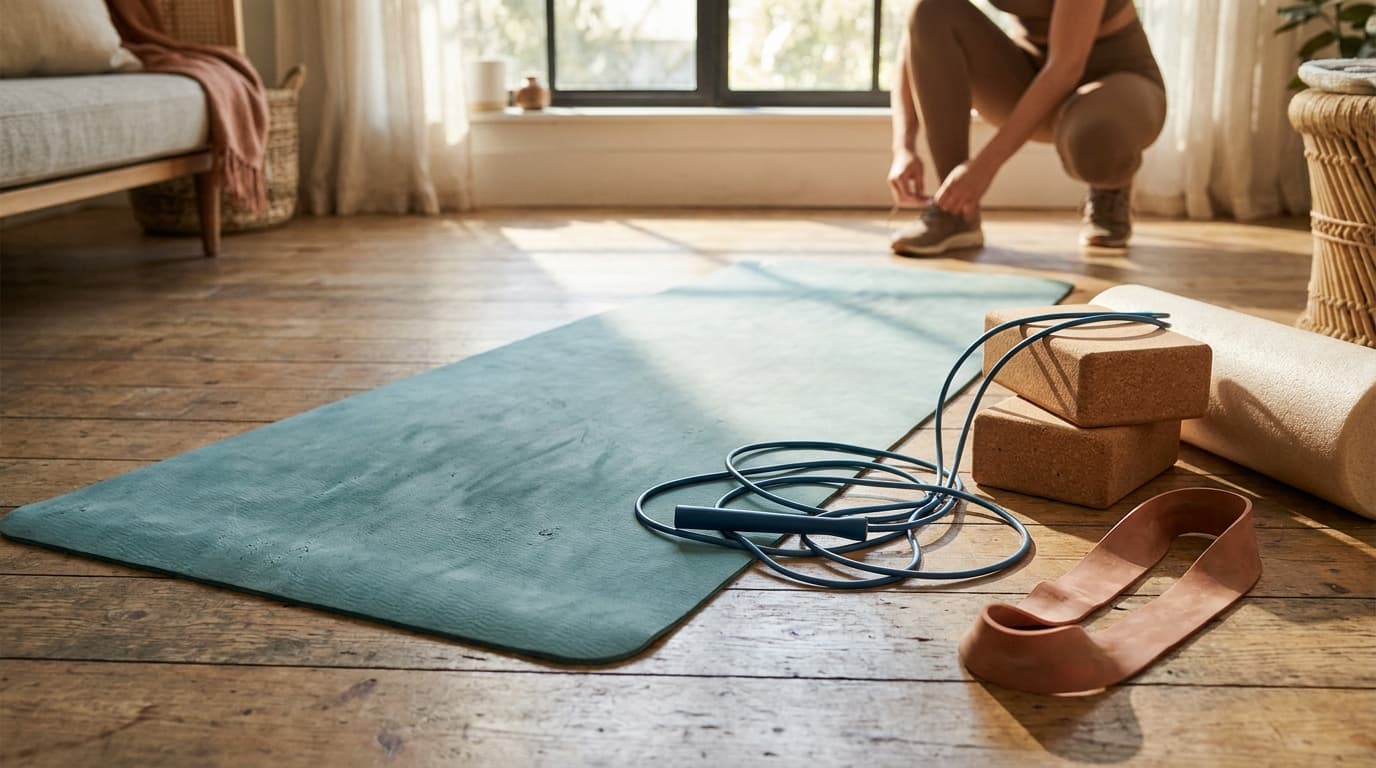
Complete loadoutHome calisthenics kitA compact strength and conditioning setup built around five tools that cover pushing, pulling, assistance, cardio, and floor work.
Researched, not hands-on tested
Updated Jun 4, 2026Our recommendations draw on manufacturer documentation, retailer listings, owner feedback, and comparisons with alternatives.
As an Amazon Associate I earn from qualifying purchases. We may earn a commission from links here, at no extra cost to you. How we research →