Speed ropes and weighted ropes look almost identical until you swing them, and then they feel like two different tools. The right pick depends on whether you want raw cardio speed or you want to feel the rope and build conditioning while you learn.
What each rope is actually built to train
A speed rope like the WOD Nation Speed Rope uses a thin coated cable (often 2–4mm) on low-friction bearings. It is built to rotate as fast as your wrists can drive it, which is why it dominates CrossFit boxes and boxing gyms where the goal is high revolutions per minute and skills like double-unders (two passes per jump) and crossovers.
A weighted rope adds mass, either in the handles or distributed through a thicker cable. That mass does three things: it slows the swing so the timing is easier to read, it gives constant feedback so you always know where the rope is, and it loads the shoulders, forearms, and grip on every rotation. A 1/2 lb rope feels like cardio with a conditioning tax. A 1–2 lb rope starts to feel like a strength tool.
Neither rope is "better." They sit at opposite ends of a speed-versus-resistance trade-off, and your goal decides which end you want.
Learning curve: why beginners often start weighted
The hardest part of learning to jump rope is timing, getting your jump to sync with a rope you cannot see behind you. A fast, light speed rope gives you almost no feedback, so a missed beat just becomes a trip, and beginners trip a lot.
A lightly weighted rope (around 1/4 to 1/2 lb) is more forgiving. You can feel the cable travel overhead and under your feet, so your body learns the rhythm by feel instead of by guesswork. That tactile cue is why many coaches hand beginners a weighted rope first, then graduate them to a speed rope once the timing is automatic.
Go too heavy too soon, though, and you trade one problem for another: a 2 lb rope will torch your shoulders before your coordination ever catches up. Match the weight to the job.
Cardio vs strength: where the emphasis really lands
Both ropes are cardio at heart. Jumping rope is a high-intensity, full-body effort that elevates heart rate fast. The difference is what rides on top of that cardio base.
A speed rope keeps the load light, so nearly all of the effort goes into pace and footwork. You can sustain high revolutions and chase conditioning, agility, and skill volume without your arms fatiguing first.
A weighted rope shifts some of that effort into your upper body. The constant resistance turns each rotation into light shoulder, forearm, and grip work, so your arms often fatigue before your lungs do. That makes weighted ropes a favorite for people who want a denser, more muscular feel from their cardio, or who want to build the shoulder endurance that makes longer rope sessions comfortable.
Speed trains how fast you can go. Weight trains how long your shoulders can keep you there.
How to choose: a quick decision checklist
Work through these in order and the answer usually falls out on its own.
Pick your rope in four questions
Your main goal
Chasing double-unders, footwork, or max cardio output points to a speed rope. Building rhythm, conditioning, or upper-body endurance points to weighted.
Your experience
Brand new to rope work favors a lightly weighted rope for the timing feedback. Already comfortable with single bounces favors a speed rope.
Where your effort should land
Want the work mostly in your legs and lungs, go speed. Want some of it in shoulders, forearms, and grip, go weighted.
Your session length
Short, fast, skill-focused sessions suit a speed rope. Steady conditioning intervals where you feel the rope suit a weighted one.
If you are still torn, default to a lightly weighted rope. It teaches form, builds the shoulder endurance you will want later, and still moves quickly enough to get a real cardio session.
The verdict: most people should own both
These ropes are not rivals, they are stages. A practical path for most people is to learn and condition on a lightly weighted rope, then add a speed rope once your timing is solid and you want to push pace and skills. Many lifters keep the weighted rope for warm-ups and conditioning finishers and reach for the speed rope on skill days.
If you can only buy one and you are new, choose a 1/4 to 1/2 lb weighted rope; the Crossrope Get Lean Set covers both of those weights with swappable cables. If you can only buy one and you already jump comfortably and want double-unders, choose an adjustable speed rope. If you can buy two, you have the full toolkit, and they cost little enough that owning both is an easy call.
Frequently asked questions
Can a weighted rope replace lifting for my arms?
No. A weighted rope adds light, high-rep conditioning to your shoulders, forearms, and grip, which builds endurance and a bit of muscular tone. It does not provide the progressive overload that real strength gains require. Treat it as conditioning that complements lifting, not a substitute for it.
Are weighted ropes bad for double-unders?
For learning the timing of a double-under, a light weighted rope can actually help because the slower, more readable swing makes the rhythm easier to feel. Once you want to perform them fast and for high reps, a speed rope is the better tool because the light cable rotates quickly enough to clear two passes per jump with less effort.
What weight should a beginner's weighted rope be?
Start in the 1/4 to 1/2 lb range. That is enough mass to feel the rope and learn the rhythm without overloading your shoulders before your coordination catches up. Save 1 lb and heavier ropes for dedicated conditioning work once your form is dialed in.
For specific model picks, see our guide to the best jump ropes. Browse all fitness guides or read how we research and rate gear.
Recommended gear
Our current top picks from the Best jump ropes: speed, weighted, and beaded picks guide, if you are ready to buy.
WOD NATION
WOD Nation Adjustable Speed Jump Rope
Best Overall
Kit Score 8.7/10
$16.79 Price checked Oct 23, 4:16 PM CDT
Best for: CrossFit conditioning, boxing footwork drills, double-under practice, and anyone who wants a proven speed rope without the premium price tag.
- Consistently rated across a large verified-owner base: 4.5 stars from 14,000-plus ratings
- Coated steel cable frays on concrete within 2 to 3 months of regular outdoor use
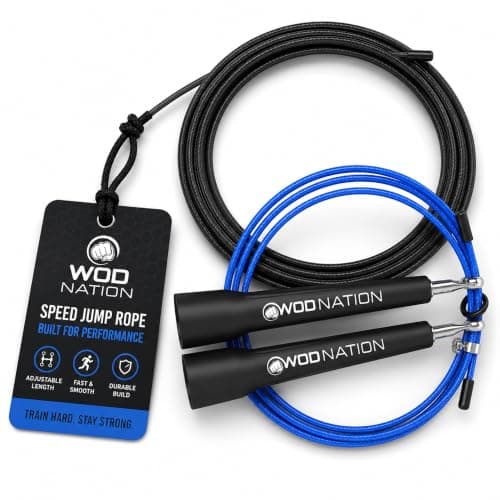
- Cable
- UNVERIFIED on maker site: wodnationgear.com returned HTTP 402 and wodnation.com failed TLS; listing/reviewer figures are 2.5 mm coated steel cable, ball-bearing handles
- Handles
- ABS plastic
- Adjustability
- Cut to length; accommodates a wide height range
- Use case
- Speed work, boxing, MMA, CrossFit conditioning
About this pick
The WOD Nation speed rope has held a 4.5-star average across 14,000-plus Amazon ratings, which is a rare combination of volume and consistency at this price. The adjustable alloy steel cable handles speed work and double-under practice reliably without the premium price tag.
Strengths
- Consistently rated across a large verified-owner base: 4.5 stars from 14,000-plus ratings
- Adjustable steel cable supports speed work and double-unders at this price tier
- Exceptional value for CrossFit-level conditioning under $20
Weaknesses
- Coated steel cable frays on concrete within 2 to 3 months of regular outdoor use
- Plastic handles lack the grip feel of knurled aluminum at premium price points
Kit Score breakdown
ELITE JUMPS
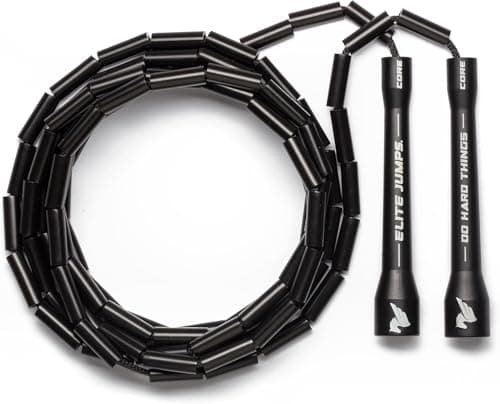
Elite Jumps Do Hard Things Beaded Jump Rope
Editor's Choice
Kit Score 8.8/10
$22.99 Price checked Oct 23, 4:16 PM CDT
Best for: Outdoor training on rough surfaces, beginner technique development, boxing footwork rhythms, and anyone building freestyle skills who needs auditory timing feedback.
- Bead-on-polycord construction works on concrete, asphalt, gym floors, and outdoor surfaces where cable ropes fail
- Not suitable for double-unders or high-speed conditioning: slower rotation by design
- Beads
- 1 in shatterproof plastic on 3 mm polycord
- Handles
- Unbreakable polymer, 5 in
- Rope Length
- 10 ft adjustable; fits jumpers up to 6'4"
- Weight
- ~100 g (3.5 oz)
- Surface
- Indoor and outdoor, including rough surfaces
- Origin
- Made in USA (Wenatchee, WA)
About this pick
The Do Hard Things is the standard beaded rope recommended by competitive jump rope coaches for developing rhythm and learning advanced skills. The shatterproof 1-inch beads hold their arc on any surface, give clear auditory feedback on timing, and outlast PVC cable ropes on abrasive concrete or asphalt. Available direct at elitejumps.co.
Strengths
- Bead-on-polycord construction works on concrete, asphalt, gym floors, and outdoor surfaces where cable ropes fail
- Auditory feedback from the beads is a genuine training aid for rhythm development and learning tricks
- Shatterproof beads and unbreakable handles make this the most durable rope under $30
Weaknesses
- Not suitable for double-unders or high-speed conditioning: slower rotation by design
- Beads need to be removed and cord trimmed to adjust length, which requires more effort than a screw-adjust cable rope
Kit Score breakdown
Best for: Cardio-focused training and fat-loss programs where rope weight feedback accelerates learning and the weighted resistance adds upper-body demand to every set.
- Two-rope system at 1/4 lb and 1/2 lb covers both endurance HIIT and foundational cardio in one purchase
- App subscription required to access full workout library beyond the 30-day trial, adding recurring cost
- Ropes Included
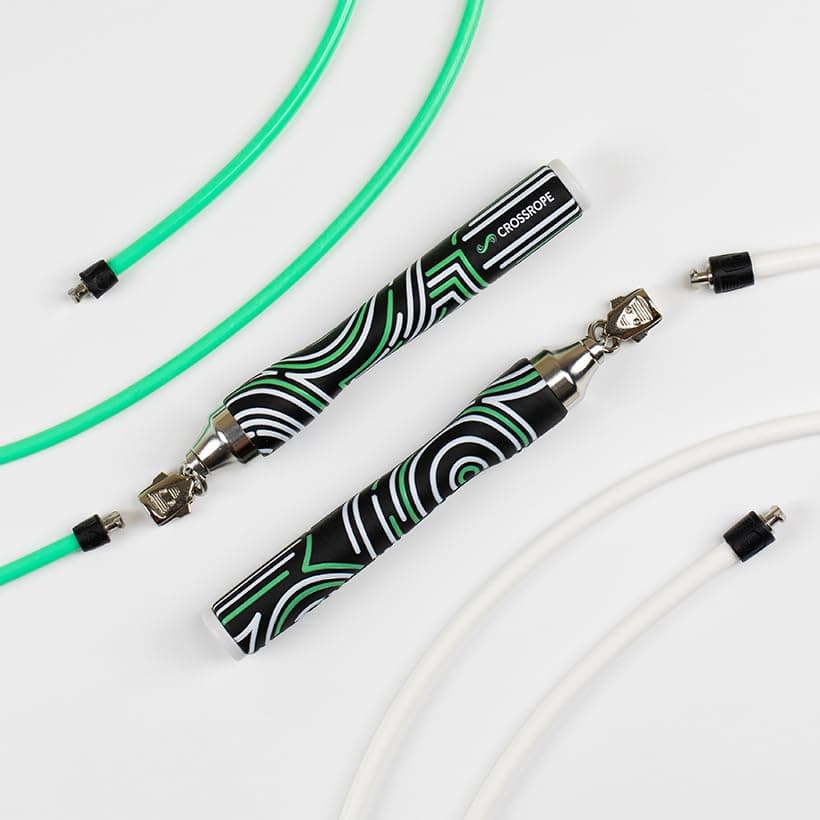
- 1/4 lb (endurance/HIIT) and 1/2 lb (cardio/beginner)
- Handles
- Slim aluminum, fast-clip connection system
- Bearings
- UNVERIFIED: Crossrope's Get Lean Set page does not mention ceramic bearings; it lists Slim handles, Fast Clip connection, lifetime handle warranty, XS-XL sizes (7'6" to 9'6" ropes), $129
- Length
- Adjustable; available in XS through XL sizes
- App
- Crossrope app (30-day free trial included)
- Warranty
- Lifetime handle warranty
About this pick
The Crossrope Get Lean Set pairs two weighted cable ropes with ceramic-bearing handles and a fast-clip system that lets you swap rope weight mid-session. The 1/2 lb rope slows rotation enough to feel each revolution clearly, making it one of the most useful tools for building jump rope cardio from scratch or transitioning beginners toward higher-cadence work.
Strengths
- Two-rope system at 1/4 lb and 1/2 lb covers both endurance HIIT and foundational cardio in one purchase
- Ceramic bearing handles deliver noticeably smoother rotation than most steel-bearing ropes in this price range
- Lifetime handle warranty and fast-clip interchangeability make handles a one-time buy
Weaknesses
- App subscription required to access full workout library beyond the 30-day trial, adding recurring cost
- Price is high relative to single-rope alternatives; harder to justify for pure speed or double-under training
Kit Score breakdown
See all picks in Best jump ropes: speed, weighted, and beaded picks
Keep going

Researched, not hands-on tested
Updated Jun 4, 2026Our recommendations draw on manufacturer documentation, retailer listings, owner feedback, and comparisons with alternatives.
As an Amazon Associate I earn from qualifying purchases. We may earn a commission from links here, at no extra cost to you. How we research →