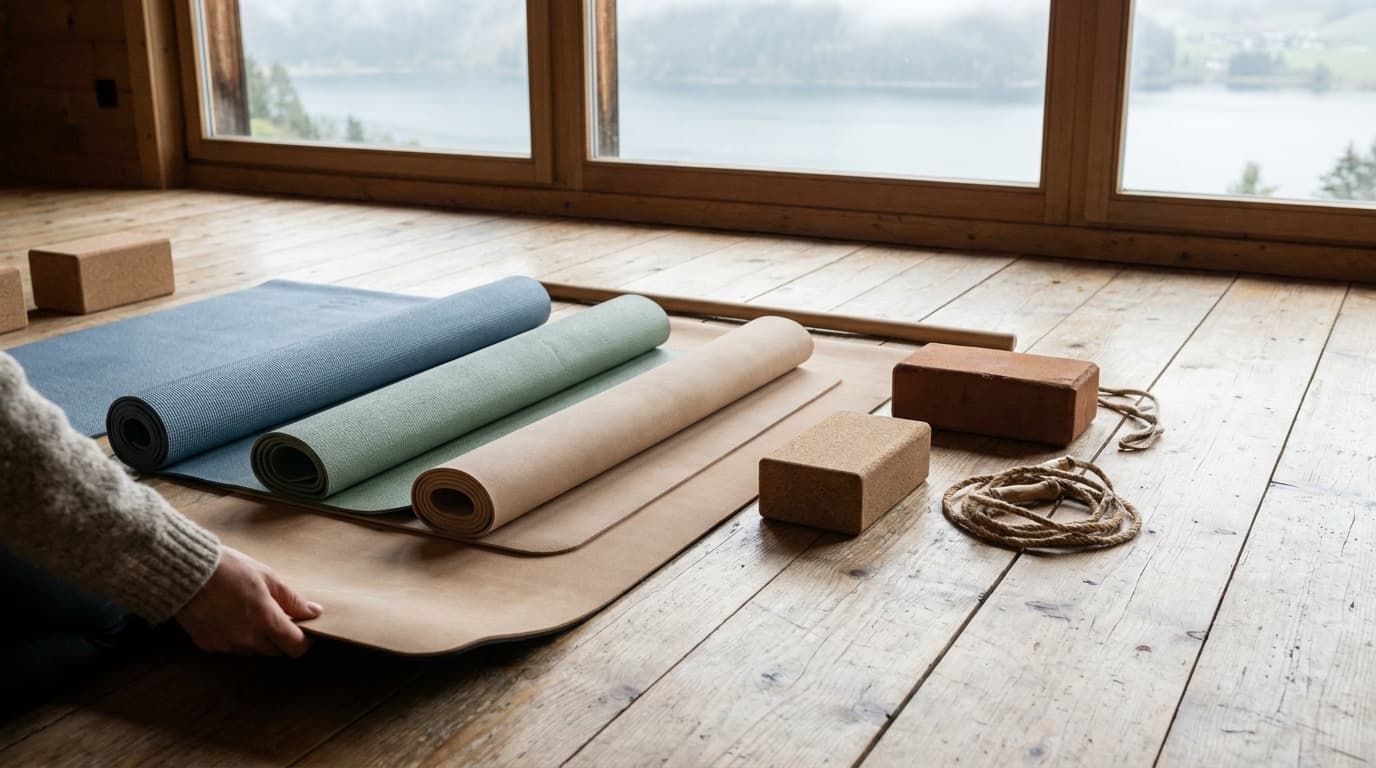
Yoga mat thickness is a trade-off, not a ranking: thinner mats give you stability and balance, thicker mats give you cushioning and joint protection. The right number depends on your practice, your joints, and where you roll it out.
The three thickness tiers, and who each one suits
Mat thickness almost always falls into three practical bands. Knowing where a mat sits tells you most of what you need before you ever unroll it.
The classic standard mat is about 4-5mm, and it is the default for a reason. It puts a little foam between your joints and the floor without lifting you so high that you wobble. If you are buying one mat to do everything, start here.
Thin mats in the 1.5-3mm range are built for two jobs: packing small and maximizing stability. A 1.5mm travel mat folds into a carry-on and weighs almost nothing, while a firm 2-3mm mat keeps your standing poses rock solid. The catch is comfort: any kneeling, seated, or supine pose puts your bones closer to a hard floor.
Thick mats at 6mm and up are cushion specialists. They shine for restorative practice, gentle yoga, and anyone protecting knees, hips, wrists, or the lower spine. The trade is balance: the more foam under you, the more the surface gives and the harder it is to feel grounded.
Thickness vs stability: why thinner can mean steadier
Stability comes from connection to the floor. The thinner and firmer the mat, the more directly your foot, hand, or sit bone presses into a solid surface, and the easier it is to balance and push off.
Every millimeter of foam you add for comfort is a millimeter of feedback you take away from your balance.
This is why dynamic, balance-heavy styles favor thinner mats. In a flowing vinyasa sequence, a long single-leg balance, or a power class with lots of standing transitions, a soft 6mm+ mat works against you: the surface compresses unevenly under your weight and your foundation feels mushy. A firm mat in the 3-5mm range, or even thinner for balance work, gives you a stable base to move from.
The flip side is equally real. The same firmness that helps you balance is the firmness your knees feel in a low lunge or your spine feels lying back. There is no thickness that is best at both stability and cushioning at once, which is exactly why the choice comes down to your practice and your body.
Joint protection: what thickness actually does for knees and pressure points
If you have sensitive knees, tender wrists, or a bony lower back that complains in supine poses, thickness matters more than almost any other spec. Padding spreads the pressure of body weight over a softer surface so individual joints take less concentrated load.
For most people with mild joint sensitivity, a 5mm mat like the Gaiam Premium 5mm Yoga Mat is enough. If kneeling poses still hurt, step up to 6mm or more. Once you pass roughly 6-8mm, you are firmly in the cushioned category, and you should expect to trade away ground feel and stability for that comfort.
Density matters alongside thickness. A dense mat like the 6mm Manduka PRO Yoga Mat can protect joints better than a cheap, squishy mat of the same thickness, because it resists bottoming out under a knee. When two mats list the same millimeters, the firmer, denser one usually offers more durable support and better stability.
How to choose your thickness
Work through these in order. The first answer that clearly applies usually points to your tier.
Pick your thickness
Name your main practice
Vigorous flow, power, or balance-focused yoga leans thin and firm (3-5mm). Restorative, gentle, or floor-heavy practice leans thick (6mm+).
Check your joints
No issues, stay around 4-5mm. Sensitive knees, wrists, or spine, move up to 5-6mm or more for pressure relief.
Decide how you carry it
Studio or home use can go thicker and heavier. Frequent travel or commuting points to a packable 1.5-3mm travel mat.
Weigh ground feel vs comfort
If you value feeling connected and stable, err thinner. If you value cushion and joint relief, err thicker.
Consider a two-mat setup
Many regular practitioners keep one standard 4-5mm mat for daily use and a 1.5mm travel mat for the road.
If you can only own one mat, a firm 4-5mm standard mat covers the widest range of practice and bodies. It is the safe default precisely because it sits in the middle of the trade-off.
Quick recommendations by scenario
- One mat for everything: firm 4-5mm standard.
- Power, vinyasa, or balance work: 3-4mm firm, for maximum stability.
- Sensitive knees or restorative practice: 6mm or more, prioritizing density.
- Travel and commuting: 1.5mm fold-flat travel mat, accepting less cushion.
- Hot yoga: 4-5mm with a grippy, sweat-resistant top, since traction matters more than thickness here.
Frequently asked questions
Is a thicker yoga mat always better?
No. Thicker mats add cushioning and joint protection, but they reduce stability and ground feel. A 6mm+ mat is great for restorative or floor-heavy practice and sensitive joints, but it works against you in balance poses and vigorous flows. For most people, a firm 4-5mm standard mat is the better all-around choice.
What thickness is best for bad knees?
Start with a 5mm mat and step up to 6mm or more if kneeling poses still hurt. Density matters as much as the millimeter count: a dense mat resists bottoming out under your knee, so it can protect joints better than a thicker but squishier one. If you prefer a thinner mat for stability, a folded towel under your knees in specific poses is a simple alternative.
Are 1.5mm travel mats worth it?
Yes, for their purpose. A 1.5mm travel mat folds flat, packs into a carry-on, and gives excellent ground feel for balance work. The trade-off is comfort: kneeling, seated, and lying-down poses put you close to a hard floor. They are best as a second mat for travel rather than your only mat, or laid over a carpet or another mat for extra cushion.
For specific model picks, see our guide to the best yoga mats. Browse all fitness guides or read how we research and rate gear.
Recommended gear
Our current top picks from the Best yoga mats in 2026: our top picks for every practice guide, if you are ready to buy.
MANDUKA
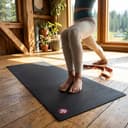
Manduka PRO Yoga Mat 68" 6mm
Best Overall
Kit Score 8.9/10
$138.00 Price checked Oct 23, 4:16 PM CDT
Best for: Daily practitioners and yoga teachers who want a single mat that performs across all styles, holds up for a decade, and prioritizes joint protection over portability.
- Exceptional joint cushioning at 6mm with no compression over years of daily practice
- At 7 lbs it is one of the heavier mats in its class, making it a poor travel companion
- Thickness
- 6mm
- Dimensions
- 68" x 26"
- Weight
- 7 lbs
- Material
- OEKO-TEX certified PVC, closed-cell construction
- Warranty
- Lifetime
- Grip type
- Closed-cell textured surface, dot-pattern underside
About this pick
The Manduka PRO is the mat yoga teachers return to for years, sometimes decades. Six millimeters of ultra-dense PVC cushioning protects joints without the spongy instability that plagues budget options, and the closed-cell surface resists moisture absorption for a cleaner, more hygienic practice.
Strengths
- Exceptional joint cushioning at 6mm with no compression over years of daily practice
- Lifetime warranty backed by independent long-term testing across 5- to 20-year-old mats
- Stable closed-cell surface works well for balance poses and inversions on any floor type
Weaknesses
- At 7 lbs it is one of the heavier mats in its class, making it a poor travel companion
- Grip degrades noticeably when wet, so hot yoga or sweat-heavy flows benefit from a towel overlay
Kit Score breakdown
LIFORME
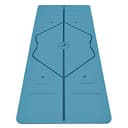
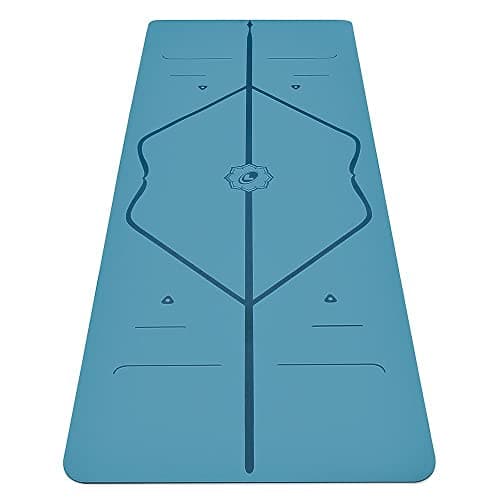
Liforme Original Yoga Mat
Editor's Choice
Kit Score 7.7/10
$165.00 Price checked Oct 23, 4:16 PM CDT
Best for: Hot yoga regulars and alignment-focused practitioners who need a mat that stays grippy through the sweatiest sessions and comes ready to travel.
- Wet grip that actually improves with sweat, making it the standout choice for hot yoga and Bikram classes
- Durability trails the Manduka PRO: reviewers note surface wear and staining after heavy use
- Thickness
- 4.2mm
- Dimensions
- 72.8" x 26.8"
- Weight
- 5.5 lbs
- Material
- Eco-polyurethane top, natural rubber base
- Grip system
- GripForMe polyurethane surface
- Includes
- Enclosed yoga bag with shoulder strap
About this pick
The Liforme Original is the go-to mat for practitioners who sweat heavily or practice hot yoga. Its polyurethane top surface grips harder as it gets wetter, a property that is the reverse of most PVC mats, and the etched AlignForMe grid helps new and advancing practitioners find correct hand and foot placement without guesswork.
Strengths
- Wet grip that actually improves with sweat, making it the standout choice for hot yoga and Bikram classes
- Wider and longer than standard mats (72.8" x 26.8") giving taller practitioners room to move
- Included carry bag with shoulder strap and etched alignment guides add day-to-day usefulness
Weaknesses
- Durability trails the Manduka PRO: reviewers note surface wear and staining after heavy use
- Highest price in this roundup with no lifetime guarantee to offset it
Kit Score breakdown
JADEYOGA
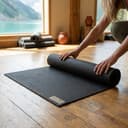
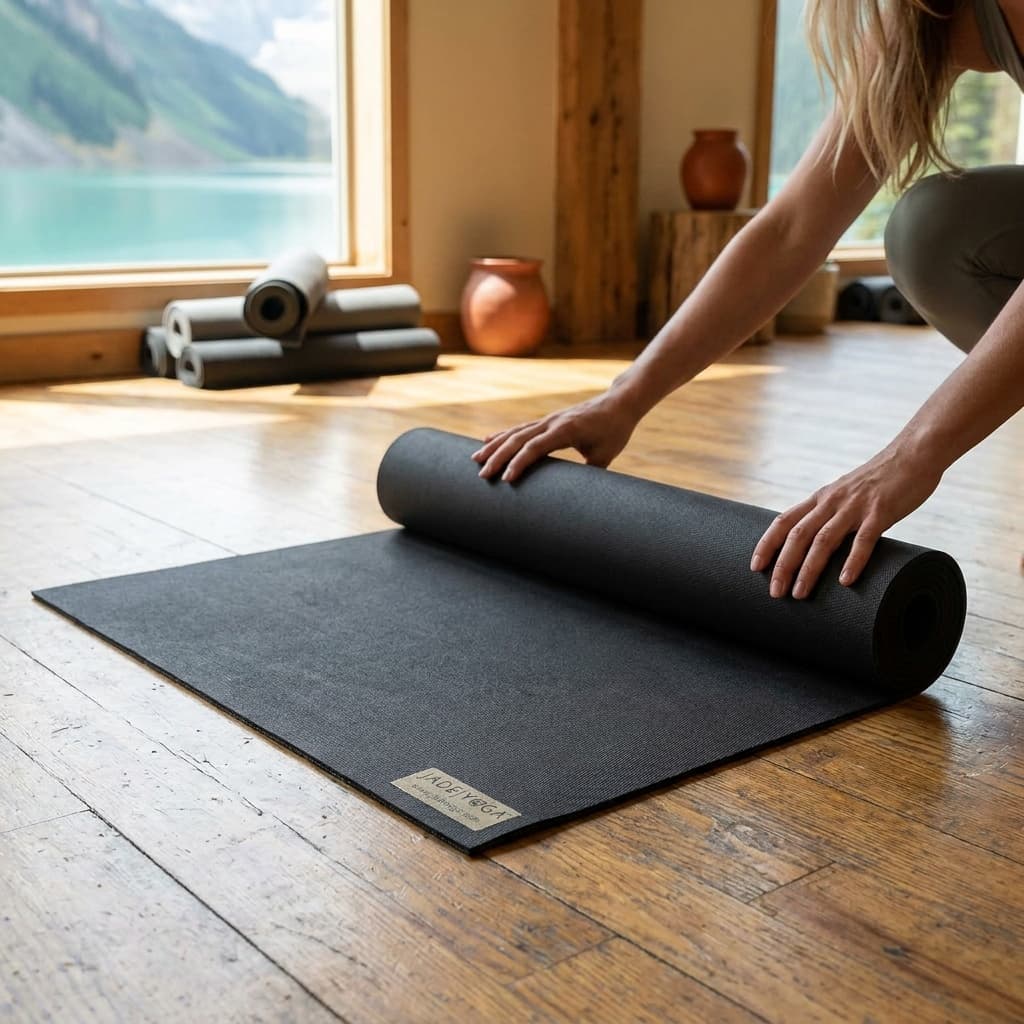
JadeYoga Harmony Yoga Mat 68"
Best Natural Rubber
Kit Score 8.5/10
$114.95 Price checked Oct 23, 4:16 PM CDT
Best for: Eco-minded practitioners who prioritize natural materials, want reliable dry-grip performance, and practice primarily in normal-temperature settings rather than hot yoga.
- 100% natural open-cell rubber provides strong dry grip that outperforms most synthetic alternatives in stability poses
- Open-cell surface absorbs sweat and traps dust, requiring more frequent cleaning than closed-cell or polyurethane-top mats
- Thickness
- 4.75mm (3/16")
- Dimensions
- 68" x 24"
- Weight
- 4.2 lbs
- Material
- 100% natural open-cell rubber, no PVC or EVA
- Construction
- Open-cell natural rubber throughout
- Environmental
- Made in USA, one tree planted per mat sold
About this pick
The JadeYoga Harmony is the benchmark natural rubber mat for practitioners who want to avoid PVC and synthetic materials without sacrificing grip. Open-cell natural rubber delivers a coarse, gritty surface that bites into standing poses and holds position under downward dogs, even as the session heats up.
Strengths
- 100% natural open-cell rubber provides strong dry grip that outperforms most synthetic alternatives in stability poses
- No PVC, phthalates, or synthetic rubber: a clean-material pick for eco-conscious practitioners
- Longevity measured in years, with owners reporting consistent performance past the 7-year mark
Weaknesses
- Open-cell surface absorbs sweat and traps dust, requiring more frequent cleaning than closed-cell or polyurethane-top mats
- Natural rubber contains latex, which rules it out for anyone with a latex sensitivity or allergy
Kit Score breakdown
See all picks in Best yoga mats in 2026: our top picks for every practice
Keep going
Complete loadoutHome calisthenics kitA compact strength and conditioning setup built around five tools that cover pushing, pulling, assistance, cardio, and floor work.
Researched, not hands-on tested
Updated Jun 4, 2026Our recommendations draw on manufacturer documentation, retailer listings, owner feedback, and comparisons with alternatives.
As an Amazon Associate I earn from qualifying purchases. We may earn a commission from links here, at no extra cost to you. How we research →