The yoga mat market is noisy, the price range is wild ($25 to $200+), and the wrong choice means slipping, aching joints, or a mat that flakes apart inside a year. These four picks cut through the clutter.
Our quick picks
How we picked
Every mat in this guide was evaluated against our Kit Score: we aggregate verified-owner reviews, manufacturer specs, material certifications, and independent tester write-ups to score across thickness and cushioning, grip in dry and sweaty conditions, material quality, weight, durability, and value.
The best yoga mats: our picks
Best overall
BEST OVERALL
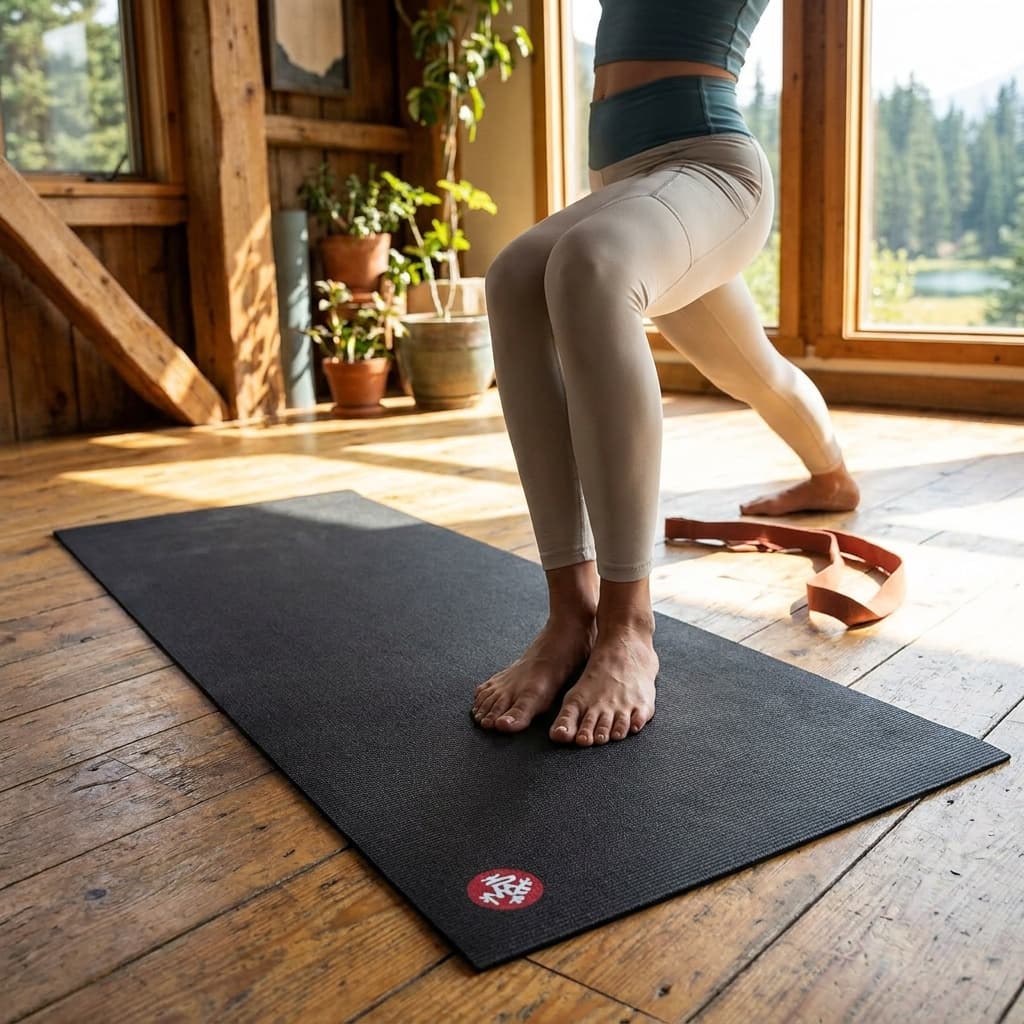
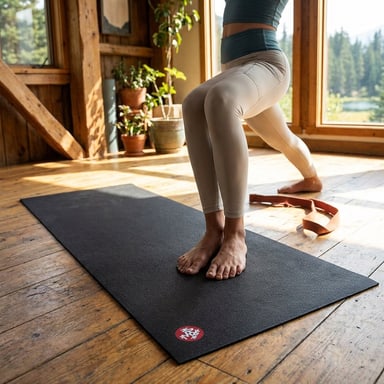
Manduka PRO Yoga Mat 68" 6mm
Best for: Daily practitioners and yoga teachers who want a single mat that performs across all styles, holds up for a decade, and prioritizes joint protection over portability.
- Exceptional joint cushioning at 6mm with no compression over years of daily practice
- At 7 lbs it is one of the heavier mats in its class, making it a poor travel companion
Kit Score 8.9/10 · $138.00 Price checked Oct 23, 4:16 PM CDT · how we score gear
Buy on AmazonProduct details
The Manduka PRO is the mat yoga teachers return to for years, sometimes decades. Six millimeters of ultra-dense PVC cushioning protects joints without the spongy instability that plagues budget options, and the closed-cell surface resists moisture absorption for a cleaner, more hygienic practice.
- Thickness
- 6mm
- Dimensions
- 68" x 26"
- Weight
- 7 lbs
- Material
- OEKO-TEX certified PVC, closed-cell construction
- Warranty
- Lifetime
- Grip type
- Closed-cell textured surface, dot-pattern underside
More strengths
- Lifetime warranty backed by independent long-term testing across 5- to 20-year-old mats
- Stable closed-cell surface works well for balance poses and inversions on any floor type
Other tradeoffs
- Grip degrades noticeably when wet, so hot yoga or sweat-heavy flows benefit from a towel overlay
The Manduka PRO has been a studio staple for over two decades, and the 2026 version earns that reputation on merit. At 6mm, it provides more cushioning than most competitors without the spongy instability that thicker mats can introduce under standing poses. The dense, closed-cell PVC surface resists moisture absorption, which means bacteria and sweat stay on top where they can be wiped away, rather than soaking in.
Grip on the PRO is the one detail that trips up new buyers: the mat ships with a factory coating that can feel slick for the first handful of sessions. The fix is simple: Manduka recommends a sea-salt break-in, and most owners report full grip by the third or fourth practice. Once broken in, the surface performs reliably across Hatha, Vinyasa, and Restorative styles.
The lifetime guarantee is the real differentiator at this price point. Manduka replaces defective mats with no questions asked. At 7.5 lb, the PRO is not a travel mat, but for anyone with a dedicated practice space, weight is a non-issue. Multiple verified owners with 8-to-10-year-old PRO mats report zero delamination, no peeling, and unchanged grip.
Best for: Daily practitioners and yoga teachers who want a single mat that performs across all styles, holds up for a decade, and prioritizes joint protection over portability.
Price: $138
Editor's choice
EDITOR'S CHOICE
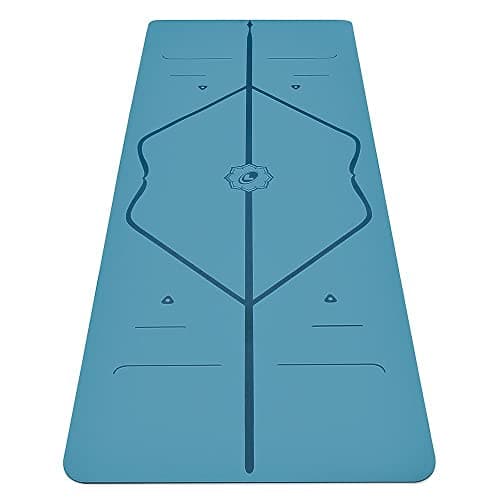
Liforme Original Yoga Mat
Best for: Hot yoga regulars and alignment-focused practitioners who need a mat that stays grippy through the sweatiest sessions and comes ready to travel.
- Wet grip that actually improves with sweat, making it the standout choice for hot yoga and Bikram classes
- Durability trails the Manduka PRO: reviewers note surface wear and staining after heavy use
Kit Score 7.7/10 · $165.00 Price checked Oct 23, 4:16 PM CDT · how we score gear
Buy on AmazonProduct details
The Liforme Original is the go-to mat for practitioners who sweat heavily or practice hot yoga. Its polyurethane top surface grips harder as it gets wetter, a property that is the reverse of most PVC mats, and the etched AlignForMe grid helps new and advancing practitioners find correct hand and foot placement without guesswork.
- Thickness
- 4.2mm
- Dimensions
- 72.8" x 26.8"
- Weight
- 5.5 lbs
- Material
- Eco-polyurethane top, natural rubber base
- Grip system
- GripForMe polyurethane surface
- Includes
- Enclosed yoga bag with shoulder strap
More strengths
- Wider and longer than standard mats (72.8" x 26.8") giving taller practitioners room to move
- Included carry bag with shoulder strap and etched alignment guides add day-to-day usefulness
Other tradeoffs
- Highest price in this roundup with no lifetime guarantee to offset it
The Liforme Original is purpose-built for one scenario: a sweaty practitioner who needs the mat to grip harder as the session goes on, not less. The proprietary GripForLife rubber compound is the mechanism behind that promise. Unlike PVC surfaces that become slick when wet, the Liforme's texture actually increases in traction with moisture, a characteristic that owners of hot yoga studios consistently highlight as the mat's single most important feature.
At 71 inches long and 27 inches wide, the Liforme is meaningfully larger than standard 68x24-inch mats. That extra real estate matters during wide-stance poses and when you simply have longer limbs. The alignment lines (a grid and markers for hands, feet, and centre of the mat) are laser-etched into the surface rather than printed on top, so they will not wear off.
Natural rubber construction means two caveats worth knowing before buying. First, the Liforme has a mild rubber scent when new that dissipates over a few weeks. Second, latex-sensitive practitioners should avoid it. At 4.2 kg (about 9.2 lb), it is heavier than the Manduka PRO, but the included strap handles studio transport without drama.
Best for: Hot yoga regulars and alignment-focused practitioners who need a mat that stays grippy through the sweatiest sessions and comes ready to travel.
Price: $165
Best natural rubber
BEST NATURAL RUBBER
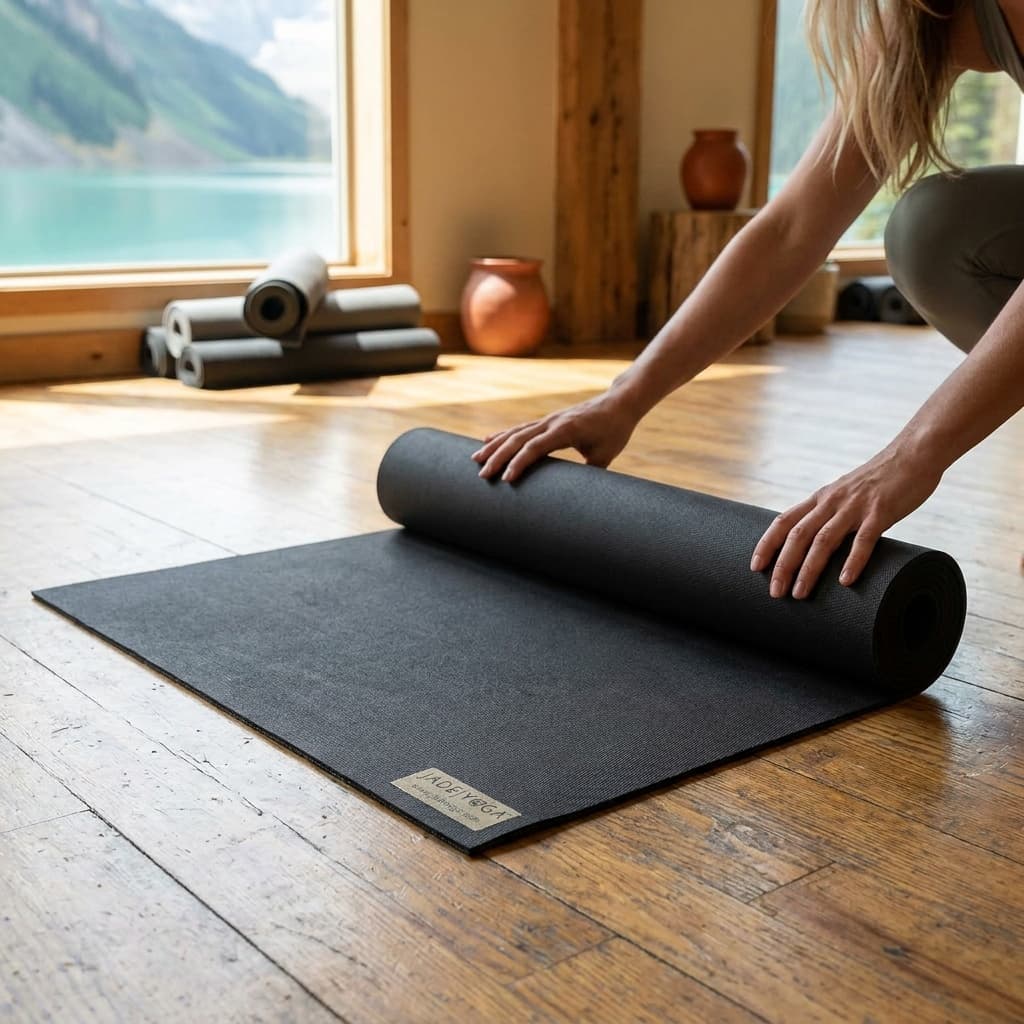
JadeYoga Harmony Yoga Mat 68"
Best for: Eco-minded practitioners who prioritize natural materials, want reliable dry-grip performance, and practice primarily in normal-temperature settings rather than hot yoga.
- 100% natural open-cell rubber provides strong dry grip that outperforms most synthetic alternatives in stability poses
- Open-cell surface absorbs sweat and traps dust, requiring more frequent cleaning than closed-cell or polyurethane-top mats
Kit Score 8.5/10 · $114.95 Price checked Oct 23, 4:16 PM CDT · how we score gear
Buy on AmazonProduct details
The JadeYoga Harmony is the benchmark natural rubber mat for practitioners who want to avoid PVC and synthetic materials without sacrificing grip. Open-cell natural rubber delivers a coarse, gritty surface that bites into standing poses and holds position under downward dogs, even as the session heats up.
- Thickness
- 4.75mm (3/16")
- Dimensions
- 68" x 24"
- Weight
- 4.2 lbs
- Material
- 100% natural open-cell rubber, no PVC or EVA
- Construction
- Open-cell natural rubber throughout
- Environmental
- Made in USA, one tree planted per mat sold
More strengths
- No PVC, phthalates, or synthetic rubber: a clean-material pick for eco-conscious practitioners
- Longevity measured in years, with owners reporting consistent performance past the 7-year mark
Other tradeoffs
- Natural rubber contains latex, which rules it out for anyone with a latex sensitivity or allergy
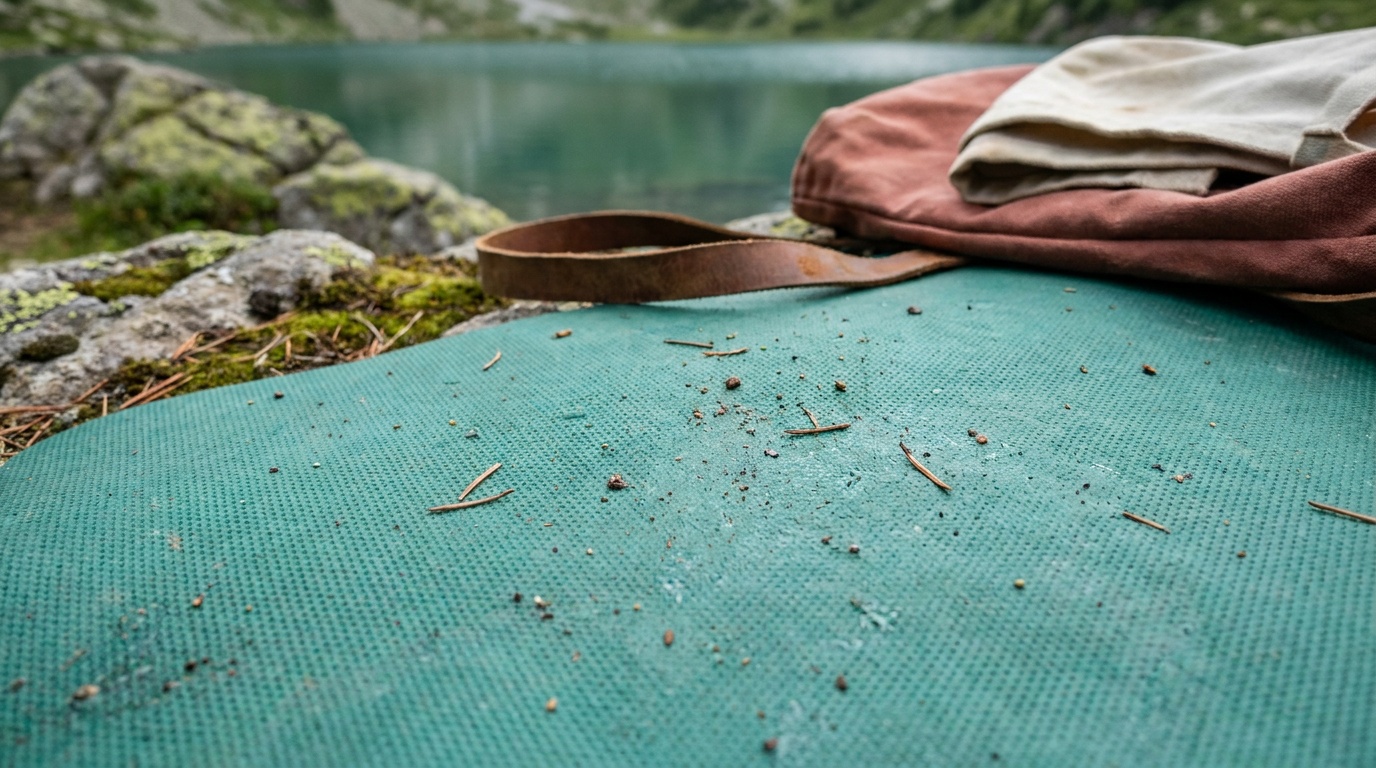
JadeYoga taps natural rubber from rubber trees rather than using petroleum-based PVC or synthetic TPE, and the Harmony is the most accessible entry point into that material category. The open-cell rubber surface grips well in dry conditions, with a texture that feels substantively different from PVC. It is a bit more tactile and a little less plasticky. At 68 inches long and 3/16-inch thick (roughly 4.8mm), it sits in a comfortable middle zone between travel-thin and studio-plush.
The environmental story is genuine. JadeYoga plants a tree for every mat sold through a partnership with One Tree Planted, and the natural rubber is tapped sustainably. For buyers to whom supply chain matters, those are concrete, verifiable commitments rather than vague claims.
The open-cell structure is also the Harmony's limitation in hot conditions. Open-cell rubber absorbs moisture, which degrades grip when sweat accumulates. Owners who practice Bikram or heavily heated Vinyasa consistently note the same thing: a damp towel is not optional for hot yoga sessions. For room-temperature Hatha, Yin, or flow at a normal studio, this is a non-issue.
Weight is a modest 5 lb. The Harmony also avoids the strong off-gassing that synthetic mats sometimes have, a benefit of natural materials.
Best for: Eco-minded practitioners who prioritize natural materials, want reliable dry-grip performance, and practice primarily in normal-temperature settings rather than hot yoga.
Price: $92 – $115
Best budget
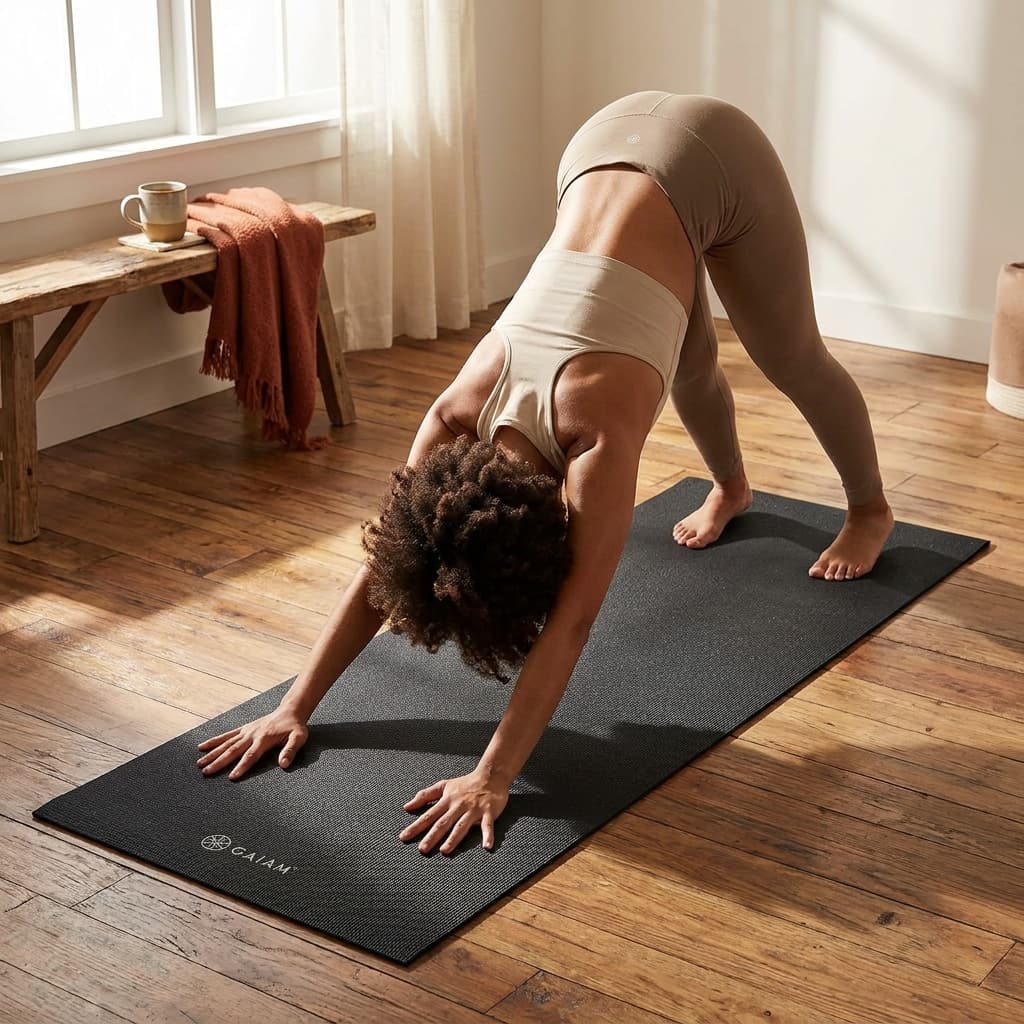
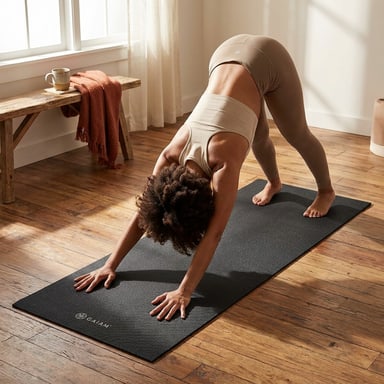
At $25 – $35, the Gaiam Premium asks the right question: what do you actually need from a first mat? For beginners or occasional practitioners, the answer is usually "a non-slip surface, enough cushioning for my knees, and a mat that does not weigh more than my gym bag." The Gaiam delivers all three.
The 5mm PVC construction is standard for this price tier. It will not match the Manduka's longevity or the Liforme's wet grip, but it holds its shape through consistent use, the surface texture is adequate for dry-practice styles, and the range of color options means there is something for every aesthetic. At under 3 lb, it is also the lightest mat in this roundup, which matters if you are carrying it on public transit.
The honest limitation: the Gaiam Premium is not a mat for anyone who sweats heavily or practices heated yoga. Grip decreases noticeably once the surface gets wet. And PVC does not have the decade-plus lifespan of the Manduka PRO; expect to replace it after a few years of regular use.
For what it costs, though, it is an excellent starting point. It will not be the mat that holds you back.
Best for: Beginners, occasional home practitioners, or anyone who wants a lightweight, low-commitment mat for dry-practice yoga without spending more than $35.
Price: $25 – $35
Comparison
| Product | Kit Score | Price | Best for |
|---|---|---|---|
| Manduka PRO Yoga Mat 68" 6mm | 8.9 | $138.00 Price checked Oct 23, 4:16 PM CDT | Best for: Daily practitioners and yoga teachers who want a single mat that performs across all styles, holds up for a decade, and prioritizes joint protection over portability. Why it stands out: Exceptional joint cushioning at 6mm with no compression over years of daily practice Tradeoff: At 7 lbs it is one of the heavier mats in its class, making it a poor travel companion |
| Liforme Original Yoga Mat | 7.7 | $165.00 Price checked Oct 23, 4:16 PM CDT | Best for: Hot yoga regulars and alignment-focused practitioners who need a mat that stays grippy through the sweatiest sessions and comes ready to travel. Why it stands out: Wet grip that actually improves with sweat, making it the standout choice for hot yoga and Bikram classes Tradeoff: Durability trails the Manduka PRO: reviewers note surface wear and staining after heavy use |
| JadeYoga Harmony Yoga Mat 68" | 8.5 | $114.95 Price checked Oct 23, 4:16 PM CDT | Best for: Eco-minded practitioners who prioritize natural materials, want reliable dry-grip performance, and practice primarily in normal-temperature settings rather than hot yoga. Why it stands out: 100% natural open-cell rubber provides strong dry grip that outperforms most synthetic alternatives in stability poses Tradeoff: Open-cell surface absorbs sweat and traps dust, requiring more frequent cleaning than closed-cell or polyurethane-top mats |
| Gaiam Premium Solid Color Yoga Mat 5mm | 7.3 | $24.99 Price checked Oct 23, 4:16 PM CDT | Best for: Beginners, occasional home practitioners, or anyone who wants a lightweight, low-commitment mat for dry-practice yoga without spending more than $35. Why it stands out: Lightest mat in this roundup at under 3 lbs, and the lowest price, making it easy to commit to without risk Tradeoff: Grip is noticeably poor on wet surfaces: hands and feet slide in sweat-heavy practices or hot yoga |
Manduka PRO Yoga Mat 68" 6mm
- Best for
- Daily practitioners and yoga teachers who want a single mat that performs across all styles, holds up for a decade, and prioritizes joint protection over portability.
- Why it stands out
- Exceptional joint cushioning at 6mm with no compression over years of daily practice
- Tradeoff
- At 7 lbs it is one of the heavier mats in its class, making it a poor travel companion
Liforme Original Yoga Mat
- Best for
- Hot yoga regulars and alignment-focused practitioners who need a mat that stays grippy through the sweatiest sessions and comes ready to travel.
- Why it stands out
- Wet grip that actually improves with sweat, making it the standout choice for hot yoga and Bikram classes
- Tradeoff
- Durability trails the Manduka PRO: reviewers note surface wear and staining after heavy use
JadeYoga Harmony Yoga Mat 68"
- Best for
- Eco-minded practitioners who prioritize natural materials, want reliable dry-grip performance, and practice primarily in normal-temperature settings rather than hot yoga.
- Why it stands out
- 100% natural open-cell rubber provides strong dry grip that outperforms most synthetic alternatives in stability poses
- Tradeoff
- Open-cell surface absorbs sweat and traps dust, requiring more frequent cleaning than closed-cell or polyurethane-top mats
Gaiam Premium Solid Color Yoga Mat 5mm
- Best for
- Beginners, occasional home practitioners, or anyone who wants a lightweight, low-commitment mat for dry-practice yoga without spending more than $35.
- Why it stands out
- Lightest mat in this roundup at under 3 lbs, and the lowest price, making it easy to commit to without risk
- Tradeoff
- Grip is noticeably poor on wet surfaces: hands and feet slide in sweat-heavy practices or hot yoga
How to choose the right yoga mat
Not every mat is right for every practice. Here is the shortest path to a decision.
Choosing the right yoga mat
Identify your practice style
Hot yoga, Bikram, or sweat-heavy flow demand wet grip above all else; that points to the Liforme or a mat with open-cell rubber and a towel. Room-temperature Hatha, Yin, and Restorative have more forgiving grip requirements.
Pick your thickness based on joint needs
4–5mm is the standard zone, adequate for most people. If you have sensitive knees, wrists, or ankles, 6mm adds meaningful cushion without compromising balance on standing poses. Do not go above 6mm for standing work; the instability offsets the padding.
Match material to your priorities
PVC lasts the longest and is the easiest to clean but is petroleum-based. Natural rubber grips well dry but absorbs moisture and contains latex. TPE is the middle compromise: lighter than rubber, free of latex risk, and more eco-friendly than PVC, but with a shorter track record for long-term durability.
Factor in weight only if you carry the mat
Studio practitioners who leave a mat at the space can ignore weight. If you commute with it, anything over 5 lb becomes noticeable. The Gaiam is the lightest pick; the Liforme is the heaviest.
Budget honestly for your frequency
If you practice three or more times per week, spend for the Manduka PRO. The per-use cost over five years is lower than replacing two budget mats. If you practice once a week or less, the Gaiam Premium is the rational choice.
The mat you will actually use is the right mat, but grip failure mid-Warrior III is the fastest way to stop using it.
Frequently asked questions
What thickness yoga mat should I buy?
For most practitioners, 4–5mm is the right range: enough cushion for joints without compromising balance on standing and balancing poses. Step up to 6mm (like the Manduka PRO) if you have knee, wrist, or hip sensitivity, or if you practice primarily floor-based styles like Yin or Restorative. Avoid mats above 6mm for active flow work; the instability in standing poses tends to outweigh the cushioning benefit.
Can I use a yoga mat for hot yoga?
Not every mat can handle heat and sweat. PVC mats like the Gaiam Premium and Manduka PRO develop reduced grip as moisture accumulates. The Manduka handles this better than most PVC mats thanks to its closed-cell construction, but the safest choices for hot yoga are the Liforme Original (GripForLife rubber increases grip when wet) or a natural rubber mat paired with a microfiber yoga towel.
How long should a yoga mat last?
It depends heavily on material and frequency of use. A well-maintained Manduka PRO (PVC, closed-cell) can realistically last 10 or more years with daily practice. The lifetime guarantee backs that up. Natural rubber mats like the JadeYoga Harmony typically run 3–5 years with regular use before grip and structure degrade. Budget PVC mats like the Gaiam Premium are usually good for 1–3 years of consistent use. The main enemies of mat longevity are UV exposure, oil-based cleaners, and rolling the mat with the practice surface facing outward, which stresses the material over time.
A good mat should never introduce instability. It should let the practice take over. Start at the right spec for where you are right now, not where you hope to be in six months.
Browse more fitness gear guides or learn how we research and rate every product in this guide.
Keep going
Complete loadoutHome calisthenics kitA compact strength and conditioning setup built around five tools that cover pushing, pulling, assistance, cardio, and floor work.
Our recommendations draw on manufacturer documentation, retailer listings, owner feedback, and comparisons with alternatives.
As an Amazon Associate I earn from qualifying purchases. We may earn a commission from links here, at no extra cost to you. How we research →