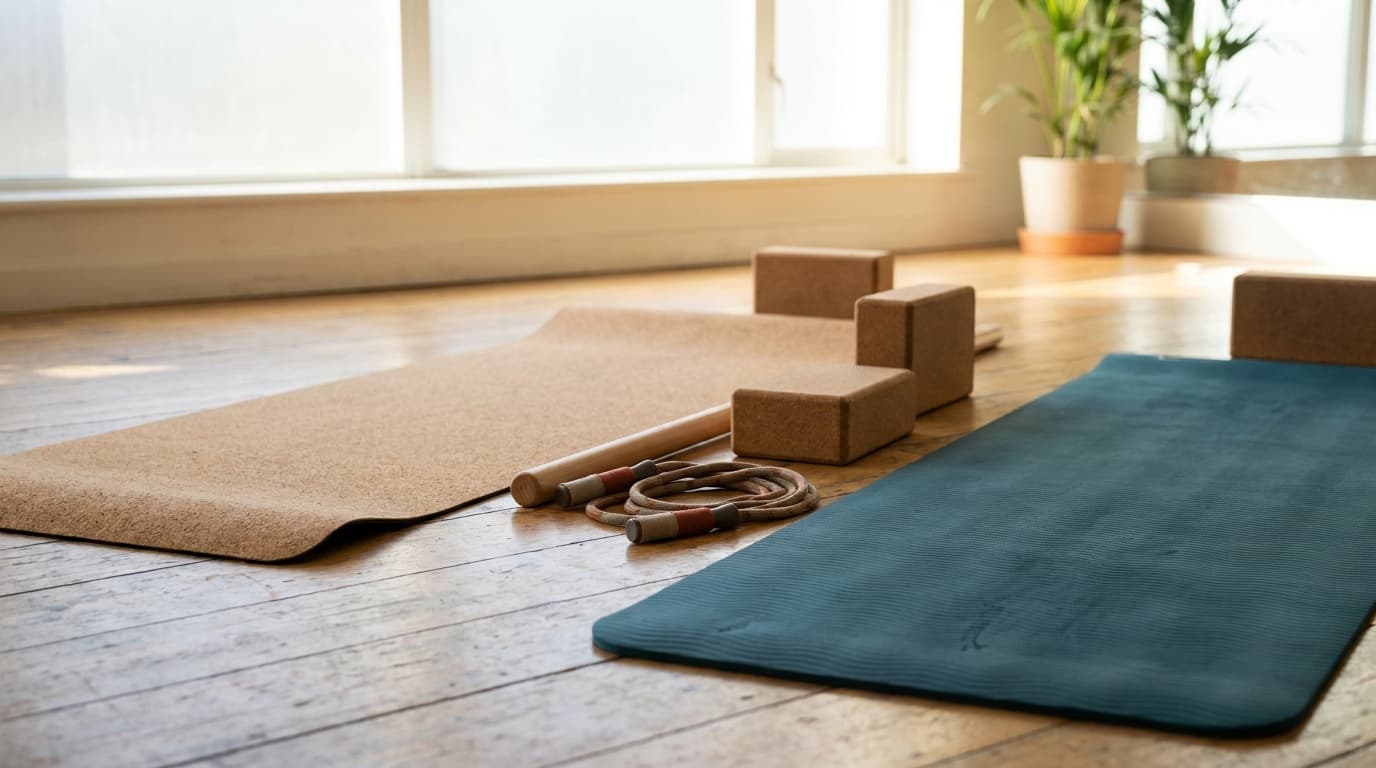
Cork and natural rubber are the two most popular eco materials for yoga mats, and they behave in almost opposite ways once you start sweating. The right pick comes down to how hot your practice runs and what you want underfoot.
Grip: the one difference that decides most buys
This is the headline, so lead with it. Cork and rubber grip through different mechanisms, and that changes which one you want.
Cork is the unusual one. Its surface contains suberin, a natural waxy substance that becomes tackier when wet. The result is counterintuitive: a cork mat can feel a touch glassy when you first place a dry hand on it, then grip harder as your palms and the mat pick up sweat. For hot yoga, vinyasa, or anyone whose hands sweat, that is close to ideal. The mat gets safer exactly when you need it most.
Natural rubber works the opposite way. A raw or rubber-topped surface has high friction when dry and gives you reliable, immediate grip from the first downward dog. Under heavy sweat, though, rubber can develop a slick film, and you may end up reaching for a towel. Many premium "sticky" mats, like the Liforme Original Yoga Mat, pair a rubber base with a polyurethane (PU) top precisely to fix wet grip, but a pure PU top is a separate material conversation from raw rubber.
Cork is the rare mat that grips better the sweatier you get, which is exactly why hot-yoga practitioners reach for it.
If you run cool and dry, rubber's instant traction wins. If you sweat, cork's wet grip is hard to beat.
Feel, cushion, and stability
Grip is only half of how a mat performs. The other half is what it feels like to stand, kneel, and balance on.
Rubber is the softer, more cushioned of the two. A 4-5mm natural rubber mat has noticeable give that protects knees, wrists, and hips in floor-heavy or restorative practice. The trade-off is that softness can feel slightly unstable in balance poses, because the surface compresses under you.
Cork sits on the firmer end. Most cork mats use a thin cork layer bonded to a rubber or TPE base, so you get cork's stable, planted feel up top with a little cushion underneath. Standing and balancing poses feel solid and grounded. If you want plush padding for a lot of kneeling, cork alone may feel too firm, and a thicker mat or an added knee pad helps.
Weight, durability, and travel
If you carry your mat to a studio or pack it for trips, weight matters more than the spec sheet suggests.
Natural rubber is dense and heavy. A full-size 5mm rubber mat like the JadeYoga Harmony is one of the heaviest options on the market, which is fine for a home mat but tiring on a long walk or a flight. Cork mats tend to run lighter for the same dimensions, and thin cork travel mats are a genuinely packable option.
Both materials are durable. Rubber resists tearing and compression well and holds up to years of daily use. Cork is highly resilient and resists flaking when it is good quality, though a cheap, thinly bonded cork layer can wear at high-friction spots over time. For either material, the enemies are the same: prolonged direct sun (which degrades rubber and dries cork) and rolling the mat up wet.
Smell, maintenance, and hygiene
The practical day-to-day differences come down to odor and cleaning, and here cork has a real edge.
Natural rubber has a distinct latex smell when new. It usually fades over a few days to a couple of weeks of airing out, but it is strong at first and can linger in a warm room. (Worth flagging: natural rubber contains latex, so anyone with a latex allergy should avoid it.) Cork has a mild, neutral, woody scent and almost no off-gassing.
Cork is also naturally antimicrobial. Suberin resists bacteria, mold, and odor buildup, which is why cork is a favorite for sweaty, humid practices: it does not turn into a smelly mat the way some surfaces do. Cleaning is simple for both. Wipe down with a damp cloth and a little mild soap or diluted vinegar, then air dry fully before rolling. Avoid harsh chemicals and soaking, which break down the bonding and the rubber base on either type.
Sustainability and price
Both materials are strong eco choices, which is a big reason people shop them in the first place.
Natural rubber is tapped from rubber trees without felling them and is biodegradable at end of life. Cork is harvested from the bark of cork oak trees, which regrow their bark and keep living and sequestering carbon for decades, making it one of the more renewable materials in any gear category. Both stand in clear contrast to PVC mats, which are petroleum based and do not break down. The main caveat for either is the base layer: a "cork" or "rubber" mat often includes TPE or other backing, so eco claims depend on the full construction, not just the top.
On price, the two overlap heavily. Quality mats in either material generally run $50–$120, with premium and oversized versions climbing higher. Cork and rubber cost roughly the same at a given quality tier, so price rarely decides between them. Grip behavior, weight, and cushion do.
How to choose between cork and rubber
Use this quick checklist to land on a material in under a minute.
Match the material to your practice
You sweat a lot or do hot yoga
Choose cork. Wet grip improves as you sweat and the antimicrobial surface resists odor.
You run cool and want instant traction
Choose rubber. It grips hard from the first dry pose and stays consistent.
You want maximum cushion for joints
Choose rubber, or a thicker mat, for more give under knees and wrists.
You carry your mat often or travel
Lean cork. It is lighter for the same size and packs down well.
You have a latex allergy
Avoid natural rubber and choose cork (on a non-latex base) to be safe.
The short verdict: cork suits sweaty, balance-focused, travel-minded practitioners who value hygiene. Rubber suits people who want plush cushion and reliable dry grip and do not mind the weight or a short break-in smell.
Frequently asked questions
Is a cork or rubber yoga mat better for hot yoga?
Cork is usually the better pick for hot yoga. Its surface contains suberin, a natural waxy compound that becomes grippier as it absorbs sweat, so traction improves rather than fades during a hot, sweaty session. Cork is also naturally antimicrobial, which helps it resist the odor and bacteria buildup that humid practice can cause. Rubber grips well when dry but can get slick under heavy sweat unless you use a towel.
Does a cork yoga mat feel slippery when it is dry?
A little, at first. Because cork's grip is partly activated by moisture, a completely dry cork mat can feel slightly slick under dry hands during the first few minutes. As you warm up and start to perspire, grip increases noticeably. If you practice cool and dry and never sweat much, a rubber or rubber-topped mat will feel grippier to you from the start.
Which lasts longer, a cork or rubber yoga mat?
Both last for years with proper care, often 5 or more. Natural rubber resists tearing and compression and stays cushioned over time. Good-quality cork is resilient and resists flaking, though a cheap, thinly bonded cork layer can wear at high-friction spots. For either material, the biggest threats to lifespan are direct sunlight and storing the mat while still damp, so air dry fully and store rolled out of the sun.
For specific model picks across both materials, see our guide to the best yoga mats. Browse all fitness guides or read how we research and rate gear.
Recommended gear
Our current top picks from the Best yoga mats in 2026: our top picks for every practice guide, if you are ready to buy.
MANDUKA
Manduka PRO Yoga Mat 68" 6mm
Best Overall
Kit Score 8.9/10
$138.00 Price checked Oct 23, 6:22 AM CDT
Best for: Daily practitioners and yoga teachers who want a single mat that performs across all styles, holds up for a decade, and prioritizes joint protection over portability.
- Exceptional joint cushioning at 6mm with no compression over years of daily practice
- At 7 lbs it is one of the heavier mats in its class, making it a poor travel companion
- Thickness
- 6mm
- Dimensions
- 68" x 26"
- Weight
- 7 lbs
- Material
- OEKO-TEX certified PVC, closed-cell construction
- Warranty
- Lifetime
- Grip type
- Closed-cell textured surface, dot-pattern underside
About this pick
The Manduka PRO is the mat yoga teachers return to for years, sometimes decades. Six millimeters of ultra-dense PVC cushioning protects joints without the spongy instability that plagues budget options, and the closed-cell surface resists moisture absorption for a cleaner, more hygienic practice.
Strengths
- Exceptional joint cushioning at 6mm with no compression over years of daily practice
- Lifetime warranty backed by independent long-term testing across 5- to 20-year-old mats
- Stable closed-cell surface works well for balance poses and inversions on any floor type
Weaknesses
- At 7 lbs it is one of the heavier mats in its class, making it a poor travel companion
- Grip degrades noticeably when wet, so hot yoga or sweat-heavy flows benefit from a towel overlay
Kit Score breakdown
LIFORME
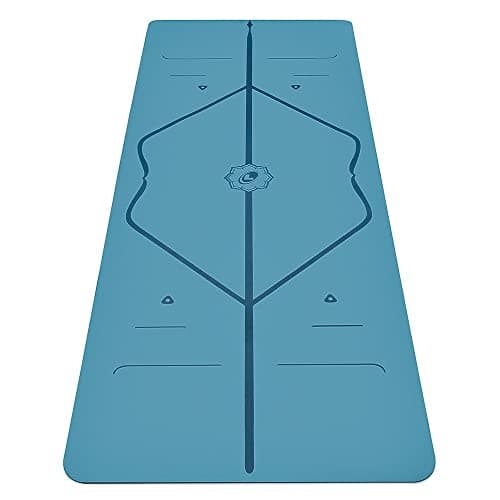
Liforme Original Yoga Mat
Editor's Choice
Kit Score 7.7/10
$165.00 Price checked Oct 23, 6:22 AM CDT
Best for: Hot yoga regulars and alignment-focused practitioners who need a mat that stays grippy through the sweatiest sessions and comes ready to travel.
- Wet grip that actually improves with sweat, making it the standout choice for hot yoga and Bikram classes
- Durability trails the Manduka PRO: reviewers note surface wear and staining after heavy use
- Thickness
- 4.2mm
- Dimensions
- 72.8" x 26.8"
- Weight
- 5.5 lbs
- Material
- Eco-polyurethane top, natural rubber base
- Grip system
- GripForMe polyurethane surface
- Includes
- Enclosed yoga bag with shoulder strap
About this pick
The Liforme Original is the go-to mat for practitioners who sweat heavily or practice hot yoga. Its polyurethane top surface grips harder as it gets wetter, a property that is the reverse of most PVC mats, and the etched AlignForMe grid helps new and advancing practitioners find correct hand and foot placement without guesswork.
Strengths
- Wet grip that actually improves with sweat, making it the standout choice for hot yoga and Bikram classes
- Wider and longer than standard mats (72.8" x 26.8") giving taller practitioners room to move
- Included carry bag with shoulder strap and etched alignment guides add day-to-day usefulness
Weaknesses
- Durability trails the Manduka PRO: reviewers note surface wear and staining after heavy use
- Highest price in this roundup with no lifetime guarantee to offset it
Kit Score breakdown
JADEYOGA
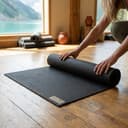
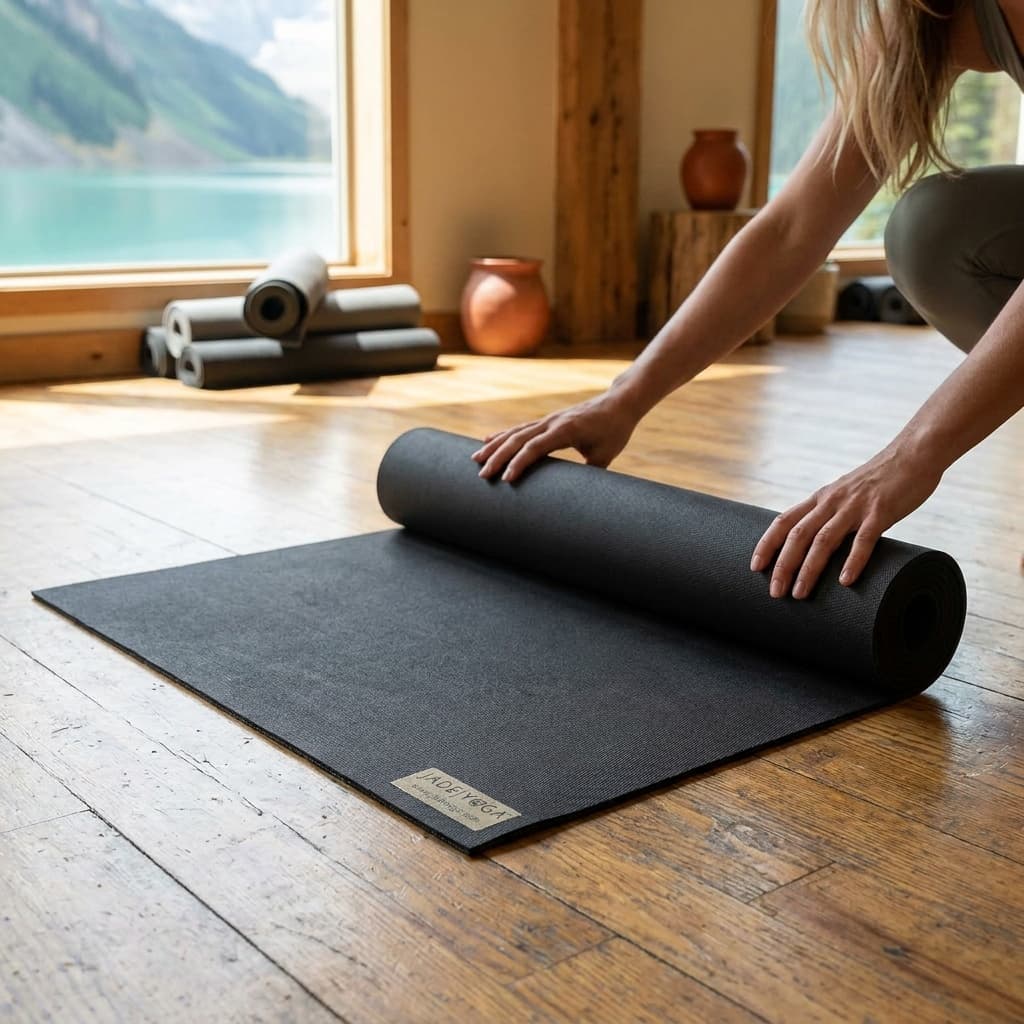
JadeYoga Harmony Yoga Mat 68"
Best Natural Rubber
Kit Score 8.5/10
$114.95 Price checked Oct 23, 6:22 AM CDT
Best for: Eco-minded practitioners who prioritize natural materials, want reliable dry-grip performance, and practice primarily in normal-temperature settings rather than hot yoga.
- 100% natural open-cell rubber provides strong dry grip that outperforms most synthetic alternatives in stability poses
- Open-cell surface absorbs sweat and traps dust, requiring more frequent cleaning than closed-cell or polyurethane-top mats
- Thickness
- 4.75mm (3/16")
- Dimensions
- 68" x 24"
- Weight
- 4.2 lbs
- Material
- 100% natural open-cell rubber, no PVC or EVA
- Construction
- Open-cell natural rubber throughout
- Environmental
- Made in USA, one tree planted per mat sold
About this pick
The JadeYoga Harmony is the benchmark natural rubber mat for practitioners who want to avoid PVC and synthetic materials without sacrificing grip. Open-cell natural rubber delivers a coarse, gritty surface that bites into standing poses and holds position under downward dogs, even as the session heats up.
Strengths
- 100% natural open-cell rubber provides strong dry grip that outperforms most synthetic alternatives in stability poses
- No PVC, phthalates, or synthetic rubber: a clean-material pick for eco-conscious practitioners
- Longevity measured in years, with owners reporting consistent performance past the 7-year mark
Weaknesses
- Open-cell surface absorbs sweat and traps dust, requiring more frequent cleaning than closed-cell or polyurethane-top mats
- Natural rubber contains latex, which rules it out for anyone with a latex sensitivity or allergy
Kit Score breakdown
See all picks in Best yoga mats in 2026: our top picks for every practice
Keep going
Complete loadoutHome calisthenics kitA compact strength and conditioning setup built around five tools that cover pushing, pulling, assistance, cardio, and floor work.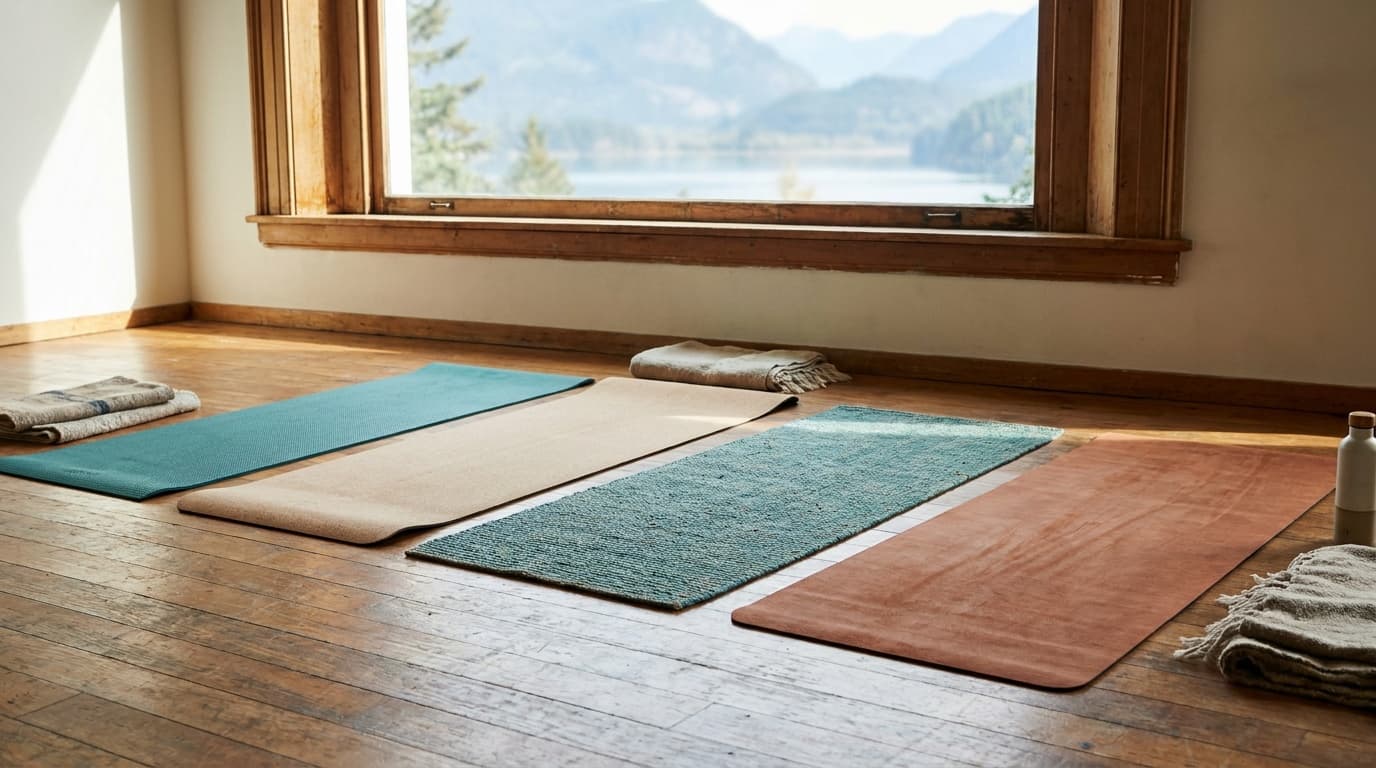
Researched, not hands-on tested
Updated Jun 4, 2026Our recommendations draw on manufacturer documentation, retailer listings, owner feedback, and comparisons with alternatives.
As an Amazon Associate I earn from qualifying purchases. We may earn a commission from links here, at no extra cost to you. How we research →