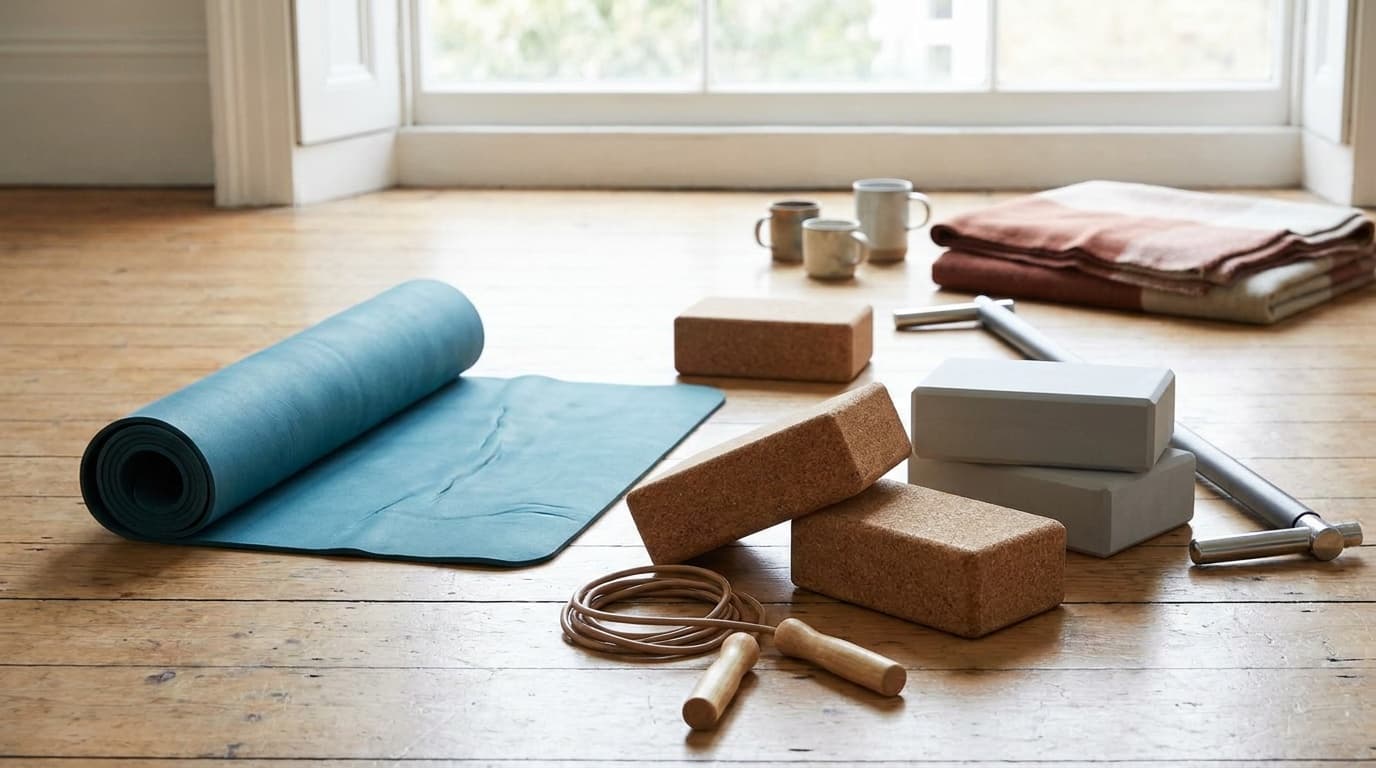
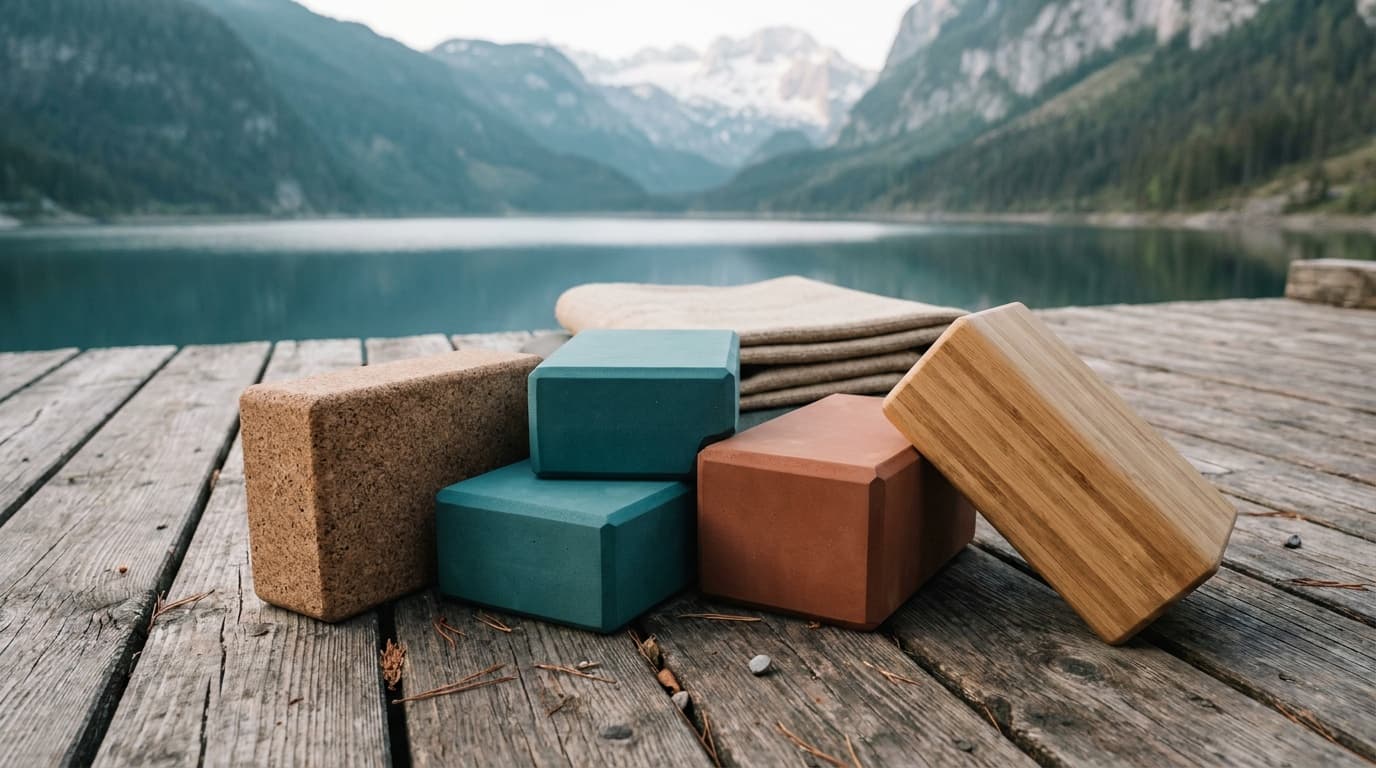
The yoga block you choose changes how a pose feels under your hands, hips, or spine. Cork and foam are the two dominant materials, and the difference is real enough to matter.
Firmness and weight-bearing support
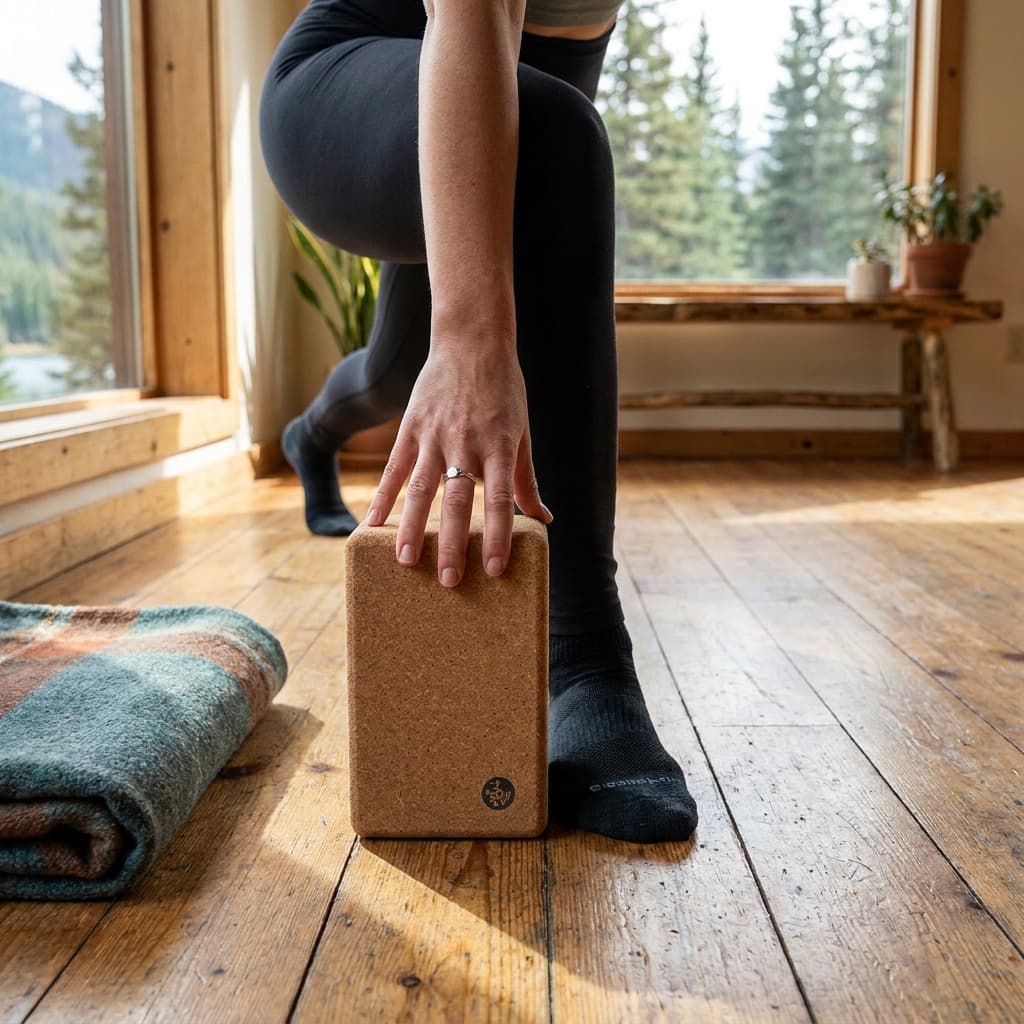
Cork is the firmer material by a meaningful margin. When you press your full bodyweight through a block in side-angle pose or use it for a supported bridge, cork does not compress under you. That stable base protects wrist and shoulder alignment and lets you actually trust the prop.
Foam blocks, especially lower-density versions, can compress slightly under load. For standing or arm-balance-adjacent poses, that micro-give is not ideal. Higher-density EVA foam closes the gap considerably, but even premium foam does not match the rigidity of solid cork.
A block that compresses under your hands is a prop that asks you to compensate, not rest.
If your practice includes yin, restorative, or gentle yoga where the block lives under your sacrum or bolsters a reclined position, cork's firmness can feel hard against soft tissue. That is the one area where foam's give becomes a genuine advantage.
Grip and sweat performance
This is where cork has a clear functional edge. Cork's natural texture becomes tackier as it gets damp, the opposite of what happens with most foam surfaces. In a heated class or a vigorous flow where your palms are wet, a cork block stays planted. Foam surfaces tend to get slippery when wet.
For anyone practicing Bikram, hot yoga, or any style where sweat is a given, cork is the practical answer. If your studio is climate-controlled and your practice is slow, foam's grip limitation rarely becomes a problem.
Comfort and cushioning
Foam wins on softness. If you are sitting on a block for pranayama, kneeling on one during a hip opener, or resting your forehead on a block in child's pose, foam is simply more comfortable against the body. Cork's density that helps in standing poses can feel unyielding in passive, long-held positions.
Where each material excels
Active standing poses
Cork, for its rigid, trust-your-weight stability
Arm balances and inversions
Cork, for non-compressible support
Restorative and yin holds
Foam, for softer contact against the body
Pranayama seating
Foam, for comfortable prolonged contact
Hot yoga or sweaty flows
Cork, for grip that improves when damp
Many practitioners who do a mixed practice (active flow plus restorative) end up owning one of each, which is a reasonable answer if budget allows.
Durability and eco credentials
Cork holds up exceptionally well over years of use. It does not dent, it resists odor naturally, and the surface does not peel or flake. A quality cork block like the Manduka Cork Yoga Block bought today should outlast several cycles of foam replacements.
Foam degrades more visibly over time. The surface can develop creases, the corners compress, and cheaper foam develops a slightly tacky deteriorated feel after a year or two of regular use. Higher-density foam extends that lifespan but does not eliminate it.
On the environmental side, cork is harvested from the bark of cork oak trees without felling them, making it a renewable material with strong sustainability credentials. Most yoga foam is EVA (ethylene-vinyl acetate), a petroleum-derived material that is not easily recycled. Some brands now offer TPE foam blocks as a greener alternative, but cork still carries the cleaner environmental story.
Price
Foam is cheaper, often by a significant amount. A single EVA foam block commonly runs $8–$15. Cork blocks typically land in the $18–$30 range per block, with premium brands higher. When a beginner is buying two blocks and a mat at once, that price gap is real.
Over a multi-year horizon the math shifts. If you replace foam blocks every two to three years and a cork block lasts five-plus years, the per-year cost difference shrinks. For a committed practitioner, cork is the better value long-term.
Frequently asked questions
Can I use a foam block for standing yoga poses?
Yes, and most beginners do. Higher-density foam like the Manduka Recycled Foam Yoga Block handles standing poses adequately for a lighter practitioner or moderate use. The concern is with full-bodyweight pressure over time: foam compresses slightly, which can subtly undermine alignment in poses where a stable base matters. If you notice the block feeling less firm than it used to, it is time to replace it or switch to cork.
How do I clean a cork yoga block?
Wipe cork down with a damp cloth and a small amount of mild soap. Avoid soaking it or leaving it wet, as prolonged moisture can cause the cork to swell or crack over time. Cork's natural antimicrobial properties help resist odor, so deep cleaning is rarely needed. Let it air dry fully before storing.
Are cork yoga blocks worth the higher price?
For an active, regular practice, yes. The combination of long lifespan, better grip under sweat, and non-compressible firmness makes cork the more functional tool for most poses. For a restorative-only practice or someone just getting started, foam's lower cost and softer feel make it a reasonable choice without real compromise.
For specific product picks in both materials, see our guide to the best yoga blocks. Browse all fitness guides or read how we research and rate gear.
Recommended gear
Our current top picks from the Best yoga blocks in 2026: cork, foam and bamboo picks guide, if you are ready to buy.
Best for: Practitioners at any level who want a single durable block that handles both reach support and sweaty grip for advanced poses.
- Cork grip improves with moisture, unlike foam that can become slick
- 2.2 lb weight is heavier than foam blocks, which matters if you carry several props to class
- Material
- Solid fine-grain cork (sustainably sourced)
- Dimensions
- 9" x 6" x 4"
- Weight
- 2.2 lb
- Quantity
- 1 block
- Surface
- Natural cork texture, antimicrobial
- Edge finish
- Contoured, comfortable
About this pick
Dense solid cork gives this block the firmness and grip that foam cannot match, making it the go-to choice for arm balances, inversions, and any pose where you need a surface that stays put when your hands get damp. The fine-grain texture grips better as hands sweat, the opposite of foam.
Strengths
- Cork grip improves with moisture, unlike foam that can become slick
- Solid construction does not compress under body weight, giving a true stable base for arm balances and advanced poses
- Antimicrobial cork surface cleans easily and resists sweat stains in moderate conditions
Weaknesses
- 2.2 lb weight is heavier than foam blocks, which matters if you carry several props to class
- Firm surface is less comfortable for extended restorative lying poses compared to soft foam
Kit Score breakdown
GAIAM
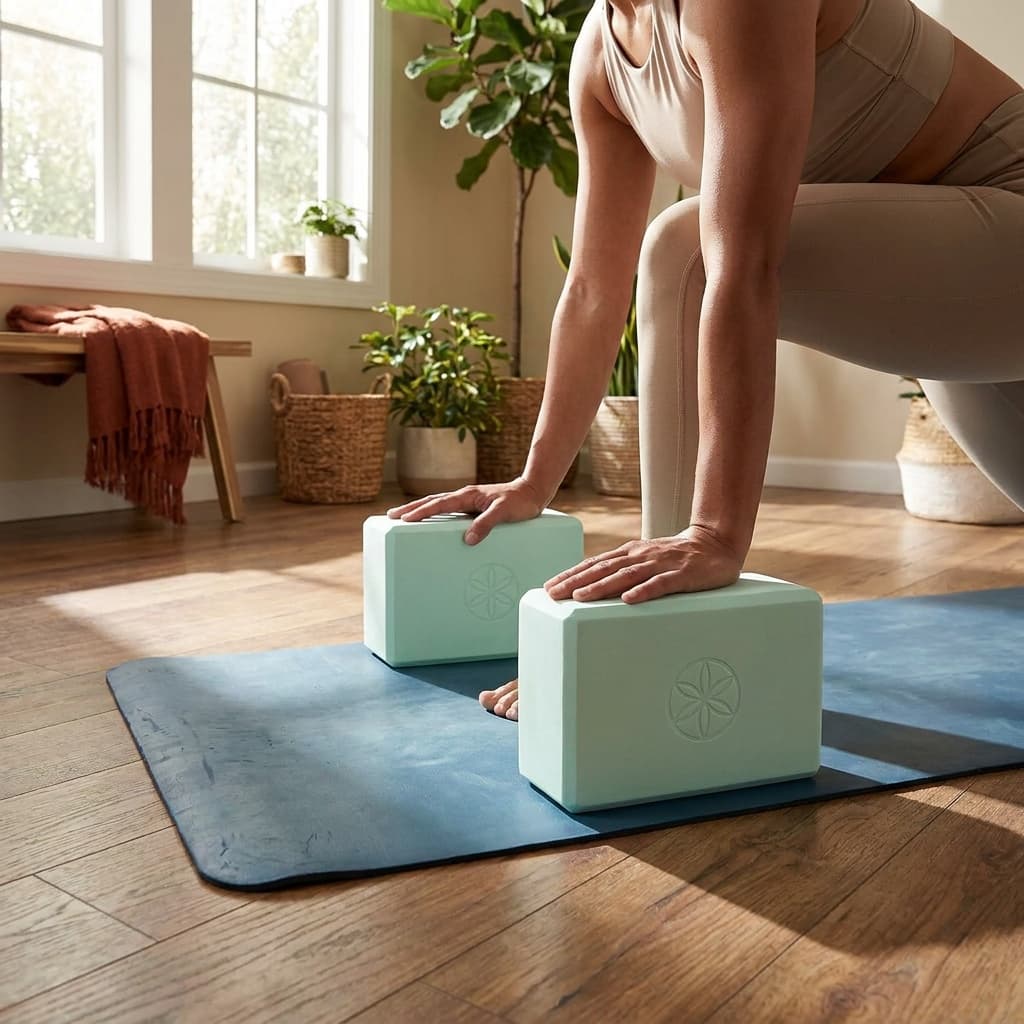
Gaiam Essentials Yoga Block Set of 2
BEST VALUE
Kit Score 8.0/10
$15.85 Price checked Oct 23, 4:16 PM CDT
Best for: Beginners who want two blocks to build reach support and bridge poses without spending much.
- Two blocks at a budget price covers most beginner setups without buying twice
- Some buyers note an initial chemical smell that takes a day or two to air out
- Material
- EVA foam (50% denser than standard)
- Dimensions (each)
- 9" x 6" x 4"
- Weight (pair)
- 10.4 oz
- Quantity
- 2 blocks
- Surface
- Non-slip, beveled edges
- Latex free
- Yes
About this pick
Gaiam's best-selling 2-pack covers the most common beginner need: two blocks at once for symmetrical support, bridge pose, and seated forward folds. The EVA foam is soft enough for restorative lying poses yet dense enough to hold its shape under body weight.
Strengths
- Two blocks at a budget price covers most beginner setups without buying twice
- Lightweight pair makes these easy to carry to a studio or shift mid-flow
- Non-slip beveled edges grip reliably in dry conditions and moderate sweat
Weaknesses
- Some buyers note an initial chemical smell that takes a day or two to air out
- Less stable than cork for arm balances or inversions where a firmer base matters
Kit Score breakdown
MANDUKA
Manduka Recycled Foam Yoga Block
EDITOR'S CHOICE
Kit Score 8.4/10
$26.00 Price checked Oct 23, 4:16 PM CDT
Best for: Yogis who want an eco-conscious foam block with proven durability and wide color availability, without moving up to the weight and price of cork.
- Recycled EVA foam construction puts sustainability credentials on par with cork alternatives, without the weight penalty
- Sold as a single block at $26, so a two-block setup costs $52 compared to foam two-packs that run $15–$20 total
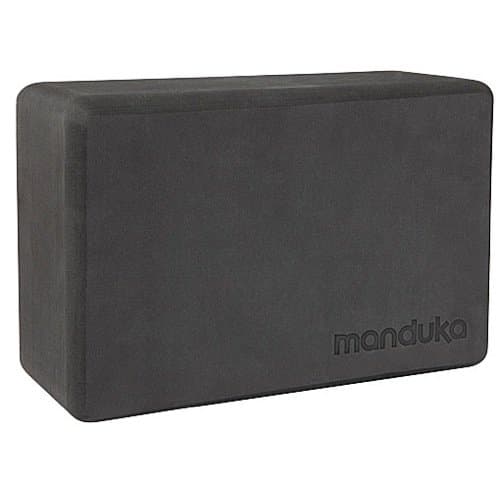
- Dimensions
- 9" x 6" x 4" (23 cm x 15 cm x 10 cm)
- Weight
- 1 lb (0.45 kg)
- Material
- High-density recycled EVA foam (50–75% post-industrial and post-consumer recycled content)
- Surface
- Closed-cell, moisture-resistant, wipe-clean
- Edges
- Contoured rounded edges for body contact comfort
- Colors available
- Thunder (grey), Midnight (blue), Sage, Linen
About this pick
The Manduka Recycled Foam Yoga Block delivers firm, stable support for extending reach and deepening poses, built from high-density EVA foam with 50–75% recycled post-industrial and post-consumer content. Its closed-cell surface resists moisture and wipes clean easily, making it practical for both studio and home use. Contoured edges sit comfortably against the body during supported poses. With nearly 4,000 Amazon ratings averaging 4.8 out of 5, it has earned a strong reputation among beginners and experienced practitioners as a reliable, eco-conscious prop at a mid-range price.
Strengths
- Recycled EVA foam construction puts sustainability credentials on par with cork alternatives, without the weight penalty
- Nearly 4,000 Amazon ratings at 4.8 stars reflects consistent real-world satisfaction across a wide range of users
- Closed-cell surface is easy to wipe down and holds up to repeated studio use without absorbing sweat or odor
Weaknesses
- Sold as a single block at $26, so a two-block setup costs $52 compared to foam two-packs that run $15–$20 total
- Foam blocks at this density are not quite as rigid as cork under sustained load in advanced inversions
Kit Score breakdown
See all picks in Best yoga blocks in 2026: cork, foam and bamboo picks
Keep going
Researched, not hands-on tested
Updated Jul 8, 2026Our recommendations draw on manufacturer documentation, retailer listings, owner feedback, and comparisons with alternatives.
As an Amazon Associate I earn from qualifying purchases. We may earn a commission from links here, at no extra cost to you. How we research →