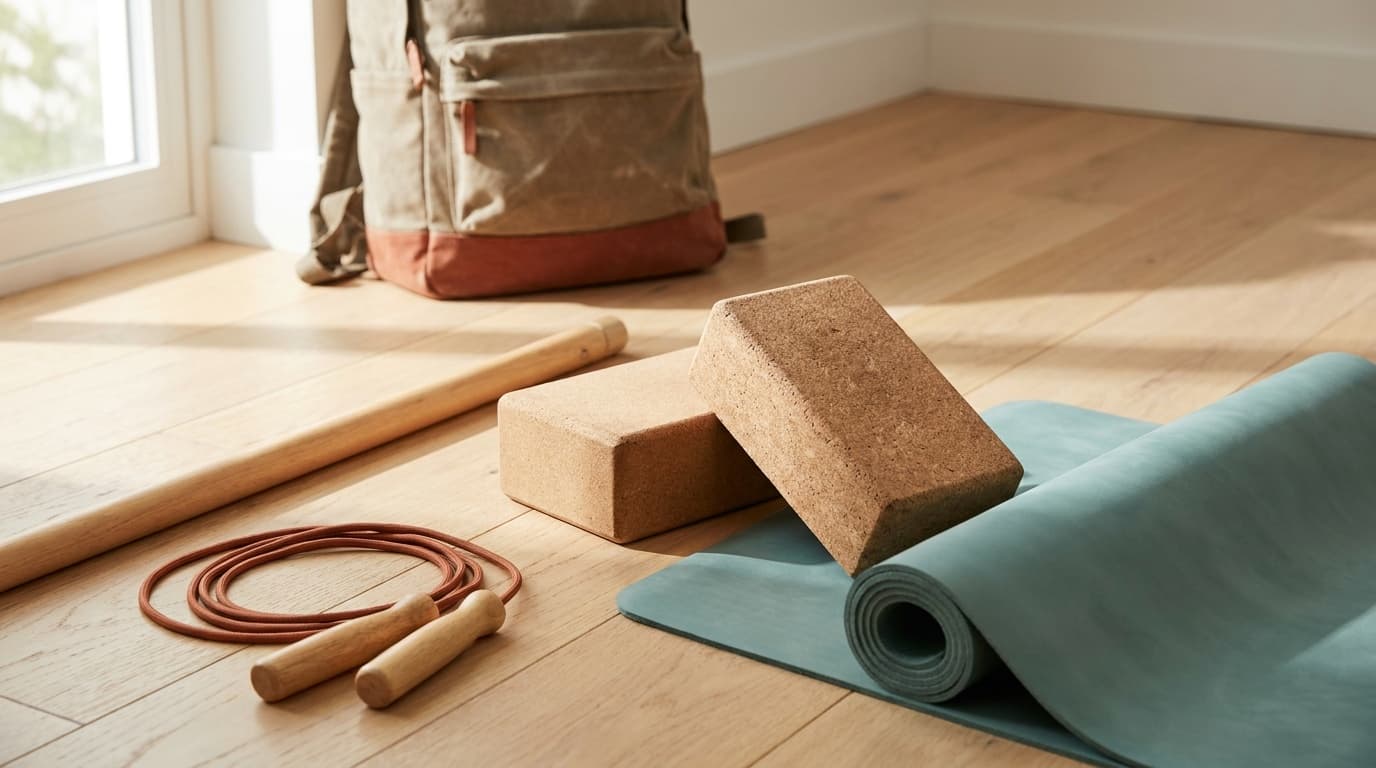
Yoga blocks are the most misunderstood prop in any studio: beginners treat them as a sign they are not flexible enough, when experienced practitioners know they are a tool for practicing smarter.
Understanding the three heights
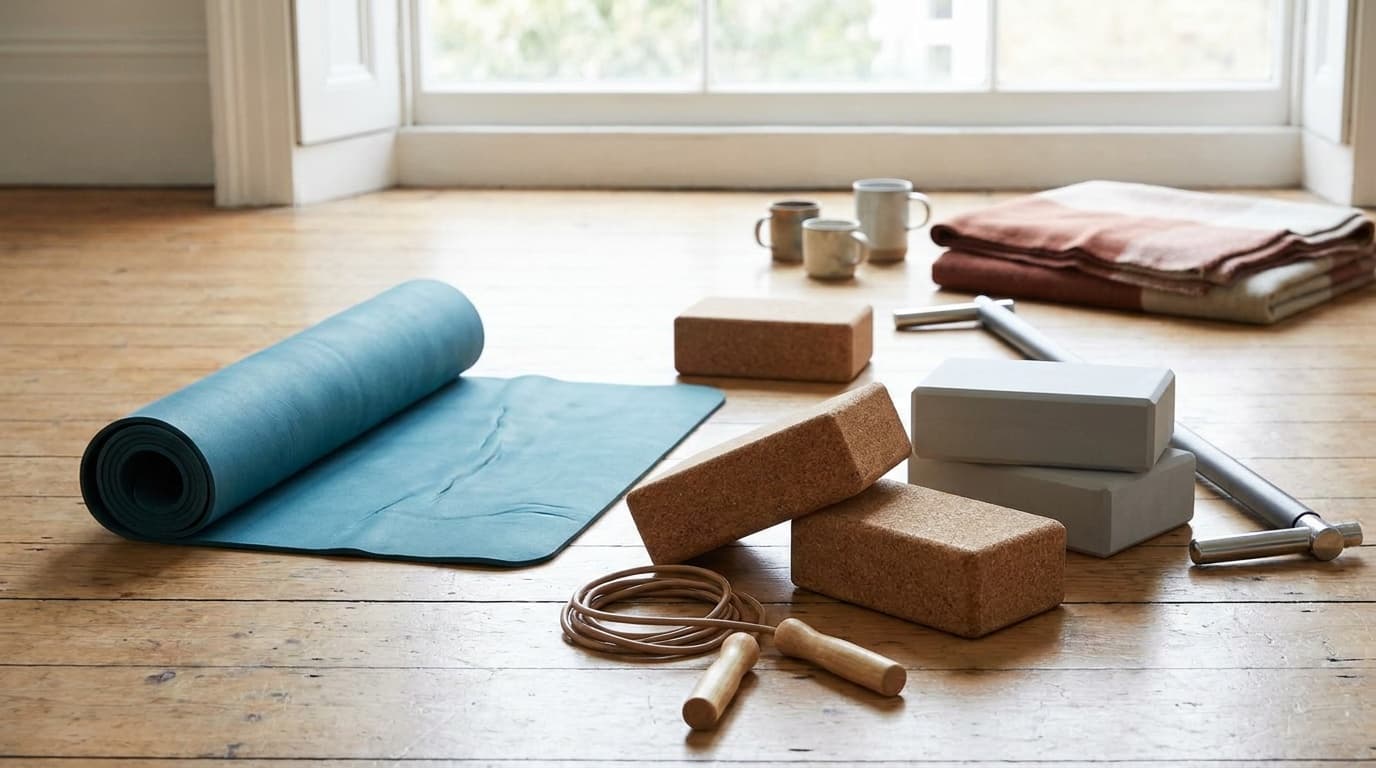
A standard foam or cork block like the Manduka Cork Yoga Block is roughly 9 x 6 x 4 inches and can be placed three ways. Each position changes the height and, critically, the stability of the surface.
Start every new pose on the tall setting. Only lower the block when you can maintain a long spine and relaxed shoulders at the current height. The goal is never to touch the floor with the block gone; the goal is to find the height where good form is possible right now.
Using blocks in standing poses
In standing forward folds and triangle pose, the floor is often 6 to 12 inches farther away than your hands can comfortably reach without rounding the lower back. Placing a block on the tall or medium height outside your front foot lets you keep the chest open and the hamstrings working properly rather than straining the spine.
Triangle pose with a block
Front foot placement
Place the block just outside your front foot before you step into the pose.
Start tall
Set it on the tall height so you are not reaching down at all on the first attempt.
Stack the shoulder
Rest your hand on the block and rotate the top shoulder directly over the bottom one.
Open the chest
If your top shoulder is rolling forward, the block is too low; raise it.
Progress over weeks
Drop to medium height only when tall feels easy and your spine stays long.
The same logic applies in half-moon pose, revolved triangle, and low lunge with a twist. Any time you catch yourself hunching the upper back to reach the floor, a block at the right height fixes it immediately.
Blocks in seated and floor poses
In seated forward folds, tight hamstrings tilt the pelvis backward and round the lumbar spine. Sitting on the flat side of a block raises your hips just enough to tilt the pelvis forward, which lets you hinge at the hip rather than curl through the lower back. This one adjustment makes a seated forward fold actually stretch the hamstrings instead of straining the back.
In bound angle pose (butterfly), sliding a block under each knee removes the hip-flexor strain that makes beginners grip and tense. The inner groins can release because they are not working to prevent the knees from dropping further than is comfortable.
The block does not mean you are cheating; it means you are training the correct muscle pattern instead of compensating around a limitation.
Restorative uses: hips and back support
Restorative poses hold for 3 to 10 minutes and rely on props to do the work, not muscles. Two common applications:
Supported bridge: Lie on your back, lift the hips, and slide a block under the sacrum (the flat triangular bone at the base of the spine) on the flat or medium height. The block supports the pelvis so the glutes and lower back can fully relax. This is a gentle traction for the lumbar spine and a passive hip flexor opener at the same time.
Supported fish: Place one block under the mid-back at shoulder-blade height (medium or tall) and a second from a matched pair like the Gaiam Essentials Yoga Block Set under the back of the skull (flat). Arms rest out to the sides. The chest opens and the thoracic spine extends passively. Five minutes here undoes a lot of desk posture.
Between the thighs for muscle engagement
Squeezing a block lightly between the inner thighs during bridge pose, chair pose, or warrior one teaches adductor activation that many beginners never access. The inner legs are chronically underused in daily movement, and the block gives immediate feedback: if it drops, the engagement stopped.
Use the medium height between the thighs for standing poses and the flat height when lying on your back. Aim for about 20 to 30 percent of maximum squeeze force, enough to hold the block without gripping so hard it changes your breathing.
Building flexibility safely over time
Blocks let you practice at the edge of your current range without forcing past it. This matters because flexibility gains come from consistent exposure to a mild, sustainable stretch, not from occasional aggressive pushing. A block at the right height lets you hold a pose for the full recommended duration (typically 30 to 60 seconds for active stretching, 3 to 5 minutes for passive) without pain or compensation.
Track progress by how often you can drop a height, not by whether you have abandoned the block entirely. Many advanced practitioners keep blocks at medium height in triangle pose indefinitely because it lets them focus on thoracic rotation instead of worrying about reach.
Frequently asked questions
What height should a beginner start with?
Start on the tall height for any pose where the block replaces reaching the floor. The tall setting gives the most support and makes it easiest to maintain alignment. Drop to medium only when tall feels genuinely easy and you can hold good form for the full duration of the pose.
Foam or cork: which block material is better?
Foam blocks are lighter and softer, which makes them more comfortable under the back in restorative poses. Cork blocks are heavier and firmer, which gives better stability when bearing weight, as in balancing poses. Beginners who will mostly use blocks for standing support often prefer cork; those doing a lot of restorative work often prefer foam. Either works for most beginner applications.
Can I use a book or folded blanket instead of a yoga block?
A thick hardcover book can substitute for the flat or medium height in pinch, and a tightly folded blanket works for restorative support under the head or back. Neither matches the stability and precise height options of a proper block, especially for weight-bearing poses where the surface needs to be firm and consistent. If you practice more than once a week, a pair of blocks is worth the modest cost.
For specific picks across foam, cork, and budget options, see our guide to the best yoga blocks. Browse all fitness guides or read how we research and rate gear.
Recommended gear
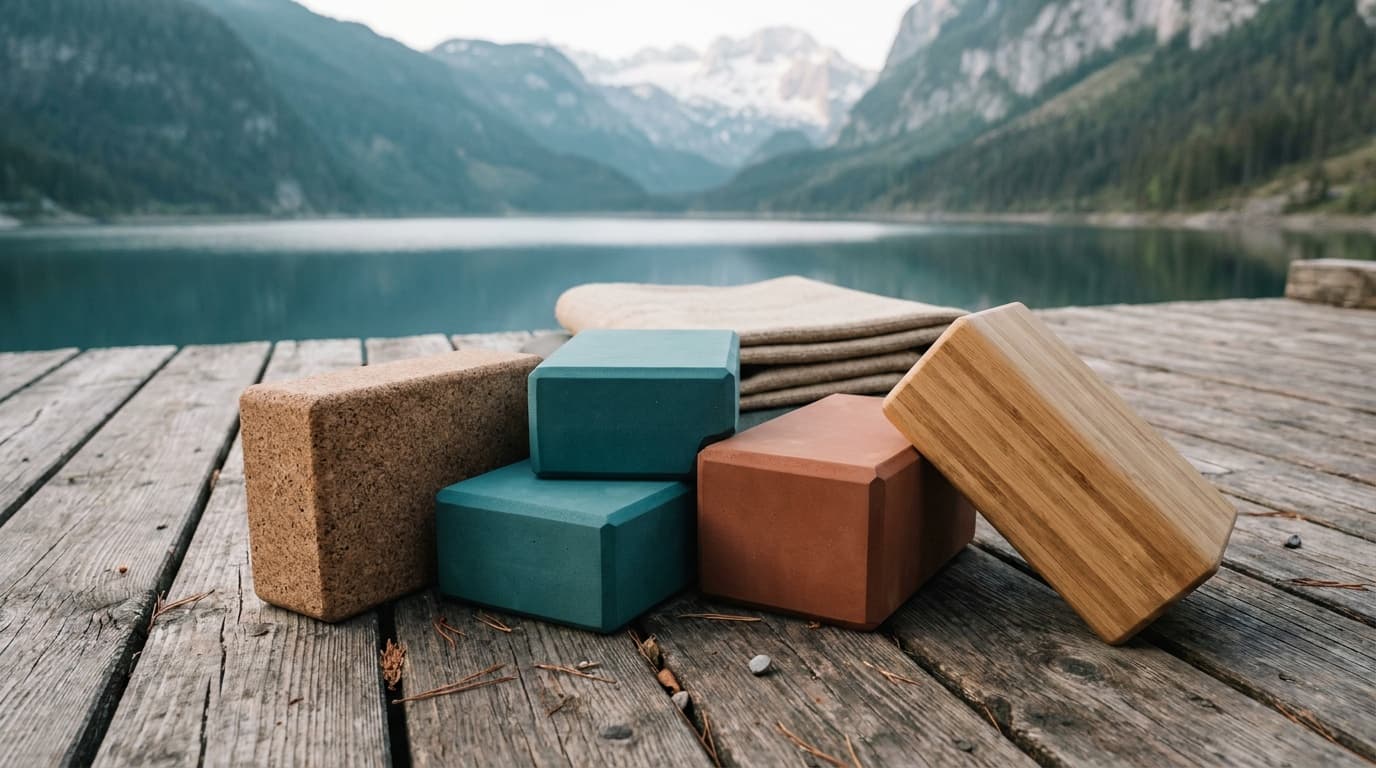
Our current top picks from the Best yoga blocks in 2026: cork, foam and bamboo picks guide, if you are ready to buy.
Best for: Practitioners at any level who want a single durable block that handles both reach support and sweaty grip for advanced poses.
- Cork grip improves with moisture, unlike foam that can become slick
- 2.2 lb weight is heavier than foam blocks, which matters if you carry several props to class
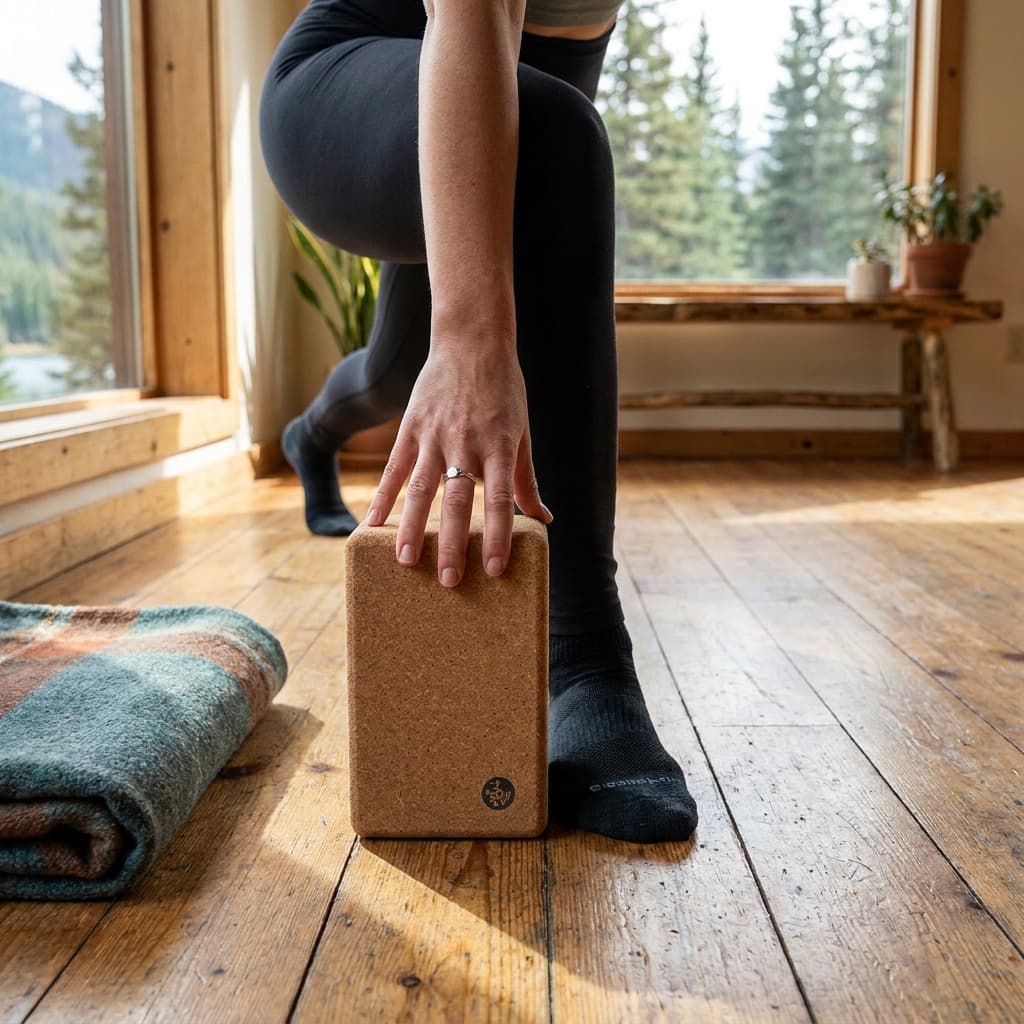
- Material
- Solid fine-grain cork (sustainably sourced)
- Dimensions
- 9" x 6" x 4"
- Weight
- 2.2 lb
- Quantity
- 1 block
- Surface
- Natural cork texture, antimicrobial
- Edge finish
- Contoured, comfortable
About this pick
Dense solid cork gives this block the firmness and grip that foam cannot match, making it the go-to choice for arm balances, inversions, and any pose where you need a surface that stays put when your hands get damp. The fine-grain texture grips better as hands sweat, the opposite of foam.
Strengths
- Cork grip improves with moisture, unlike foam that can become slick
- Solid construction does not compress under body weight, giving a true stable base for arm balances and advanced poses
- Antimicrobial cork surface cleans easily and resists sweat stains in moderate conditions
Weaknesses
- 2.2 lb weight is heavier than foam blocks, which matters if you carry several props to class
- Firm surface is less comfortable for extended restorative lying poses compared to soft foam
Kit Score breakdown
GAIAM
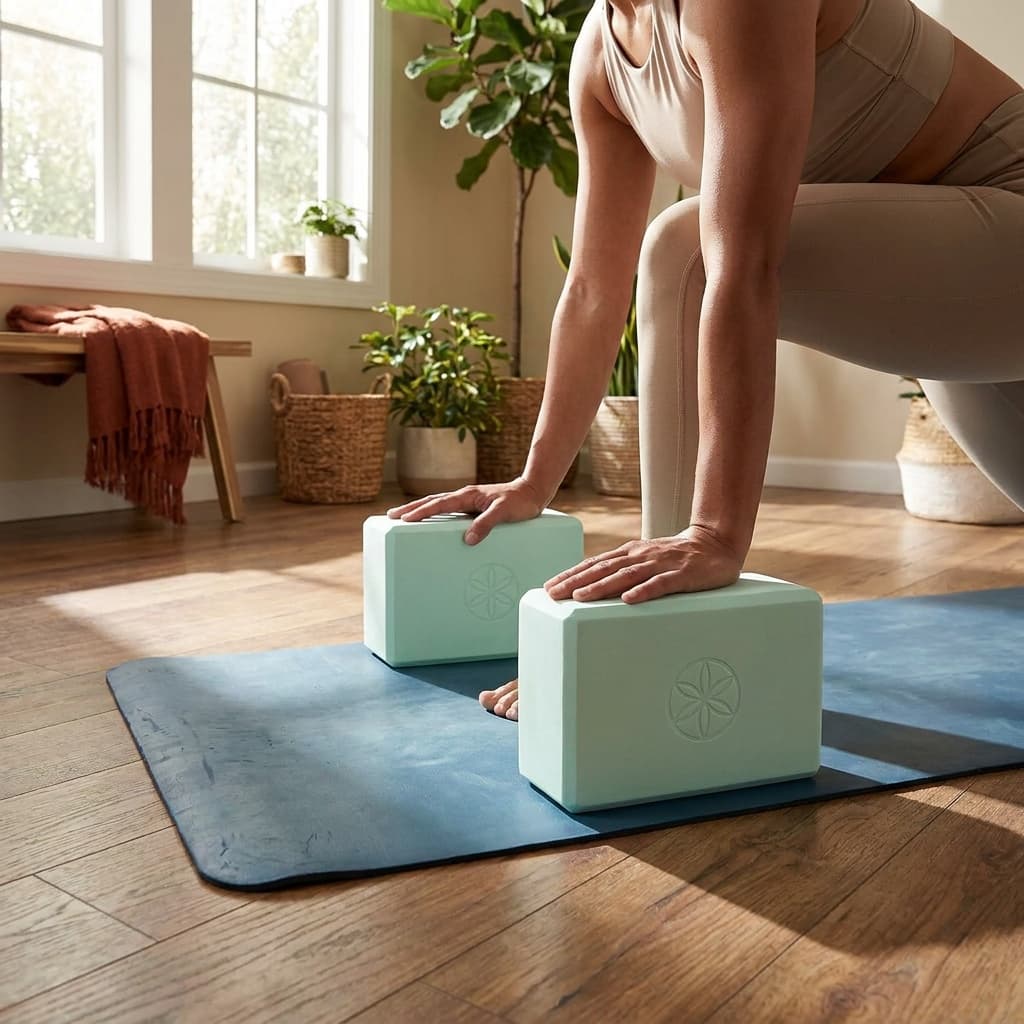
Gaiam Essentials Yoga Block Set of 2
BEST VALUE
Kit Score 8.0/10
$15.85 Price checked Oct 23, 4:16 PM CDT
Best for: Beginners who want two blocks to build reach support and bridge poses without spending much.
- Two blocks at a budget price covers most beginner setups without buying twice
- Some buyers note an initial chemical smell that takes a day or two to air out
- Material
- EVA foam (50% denser than standard)
- Dimensions (each)
- 9" x 6" x 4"
- Weight (pair)
- 10.4 oz
- Quantity
- 2 blocks
- Surface
- Non-slip, beveled edges
- Latex free
- Yes
About this pick
Gaiam's best-selling 2-pack covers the most common beginner need: two blocks at once for symmetrical support, bridge pose, and seated forward folds. The EVA foam is soft enough for restorative lying poses yet dense enough to hold its shape under body weight.
Strengths
- Two blocks at a budget price covers most beginner setups without buying twice
- Lightweight pair makes these easy to carry to a studio or shift mid-flow
- Non-slip beveled edges grip reliably in dry conditions and moderate sweat
Weaknesses
- Some buyers note an initial chemical smell that takes a day or two to air out
- Less stable than cork for arm balances or inversions where a firmer base matters
Kit Score breakdown
MANDUKA
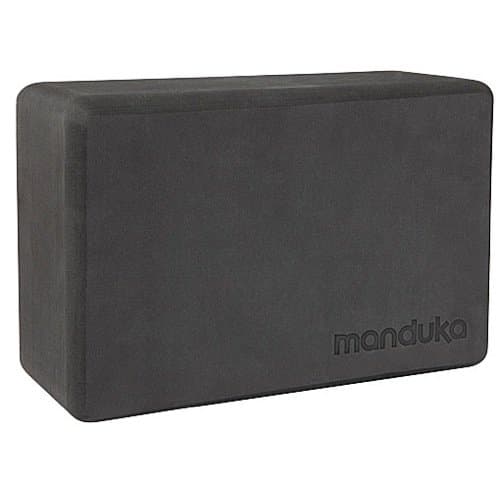
Manduka Recycled Foam Yoga Block
EDITOR'S CHOICE
Kit Score 8.4/10
$26.00 Price checked Oct 23, 4:16 PM CDT
Best for: Yogis who want an eco-conscious foam block with proven durability and wide color availability, without moving up to the weight and price of cork.
- Recycled EVA foam construction puts sustainability credentials on par with cork alternatives, without the weight penalty
- Sold as a single block at $26, so a two-block setup costs $52 compared to foam two-packs that run $15–$20 total
- Dimensions
- 9" x 6" x 4" (23 cm x 15 cm x 10 cm)
- Weight
- 1 lb (0.45 kg)
- Material
- High-density recycled EVA foam (50–75% post-industrial and post-consumer recycled content)
- Surface
- Closed-cell, moisture-resistant, wipe-clean
- Edges
- Contoured rounded edges for body contact comfort
- Colors available
- Thunder (grey), Midnight (blue), Sage, Linen
About this pick
The Manduka Recycled Foam Yoga Block delivers firm, stable support for extending reach and deepening poses, built from high-density EVA foam with 50–75% recycled post-industrial and post-consumer content. Its closed-cell surface resists moisture and wipes clean easily, making it practical for both studio and home use. Contoured edges sit comfortably against the body during supported poses. With nearly 4,000 Amazon ratings averaging 4.8 out of 5, it has earned a strong reputation among beginners and experienced practitioners as a reliable, eco-conscious prop at a mid-range price.
Strengths
- Recycled EVA foam construction puts sustainability credentials on par with cork alternatives, without the weight penalty
- Nearly 4,000 Amazon ratings at 4.8 stars reflects consistent real-world satisfaction across a wide range of users
- Closed-cell surface is easy to wipe down and holds up to repeated studio use without absorbing sweat or odor
Weaknesses
- Sold as a single block at $26, so a two-block setup costs $52 compared to foam two-packs that run $15–$20 total
- Foam blocks at this density are not quite as rigid as cork under sustained load in advanced inversions
Kit Score breakdown
See all picks in Best yoga blocks in 2026: cork, foam and bamboo picks
Keep going
Researched, not hands-on tested
Updated Jun 4, 2026Our recommendations draw on manufacturer documentation, retailer listings, owner feedback, and comparisons with alternatives.
As an Amazon Associate I earn from qualifying purchases. We may earn a commission from links here, at no extra cost to you. How we research →