A weightlifting belt does one job: it gives your core something to brace against, raising intra-abdominal pressure so your spine stays neutral under a heavy squat or deadlift. The three belts below cover every serious use case, from daily powerlifting training to mixed barbell-and-conditioning programs.
Our quick picks
How we picked
Every pick is scored against our Kit Score: verified owner reviews aggregated across major retail platforms, published lab or brand spec data, competitive pricing history, and cross-referencing against the IPF/USAPL equipment rules for competition-legal calls. No belt was gifted or tested in house; we research so you can buy with confidence.
The picks
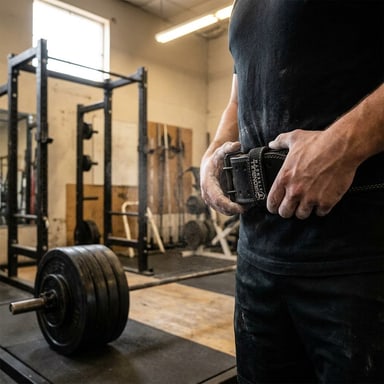
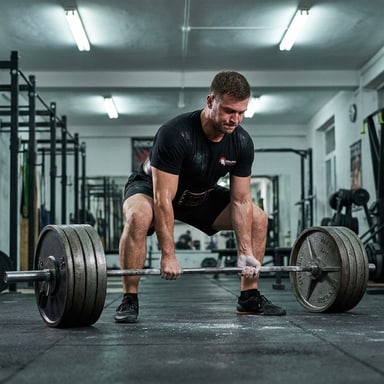
Best overall: Iron Bull Strength 10mm Double Prong
BEST OVERALL
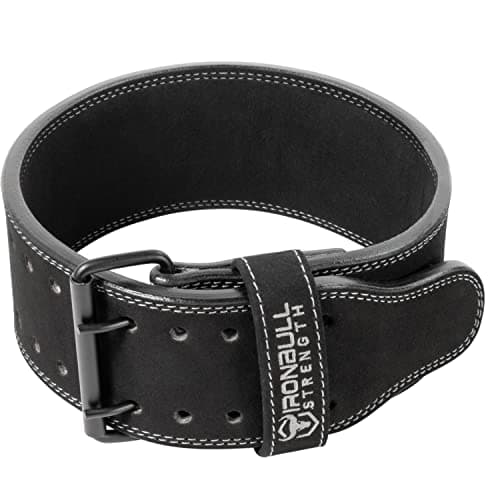
Iron Bull Strength Powerlifting Belt 10mm Double Prong
Best for: Lifters who want a full 10mm competition-legal leather belt without paying Inzer or SBD pricing, and who are comfortable with a prong closure.
- IPF-approved at a price well below most name-brand powerlifting belts, making competition-legal training accessible without the premium outlay
- Requires a genuine break-in period of several weeks before the leather becomes pliable enough for comfortable use
Kit Score 8.2/10 · $99.95 Price checked Oct 23, 4:16 PM CDT · how we score gear
Buy on AmazonProduct details
A competition-legal 10mm leather belt at a mid-range price, with a double-prong roller buckle and suede facing for grip on the torso. The closer hole spacing means more fine-tuning than most entry-level belts allow, and it arrives stiff and needs a proper break-in.
- Thickness
- 10mm
- Width
- 4 inches (uniform)
- Material
- Suede leather
- Closure
- Double-prong roller buckle
- Hole spacing
- 10 sets of prong holes, closer pattern for precise fit
- Certification
- IPF, USAPL, USPA, IPL approved
More strengths
- Double-prong system provides a secure, redundant lockdown that inspires confidence under heavy loads
- Suede exterior resists belt migration during squats and deadlifts
Other tradeoffs
- Double prong takes longer to fasten and release than a lever, which adds friction between sets
Iron Bull Strength produces a 10mm single-layer leather belt that meets IPF thickness and width specs at roughly 40 percent of the Inzer price. The double-prong closure adds some redundancy (two prongs distribute stress across the holes rather than concentrating on one), though it also means a few extra seconds between sets compared to a lever setup.
Owner reviews across multiple platforms consistently note that the leather quality punches above the price. The belt is firm out of the box and breaks in on a similar timeline to the Inzer. The buckle hardware is solid steel, and the stitching on the rollar and keeper holds up under verified multi-year use reports.
The trade-off is the prong closure. For general strength training it is a non-issue. For competition, where you may be pulling your belt on and off between squat and deadlift attempts with tight warm-up timing, a lever is faster. If you plan to compete and know you want lever convenience, save up for the Inzer. If you want competition-grade leather at a reasonable entry price and are comfortable with prongs, this is the belt.
Best for: Lifters who want a full 10mm competition-legal leather belt without paying Inzer or SBD pricing, and who are comfortable with a prong closure.
Price: $75–$85
Best budget: Dark Iron Fitness Genuine Leather Belt
BEST BUDGET
Dark Iron Fitness Genuine Leather Weightlifting Belt
Best for: Newer lifters or general strength trainers who want real leather and a proven track record at a price that does not require a big commitment.
- One of the highest review volumes in the category, and a 4.7-star average reflects broadly consistent quality rather than niche enthusiasm
- Sizing runs small; most owners report needing to go up one size from their usual measurement
Kit Score 8.1/10 · $59.99 Price checked Oct 23, 4:16 PM CDT · how we score gear
Buy on AmazonProduct details
Dark Iron Fitness has held a top spot in Amazon's weightlifting belt category for years with over 24,000 reviews. It is genuine buffalo leather with metal-grommet-reinforced holes, double-stitched borders, and a lifetime replacement guarantee. Sizing runs small, so order up one size.
- Thickness
- ~10mm
- Width
- 4 inches (uniform)
- Material
- Genuine buffalo hide leather
- Closure
- Double-prong steel buckle
- Hole reinforcement
- Metal grommets on all adjustment holes
- Reviews on Amazon
- 24,000+ with 4.7-star average
More strengths
- Metal grommets on all adjustment holes address one of the most common early failure points on budget leather belts
- Lifetime replacement guarantee offers a safety net that most sub-$65 belts do not
Other tradeoffs
- Break-in period can feel stiff for 2 to 4 weeks, and the initial leather odor is noticeable
Dark Iron Fitness has shipped a legitimate genuine-leather belt with a single-prong roller buckle at a price that removes every financial excuse for going without one. It is not full-grain competition leather and it is not 10mm thick across the entire belt (it tapers at the front, which makes it more comfortable for shorter torsos and lifters who include pressing movements). That taper also means it is not IPF competition-legal, but the vast majority of people buying this belt are not competing, they are training.
For the use case it targets, the performance record is strong. Aggregated reviews highlight durability over multi-year regular use, a break-in period that is shorter than stiffer competition belts, and a buckle that holds under working weights. The 4-inch back width still provides a substantial bracing surface for squats and deadlifts.
If you are newer to belted lifting and not sure how often you will use it, or if you train strength alongside other fitness modalities and want a belt that is less punishing to wear for longer sessions, the Dark Iron is a sensible starting point.
Best for: Newer lifters or general strength trainers who want real leather and a proven track record at a price that does not require a big commitment.
Price: $55–$65
Editor's choice: Element 26 Self-Locking Nylon Belt
EDITOR'S CHOICE
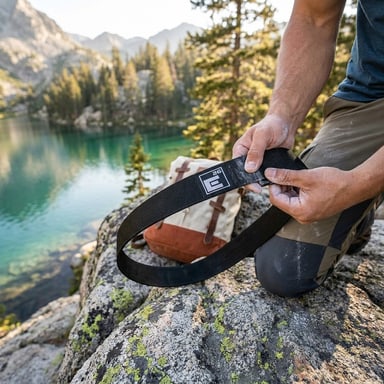
Element 26 Self-Locking Weight Lifting Belt
Best for: Lifters who train squats and deadlifts but also include Olympic lifts, metabolic conditioning, or higher-rep work where a stiff leather belt becomes a hindrance.
- No break-in required: nylon is flexible from the first session, which matters for lifters who train varied movements alongside squats and deadlifts
- 5mm nylon provides meaningfully less rigidity than 10mm leather, so lifters approaching maximal powerlifting loads will outgrow this belt
Kit Score 7.9/10 · $34.97 Price checked Oct 23, 4:16 PM CDT · how we score gear
Buy on AmazonProduct details
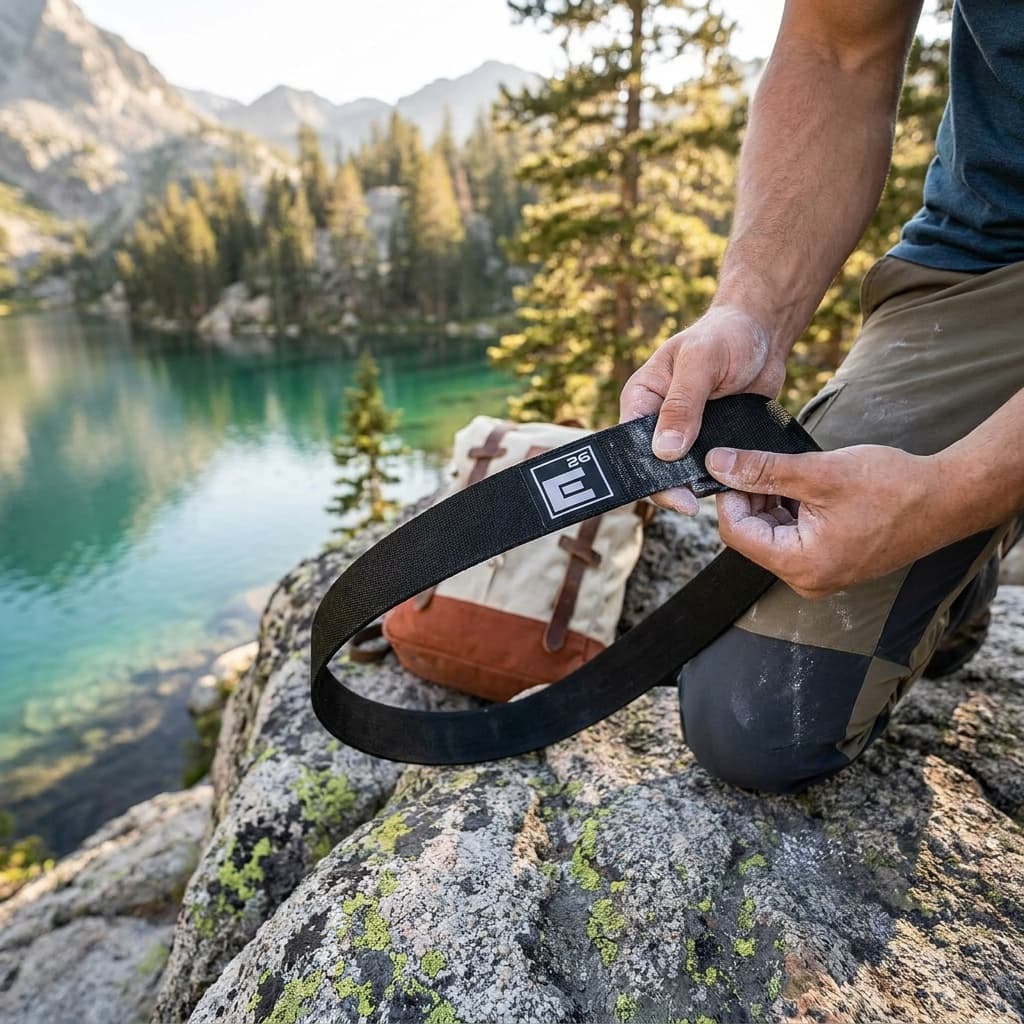
The Element 26 Self-Locking Belt is the pick for lifters who move between heavy compound work and dynamic or Olympic-style movements. The steel self-locking buckle engages automatically under load and releases cleanly, and the nylon construction needs no break-in period.
- Thickness
- ~5mm
- Width
- 4 inches (uniform)
- Material
- 100% premium nylon
- Closure
- Steel self-locking buckle with velcro strap
- Sizes
- XS to XXL (23 to 50 inches)
- Certification
- USAW and Functional Fitness Competition approved
More strengths
- The self-locking buckle mechanism engages under load and stays locked without manual intervention mid-set
- Infinitely adjustable fit via velcro strap, with a lifetime warranty backing the construction
Other tradeoffs
- Not IPF-approved for sanctioned powerlifting competition
Nylon belts and leather belts solve different problems. A stiff 10mm leather belt creates maximum bracing rigidity, which is exactly what you want for a one-rep-max deadlift. It is also bulky, takes time to put on and remove, and digs into your hips during a Pendlay row or a set of power cleans. The Element 26 nylon belt is 6mm thick, flexible enough to move with you through a full range of motion, and uses a self-locking buckle that cinches in one motion and releases completely when you pull the tab.
For athletes whose training includes barbell squats and deadlifts alongside Olympic lifting, CrossFit-style conditioning, or higher-rep hypertrophy work, the Element 26 is the right tool. It provides genuine lumbar support and bracing feedback on heavy lifts without penalizing you during the other 70 percent of your session.
The self-locking mechanism is the main technical differentiator in the nylon category. Many cheaper nylon belts use a basic double-D-ring system that can slip under load. The Element 26 locking cam holds at the set tightness until you actively release it.
Best for: Lifters who train squats and deadlifts but also include Olympic lifts, metabolic conditioning, or higher-rep work where a stiff leather belt becomes a hindrance.
Price: $30–$40
| Product | Kit Score | Price | Best for |
|---|---|---|---|
| Iron Bull Strength Powerlifting Belt 10mm Double Prong | 8.2 | $99.95 Price checked Oct 23, 4:16 PM CDT | Best for: Lifters who want a full 10mm competition-legal leather belt without paying Inzer or SBD pricing, and who are comfortable with a prong closure. Why it stands out: IPF-approved at a price well below most name-brand powerlifting belts, making competition-legal training accessible without the premium outlay Tradeoff: Requires a genuine break-in period of several weeks before the leather becomes pliable enough for comfortable use |
| Dark Iron Fitness Genuine Leather Weightlifting Belt | 8.1 | $59.99 Price checked Oct 23, 4:16 PM CDT | Best for: Newer lifters or general strength trainers who want real leather and a proven track record at a price that does not require a big commitment. Why it stands out: One of the highest review volumes in the category, and a 4.7-star average reflects broadly consistent quality rather than niche enthusiasm Tradeoff: Sizing runs small; most owners report needing to go up one size from their usual measurement |
| Element 26 Self-Locking Weight Lifting Belt | 7.9 | $34.97 Price checked Oct 23, 4:16 PM CDT | Best for: Lifters who train squats and deadlifts but also include Olympic lifts, metabolic conditioning, or higher-rep work where a stiff leather belt becomes a hindrance. Why it stands out: No break-in required: nylon is flexible from the first session, which matters for lifters who train varied movements alongside squats and deadlifts Tradeoff: 5mm nylon provides meaningfully less rigidity than 10mm leather, so lifters approaching maximal powerlifting loads will outgrow this belt |
Iron Bull Strength Powerlifting Belt 10mm Double Prong
- Best for
- Lifters who want a full 10mm competition-legal leather belt without paying Inzer or SBD pricing, and who are comfortable with a prong closure.
- Why it stands out
- IPF-approved at a price well below most name-brand powerlifting belts, making competition-legal training accessible without the premium outlay
- Tradeoff
- Requires a genuine break-in period of several weeks before the leather becomes pliable enough for comfortable use
Dark Iron Fitness Genuine Leather Weightlifting Belt
- Best for
- Newer lifters or general strength trainers who want real leather and a proven track record at a price that does not require a big commitment.
- Why it stands out
- One of the highest review volumes in the category, and a 4.7-star average reflects broadly consistent quality rather than niche enthusiasm
- Tradeoff
- Sizing runs small; most owners report needing to go up one size from their usual measurement
Element 26 Self-Locking Weight Lifting Belt
- Best for
- Lifters who train squats and deadlifts but also include Olympic lifts, metabolic conditioning, or higher-rep work where a stiff leather belt becomes a hindrance.
- Why it stands out
- No break-in required: nylon is flexible from the first session, which matters for lifters who train varied movements alongside squats and deadlifts
- Tradeoff
- 5mm nylon provides meaningfully less rigidity than 10mm leather, so lifters approaching maximal powerlifting loads will outgrow this belt
How to choose a weightlifting belt
How to choose the right belt for your training
Decide your primary use case
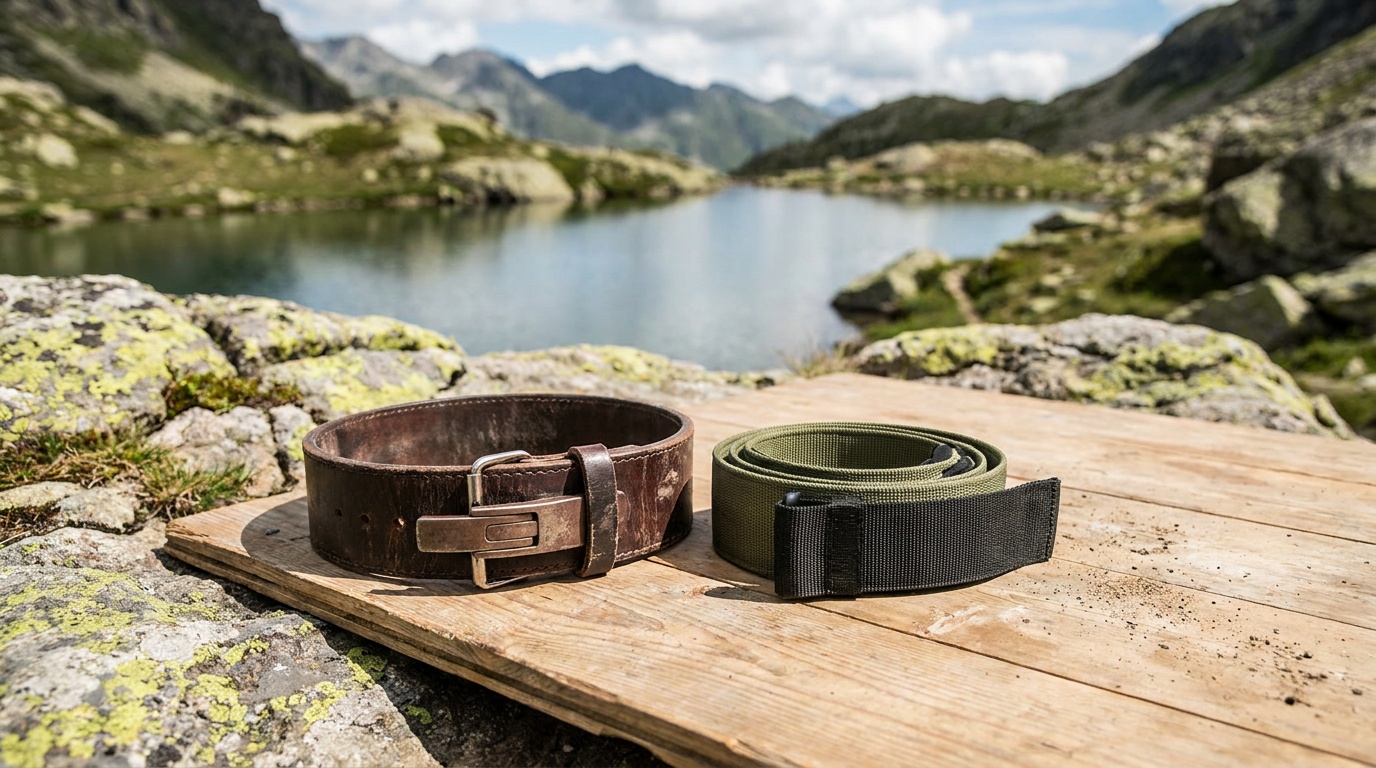
If your training is predominantly heavy barbell squats and deadlifts with powerlifting-style programming, you want 10mm leather. If your sessions regularly include Olympic lifts, conditioning, or high-rep work, choose nylon.
Match closure type to your training pace
Lever belts are fastest between sets; ideal for competition or high-volume powerlifting. Double-prong adds redundancy with slightly slower transitions. Nylon self-locking cinches instantly but offers less rigidity than stiff leather.
Check competition legality if it applies
IPF and USAPL cap belt width at 4 inches and thickness at 13mm. Most 10mm competition belts meet this. Tapered belts (wider at the back, narrower at the front) are legal in many federations but not all; confirm with your specific fed before purchasing.
Size for a snug brace, not just waist measurement
Most belt brands size to waist circumference measured at the navel, not pants waist size. Measure before ordering. You want the belt to close on the middle holes so you can tighten or loosen as needed.
Budget for break-in time on leather
A competition leather belt does not perform at its best the first week. Factor in several weeks of regular use before judging fit and rigidity.
Leather vs nylon: the real trade-off
Full-grain leather at 10mm is stiffer, which creates a harder surface to brace against. That rigidity is valuable when your goal is maximum intra-abdominal pressure for a near-maximal effort squat or deadlift. The stiffness is also why leather belts dig in during exercises that require more torso flexion or rotation.
Nylon belts at 6mm are flexible. They conform to the body rather than forcing the body to conform to them, which makes them more comfortable during longer sessions or varied movement patterns. The trade-off is that the bracing surface is less rigid, so the proprioceptive feedback (the physical cue to "push your core out into the belt") is softer.
Neither is objectively better. The question is what your training actually requires.
When a belt actually helps
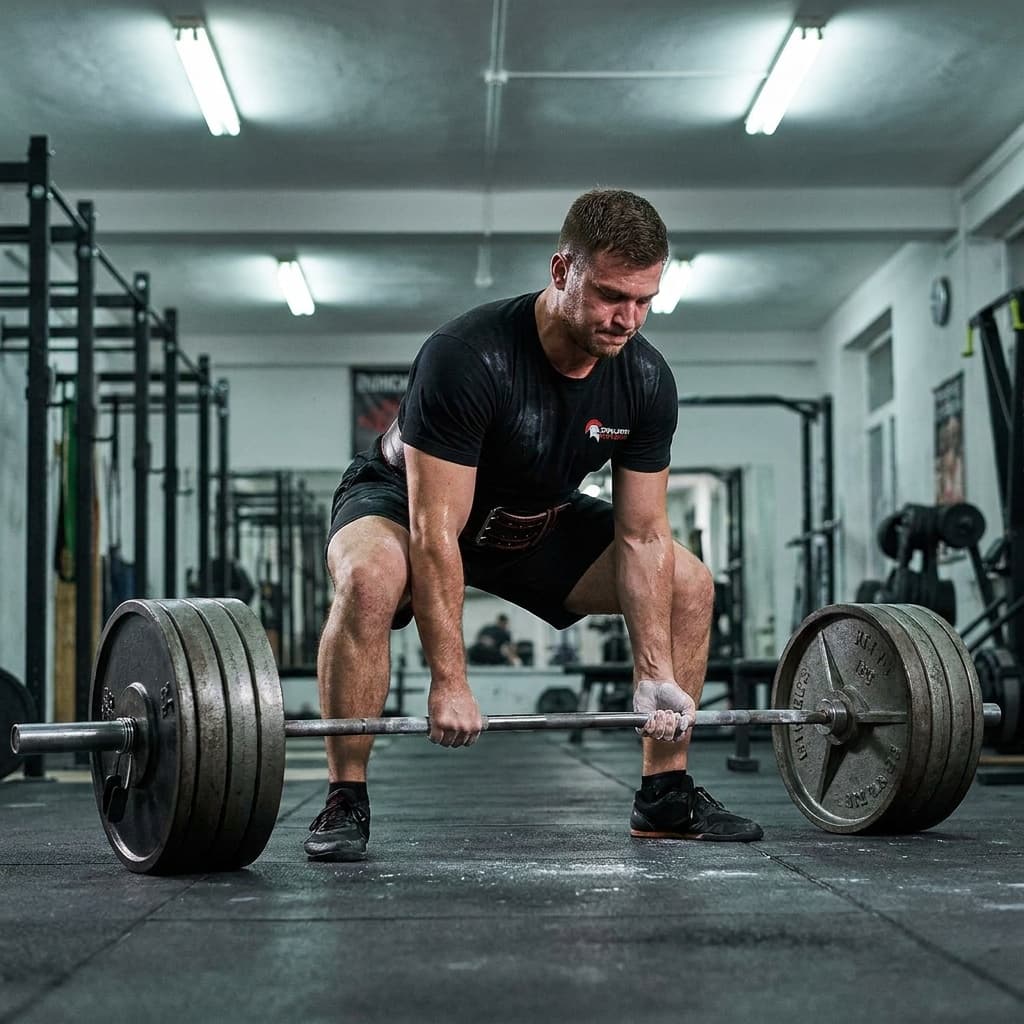
A belt is a bracing tool, not a substitute for core strength. The mechanism: you breathe deeply into your belly, creating intra-abdominal pressure, and then brace your core outward against the belt, which provides resistance. The result is a more stable spinal column under load.
This effect is most meaningful at high percentages of your one-rep max on compound lifts (squats, deadlifts, good mornings, heavy rows). Research on powerlifters consistently shows that belted squats and deadlifts allow higher loads and generate higher intra-abdominal pressure than unbelted attempts at the same effort level.
Belts add less value on lighter loads, assistance exercises, and upper-body movements. Using one for every set in every session can also reduce the training stimulus to the core musculature, since the belt handles some of the stabilization work your trunk muscles would otherwise provide. Many coaches recommend reserving belt use for working sets at 80 percent of maximum effort or above.
A belt does not protect a weak core; it amplifies a strong one bracing against a hard surface.
Frequently asked questions
Should I buy a 10mm or 13mm belt?
For most lifters, including competitive powerlifters at the intermediate and advanced level, 10mm is the practical choice. It provides a full competition-legal bracing surface, breaks in to a usable stiffness within a few months, and is comfortable enough for training volume. A 13mm belt is stiffer, which some advanced geared powerlifters prefer for maximum rigidity on attempts at elite loads. If you are asking whether you need 13mm, you almost certainly do not yet. Start with 10mm.
What belt width should I use?
Most powerlifting belts are 4 inches wide across the full circumference, which is the IPF maximum. This width provides a large bracing surface for your core and is appropriate for squats and deadlifts. Some older or bodybuilding-style belts are tapered: wider at the back (4 inches) and narrower at the front (2 to 3 inches). Tapered belts are more comfortable and allow more forward lean, which makes them better for overhead pressing and rows, but they provide less bracing contact area than a uniform 4-inch belt. For powerlifting, uniform width is standard.
How tight should a weightlifting belt be?
The belt should be snug enough that you cannot easily slide your hand under it, but loose enough that you can take a full diaphragmatic breath and feel your belly press into it. If you have to force air in or the belt restricts breathing entirely, it is too tight. If you can pull it away from your torso easily or it shifts during a lift, it is too loose. On a buckle or prong belt, aim to fasten it on the middle hole so you have room to adjust in either direction as your body composition changes or your warm-up sets progress to working sets.
The right belt for you depends on where you train, how you train, and what you plan to do with it. For more gear for the weight room and outdoor pursuits, browse the fitness hub or read about how we research and rate every product on this site.
Keep going
Our recommendations draw on manufacturer documentation, retailer listings, owner feedback, and comparisons with alternatives.
As an Amazon Associate I earn from qualifying purchases. We may earn a commission from links here, at no extra cost to you. How we research →