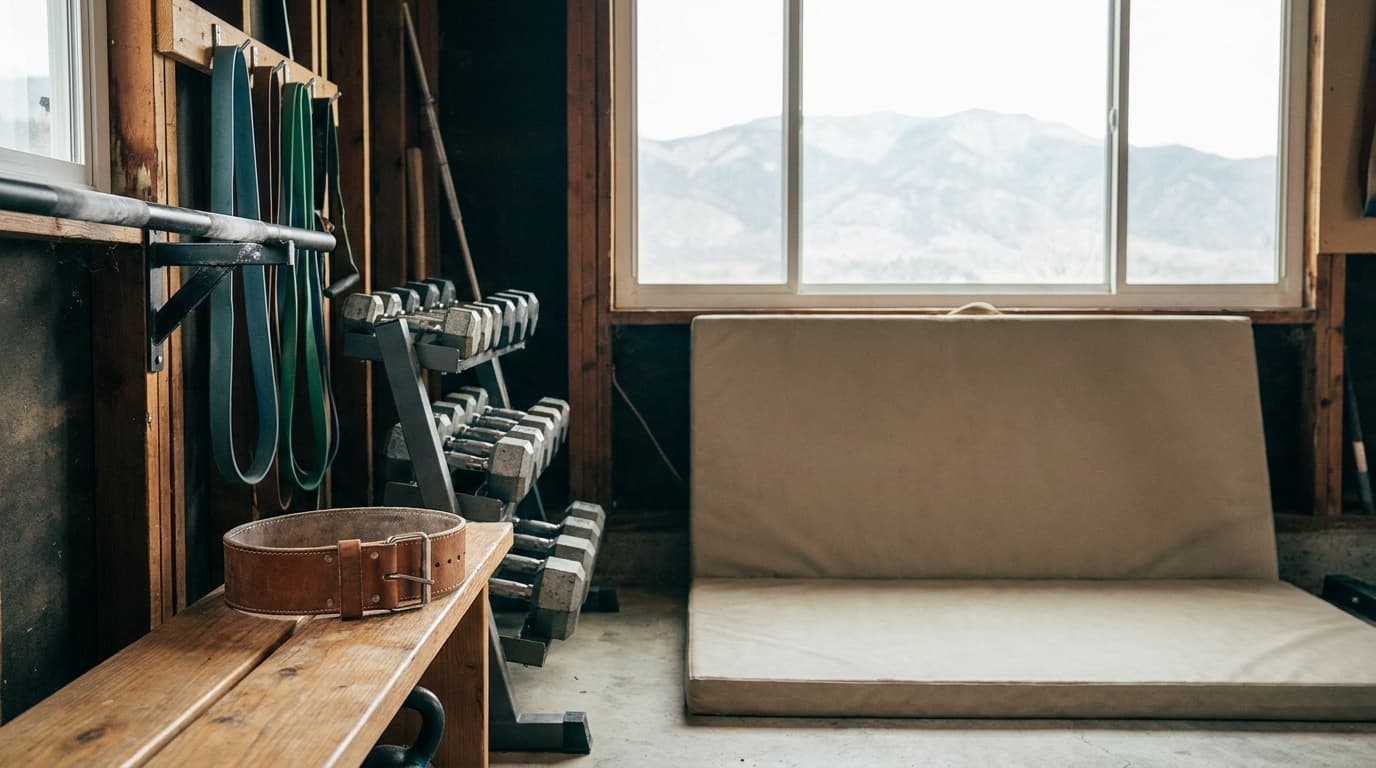
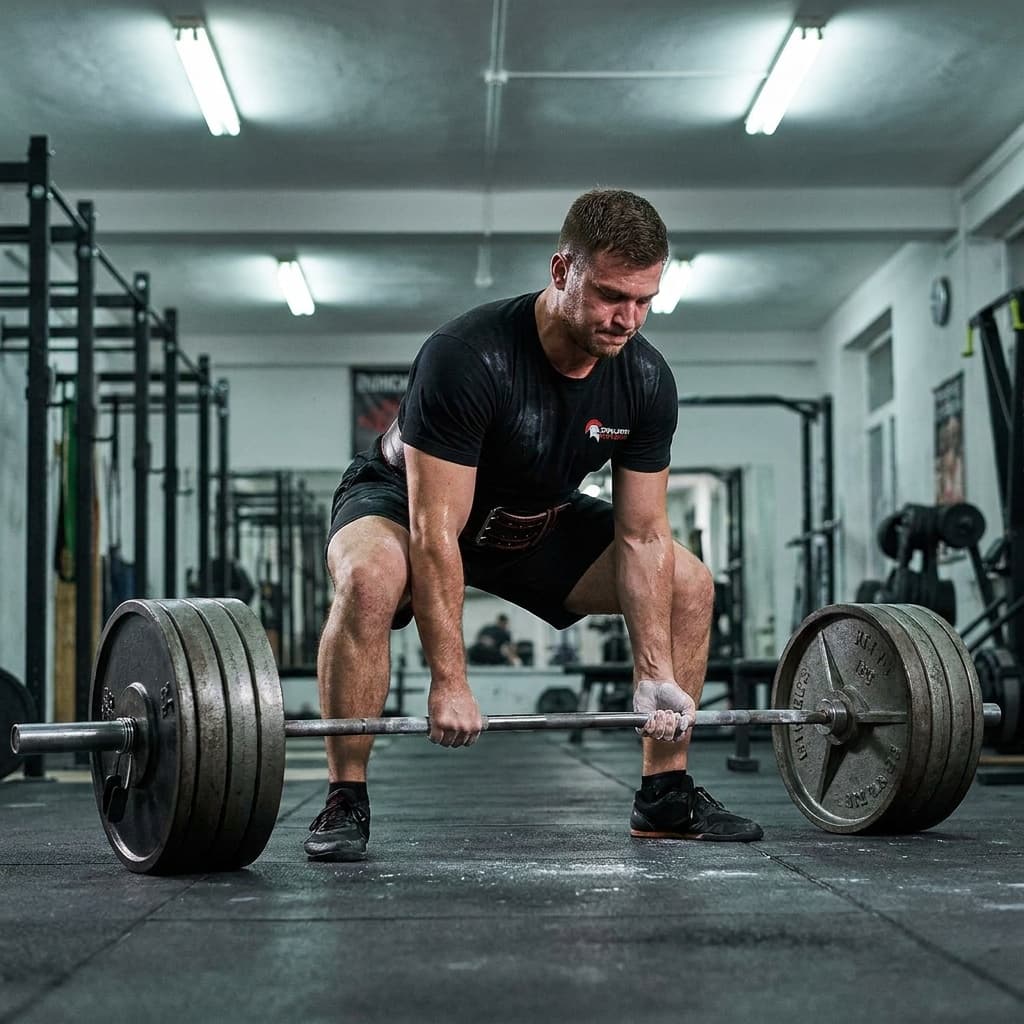
A weightlifting belt does one thing well: it gives your core something rigid to brace against, which lets you generate more intra-abdominal pressure on your heaviest sets. It is not a brace that holds your spine up, and it will not fix poor technique or compensate for a weak core.
What a weightlifting belt actually does
Intra-abdominal pressure (IAP) is the hydraulic mechanism your body uses to stabilize the lumbar spine under load. When you brace your core and push your abs outward against a rigid surface, pressure inside the abdominal cavity rises. That pressure acts like an internal pillar supporting the spine from the inside.
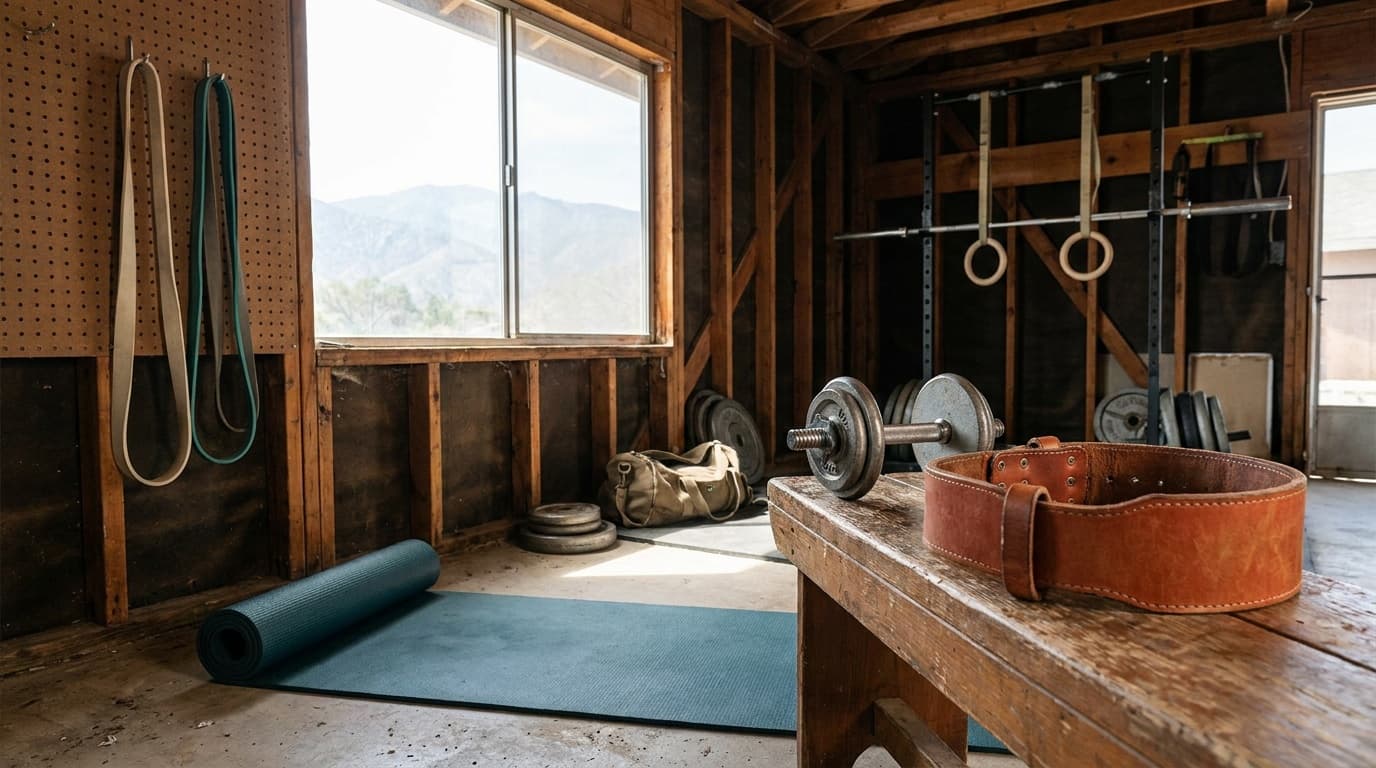
A belt (a basic leather model like the Dark Iron Fitness Leather Belt is typical) provides that rigid surface on your front and sides, giving your abs somewhere to push into. Research published in journals including the Journal of Strength and Conditioning Research has found that wearing a belt increases IAP by roughly 15–40 percent compared to beltless lifting at the same load. That higher pressure translates into a measurably more stable lumbar spine during the lift.
The key distinction: the belt works because of what your muscles do against it. A person who has not learned to brace properly gets little benefit because they are not generating the pressure in the first place.
A belt amplifies a good brace. It cannot substitute for one.
Which lifts benefit and which do not
Not every exercise justifies a belt. The benefit is highest when:
- The load is large relative to your max.
- The lift places significant compressive or shear force on the lumbar spine (squat variations, deadlift variations, overhead press at max effort).
- Performance is the priority, not core development.
Exercises where a belt adds little or can actively reduce training stimulus include: planks, ab work, cable exercises, rows, and most single-leg or unilateral movements. Wearing a belt on every set in every session also means your core is bracing against an external aid constantly, which limits the stimulus for developing your own bracing strength.
Why beginners should build beltless first
If you have been lifting for less than a year, a belt is almost certainly premature. Here is why that matters.
The belt works by amplifying what your core already does. A beginner who has not trained the valsalva maneuver and proper bracing under load will not know how to use the belt effectively, and may develop a false sense of security that masks form breakdown at loads they are not ready for.
Spending six to twelve months squatting and deadlifting beltless teaches your core to generate and maintain pressure independently. That foundation makes the belt a genuine performance tool when you do add it, rather than a crutch that hides a gap.
Coaches often describe this as earning the belt: use it when you have legitimately hit loads where your brace alone is the limiting factor, not when the weight feels heavy and you want reassurance.
When to put the belt on
A practical framework used by many coaches is intensity-gated belt use:
Intensity-gated belt protocol
Warm-up sets (below 60% 1RM)
Belt off. Build your brace pattern, practice technique.
Moderate work (60–79% 1RM)
Belt optional. Many experienced lifters stay beltless here to accumulate core training stimulus.
Heavy working sets (80%+ 1RM)
Belt on. This is the zone where the IAP amplification has the greatest safety and performance return.
Max attempts and competition
Belt on. Non-negotiable for most lifters; the risk-to-benefit ratio strongly favors it.
Accessory and supplemental work
Belt off. Rows, RDLs, good mornings, and similar exercises benefit from the core training.
This is not a rigid rule, but it is a sensible default. Some experienced lifters go beltless for sets at 85 percent as a deliberate training choice. Others belt earlier when managing an injury under medical guidance. Adjust to your situation.
When not to use a belt
A belt is inappropriate or counterproductive in several situations:
You have not learned to brace. If you do not know what it feels like to create full intra-abdominal pressure, adding a belt before learning that is putting the cart before the horse. Learn the brace first.
You are treating it as an injury fix. A belt does not rehabilitate low back injuries. If you have a diagnosed condition, work with a qualified physical therapist before using external support tools.
The exercise goal is core development. If you are doing a set specifically to build bracing endurance, wearing a belt defeats the purpose.
The load does not warrant it. Light and moderate sets with a belt on every rep trains your brain to expect external support, which can subtly reduce your bracing effort over time.
Frequently asked questions
Does wearing a belt weaken your core over time?
The evidence does not support the idea that occasional belt use causes core weakness, provided you also train beltless regularly. The risk is behavioral rather than physiological: if you wear a belt on every set at every intensity, you reduce the training stimulus to your core musculature. Keep moderate and accessory work beltless and your core continues to develop alongside your belted maxes.
How tight should a weightlifting belt be?
Tight enough that you feel resistance when you brace outward, but not so tight that you cannot take a full breath into your belly. A common starting point is fitting two fingers between belt and abdomen when relaxed, then tightening one notch from there. You should feel the belt on all sides when you brace hard at the top of your breath.
Lever belt or prong belt: does it matter?
Both work. Lever belts like the Inzer Forever Lever Belt are faster to buckle and easier to set a precise tightness every set, which is why they are common in powerlifting. Prong belts are more adjustable across different tightness levels within a session, which some lifters prefer for warmup to working sets. The material and stiffness of the leather matter more for performance than the buckle style. A 10 mm single-prong or lever belt from a reputable maker is a solid starting point for most lifters.
For specific picks on width, thickness, and buckle style, see our guide to the best weightlifting belts. Browse all fitness guides or read how we research and rate gear.
Recommended gear
Our current top picks from the Best weightlifting belts for squats and deadlifts (2026) guide, if you are ready to buy.
IRON BULL STRENGTH
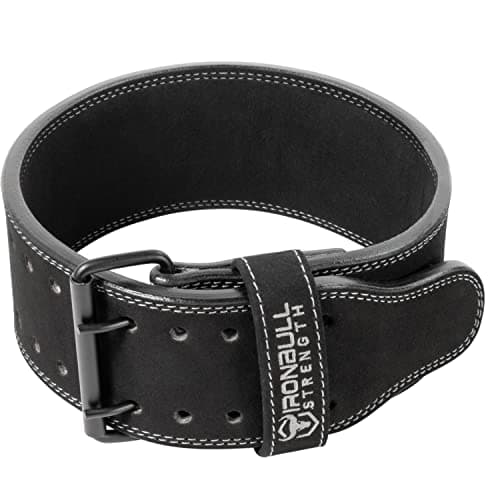
Iron Bull Strength Powerlifting Belt 10mm Double Prong
Best Value
Kit Score 8.2/10
$99.95 Price checked Oct 23, 4:16 PM CDT
Best for: Lifters who want a full 10mm competition-legal leather belt without paying Inzer or SBD pricing, and who are comfortable with a prong closure.
- IPF-approved at a price well below most name-brand powerlifting belts, making competition-legal training accessible without the premium outlay
- Requires a genuine break-in period of several weeks before the leather becomes pliable enough for comfortable use
- Thickness
- 10mm
- Width
- 4 inches (uniform)
- Material
- Suede leather
- Closure
- Double-prong roller buckle
- Hole spacing
- 10 sets of prong holes, closer pattern for precise fit
- Certification
- IPF, USAPL, USPA, IPL approved
About this pick
A competition-legal 10mm leather belt at a mid-range price, with a double-prong roller buckle and suede facing for grip on the torso. The closer hole spacing means more fine-tuning than most entry-level belts allow, and it arrives stiff and needs a proper break-in.
Strengths
- IPF-approved at a price well below most name-brand powerlifting belts, making competition-legal training accessible without the premium outlay
- Double-prong system provides a secure, redundant lockdown that inspires confidence under heavy loads
- Suede exterior resists belt migration during squats and deadlifts
Weaknesses
- Requires a genuine break-in period of several weeks before the leather becomes pliable enough for comfortable use
- Double prong takes longer to fasten and release than a lever, which adds friction between sets
Kit Score breakdown
DARK IRON FITNESS
Dark Iron Fitness Genuine Leather Weightlifting Belt
Best Budget
Kit Score 8.1/10
$59.99 Price checked Oct 23, 4:16 PM CDT
Best for: Newer lifters or general strength trainers who want real leather and a proven track record at a price that does not require a big commitment.
- One of the highest review volumes in the category, and a 4.7-star average reflects broadly consistent quality rather than niche enthusiasm
- Sizing runs small; most owners report needing to go up one size from their usual measurement
- Thickness
- ~10mm
- Width
- 4 inches (uniform)
- Material
- Genuine buffalo hide leather
- Closure
- Double-prong steel buckle
- Hole reinforcement
- Metal grommets on all adjustment holes
- Reviews on Amazon
- 24,000+ with 4.7-star average
About this pick
Dark Iron Fitness has held a top spot in Amazon's weightlifting belt category for years with over 24,000 reviews. It is genuine buffalo leather with metal-grommet-reinforced holes, double-stitched borders, and a lifetime replacement guarantee. Sizing runs small, so order up one size.
Strengths
- One of the highest review volumes in the category, and a 4.7-star average reflects broadly consistent quality rather than niche enthusiasm
- Metal grommets on all adjustment holes address one of the most common early failure points on budget leather belts
- Lifetime replacement guarantee offers a safety net that most sub-$65 belts do not
Weaknesses
- Sizing runs small; most owners report needing to go up one size from their usual measurement
- Break-in period can feel stiff for 2 to 4 weeks, and the initial leather odor is noticeable
Kit Score breakdown
ELEMENT 26
Element 26 Self-Locking Weight Lifting Belt
Editor's Choice
Kit Score 7.9/10
$34.97 Price checked Oct 23, 4:16 PM CDT
Best for: Lifters who train squats and deadlifts but also include Olympic lifts, metabolic conditioning, or higher-rep work where a stiff leather belt becomes a hindrance.
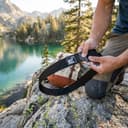
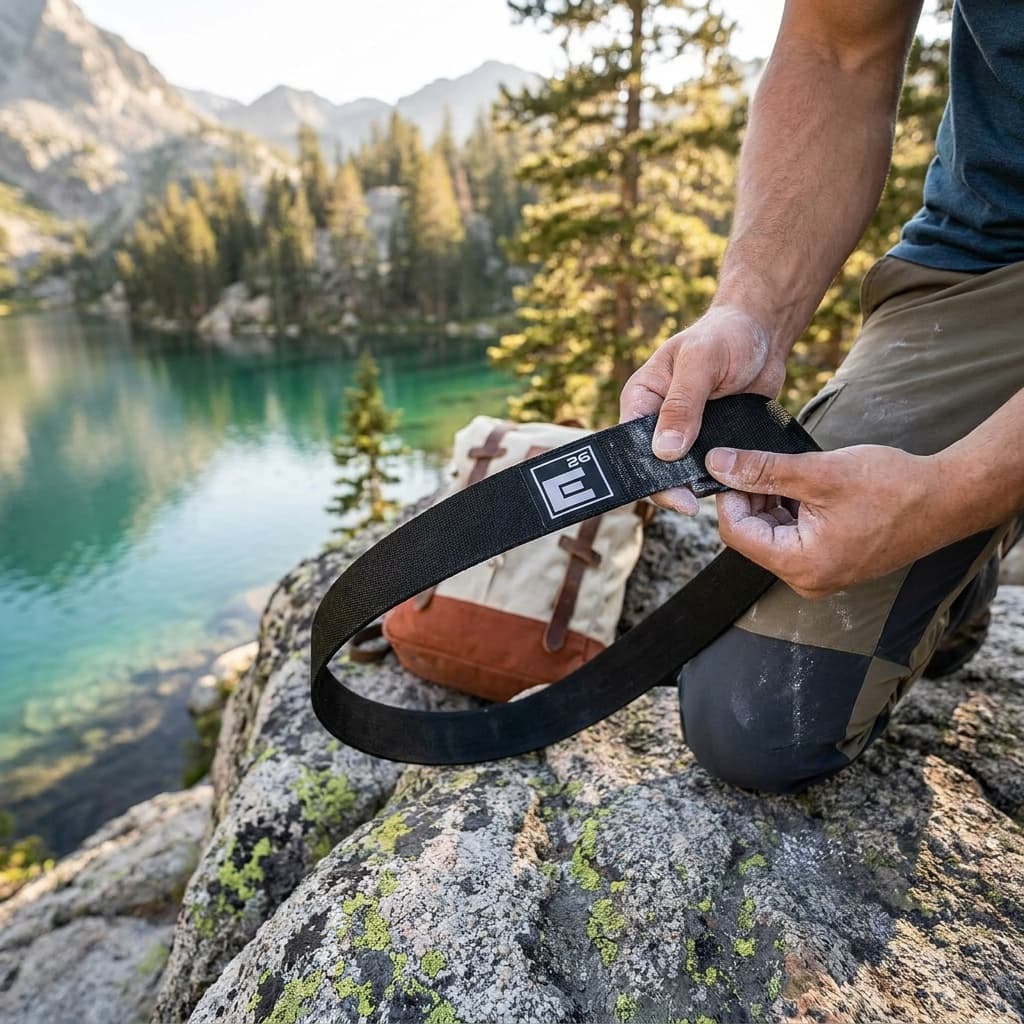
- No break-in required: nylon is flexible from the first session, which matters for lifters who train varied movements alongside squats and deadlifts
- 5mm nylon provides meaningfully less rigidity than 10mm leather, so lifters approaching maximal powerlifting loads will outgrow this belt
- Thickness
- ~5mm
- Width
- 4 inches (uniform)
- Material
- 100% premium nylon
- Closure
- Steel self-locking buckle with velcro strap
- Sizes
- XS to XXL (23 to 50 inches)
- Certification
- USAW and Functional Fitness Competition approved
About this pick
The Element 26 Self-Locking Belt is the pick for lifters who move between heavy compound work and dynamic or Olympic-style movements. The steel self-locking buckle engages automatically under load and releases cleanly, and the nylon construction needs no break-in period.
Strengths
- No break-in required: nylon is flexible from the first session, which matters for lifters who train varied movements alongside squats and deadlifts
- The self-locking buckle mechanism engages under load and stays locked without manual intervention mid-set
- Infinitely adjustable fit via velcro strap, with a lifetime warranty backing the construction
Weaknesses
- 5mm nylon provides meaningfully less rigidity than 10mm leather, so lifters approaching maximal powerlifting loads will outgrow this belt
- Not IPF-approved for sanctioned powerlifting competition
Kit Score breakdown
See all picks in Best weightlifting belts for squats and deadlifts (2026)
Keep going
Researched, not hands-on tested
Updated Jun 4, 2026Our recommendations draw on manufacturer documentation, retailer listings, owner feedback, and comparisons with alternatives.
As an Amazon Associate I earn from qualifying purchases. We may earn a commission from links here, at no extra cost to you. How we research →