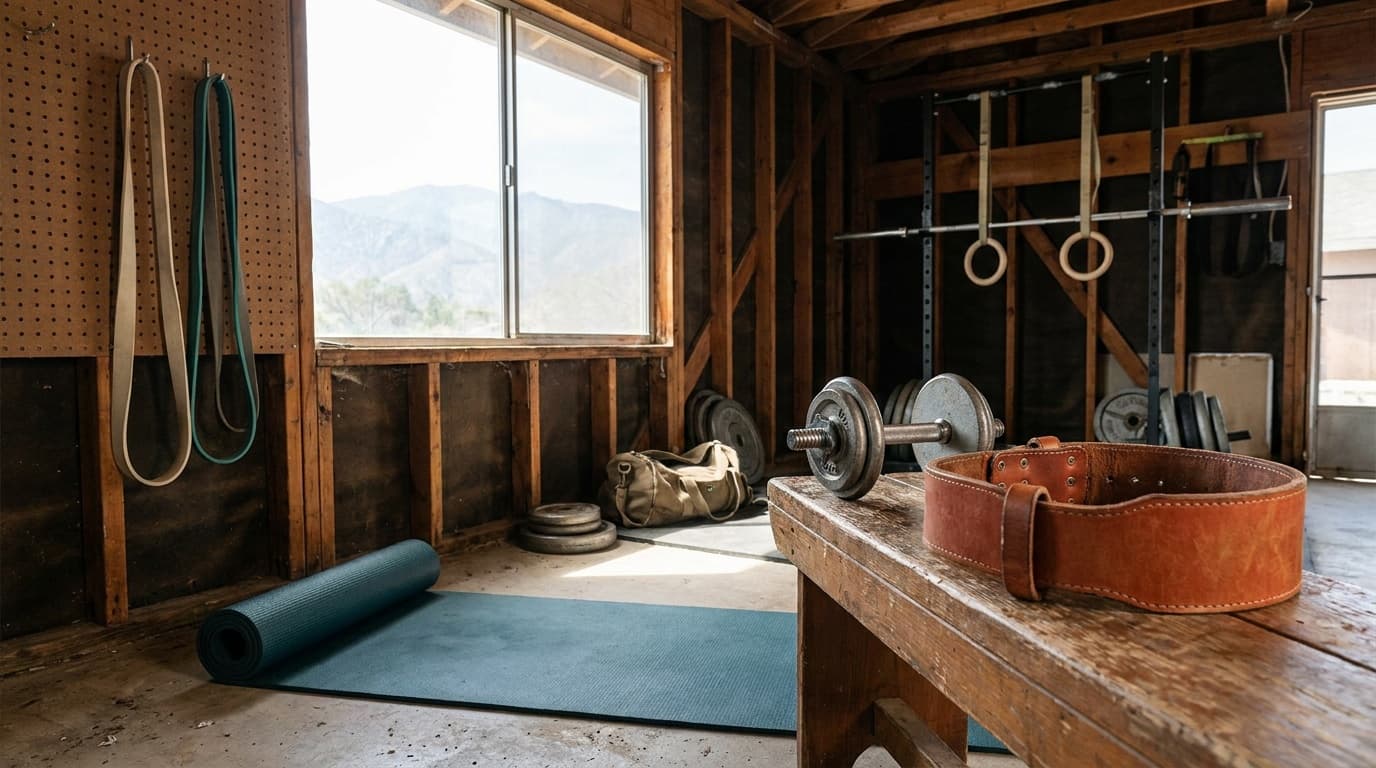
Getting your weightlifting belt wrong in either direction, too loose to brace against, too tight to breathe, costs you the whole point of wearing one. Here is how to measure correctly and choose a belt that matches how you actually train.
How to measure for a belt (belt size is not pants size)
Stand relaxed and wrap a soft tape measure around your bare torso at the level of your navel. That number, in inches, is your belt measurement. It is almost always different from your trouser waist size, often by several inches in either direction depending on body composition.
Most belt manufacturers publish a size chart that maps this navel measurement to a belt size (S, M, L, XL, or a numeric inch size). Always use the brand's own chart. A "medium" from one maker may correspond to a 32–36 inch navel measurement; from another it might be 34–38. Ordering blind without checking guarantees a bad fit.
The goal: when the belt is buckled in your working position, you should be able to get two fingers under the belt while standing relaxed, and it should feel snug but not painful when you brace hard into it.
10mm vs 13mm: which thickness is right for you
Thickness is the single biggest factor in how stiff a belt feels and how much support it provides.
10mm is the sweet spot for the majority of lifters. It is stiff enough to brace against effectively, breaks in to a wearable shape faster, and is approved for competition by most federations (IPF, USPA, and others allow 10mm up to a maximum width of 10cm). If you train in a variety of movements including Olympic lifts, cleans, or any pressing where you rotate or hinge around the belt, 10mm is more practical.
13mm is a powerlifting-specific choice. It provides noticeably more rigidity, which some experienced lifters find useful under near-maximal squat and deadlift loads. The trade-off is a longer break-in period, more bruising on the iliac crest early on, and reduced comfort in movements where the torso changes angle quickly. Most 13mm belts are also single-prong or lever only, not tapered, and are built strictly for powerlifting.
For general strength training, bodybuilding-style training, or a first belt: start with 10mm.
Closure types: lever, single-prong, double-prong, and velcro
Closure type trade-offs
Lever
Fastest on and off; locks to a single fixed position. Ideal for competition and any session where you always use the same tightness; the Inzer Forever Lever Belt is the benchmark here. Requires a screwdriver to refit to a different hole.
Single-prong
The most common choice. Quick to buckle, easy to adjust one hole tighter or looser between sets. Reliable and simple.
Double-prong
Two prongs distribute load across two points, which some lifters feel is more secure. Slightly more fiddly to buckle under fatigue; takes longer mid-set to adjust.
Velcro (nylon)
The most adjustable option on any given set. No break-in period. Less total support than a stiff leather belt; better suited to higher-rep training, CrossFit-style workouts, or general gym use.
Leather vs nylon: material trade-offs
Leather belts are rigid, durable, and provide the firmest surface to brace against. The downside is the break-in period: a stiff leather belt needs weeks of regular use before it conforms to your body. Some lifters accelerate this by flexing the belt repeatedly or rolling it over a barbell. Once broken in, a quality leather belt like the Dark Iron Fitness Leather Belt will outlast most training programs.
Nylon belts like the Element 26 Self-Locking Weight Lifting Belt skip the break-in entirely. They are flexible enough to be comfortable from the first session, pack flat in a bag, and work well for lifters who do a mix of movements or want something they can leave on between sets without discomfort. The trade-off is that nylon cannot match the rigidity of a stiff leather belt at maximal loads. For most recreational lifters training in the 70–85% intensity range, this difference is negligible.
A nylon belt you wear consistently is more useful than a leather belt that sits in your bag because it bruises your hip every session.
Uniform-width powerlifting belt vs tapered
A uniform-width belt (typically 4 inches / 10cm wide all the way around) is the standard powerlifting style. Equal width front and back means equal support in all directions, which is what you want for squat and deadlift.
A tapered belt is wider at the back (sometimes 4–5 inches) and narrows at the front (sometimes 2–3 inches). The tapered shape can feel more comfortable for lifters with shorter torsos or a prominent anterior pelvic tilt, because the narrower front panel avoids digging into the hip flexors at the bottom of a squat. Tapered belts are more common in bodybuilding and general training contexts than in powerlifting competition, where uniform width is the norm.
If you are buying a first belt for general strength training and comfort matters: a tapered leather or nylon belt is a reasonable choice. If you are training specifically for powerlifting or want maximum support: uniform width.
Frequently asked questions
Should I size up if I am between sizes on the chart?
Generally, no. A belt that is too large will not brace properly regardless of how tight you buckle it. If you are exactly between sizes, size down and work the belt in. Most belts have enough holes to accommodate a small measurement variance, and leather will conform to your shape over time. If a brand offers half sizes or a wide range in one size, contact them directly before ordering.
Where should the belt sit on my torso?
For most lifters, the belt sits with its top edge roughly one to two inches above the top of the hip bones (iliac crest), centered over the navel. This position lets you brace your entire core into the belt from front to back. If the belt rides so low it contacts the hip bones during a squat, move it up slightly. If it rides so high it interferes with your rib cage during a deadlift lockout, move it down.
Do I need a belt for every lift?
No. Belts are most useful for near-maximal squats, deadlifts, and overhead pressing where intra-abdominal pressure is a limiting factor. Many coaches recommend building unbelted core strength first and using a belt as a tool for heavier sets, not a crutch for every warm-up. For accessory work, rows, or moderate-intensity training, most lifters are better off without one.
For specific picks, see our guide to the best weightlifting belts. Browse all fitness guides or read how we research and rate gear.
Recommended gear
Our current top picks from the Best weightlifting belts for squats and deadlifts (2026) guide, if you are ready to buy.
IRON BULL STRENGTH
Iron Bull Strength Powerlifting Belt 10mm Double Prong
Best Value
Kit Score 8.2/10
$99.95 Price checked Oct 23, 4:16 PM CDT
Best for: Lifters who want a full 10mm competition-legal leather belt without paying Inzer or SBD pricing, and who are comfortable with a prong closure.
- IPF-approved at a price well below most name-brand powerlifting belts, making competition-legal training accessible without the premium outlay
- Requires a genuine break-in period of several weeks before the leather becomes pliable enough for comfortable use
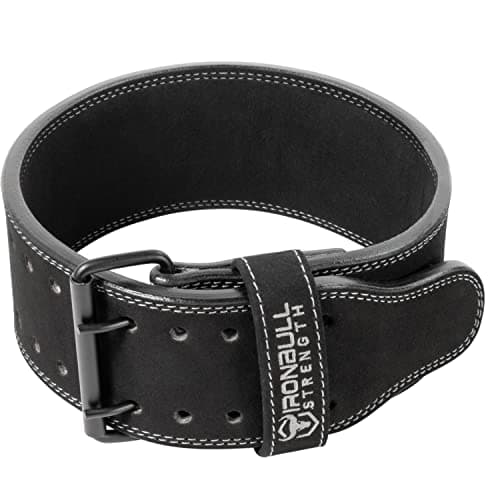
- Thickness
- 10mm
- Width
- 4 inches (uniform)
- Material
- Suede leather
- Closure
- Double-prong roller buckle
- Hole spacing
- 10 sets of prong holes, closer pattern for precise fit
- Certification
- IPF, USAPL, USPA, IPL approved
About this pick
A competition-legal 10mm leather belt at a mid-range price, with a double-prong roller buckle and suede facing for grip on the torso. The closer hole spacing means more fine-tuning than most entry-level belts allow, and it arrives stiff and needs a proper break-in.
Strengths
- IPF-approved at a price well below most name-brand powerlifting belts, making competition-legal training accessible without the premium outlay
- Double-prong system provides a secure, redundant lockdown that inspires confidence under heavy loads
- Suede exterior resists belt migration during squats and deadlifts
Weaknesses
- Requires a genuine break-in period of several weeks before the leather becomes pliable enough for comfortable use
- Double prong takes longer to fasten and release than a lever, which adds friction between sets
Kit Score breakdown
DARK IRON FITNESS
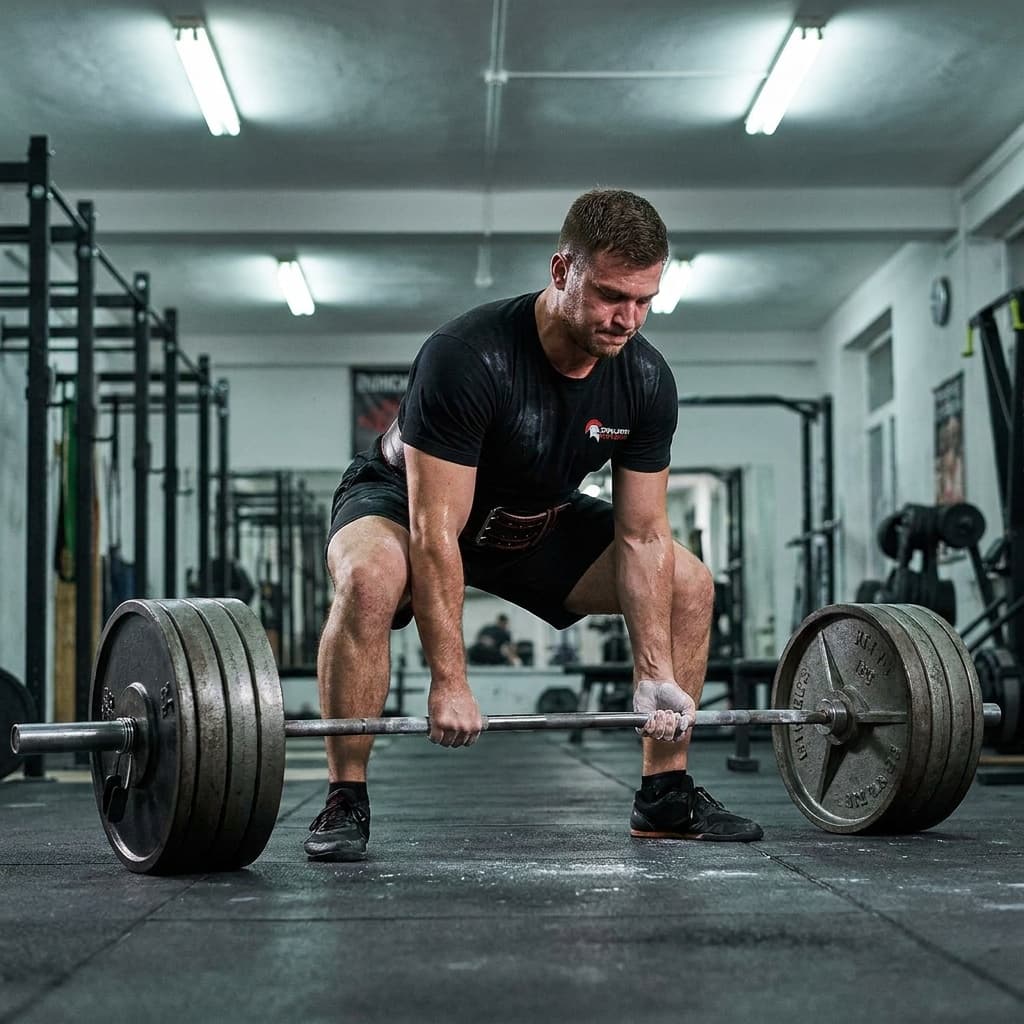
Dark Iron Fitness Genuine Leather Weightlifting Belt
Best Budget
Kit Score 8.1/10
$59.99 Price checked Oct 23, 4:16 PM CDT
Best for: Newer lifters or general strength trainers who want real leather and a proven track record at a price that does not require a big commitment.
- One of the highest review volumes in the category, and a 4.7-star average reflects broadly consistent quality rather than niche enthusiasm
- Sizing runs small; most owners report needing to go up one size from their usual measurement
- Thickness
- ~10mm
- Width
- 4 inches (uniform)
- Material
- Genuine buffalo hide leather
- Closure
- Double-prong steel buckle
- Hole reinforcement
- Metal grommets on all adjustment holes
- Reviews on Amazon
- 24,000+ with 4.7-star average
About this pick
Dark Iron Fitness has held a top spot in Amazon's weightlifting belt category for years with over 24,000 reviews. It is genuine buffalo leather with metal-grommet-reinforced holes, double-stitched borders, and a lifetime replacement guarantee. Sizing runs small, so order up one size.
Strengths
- One of the highest review volumes in the category, and a 4.7-star average reflects broadly consistent quality rather than niche enthusiasm
- Metal grommets on all adjustment holes address one of the most common early failure points on budget leather belts
- Lifetime replacement guarantee offers a safety net that most sub-$65 belts do not
Weaknesses
- Sizing runs small; most owners report needing to go up one size from their usual measurement
- Break-in period can feel stiff for 2 to 4 weeks, and the initial leather odor is noticeable
Kit Score breakdown
ELEMENT 26
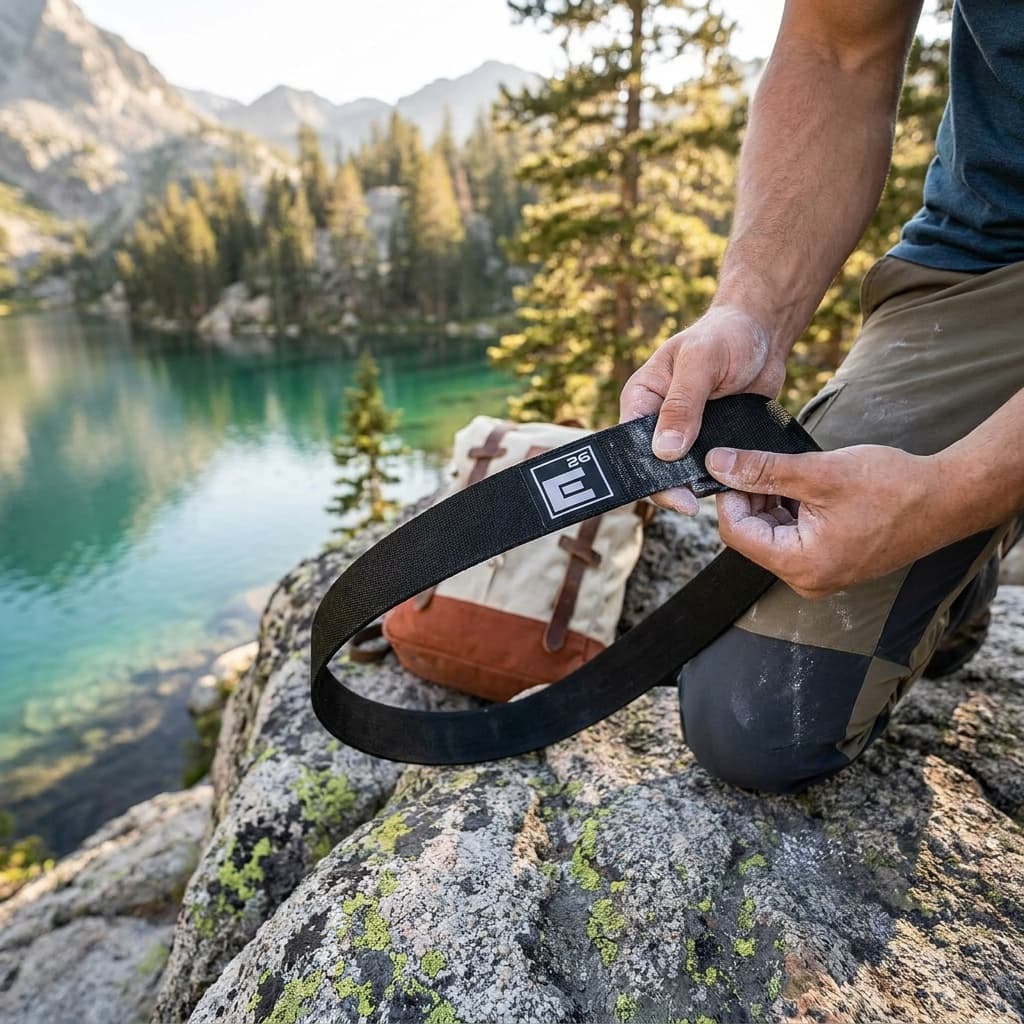
Element 26 Self-Locking Weight Lifting Belt
Editor's Choice
Kit Score 7.9/10
$34.97 Price checked Oct 23, 4:16 PM CDT
Best for: Lifters who train squats and deadlifts but also include Olympic lifts, metabolic conditioning, or higher-rep work where a stiff leather belt becomes a hindrance.
- No break-in required: nylon is flexible from the first session, which matters for lifters who train varied movements alongside squats and deadlifts
- 5mm nylon provides meaningfully less rigidity than 10mm leather, so lifters approaching maximal powerlifting loads will outgrow this belt
- Thickness
- ~5mm
- Width
- 4 inches (uniform)
- Material
- 100% premium nylon
- Closure
- Steel self-locking buckle with velcro strap
- Sizes
- XS to XXL (23 to 50 inches)
- Certification
- USAW and Functional Fitness Competition approved
About this pick
The Element 26 Self-Locking Belt is the pick for lifters who move between heavy compound work and dynamic or Olympic-style movements. The steel self-locking buckle engages automatically under load and releases cleanly, and the nylon construction needs no break-in period.
Strengths
- No break-in required: nylon is flexible from the first session, which matters for lifters who train varied movements alongside squats and deadlifts
- The self-locking buckle mechanism engages under load and stays locked without manual intervention mid-set
- Infinitely adjustable fit via velcro strap, with a lifetime warranty backing the construction
Weaknesses
- 5mm nylon provides meaningfully less rigidity than 10mm leather, so lifters approaching maximal powerlifting loads will outgrow this belt
- Not IPF-approved for sanctioned powerlifting competition
Kit Score breakdown
See all picks in Best weightlifting belts for squats and deadlifts (2026)
Keep going
Researched, not hands-on tested
Updated Jun 4, 2026Our recommendations draw on manufacturer documentation, retailer listings, owner feedback, and comparisons with alternatives.
As an Amazon Associate I earn from qualifying purchases. We may earn a commission from links here, at no extra cost to you. How we research →