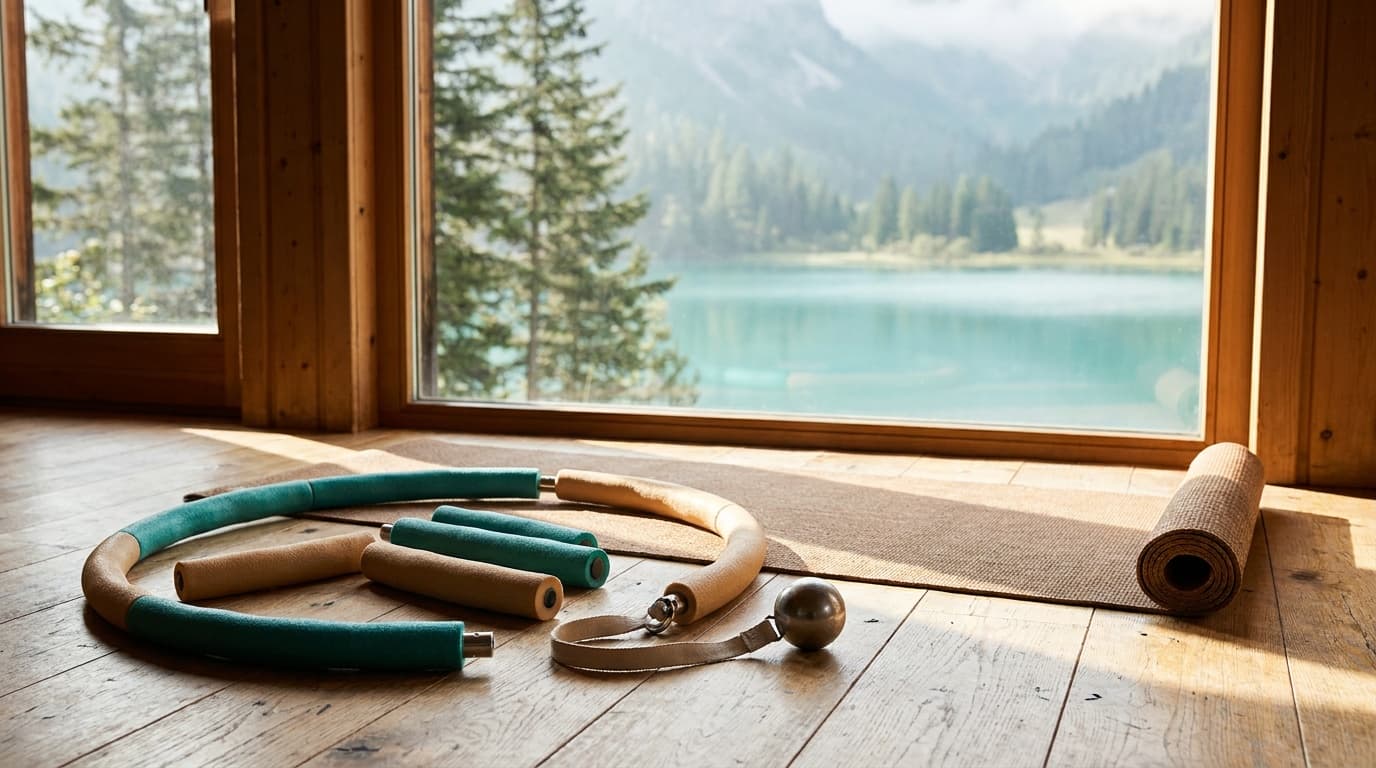
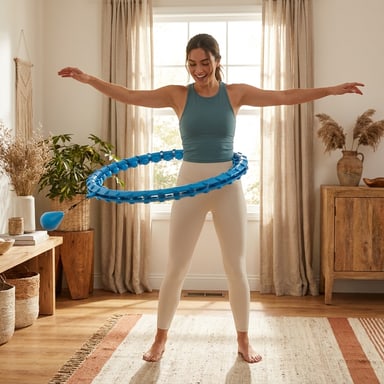
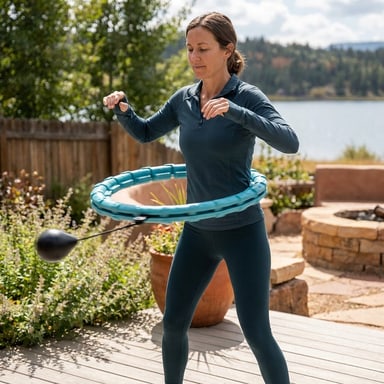
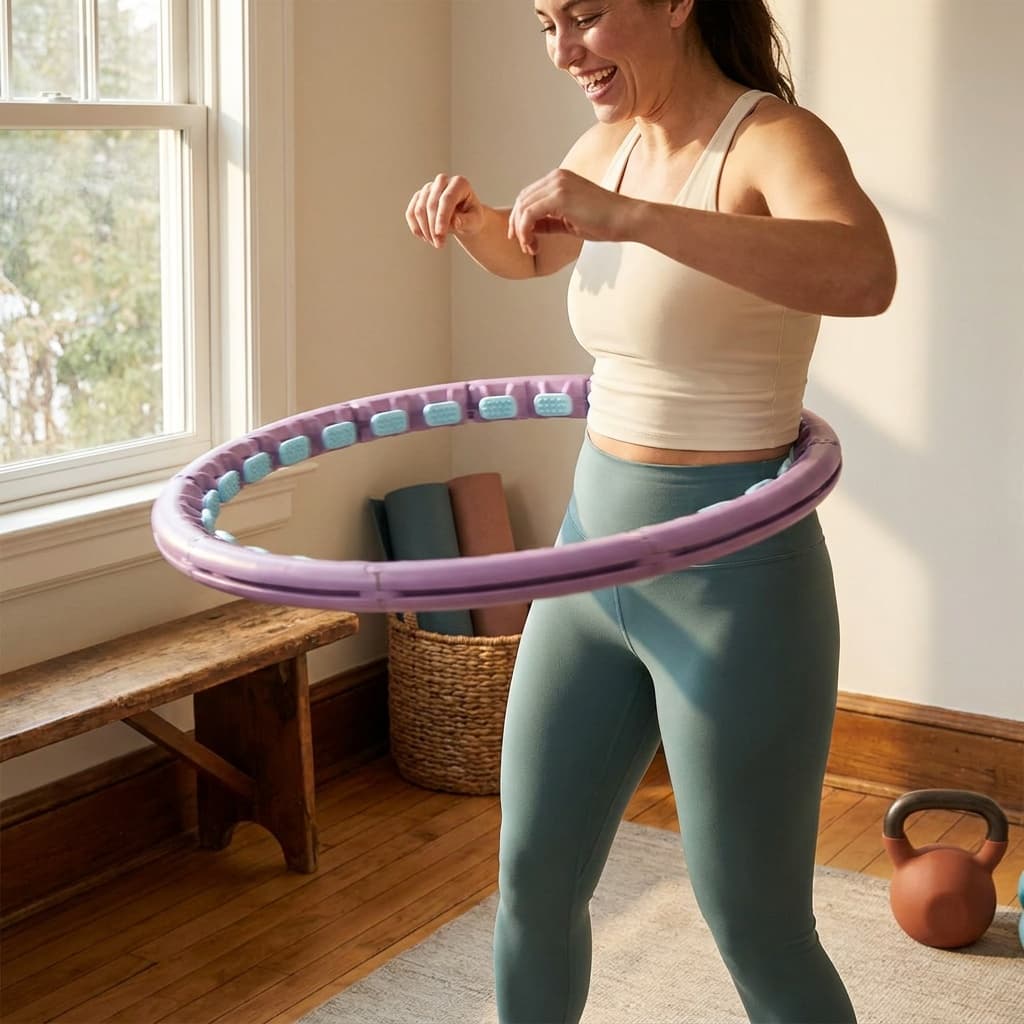
Weighted hula hoops are not the childhood toy. The modern gravity-ball design stays up through centrifugal force rather than continuous hip snap, which means they work for adults who could never keep a traditional hoop going and prefer a quiet, low-impact core session at home.
Our quick picks
How we picked
Every hoop here was evaluated against our Kit Score: segment design and waist-fit range, ball weight and hoop weight, padding quality, usability for true beginners, noise level, and price-to-performance ratio. Scores draw from verified owner reviews, manufacturer specs, and fitness community data. We do not invent first-hand results.
The numbers worth knowing before you shop
These are the figures that matter most when comparing gravity-ball hoops.
Best overall: Dumoyi Smart Weighted Hoop for Adults
BEST OVERALL
Dumoyi Smart Weighted Hoop for Adults
Best for: Anyone new to weighted hoop training who wants a proven gravity-ball design with a large owner community and room to adjust as their waist measurement changes.
- Large owner review base points to a consistent real-world experience and an easy learning curve for beginners
- Gravity ball can occasionally stick in its track mid-workout, especially in the first few uses before the channel breaks in
Kit Score 8.2/10 · $16.99 Price checked Oct 23, 4:16 PM CDT · how we score gear
Buy on AmazonProduct details
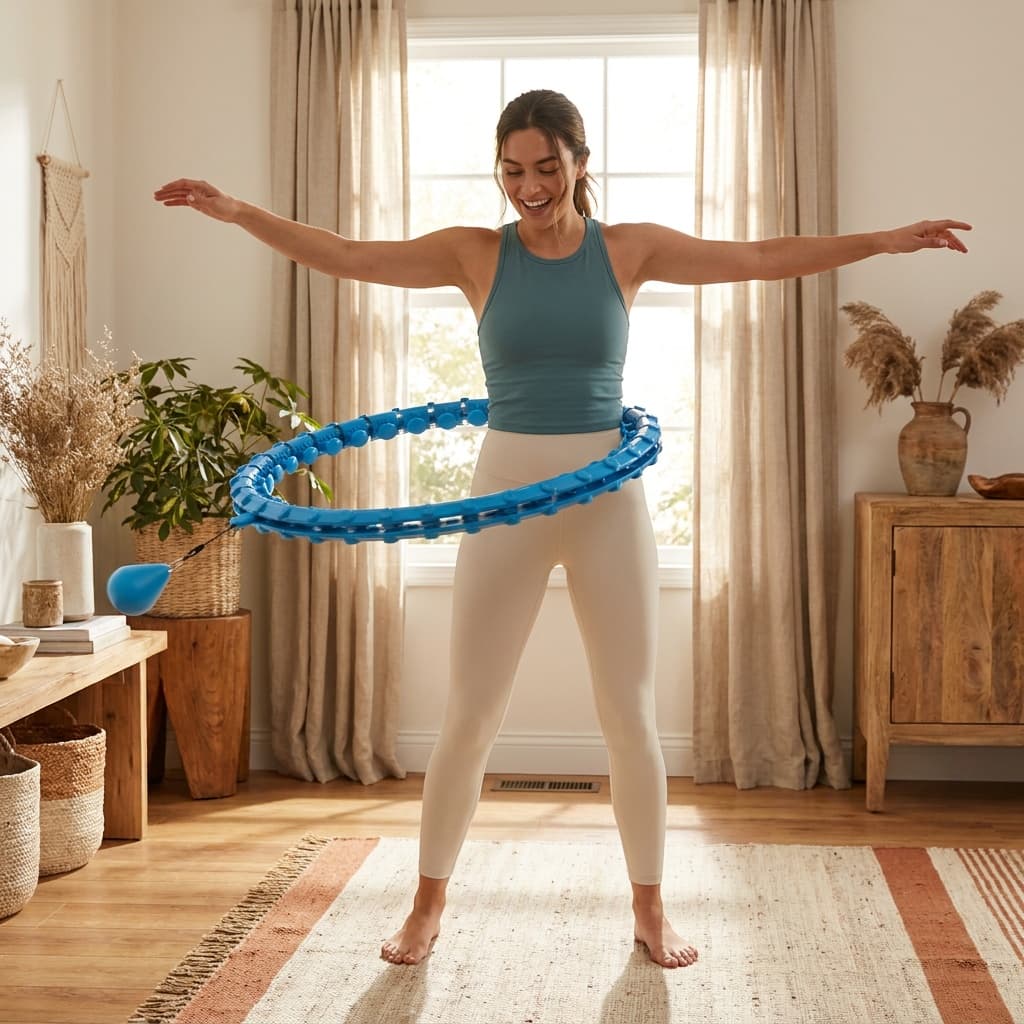
Dumoyi's 24-link infinity hoop uses a 360-degree gravity ball in an inner channel to generate resistance as you move your hips, no traditional spinning technique required. The links click apart and reconnect in seconds, so you can drop a segment as your waist measurement changes over weeks of use.
- Weight
- ~3.5 lb (1.6 kg)
- Segments
- 24 detachable links
- Waist range
- Adjustable (detachable links)
- Resistance type
- Gravity ball on 360-degree silent rollers
- Material
- Eco-friendly ABS plastic
- Colors
- Multiple color options
More strengths
- Gravity ball keeps momentum going without the skill wall of a traditional fixed hoop, making daily 20-30 minute sessions achievable
- Detachable link system lets you shorten the diameter as fitness improves, extending the useful life of one purchase
Other tradeoffs
- Users above the maximum assembled waist fit should look at a higher-link option
The Dumoyi earns the top spot because it gets the fundamentals right at a price that makes it easy to commit to. The gravity-ball mechanism rotates around the hoop on a smooth track and maintains momentum through natural hip movement, so you do not need to keep the hoop spinning with continuous snapping the way a traditional hoop demands.
The hoop ships as 24 detachable links that assemble in a few minutes, so you can remove links as your waist changes. Dumoyi does not list the ball weight on this listing, but the whole hoop weighs about 3.5 lb, which is enough to feel the resistance on your obliques and core without battering your ribs. Foam padding on the inner surface matters here: it is the difference between a workout that is uncomfortable for the first week and one that bruises you into quitting. The Dumoyi's padding is adequate for daily sessions once your waist adjusts.
The owner community for this design is large, which has two practical benefits: there is a clear body of real feedback on what sizing actually fits (not just what the chart says), and replacement parts are easy to find if a segment clip breaks.
It is the best-balanced buy for someone who wants a proven format without spending on features they may not use yet.
Best for: Anyone new to weighted hoop training who wants a proven gravity-ball design with a large owner community and room to adjust as their waist measurement changes.
Best budget: JKSHMYT Weighted Hula Circle Hoops
BEST BUDGET
JKSHMYT Weighted Hula Circle Hoops
Best for: Curious beginners on a tight budget who want a functional gravity-ball hoop to evaluate whether the format fits their workout routine before spending more.
- Sub-$20 entry price removes the financial barrier for users who want to test the format before committing to a premium model
- Gravity ball can stick in its track more often than pricier options with machined channels; requires patience during the break-in period
Kit Score 7.4/10 · $14.99 Price checked Oct 23, 4:16 PM CDT · how we score gear
Buy on AmazonProduct details
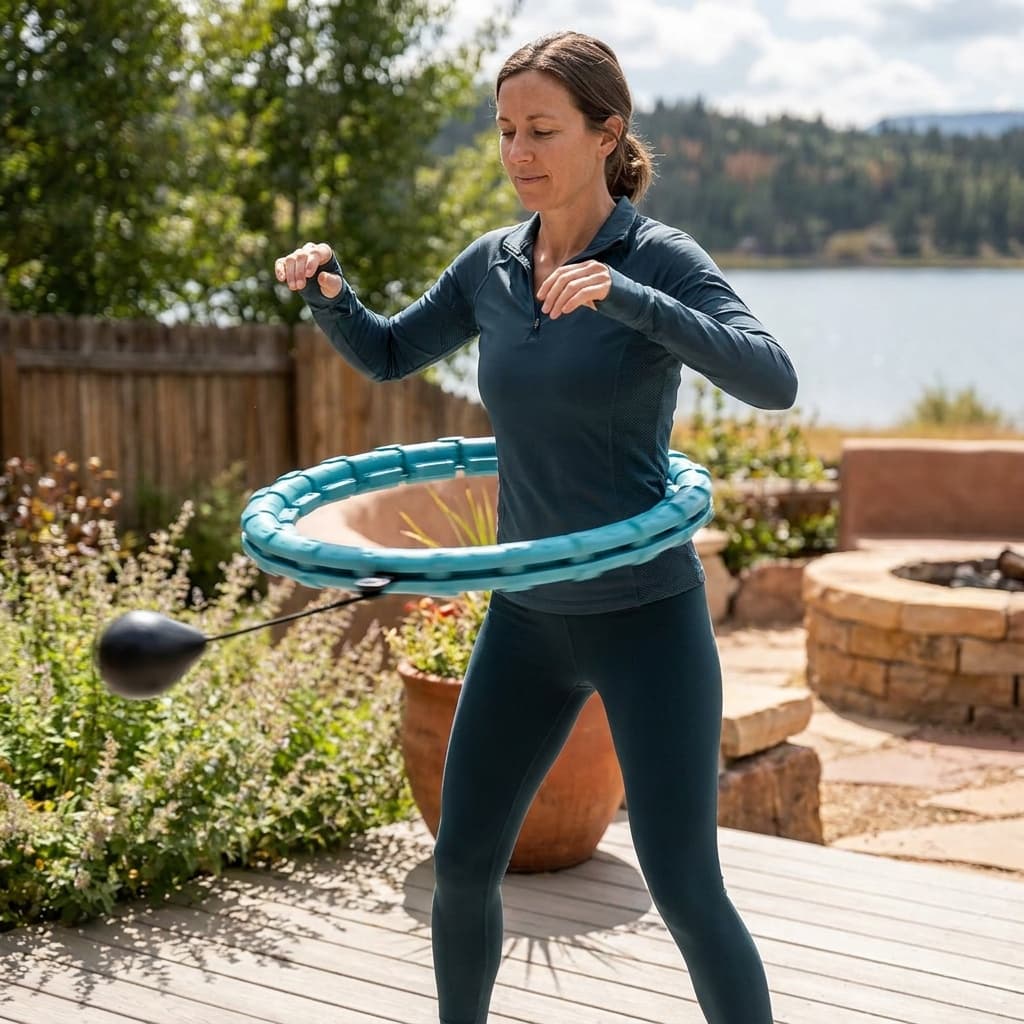
JKSHMYT's 24-link circle hoop uses a 0.7 lb gravity ball on a simplified ABS track and fits waists in the 26-47 inch range.
- Segments
- 24 detachable links
- Waist range
- 26 – 47 in
- Total hoop weight
- 720 g (~1.6 lb)
- Gravity ball
- 0.7 lb
- Material
- ABS plastic
More strengths
- Snap-lock segment assembly holds together during use
- 24 links and a listed 26 to 47 inch waist fit cover most adults without extension links
Other tradeoffs
- The ball track clicks during use; apartment and early-morning users may find it disruptive
The JKSHMYT is the lowest-commitment way to find out whether a gravity-ball hoop fits your workout routine. The format is the same: 24 detachable links, a gravity ball (listed at 0.7 lb), and a 26 to 47 inch waist fit. You are not giving up the core design in exchange for the lower price.
What you are giving up is polish. The padding is thinner and the segment clips are less refined than the Dumoyi. Neither is a disqualifying flaw for a beginner evaluation, but both are things you will notice if you use the hoop daily for more than a month and decide you want to step up.
The case for buying this first and upgrading later is straightforward: weighted hoops are not for everyone, and paying more for a hoop you use twice is worse than paying less for one you use four times and then decide is worth a real investment. If you go three or four weeks and enjoy the sessions, the Dumoyi is waiting.
Best for: Curious beginners on a tight budget who want a functional gravity-ball hoop to evaluate whether the format fits their workout routine before spending more.
How they compare
| Product | Kit Score | Price | Best for |
|---|---|---|---|
| Dumoyi Smart Weighted Hoop for Adults | 8.2 | $16.99 Price checked Oct 23, 4:16 PM CDT | Best for: Anyone new to weighted hoop training who wants a proven gravity-ball design with a large owner community and room to adjust as their waist measurement changes. Why it stands out: Large owner review base points to a consistent real-world experience and an easy learning curve for beginners Tradeoff: Gravity ball can occasionally stick in its track mid-workout, especially in the first few uses before the channel breaks in |
| JKSHMYT Weighted Hula Circle Hoops | 7.4 | $14.99 Price checked Oct 23, 4:16 PM CDT | Best for: Curious beginners on a tight budget who want a functional gravity-ball hoop to evaluate whether the format fits their workout routine before spending more. Why it stands out: Sub-$20 entry price removes the financial barrier for users who want to test the format before committing to a premium model Tradeoff: Gravity ball can stick in its track more often than pricier options with machined channels; requires patience during the break-in period |
Dumoyi Smart Weighted Hoop for Adults
- Best for
- Anyone new to weighted hoop training who wants a proven gravity-ball design with a large owner community and room to adjust as their waist measurement changes.
- Why it stands out
- Large owner review base points to a consistent real-world experience and an easy learning curve for beginners
- Tradeoff
- Gravity ball can occasionally stick in its track mid-workout, especially in the first few uses before the channel breaks in
JKSHMYT Weighted Hula Circle Hoops
- Best for
- Curious beginners on a tight budget who want a functional gravity-ball hoop to evaluate whether the format fits their workout routine before spending more.
- Why it stands out
- Sub-$20 entry price removes the financial barrier for users who want to test the format before committing to a premium model
- Tradeoff
- Gravity ball can stick in its track more often than pricier options with machined channels; requires patience during the break-in period
How to choose the right weighted hoop
The format is consistent across the hoops here. What varies is fit, padding, and feedback. Here is how to think through the choice.
How to pick the right weighted hoop for your situation
Measure your waist before you look at specs
Use a flexible tape measure at your navel, not your hips. Most hoops list a waist-size range. If you are at the upper end of a hoop's range, size up or choose a model that accommodates larger sizes without extension links.
Decide how important break-in comfort is
If you are sensitive to contact pressure or plan to start with daily sessions, prioritize padding thickness. The Dumoyi is the right call. If you are testing the format on a budget, thinner padding is an acceptable tradeoff.
Consider your feedback style
If counting rotations or tracking session time keeps you motivated, look for a hoop listing that includes a digital counter; the Swiss Activa+ S2 XXL listing linked here does not mention one. If you run a timer on your phone and do not track reps, it is a feature you will pay for and ignore.
Assemble and resize before your first session
Every hoop here is adjustable. Start with a slightly larger diameter than the chart suggests, especially for your first week. A hoop that is too small requires faster movement to keep momentum and is harder on the hips before the muscles adapt.
Give it two weeks before you judge it
The gravity-ball design works differently from traditional hooping. Most users report that the motion feels unfamiliar for the first three to five sessions before it clicks. If you quit after one session, you have not actually tried it.
Where these numbers come from
| Claim | Source | Checked |
|---|---|---|
| Six weeks of weighted hooping (1.5 kg hoop, 12.8 min/day average) cut waist circumference 3.1 cm vs 0.7 cm for walking in 53 overweight adults; trunk muscle mass rose more with hooping | Lahelma et al., Obesity Facts 12(4), 2019 | Sep 2026 |
| 16 experienced hoopers burned about 7 calories a minute, about 210 in a 30-minute routine, at 84% of age-predicted max heart rate | ACE, sponsored research on hooping (2011) | Sep 2026 |
| Dumoyi: 24 links, about 3.5 lb, silent rollers, one year of after-sales service | Dumoyi listing on Amazon, ASIN B0924TRVH5 | Sep 2026 |
| JKSHMYT: 24 detachable links, 0.7 lb gravity ball, 26 to 47 in waist | JKSHMYT listing on Amazon, ASIN B0BGLP6JJC | Sep 2026 |
| Swiss Activa+ S2 XXL: 34 links, fits waists up to 65 in (165 cm), free replacement of broken links | Swiss Activa+ listing on Amazon, ASIN B0CWB3QRL9 | Sep 2026 |
We have not used these hoops. Specs are from the live listings; comfort and padding notes summarize owner feedback.
FAQ
Do gravity-ball hoops actually work for waist toning?
There is some evidence. In a 2019 randomized trial in Obesity Facts, 53 overweight adults used a 1.5 kg (about 3.3 lb) weighted hoop for six weeks, averaging about 13 minutes a day. Their waist circumference fell 3.1 cm, compared with 0.7 cm when the same people walked for six weeks, and trunk muscle mass rose. That study used a traditional weighted hoop, not a gravity-ball design, so treat it as a guide rather than proof for smart hoops. For energy use, an ACE-sponsored study found experienced hoopers burned about 210 calories in a 30-minute routine. Hooping works best as one part of a broader routine that includes strength training.
What waist size do I need for a weighted hoop?
The JKSHMYT lists a 26 to 47 inch fit, and the Swiss Activa+ S2 XXL reaches 65 inches with its 34 links. Measure at your navel and check each model's listed range. If you are near the upper end of a range, choose a hoop whose listed range clears your measurement with room to spare.
How is a gravity-ball hoop different from a traditional weighted hoop?
A traditional weighted hoop is simply a heavier version of the ring itself, requiring continuous hip snap to keep spinning. A gravity-ball hoop uses a weighted ball that travels around a fixed track on the ring, generating momentum on its own once you start the rotation. The practical difference is significant: most adults who could never keep a traditional hoop spinning find the gravity-ball design much easier to sustain for a full workout. The trade-off is that the track mechanism adds a small amount of noise, though some designs use silent rollers to reduce it.
Ready to build a low-impact home fitness routine? Browse more fitness gear, or read how we research and rate.
Keep going
Our recommendations draw on manufacturer documentation, retailer listings, owner feedback, and comparisons with alternatives.
As an Amazon Associate I earn from qualifying purchases. We may earn a commission from links here, at no extra cost to you. How we research →
Top picks
 Best OverallDumoyi Smart Weighted Hoop for Adults8.2/10
 Best BudgetJKSHMYT Weighted Hula Circle Hoops7.4/10
 Editor's ChoiceSwiss Activa+ S2 XXL Smart Hula Hoop8.5/10