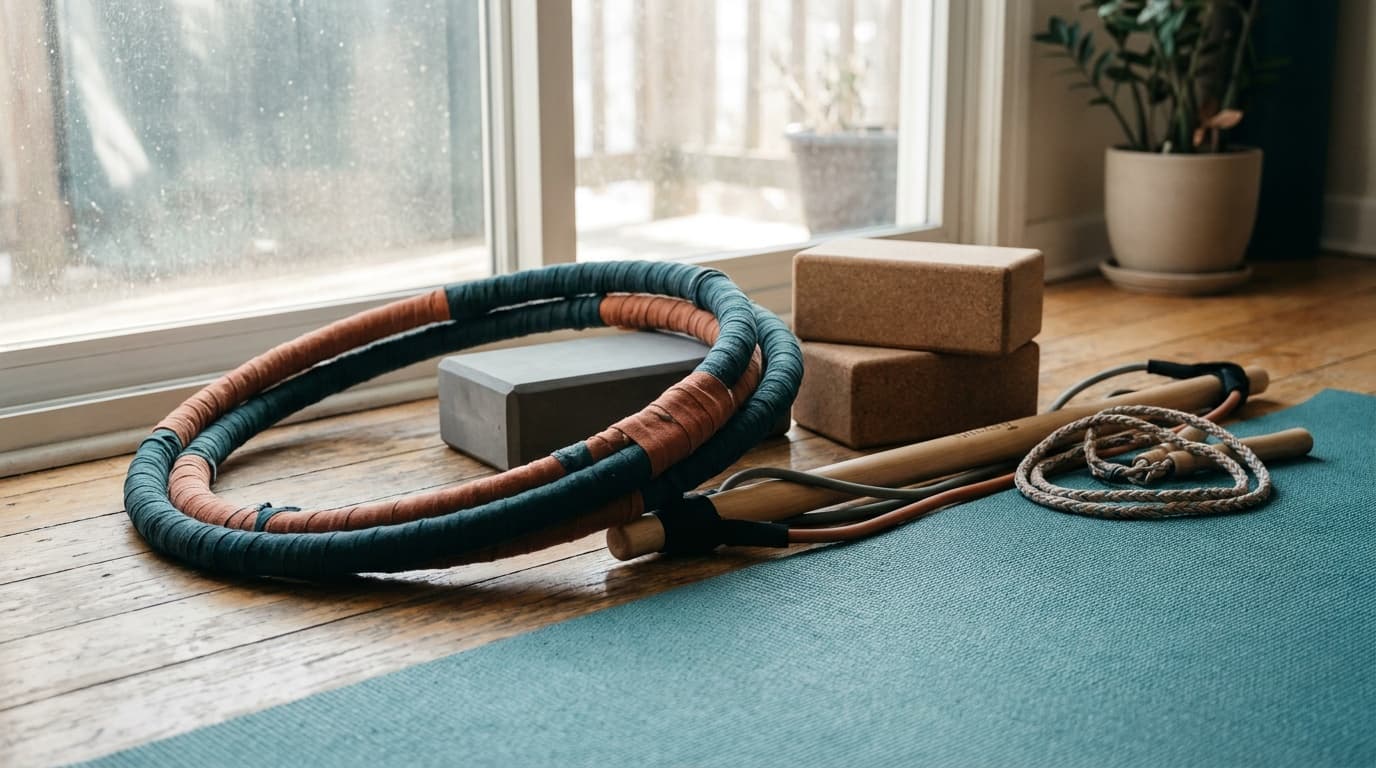
Weighted hula hoops have gone from a childhood toy to a serious piece of home-gym kit, and the fitness claims range from reasonable to wildly exaggerated. Here is what the evidence actually supports.
What happens to your body when you hoop
Keeping a weighted hoop in motion requires your hips, obliques, and lower back to contract and release in a continuous rhythm. That rhythmic engagement is the core benefit. Research published in the Journal of Strength and Conditioning Research found that a six-week hooping program produced meaningful reductions in waist circumference and increased trunk muscle mass compared to walking, suggesting the rotational demand does more for the midsection than plain forward locomotion.
At the same time, your heart rate climbs. Because you are moving continuously for the duration of a set, the cardiovascular demand is real, even if it is not intense. Think of it as a step above walking and a step below a light jog.
The spot-reduction myth: what hooping cannot do
This is the most important correction in the entire article. Fat loss does not work by location. When your body draws on stored energy during exercise, it pulls from fat stores throughout the body based on genetics and hormones, not from the muscle that happens to be working nearby.
Hooping will trim your waist only to the degree that it contributes to an overall calorie deficit. The waist-circumference reductions seen in studies are partly fat loss (distributed across the body) and partly the toning of the muscles underneath, which creates a firmer, slightly smaller-looking midsection without necessarily requiring large-scale fat loss.
A consistent hooping habit can reshape your midsection, but not by targeting belly fat: it works by building the muscles underneath and contributing to whole-body calorie burn.
Calorie burn: honest numbers
The American Council on Exercise (ACE) funded a small study that measured hooping at roughly 7 calories per minute for women at moderate effort, landing around 210 calories per 30-minute session. Other estimates using metabolic equivalents (METs) place a 30-minute session in the 150–200 calorie range for most adults.
That is comparable to a casual bike ride, a brisk walk, or a light dance class. Useful, but not a high-intensity fat-burning session. The honest framing: hooping is a low-to-moderate intensity activity that fits well as a daily movement habit or as active recovery, not as a replacement for more demanding cardio if fat loss is your primary goal.
Bruising: why it happens and when it stops
A weighted hoop (typically 1–2 kg) repeatedly makes contact with your hips and lower back during the learning phase when your rhythm is inconsistent. That contact leaves bruises, especially on people with less natural padding around the hips. This is normal and not a sign of injury.
Getting through the bruising phase
Start with 5-minute sets
Short sessions mean fewer contact repetitions per day while you learn the rhythm.
Wear leggings or thicker fabric
A layer of fabric between skin and hoop reduces the impact force at each contact point.
Expect 1–2 weeks
Most beginners report bruising fades completely once muscle memory develops and the hoop stays in motion more consistently.
Progress gradually
Add 2–3 minutes per session each week rather than jumping to 20-minute sets early.
Check hoop weight
If bruising persists past two weeks, a lighter hoop (or an infinity-style smart hoop with a wider contact surface, like the [Dumoyi Smart Weighted Hoop](/api/go?product=dumoyi-smart-weighted-fit-hoop&retailer=amazon&article=do-weighted-hula-hoops-work)) may suit your body better.
Realistic results with a consistent practice
The honest picture is encouraging if you go in with the right expectations. Studies and anecdotal reports converge on a similar pattern: people who hoop three to four times per week for eight or more weeks tend to report a smaller waist, better posture awareness, and improved ability to engage their core during other activities. These are real, meaningful results.
What they are not: dramatic fat loss, a six-pack, or a shortcut. Hooping works as one piece of a broader fitness habit. Pair it with adequate protein, progressive resistance training, and other cardio, and it becomes a genuinely useful low-impact option. Use it as your only tool and expect miracles, and you will be disappointed.
Frequently asked questions
How heavy should a weighted hula hoop be for a beginner?
Most beginners do best starting between 0.9 kg (2 lb) and 1.5 kg (3.3 lb). Heavier hoops are actually easier to keep moving because their momentum carries them through rhythm gaps, but the tradeoff is more contact force and more bruising. A traditional hoop in the 1–1.5 kg range, like the JKSHMYT Weighted Hula Hoops, balances learnability with manageable impact. Once you can sustain 10 minutes without stopping, you can experiment with slightly heavier options.
Can I use a weighted hula hoop every day?
Yes, with moderation. Because hooping is low-impact and the muscle demand is moderate, daily short sessions (10–15 minutes) are reasonable for most healthy adults. If you are still in the bruising phase, giving your skin a day to recover between sessions is sensible. Longer or more intense sessions benefit from a rest day in between to allow the trunk musculature to recover.
Will hooping flatten my stomach?
It can contribute to a smaller waist measurement over time through two mechanisms: building the underlying core muscles (which creates a firmer, tighter appearance) and contributing to a calorie deficit that reduces overall body fat. It will not selectively remove fat from your stomach. Visible abdominal definition depends far more on overall body fat percentage, which requires a consistent calorie deficit across weeks and months, than on any single exercise.
For specific picks, see our guide to the best weighted hula hoops. Browse all fitness guides or read how we research and rate gear.
Recommended gear
Our current top picks from the Best weighted hula hoops for core and cardio at home guide, if you are ready to buy.
DUMOYI
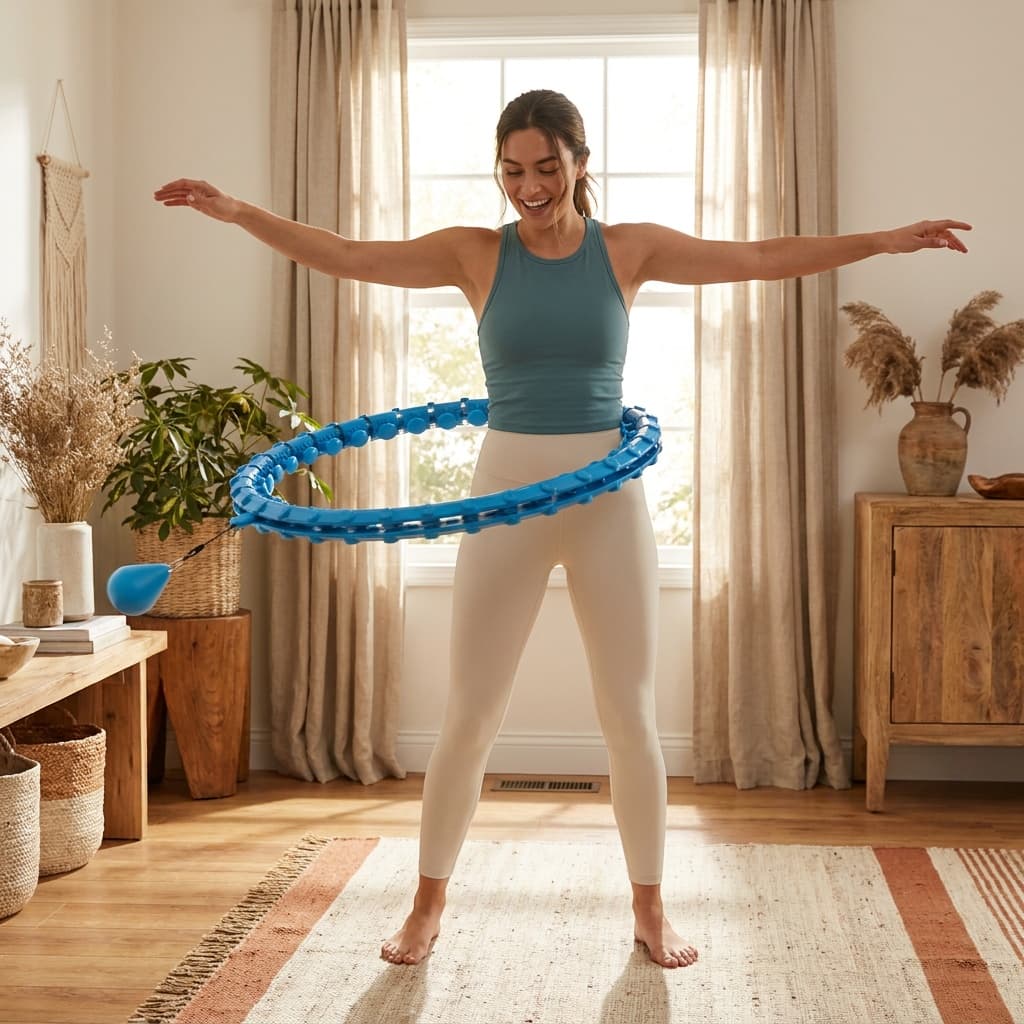
Dumoyi Smart Weighted Hoop for Adults
Best Overall
Kit Score 8.2/10
$16.99 Price checked Oct 23, 4:16 PM CDT
Best for: Anyone new to weighted hoop training who wants a proven gravity-ball design with a large owner community and room to adjust as their waist measurement changes.
- Large owner review base points to a consistent real-world experience and an easy learning curve for beginners
- Gravity ball can occasionally stick in its track mid-workout, especially in the first few uses before the channel breaks in
- Weight
- ~3.5 lb (1.6 kg)
- Segments
- 24 detachable links
- Waist range
- Adjustable (detachable links)
- Resistance type
- Gravity ball on 360-degree silent rollers
- Material
- Eco-friendly ABS plastic
- Colors
- Multiple color options
About this pick
Dumoyi's 24-link infinity hoop uses a 360-degree gravity ball in an inner channel to generate resistance as you move your hips, no traditional spinning technique required. The links click apart and reconnect in seconds, so you can drop a segment as your waist measurement changes over weeks of use.
Strengths
- Large owner review base points to a consistent real-world experience and an easy learning curve for beginners
- Gravity ball keeps momentum going without the skill wall of a traditional fixed hoop, making daily 20-30 minute sessions achievable
- Detachable link system lets you shorten the diameter as fitness improves, extending the useful life of one purchase
Weaknesses
- Gravity ball can occasionally stick in its track mid-workout, especially in the first few uses before the channel breaks in
- Users above the maximum assembled waist fit should look at a higher-link option
Kit Score breakdown
JKSHMYT
JKSHMYT Weighted Hula Circle Hoops
Best Budget
Kit Score 7.4/10
$14.99 Price checked Oct 23, 4:16 PM CDT
Best for: Curious beginners on a tight budget who want a functional gravity-ball hoop to evaluate whether the format fits their workout routine before spending more.
- Sub-$20 entry price removes the financial barrier for users who want to test the format before committing to a premium model
- Gravity ball can stick in its track more often than pricier options with machined channels; requires patience during the break-in period
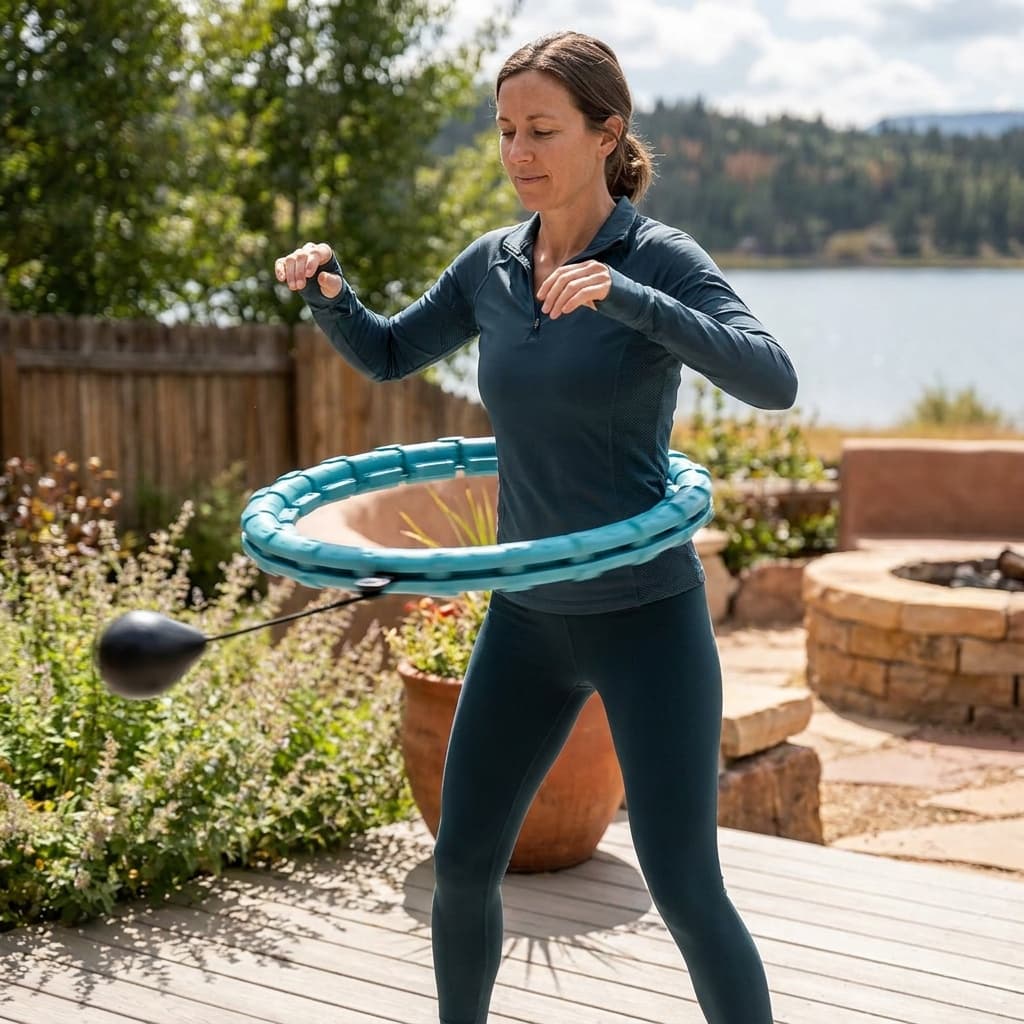
- Segments
- 24 detachable links
- Waist range
- 26 – 47 in
- Total hoop weight
- 720 g (~1.6 lb)
- Gravity ball
- 0.7 lb
- Material
- ABS plastic
About this pick
JKSHMYT's 24-link circle hoop uses a 0.7 lb gravity ball on a simplified ABS track and fits waists in the 26-47 inch range.
Strengths
- Sub-$20 entry price removes the financial barrier for users who want to test the format before committing to a premium model
- Snap-lock segment assembly holds together during use
- 24 links and a listed 26 to 47 inch waist fit cover most adults without extension links
Weaknesses
- Gravity ball can stick in its track more often than pricier options with machined channels; requires patience during the break-in period
- The ball track clicks during use; apartment and early-morning users may find it disruptive
Kit Score breakdown
Best for: Users who have tried and dropped traditional hoops because of the constant fall problem, and larger-waisted users who need more links than standard hoops include.
- Non-fall smart-track design is the most consistent feature owners highlight, especially for beginners who have failed with traditional fixed hoops
- Current price is significantly lower than many roundup comparisons show, which may reflect a repositioning or promotional period; verify price before purchase
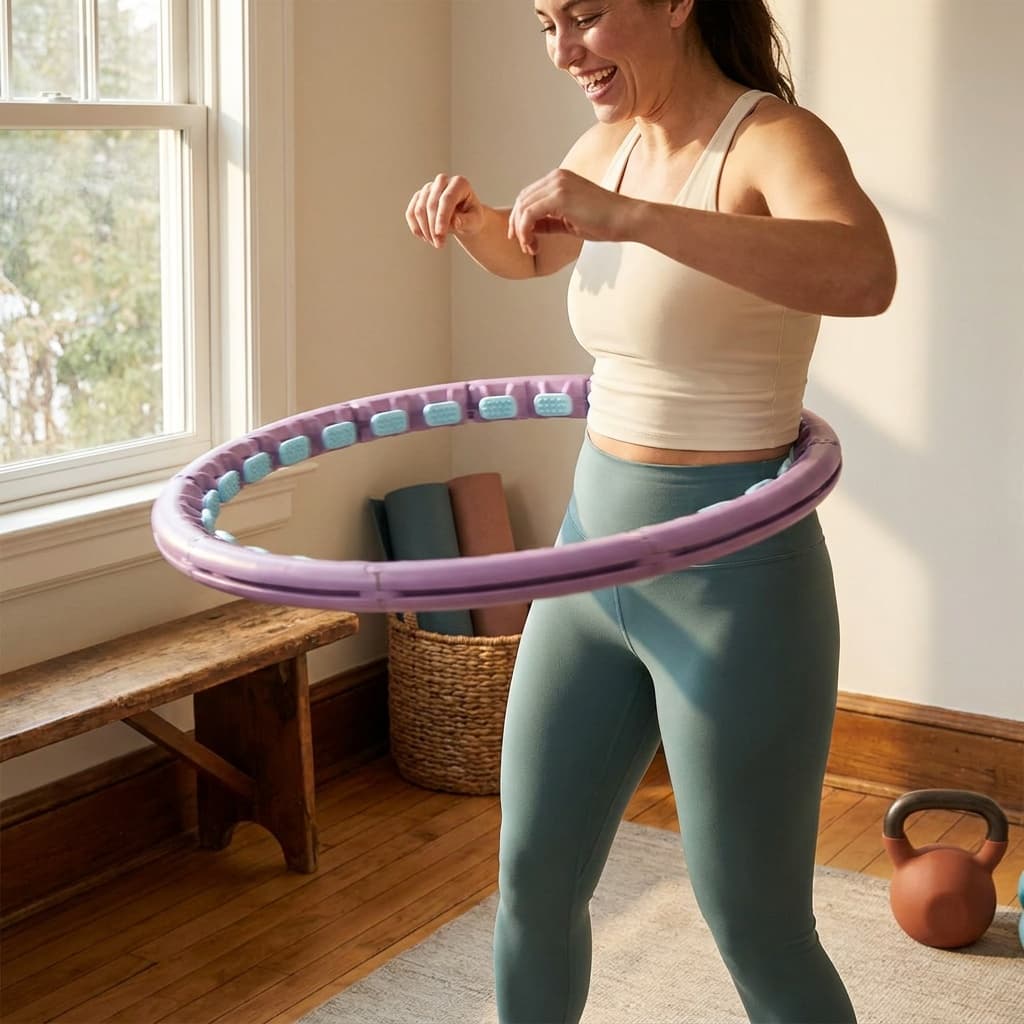
- Waist range
- Up to 65 in (165 cm) with 34 links
- Resistance type
- Integrated 360-degree massaging knobs
- Smart track
- Non-fall design keeps hoop on waist
- Warranty
- Lifetime exchange on broken links or worn parts (per listing)
- Includes
- 1 year of access to Swiss Activa+ training videos
About this pick
Swiss Activa+ built its S2 XXL around a smart-track system that keeps the hoop seated on your waist throughout a session, solving the single biggest reason beginners quit: the hoop falling to the floor every few rotations. The 34 included links fit waists up to 65 inches without an extension kit. Internal massaging knobs stimulate circulation along the waist during use.
Strengths
- Non-fall smart-track design is the most consistent feature owners highlight, especially for beginners who have failed with traditional fixed hoops
- 34 links fit waists up to 65 inches with no extension kit, and Swiss Activa+ replaces broken links for free
- Massaging knobs add a circulation benefit during workouts and make longer sessions more comfortable on the waist
Weaknesses
- Current price is significantly lower than many roundup comparisons show, which may reflect a repositioning or promotional period; verify price before purchase
- Weight ball requires a short learning curve to keep spinning; new users may need a few sessions before the motion becomes self-sustaining
Kit Score breakdown
See all picks in Best weighted hula hoops for core and cardio at home
Keep going
Researched, not hands-on tested
Updated Jul 8, 2026Our recommendations draw on manufacturer documentation, retailer listings, owner feedback, and comparisons with alternatives.
As an Amazon Associate I earn from qualifying purchases. We may earn a commission from links here, at no extra cost to you. How we research →