Destinations
Missouri outdoors
Missouri puts spring-fed float rivers, billion-year-old granite shut-ins, and a 240-mile rail-trail all within a few hours' drive.
Top parks in Missouri
See all 92 parks
Gateway Arch
The smallest national park: a 630-foot stainless steel arch over the Mississippi, all city sidewalks and a tram ride.
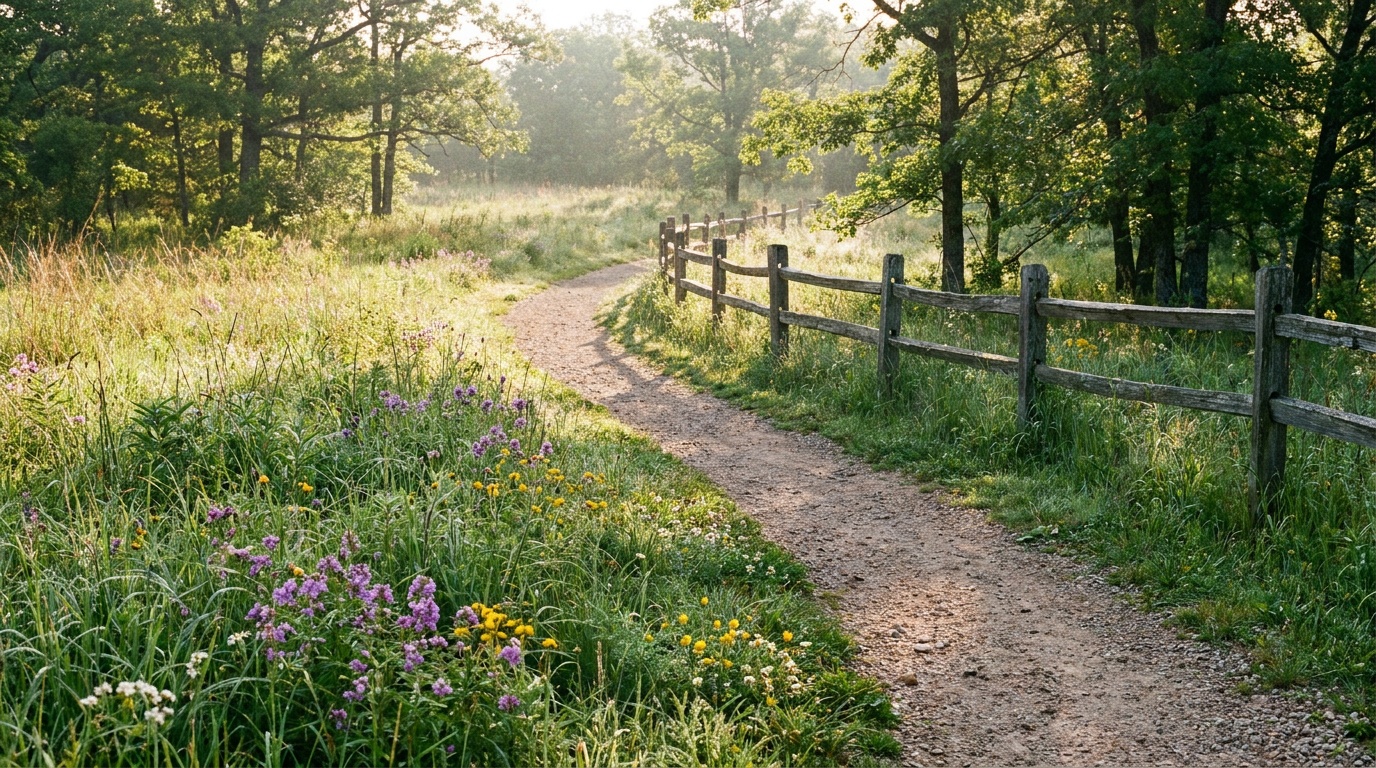
George Washington Carver National Monument
The birthplace and boyhood farm of scientist and educator George Washington Carver near Diamond, Missouri, the first national monument honoring a Black American and the first for a non-president.
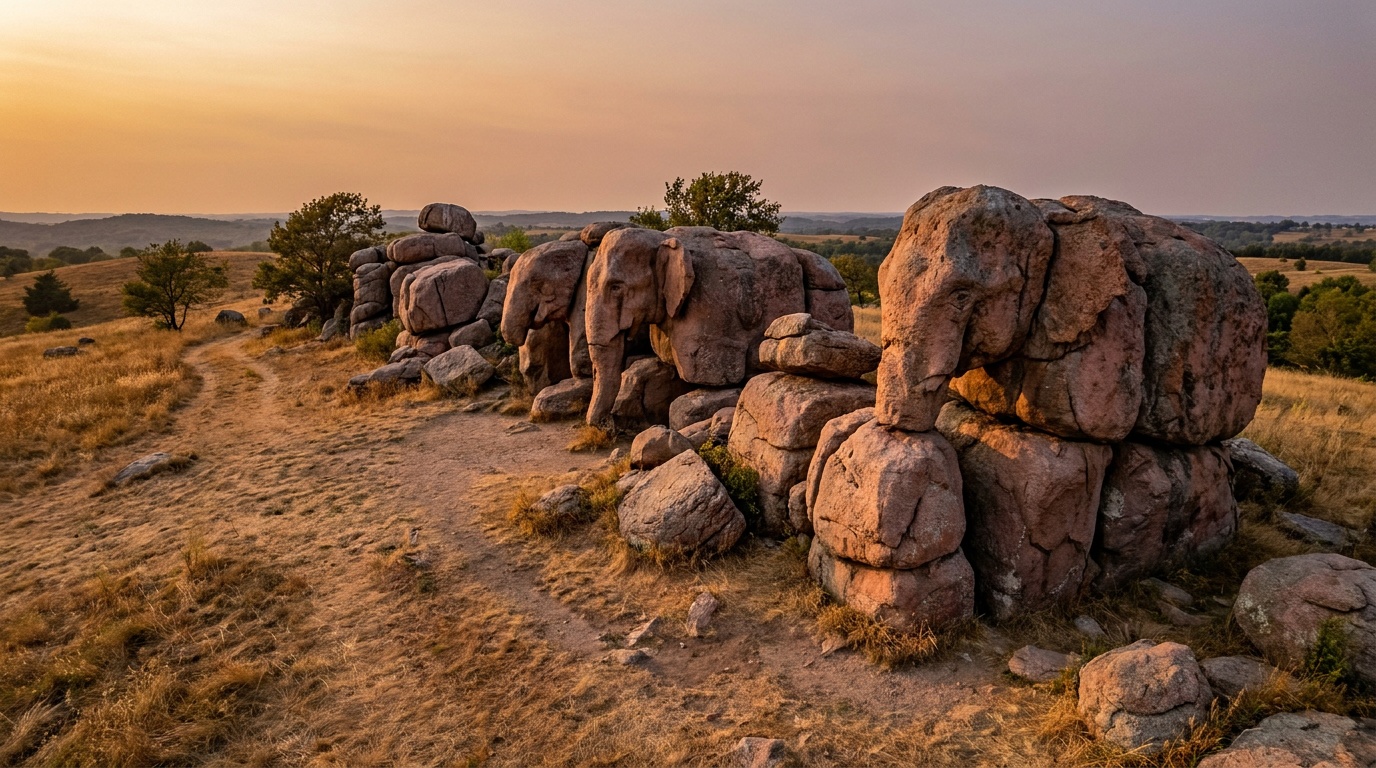
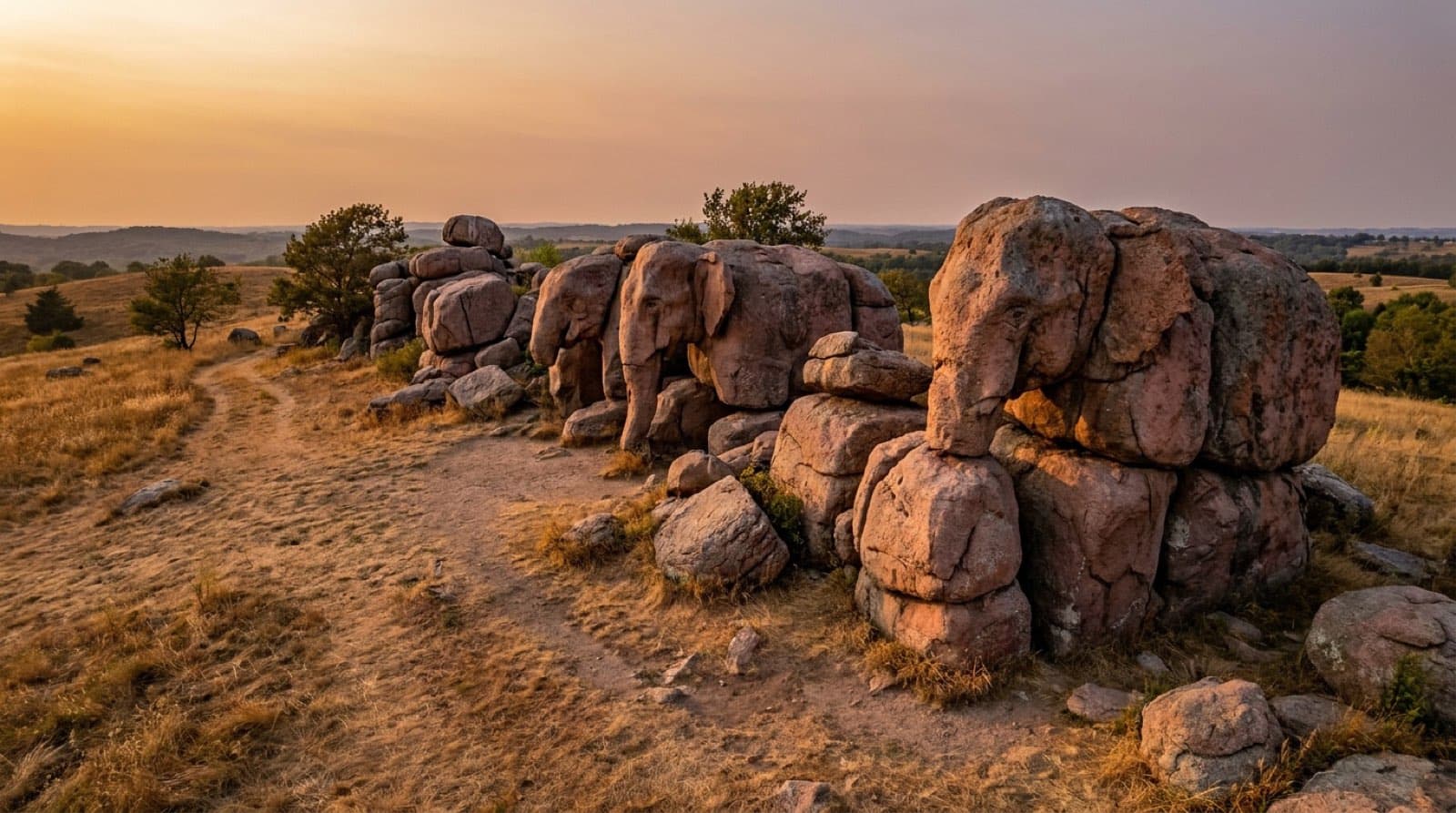
Elephant Rocks State Park
A small St. Francois Mountains day-use park built around a line of giant 1.5-billion-year-old pink granite boulders, reached by an accessible paved Braille Trail.
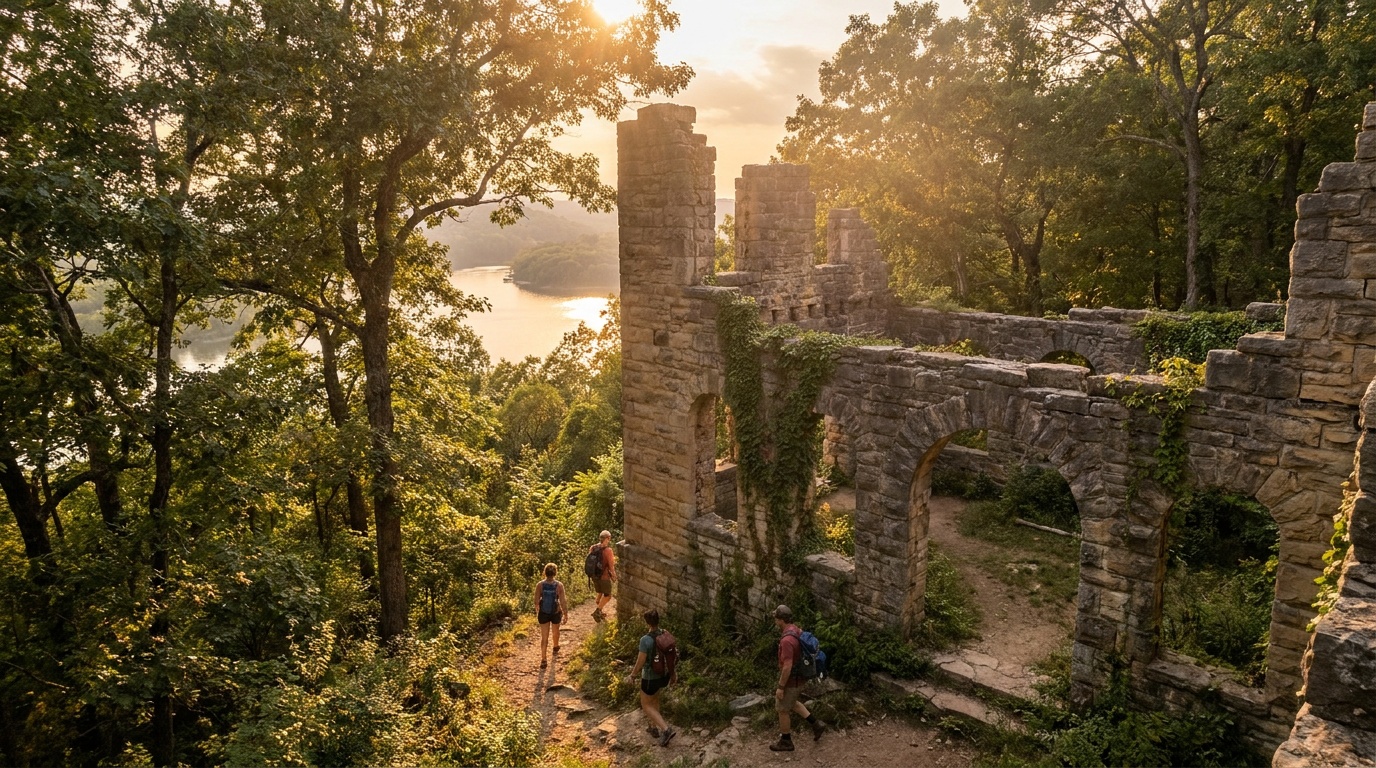
Ha Ha Tonka State Park
A geologic showpiece above the Lake of the Ozarks: the stone ruins of a turn-of-the-century castle, a 100-foot natural bridge, sinkholes, a huge spring, and more than 15 miles of bluff-top trail.
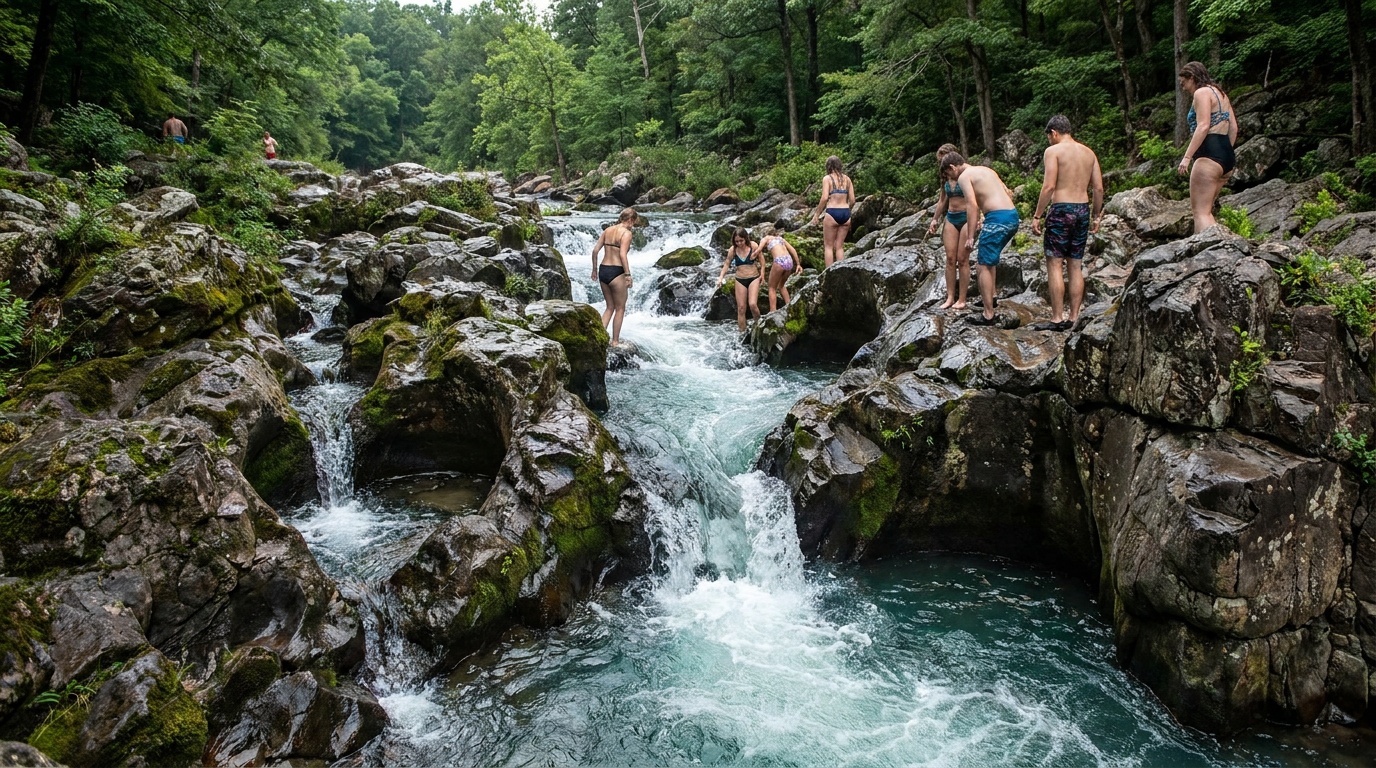
Johnson's Shut-Ins State Park
A St. Francois Mountains park where the Black River churns through narrow igneous chutes, forming a natural water park, with billion-year-old rock, the Scour Trail, camping, and cabins.

Arrow Rock State Historic Site
Arrow Rock State Historic Site preserves a historic river town with period architecture, the 1834 J. Huston Tavern, and a visitor center interpreting Boone's Lick Country.

Battle of Athens State Historic Site
Battle of Athens State Historic Site preserves the northernmost Civil War battlefield fought west of the Mississippi, with historic buildings and a mile of Des Moines River frontage.

Battle of Carthage State Historic Site
Battle of Carthage State Historic Site preserves a meadow and spring where the earliest full-scale Civil War battle was fought on July 5, 1861.

Battle of Island Mound State Historic Site
Battle of Island Mound State Historic Site preserves the site of an 1862 skirmish, the first time Black soldiers engaged in combat during the Civil War.
Planning a Missouri trip
What Missouri offers outdoors
Missouri is built around water and old rock. The Ozarks in the southern half of the state are laced with clear, spring-fed rivers that you float in a canoe or kayak, and that habit of getting on the water is the through-line of a Missouri trip. The Current and Jacks Fork rivers are protected as a national riverways unit, fed by hundreds of springs and threaded with caves, and they sit at the heart of the float-trip culture. If you would rather stay dry, the same hills give you the 430-mile Ozark Trail and the bluffs, glades, and oak-hickory forest of parks like Lake of the Ozarks.
The best concentration of scenery is the Arcadia Valley in southeast Missouri, where three of the state's standout parks sit within about 30 minutes of each other. Johnson's Shut-Ins is a natural rock water park where the Black River has carved chutes and pools into 1.5-billion-year-old volcanic rock. Elephant Rocks lines up giant granite boulders like a train of elephants along a short, accessible loop. Taum Sauk Mountain is the high point of the state and a quiet, rewarding hike. For a flatter, longer day, the Katy Trail runs more than 240 miles along the Missouri River, the longest developed rail-trail in the country, free and open year-round. The state's lone national park sits on the St. Louis riverfront and pairs naturally with a city visit.
Spring and fall are the sweet spots. April through June brings full rivers, green hills, and comfortable temperatures, while September and October give you cooler air and good fall color. Summer is float-trip and swimming season, with highs in the upper 80s F to low 90s F and high humidity, so plan water time and shade. Winters are cold, often in the 30s F and 40s F, and quiet on the trails. Pack for water no matter the season: a dry bag, water shoes or sandals with a back strap, quick-dry layers, and sun protection. Add sturdy trail shoes for the rocky Ozark trails and a warm layer in spring and fall, when mornings start chilly and afternoons warm up.
Getting around Missouri
Getting around
Missouri has three practical entry points. Lambert St. Louis International (STL) anchors the eastern side and is your closest hub for the Arcadia Valley parks and the eastern end of the Katy Trail. Kansas City International (MCI) covers the western side. Springfield-Branson National (SGF) is the smallest of the three but lands you closest to the southern Ozarks and the float rivers, with the terminal only about 8 miles from Springfield.
The state is wide, so build in drive time. St. Louis to Springfield is roughly 215 miles, about 3 hours and 20 minutes on I-44. St. Louis to Kansas City is a similar haul, around 235 miles and 3.5 hours straight across I-70. Springfield to Kansas City runs about 190 miles, roughly 3 hours.
For the marquee outdoor areas, the Arcadia Valley parks (Johnson's Shut-Ins, Elephant Rocks, Taum Sauk) sit southwest of St. Louis, about 1.5 to 2 hours by car, and cluster within 30 minutes of one another once you arrive. The Ozark National Scenic Riverways float country sits in the south-central part of the state, roughly 2.5 to 3 hours from either St. Louis or Springfield, and is car-dependent once you are there. The Katy Trail parallels the Missouri River across the middle of the state, so you can pick it up near St. Louis, Columbia, or wine-country towns like Hermann and Augusta and ride as much or as little as you want. A car is essential for all of it: trailheads, river put-ins, and outfitters are rural and not served by transit.
All 5 Missouri park guides
State park directory
Every Missouri state park
A source-backed inventory layer for planning breadth. Full Kit Authority guides are marked when a park has camping detail, rules, and packing notes; the rest link straight to the official page. Looking for rail trails and state trails? They have their own Trail Guide.
92 parks
3 full guides · 82 with photos
Elephant Rocks State Park
State Park
Elephant Rocks State Park features giant granite boulders formed from 1.5-billion-year-old rock, reached by the accessible Braille Trail through the formations.
- Climbing
- Picnicking
- Fishing
- Hiking
Missouri State Parks
Full guideHa Ha Tonka State Park
State Park
Ha Ha Tonka State Park is a geologic wonderland of sinkholes, caves, a natural bridge, and bluffs, crowned by the ruins of a stone castle overlooking the Lake of the Ozarks.
- Hiking
- Fishing
- Paddling
- Picnicking
Missouri State Parks
Full guideJohnson's Shut-Ins State Park
State Park
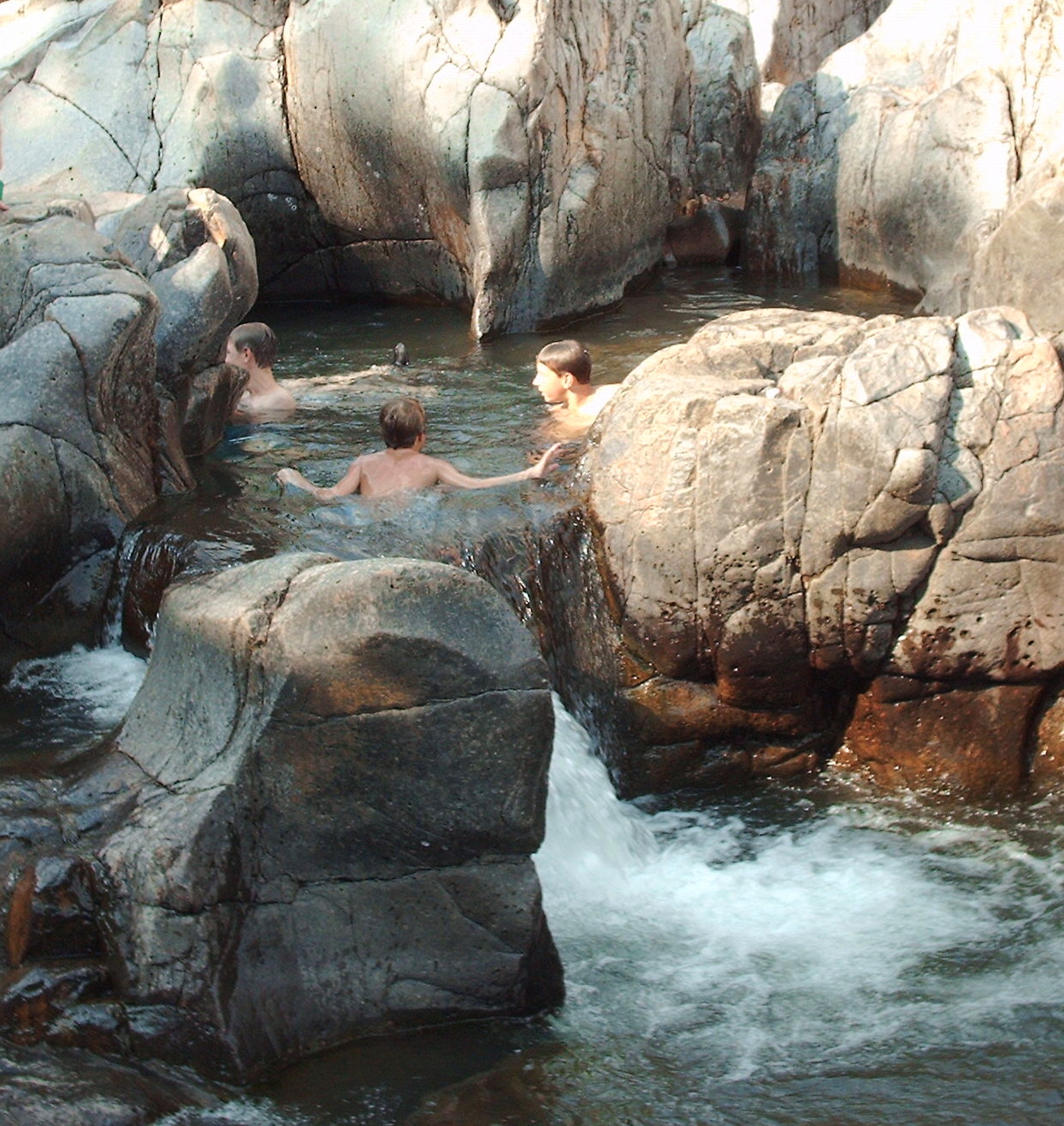
Johnson's Shut-Ins State Park features rugged geology in the St. Francois Mountains, with shut-ins formed by the East Fork of the Black River.
- Swimming
- Camping
- Hiking
- Picnicking
Missouri State Parks
Full guideArrow Rock State Historic Site
State Historic Site
Arrow Rock State Historic Site preserves a historic river town with period architecture, the 1834 J. Huston Tavern, and a visitor center interpreting Boone's Lick Country.
- Historic Site
- Camping
- Fishing
- Hiking
Missouri State Parks
Official pageBattle of Athens State Historic Site
State Historic Site
Battle of Athens State Historic Site preserves the northernmost Civil War battlefield fought west of the Mississippi, with historic buildings and a mile of Des Moines River frontage.
- Historic Site
- Camping
- Hiking
- Boating
Missouri State Parks
Official pageBattle of Carthage State Historic Site
State Historic Site
Battle of Carthage State Historic Site preserves a meadow and spring where the earliest full-scale Civil War battle was fought on July 5, 1861.
- Hiking
- Historic Site
Missouri State Parks
Official pageBattle of Island Mound State Historic Site
State Historic Site
Battle of Island Mound State Historic Site preserves the site of an 1862 skirmish, the first time Black soldiers engaged in combat during the Civil War.
- Hiking
- Picnicking
- Historic Site
Missouri State Parks
Official pageBattle of Lexington State Historic Site
State Historic Site
Battle of Lexington State Historic Site preserves the Anderson House and battlefield of an 1861 three-day Civil War battle, with bullet holes still visible in the walls.
- Historic Site
- Picnicking
- Hiking
Missouri State Parks
Official pageBennett Spring State Park
State Park
Bennett Spring State Park is one of Missouri's earliest state parks, where more than 100 million gallons of spring water daily form a trout-stocked branch popular with anglers.
- Fishing
- Camping
- Hiking
- Picnicking
Missouri State Parks
Official pageBig Lake State Park
State Park
Big Lake State Park is a 407-acre park in northwest Missouri adjacent to the largest remaining oxbow lake in the state, popular for boating, fishing, and wetland birding.
- Camping
- Fishing
- Boating
- Picnicking
Missouri State Parks
Official pageBig Oak Tree State Park
State Park
Big Oak Tree State Park preserves towering bottomland forest and wetlands in southeast Missouri, with a self-guided boardwalk trail through the marshy terrain.
- Picnicking
- Fishing
- Nature Trails
- Playground
Missouri State Parks
Official pageBig Sugar Creek State Park
State Park
Big Sugar Creek State Park is a rugged Ozark landscape of upland woodlands and grassy glades with rare plants and animals reached by hiking trails.
- Hiking
- Wildlife Viewing
Missouri State Parks
Official pageBollinger Mill State Historic Site
State Historic Site
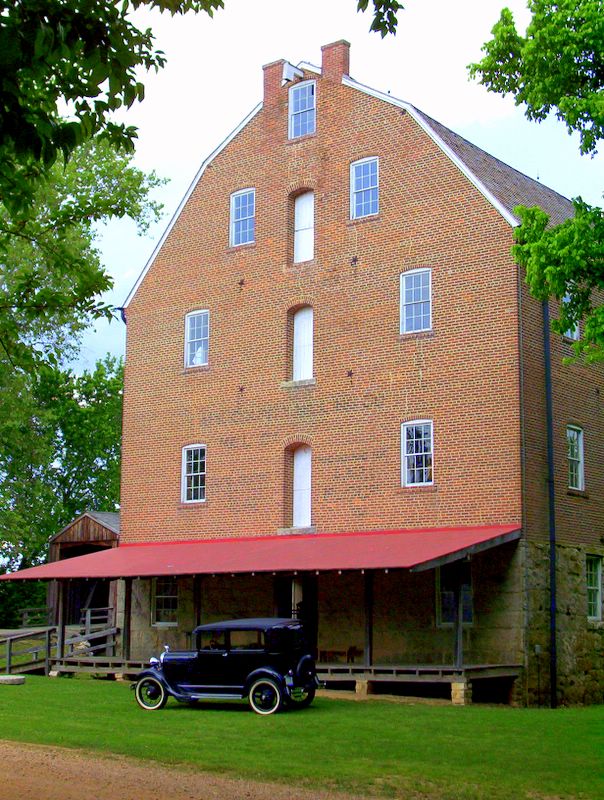
Bollinger Mill State Historic Site preserves a four-story Civil War-era gristmill and the Burfordville Covered Bridge along the Whitewater River.
- Historic Site
- Picnicking
Missouri State Parks
Official pageBoone's Lick State Historic Site
State Historic Site
Boone's Lick State Historic Site preserves the remnants of an early salt-making industry commercialized by Daniel Boone's sons, with outdoor interpretive exhibits.
- Picnicking
- Hiking
- Historic Site
Missouri State Parks
Official pageBothwell Lodge State Historic Site
State Historic Site
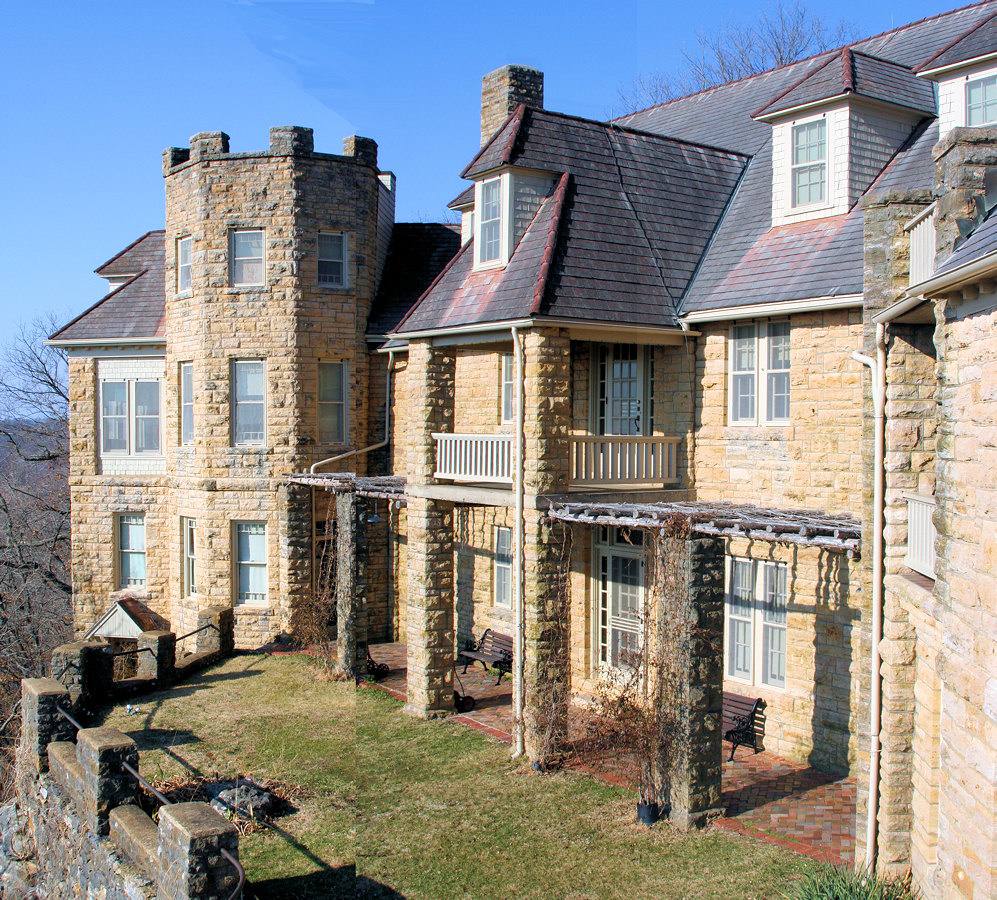
Bothwell Lodge State Historic Site preserves a 31-room lodge built atop natural caves by Sedalia lawyer John Homer Bothwell, with a hiking and mountain biking trail.
- Historic Site
- Hiking
- Biking
- Picnicking
Missouri State Parks
Official pageBryant Creek State Park
State Park
Bryant Creek State Park spans over 2,900 acres of rugged Ozark river hills with large oaks, native shortleaf pines, and nearly two miles of creek frontage.
- Hiking
- Picnicking
Missouri State Parks
Official pageCastlewood State Park
State Park
Castlewood State Park follows the winding Meramec River near St. Louis and is considered one of the area's best mountain biking locations.
- Hiking
- Biking
- Fishing
- Picnicking
Missouri State Parks
Official pageConfederate Memorial State Historic Site
State Historic Site
Confederate Memorial State Historic Site preserves the former Confederate Soldiers Home of Missouri across 135 acres with a restored chapel, cemetery, and six fishing ponds.
- Historic Site
- Fishing
- Picnicking
- Disc Golf
Missouri State Parks
Official pageCrowder State Park
State Park
Crowder State Park covers 1,912 acres of rugged forested terrain in northern Missouri with more than 17 miles of trails and an 18-acre lake.
- Camping
- Hiking
- Biking
- Backpacking
Missouri State Parks
Official pageCuivre River State Park
State Park
Cuivre River State Park is one of Missouri's largest and most rugged parks, offering an Ozarkian landscape near St. Louis with Lake Lincoln for swimming and boating.
- Camping
- Swimming
- Boating
- Fishing
Missouri State Parks
Official pageCurrent River State Park
State Park
Current River State Park is built around a former corporate retreat with rustic National Park Service-style buildings, two lakes, and views of the scenic Current River.
- Hiking
- Fishing
- Swimming
- Paddling
Missouri State Parks
Official pageDeutschheim State Historic Site
State Historic Site
Deutschheim State Historic Site in Hermann preserves several structures from 1840 to 1890 reflecting German settlement of the Missouri River valley.
- Historic Site
Missouri State Parks
Official pageDillard Mill State Historic Site
State Historic Site
Dillard Mill State Historic Site interprets one of the state's best-preserved gristmills, completed in 1908, on the blue waters of Huzzah Creek in the Ozarks.
- Historic Site
- Picnicking
- Hiking
- Fishing
Missouri State Parks
Official pageDon Robinson State Park
State Park
Don Robinson State Park preserves sandstone box canyons, shelter caves, cliffs, and glades in the LaBarque Creek watershed near St. Louis.
- Hiking
- Picnicking
- Camping
Missouri State Parks
Official page







Inventory source: USGS PAD-US 4.1. Photos are public-domain or Creative Commons via Wikimedia Commons, credited per image. Official reservations and rules remain state-specific, so use the state booking links before committing to dates.
Frequently asked questions
What is the best time to visit Missouri's parks?
Spring (April to June) and fall (September to October) are the best overall, with mild temperatures, full rivers, and fall color in October. Summer is prime float-trip and swimming season, with highs in the upper 80s F to low 90s F and high humidity, so plan around water and shade. Winters are cold, often in the 30s F and 40s F, and quiet, which suits hiking but not river time.
What is the best national park in Missouri?
Missouri's only national park is Gateway Arch National Park on the St. Louis riverfront, so it is the default pick and pairs well with a city stay. For a wilder outdoor experience, many visitors head to the Ozark National Scenic Riverways, a national park unit protecting the spring-fed Current and Jacks Fork rivers that is built for floating, fishing, and exploring caves and springs.
Where can you go float-trip or canoe in Missouri?
The Ozarks are the heart of Missouri float culture. The Current and Jacks Fork rivers inside the Ozark National Scenic Riverways are spring-fed, cold, and clear, with the Akers Ferry to Pulltite stretch on the Current often called the best single-day float. The Meramec near Meramec State Park offers shorter 2 to 4 hour floats closer to St. Louis. Local outfitters rent canoes, kayaks, and rafts and handle shuttles.
What should you pack for a Missouri outdoor trip?
Plan for water first: a dry bag, water shoes or back-strap sandals, quick-dry layers, and strong sun protection for long days on the rivers. Bring sturdy trail shoes for the rocky Ozark Trail and Arcadia Valley parks, plus a warm layer for cool spring and fall mornings. In summer, add bug protection and plenty of drinking water for the heat and humidity.