When to go
Weather, crowds, and what the season changes about the trip.
Spring
Warm, often windy days with possible wildflower and Joshua tree bloom before summer heat.
Pack Wind shell, sun protection, and all your own water; there is almost none out here.
Summer
100F
Very hot at lower elevations, often over 100F, with cooler air only on the high mesas.
Pack Heat planning, abundant water, and high-elevation routes instead of the dunes at midday.
Fall
Cooling, clear, and calm, with excellent hiking and some of the darkest night skies anywhere.
Pack Layers for cold nights, a full water supply, and a headlamp for the stars.
Winter
Cool to cold, with chilly nights, occasional snow on the high ground, and crisp clear days.
Pack Warm layers, a real sleeping setup for cold dispersed nights, and full water.
Top things to do
Kelso Dunes
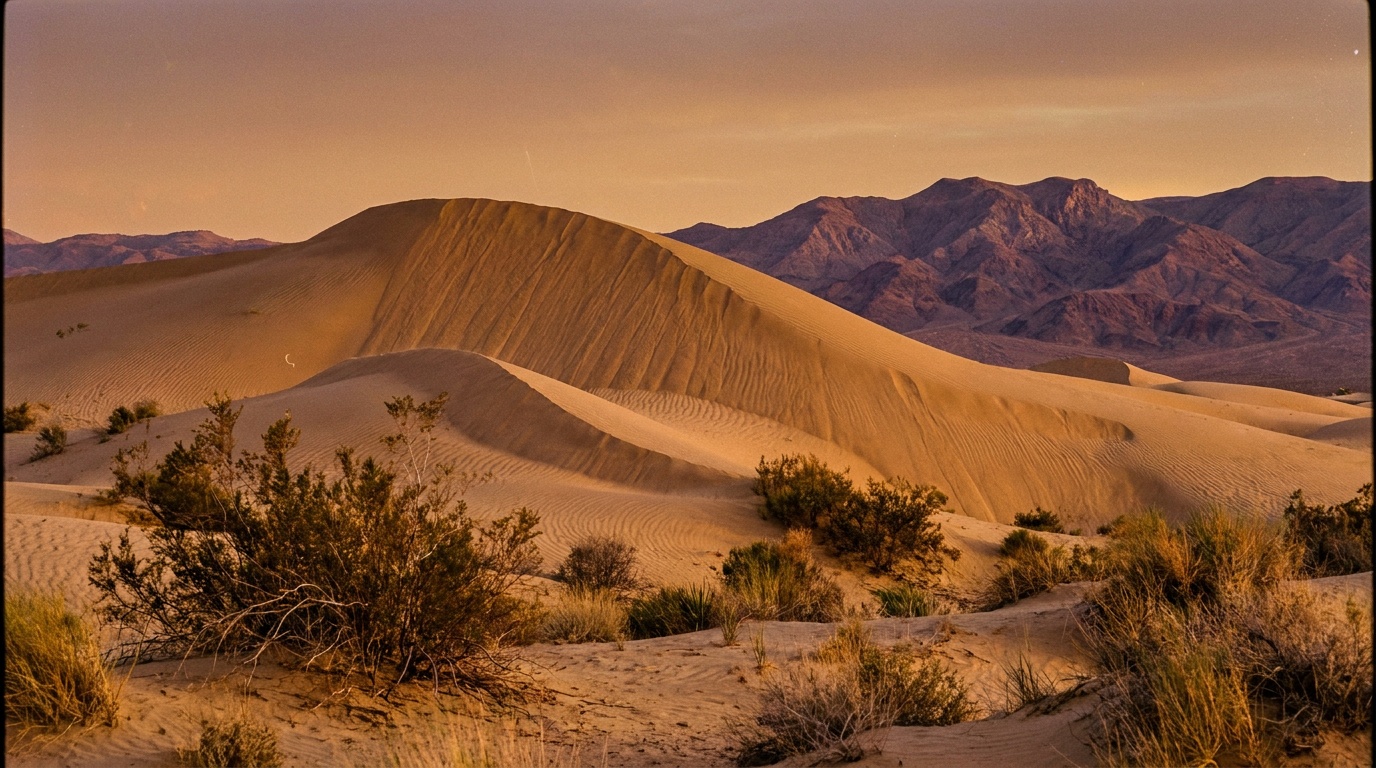
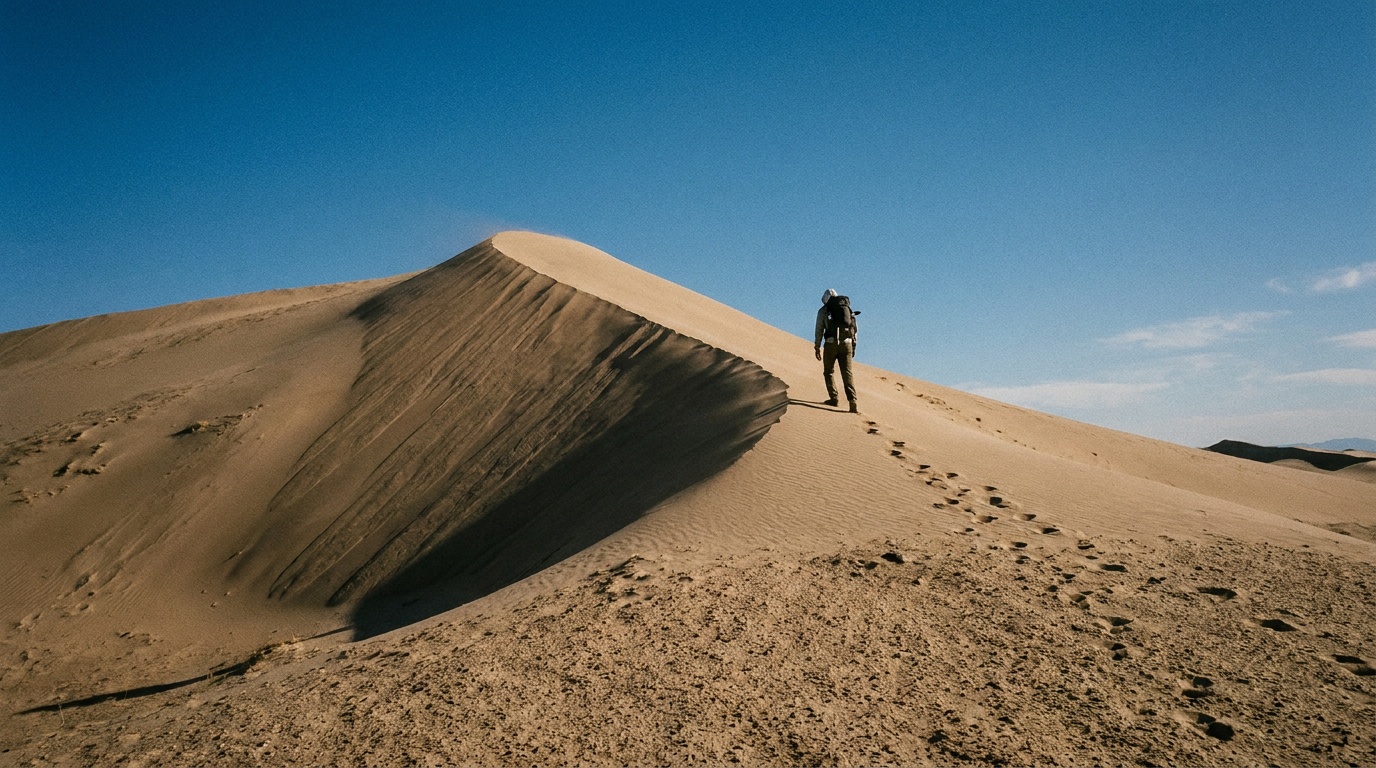
A 650-foot field of singing sand that can boom and rumble as it slides underfoot. The preserve's signature hike.
Kelso Depot Visitor Center
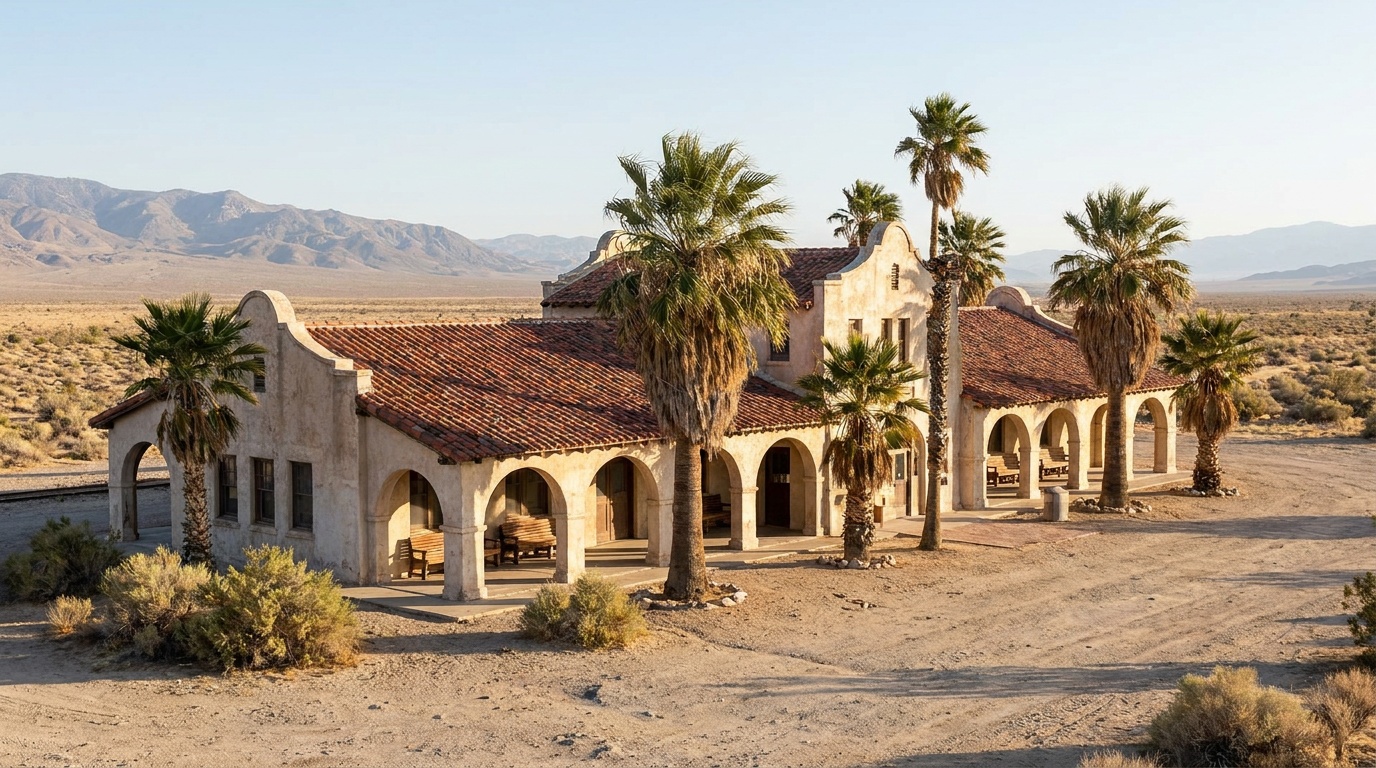
A restored 1920s Spanish-revival rail depot at the heart of the preserve, the main orientation point and a striking photo stop.
Teutonia Peak and the Cima Dome Joshua tree forest
A climb through one of the densest Joshua tree forests on earth to a granite summit with wide desert views.
Anchor the day around Kelso Dunes
Move exposed miles to the morning and keep water, shade, and storm checks ahead of the wish list. For one day in Mojave National Preserve, make Kelso Dunes the non-negotiable, add Kelso Depot Visitor Center only if the first stop runs clean, and keep Teutonia Peak and the Cima Dome Joshua tree forest as the flexible finish.
- 1Start with Kelso Dunes: A 650-foot field of singing sand that can boom and rumble as it slides underfoot. The preserve's signature hike.
- 2Add Kelso Depot Visitor Center: A restored 1920s Spanish-revival rail depot at the heart of the preserve, the main orientation point and a striking photo stop.
- 3Use Teutonia Peak and the Cima Dome Joshua tree forest as the optional finish, not as a reason to rush the whole day.
Where to stay
Inside the preserve, the choices are Hole-in-the-Wall and Mid Hills, two developed first-come campgrounds, plus free dispersed camping at established roadside pullouts used traditionally for that purpose. There is no lodging in the preserve. For a roof, the gateway towns are Baker and Barstow to the west and Primm or Las Vegas to the east, all an hour or more from the interior. Most people who want the real experience camp.
Camping reservations
Camping reservations
Two developed first-come campgrounds plus legal free dispersed camping; either way you carry in all water.
Mojave is one of the easiest NPS units to camp in spontaneously: Hole-in-the-Wall and Mid Hills are first-come developed campgrounds, and free dispersed camping is allowed at established roadside sites, including pullouts near the Kelso Dunes trailhead. The catch is total self-sufficiency, since there is almost no water or fuel anywhere in the preserve.
Reviewed June 11, 2026
Booking window
Developed campgrounds are first-come, first-served. Dispersed camping needs no reservation but must use already-established roadside sites.
- Hole-in-the-Wall is a developed first-come campground at about 4,400 feet, around $12 per night.
- Mid Hills is a higher, cooler developed campground reached on a dirt road, also first-come.
- Free dispersed camping is allowed only at sites traditionally used for it, such as pullouts near Kelso Dunes; do not create new sites.
- There is almost no water, fuel, or cell signal in the preserve, so carry everything and share your plan.
Where to book or verify
NPS page covering both developed campgrounds and the rules for free dispersed camping.
Check for federal campground, backcountry, tour, and permit inventory tied to this park.
Campgrounds to know
Hole-in-the-Wall Campground
Details- Season
- Year-round
- Sites
- Developed first-come tent and RV sites with water, tables, fire rings, and pit toilets.
- The main developed base, near the dramatic Hole-in-the-Wall rings trail.
Mid Hills Campground
Details- Season
- Year-round, road may be rough
- Sites
- Higher-elevation first-come sites reached on a dirt road, cooler than the lowlands.
- A cooler pinyon-juniper setting for hotter shoulder seasons.
Getting there and practical info
Plan the last mile as carefully as the destination.
Airports, roads, entrances, and local movement belong in the same plan.
Getting there
Get to Mojave National Preserve, then move through the park without wasting the day.
- Nearest airport
- Las Vegas (LAS) about 1.5 hours; Ontario (ONT) about 3 hours
- Access rhythm
- Plan the last mile
- Region
- California
Arrival note
Mojave National Preserve sits between Interstate 15 to the north and Interstate 40 to the south, roughly halfway between Los Angeles and Las Vegas.
Car strategy
Kelbaker Road and Cima Road drop south from I-15, and Essex Road and Black Canyon Road climb from I-40, all converging on Kelso Depot in the middle.
Car strategy
Distances are large and services nearly nonexistent, so fuel up in Baker, Barstow, or Primm and carry far more water than you think you need.
Book ahead
- Rental cars at Las Vegas (LAS)Paid link, Economybookings
- Guided tours in Mojave National PreservePaid link, Viator
Paid links: we may earn a commission if you book, at no extra cost to you.
Pair this with lodging: the simplest base is the one that removes a real morning problem, not just the one nearest the map pin.
Plan your trip
Turn Mojave's conditions into water, pack, and sleep-system decisions.
Build around conditions
Let season, elevation, and weather set the plan.
Plan your trip
4 quick tools, already seeded for Mojave National Preserve. Tune the numbers around temperature swings, footing, layers, and how much margin the route needs.
What to pack
Start with the gear decisions this park changes: footing, weather, camping, and water.
Kit Authority
Mojave National Preserve packing list
0 of 24 packed. Check items as you pack, then take this list to the store, trailhead, or campsite.
Pack planning
Decide what Mojave National Preserve asks of your kit before you start checking boxes.
Use this as a constraint check while you are still shaping the trip. The active checklist becomes useful once your route, dates, and sleep plan are set.
- First constraintHydration and exposureWater, Electrolyte mix, hat, sunscreen, sunglasses, 4 more
- Route realityFooting and tractionHiking boots, Hiking socks, Trekking poles
- Load choicePack and carry systemBackpacking pack
- If overnightSleep and shelterBackpacking tent, Sleeping bag, Sleeping pad, 1 more
Checklist mode
24 items, grouped for the trip you are actually taking.
- Dates and season are set.
- Primary route, campground, or lodge is chosen.
- Water, footwear, and overnight needs are sized.
One researched pick
The first gear decision for Mojave National Preserve
A stable daypack is the one purchase that organizes water, layers, food, first aid, and the small safety margin.
We may earn a commission from links on this page, at no extra cost to you. Product prices and availability are accurate as of the date/time indicated and are subject to change. Any price and availability information displayed on Amazon at the time of purchase will apply to the purchase of this product.
THE DAY-HIKE PICK
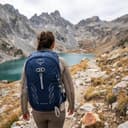
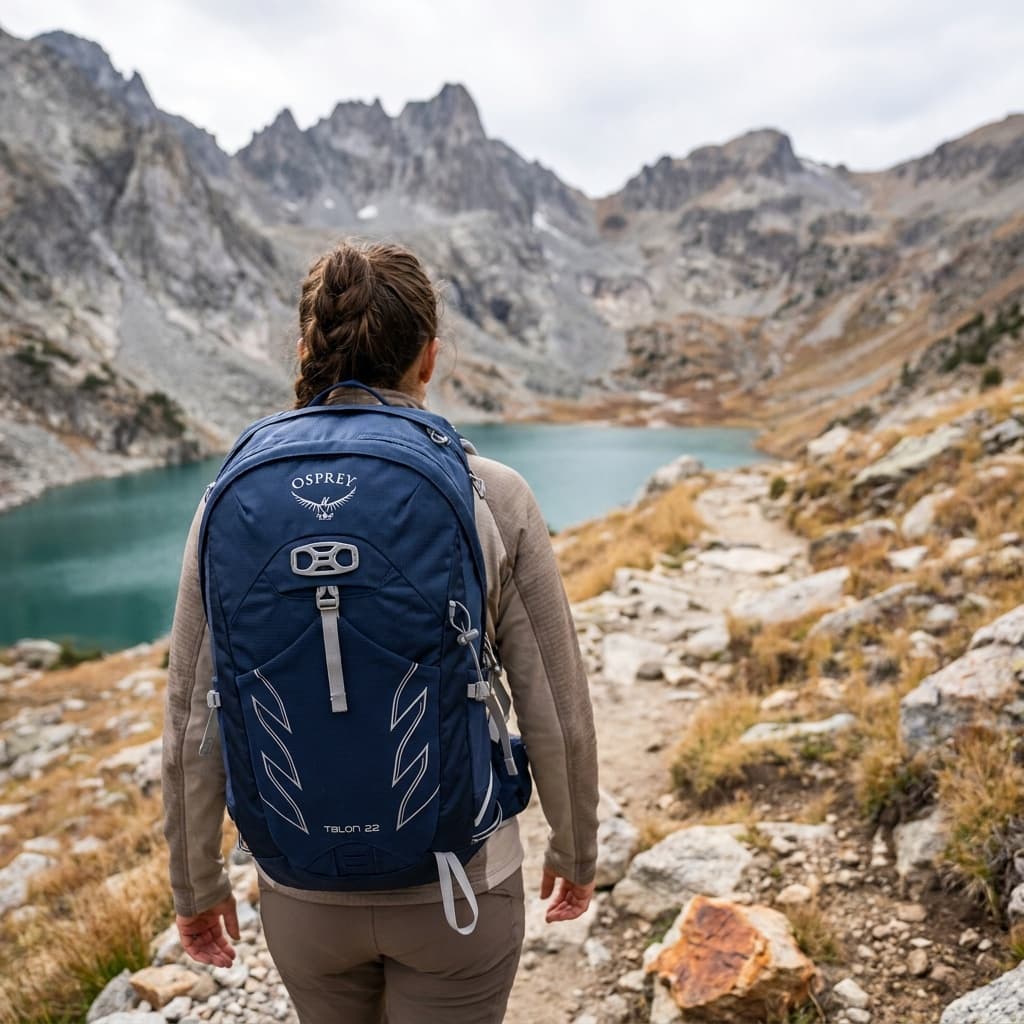
Osprey Talon 22
Best Overall
Kit Score 8.6/10
$169.95 Price checked Oct 26, 7:39 AM CDT
Best for: Hikers who want a proven all-around daypack with solid load support, plenty of adjustment, and a warranty they can actually use.
- Adjustable torso fit covers a wide range of body sizes
- At 2 lb 1 oz it runs heavier than ultralight rivals for the same volume
- Volume
- 22 L
- Weight
- 2 lb 1 oz (945 g)
- Back Panel
- AirScape foam with ventilation channels
- Hipbelt Pockets
- 2 zippered
- Hydration
- Compatible up to 3 L reservoir (sold separately)
- Warranty
- All Mighty Guarantee (lifetime repair or replace)
About this pick
The Talon 22 is the daypack you see on the trail more than any other for good reason: it packs in a padded hipbelt, adjustable torso harness, and dual hipbelt pockets into a 22-liter package that handles loads up to 20 lb without complaint. Owners across hundreds of Amazon ratings consistently cite its adjustability and durability as standouts.
Strengths
- Adjustable torso fit covers a wide range of body sizes
- Padded hipbelt and dual hipbelt pockets at this size are rare
- Osprey lifetime warranty backs years of hard use
Weaknesses
- At 2 lb 1 oz it runs heavier than ultralight rivals for the same volume
- AirScape back panel ventilation is functional but not class-leading compared to suspended-mesh designs
Kit Score breakdown
Gear for Mojave
The buying guides that match what Mojave asks of your kit, with our current top picks across budget and use case.
Can you photograph here? Permit and drone rules
California is the exception: the California Film Commission itself issues free permits for all state property, including state parks, beaches, and highways.
- Permit
- Usually fine for personal shoots; commercial or large productions can need a permit
- Drones
- Commercial drone work requires FAA Part 107
- Land
- Yes: you can photograph what is visible from public space in the US
From our photography sister site, Aperture Authority. Verified 2026-07-01.
Frequently asked questions
Is there an entrance fee for Mojave National Preserve?
No. Mojave has no entrance fee. You only pay if you stay at a developed campground, which is about $12 per night; dispersed camping is free.
Can you camp for free in Mojave National Preserve?
Yes. Free dispersed camping is allowed at sites that have traditionally been used for it, including roadside pullouts near the Kelso Dunes trailhead. Use established spots only, do not create new ones, and pack out everything. There are also two developed campgrounds for a modest fee.
What are the Kelso Dunes?
A 650-foot field of fine sand that can sing, a low boom or rumble produced as the dry sand slides during an avalanche underfoot. The hike to the high crest is about 3 miles round trip and is the preserve's signature outing.
Do I need to bring water to Mojave?
Yes, all of it. The preserve is 1.6 million acres with almost no water, fuel, or cell signal. Carry far more water than you expect to use, fuel up before you enter, and tell someone your route.