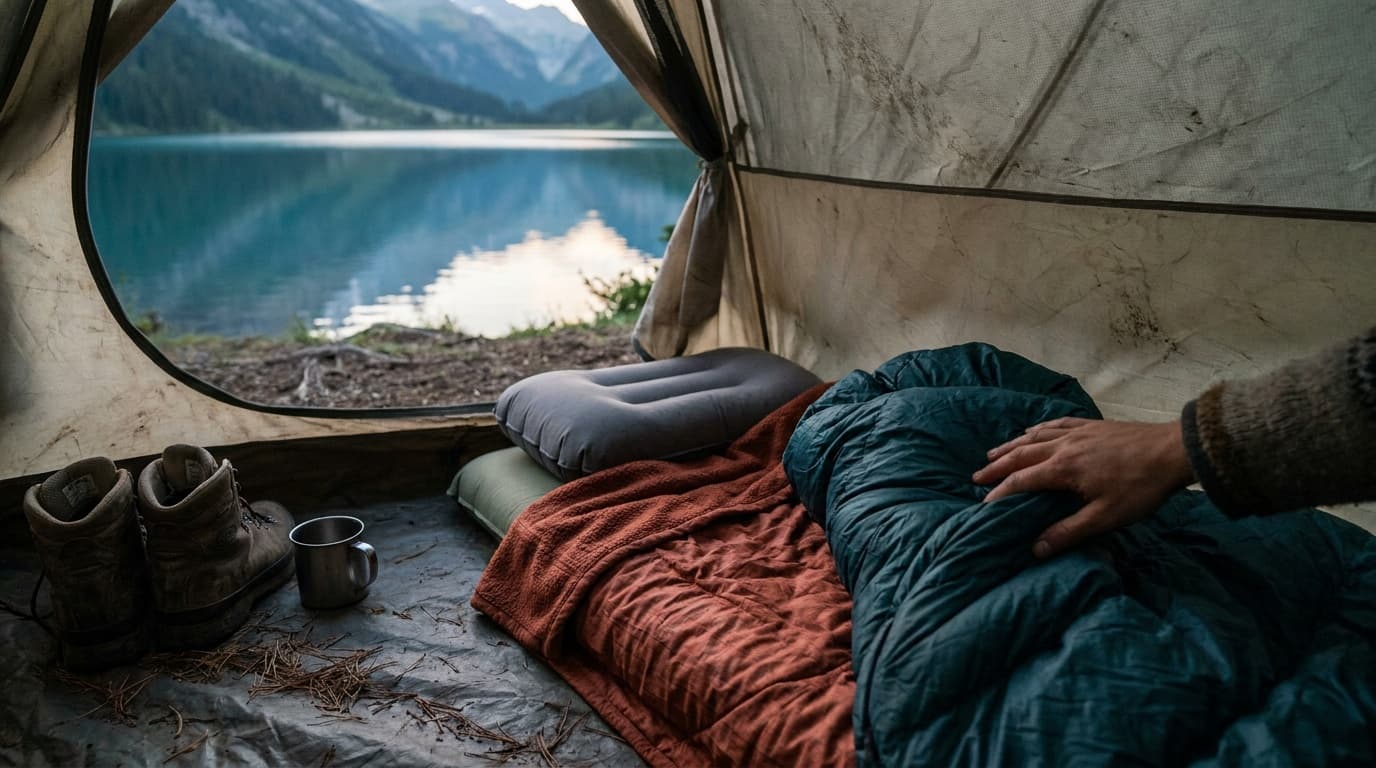
Choosing a camp blanket fill is less dramatic than choosing sleeping bag fill, but the same physics apply and the right answer still depends on how and where you camp.
Warmth-to-weight: where down still leads
Down's thermal efficiency is measured in fill power, a number that describes how much volume one ounce of down occupies. Higher fill power means more air trapped per gram of weight. A 700-fill-power down blanket will be noticeably lighter and more compressible than a synthetic blanket of equivalent warmth.
For reference, a quality synthetic camp blanket like the Kelty Biggie Blanket in the 50°F–55°F comfort range typically weighs around 2–3 lb depending on size. A comparable down blanket can come in under 1.5 lb. That difference matters on backpacking trips or when you are already at your weight limit. For car camping and basecamp trips, it matters much less.
Wet performance: synthetic's biggest advantage
Down clusters trap warm air because they loft. Water destroys that loft by matting the clusters together. A soaked down blanket can lose 30–50% of its insulating value, turning an expensive piece of kit into a cold, clammy weight.
Synthetic fibers hold their structure better when wet because they do not absorb water the way down does. A damp synthetic blanket keeps working. This is the core reason most camp blankets sold in the outdoor market use synthetic fill: campsites involve morning dew, accidental spills, kids dragging gear through grass, and unpredictable rain. The risk of a wet blanket doing nothing useful is real.
If your campsite is reliably dry and you control your gear carefully, down is compelling. If your campsite looks like a family picnic, synthetic is the honest choice.
Water-resistant down (hydrophobic down treated with a durable water-repellent finish) closes some of this gap. Treated down resists light moisture far better than untreated down and buys you time in a brief shower or humid night. It does not eliminate the vulnerability. A soaked hydrophobic down blanket still loses significant loft.
Packability and storage
Down compresses to a much smaller stuff sack. A down blanket for two people can often compress to the size of a large cantaloupe. A synthetic equivalent typically packs to twice that volume or more.
For storage at home, synthetic has a practical edge: it tolerates being stored compressed in a stuff sack for longer periods without losing loft. Down should ideally be stored loose in a large cotton bag or on a shelf, which means more space and more discipline at home.
Packability by use case
Backpacking
Down wins clearly. Every liter of pack space counts and down's compression advantage is real.
Moto and bikepacking
Down again. Panniers and bags have hard volume limits.
Car camping, family
Synthetic is fine. Pack size is a non-issue from a parking lot.
Rental gear / shared blankets
Synthetic only. Laundering ease and resilience to rough handling are the whole game.
Humid climates
Synthetic. Coastal, PNW, Southeast U.S. camping favors synthetic year-round.
Durability and washability
Synthetic fills are more tolerant of machine washing. Most synthetic camp blankets can go straight into a front-load washer on a gentle cycle with standard detergent and come out fine. Doing this repeatedly over a season is not a problem.
Down requires a front-load washer (agitators can tear the baffles), a down-specific or gentle soap, and a long dryer cycle with tennis balls or dryer balls to break up clumped clusters. Done correctly, you can machine-wash down; done carelessly, you get clumped fill and cold spots. The process is slower, more involved, and more likely to be skipped, which leads to degraded performance over time.
In terms of fill longevity, high-quality down outlasts most synthetics when properly cared for. Synthetic fibers degrade with repeated compression and washing, gradually losing loft. That said, a synthetic camp blanket that gets washed regularly and dried properly will easily last several seasons of normal use.
Cost and value
Synthetic fill costs less to source and manufacture than down. That difference shows up clearly in retail prices. A quality synthetic camp blanket like the Rumpl Original Puffy Blanket runs roughly $40–$120 depending on size and brand. A comparable down blanket typically starts around $100 and goes well above $200 for larger or higher fill-power options.
For most buyers, the price gap is a significant factor. A synthetic blanket at $60 that handles your trips reliably is better value than a $180 down blanket that spends most of its life in a garage and occasionally gets rained on.
Frequently asked questions
Why do most camp blankets use synthetic fill instead of down?
Camp blankets spend time in conditions that sleeping bags often avoid: laid out in open air, used as lap blankets near fire rings, draped over multiple people, and shoved into car trunks. Synthetic fill handles moisture, rough treatment, and frequent washing better than down, which makes it a more practical default for gear that sees variable conditions. Down camp blankets exist and are excellent for the right use case, but synthetic is the safer choice for general-purpose camp use.
Can I use a down camp blanket in a humid or wet climate?
You can, with care. Hydrophobic down treatment helps with light moisture, but sustained humidity or rain will compromise warmth meaningfully. If you camp regularly in wet climates, a quality synthetic blanket is more reliable. If you want the weight savings of down and camp in a humid region, plan to keep the blanket dry with a dry bag or waterproof storage and avoid using it in exposed conditions.
Is a down camp blanket worth the extra cost?
For weight-conscious users (backpackers, moto campers, anyone counting ounces), yes. Down delivers more warmth per gram and packs smaller, which justifies the price premium. For car campers, family campers, or anyone who prioritizes easy care and resilience over weight, the premium is harder to justify. Synthetic fill at a lower price point performs well enough for most people in most conditions.
For specific picks across both fill types, see our guide to the best camp blankets. Browse all camp guides or read how we research and rate gear.
Recommended gear
Our current top picks from the Best camp blankets for car camping and the campsite (2026) guide, if you are ready to buy.

Best for: Car campers, festival-goers, and van travelers who want a single blanket that handles cool nights, morning damp, and stadium seating equally well.
- Hands-free Cape Clip and paracord corner loops make it genuinely versatile at the campsite, stadium, or tailgate
- Roll-top stuff sack has a tight opening that can be frustrating in cold conditions
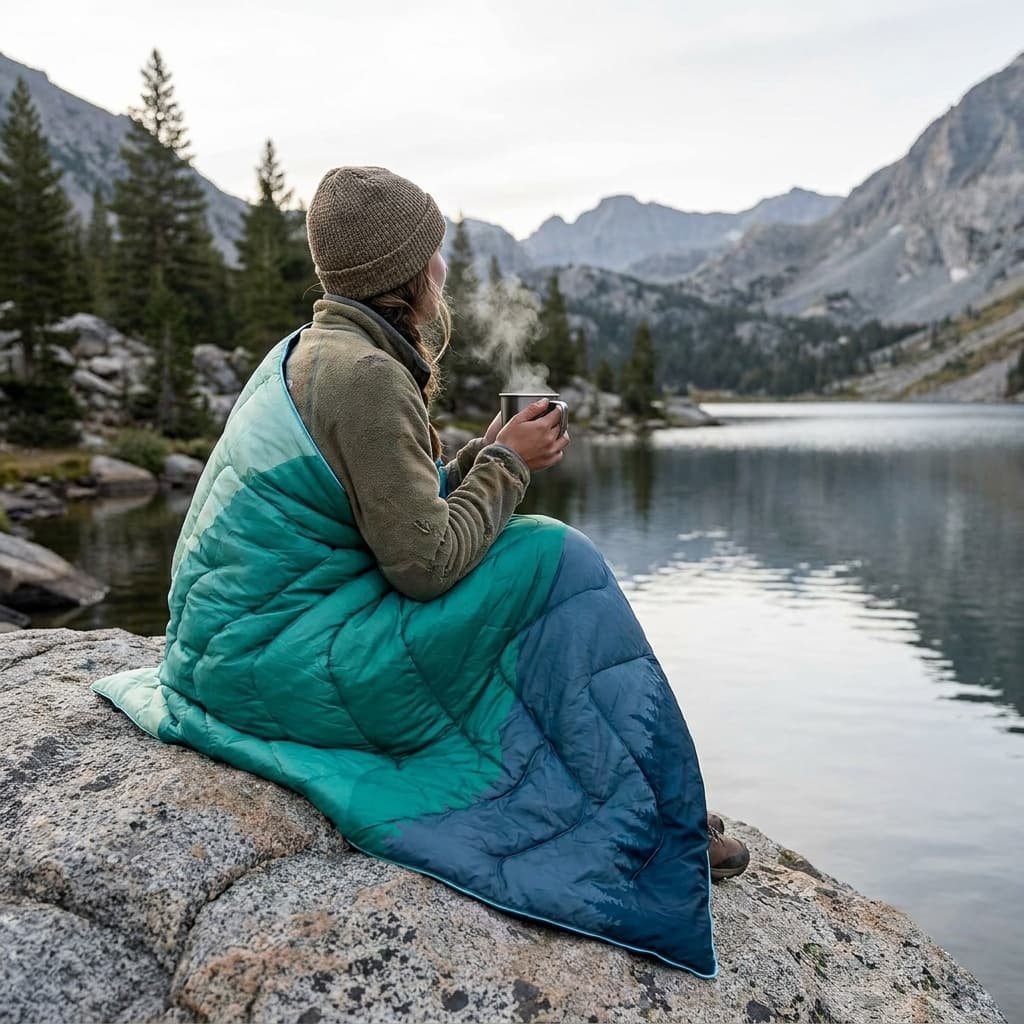
- Material
- 100% recycled 30D ripstop polyester shell, RenewaLoft synthetic insulation (240 gsm)
- Dimensions (1-person)
- 52" x 75"
- Weight (1-person)
- approx. 2.2 lb
- Packed Size
- 7" x 16"
- Water Resistance
- PFAS-free DWR coating
- Care
- Machine washable
About this pick
The Rumpl Original Puffy is a packable synthetic camping blanket built from fully recycled materials, with a ripstop polyester shell treated with a PFAS-free DWR finish. It works as a lap blanket, campfire throw, stadium wrap, or car camping layer down to around 45 F.
Strengths
- Hands-free Cape Clip and paracord corner loops make it genuinely versatile at the campsite, stadium, or tailgate
- Ranked among the warmest synthetic camping blankets in independent lab testing, outperforming many pricier alternatives
- Made from 100+ post-consumer recycled plastic bottles, with a soft yet water-shedding outer shell
Weaknesses
- Roll-top stuff sack has a tight opening that can be frustrating in cold conditions
- Packs bulkier than premium down options at the same warmth level
Kit Score breakdown
Best for: Families and couples doing car camping, glamping, or hammock hangs where weight is not a concern and sharing a blanket around the fire is the whole point.
- Genuine two-person coverage at 82" x 80" with CloudLoft insulation that outperformed pricier competitors in warmth retention testing
- Heavy and bulky relative to its insulation level, making it impractical for any trip where pack weight matters
- Material
- 68D recycled polyester taffeta shell with PFAS-free DWR, 75D recycled polyester pongee liner, CloudLoft ECO synthetic insulation
- Dimensions
- 82" x 80" (fits two adults)
- Weight
- 1 lb 15.2 oz
- Packed Size
- 8.75" x 16"
- Water Resistance
- PFAS-free DWR-coated outer shell
- Care
- Machine washable
About this pick
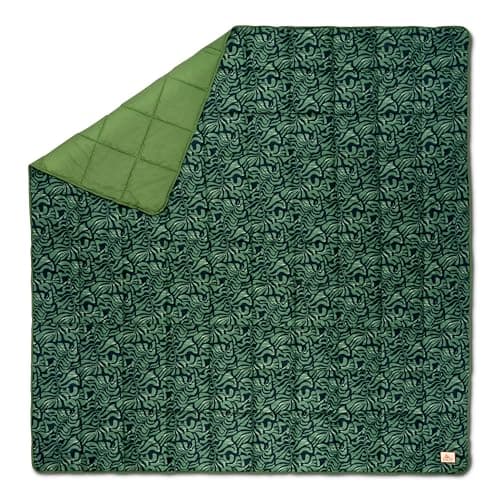
The Kelty Biggie is an oversized two-person camping blanket with CloudLoft ECO insulation sandwiched between a PFAS-free DWR-coated recycled polyester shell and a soft brushed liner. It is big enough to cover a queen airbed and comes with a stuff sack for easy transport.
Strengths
- Genuine two-person coverage at 82" x 80" with CloudLoft insulation that outperformed pricier competitors in warmth retention testing
- Soft brushed liner is noticeably plusher than other budget options, and the DWR outer shell handles light spills and morning dew
- Machine washable and affordably priced, making it a practical pick for families and frequent car campers
Weaknesses
- Heavy and bulky relative to its insulation level, making it impractical for any trip where pack weight matters
- No cape clip, corner loops, or other features found on premium blankets at twice the price
Kit Score breakdown
GLORSIGN
GLORSIGN Outdoor Puffy Camping Blanket
Best Budget
Kit Score 6.8/10
$32.29 Price checked Oct 23, 4:16 PM CDT
Best for: Budget-conscious car campers and tailgaters who want the puffy-blanket experience with DWR protection for casual cool-weather outings.
- Cape clip and corner staking loops are features usually reserved for blankets costing two to three times as much
- Noticeably thinner insulation than premium synthetic options; comfort floor is around 50 F rather than true three-season use
- Material
- 100% recycled polyester shell and insulation, DWR coating
- Dimensions
- 80" x 60"
- Weight
- 1 lb 10.2 oz
- Packed Size
- 15" x 10"
- Water Resistance
- DWR-coated outer shell
- Care
- Machine washable
About this pick
The GLORSIGN Outdoor Puffy Blanket is a budget-friendly recycled polyester throw with a DWR-coated shell, a cape clip for hands-free wearing, and corner loops for staking down. It delivers the core puffy-blanket format at roughly a third of the Rumpl price.
Strengths
- Cape clip and corner staking loops are features usually reserved for blankets costing two to three times as much
- DWR coating sheds light rain and spills effectively for the price tier
- Made from recycled materials and available in mountain-print patterns that look sharp at the campsite or stadium
Weaknesses
- Noticeably thinner insulation than premium synthetic options; comfort floor is around 50 F rather than true three-season use
- Material feel and long-term durability are rated meaningfully lower than Rumpl or Kelty in side-by-side comparisons
Kit Score breakdown
See all picks in Best camp blankets for car camping and the campsite (2026)
Keep going
Related guides
 Complete camp loadoutCar-camping starter kitBuild the complete kit
Researched, not hands-on tested
Updated Jun 4, 2026Our recommendations draw on manufacturer documentation, retailer listings, owner feedback, and comparisons with alternatives.
As an Amazon Associate I earn from qualifying purchases. We may earn a commission from links here, at no extra cost to you. How we research →