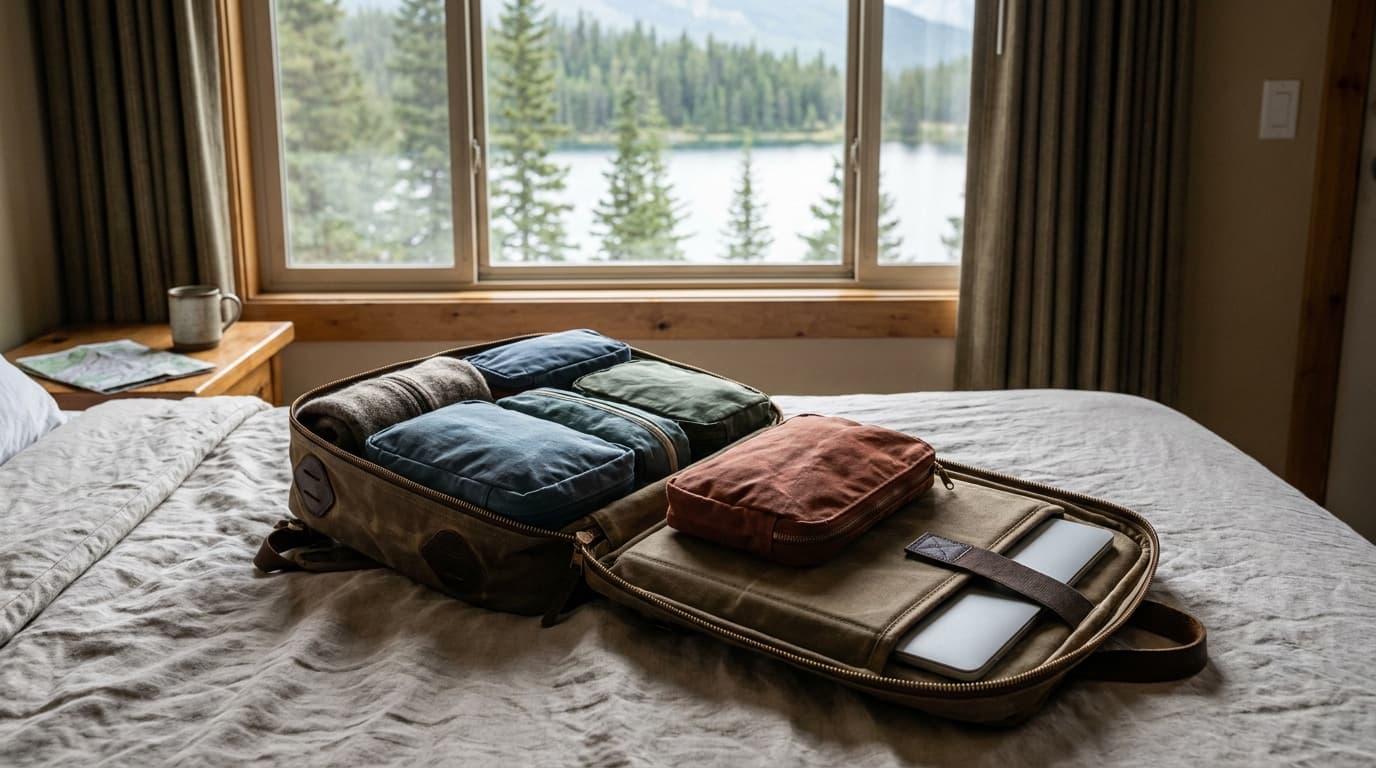
Packing a carry-on well is a learnable skill. Whether you are squeezing a week into a 22-inch bag or just trying to avoid a checked-bag fee, the same principles apply: choose the right items, put them in the right order, and know the rules before you get to the airport.
Know your airline's limits before you pack
The 22 x 14 x 9 inch standard is common across major U.S. carriers, but it is not universal. International carriers, especially European and Asian airlines, frequently add weight limits of 7–10 kg on top of size restrictions. A bag that passes at JFK can get gate-checked in Amsterdam if it hits 11 kg.
Build a habit: look up your specific airline's carry-on policy every time you book, not once and assume it holds forever. Policies change, and budget carriers in particular tend to enforce limits more aggressively. If you are connecting through an international leg, check the most restrictive airline on your itinerary. For a current size comparison across major airlines, see our guide to the best carry-on luggage.
The 3-1-1 liquids rule
Every container of liquid, gel, aerosol, cream, or paste must be 3.4 oz (100 ml) or smaller. All of those containers must fit inside one quart-sized, clear, resealable bag. Each passenger gets one bag. That is the full rule.
The practical implication: your full-size shampoo stays home or goes in a checked bag. Decant into travel-size containers or buy toiletries at your destination.
Exceptions worth knowing: medications, baby formula, and breast milk are exempt from the 3.4 oz limit. Bring them in a reasonable quantity for your trip, declare them separately at the checkpoint, and expect additional screening. These items do not need to go in the quart bag.
Roll vs. fold: the practical rule by garment type
Rolling clothes saves roughly 15–20% more space than flat folding on compressible fabrics. But rolling is not always better. The type of fabric and garment determines the right method.
Roll these: synthetic fabrics (polyester, nylon, merino wool), casual cotton tees, athletic wear, underwear, and socks. These compress well without permanent creasing and unroll flat enough to wear.
Fold these: structured dress shirts, blazers, linen pieces, and anything with a defined collar or shoulder seam. Rolling these creates hard creases that do not shake out easily. Fold them flat, place tissue paper between layers if you are packing something delicate, and lay them on top of the rolled items.
Combining both methods works better than committing to one. Roll the bulk of your clothes to fill the bottom two-thirds of your bag, then fold the two or three structured pieces and lay them across the top.
The best packing method is the one matched to the fabric, not the one you saw in a travel video.
Packing cubes: organization first, compression second
Packing cubes keep your bag from becoming a churned pile of clothes by day two of a trip. That organizational benefit is real and worth the investment. But cubes do not create extra space.
Compression packing cubes like the Eagle Creek Pack-It Isolate do reduce bulk on soft, compressible fabrics by squeezing out air. They are genuinely useful for a bag full of synthetic layers. What they cannot do is compress a hard-sided item, a structured jacket, or a pair of shoes. And a common mistake is compressing everything down so tightly that the bag exceeds a weight limit even though it looks small on the outside. A quick check with a handheld scale catches this, though luggage scales are not always perfectly accurate, so leave a small buffer under the limit.
A practical system: use two or three cubes of different sizes, the way a set like the Osprey UL Packing Cube Set breaks down. One for tops, one for bottoms, one for underwear and socks. Compression cubes go in the base of the bag for the softest items; a regular flat cube sits on top for items you want to grab quickly without unpacking everything.
How to pack a carry-on from scratch
Check limits first
Look up your airline's exact size and weight rules before you pull out a single piece of clothing.
Lay out everything you think you need
Put it all on the bed, then remove one item from each category. Most people overpack by default.
Start with shoes
Place them at the bottom near the wheels, sole to sole, and stuff socks inside to fill dead space.
Roll soft items into cubes
Synthetics, tees, and athletic wear roll tightly. Fill cubes and compress if using compression style.
Fold structured pieces
Lay dress shirts and blazers flat on top of the cubes with collars aligned to avoid collar creases.
Pack toiletries last
Your quart liquids bag goes in an exterior pocket or right on top so you can pull it at security without digging.
Wear your heaviest layer
Put on your thickest jacket, heaviest boots, and chunkiest sweater before you leave for the airport.
Weight distribution: where heavy items go
A poorly distributed bag tips over in the overhead bin and is awkward to lift. Heavy items belong near the bottom of the bag, closest to the wheels, or against the back panel if it is a backpack-style carry-on. That keeps the center of gravity low and stable.
Shoes, toiletry bags, electronics, and charging bricks are the densest items most people pack. Get them in first, near the frame. Clothes go on top and around them. A bag packed this way stands upright on its own and slides into the overhead bin without fighting you.
Wearing bulky items on travel day
Wearing your heaviest gear through the airport is not a trick. It is a legitimate and widely used strategy. A thick down jacket, heavy leather or hiking boots, and a chunky cable-knit sweater can collectively take up a third of a carry-on's volume. On the plane, the jacket goes in the overhead or on your lap, and the boots stay on your feet.
This tactic matters most when you are traveling somewhere cold or when you need that one pair of technical boots for a specific activity. It is also useful on weight-restricted international flights, since worn items do not count toward your bag's weighed limit.
The one-bag mindset
Choosing carry-on only is as much a philosophy as a packing technique. The enabling habits are: build a capsule wardrobe around two or three neutral base colors so every piece pairs with every other piece, limit yourself to two pairs of shoes, and plan outfits before you pack rather than throwing in options.
Avoiding one checked bag saves roughly $90 on a round trip based on standard first-bag fees of around $45 each way on major U.S. carriers. Over several trips a year, that adds up quickly, and carry-on-only also cuts time at baggage claim and eliminates the risk of lost luggage on a tight connection.
The realistic constraint: carry-on only gets harder as trips get longer, climates get more variable, or dress codes get more formal. A week-long business trip in one climate is very achievable. A two-week trip spanning a beach and formal dinners is genuinely difficult. Know where your trip falls on that spectrum before you decide.
What does not belong in a carry-on
Any liquid over 3.4 oz that is not an exempt medication or formula. Sharp items flagged by TSA (scissors with blades longer than 4 inches, box cutters, most tools). Anything that would push the bag over a weight limit on an international carrier. And practically speaking: items you will definitely need at your destination but can easily buy there, like full-size toiletries or a cheap umbrella.
Do packing cubes actually save space, or just keep things organized?
Mostly the latter. Standard packing cubes organize your bag and keep clothes from shifting, which can reduce wrinkles and make unpacking faster at your destination. Compression packing cubes do reduce bulk on soft fabrics by squeezing out air, but they do not create extra volume inside the bag. The bigger risk with compression cubes is packing them so tightly that you push the bag over a weight limit while it still looks compact from the outside.
Can I bring a full-size shampoo bottle if I put it in a checked bag?
Yes. The TSA 3-1-1 rule applies only to carry-on bags. In a checked bag, liquids have no size restriction under TSA rules, though airlines prohibit certain flammable or pressurized items regardless of bag type. If you are traveling carry-on only, decant shampoo into containers of 3.4 oz or less, or plan to buy toiletries at your destination. For trips of a week or more, buying locally is often cheaper than the effort of managing tiny bottles.
What is the best way to pack shoes in a carry-on?
Wear your bulkiest pair on travel day and pack a second pair in the bag. Place the packed shoes at the bottom near the wheels, sole to sole or sole facing outward, and stuff socks inside to fill dead space. Use a shoe bag or a shower cap over the soles to keep the rest of your clothes clean. Two pairs is the practical limit for most carry-on trips: one worn, one packed.
For gear recommendations, see our best carry-on luggage guide. Browse all travel gear or learn how we research and rate the products and advice on this site.
Recommended gear
Our current top picks from the Best carry-on luggage 2026: 8 bags checked against airline limits guide, if you are ready to buy.
TRAVELPRO
Travelpro Platinum Elite 21-Inch Softside Expandable Spinner
Best Overall
Kit Score 9.0/10
$389.99 Price checked Oct 23, 4:16 PM CDT
Best for: Frequent flyers who pack a jacket or work clothes, fly mainline carriers, and want a warranty that covers airline damage.
- Top soft-sided pick at Wirecutter and Outdoor Gear Lab
- 23.5 inches tall overall, so it can fail a strict 22 inch sizer
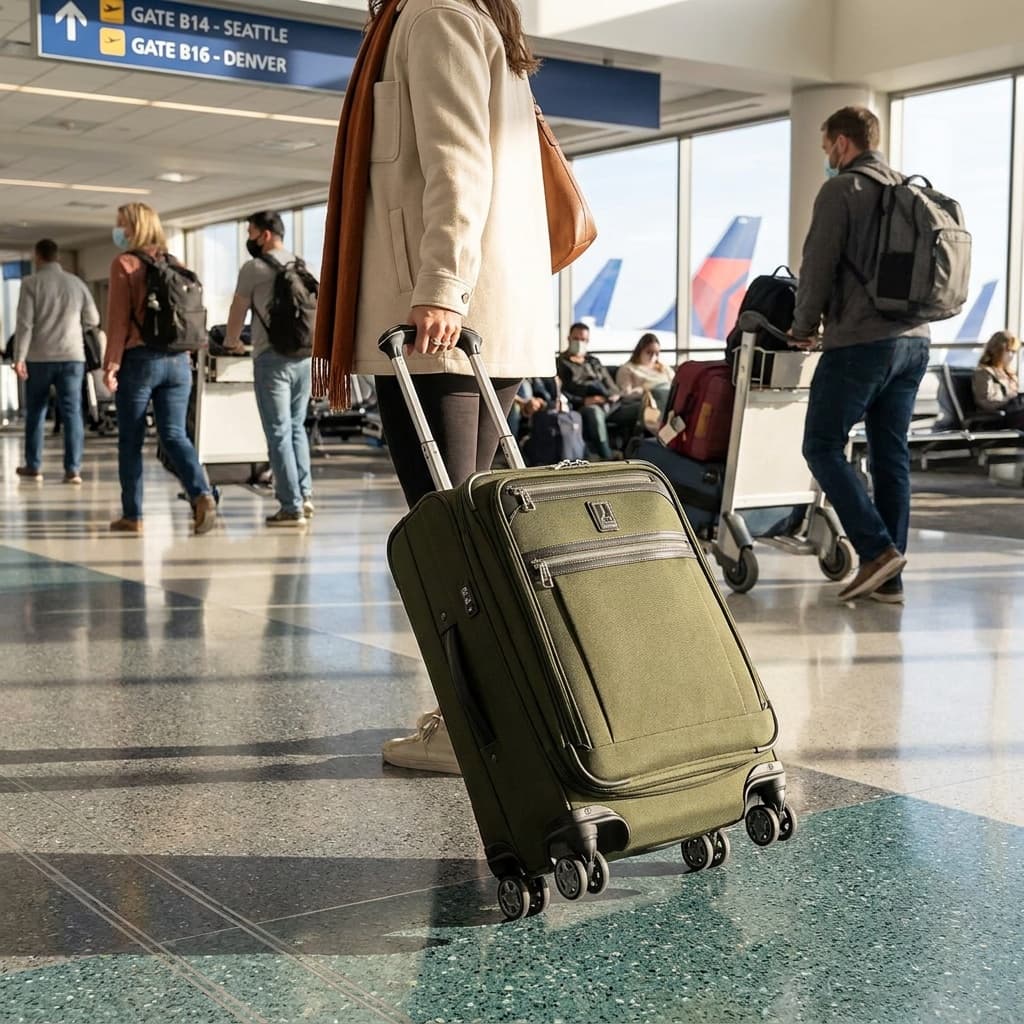
- Case dimensions
- 21" x 14" x 9"; 23.5" x 14.5" x 9" overall with wheels and handle (Travelpro)
- Expansion
- Up to 2" (Travelpro)
- Weight
- 7.8 lbs
- Capacity
- 46 L (manufacturer); 40 L (Outdoor Gear Lab measured main compartment)
- Shell material
- Nylon with DuraGuard coating
- Wheels
- 8-wheel MagnaTrac self-aligning 360-degree dual spinner
About this pick
The Platinum Elite is Travelpro's top softside carry-on and the top soft-sided pick at both Wirecutter and Outdoor Gear Lab. It pairs a drop-in suiter and 2 inches of expansion with eight MagnaTrac spinner wheels, and Travelpro's warranty adds airline damage coverage once you register the bag. The 21 x 14 x 9 inch case grows to 23.5 inches tall with wheels and handle.
More specifications
- Warranty
- Limited lifetime; airline damage covered when registered within 120 days
Strengths
- Top soft-sided pick at Wirecutter and Outdoor Gear Lab
- Drop-in suiter keeps a jacket or dress shirts flatter than rolled clothes
- Warranty covers airline damage once registered, which most rivals exclude
Weaknesses
- 23.5 inches tall overall, so it can fail a strict 22 inch sizer
- 7.8 lb empty, about 2.4 lb more than the Maxlite 5
Kit Score breakdown
AWAY
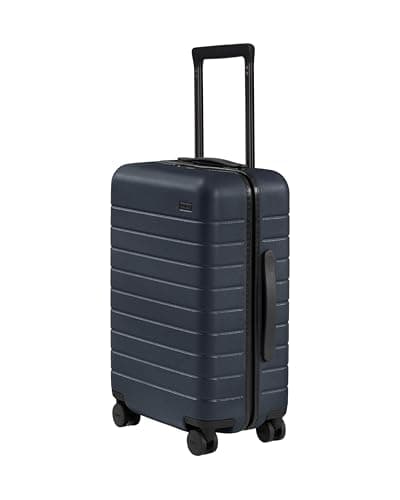
Away The Carry-On 22-Inch Hardside Spinner
Best Hardside
Kit Score 8.5/10
$275.00 Price checked Oct 23, 4:16 PM CDT
Best for: Travelers who want a durable, polished hardside bag they can use for years and check in knowing the shell will protect contents.
- Dense polycarbonate shell resisted cracking and denting in independent reviews
- Does not expand, limiting packing flexibility versus comparable softside options
- Exterior dimensions
- 22" x 14.4" x 9.1" including wheels and handles (Away)
- Interior dimensions
- 20.1" x 13.9" x 7.5" (Away)
- Weight
- 7.5 lbs
- Capacity
- 41 L (Away); 35.5 L measured by Outdoor Gear Lab
- Shell material
- 100% polycarbonate hardshell
- Wheels
- 4-wheel 360-degree spinner
About this pick
Away's carry-on pairs a polycarbonate shell with a compression panel, a built-in TSA lock, and four spinner wheels. Wirecutter names it its top hard-sided carry-on and Outdoor Gear Lab its favorite hardside. Away lists 22 x 14.4 x 9.1 inches including wheels and handles, a hair over the 22 x 14 x 9 inch template.
More specifications
- Lock
- TSA-approved combination lock, built-in
- Warranty
- LifetimeCare for purchases from April 14, 2026: five years of free repairs, up to one replacement, then paid repairs
Strengths
- Dense polycarbonate shell resisted cracking and denting in independent reviews
- WhisperGlide spinner wheels are consistently quiet and track straight
- Compression panel keeps contents flat and reduces overpacking tension on zipper
Weaknesses
- Does not expand, limiting packing flexibility versus comparable softside options
- Grab handles are narrow and can be uncomfortable for larger hands
Kit Score breakdown
TRAVELPRO
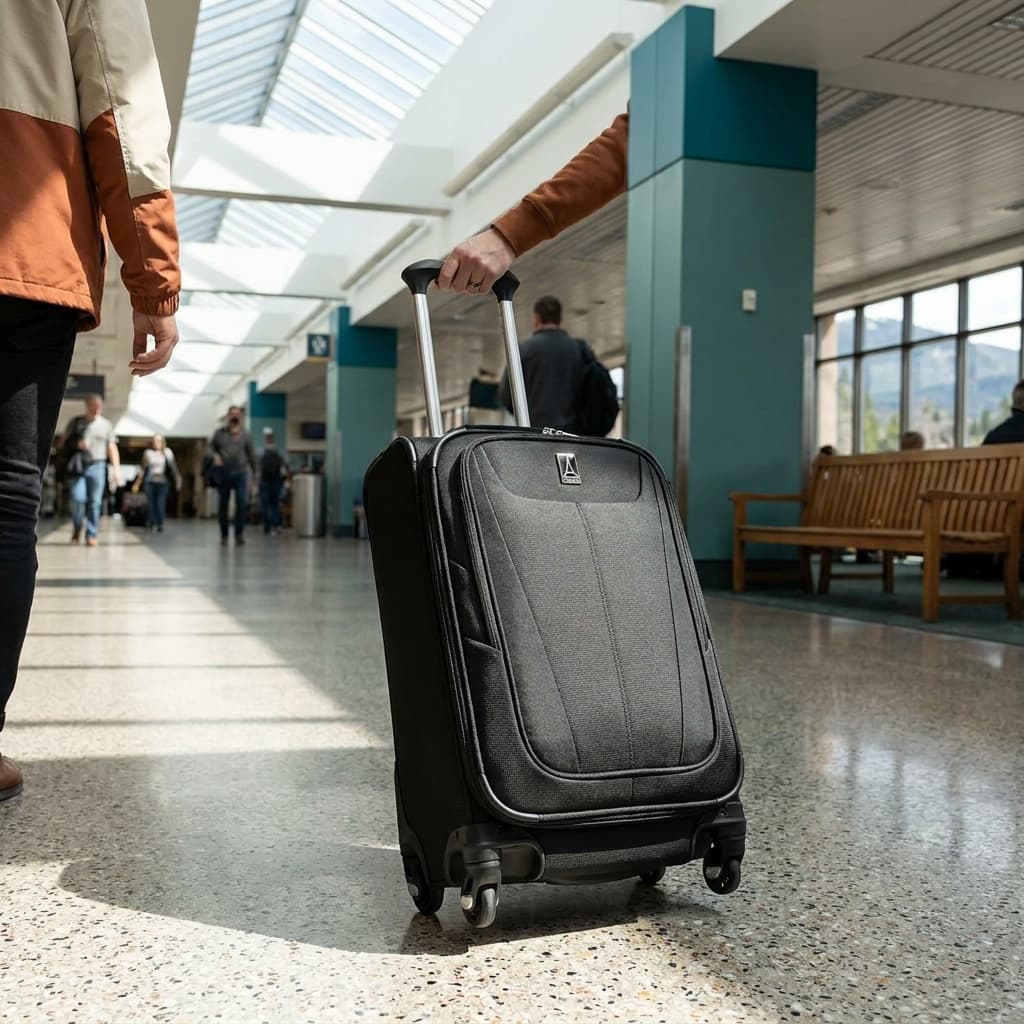
Maxlite 5 21-Inch Softside Expandable Spinner
Best Value
Kit Score 8.4/10
$160.00 Price checked Oct 23, 4:16 PM CDT
Best for: Frequent travelers who prioritize low bag weight to maximize packing allowance on weight-limited international routes.
- Lightest carry-on in its class at this price
- Wheel housings feel less robust than the rest of the bag
- Overall dimensions
- 23" x 14.5" x 9"
- Case dimensions (packing body only)
- 21" x 14" x 9" (Travelpro)
- Weight
- 5.4 lbs
- Capacity
- 46 L
- Shell material
- Polyester with Duraguard water and stain-resistant coating
- Wheels
- 4-wheel 360-degree spinner
About this pick
The Maxlite 5 is among the lightest spinner carry-ons in its price range, built on Travelpro's flight-crew heritage. At 5.4 lbs it leaves meaningful headroom before most domestic and international cabin weight limits.
More specifications
- Expansion
- Expands up to 2 inches
Strengths
- Lightest carry-on in its class at this price
- Duraguard-coated fabric resists scuffs and stains well
- Four spinner wheels roll quietly on flat airport floors
Weaknesses
- Wheel housings feel less robust than the rest of the bag
- Slightly oversized for the most restrictive international sizers when expanded
Kit Score breakdown
See all picks in Best carry-on luggage 2026: 8 bags checked against airline limits
Keep going
Complete loadoutCarry-on travel kitA one-week suitcase system with the bag, organization, laundry, toiletries, security, scale, and power.Free tool: Packing Cube Fit Checker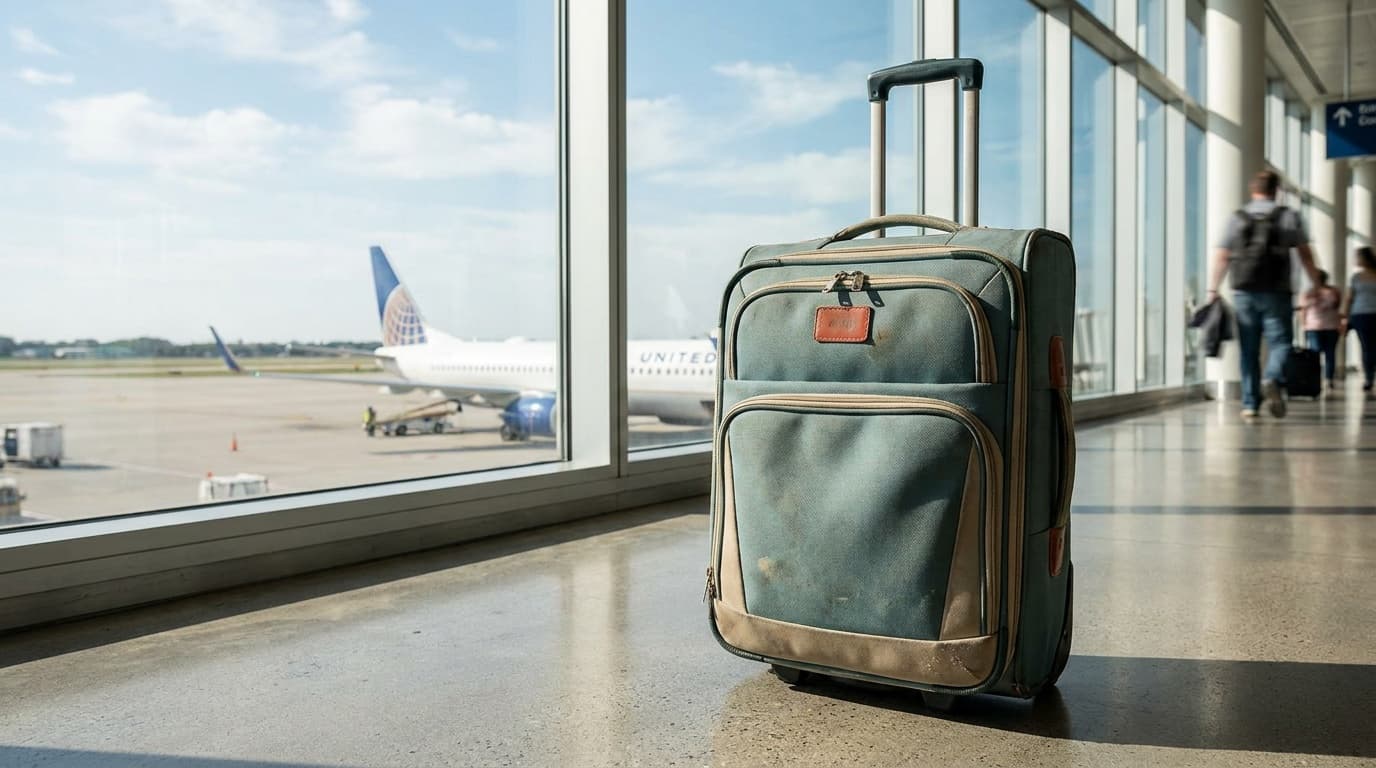
Researched, not hands-on tested
Updated Jun 3, 2026Our recommendations draw on manufacturer documentation, retailer listings, owner feedback, and comparisons with alternatives.
As an Amazon Associate I earn from qualifying purchases. We may earn a commission from links here, at no extra cost to you. How we research →