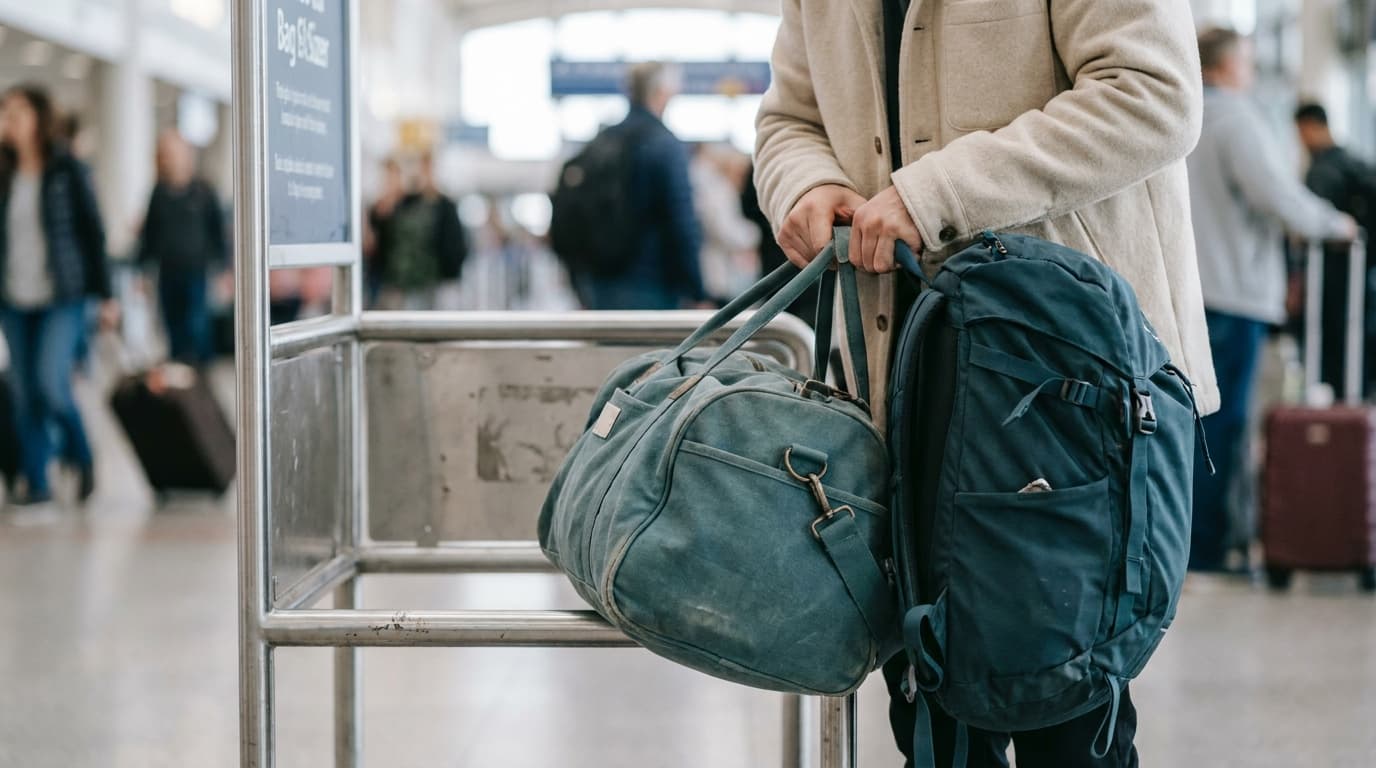
Checked bag fees have quietly become one of the most avoidable travel costs, yet most passengers pay them. A single round trip on Delta or United now runs $80–$100 in first-bag fees alone, and Southwest's legendary free-bag era ended in May 2025.
What checked bags actually cost in 2025–2026
Delta and United charge $45 prepaid or $50 at the airport counter for the first checked bag each way. The second bag steps up to $55. On a round trip for two people each checking one bag, that is $180 before you reach the gate.
Southwest ended its two-free-bags policy on May 28, 2025. Today, only Choice Extra fare holders and A-List Preferred members still receive two free bags. Standard passengers pay.
Ultra-low-cost carriers operate under a different model entirely. Frontier's base fares include only a personal item. A carry-on that goes in the overhead bin is a paid add-on: Frontier charges $35–$79 depending on when you pay. (Spirit, long the other big ultra-low-cost carrier, stopped flying on May 2, 2026.) The lesson here is simple: on a budget carrier, the base fare is not the total fare unless you pack to the personal item limit.
Know the two free dimensions
Every US airline includes one personal item at no charge on every fare. The typical personal item limit is 18 x 14 x 8 inches, small enough to fit under the seat in front of you. Backpacks, laptop bags, compact duffels, and wheeled underseaters like the Travelpro Maxlite 5 Rolling Underseat all qualify. For more options sized to the personal item slot, see our roundup of the best underseat luggage.
The standard overhead carry-on limit across most major US carriers is 22 x 14 x 9 inches (total exterior, including wheels and handles). At Delta, United, and American, that carry-on is free. At Frontier, it is not.
The number that trips people up: wheels and handles count. A bag whose wheels protrude 2–4 cm beyond the shell can push you over the limit at a gate sizer. Measure with wheels extended, handles raised. Then leave a small margin.
Pack to the personal item and skip the overhead bin
The personal item slot is the fee-proof foundation. A 40L backpack packed well fits the 18 x 14 x 8 inch limit on most airlines and travels as your single free item everywhere.
Packing to the personal item limit
Weigh every item before it goes in
A base of merino wool layers, a single pair of shoes on your feet, and two or three versatile bottoms will cover five to seven days. Resist the instinct to "just in case" your way to 45L.
Use packing cubes to compress, not to fit more
Compression cubes like the [Gonex Compression Packing Cubes](/api/go?product=gonex-compression-packing-cubes-4pc&retailer=amazon&article=how-to-avoid-checked-bag-fees) reduce bulk without adding weight. They also make the security tray faster because you lift out one cube instead of unpacking the whole bag.
Wear your heaviest and bulkiest items
A jacket, fleece, and boots worn through security and onto the plane cost zero bag space. As of mid-2025, TSA no longer requires shoes off at standard checkpoints nationwide. Footwear with heavy metal hardware may still trigger additional screening, so a zippered boot clears faster than a lace-up with metal eyelets.
Roll or fold, then test the sizer at home
Most airlines publish sizer dimensions. Set up a cardboard template at home and confirm your packed bag drops in cleanly before you leave for the airport.
Co-branded airline cards: the highest-ROI approach
If you check a bag more than once or twice a year, a co-branded airline card pays for itself immediately.
Delta Amex Gold cardholders receive a free first checked bag on Delta flights for themselves and up to eight companions on the same reservation. Critically, you do not need to pay for the flight with the card to unlock the benefit. On a family trip of four, one round trip saves $320 in first-bag fees. The card's annual fee is around $150.
The United Explorer Card offers the same free-first-bag structure, but United requires payment with the card to trigger the benefit. American's co-branded cards (Citi and Barclays) work similarly to Delta: no pay-with-card requirement.
One round trip's first-bag savings ($80–$100) typically covers or exceeds the annual fee on a co-branded airline card. For group travel, the math gets more decisive: the Delta Amex Gold extends the benefit to up to eight companions on the same reservation.
Entry-level elite status (Delta Silver Medallion, United Premier Silver) also waives the first checked bag fee and covers companions on the same reservation. If you are close to a status threshold, the bag savings alone can justify a mileage run.
The gate-check gamble
Airlines now proactively solicit gate checks before the overhead bins are actually full, targeting passengers in later boarding groups. The ask sounds voluntary. It rarely is by group 4 or 5.
If your bag passes the overhead sizer but you board late, the bins may be full and your bag goes below. That is usually free. The expensive scenario is a bag that fails the gate sizer because wheels or handles push it over the stated limit. American, for example, can charge up to $100 at the gate for an oversized carry-on.
The defense is straightforward: board early. Priority boarding comes with elite status, co-branded credit cards on most airlines, or a fare upgrade. A compliant bag that boards in group 1 or 2 almost never gets gate-checked.
If you need to check a bag on a trip where you do not have a card benefit or status, prepay online before you arrive. Airport counter and gate fees are consistently $5–$20 higher than prepaid rates across all major carriers.
Quick comparison by carrier type
Fee structure by airline type
Legacy carriers (Delta, United, American)
Carry-on is free. First checked bag runs $45–$50 each way prepaid. A co-branded card eliminates the fee. Status waives it for you and your group.
Southwest (post-May 2025)
Carry-on is free. First and second checked bags are paid for standard fares. Choice Extra fare and A-List Preferred still get two free bags. No co-branded card benefit on the scale of Delta or United.
Ultra-low-cost (Frontier)
Personal item only on base fares. A carry-on is a paid add-on. Buy it at booking, not at the gate. Sizer enforcement is strict. Measure with wheels and handles included.
What is the largest bag I can bring for free on any US airline?
Every US airline includes one personal item at no charge on every fare class, including Frontier basic fares. The typical limit is 18 x 14 x 8 inches: must fit under the seat in front of you. Backpacks, laptop bags, and small duffels all qualify. A carry-on that goes in the overhead bin is free on most major carriers (Delta, United, American) but is a paid add-on on Frontier unless you buy a bundle at booking.
Does an airline credit card actually save money on checked bags?
Yes, in most cases it pays for itself quickly. A co-branded Delta, American, or United card typically costs $95–$150 per year in annual fees. The free first checked bag benefit saves $80–$100 on a single round trip. If you check a bag more than once or twice a year, the card pays for itself. Delta and American extend the benefit to up to eight companions on the same reservation, which multiplies the savings on group travel. United requires you to pay for the flight with the card to unlock the benefit.
Can airlines charge me to gate-check a bag I brought as a carry-on?
Yes. If your carry-on fails the gate sizer (wheels and handles count toward total dimensions), airlines including American can charge up to $100 at the gate. Airlines also proactively solicit gate checks from later boarding groups before bins are actually full. To avoid this: measure your bag with wheels and handles included and leave a small margin below the stated limit, then board as early as possible. A bag that clears the sizer and boards in group 1 or 2 almost never gets gate-checked.
For specific bag picks that hit the personal item and carry-on limits, see our guide to the best carry-on luggage. Browse all travel gear guides or read how we research and rate gear at Kit Authority.
Recommended gear
Our current top picks from the Best carry-on luggage 2026: 8 bags checked against airline limits guide, if you are ready to buy.
TRAVELPRO
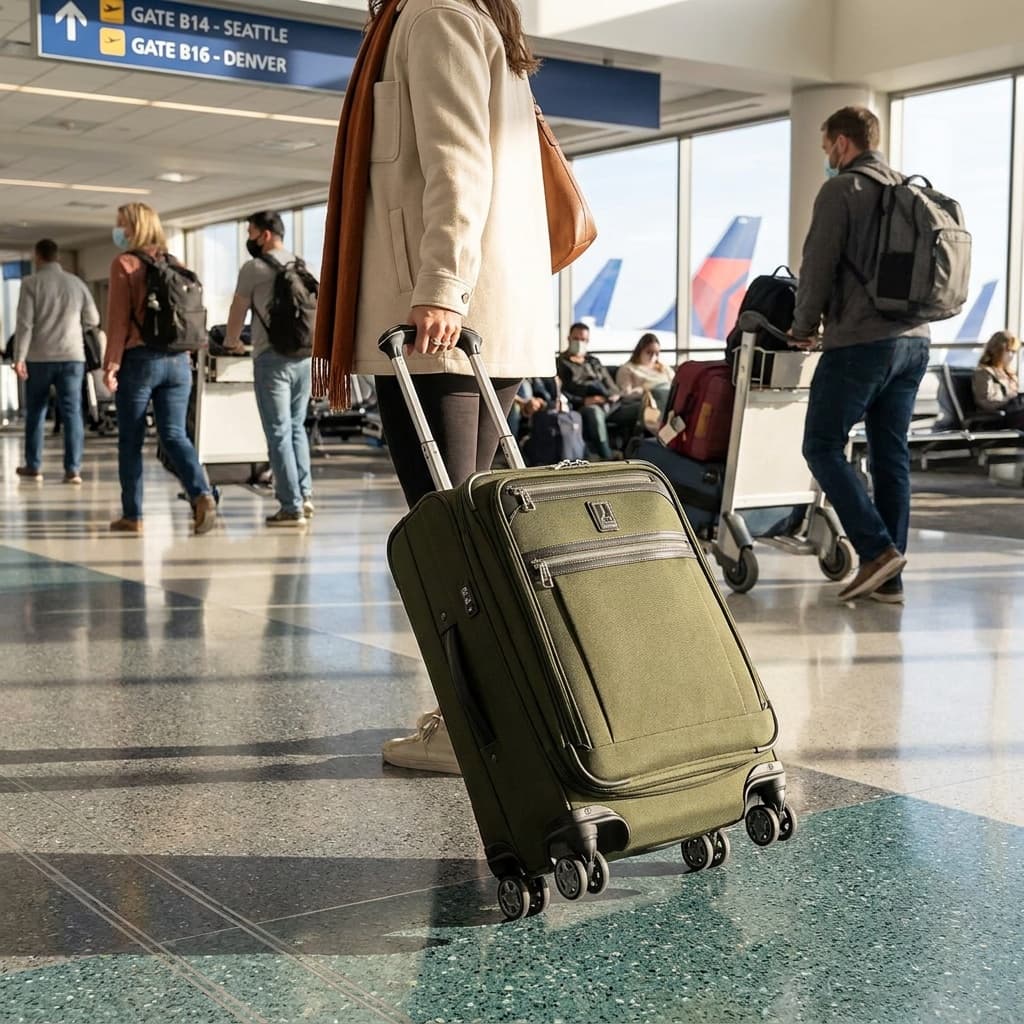
Travelpro Platinum Elite 21-Inch Softside Expandable Spinner
Best Overall
Kit Score 9.0/10
$389.99 Price checked Oct 23, 4:16 PM CDT
Best for: Frequent flyers who pack a jacket or work clothes, fly mainline carriers, and want a warranty that covers airline damage.
- Top soft-sided pick at Wirecutter and Outdoor Gear Lab
- 23.5 inches tall overall, so it can fail a strict 22 inch sizer
- Case dimensions
- 21" x 14" x 9"; 23.5" x 14.5" x 9" overall with wheels and handle (Travelpro)
- Expansion
- Up to 2" (Travelpro)
- Weight
- 7.8 lbs
- Capacity
- 46 L (manufacturer); 40 L (Outdoor Gear Lab measured main compartment)
- Shell material
- Nylon with DuraGuard coating
- Wheels
- 8-wheel MagnaTrac self-aligning 360-degree dual spinner
About this pick
The Platinum Elite is Travelpro's top softside carry-on and the top soft-sided pick at both Wirecutter and Outdoor Gear Lab. It pairs a drop-in suiter and 2 inches of expansion with eight MagnaTrac spinner wheels, and Travelpro's warranty adds airline damage coverage once you register the bag. The 21 x 14 x 9 inch case grows to 23.5 inches tall with wheels and handle.
More specifications
- Warranty
- Limited lifetime; airline damage covered when registered within 120 days
Strengths
- Top soft-sided pick at Wirecutter and Outdoor Gear Lab
- Drop-in suiter keeps a jacket or dress shirts flatter than rolled clothes
- Warranty covers airline damage once registered, which most rivals exclude
Weaknesses
- 23.5 inches tall overall, so it can fail a strict 22 inch sizer
- 7.8 lb empty, about 2.4 lb more than the Maxlite 5
Kit Score breakdown
AWAY
Away The Carry-On 22-Inch Hardside Spinner
Best Hardside
Kit Score 8.5/10
$275.00 Price checked Oct 23, 4:16 PM CDT
Best for: Travelers who want a durable, polished hardside bag they can use for years and check in knowing the shell will protect contents.
- Dense polycarbonate shell resisted cracking and denting in independent reviews
- Does not expand, limiting packing flexibility versus comparable softside options
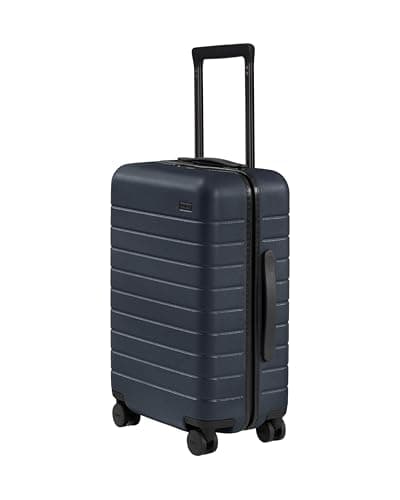
- Exterior dimensions
- 22" x 14.4" x 9.1" including wheels and handles (Away)
- Interior dimensions
- 20.1" x 13.9" x 7.5" (Away)
- Weight
- 7.5 lbs
- Capacity
- 41 L (Away); 35.5 L measured by Outdoor Gear Lab
- Shell material
- 100% polycarbonate hardshell
- Wheels
- 4-wheel 360-degree spinner
About this pick
Away's carry-on pairs a polycarbonate shell with a compression panel, a built-in TSA lock, and four spinner wheels. Wirecutter names it its top hard-sided carry-on and Outdoor Gear Lab its favorite hardside. Away lists 22 x 14.4 x 9.1 inches including wheels and handles, a hair over the 22 x 14 x 9 inch template.
More specifications
- Lock
- TSA-approved combination lock, built-in
- Warranty
- LifetimeCare for purchases from April 14, 2026: five years of free repairs, up to one replacement, then paid repairs
Strengths
- Dense polycarbonate shell resisted cracking and denting in independent reviews
- WhisperGlide spinner wheels are consistently quiet and track straight
- Compression panel keeps contents flat and reduces overpacking tension on zipper
Weaknesses
- Does not expand, limiting packing flexibility versus comparable softside options
- Grab handles are narrow and can be uncomfortable for larger hands
Kit Score breakdown
TRAVELPRO
Maxlite 5 21-Inch Softside Expandable Spinner
Best Value
Kit Score 8.4/10
$160.00 Price checked Oct 23, 4:16 PM CDT
Best for: Frequent travelers who prioritize low bag weight to maximize packing allowance on weight-limited international routes.
- Lightest carry-on in its class at this price
- Wheel housings feel less robust than the rest of the bag
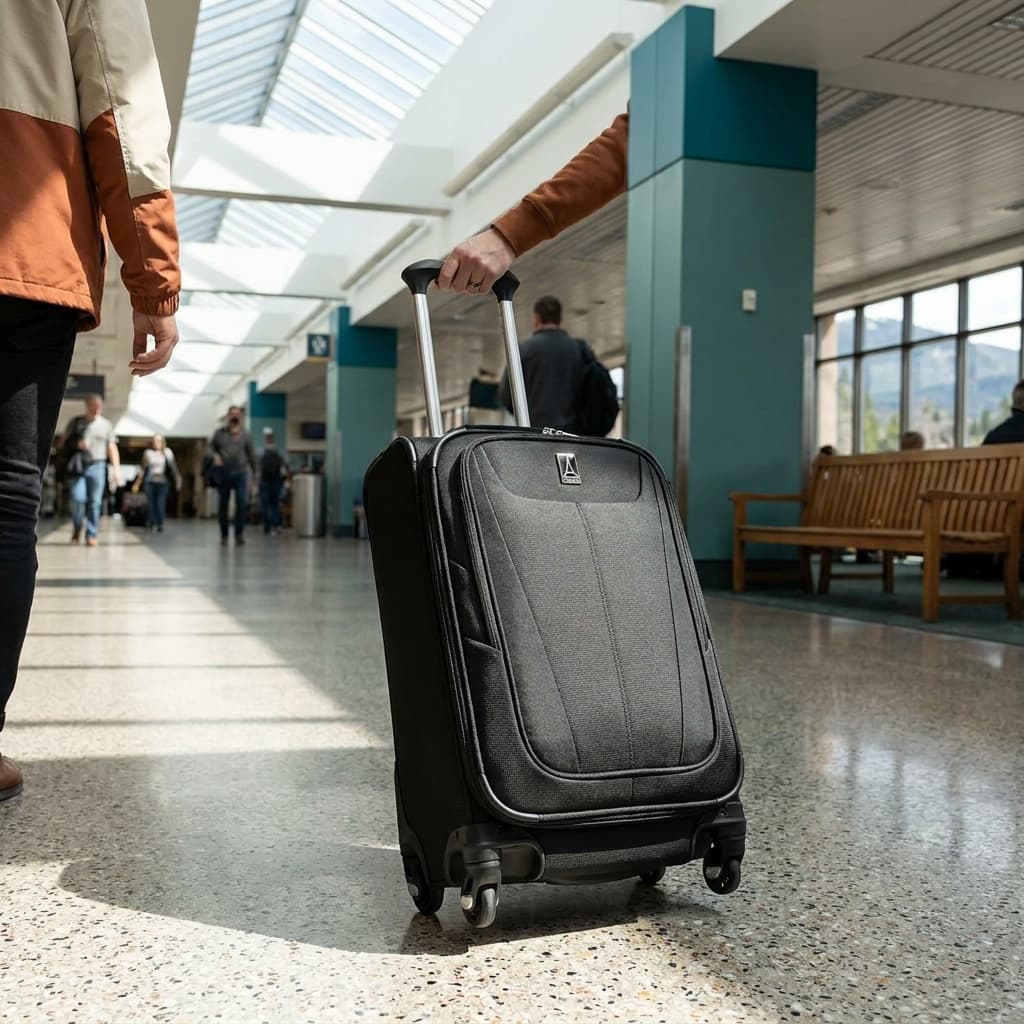
- Overall dimensions
- 23" x 14.5" x 9"
- Case dimensions (packing body only)
- 21" x 14" x 9" (Travelpro)
- Weight
- 5.4 lbs
- Capacity
- 46 L
- Shell material
- Polyester with Duraguard water and stain-resistant coating
- Wheels
- 4-wheel 360-degree spinner
About this pick
The Maxlite 5 is among the lightest spinner carry-ons in its price range, built on Travelpro's flight-crew heritage. At 5.4 lbs it leaves meaningful headroom before most domestic and international cabin weight limits.
More specifications
- Expansion
- Expands up to 2 inches
Strengths
- Lightest carry-on in its class at this price
- Duraguard-coated fabric resists scuffs and stains well
- Four spinner wheels roll quietly on flat airport floors
Weaknesses
- Wheel housings feel less robust than the rest of the bag
- Slightly oversized for the most restrictive international sizers when expanded
Kit Score breakdown
See all picks in Best carry-on luggage 2026: 8 bags checked against airline limits
Keep going
Free toolCarry-On CheckerWill your bag fit? Check it against airline size limits.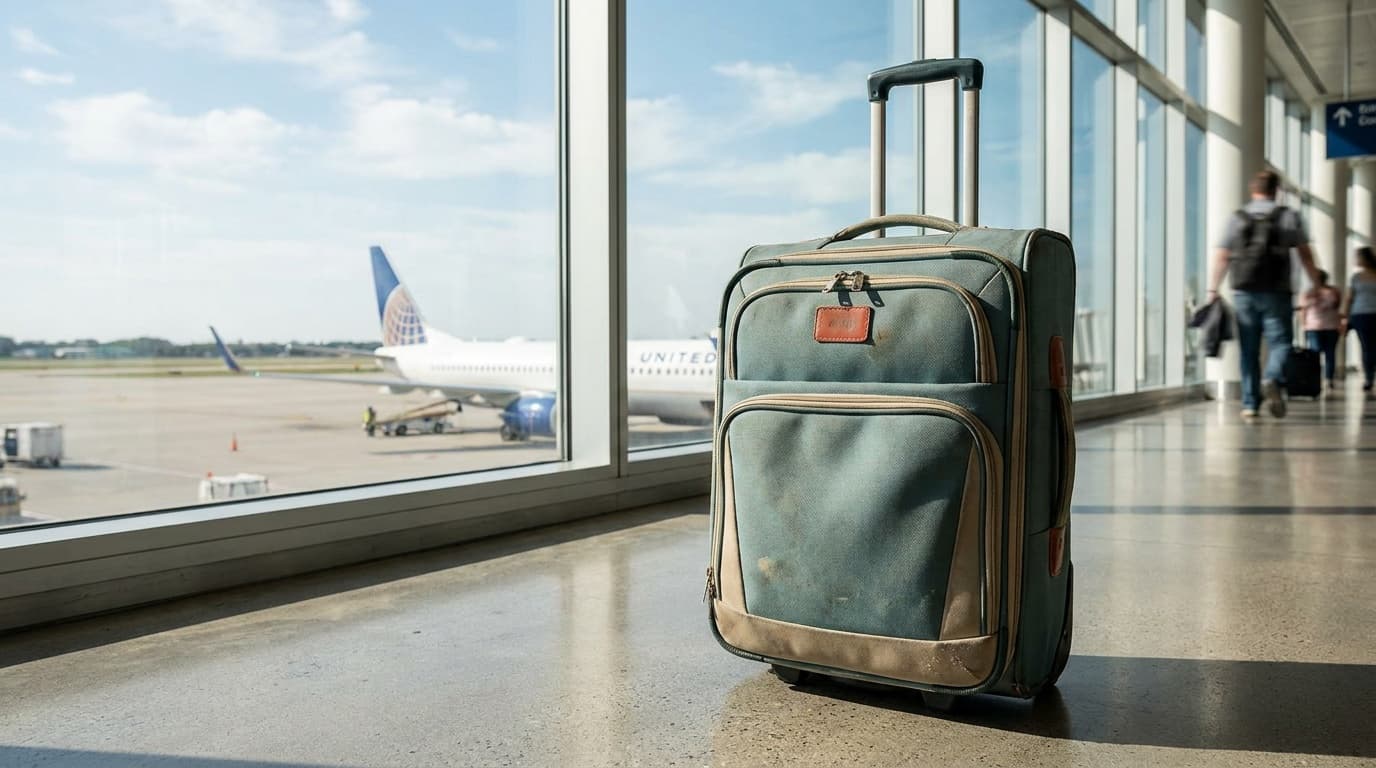
Researched, not hands-on tested
Updated Jun 4, 2026Our recommendations draw on manufacturer documentation, retailer listings, owner feedback, and comparisons with alternatives.
As an Amazon Associate I earn from qualifying purchases. We may earn a commission from links here, at no extra cost to you. How we research →