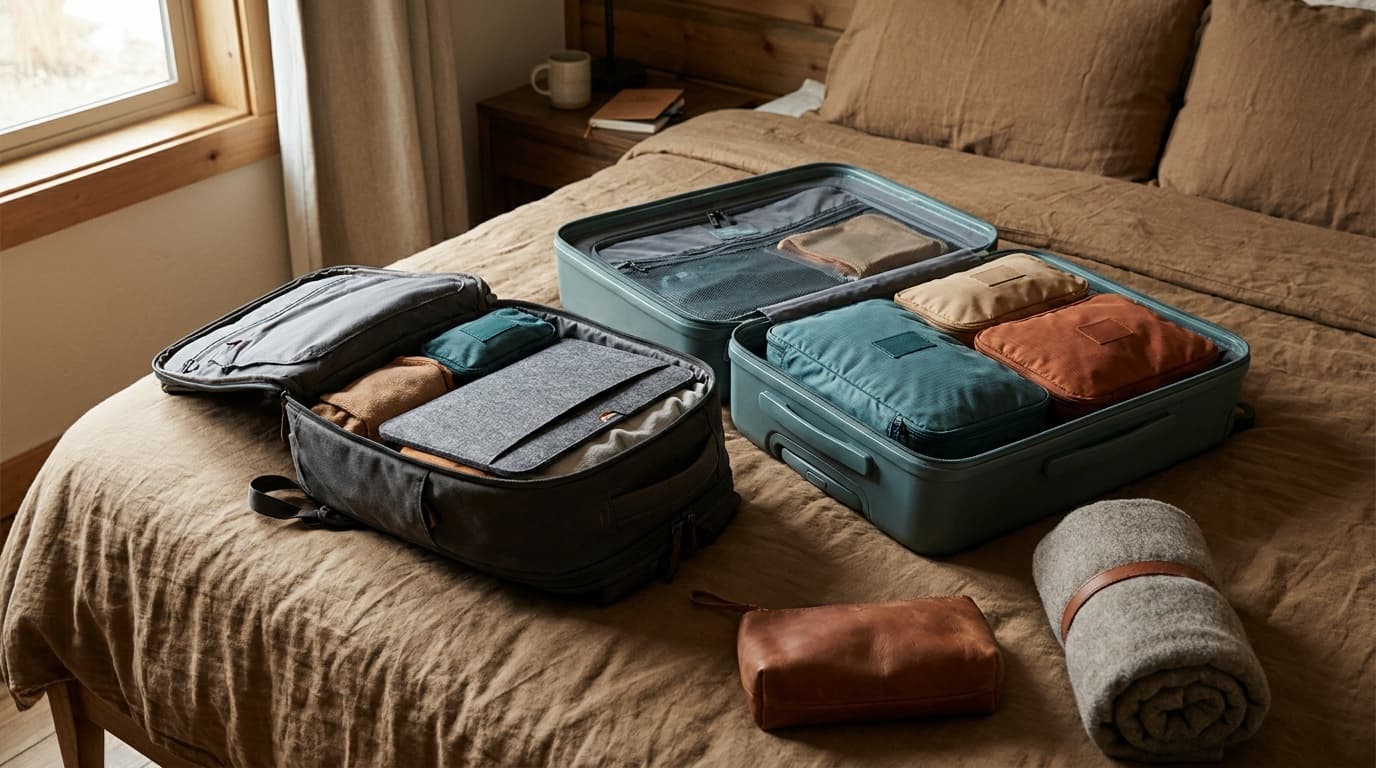
Choose hardside polycarbonate luggage for checked bags carrying fragile items and better rain protection. Choose softside luggage for lighter carry-ons, exterior pockets, expansion, and easier repairs. Many frequent travelers use a soft carry-on and a hard checked case because each material solves a different part of the trip.
Durability and protection: material matters more than category
The most useful frame here is not hard vs soft but which material within each category.
For hardside bags, polycarbonate is the benchmark, the shell material on cases like the Samsonite Freeform. It accounts for over 40% of hard-shell luggage sold precisely because it flexes under impact rather than cracking. ABS, which accounts for almost 30% of hard-shell sales, is more affordable but more prone to cracking at corners on sharp impact, and a structural crack in an ABS shell is not repairable. For softside bags, high-denier nylon (Cordura or ballistic constructions) outlasts most polyesters by a wide margin on abrasion.
Airlines globally mishandle or damage roughly 8 bags per 1,000 checked, and cargo holds stack bags under significant cumulative weight. A rigid shell distributes that impact force more evenly across the structure. Soft bags are vulnerable to compression damage when buried under heavier luggage.
Weight: a real difference at tight limits
A soft-shell carry-on weighs roughly 6 lbs empty. A hard-shell carry-on typically weighs 7–9 lbs empty. Lightweight polycarbonate models have narrowed the gap in recent years, but the difference still matters when an airline enforces a 15 lb or 22 lb carry-on limit. One to three pounds of saved bag weight is one to three more pounds of gear or clothing before you hit the ceiling.
For checked bags where limits are typically 50 lbs, the same math applies but is less punishing unless you are already packing heavy.
Expandability and packing flexibility
Soft-sided luggage can typically expand 15–25% beyond its base capacity via a zipper panel. Away's Softside Carry-On expansion zipper, for example, adds a full 2.25 inches of additional depth. Most hardside cases offer no expansion at all.
That gap matters on the return leg of any trip where you bought things. A soft bag with an expansion zipper can absorb that extra layer without forcing you to check a previously carry-on bag. A rigid clamshell holds a fixed volume: fill it, and you are done. That same rigidity is actually useful for airlines, since the bag maintains its approved dimensions even when packed to capacity.
Soft bags flex to fit a tight overhead bin and absorb a souvenir haul on the way home. Hard shells hold their line when a cargo hold full of bags is stacked on top of yours.
Water resistance
Hardside cases have an inherent advantage here. A polycarbonate or polypropylene shell does not absorb water. Rain on the tarmac, a wet baggage cart, a burst water bottle nearby: none of it penetrates.
Softside bags depend on fabric coatings. Travelpro's DuraGuard coating on nylon and polyester bags like the Travelpro Maxlite 5 provides meaningful water and scuff resistance. Budget polyester bags without advanced coatings absorb water faster in heavy rain. A DWR spray reapplied every 6–12 months ($10–$15) can restore performance on a bag whose coating has degraded. Premium nylon with a quality coating handles light-to-moderate rain well; budget polyester in a downpour is a different story.
Repairability: the underrated factor
This is where soft bags have a clear practical edge. A broken zipper on a soft-sided bag can be replaced at most local repair shops for $30–$60. A structural crack in an ABS hard shell is generally not repairable and means replacing the bag. Polycarbonate resists cracking far better than ABS, but if it does crack structurally, replacement is still your only real option.
Zipper failure on a cheap softside bag is a risk in the other direction, but on a quality bag with YKK or equivalent hardware, zippers outlast most other failure points and remain fixable when they do go.
Access and daily use
Hardside bags require a full clamshell opening, which takes up roughly double the floor space of the bag itself. In a small hotel room, a hostel bunk area, or a studio apartment, that is a genuine inconvenience. Softside bags frequently have exterior pockets and a single-side zip opening, making mid-trip access easier without fully unpacking.
How to choose: a decision framework
Picking the right type for how you travel
Checking fragile or high-value items
Choose hardside polycarbonate. The rigid shell resists compression in the cargo hold and shed tarmac rain without soaking through.
Flying carry-on only with tight weight limits
Choose softside. The 1–3 lb weight advantage and 15–25% expansion room give you more working margin under strict airline limits.
Frequently buying things on trips
Choose softside with an expansion zipper. A fixed-volume hard shell forces you to check an extra bag when it fills; a soft bag absorbs the extra layer.
Traveling to wet or tropical climates
Hardside wins on inherent water resistance. For softside, invest in DuraGuard or DWR-coated nylon and reapply the treatment annually.
Prioritizing long-term repairability on a budget
Choose softside with quality zippers. A $30–$60 zipper repair keeps a good bag alive for years; a cracked ABS shell ends its life.
Combining carry-on and one checked bag
Many frequent travelers use a lightweight softside carry-on paired with a polycarbonate checked case. That split often outperforms a matching set of one type.
For carry-on picks across both categories, see our guide to the best carry-on luggage.
Frequently asked questions
Is hard or soft luggage better for checked bags?
Hard luggage, specifically polycarbonate or polypropylene, is the stronger choice for checked bags. Cargo holds stack bags under significant weight, and a rigid shell resists that compression far better than fabric. It also sheds rain and tarmac moisture that soft bags absorb. If you are checking fragile items, electronics, or anything breakable, a polycarbonate hard case gives meaningfully better protection.
Can you overstuff a hard-sided suitcase?
Not really, and that is actually one of its practical strengths. A rigid clamshell holds a fixed volume: you cannot zip in extra layers the way you can with an expandable soft bag. This is a minor inconvenience when packing for the return trip, but it also means the bag maintains its approved airline dimensions even when full. If you regularly shop on trips, a soft bag with an expansion zipper is more practical.
Which type of luggage lasts longer?
It depends heavily on the material, not just the category. A polycarbonate hardside bag handled carefully can last a decade or more because the shell resists cracking. A softside bag in high-denier Cordura or ballistic nylon is extremely abrasion-resistant and its zippers are replaceable, giving it a long serviceable life even with heavy use. The real risk with hardside is an unrepairable crack, more likely with ABS than polycarbonate. The real risk with softside is zipper failure on a cheap bag and fabric vulnerability in high-risk airport situations.
Browse all travel gear or learn how we research and rate the products we recommend.
Recommended gear
Our current top picks from the Best carry-on luggage 2026: 8 bags checked against airline limits guide, if you are ready to buy.

TRAVELPRO
Travelpro Platinum Elite 21-Inch Softside Expandable Spinner
Best Overall
Kit Score 9.0/10
$389.99 Price checked Oct 23, 6:22 AM CDT
Best for: Frequent flyers who pack a jacket or work clothes, fly mainline carriers, and want a warranty that covers airline damage.
- Top soft-sided pick at Wirecutter and Outdoor Gear Lab
- 23.5 inches tall overall, so it can fail a strict 22 inch sizer
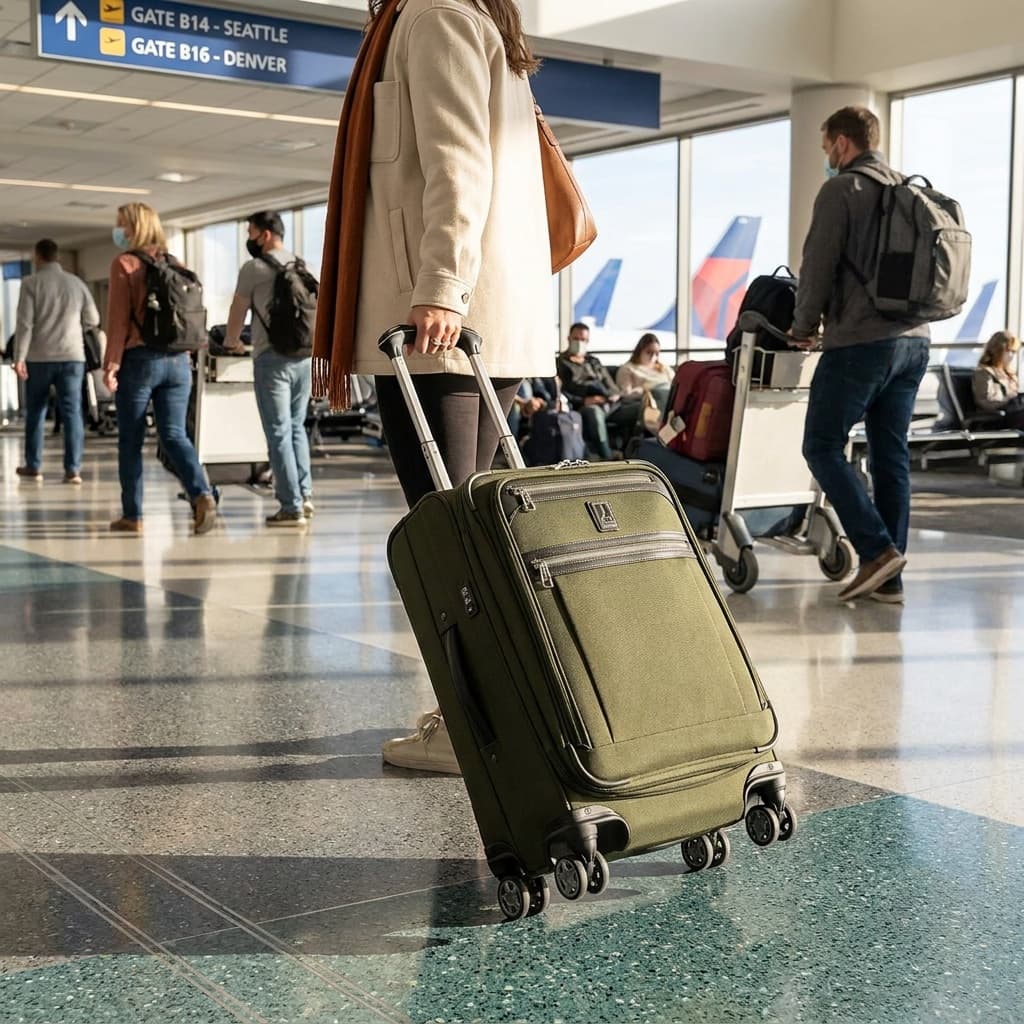
- Case dimensions
- 21" x 14" x 9"; 23.5" x 14.5" x 9" overall with wheels and handle (Travelpro)
- Expansion
- Up to 2" (Travelpro)
- Weight
- 7.8 lbs
- Capacity
- 46 L (manufacturer); 40 L (Outdoor Gear Lab measured main compartment)
- Shell material
- Nylon with DuraGuard coating
- Wheels
- 8-wheel MagnaTrac self-aligning 360-degree dual spinner
About this pick
The Platinum Elite is Travelpro's top softside carry-on and the top soft-sided pick at both Wirecutter and Outdoor Gear Lab. It pairs a drop-in suiter and 2 inches of expansion with eight MagnaTrac spinner wheels, and Travelpro's warranty adds airline damage coverage once you register the bag. The 21 x 14 x 9 inch case grows to 23.5 inches tall with wheels and handle.
More specifications
- Warranty
- Limited lifetime; airline damage covered when registered within 120 days
Strengths
- Top soft-sided pick at Wirecutter and Outdoor Gear Lab
- Drop-in suiter keeps a jacket or dress shirts flatter than rolled clothes
- Warranty covers airline damage once registered, which most rivals exclude
Weaknesses
- 23.5 inches tall overall, so it can fail a strict 22 inch sizer
- 7.8 lb empty, about 2.4 lb more than the Maxlite 5
Kit Score breakdown
AWAY
Away The Carry-On 22-Inch Hardside Spinner
Best Hardside
Kit Score 8.5/10
$275.00 Price checked Oct 23, 6:22 AM CDT
Best for: Travelers who want a durable, polished hardside bag they can use for years and check in knowing the shell will protect contents.
- Dense polycarbonate shell resisted cracking and denting in independent reviews
- Does not expand, limiting packing flexibility versus comparable softside options
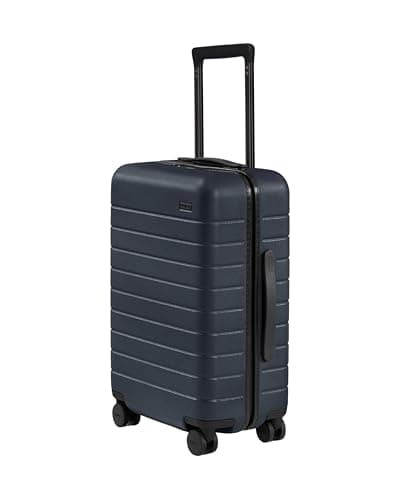
- Exterior dimensions
- 22" x 14.4" x 9.1" including wheels and handles (Away)
- Interior dimensions
- 20.1" x 13.9" x 7.5" (Away)
- Weight
- 7.5 lbs
- Capacity
- 41 L (Away); 35.5 L measured by Outdoor Gear Lab
- Shell material
- 100% polycarbonate hardshell
- Wheels
- 4-wheel 360-degree spinner
About this pick
Away's carry-on pairs a polycarbonate shell with a compression panel, a built-in TSA lock, and four spinner wheels. Wirecutter names it its top hard-sided carry-on and Outdoor Gear Lab its favorite hardside. Away lists 22 x 14.4 x 9.1 inches including wheels and handles, a hair over the 22 x 14 x 9 inch template.
More specifications
- Lock
- TSA-approved combination lock, built-in
- Warranty
- LifetimeCare for purchases from April 14, 2026: five years of free repairs, up to one replacement, then paid repairs
Strengths
- Dense polycarbonate shell resisted cracking and denting in independent reviews
- WhisperGlide spinner wheels are consistently quiet and track straight
- Compression panel keeps contents flat and reduces overpacking tension on zipper
Weaknesses
- Does not expand, limiting packing flexibility versus comparable softside options
- Grab handles are narrow and can be uncomfortable for larger hands
Kit Score breakdown
TRAVELPRO
Maxlite 5 21-Inch Softside Expandable Spinner
Best Value
Kit Score 8.4/10
$160.00 Price checked Oct 23, 6:22 AM CDT
Best for: Frequent travelers who prioritize low bag weight to maximize packing allowance on weight-limited international routes.
- Lightest carry-on in its class at this price
- Wheel housings feel less robust than the rest of the bag
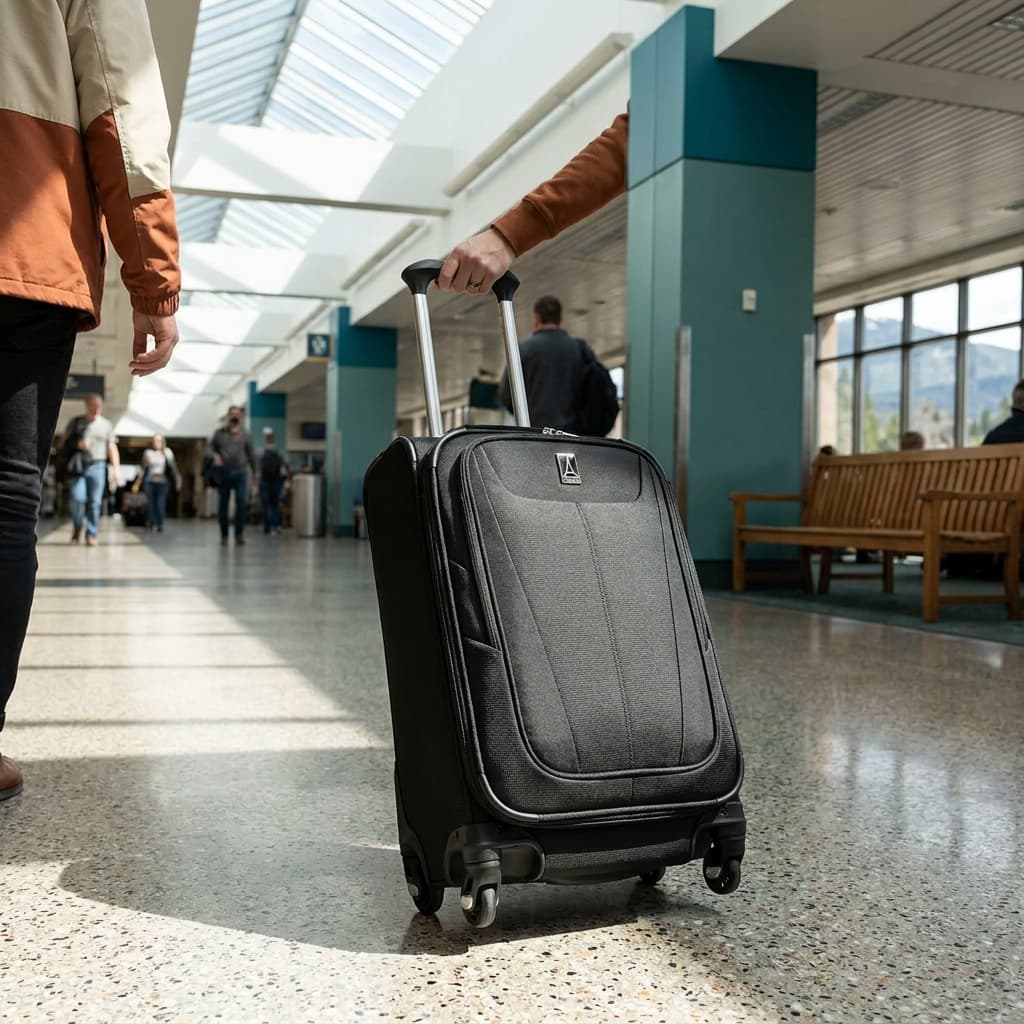
- Overall dimensions
- 23" x 14.5" x 9"
- Case dimensions (packing body only)
- 21" x 14" x 9" (Travelpro)
- Weight
- 5.4 lbs
- Capacity
- 46 L
- Shell material
- Polyester with Duraguard water and stain-resistant coating
- Wheels
- 4-wheel 360-degree spinner
About this pick
The Maxlite 5 is among the lightest spinner carry-ons in its price range, built on Travelpro's flight-crew heritage. At 5.4 lbs it leaves meaningful headroom before most domestic and international cabin weight limits.
More specifications
- Expansion
- Expands up to 2 inches
Strengths
- Lightest carry-on in its class at this price
- Duraguard-coated fabric resists scuffs and stains well
- Four spinner wheels roll quietly on flat airport floors
Weaknesses
- Wheel housings feel less robust than the rest of the bag
- Slightly oversized for the most restrictive international sizers when expanded
Kit Score breakdown
See all picks in Best carry-on luggage 2026: 8 bags checked against airline limits
Keep going
Complete loadoutCarry-on travel kitA one-week suitcase system with the bag, organization, laundry, toiletries, security, scale, and power.Free tool: Carry-On Checker
Researched, not hands-on tested
Updated Aug 14, 2026Our recommendations draw on manufacturer documentation, retailer listings, owner feedback, and comparisons with alternatives.
As an Amazon Associate I earn from qualifying purchases. We may earn a commission from links here, at no extra cost to you. How we research →