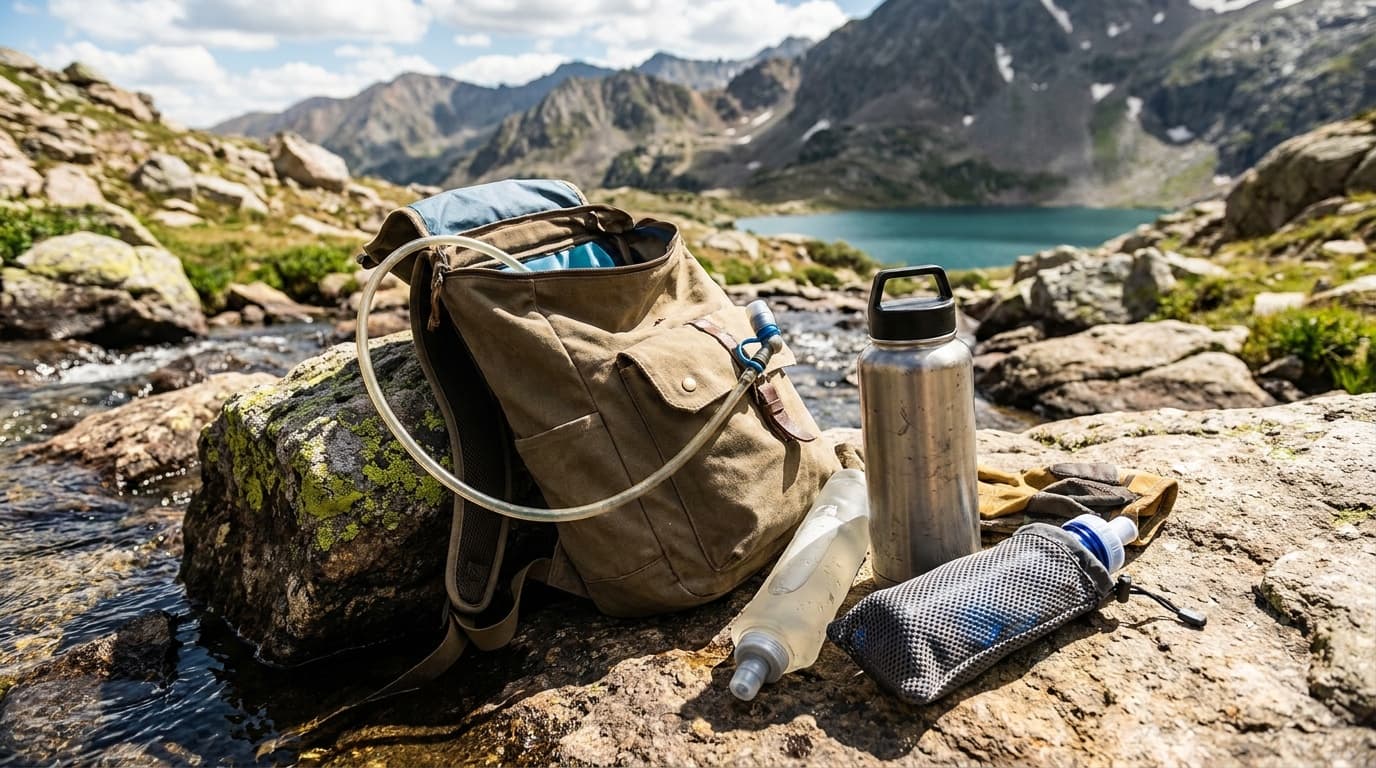
Choose a hydration vest for trail running and fast, light outings where low bounce and front-flask access matter. Choose a hydration pack for day hiking, biking, and longer trips that require more water, layers, food, and emergency gear. Capacity is the clearest dividing line: vests commonly carry 3 to 10 L, while packs cover roughly 10 to 30 L.
Shop the system separately by comparing the best hydration vests and best hydration bladders.
How each system works
A hydration vest like the Salomon ADV Skin 5 wraps around your torso like a second skin. The fit is dialed in with sternum straps and bungee cords, and most of the liquid lives up front in two soft flasks (usually 500 mL each) positioned in chest pockets. Some vests add a small rear reservoir pocket for a 1.5–2 L bladder, but the rear compartment is shallow. Total storage is modest: a few hundred milliliters of extra fuel, a jacket, and a phone.
A hydration pack sits on your back like a traditional daypack with one key addition: a dedicated sleeve for a reservoir (bladder) ranging from 1.5 L to 3 L, like the CamelBak Crux 3L. The bite valve routes over your shoulder on a magnetic clip or a simple tuck. The pack's main body carries the rest: layers, food, a first-aid kit, trekking poles, and anything else a full day demands.
Fit, bounce, and carry comfort
Fit is where vests genuinely shine. The best trail-running vests use stretch fabrics and a body-mapped cut so the pack moves with you, not against you. When loaded correctly, a well-fitted vest produces almost no bounce even at a running pace. Brands like Salomon, Nathan, and Ultimate Direction have refined this over years of ultramarathon feedback, and the result is a carry experience that feels more like wearing a jersey than shouldering a load.
Packs trade that locked-in feel for load-carrying ability. A hip belt and load-lifter straps distribute weight efficiently when you're carrying 12–20 L, but that same structure adds bulk and warmth on hot days. A lightly loaded pack can bounce on technical terrain if you don't cinch it properly. The trade is worth it when you genuinely need what's inside.
A vest worn correctly on a long run should feel like it disappears. A pack worn correctly on a long hike should feel like the weight is on your hips, not your shoulders.
Access and drinking habits
This difference is more practical than it sounds. On a run, reaching back to find a hose, locating the valve, and drinking without slowing down is awkward. Front flasks solve that: grab, drink, replace, done. You also see exactly how much water is left, which matters when you're rationing over 20 miles.
Bladders win in a low-intensity context. Hiking with trekking poles, a bladder lets you drink continuously without freeing your hands. Many hikers find they drink more consistently with a hose than with a flask, which is a genuine hydration benefit on warm days.
One downside of bladders: refilling requires removing the pack, opening the main compartment, pulling out the reservoir, filling it, reseating it, and routing the hose back. At a trail junction with a water filter, that's a two-minute operation. Soft flasks refill in seconds.
Refilling a soft flask vs a bladder
Soft flask, one-handed
Unscrew cap, fill from filter or bottle, recap. Done in under 30 seconds.
Bladder, full process
Remove pack, open reservoir compartment, pull bladder, fill, reseat, reroute hose. Closer to 2 minutes.
Bladder shortcut
Some packs have a top-fill port accessible without removing the bladder. Check before you buy.
Flask in cold weather
Soft flasks freeze less quickly than long hose runs, which can ice up in sub-zero temps.
Storage and who needs what
If your kit for a two-hour run is two flasks, a gel, a phone, and an emergency layer, a vest handles it easily. If your kit for an eight-hour hike includes a filter, lunch, a rain shell, a first-aid kit, sun protection, and camp layers, a pack is the only sensible option.
Biking sits closer to hiking on this spectrum. Mountain bikers often prefer vests for their low profile and no-sway fit, especially on technical descents where a swinging pack is a liability. Gravel cyclists and bikepacking riders lean toward packs or frame bags when mileage climbs.
The verdict: which one is right for you
Choose a vest if you run trails, race ultras, or fast-pack with a deliberate light kit. Choose a pack if you day hike, backpack, bike long distances, or carry camera gear. If you do both, own both: a good vest runs $80–$180 and a solid daypack runs $100–$220, and they serve genuinely different purposes.
The one case where the choice is obvious: if you carry more than 10 L of gear, a vest is not the right tool. Below 10 L with an emphasis on speed and fit, a vest is almost always the better choice.
Frequently asked questions
Can I use a hydration vest for hiking instead of running?
Yes, and many hikers do on short, fast routes. The limits show up on full-day hikes: vest storage tops out around 10 L, so you'll sacrifice layers, food, or safety gear. If your hike runs under four hours and the trail is straightforward, a vest works well. For anything longer or more remote, a pack gives you the margin you want.
Are soft flasks as easy to drink from as a bladder hose?
Different, not worse. Soft flasks require a deliberate grab-and-drink motion; a hose lets you sip passively while walking. Runners tend to prefer flasks because hands-free drinking at pace is awkward with a hose. Hikers often prefer the hose because passive sipping means they drink more consistently over a long day. Try both if you can before committing to a system.
How much water should I carry on a trail run or hike?
A common guideline is 0.5 L per hour of moderate activity, more in heat or at altitude. A two-hour run needs roughly 1 L, which two standard soft flasks cover exactly. A six-hour hike needs 3 L minimum, pointing toward a 3 L bladder or flasks plus extra capacity. Always factor in water source availability: on well-mapped trails with reliable sources you can carry less and filter more; on dry routes, carry more than you think you need.
For specific picks, see our guide to the best hydration vests. Browse all hike guides or read how we research and rate gear.
Recommended gear
Our current top picks from the Best hydration vests for trail running and hiking 2026 guide, if you are ready to buy.
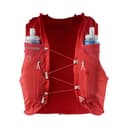
Best for: Ultramarathon runners and fastpackers who need maximum storage, proven bounce control, and all-day comfort on technical terrain.
- Zero bounce even when fully loaded, thanks to the body-hugging SensiFit harness
- Rear panel fit is structured and precise, meaning you cannot overstuff it the way older more pliable versions allowed
- Capacity
- 12 L
- Weight
- 9 oz; 11.4 oz with flasks (Salomon spec)
- Hydration system
- 2 x 500 ml ULTRA soft flasks included; reservoir-compatible up to 2 L
- Pocket count
- 10+ pockets including front zip, stretch, and rear pass-through
- Fit system
- SensiFit with adjustable front sternum strap
- Best use
- Trail running, ultramarathons, fastpacking up to 100+ miles
About this pick
The ADV Skin 12 is the vest most often spotted at ultramarathon start lines, and gear-review consensus built over a decade of iterations is clear: it sets the standard for all-day running comfort. The current model features a back panel designed for moisture evacuation paired with Salomon's SensiFit harness that locks the vest to your body without restricting movement.
Strengths
- Zero bounce even when fully loaded, thanks to the body-hugging SensiFit harness
- Intuitive 10-pocket layout keeps gels, phone, and layers accessible mid-run without stopping
- Two ULTRA soft flasks included and reservoir-compatible, so you can configure hydration for any distance
Weaknesses
- Rear panel fit is structured and precise, meaning you cannot overstuff it the way older more pliable versions allowed
- Snug, close-to-body fit runs warm for runners who overheat easily
Kit Score breakdown
Best for: Trail runners who want a race-ready, minimal-bounce vest for distances up to 60 km and do not need the extra storage of a 12 L pack.
- SensiFit Y-harness delivers a locked-in, no-bounce ride across light and heavy loads, confirmed across iRunFar and Road Trail Run long-term testing
- Unisex sizing may not fit petite runners well; occasional neck chafing reported when carrying a single flask
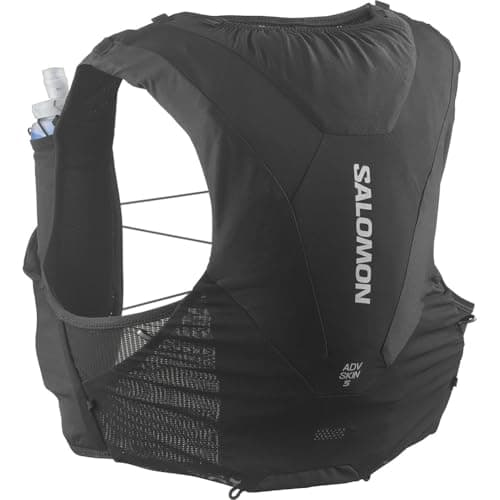
- Capacity
- 5 L
- Weight
- 7 oz; 9.9 oz with flasks (Salomon spec)
- Hydration system
- 2 x 500 ml soft flasks included; 2 L reservoir-compatible (not included)
- Dimensions
- 38 x 28 x 1 cm
- Fit system
- Y-shaped SensiFit harness with quick-link sternum strap
- Best use
- Trail races, marathon-distance runs, and supported day outings up to 60 km
About this pick
The ADV Skin 5 is Salomon's highest-volume seller in the vest category for good reason: it delivers the same second-skin SensiFit comfort as the larger 12 at a lighter weight and lower price, with enough storage for a marathon trail race or a fast half-day in the mountains. The current model features tighter-weave mesh on the shoulder straps for durability and redesigned top pockets.
Strengths
- SensiFit Y-harness delivers a locked-in, no-bounce ride across light and heavy loads, confirmed across iRunFar and Road Trail Run long-term testing
- Front zip pocket fits an iPhone 16 Pro and is reachable without removing a flask, making mid-run access practical
- Ships with two 500 ml soft flasks at a $145 retail price, offering strong all-in value compared to vests that sell flasks separately
Weaknesses
- Unisex sizing may not fit petite runners well; occasional neck chafing reported when carrying a single flask
- 5 L rear capacity is tight for overnight or multi-day fastpacking
Kit Score breakdown

NATHAN SPORTS
Nathan VaporAir 4 8L
Editor's Choice
Kit Score 8.3/10
$149.99 Price checked Oct 24, 5:42 AM CDT
Best for: Runners who want mid-run fit adjustability, bladder-based hydration, and the durability to handle regular high-mileage training without babying the gear.
- Quick-Fit cord system lets you dial in compression across your ribs mid-run, a feature no other vest at this price offers
- Front adjustment tabs can flap loose after pulling if not re-tucked, a minor but recurring complaint in the Road Trail Run review
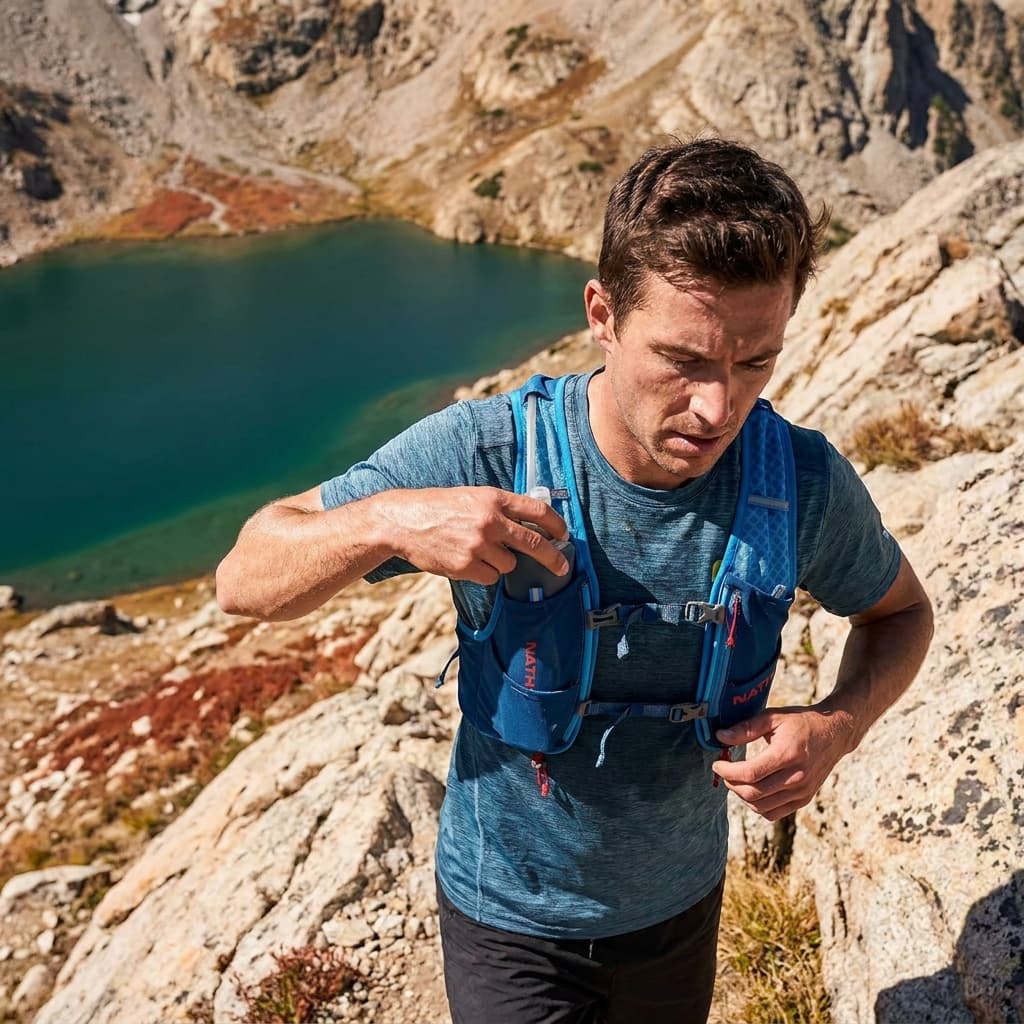
- Capacity
- 8 L
- Weight
- 13.6 oz listed with 2 L bladder (Amazon listing)
- Hydration system
- 2 L Nathan x HydraPak bladder included; front pockets fit two 20 oz soft flasks (sold separately)
- Sizing
- Four unisex sizes (XXS/XS, S/M, L/XL, XXL); women's VaporAiress version also available
- Fit system
- Quick-Fit internal cord wraps; front sternum straps adjustable while running
- Best use
- Trail races, long training runs, and fast-and-light day hikes
About this pick
The VaporAir 4 adds 1 L of storage and an improved trekking pole carry over its predecessor, and it is the only vest in this tier that lets you fine-tune torso tension with front adjustments while moving. At 7.7 oz for an 8 L vest with a 2 L bladder included, the weight-to-capacity ratio stands out among competitors at this price.
Strengths
- Quick-Fit cord system lets you dial in compression across your ribs mid-run, a feature no other vest at this price offers
- Stays stable on aggressive descents with a full bladder, as confirmed in Road Trail Run race-condition testing
- Rugged ripstop and two-layer mesh construction rated as the most durable of four vests compared in head-to-head testing
Weaknesses
- Front adjustment tabs can flap loose after pulling if not re-tucked, a minor but recurring complaint in the Road Trail Run review
- Only four size options may not accommodate runners at the extremes of the size range
Kit Score breakdown
See all picks in Best hydration vests for trail running and hiking 2026
Keep going
Free toolHiking Water CalculatorHow much water to carry for the distance and the heat.Related guides

 Complete hike loadoutDay hike kitBuild the complete kit
Researched, not hands-on tested
Updated Sep 18, 2026Our recommendations draw on manufacturer documentation, retailer listings, owner feedback, and comparisons with alternatives.
As an Amazon Associate I earn from qualifying purchases. We may earn a commission from links here, at no extra cost to you. How we research →