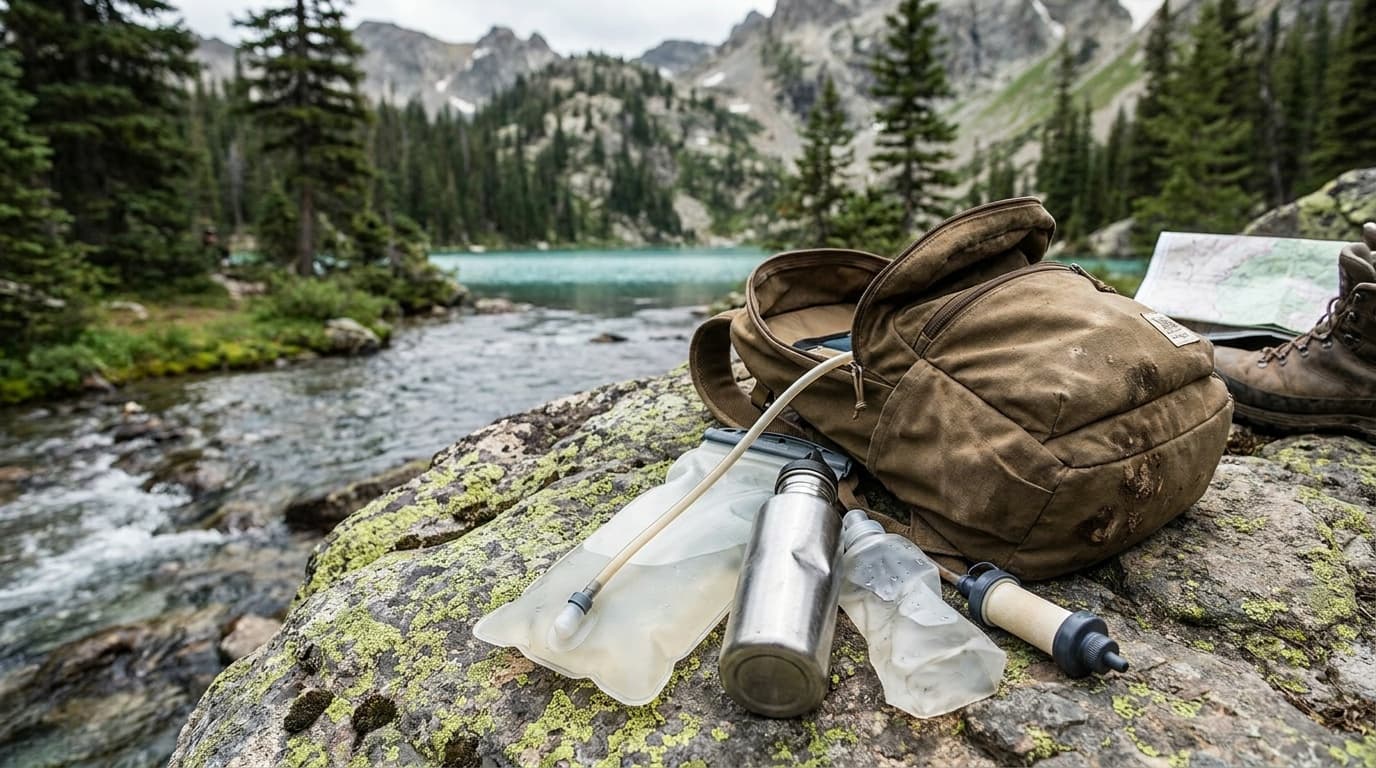
The right hydration vest turns a suffer-fest into a smooth effort; the wrong one bounces, chafes, and still leaves you thirsty at mile ten. Here is how to pick the one that matches your distance.
Match capacity to your effort
Overpacking water is a real mistake. Extra liquid weight costs you energy on every climb, and a half-empty bladder sloshes. Underpacking is worse. Use effort duration as your guide.
These numbers assume moderate conditions and accessible aid or water sources. In desert heat or above treeline without streams, add a safety buffer of at least 500ml. Many races publish their aid station spacing; calculate your per-hour sweat rate on a training run in similar conditions and you will have a precise target rather than a guess.
Soft flasks vs hydration bladder
Both work. The question is how you drink and how long you go.
Soft flasks (typically 150ml–500ml, seated in front chest pockets) are the default choice for trail runners. You reach forward, drink, and slot the flask back without breaking stride. As the flask empties it collapses, eliminating slosh. The drawback is total volume: even two 500ml flasks give you only 1L, so you need to plan around aid stations or carry an additional rear reservoir.
Bladders (1.5L–3L, stored in a rear compartment with a bite-valve hose, like the CamelBak Crux 3L) suit longer efforts where you want continuous, hands-free sipping. The downsides are real: you cannot see how much you have left, the hose can freeze in cold weather, and cleaning a bladder thoroughly is more work than rinsing a flask. Some vests, like the Salomon ADV Skin 12, accept both a rear bladder and front flasks simultaneously, which is the best setup for fastpacking where you want high total volume with quick front-pocket access.
Fit and bounce control
Bounce is the enemy of long-distance comfort. A vest that shifts on your torso multiplies its effective weight with every step. Manufacturers control bounce through four mechanisms:
How vests control bounce
Chest straps
Elastic bands that cinch across the sternum; most vests have one or two adjustable points
Hip fin or waist band
Anchors the bottom of the vest so it cannot ride up; critical for packs over 5L
Bungee side cinch
Tightens the torso wrap so the vest compresses snugly against your ribs
Load lifters
Short straps that angle up from the shoulder harness to the top of the pack body; rare on running vests but common on fastpacking hybrids
The practical test: fill the vest to your target weight, put it on adjusted properly, then jump in place. If the vest shifts more than half an inch, tighten it further or try a different size. A vest that fits correctly should feel like a second skin under load.
Sizing to your chest
Most hydration vest brands size primarily by chest circumference, measured at the widest point. A typical sizing table looks like this: XS fits a 30–34 inch chest, S fits 34–37 inches, M fits 38–40 inches, and so on. Women-specific cuts shorten the torso and reshape the shoulder straps to sit clear of the chest, which makes a significant difference in comfort on longer efforts.
A vest sized for your chest circumference and adjusted at the sternum straps will outperform a more expensive vest in the wrong size every time.
If you are between sizes, go smaller for trail running (tighter fit reduces bounce) and larger for fastpacking (you need room for layering and more gear). Always check the brand-specific chart because sizing conventions vary considerably between manufacturers.
Pocket access and ventilation
Pocket access: front chest pockets should be deep enough to hold your flasks without letting them work loose on descents, but close enough to the sternum that you can reach across your body with either hand. Zippered stash pockets on the shoulder straps are ideal for gels or a phone. Rear pockets are good for a softshell or emergency kit but poor for anything you need mid-run.
Ventilation: most trail running vests use an open-mesh back panel that sits flush against your back. This reduces the contact area compared with a solid back panel but does not provide true air gap. If back ventilation is a priority (hot-weather ultras, for example), look for a vest with a structured foam channel or a "suspended mesh" back similar to a dayhike pack. The trade-off is that structured backs are heavier and do not compress as small.
Frequently asked questions
How do I stop my hydration vest from chafing my arms?
Arm chafe almost always comes from shoulder straps that are too wide for your build, or a vest that is too large and shifting laterally. Start by sizing down if you are between sizes. Then check that the chest straps are snug enough to hold the shoulder harness close to your neck. If the problem persists on long runs, body-glide or anti-chafe balm on the underarm contact points will protect the skin while you dial in the fit.
Can I use a hydration bladder vest for fastpacking, or do I need a dedicated pack?
You can, with caveats. Running vests that top out at 8–12L total volume, like the Nathan VaporAir 4, work well for single-night fastpacking in good conditions. Beyond one night, or in shoulder-season conditions where you carry insulation and a full sleep kit, a dedicated fastpacking pack (20–30L) with a proper hip belt will distribute weight more sustainably than a vest's shoulder-only carry system. Many fastpackers own both and choose based on trip length.
How often should I replace soft flasks?
Soft flasks from reputable brands typically last 12–18 months of regular use before the plastic begins to degrade and pick up permanent odor. Replace sooner if you see any cracking near the neck, the bite valve becomes hard to seal, or the flask no longer fully collapses when empty (a sign the material has stretched). Cleaning after every run with a bottle brush and mild soap extends the lifespan significantly.
For specific picks, see our guide to the best hydration vests. Browse all hike guides or read how we research and rate gear.
Recommended gear
Our current top picks from the Best hydration vests for trail running and hiking 2026 guide, if you are ready to buy.
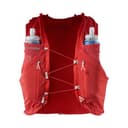
Best for: Ultramarathon runners and fastpackers who need maximum storage, proven bounce control, and all-day comfort on technical terrain.
- Zero bounce even when fully loaded, thanks to the body-hugging SensiFit harness
- Rear panel fit is structured and precise, meaning you cannot overstuff it the way older more pliable versions allowed
- Capacity
- 12 L
- Weight
- 9 oz; 11.4 oz with flasks (Salomon spec)
- Hydration system
- 2 x 500 ml ULTRA soft flasks included; reservoir-compatible up to 2 L
- Pocket count
- 10+ pockets including front zip, stretch, and rear pass-through
- Fit system
- SensiFit with adjustable front sternum strap
- Best use
- Trail running, ultramarathons, fastpacking up to 100+ miles
About this pick
The ADV Skin 12 is the vest most often spotted at ultramarathon start lines, and gear-review consensus built over a decade of iterations is clear: it sets the standard for all-day running comfort. The current model features a back panel designed for moisture evacuation paired with Salomon's SensiFit harness that locks the vest to your body without restricting movement.
Strengths
- Zero bounce even when fully loaded, thanks to the body-hugging SensiFit harness
- Intuitive 10-pocket layout keeps gels, phone, and layers accessible mid-run without stopping
- Two ULTRA soft flasks included and reservoir-compatible, so you can configure hydration for any distance
Weaknesses
- Rear panel fit is structured and precise, meaning you cannot overstuff it the way older more pliable versions allowed
- Snug, close-to-body fit runs warm for runners who overheat easily
Kit Score breakdown
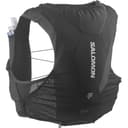
Best for: Trail runners who want a race-ready, minimal-bounce vest for distances up to 60 km and do not need the extra storage of a 12 L pack.
- SensiFit Y-harness delivers a locked-in, no-bounce ride across light and heavy loads, confirmed across iRunFar and Road Trail Run long-term testing
- Unisex sizing may not fit petite runners well; occasional neck chafing reported when carrying a single flask
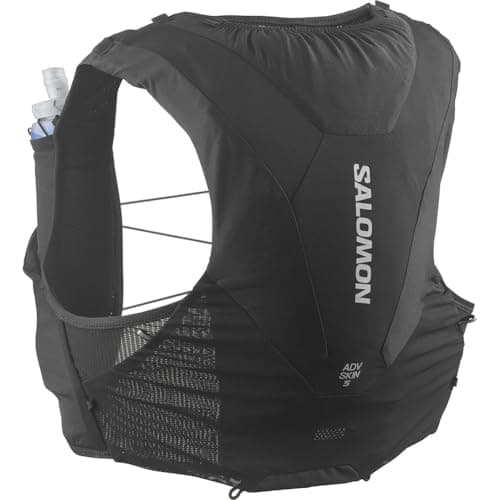
- Capacity
- 5 L
- Weight
- 7 oz; 9.9 oz with flasks (Salomon spec)
- Hydration system
- 2 x 500 ml soft flasks included; 2 L reservoir-compatible (not included)
- Dimensions
- 38 x 28 x 1 cm
- Fit system
- Y-shaped SensiFit harness with quick-link sternum strap
- Best use
- Trail races, marathon-distance runs, and supported day outings up to 60 km
About this pick
The ADV Skin 5 is Salomon's highest-volume seller in the vest category for good reason: it delivers the same second-skin SensiFit comfort as the larger 12 at a lighter weight and lower price, with enough storage for a marathon trail race or a fast half-day in the mountains. The current model features tighter-weave mesh on the shoulder straps for durability and redesigned top pockets.
Strengths
- SensiFit Y-harness delivers a locked-in, no-bounce ride across light and heavy loads, confirmed across iRunFar and Road Trail Run long-term testing
- Front zip pocket fits an iPhone 16 Pro and is reachable without removing a flask, making mid-run access practical
- Ships with two 500 ml soft flasks at a $145 retail price, offering strong all-in value compared to vests that sell flasks separately
Weaknesses
- Unisex sizing may not fit petite runners well; occasional neck chafing reported when carrying a single flask
- 5 L rear capacity is tight for overnight or multi-day fastpacking
Kit Score breakdown

NATHAN SPORTS
Nathan VaporAir 4 8L
Editor's Choice
Kit Score 8.3/10
$149.99 Price checked Oct 23, 4:16 PM CDT
Best for: Runners who want mid-run fit adjustability, bladder-based hydration, and the durability to handle regular high-mileage training without babying the gear.
- Quick-Fit cord system lets you dial in compression across your ribs mid-run, a feature no other vest at this price offers
- Front adjustment tabs can flap loose after pulling if not re-tucked, a minor but recurring complaint in the Road Trail Run review
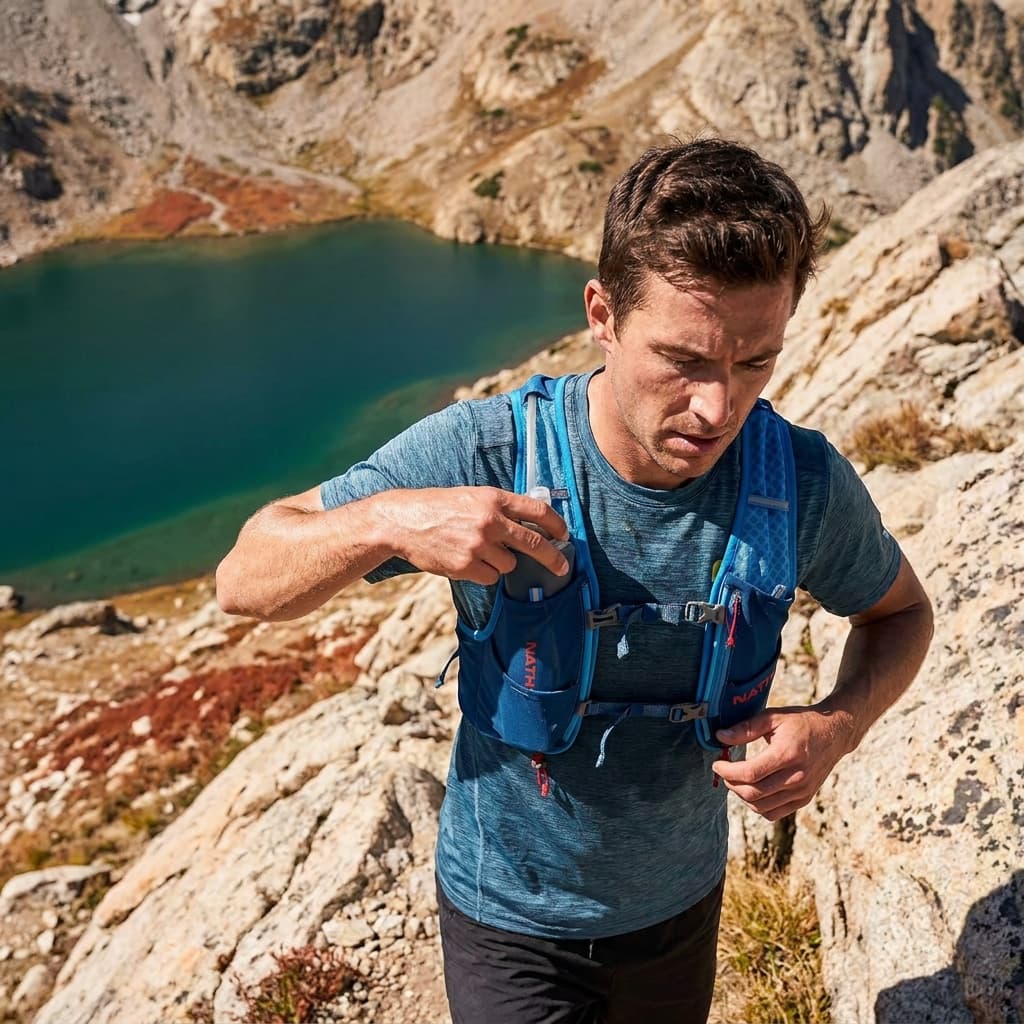
- Capacity
- 8 L
- Weight
- 13.6 oz listed with 2 L bladder (Amazon listing)
- Hydration system
- 2 L Nathan x HydraPak bladder included; front pockets fit two 20 oz soft flasks (sold separately)
- Sizing
- Four unisex sizes (XXS/XS, S/M, L/XL, XXL); women's VaporAiress version also available
- Fit system
- Quick-Fit internal cord wraps; front sternum straps adjustable while running
- Best use
- Trail races, long training runs, and fast-and-light day hikes
About this pick
The VaporAir 4 adds 1 L of storage and an improved trekking pole carry over its predecessor, and it is the only vest in this tier that lets you fine-tune torso tension with front adjustments while moving. At 7.7 oz for an 8 L vest with a 2 L bladder included, the weight-to-capacity ratio stands out among competitors at this price.
Strengths
- Quick-Fit cord system lets you dial in compression across your ribs mid-run, a feature no other vest at this price offers
- Stays stable on aggressive descents with a full bladder, as confirmed in Road Trail Run race-condition testing
- Rugged ripstop and two-layer mesh construction rated as the most durable of four vests compared in head-to-head testing
Weaknesses
- Front adjustment tabs can flap loose after pulling if not re-tucked, a minor but recurring complaint in the Road Trail Run review
- Only four size options may not accommodate runners at the extremes of the size range
Kit Score breakdown
See all picks in Best hydration vests for trail running and hiking 2026
Keep going
Free toolHiking Water CalculatorHow much water to carry for the distance and the heat.Related guides

 Complete hike loadoutDay hike kitBuild the complete kit
Researched, not hands-on tested
Updated Sep 18, 2026Our recommendations draw on manufacturer documentation, retailer listings, owner feedback, and comparisons with alternatives.
As an Amazon Associate I earn from qualifying purchases. We may earn a commission from links here, at no extra cost to you. How we research →