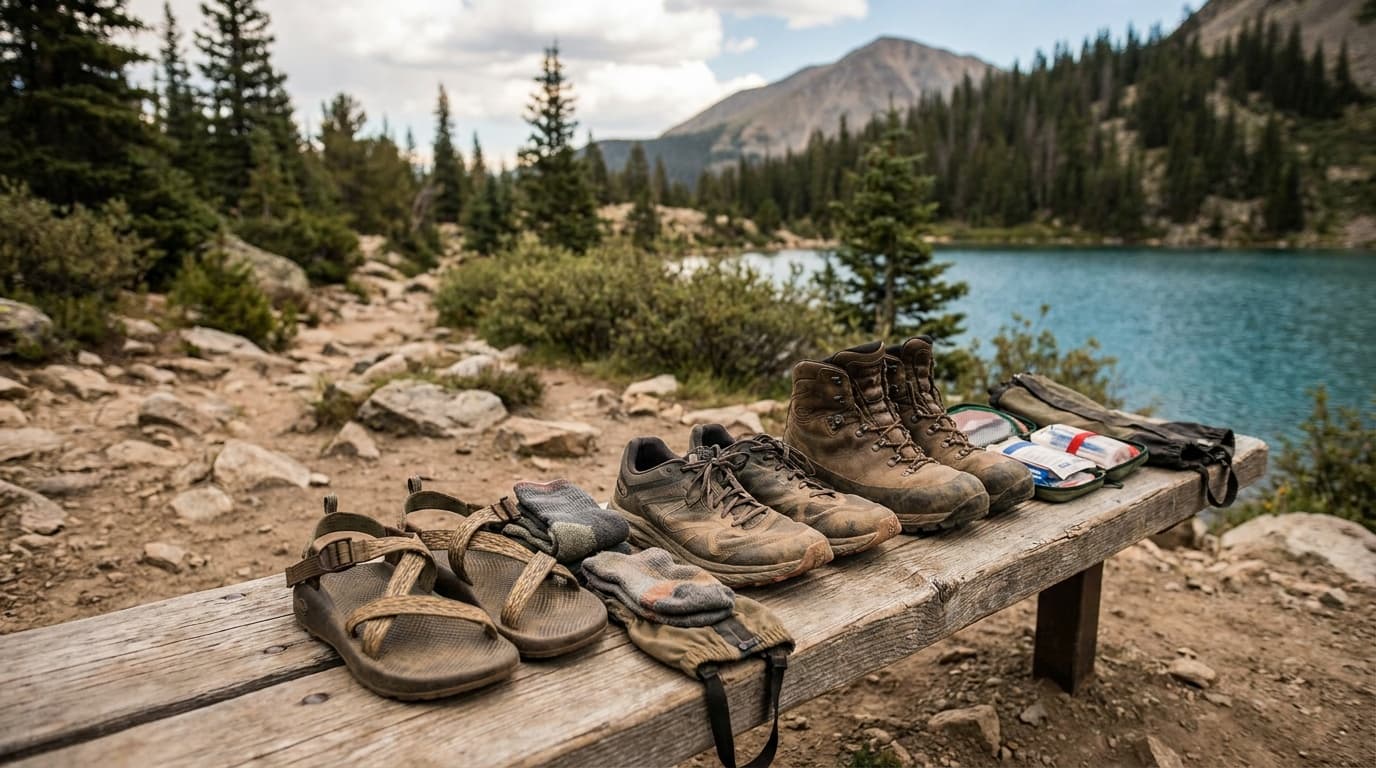
The right hiking sandal can handle creek crossings, canyon floors, and warm-weather trails with a comfort that a boot never will. The wrong one will have you sidelined by blisters, twisted ankles, or soles that skate on wet rock.
Closed-toe vs open-toe: pick your protection level
Open-toe sandals are lighter, cooler, and dry faster. They work well on smooth desert slickrock, groomed paths, and campsite approaches where the trail is wide and forgiving. The trade-off is exposure: roots, rocks, and trail debris hit your toes directly.
Closed-toe sandals like the KEEN Newport H2 add a rubber or webbing toe bumper that deflects the impact. They run 20–50 g heavier per pair but protect the toes enough that many hikers wear them as a full trail shoe alternative in moderate terrain. If your route involves scrambling, overgrown trail, or technical footing, closed-toe is the safer default.
Strap system and adjustability
A sandal that fits your foot in the store can become a blister machine on a descent if the heel lifts or the straps shift. Look for three independent adjustment points: a heel strap, an instep strap, and a toe strap or toe post. Each one lets you fine-tune a different axis of fit.
How to check strap fit before you buy
Heel strap
Buckle it snug, then try to slip two fingers under the heel cup. You should not be able to.
Instep strap
Walk downhill on a slope or stair edge. If your heel lifts, tighten the instep strap first, not the heel.
Toe strap
It should hold the forefoot without pressing the top of the foot. Numbness or a hot spot means it is too tight.
Wet test
Dip the straps in water and re-adjust. Webbing often tightens when wet; you may need a half-click of slack.
Ratchet buckles (a toothed ladder system) hold adjustment under load better than simple friction buckles. Hook-and-loop (velcro) closures are fast but pack sand and lose grip over time. For longer trips, ratchet or ladder-lock webbing lasts longer and stays where you set it.
Footbed support and arch
Most hiking sandals ship with a molded EVA or polyurethane footbed that offers light cushioning but minimal arch support. If you have high arches or pronate, that stock footbed will leave your feet aching by mile five.
The footbed is the most overlooked spec on a hiking sandal, and it is the first thing high-arch hikers should upgrade.
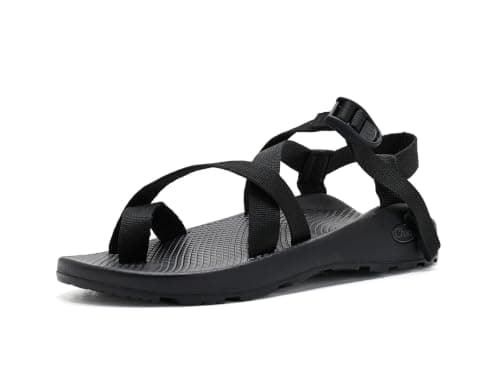
Some manufacturers build in a contoured arch ridge (Teva's arch-relief construction and the LUVSEAT platform on the Chaco Z/2 Classic are well-known examples). If neither is a match for your foot shape, aftermarket footbeds sized to trim-and-fit sandals work well and cost $30–$50. The key dimensions: heel cup depth (deeper stabilizes the rearfoot) and arch height (match to your measured arch type, not just "high" or "low").
Outsole lugs and grip
The outsole is where a hiking sandal earns its name. A flat rubber sole adequate for pavement offers almost no bite on wet granite, loose gravel, or muddy switchbacks. Lug depth of 4 mm or more and a soft rubber compound (Vibram Megagrip and similar compounds stay tacky on wet surfaces) are the two specs that separate trail sandals from resort sandals.
Lug pattern matters too: multi-directional lugs handle lateral scrambling; linear directional lugs excel on straight-line climbing. If most of your hiking is on smooth rock (desert canyon hiking, for example), prioritize rubber softness and surface contact area over deep lugs. On loose dirt and roots, deeper lugs shed debris and grip better.
Quick-dry for water crossings
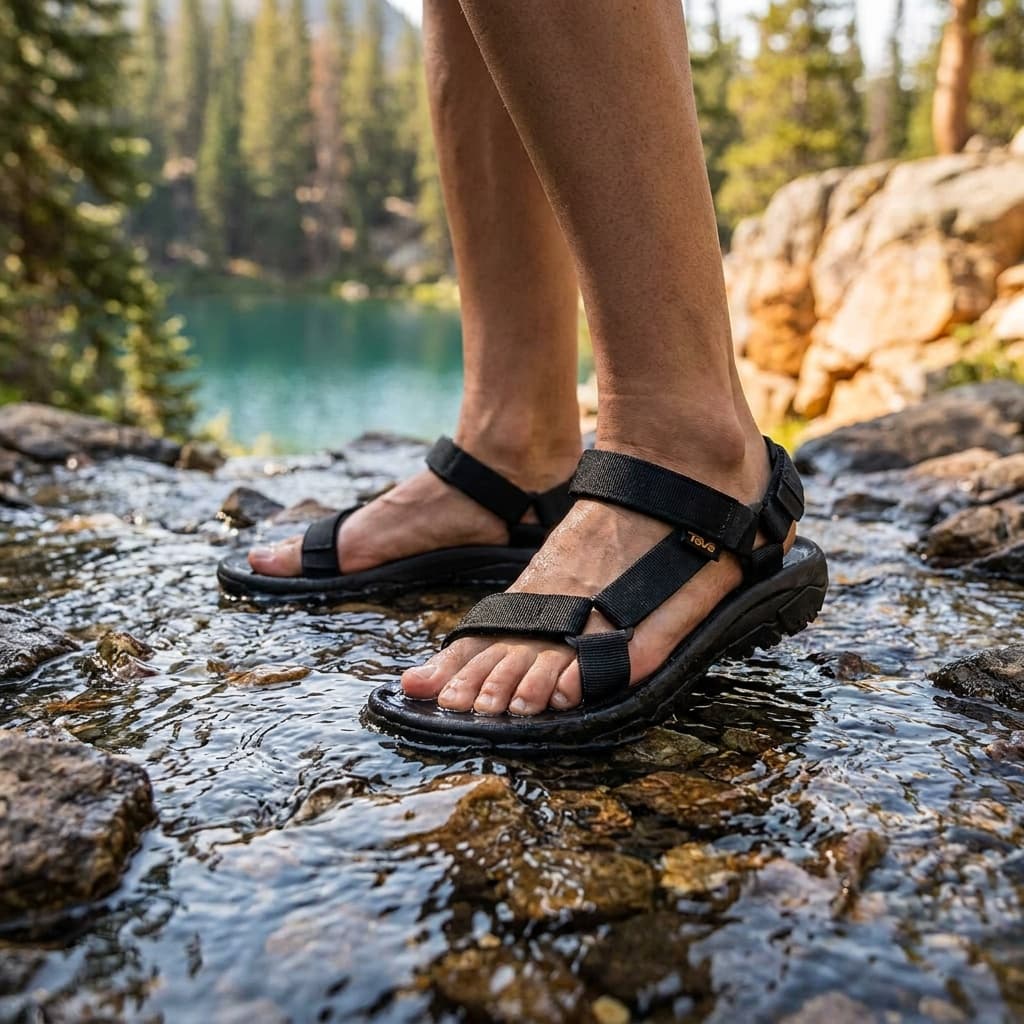
If your route involves fords, canyon wading, or tidal zones, sandal material choices determine how miserable the next two miles feel. Nylon webbing, the standard on a sandal like the Teva Hurricane XLT2, dries in 30–60 minutes in warm air. Leather webbing dries slowly (several hours), stretches when wet, and can develop odor unless treated. Polyester webbing sits between the two.
Foam footbeds absorb water and hold it. Closed-cell foam and rubber footbeds drain and dry faster. If water crossings are frequent, look for drainage ports (small holes in the footbed or midsole) that let water escape rather than pool underfoot. Cork footbeds are comfortable but absorb water heavily and are better suited to dry conditions.
Sizing and when sandals suit the terrain
Sandals run differently than trail shoes. Most fit true to size, but the strap system can compensate for a half-size in either direction. If you are between sizes, go up a half size and tighten the straps to compensate rather than going down and running out of strap adjustment.
Sandals suit these conditions well: warm-weather day hikes on maintained trails, canyon hikes with water crossings, high-mileage camp walks, and travel days. They are not the right tool for trails with loose talus (no lateral ankle support), cold and wet conditions (hypothermia risk at stream crossings in cold air), or off-trail scrambling where a stiff midsole is essential for edge control.
For a majority of warm-weather hikers, a pair of well-fitted trail sandals covers the last 40–50% of their hiking days, and that is worth a careful fit session.
Frequently asked questions
Can I wear hiking sandals on an all-day hike?
Yes, provided the terrain matches the sandal. A three-point adjustable sandal with arch support and a Vibram outsole handles 10+ mile days on maintained trail for many hikers. The limiting factors are usually arch fatigue (from an inadequate footbed) and heel slip on descents (from a loose strap), both of which are fixable before you leave the trailhead.
Do hiking sandals work in water?
Most trail sandals are designed to get wet and keep performing. Nylon or polyester webbing and rubber outsoles handle repeated crossings well. What you want to avoid is extended immersion in cold water with a heavily foam-padded footbed, as the foam holds water and can chill your feet. For canyon hiking with sustained wading, look for sandals with drainage ports and a low-profile midsole.
How do I prevent blisters from sandal straps?
New sandals need a break-in period of three to five shorter walks before a long hike. Strap blisters form most often at the instep strap and between the toes on toe-post designs. Body Glide or a thin sock (yes, socks with sandals) on a break-in walk reduces friction. If a strap consistently rubs the same spot after break-in, the fit is wrong: try a half-size adjustment or a different strap geometry rather than toughing it out.
For specific picks, see our guide to the best hiking sandals. Browse all hike guides or read how we research and rate gear.
Recommended gear
Our current top picks from the Best hiking sandals in 2026: 4 picks for trails and water guide, if you are ready to buy.
KEEN
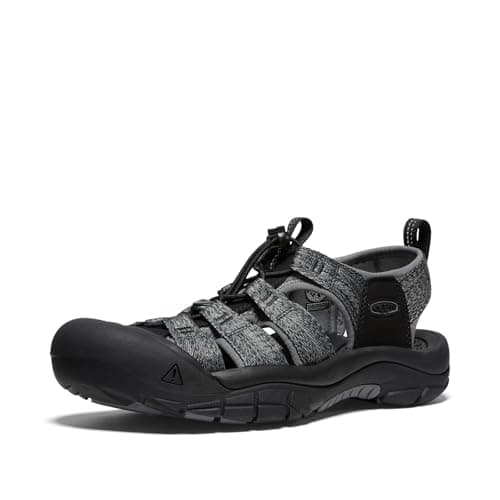
KEEN Newport H2 Closed-Toe Water Sandal
Best Overall
Kit Score 8.4/10
$94.10 Price checked Oct 23, 4:16 PM CDT
Best for: Hikers who want shoe-level toe protection on river trails, slot canyons, and creek crossings without giving up sandal breathability on the approach.
- Exceptional toe protection for rocky terrain and water crossings where open sandals leave feet exposed
- Heavier than open-toe alternatives at roughly 1 lb 10 oz per pair, which some hikers feel on longer miles
- Toe protection
- Full rubber toe cap
- Weight
- 13.4 oz (men's US 9)
- Outsole
- Non-marking carbon rubber, razor-siped, 4.1mm lug depth
- Closure
- Bungee lace with cinch lock + hook-and-loop heel strap
- Footbed
- Metatomical EVA with arch support, wide platform
- Quick-dry
- Polyester webbing upper with quick-dry lining
About this pick
The Newport H2 is KEEN's flagship closed-toe sandal: a rubber toe cap that rivals hiking boot protection, a bungee lace that cinches instantly at a water crossing, and a metatomical footbed that owners describe as day-one comfortable. Over 30,000 Amazon ratings and a consistent 4.6-star average confirm its place as the go-to closed-toe option for river trails and rocky day hikes.
Strengths
- Exceptional toe protection for rocky terrain and water crossings where open sandals leave feet exposed
- Razor-siped carbon rubber outsole grips wet dock boards and mossy river rocks reliably
- Roomy toe box and wide platform make it workable for wide feet without sizing up
Weaknesses
- Heavier than open-toe alternatives at roughly 1 lb 10 oz per pair, which some hikers feel on longer miles
- Enclosed upper traps debris like sand and gravel; requires removal to shake out on dusty trails
Kit Score breakdown
TEVA
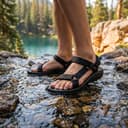
Teva Men's Hurricane XLT2 Sport Sandal
Best Value
Kit Score 8.4/10
$33.71 Price checked Oct 23, 4:16 PM CDT
Best for: Summer day hikers, river trail travelers, and multi-sport adventurers who want a proven open-toe sandal with genuine traction at a sub-$80 price point.
- Three independently adjustable straps deliver a secure, customized fit that rivals sandals costing twice as much
- Open toe design offers no protection against trail rocks or roots, a meaningful tradeoff on technical terrain
- Weight
- 10.7 oz (men's US 9)
- Outsole
- Durabrasion rubber, multidirectional lug pattern, 3.5mm lug depth
- Midsole
- Speckled EVA, 30.9mm heel stack
- Closure
- Three fully adjustable hook-and-loop straps
- Footbed
- Contoured EVA with cupped heel and raised arch
- Sustainability
- Straps made from 100% REPREVE recycled polyester
About this pick
The Hurricane XLT2 consistently earns the top value slot in multi-source roundups: three fully adjustable straps, a speckled EVA midsole, and Durabrasion rubber that holds grip on wet rocks, all for around $60–$70. It sits at 4.5 stars with over 5,700 Amazon ratings and has earned Best Buy recognition from Outdoor Gear Lab across multiple seasons of testing.
Strengths
- Three independently adjustable straps deliver a secure, customized fit that rivals sandals costing twice as much
- Durabrasion rubber outsole grips reliably on wet rocks and loose gravel without requiring break-in
- Quick-dry construction and 10.7 oz weight make it a strong choice for travel packing and river trail days
Weaknesses
- Open toe design offers no protection against trail rocks or roots, a meaningful tradeoff on technical terrain
- Velcro straps can loosen incrementally over a long day and may not suit users needing very high arch support
Kit Score breakdown
CHACO
Chaco Men's Z/2 Classic Sandal
Editor's Choice
Kit Score 8.8/10
$52.22 Price checked Oct 23, 4:16 PM CDT
Best for: Hikers who prioritize lasting arch support and want a sandal built to outlive multiple seasons of river trails, backpacking, and summer travel.
- LUVSEAT footbed provides structured arch support that owners with plantar fasciitis and high arches consistently single out
- Heavier than most competitors at around 1 lb 4 oz per sandal, which adds up on fast-paced or longer mileage days
- Outsole
- ChacoGrip rubber, diamond lug pattern, 3.5mm lug depth, non-marking
- Footbed
- LUVSEAT polyurethane midsole, podiatrist-certified arch support
- Weight
- Approx. 1 lb 4 oz per sandal (men's size 9)
- Strap system
- Single continuous adjustable webbing with toe loop (the Z/2 toe post)
- Materials
- Polyester jacquard webbing, 100% vegan construction
- Repairability
- Sole resoleable; Chaco offers re-webbing service
About this pick
The Z/2 Classic has earned its cult following through durability that owners report lasting well past 1,000 miles and a LUVSEAT footbed that carries podiatrist certification for arch support. The toe loop adds forefoot control that open-strap sandals lack, and ChacoGrip rubber maintains traction in wet and dry conditions across rocky river terrain.
Strengths
- LUVSEAT footbed provides structured arch support that owners with plantar fasciitis and high arches consistently single out
- Resoleable and re-webbable construction means the sandal can outlast two or three replacement cycles, lowering cost over time
- ChacoGrip outsole and toe-loop combination delivers confident grip and forefoot control on wet river boulders
Weaknesses
- Heavier than most competitors at around 1 lb 4 oz per sandal, which adds up on fast-paced or longer mileage days
- The single continuous webbing system requires patience to dial in; new owners often need a full trip to nail the fit
Kit Score breakdown
See all picks in Best hiking sandals in 2026: 4 picks for trails and water
Keep going
Related guides
 Complete hike loadoutDay hike kitBuild the complete kit
Researched, not hands-on tested
Updated Jul 8, 2026Our recommendations draw on manufacturer documentation, retailer listings, owner feedback, and comparisons with alternatives.
As an Amazon Associate I earn from qualifying purchases. We may earn a commission from links here, at no extra cost to you. How we research →