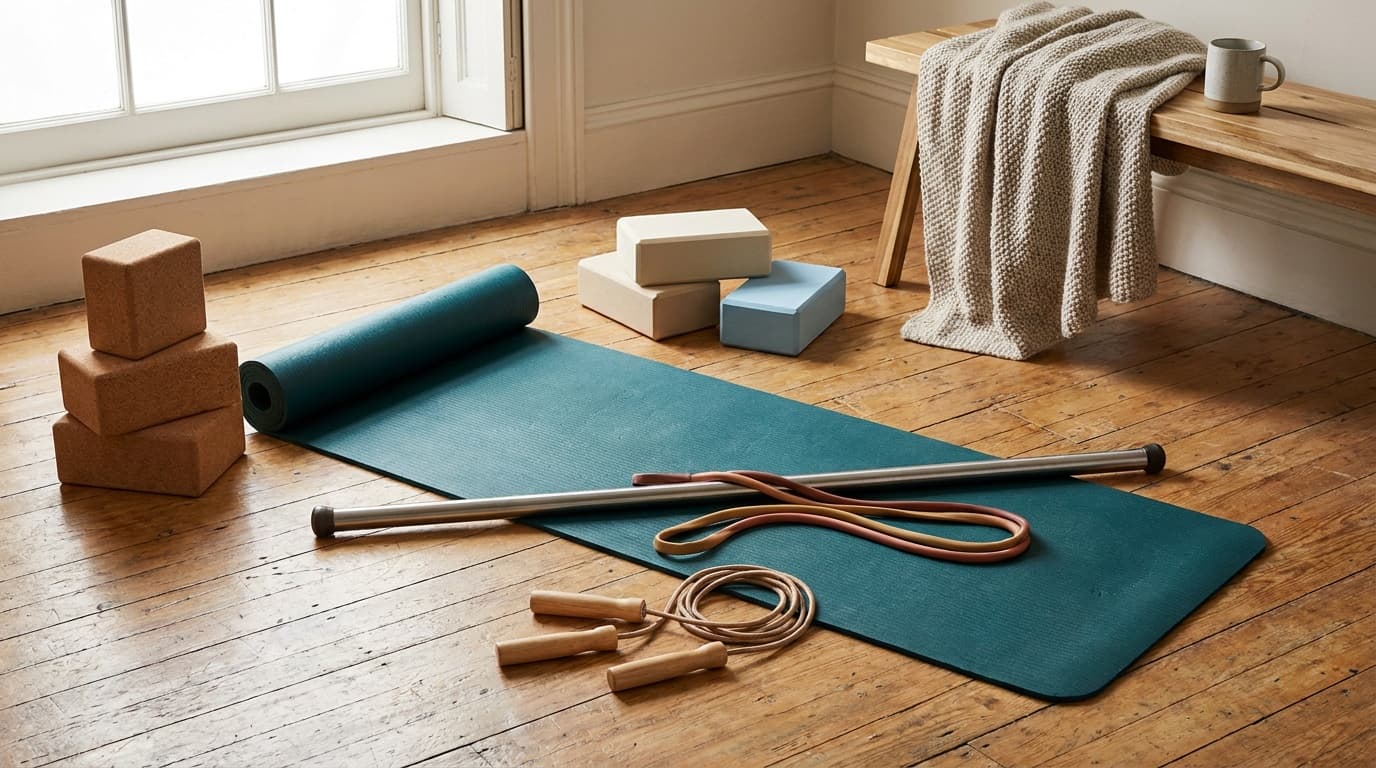
A pilates bar turns a simple telescoping rod and a pair of resistance bands into a full-body cable-tension system you can use on a yoga mat, in a hotel room, or in your living room.
What a pilates bar actually is
The kit (the Gaiam Restore Pilates Bar Kit is a typical example) has three components: a telescoping fiberglass or aluminum bar, two resistance bands that thread through or clip onto the bar's ends, and foot loops (sometimes called ankle straps) attached to the bands. Most bars adjust from roughly 35 cm to 50 cm so the grip width suits exercises from squats to rows. Resistance bands are typically sold in sets: light (around 5–10 kg), medium (10–15 kg), and heavy (15–20 kg per band). Stacking both bands doubles the load, so the ceiling for most kits is about 30–40 kg total tension at moderate stretch.
The bar itself is the key piece. Without it, you are just holding two separate bands, which limits pressing and symmetry. The bar locks both hands (or both feet) into a shared plane, so the movement pattern stays controlled, replicating the guided feel of a reformer's footbar or straps.
How it mimics reformer resistance
A reformer uses calibrated steel springs to create consistent, progressive tension through a carriage's full travel. A pilates bar uses elastic resistance instead. The mechanics differ in one important way: elastic tension increases as the band stretches, so the hardest point of the movement is at peak extension, not mid-range. On a reformer, tension is more linear. That distinction matters for experienced practitioners doing loaded rollouts or split squats, but for most foundational pilates movements, the elastic curve is close enough to train the same muscles in the same patterns.
Foot loops replicate the strap system on the reformer's foot platform. You lie on your back, place your feet in the loops, and press or circle your legs against band resistance exactly as you would in reformer footwork. That is the core of the imitation: loaded, controlled leg work against a consistent tension source, lying supine.
The bar locks both sides into a shared movement plane, which is the functional reason it feels closer to reformer work than two loose bands ever could.
Full-body use: what movements it covers
A pilates bar handles more movement patterns than its size suggests.
Core movement families
Leg press and circles
lie supine, feet in loops, press bar away to work glutes, hamstrings, and calves in the reformer footwork pattern
Rows and pulls
sit upright or hinge forward, anchor bands underfoot, pull bar toward chest or chin for back and bicep work
Squats and deadlifts
stand on the bands, hold bar at shoulder height or hip level to add resistance to lower-body patterns
Core rolldown
sit tall, feet anchored, use the bar as a handle to resist a controlled spinal rolldown and curl back up
Shoulder and chest press
press bar overhead or forward from chest, adding band resistance to pressing patterns
What it does not cover well: lateral movements (the carriage slides sideways in some reformer work), loaded spinal extension over the box, and any exercise that needs the carriage to move independently of body weight. Jump-board cardio is also out.
Who it suits
The pilates bar is a practical tool for a specific kind of trainee, not a universal substitute.
It works well for people training at home who want low-impact, controlled resistance work without machines. The footprint is a yoga mat; storage is a gym bag. Travelers who want to maintain a pilates or mobility practice between studio sessions get genuine carry-on-friendly resistance. Beginners benefit from the bilateral symmetry the bar enforces: you cannot compensate to one side the way you can with dumbbells, so body awareness develops quickly.
It suits toning and muscular endurance goals better than strength or hypertrophy goals. Working in the 15–25 rep range against moderate band tension builds the kind of postural, stabilizing strength pilates is known for. It will not replace progressive overload training for people pursuing significant strength gains.
People returning from injury or managing joint sensitivity often find the guided, low-load nature of bar work appropriate, but that should always be cleared with a physiotherapist for specific conditions.
Strengths and limits vs a real reformer
Being honest about the gap matters. A studio reformer costs $3,000–$8,000, weighs 50–90 kg, and needs a dedicated 2 x 2.5 m floor space. A pilates bar kit like the Better Sense Pilates Bar Kit costs $20–$80 and weighs under a kilogram. The tradeoff is real.
Strengths of the bar: portability, price, the genuine reformer-footwork analog, and accessibility for beginners who find a full reformer class intimidating. For the first 3–6 months of a pilates practice, the fundamental patterns, the breath work, the postural cues, and the abdominal control can all be developed with a bar.
Limits: the moving carriage is absent, which removes eccentric loading on the return phase that makes reformer spring work distinct. Resistance tops out far below what a reformer's spring stack can provide. The bar cannot replicate long-box, short-box, or jump-board work. And without an instructor's eye, form errors are harder to self-correct on unfamiliar exercises.
For regular studio practitioners, the bar is a useful supplement and travel tool, not a replacement. For someone who has never been to a reformer class, it is a legitimate and affordable entry point.
Frequently asked questions
Can a pilates bar replace a reformer for a regular practitioner?
Not fully. It replicates footwork and strap-based exercises well, but the moving carriage, the full spring-load range, and exercises like the long-box series are absent. Most experienced practitioners use it as a travel or maintenance tool between studio sessions rather than a primary training device.
How much resistance does a pilates bar actually provide?
Most kits include two bands rated at 5–20 kg each depending on the set. Stacking both gives a practical ceiling of around 30–40 kg of combined tension at moderate stretch. Resistance increases as the band lengthens, so peak load lands at end range, which differs from the linear tension of reformer springs.
Is a pilates bar good for beginners with no pilates experience?
Yes, with a caveat. The bar enforces bilateral symmetry and limits load, which helps beginners learn movement patterns without overloading joints. Following a structured video program or a few in-person sessions first is worth the investment, because the foundational breathing, pelvic alignment, and spinal cues are harder to self-teach from scratch.
For specific product picks, see our guide to the best pilates bars. Browse all fitness guides or read how we research and rate gear.
Recommended gear
Our current top picks from the Best Pilates bar kits: 2 exact picks for home workouts guide, if you are ready to buy.
BBTOPS
Bbtops Pilates Bar Kit with Resistance Bands
Best Overall
Kit Score 8.0/10
$23.93 Price checked Oct 23, 4:16 PM CDT
Best for: Home users who want a top-selling combination of steel-bar stability, dual-level resistance, and a price that does not require a second thought.
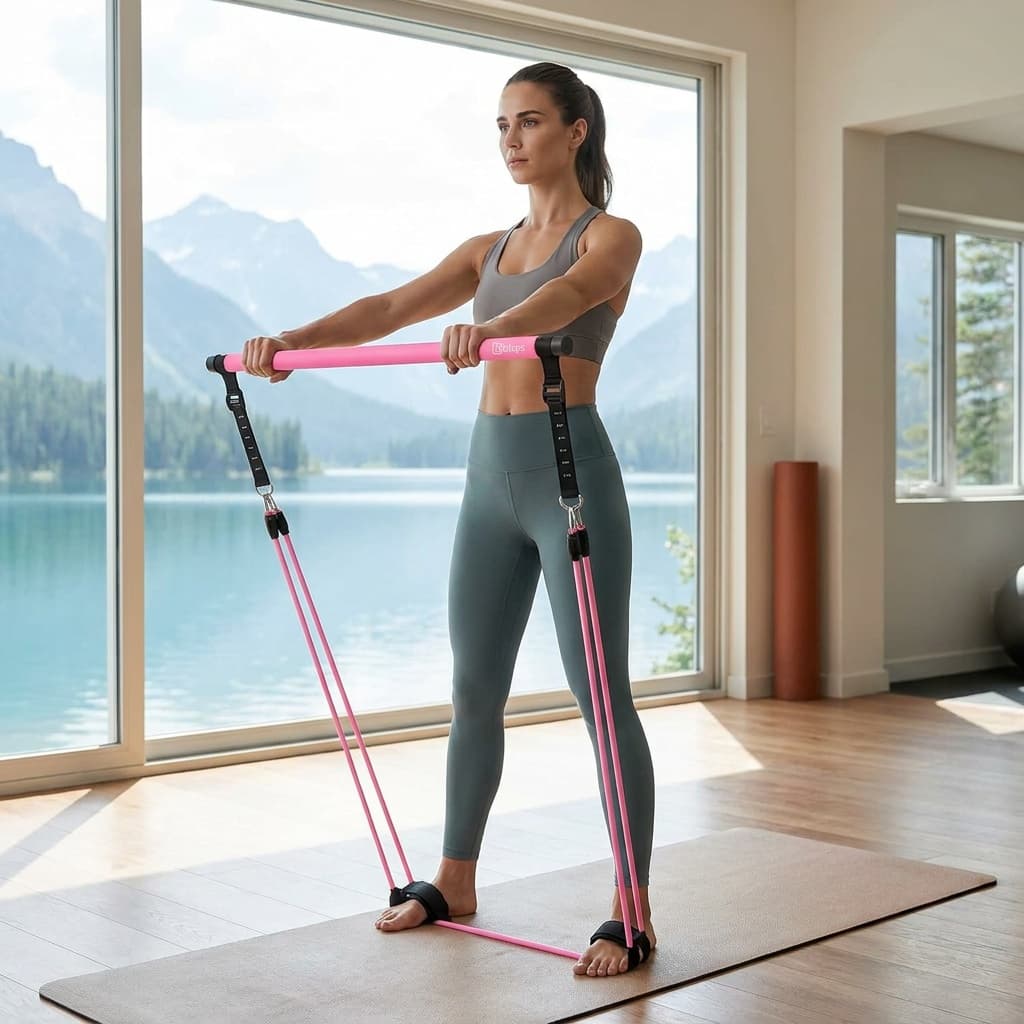
- Screw-thread steel construction is noticeably sturdier than cheaper clip-on designs, and owners consistently call out the stable, wobble-free feel during leg and core work
- Designed for users roughly 5'2"–5'8"; taller users may find the strap length limiting for full-range standing exercises
- Bar material
- 3-section steel with foam grip
- Bar
- 3-section screw-together steel; assembled length not published
- Resistance bands
- 6 natural latex bands: 20, 30, and 50 lb (two each, stackable)
- Resistance range
- 20–200 lb via stacking
- Foot loops
- Included (padded, sweat-absorbent)
- Kit weight
- About 3 lb
About this pick
The Bbtops kit pairs a three-section screw-together steel bar with a quick-adjust buckle and six natural latex bands in three resistance levels, so beginners and intermediate users can stack up as they progress.
Strengths
- Screw-thread steel construction is noticeably sturdier than cheaper clip-on designs, and owners consistently call out the stable, wobble-free feel during leg and core work
- Three band levels (20, 30, and 50 lb) stack up to 200 lb, so you can progress without buying more bands
- Compact carry bag and quick 10-second assembly make it practical for apartment living or travel
Weaknesses
- Designed for users roughly 5'2"–5'8"; taller users may find the strap length limiting for full-range standing exercises
- Foam grip wears over several months of daily use, a common pattern across this product category
Kit Score breakdown
COFOF
COFOF Pilates Bar Kit with Resistance Bands
Best Value
Kit Score 8.5/10
$39.99 Price checked Oct 23, 4:16 PM CDT
Best for: Anyone who wants a well-accessorized kit with fine-grained resistance options and a fast, precise adjustment system, without stepping up to a premium price.
- The upgraded metal buckle with clear nylon-rope graduations makes length adjustments faster and more precise than the cord-and-hook systems on cheaper kits
- Best fit for users in the 5'2"–5'8" height range; users above 5'9" report reduced range of motion on standing exercises
- Bar material
- 3-section steel with foam grip
- Strap adjustment
- Heavy-duty metal buckle, 4.3–18 in. nylon rope with clear graduations
- Resistance bands
- 6 natural latex bands: 20, 25, and 30 lb (two each)
- Resistance range
- 20–150 lb via stacking
- Extras included
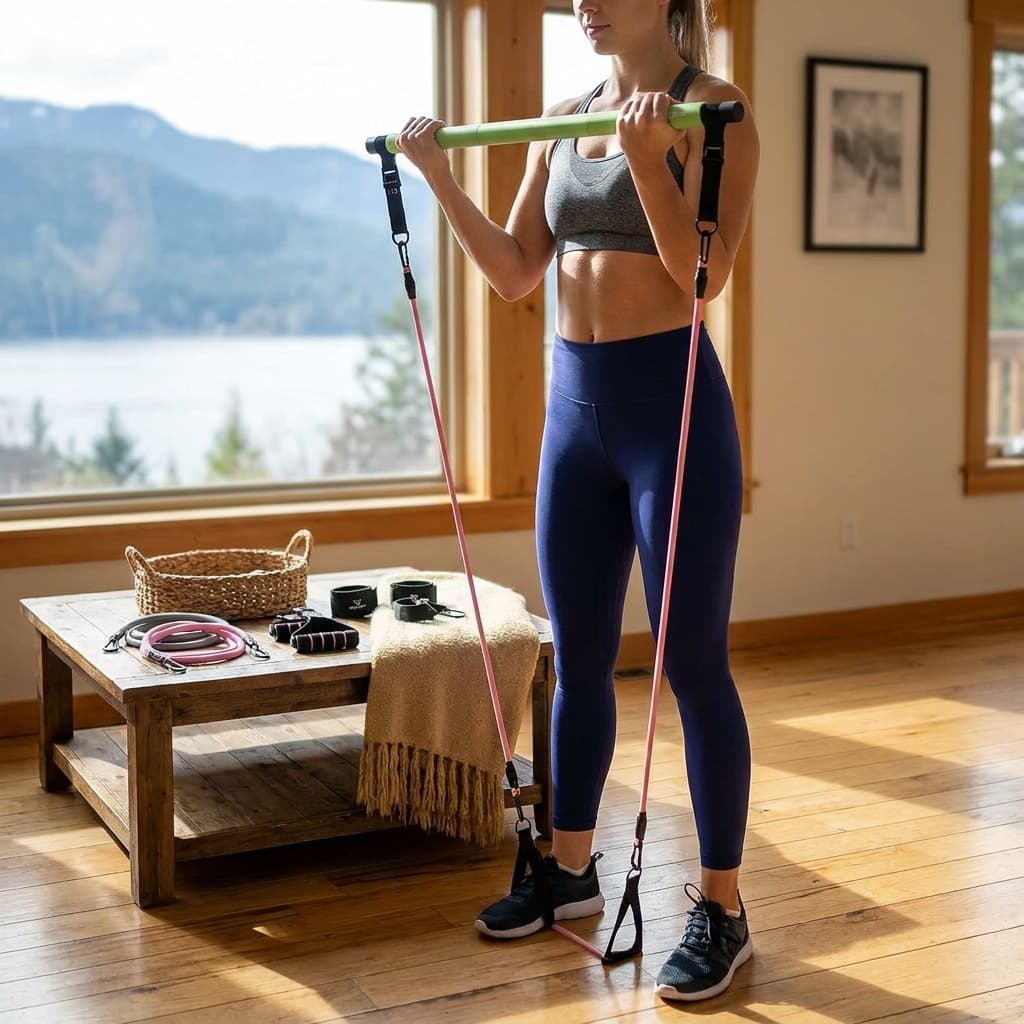
- Door anchor, 2 padded handles, 2 ankle straps, carry bag
- Kit weight
- 2.87 lb (all accessories, per listing)
About this pick
COFOF stands out for its heavy-duty metal adjustment buckle and the widest accessory spread at this price point. Six bands in three resistance levels stack up to 150 lb, covering everything from beginner mobility work to intermediate toning circuits.
Strengths
- The upgraded metal buckle with clear nylon-rope graduations makes length adjustments faster and more precise than the cord-and-hook systems on cheaper kits
- Six stackable bands (20, 25, 30 lb) give more resistance granularity than most competitors, which matters when progressing from beginner to intermediate exercises
- Door anchor and ankle straps turn one kit into a versatile cable-style setup beyond the bar itself
Weaknesses
- Best fit for users in the 5'2"–5'8" height range; users above 5'9" report reduced range of motion on standing exercises
- Latex bands show wear after several months of near-daily high-tension use, consistent with the broader category
Kit Score breakdown
See all picks in Best Pilates bar kits: 2 exact picks for home workouts
Keep going
Researched, not hands-on tested
Updated Jun 4, 2026Our recommendations draw on manufacturer documentation, retailer listings, owner feedback, and comparisons with alternatives.
As an Amazon Associate I earn from qualifying purchases. We may earn a commission from links here, at no extra cost to you. How we research →