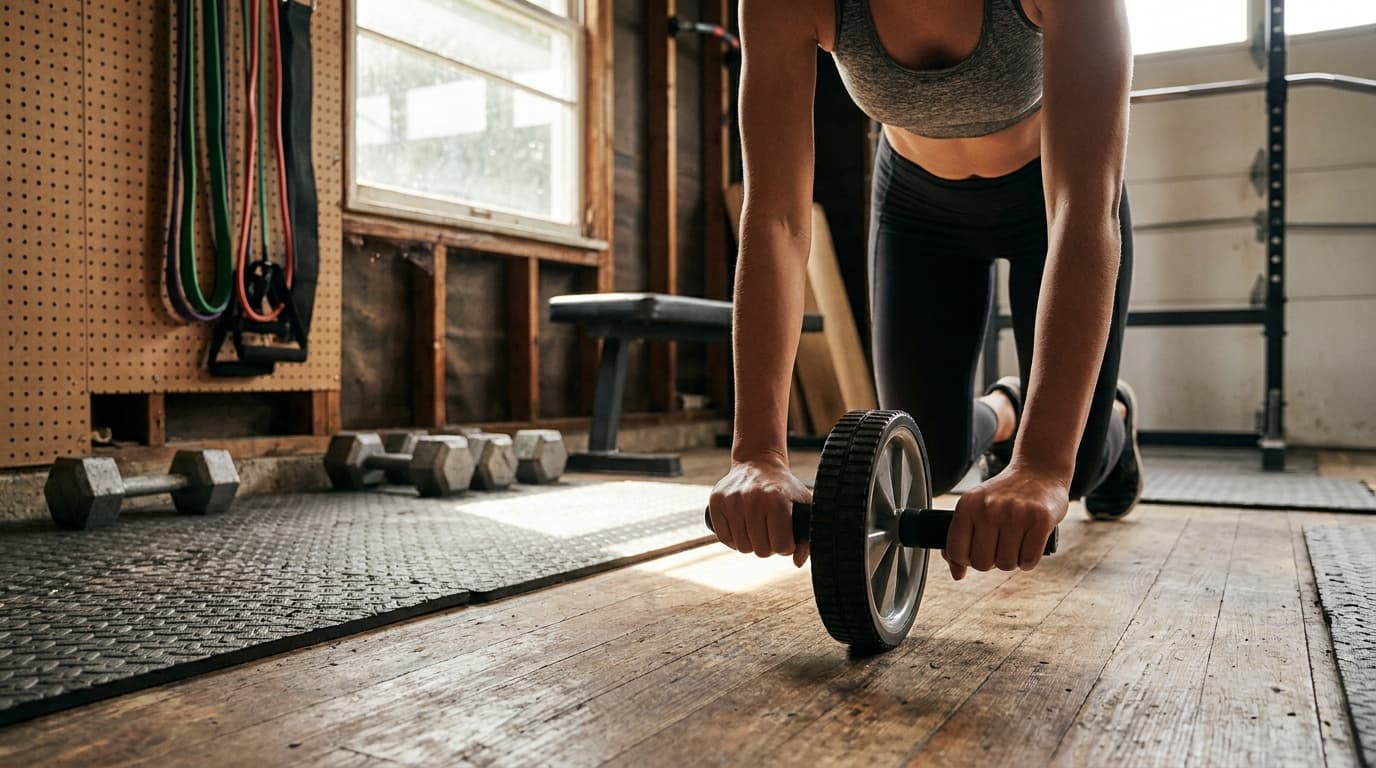
The ab roller is one of the most effective core tools you can own, and one of the most commonly misused. Get the technique right from day one and you protect your lower back while building serious anterior core strength.
The kneeling start position
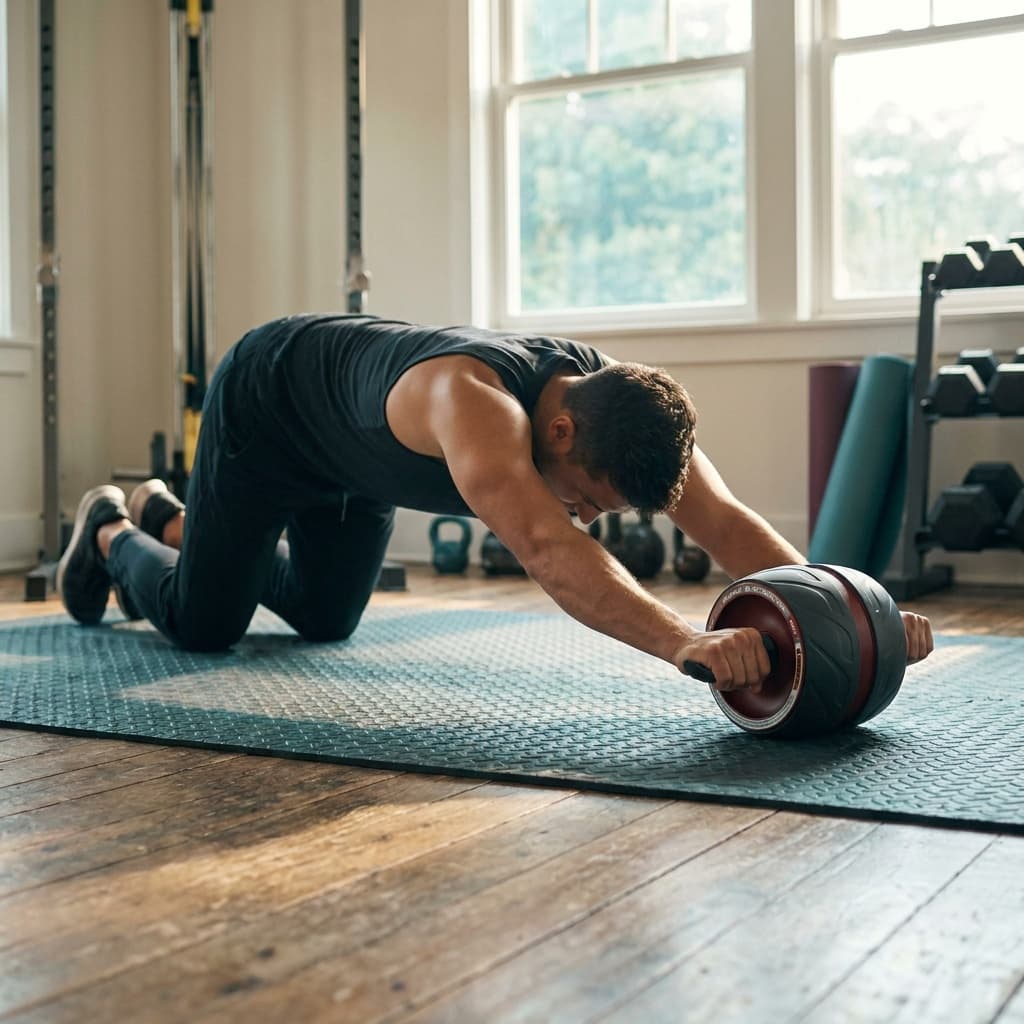
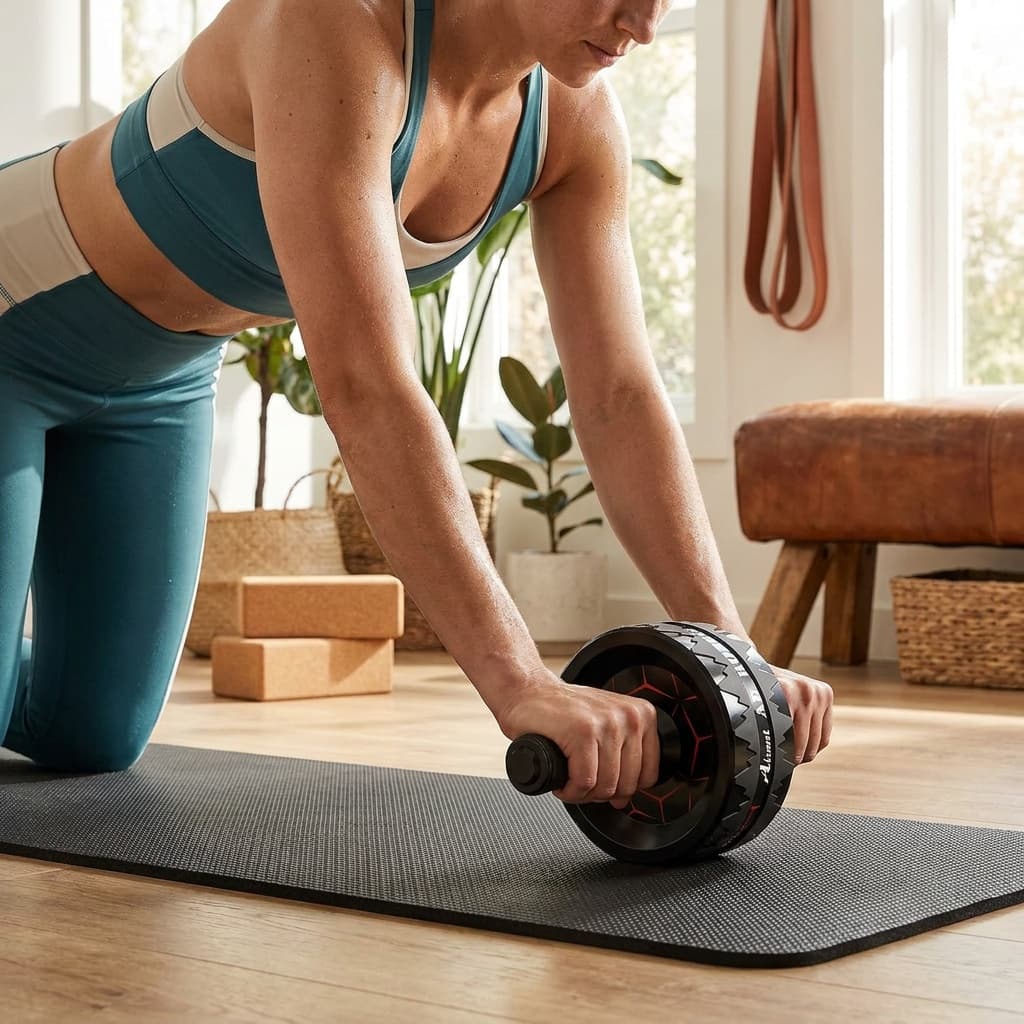
Kneel on a soft surface (many rollers, like the Sports Research Ab Wheel Roller, include a knee pad) with the roller directly under your shoulders, not in front of them. Your knees, hips, and shoulders should form a straight line from the side view. Grip the handles firmly, palms facing down, wrists neutral.
Before the wheel moves an inch, set your position: posterior pelvic tilt (tuck your tailbone slightly), ribcage down, glutes lightly squeezed. This is not optional prep, it is the movement. Every rollout starts and ends here.
Bracing the core to protect the lower back
The risk with ab rollers is lumbar hyperextension. As your arms extend, gravity pulls your hips toward the floor. If your core is not locked before that happens, your lower back arches to compensate and absorbs the load.
The fix is intra-abdominal pressure. Take a moderate breath in, brace your abs as though you are about to be punched, and hold that tension through the entire descent. Do not suck in your stomach. Think "expand outward in all directions." This Valsalva-adjacent technique creates a rigid cylinder around your spine.
The ab roller does not train your core by moving your spine. It trains your core by stopping your spine from moving at all.
If your lower back dips into extension before you are halfway out, you have gone too far. Pull back immediately. Range of motion is earned, not assumed.
Beginner regressions: wall stops and incline rollouts
Do not roll to full extension on your first session. Two regressions make the movement safe and buildable, and a spring-assisted wheel like the Perfect Fitness Ab Carver Pro reduces the return load in a similar way.
Beginner progression ladder
Wall stop (short)
Place a wall 30–40 cm in front of you. Roll out until the roller contacts the wall, then pull back. This caps your range and removes the "falling" sensation.
Wall stop (longer)
Move the wall back in 5–10 cm increments over several sessions as your brace gets stronger.
Incline rollout
Use a slight incline (a wedge mat or a step) so gravity assists the return phase. This reduces the load on the eccentric and lets you feel the correct path.
Floor rollout to parallel
Roll until your arms and torso reach roughly parallel with the floor. Pause, brace hard, return. No wall needed once you can hold this with a flat back.
Full extension
Hips travel nearly to the floor. Reserve this for when you can complete 3 sets of 10 at parallel with zero lower back involvement.
Breathing and rep ranges
Breathing on an ab roller is not complicated, but the timing matters. Inhale lightly before you start the descent and brace. Exhale as you pull back in during the concentric phase. Avoid exhaling on the way out; releasing pressure mid-descent is when lower back injuries happen.
For most people, 3 sets of 8–12 kneeling rollouts three times per week is plenty of volume to build genuine core strength. The ab roller is a high-load movement. Treat it like a strength exercise, not a cardio drill. Rest 60–90 seconds between sets. Two to three sessions per week with a day of recovery between them is the standard starting frequency.
Progressing to standing rollouts
Standing ab rollouts (feet on the floor, hips high) are dramatically harder than the kneeling version. The lever arm is longer, the stabilization demand is greater, and the margin for lower back error is smaller.
The benchmark before attempting standing rollouts: you can complete 3 sets of 10 full-extension kneeling rollouts with a flat back, controlled 3-second eccentric, and no fatigue-related form breakdown on the last rep. If your form degrades on rep 8, you are not ready.
When you do progress, start with a partial standing rollout. Feet hip-width, slight hip hinge to lower the starting position, and roll only as far as your brace holds. Use the same wall-stop logic you used as a beginner, this time applied to the standing version.
Frequently asked questions
How often should I train with an ab roller?
Two to three times per week is the right starting frequency for most people. The ab roller is a genuine strength exercise, not a light finisher, and your core needs 48 hours to recover between sessions. Beginners sometimes feel delayed onset muscle soreness in the hip flexors as well as the abs, which is normal. Increase frequency only after 4–6 weeks of consistent training without soreness lasting more than a day.
Why does my lower back hurt after using an ab roller?
Lower back pain after rollouts almost always means one of two things: you rolled out farther than your core brace could support, or you lost intra-abdominal pressure mid-rep. Shorten your range of motion, focus on the bracing cues above, and consider returning to the wall-stop regression. If pain persists beyond 48 hours or is sharp rather than a dull ache, stop and consult a physiotherapist before continuing.
Can beginners use an ab roller, or is it too advanced?
Beginners can absolutely use an ab roller as long as they start with the wall-stop regression and treat range of motion as something to build over weeks, not days. It is a challenging tool because it demands genuine core stiffness, but that demand is exactly what makes it effective. The kneeling version with a short wall stop is no more dangerous than a well-executed plank once you understand the bracing mechanics.
For specific picks, see our guide to the best ab rollers. Browse all fitness guides or read how we research and rate gear.
Recommended gear
Our current top picks from the Best ab rollers for core strength (2026) guide, if you are ready to buy.
PERFECT FITNESS
Perfect Fitness Ab Carver Pro Roller Wheel
BEST OVERALL
Kit Score 8.0/10
$41.66 Price checked Oct 23, 6:22 AM CDT
Best for: Beginners and intermediate users who want spring-assisted rollouts and built-in oblique training without buying a separate ab wheel and resistance band.
- Built-in spring assist dramatically lowers the barrier for beginners to reach full extension safely
- 220 lb (100 kg) weight capacity is lower than competitors in the same price bracket
- Wheel type
- Single ultra-wide wheel, approx. 7.75" tread width x 7.88" diameter
- Spring mechanism
- Internal carbon steel kinetic spring (resistance out, assist back)
- Max user weight
- 220 lb (100 kg)
- Total length
- 9" including ergonomic curved handles
- Included
- High-density foam knee pads, 21-day downloadable workout plan, 1-year warranty
About this pick
The Ab Carver Pro pairs an ultra-wide single wheel with an internal carbon steel spring that adds resistance on the rollout and pulls you back on the return, making full extensions achievable for beginners who would otherwise collapse at the bottom. The angled ergonomic handles reduce wrist loading and angle your arms to recruit more core and tricep activation.
Strengths
- Built-in spring assist dramatically lowers the barrier for beginners to reach full extension safely
- Ultra-wide wheel tread allows diagonal carving to target obliques, not just straight-line rollouts
- 4.6 stars across more than 15,000 Amazon reviews signals consistent real-world satisfaction
Weaknesses
- 220 lb (100 kg) weight capacity is lower than competitors in the same price bracket
- Spring mechanism produces audible clicking on some units, and the included knee pads are thin
Kit Score breakdown
Best for: Anyone who wants a stable, durable dual-wheel roller at a budget price and is comfortable controlling their own rollout depth from the start.
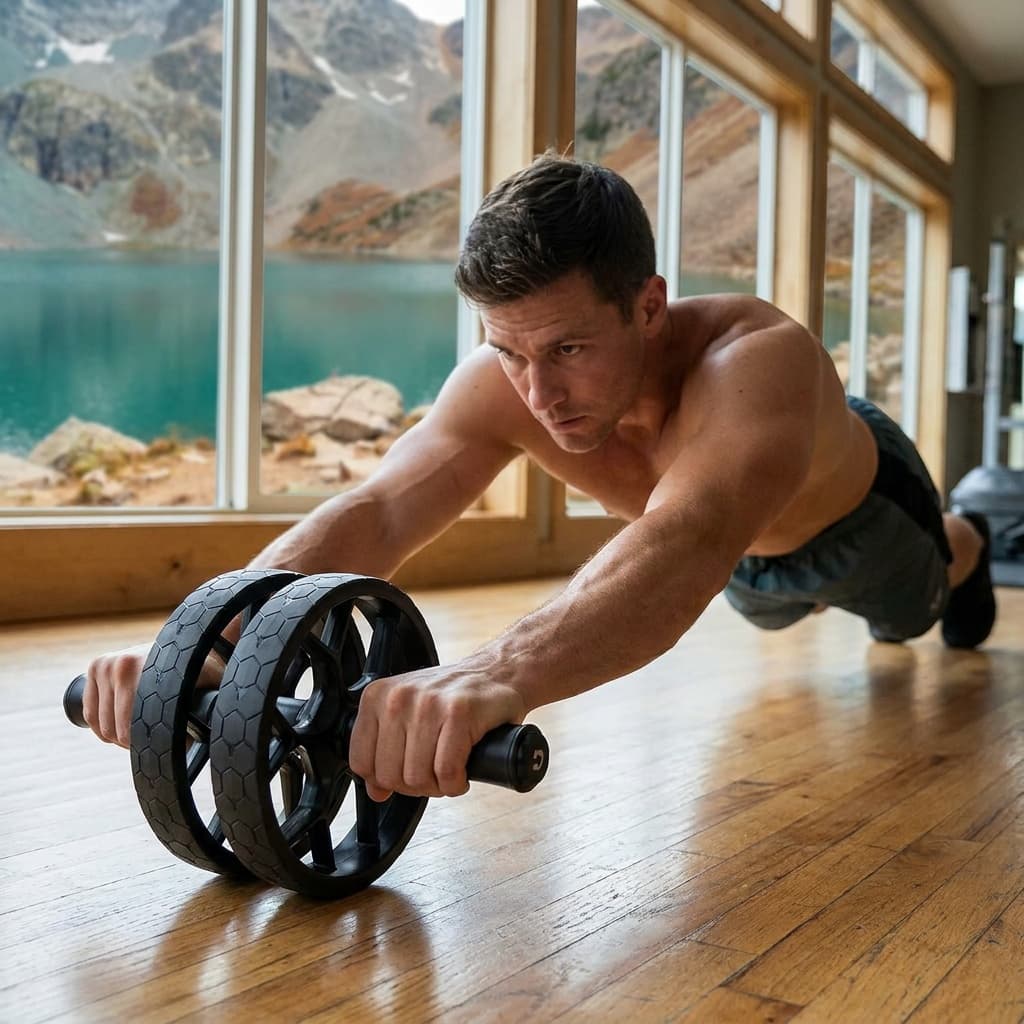
- Dual-wheel layout cuts lateral wobble and gives beginners a more forgiving rollout path
- No spring assist: users must control the full eccentric and concentric under their own strength
- Wheel design
- Dual-wheel, 3.2" wide combined tread, TPR rubber surface
- Axle
- Stainless steel shaft
- Max user weight
- 440 lb
- Handle material
- EVA foam grips over stainless steel tube
- Weight
- Approx. 1.4 lb
- Included
- Foam knee pad
About this pick
The Vinsguir is one of Amazon's top-selling ab rollers, with more than 23,000 ratings at 4.6 stars. Its dual-wheel configuration (two separate wheels sharing a central axle) widens the contact patch compared to a single narrow wheel, which reduces side-to-side wobble on rollouts and helps users stay in a straight path while learning the movement.
Strengths
- Dual-wheel layout cuts lateral wobble and gives beginners a more forgiving rollout path
- 440 lb rated capacity and stainless steel shaft outperform most budget rollers on structural specs
- Lightest and most compact option in this roundup, fitting in a gym bag without disassembly
Weaknesses
- No spring assist: users must control the full eccentric and concentric under their own strength
- Included knee pad is consistently called too small in owner reviews
Kit Score breakdown
SPORTS RESEARCH
Sports Research Ab Wheel Roller with Knee Pad
EDITOR'S CHOICE
Kit Score 8.3/10
$24.95 Price checked Oct 23, 6:22 AM CDT
Best for: Users up to 250 lb who prioritize grip comfort and a thicker, sturdier wheel over spring-assist or dual-wheel stability features.
- 3" thick rubber wheel is wider than most single-wheel competitors, improving stability and rolling feel
- 250 lb weight capacity is lower than several competitors in the same price range
- Wheel design
- Single wheel, 3" wide, rubber-treaded with rounded edge profile
- Max user weight
- 250 lb
- Handle material
- Cushioned comfort grips, removable for storage
- Item dimensions
- 11" L x 8.3" W x 5" H
- Included
- Foam knee pad, workout guide
- Warranty
- 1-year manufacturer warranty
About this pick
Sports Research built this roller to a higher material standard than most sub-$30 options: the 3-inch rubber wheel is notably thicker than the industry average, and the cushioned removable grips reduce hand fatigue during volume work. At 250 lb rated capacity it suits a wide range of users, and the rounded wheel edge profile makes diagonal rolling more forgiving than a flat-edge wheel.
Strengths
- 3" thick rubber wheel is wider than most single-wheel competitors, improving stability and rolling feel
- Cushioned ergonomic grips are consistently noted as comfortable in owner reviews
- Sports Research brand reputation and premium-feel materials stand out at this price point
Weaknesses
- 250 lb weight capacity is lower than several competitors in the same price range
- Single narrow wheel requires more active lateral stability from the user compared to dual-wheel designs
Kit Score breakdown
Keep going
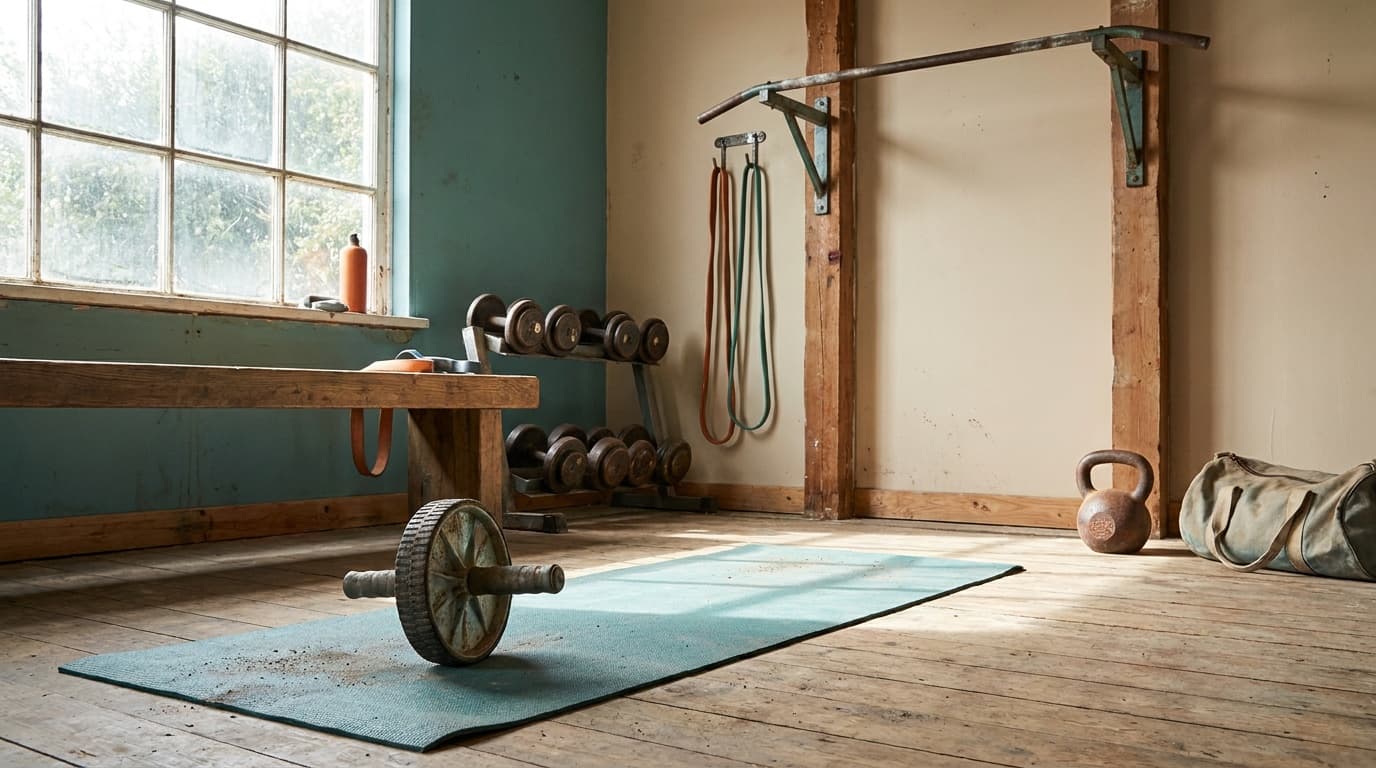
Complete loadoutHome calisthenics kitA compact strength and conditioning setup built around five tools that cover pushing, pulling, assistance, cardio, and floor work.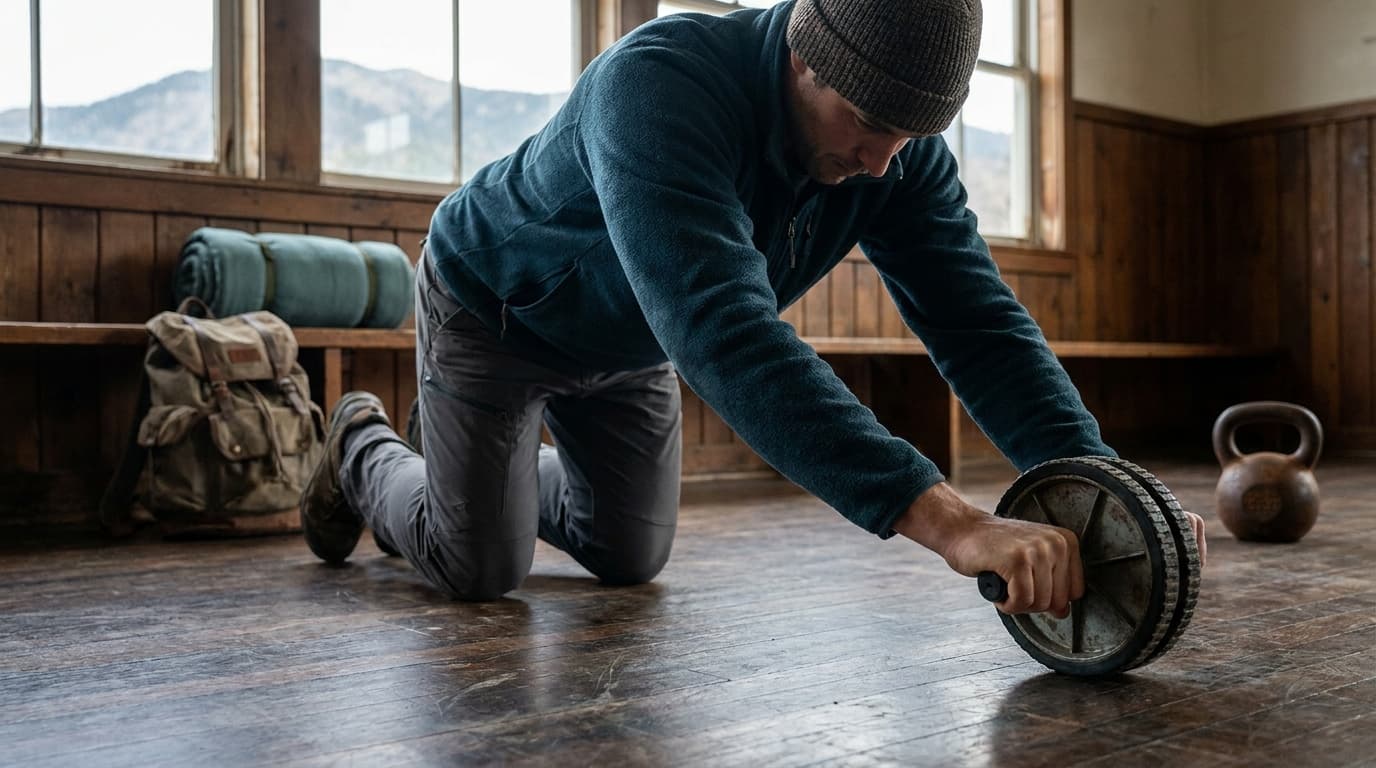
Researched, not hands-on tested
Updated Jun 4, 2026Our recommendations draw on manufacturer documentation, retailer listings, owner feedback, and comparisons with alternatives.
As an Amazon Associate I earn from qualifying purchases. We may earn a commission from links here, at no extra cost to you. How we research →