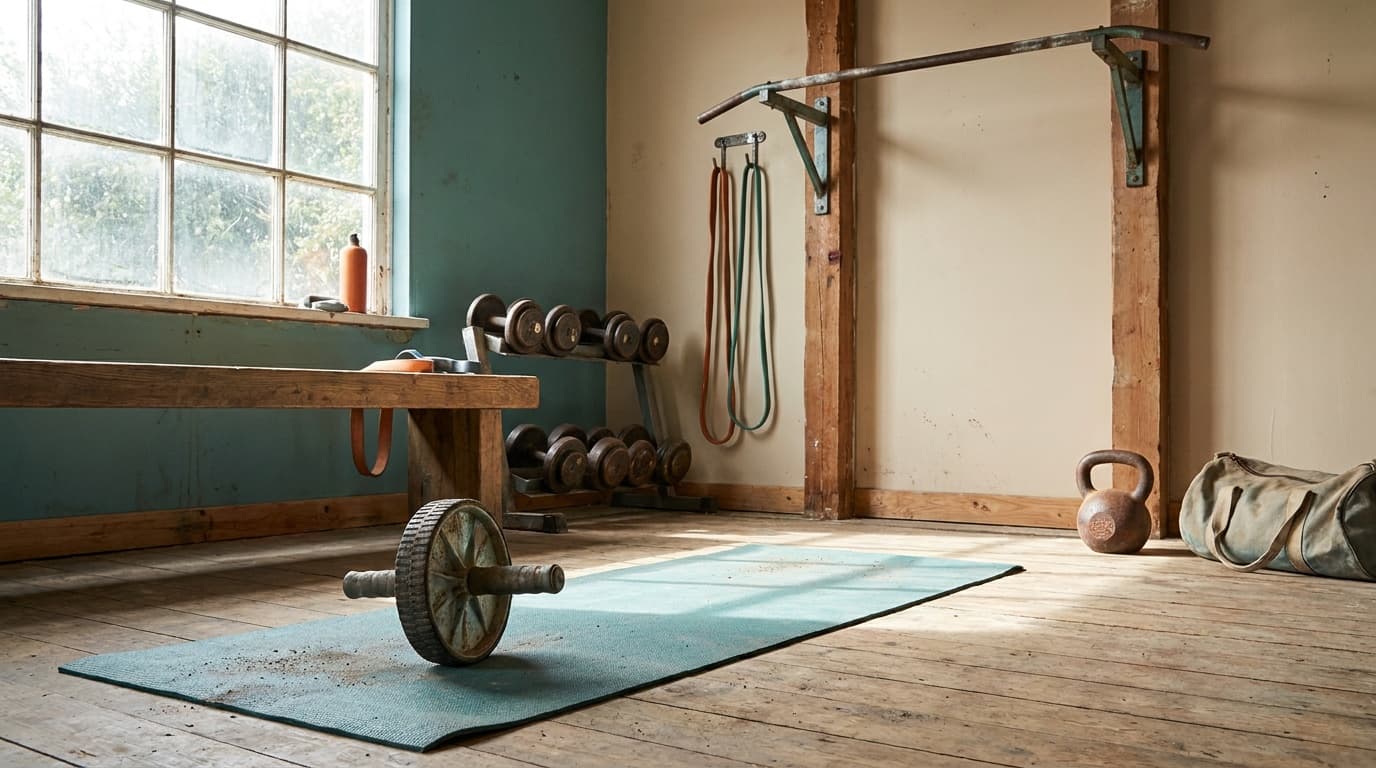
Yes. In a 2006 EMG study in Physical Therapy, ab-wheel exercises, including the kneeling roll-out, produced some of the highest upper and lower rectus abdominis, oblique, and lat activity of any exercise tested, well above the crunch, while lower-back muscle activity stayed low. What an ab roller will not do is burn belly fat: a 2011 trial found six weeks of ab training improved endurance but did not reduce abdominal fat. Understanding both halves changes how you train with it and what results you can expect.
What the ab wheel actually trains
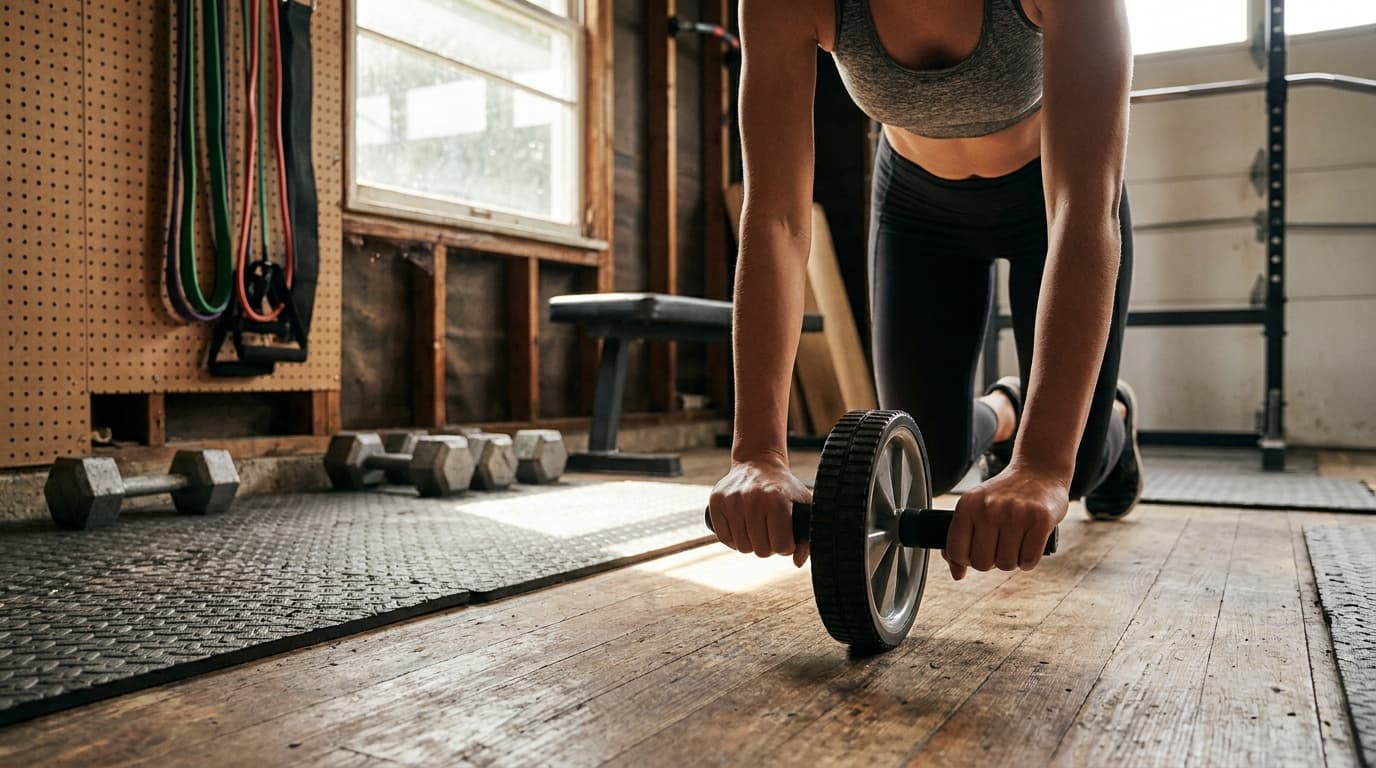
Most people think of ab training as spinal flexion: curl the torso, crunch the abs. The ab roller works the opposite pattern. As the wheel rolls forward, your spine is pulled toward extension (arching). Your core's job is to resist that pull and keep your body in a straight line. That is anti-extension, and it is one of the most functional core demands in real athletic movement.
EMG research backs this up. Escamilla and colleagues measured 21 healthy adults across traditional and device-based ab exercises and found the Power Wheel (pike, knee-up, and roll-out) among the top exercises for upper and lower rectus abdominis, internal and external oblique, and latissimus dorsi activity, ahead of the crunch and bent-knee sit-up. The lats work because pulling the wheel back requires shoulder extension against resistance, so the movement is closer to a compound drill than a pure isolation exercise. Lumbar paraspinal activity was low and similar across all the exercises tested.
Why it beats crunches for many people
The crunch works through a short range of motion, uses repeated spinal flexion, and does little for the lats or shoulders. The rollout works through a long range of motion, trains the trunk to hold position rather than repeatedly flex, and in EMG testing drew more activity from the abs, obliques, and lats than the crunch did.
For anyone who sits at a desk for long stretches, the postural implications are also worth noting. Repeated spinal flexion under load is not inherently dangerous, but if your daily posture already involves prolonged flexion, adding more may not be the priority. Anti-extension training addresses a different and often undertrained capacity.
The ab wheel does not just work your abs. It teaches your whole anterior chain to hold position under load.
That said, crunches are not useless. They are low-skill, easy to scale, and genuinely train the rectus abdominis. The rollout is simply a higher-return movement once you have the baseline stability to do it well.
The diet-and-abs reality
No exercise, regardless of how effective it is, removes fat from the area being trained. In a controlled trial by Vispute and colleagues, 24 sedentary adults did either seven ab exercises five days a week for six weeks or no training, on a steady diet. The ab group got better at curl-ups (47 versus 32 reps) but saw no significant change in body fat percentage, abdominal fat, waist circumference, or abdominal skinfolds. Fat is lost through an overall calorie deficit, not from the muscles you happen to be training.
This matters practically. You can develop genuinely strong, well-trained abdominal muscles through consistent rollout work, and they may be largely invisible under a layer of subcutaneous fat. That is not a failure of the exercise. It is a nutrition and overall energy-balance question.
If visible abs are the goal, the equation is: build the muscle (rollouts help here) and create the deficit (food and total activity volume do the work). Neither half is optional.
Who should use one, and who should wait
The ab roller is not a beginner tool. Full rollouts from a kneeling position require meaningful baseline core and shoulder stability. Rushing into them is one of the more reliable ways to strain the lower back.
Build up to full rollouts safely
Wall rollout
Stand facing a wall, roll forward until forearms touch, roll back. Builds pattern awareness with limited range.
Kneeling partial
From knees, roll out only 30–40 percent of the way (a spring-assisted wheel like the [Perfect Fitness Ab Carver Pro](/api/go?product=perfect-fitness-ab-carver-pro&retailer=amazon&article=are-ab-rollers-effective) helps control the return at this stage). Stop when you feel your lower back start to arch.
Kneeling mid-range
Progress to 60–70 percent of full extension as your stability improves, typically over a few weeks.
Full kneeling rollout
Roll to nearly full extension and return under control, spine neutral throughout.
Standing rollout
Advanced variation; most recreational lifters do not need to go here.
Who benefits most: intermediate lifters looking to build anterior-chain strength, athletes who need anti-extension stability (sprinters, climbers, rowers), and anyone who finds crunches boring or limited.
Who should wait or modify: anyone with an existing lower-back injury, people new to resistance training who have not yet built baseline core endurance, and anyone who cannot hold a solid plank for 30 seconds (that is a reasonable readiness benchmark).
Realistic expectations
With consistent training (2–3 sessions per week), expect core endurance and control to improve over the first couple of months; in the Vispute trial, six weeks of ab work was enough for a clear endurance gain. Visible changes to body composition depend on nutrition and total activity, not on the rollout itself.
The ab wheel is a durable, inexpensive tool (a basic model like the Vinsguir Ab Roller Wheel covers everything described here) that delivers a genuinely challenging and functional movement. It is not magic, and it will not override a surplus diet. But if you use it correctly and progress deliberately, it earns its place in any training program.
Where these numbers come from
| Claim | Source | Checked |
|---|---|---|
| 21 healthy adults; Power Wheel pike, knee-up, and roll-out produced the highest upper and lower rectus abdominis, internal oblique, and latissimus dorsi EMG, and the highest external oblique with hanging knee-ups; lumbar paraspinal activity low and similar across exercises | Escamilla et al., Physical Therapy, 2006 | 2026-09-25 |
| 24 sedentary adults, 7 ab exercises 5 days a week for 6 weeks: no significant change in body fat, android fat, abdominal circumference, or skinfolds; curl-ups 47 vs 32 | Vispute et al., Journal of Strength and Conditioning Research, 2011 | 2026-09-25 |
| Protein: 1.4–2.0 g/kg/day sufficient for most exercising individuals; 2.3–3.1 g/kg/day may maximize lean-mass retention in resistance-trained people during a calorie deficit | ISSN position stand: protein and exercise, 2017 | 2026-09-25 |
| Ab Carver Pro: built-in carbon steel spring resistance, ultra-wide wheel | Perfect Fitness listing on Amazon, ASIN B00B1N0R6C | 2026-09-25 |
| Vinsguir: 3.2 in dual wheel, knee pad included, 440 lb rated shaft | Vinsguir listing on Amazon, ASIN B07RKW5H68 | 2026-09-25 |
Frequently asked questions
How often should I use an ab roller?
2–3 times per week with at least one rest day between sessions is a solid starting point. The rectus abdominis and lats both need recovery time, especially when you are building toward fuller range of motion. More frequent sessions do not speed up progress and increase the chance of lower-back fatigue accumulating.
Is the ab roller safe for people with lower-back pain?
It depends on the source of the pain and the severity. For many people with general lower-back tightness, wall rollouts or very partial kneeling rollouts are tolerable and can even help build stabilizer strength over time. For anyone with a disc injury, herniation, or acute lower-back pain, the exercise should be avoided until a physio or sports medicine professional clears it. Near full extension the trunk has to resist a strong pull toward arching, and if the abs cannot hold, the lower back sags into extension under load.
Can I get a six-pack just by using an ab roller?
No. The ab roller can build strong, well-developed abdominal muscles. Whether those muscles are visible depends on body fat percentage, which is determined by calorie balance over time, not by abdominal training volume. Training the abs makes them stronger and contributes to a leaner look as body fat decreases, but no exercise creates visible abs on its own without the nutritional side of the equation.
For specific picks, see our guide to the best ab rollers. Browse all fitness guides or read how we research and rate gear.
Recommended gear
Our current top picks from the Best ab rollers for core strength (2026) guide, if you are ready to buy.
PERFECT FITNESS
Perfect Fitness Ab Carver Pro Roller Wheel
BEST OVERALL
Kit Score 8.0/10
$41.66 Price checked Oct 23, 6:22 AM CDT
Best for: Beginners and intermediate users who want spring-assisted rollouts and built-in oblique training without buying a separate ab wheel and resistance band.
- Built-in spring assist dramatically lowers the barrier for beginners to reach full extension safely
- 220 lb (100 kg) weight capacity is lower than competitors in the same price bracket
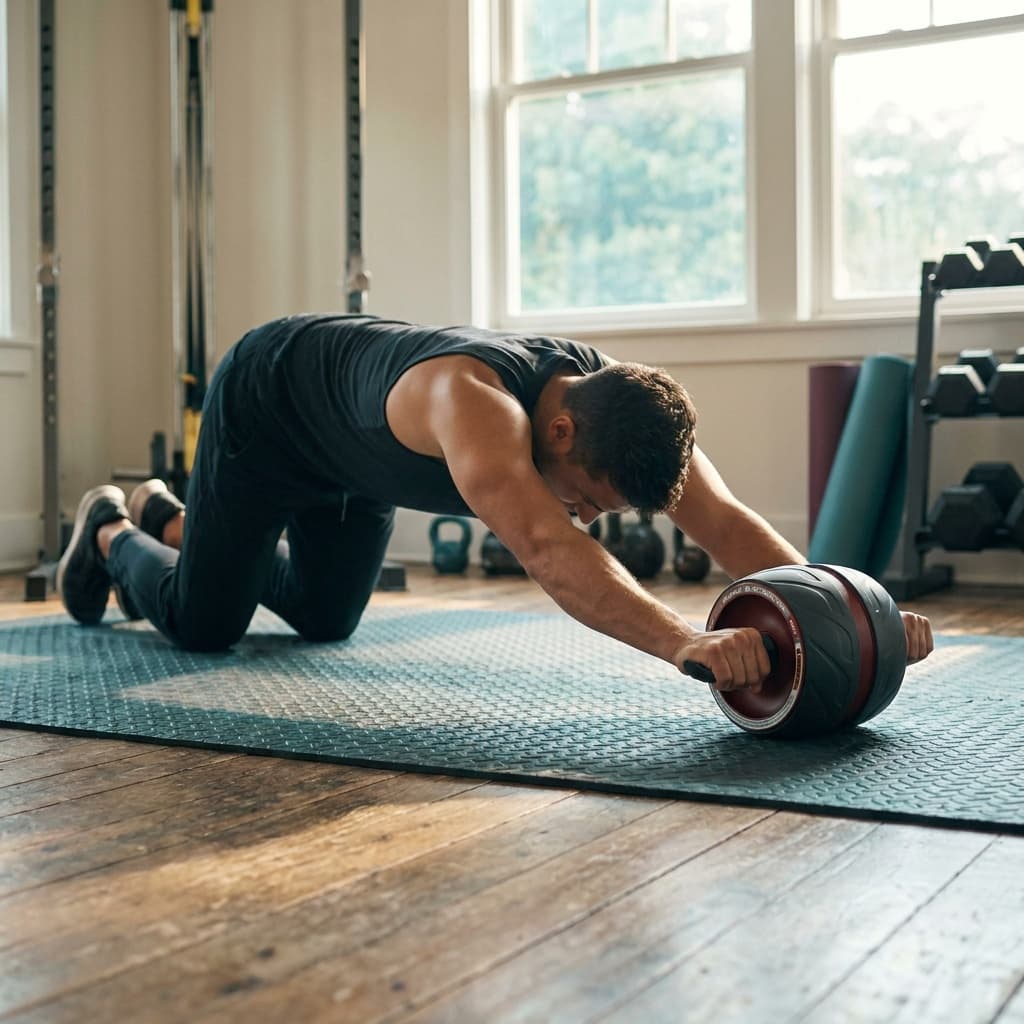
- Wheel type
- Single ultra-wide wheel, approx. 7.75" tread width x 7.88" diameter
- Spring mechanism
- Internal carbon steel kinetic spring (resistance out, assist back)
- Max user weight
- 220 lb (100 kg)
- Total length
- 9" including ergonomic curved handles
- Included
- High-density foam knee pads, 21-day downloadable workout plan, 1-year warranty
About this pick
The Ab Carver Pro pairs an ultra-wide single wheel with an internal carbon steel spring that adds resistance on the rollout and pulls you back on the return, making full extensions achievable for beginners who would otherwise collapse at the bottom. The angled ergonomic handles reduce wrist loading and angle your arms to recruit more core and tricep activation.
Strengths
- Built-in spring assist dramatically lowers the barrier for beginners to reach full extension safely
- Ultra-wide wheel tread allows diagonal carving to target obliques, not just straight-line rollouts
- 4.6 stars across more than 15,000 Amazon reviews signals consistent real-world satisfaction
Weaknesses
- 220 lb (100 kg) weight capacity is lower than competitors in the same price bracket
- Spring mechanism produces audible clicking on some units, and the included knee pads are thin
Kit Score breakdown
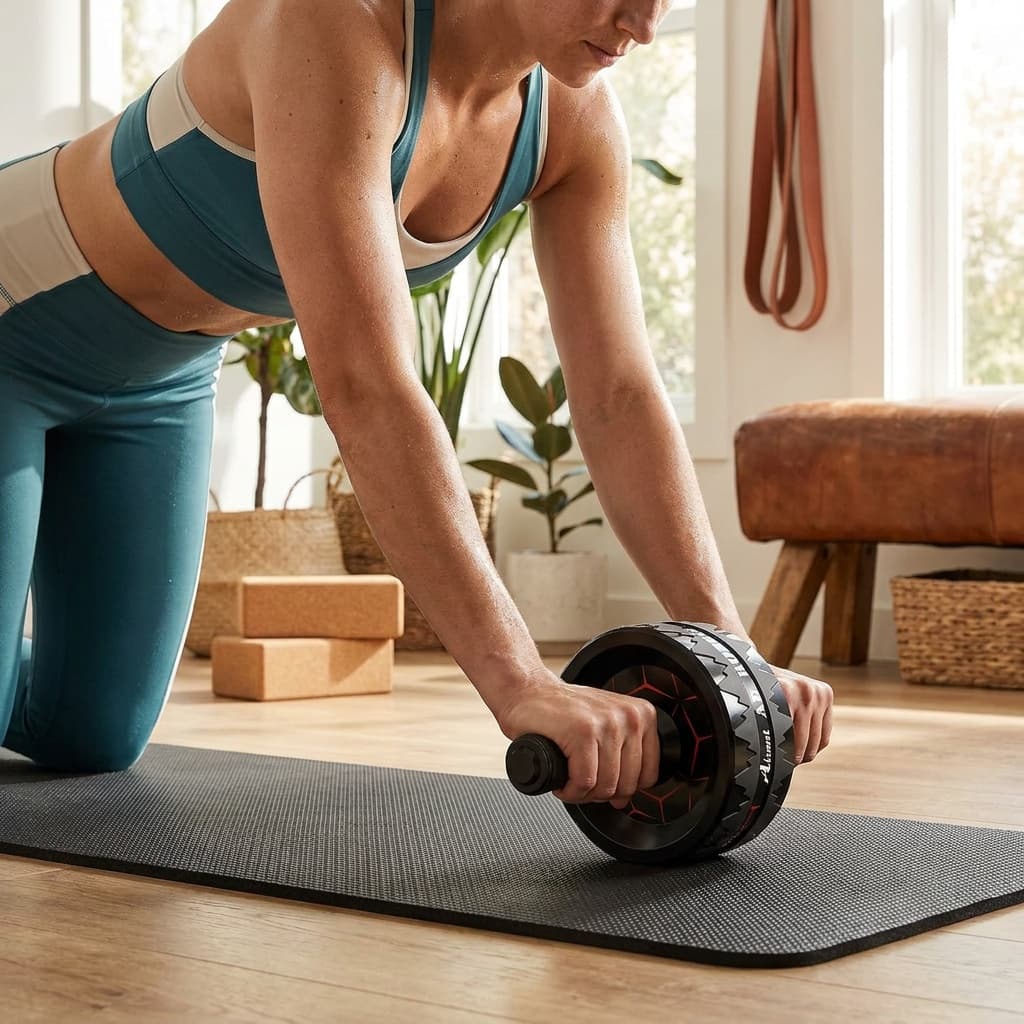
Best for: Anyone who wants a stable, durable dual-wheel roller at a budget price and is comfortable controlling their own rollout depth from the start.
- Dual-wheel layout cuts lateral wobble and gives beginners a more forgiving rollout path
- No spring assist: users must control the full eccentric and concentric under their own strength
- Wheel design
- Dual-wheel, 3.2" wide combined tread, TPR rubber surface
- Axle
- Stainless steel shaft
- Max user weight
- 440 lb
- Handle material
- EVA foam grips over stainless steel tube
- Weight
- Approx. 1.4 lb
- Included
- Foam knee pad
About this pick
The Vinsguir is one of Amazon's top-selling ab rollers, with more than 23,000 ratings at 4.6 stars. Its dual-wheel configuration (two separate wheels sharing a central axle) widens the contact patch compared to a single narrow wheel, which reduces side-to-side wobble on rollouts and helps users stay in a straight path while learning the movement.
Strengths
- Dual-wheel layout cuts lateral wobble and gives beginners a more forgiving rollout path
- 440 lb rated capacity and stainless steel shaft outperform most budget rollers on structural specs
- Lightest and most compact option in this roundup, fitting in a gym bag without disassembly
Weaknesses
- No spring assist: users must control the full eccentric and concentric under their own strength
- Included knee pad is consistently called too small in owner reviews
Kit Score breakdown
SPORTS RESEARCH
Sports Research Ab Wheel Roller with Knee Pad
EDITOR'S CHOICE
Kit Score 8.3/10
$24.95 Price checked Oct 23, 6:22 AM CDT
Best for: Users up to 250 lb who prioritize grip comfort and a thicker, sturdier wheel over spring-assist or dual-wheel stability features.
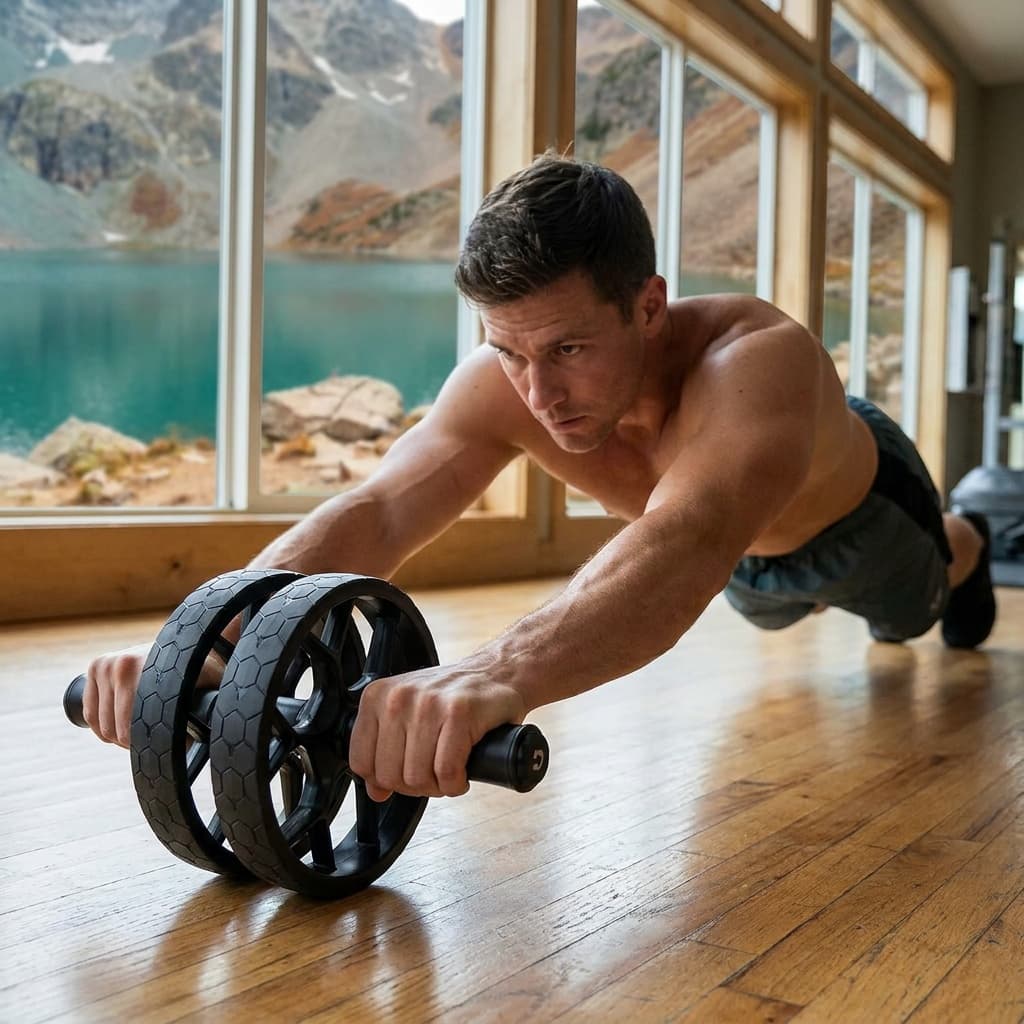
- 3" thick rubber wheel is wider than most single-wheel competitors, improving stability and rolling feel
- 250 lb weight capacity is lower than several competitors in the same price range
- Wheel design
- Single wheel, 3" wide, rubber-treaded with rounded edge profile
- Max user weight
- 250 lb
- Handle material
- Cushioned comfort grips, removable for storage
- Item dimensions
- 11" L x 8.3" W x 5" H
- Included
- Foam knee pad, workout guide
- Warranty
- 1-year manufacturer warranty
About this pick
Sports Research built this roller to a higher material standard than most sub-$30 options: the 3-inch rubber wheel is notably thicker than the industry average, and the cushioned removable grips reduce hand fatigue during volume work. At 250 lb rated capacity it suits a wide range of users, and the rounded wheel edge profile makes diagonal rolling more forgiving than a flat-edge wheel.
Strengths
- 3" thick rubber wheel is wider than most single-wheel competitors, improving stability and rolling feel
- Cushioned ergonomic grips are consistently noted as comfortable in owner reviews
- Sports Research brand reputation and premium-feel materials stand out at this price point
Weaknesses
- 250 lb weight capacity is lower than several competitors in the same price range
- Single narrow wheel requires more active lateral stability from the user compared to dual-wheel designs
Kit Score breakdown
Keep going
Complete loadoutHome calisthenics kitA compact strength and conditioning setup built around five tools that cover pushing, pulling, assistance, cardio, and floor work.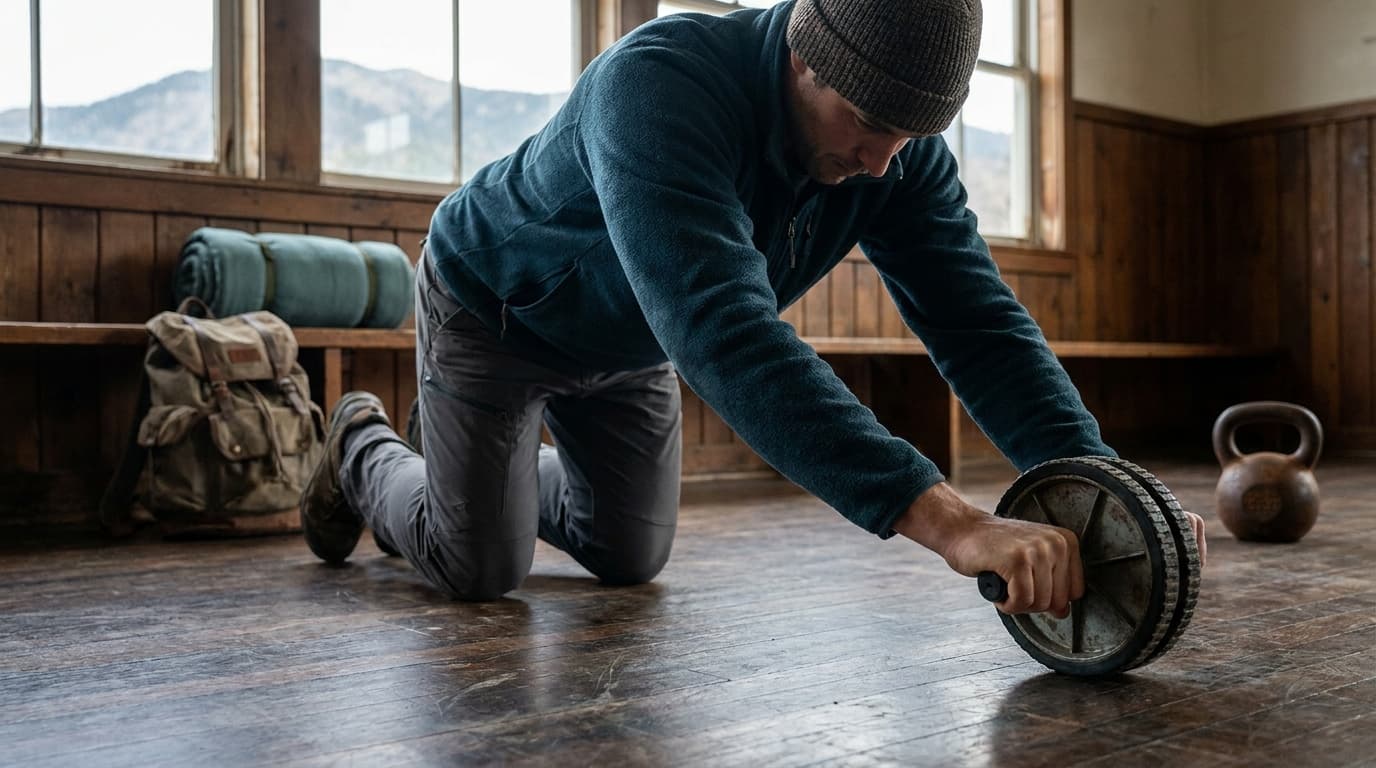
Researched, not hands-on tested
Updated Sep 25, 2026Our recommendations draw on manufacturer documentation, retailer listings, owner feedback, and comparisons with alternatives.
As an Amazon Associate I earn from qualifying purchases. We may earn a commission from links here, at no extra cost to you. How we research →