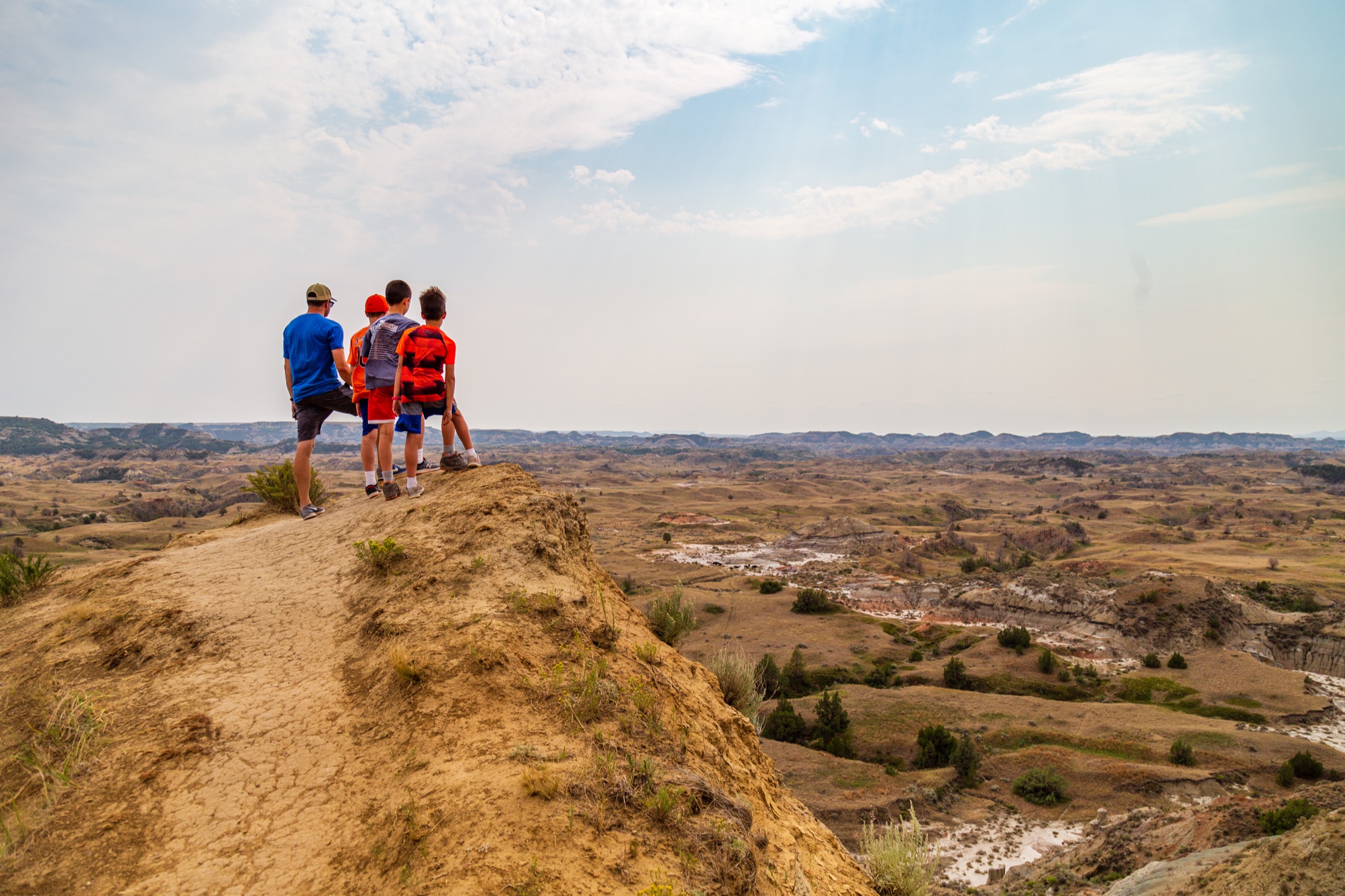
When to go
Conditions, crowds, and what each season asks you to pack.
Spring
45-65F
Highs 45-65F, wide swings and frequent wind; bison calves drop and prairie greens up.
Pack Layers and a real windbreaker; trails turn to gumbo mud when wet.
Summer
80-90F
Highs 80-90F, occasional 95F-plus afternoons and pop-up thunderstorms.
Pack Sun protection, two-plus liters of water, and a hat; shade is scarce on the buttes.
Fall
50-70F
Highs 50-70F cooling fast, crisp clear air and turning cottonwoods.
Pack Warm midlayer for cold mornings; this is the comfort sweet spot for hiking.
Winter
20-35F
Highs 20-35F, regular single digits and below-zero cold snaps with snow.
Pack Insulated boots and a serious cold-weather kit; some roads close or go unplowed.
Crowds by month, from NPS visit counts
Busiest: July. An average July brings about 159,000 recreation visits to Theodore Roosevelt, roughly 5,130 a day. Peak crowds run June to September.
Quietest: January. About 1,700 visits, 1% of the busiest month. Crowds stay low November to April.
- Low
- Moderate
- High
- Peak
Bar height is each month's average visits compared with the busiest month. Low is under 25% of that peak, Moderate 25 to 49%, High 50 to 74%, Peak 75% and up.
See the monthly numbers
| Month | Avg visits | Share of year | Crowds |
|---|---|---|---|
| January | 1,700 | <1% | Low |
| February | 2,199 | <1% | Low |
| March | 8,296 | 1% | Low |
| April | 11,603 | 2% | Low |
| May | 73,912 | 10% | Moderate |
| June | 137,526 | 19% | Peak |
| July | 158,960 | 21% | Peak |
| August | 151,305 | 20% | Peak |
| September | 119,287 | 16% | Peak |
| October | 57,431 | 8% | Moderate |
| November | 17,808 | 2% | Low |
| December | 2,134 | <1% | Low |
Source: NPS Visitor Use Statistics, monthly recreation visits, averaged over 2023–2025. October and November 2025 are left out of the averages because of the federal government shutdown. Visits count entries, not unique people. NPS monthly report for Theodore Roosevelt · Crowd calendar for all 63 parks
Theodore Roosevelt weather by month
Average daily highs and lows, plus monthly precipitation, from NOAA's 1991-2020 climate normals for Medora, at the South Unit entrance. Shaded months are the park's best season. Tap a month to build a pack list for it.
| Month | Jan | Feb | Mar | Apr | May | Jun | Jul | Aug | Sep | Oct | Nov | Dec |
|---|---|---|---|---|---|---|---|---|---|---|---|---|
| High (F) | 28 | 32 | 44 | 56 | 67 | 77 | 86 | 85 | 74 | 58 | 42 | 31 |
| Low (F) | 3 | 8 | 18 | 30 | 41 | 50 | 56 | 53 | 43 | 30 | 18 | 7 |
| Precip (in) | 0.3 | 0.4 | 0.6 | 1.6 | 2.6 | 2.9 | 2.1 | 1.4 | 1.4 | 1.2 | 0.6 | 0.6 |
| Snow (in) | 4.4 | 7.2 | 3.8 | 3.4 | 0.4 | 0.0 | 0.0 | 0.0 | 0.1 | 1.8 | 3.0 | 6.0 |
Station MEDORA (USC00325813), 2,268 ft, under a mile from South Unit Visitor Center in Medora.
Source: NOAA NCEI U.S. Climate Normals, 1991-2020 monthly averages. Averages describe a typical year, not a forecast; check current conditions and alerts before you go. Precipitation includes the water in melted snow.
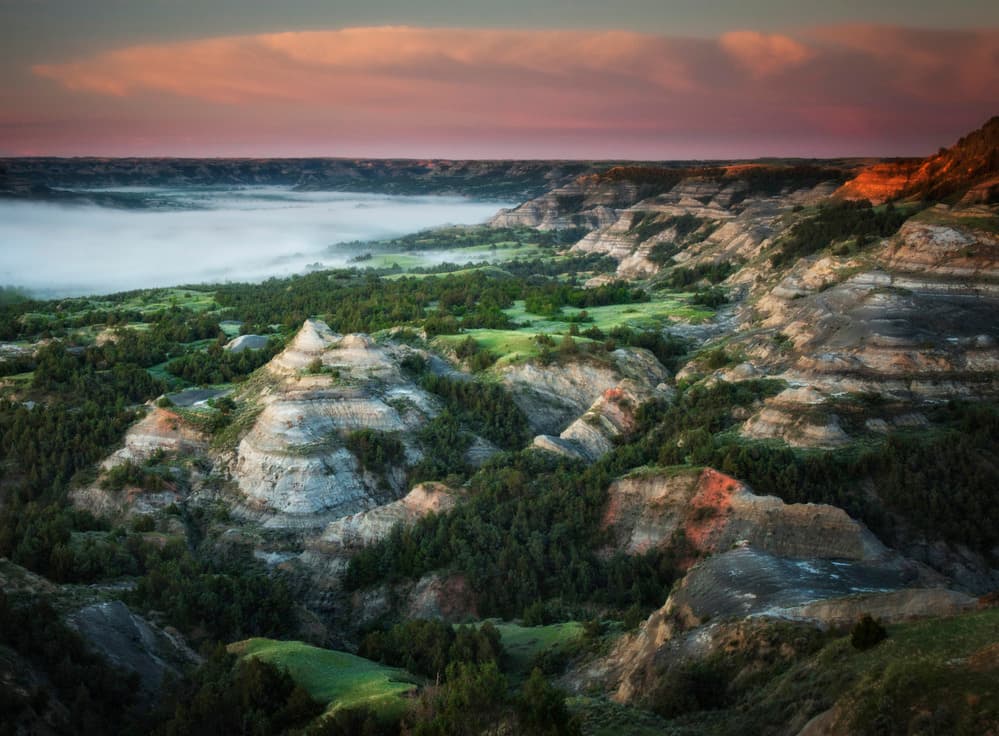
Top things to do
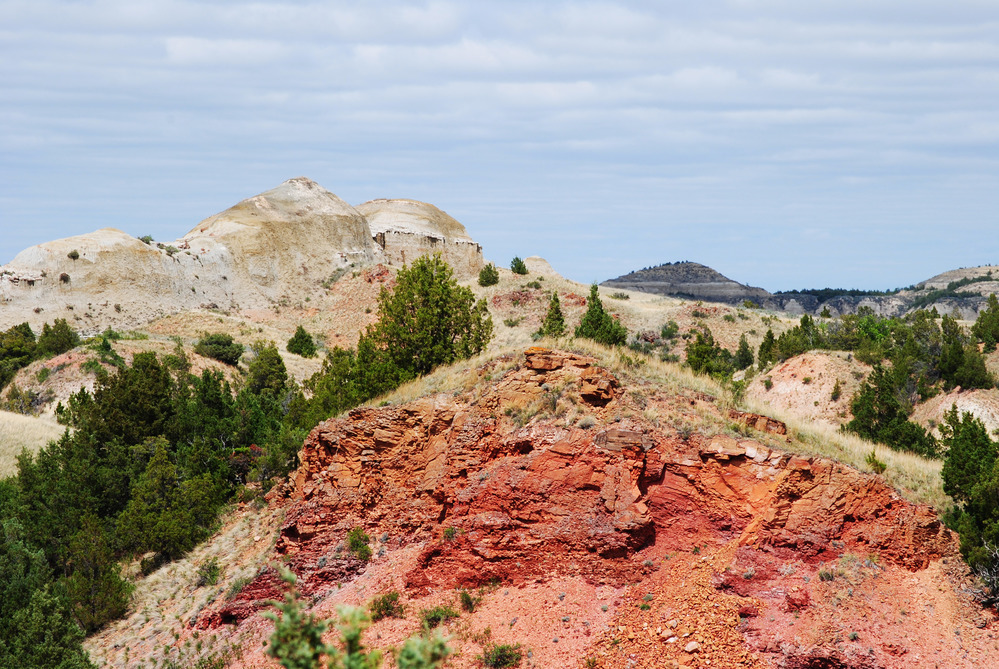
Painted Canyon Overlook
Right off I-94 east of Medora, the fastest first look at the layered badlands with its own visitor center.
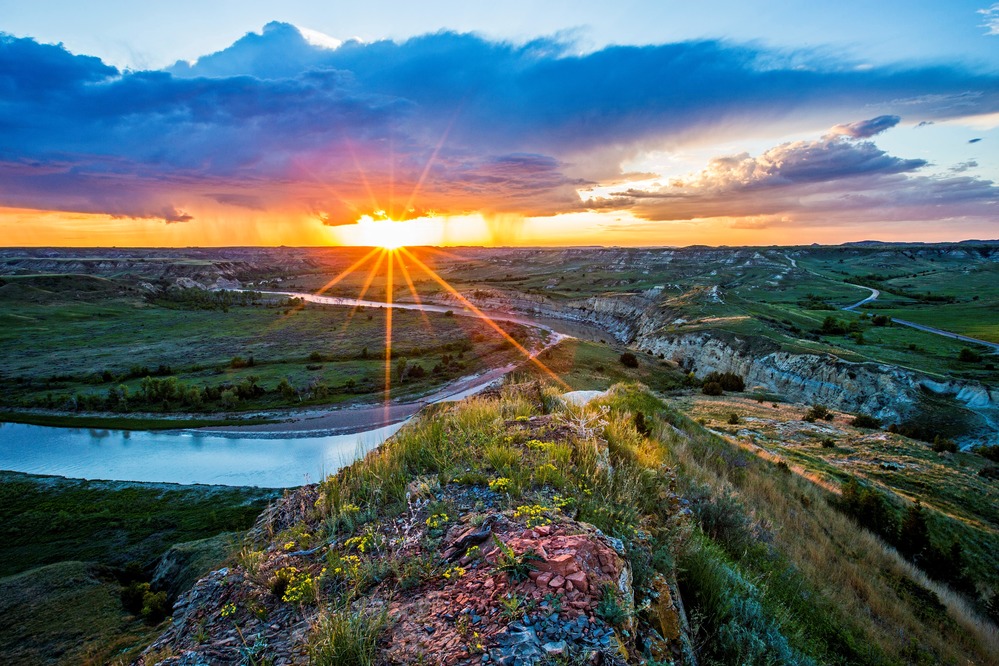
Scenic Loop Drive (South Unit)
A 36-mile loop past prairie dog towns, bison herds, and pull-offs like Wind Canyon over the Little Missouri.
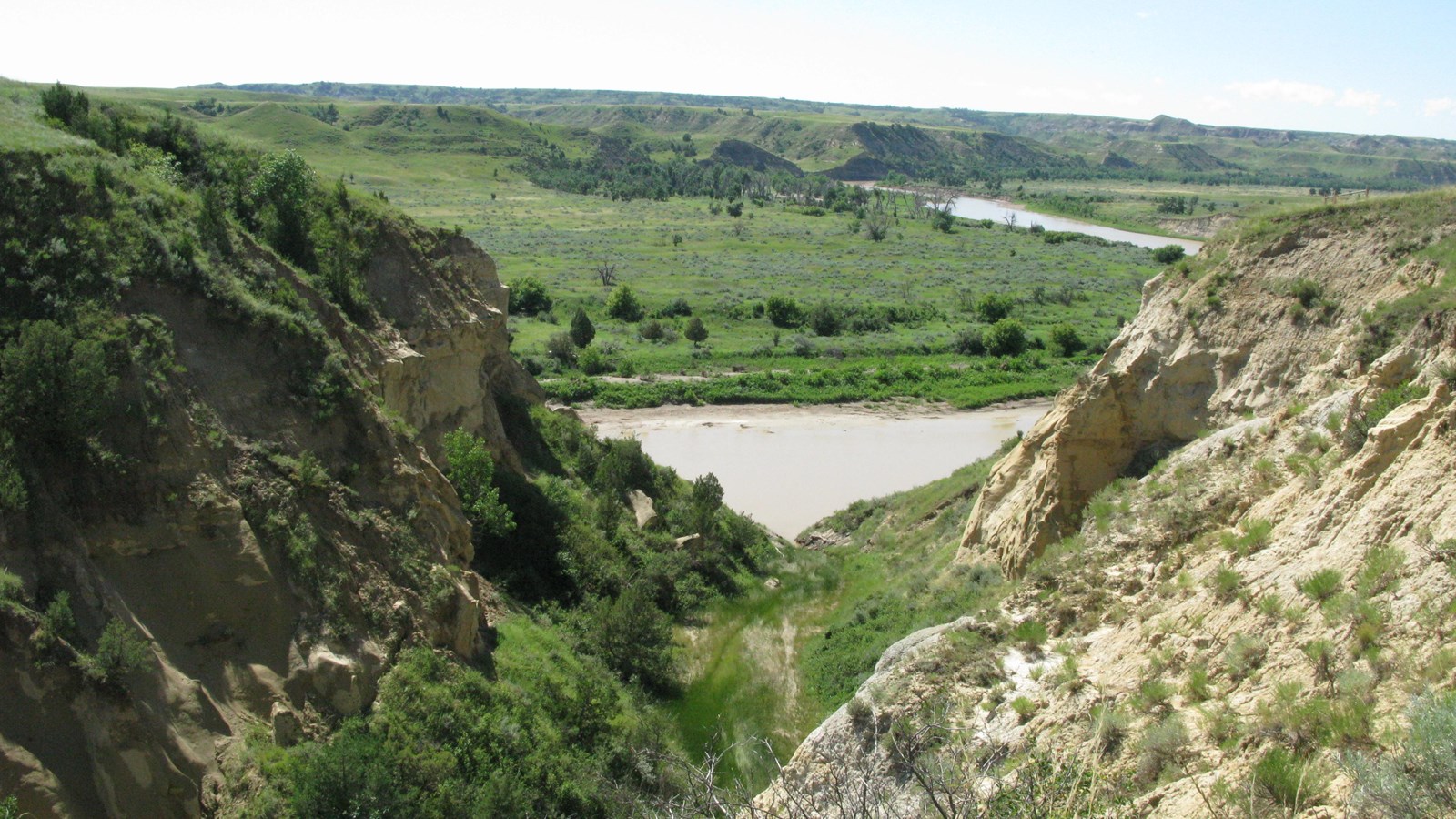
Wind Canyon Trail
A short half-mile climb to a wind-carved rim and the best sunset view of the river bend.
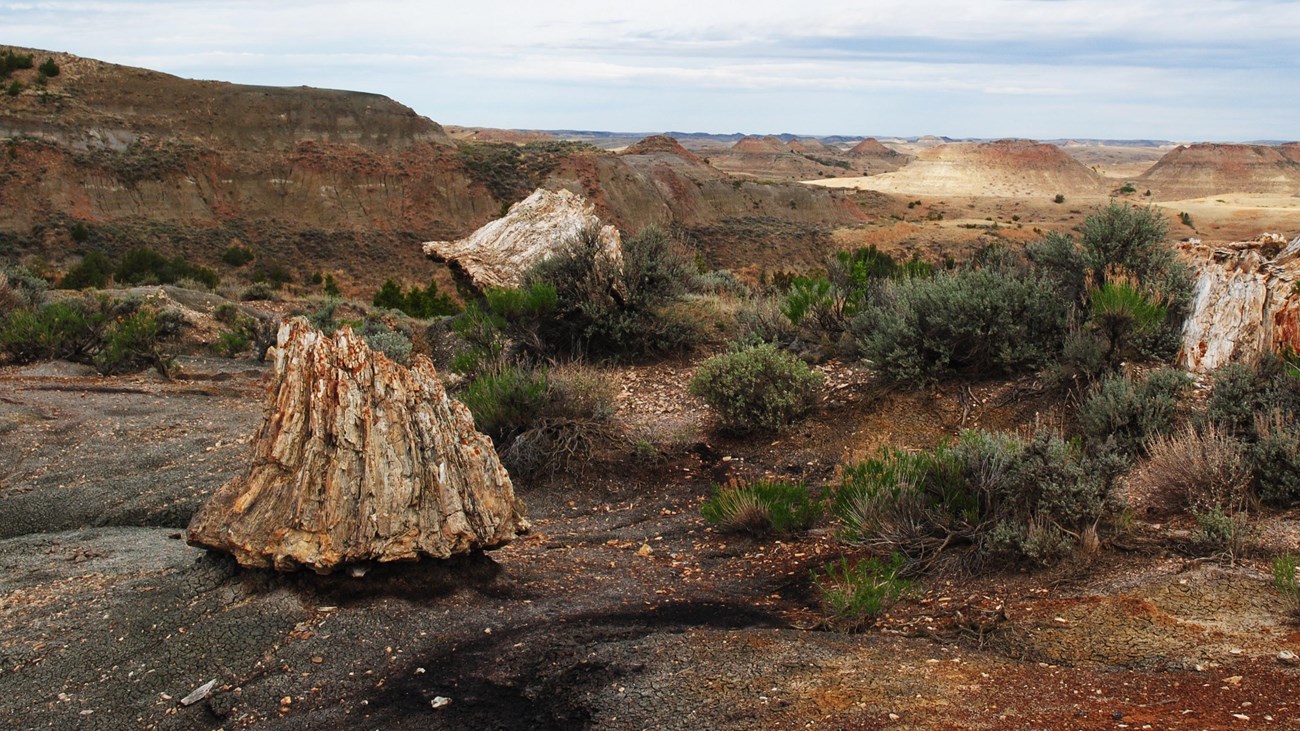
Petrified Forest Loop
A roughly 10-mile backcountry trek to one of the largest concentrations of petrified wood in the country.
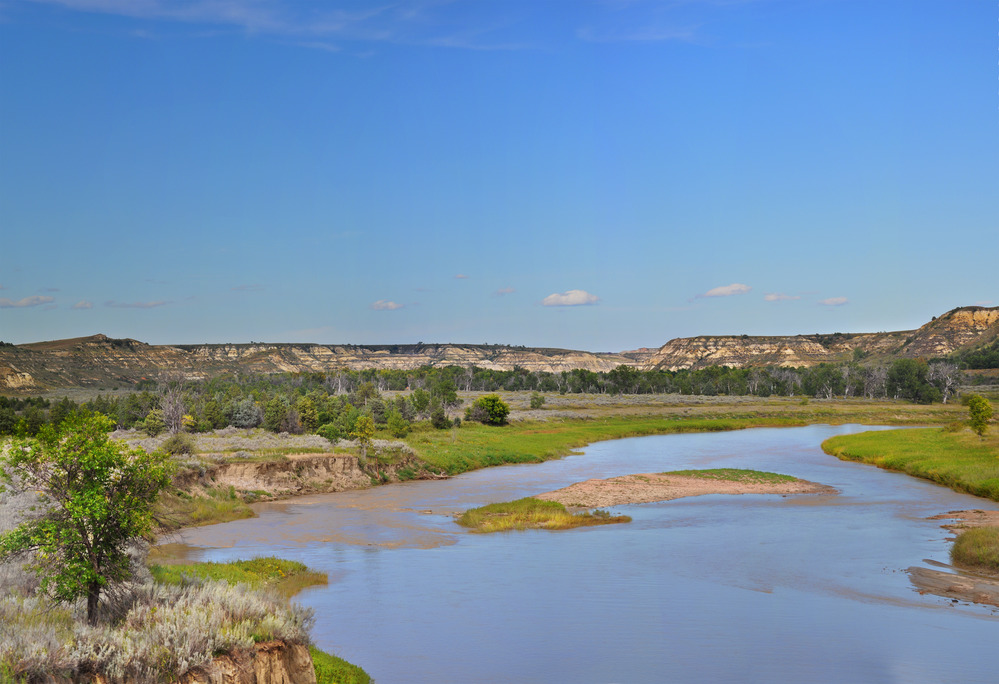
Maah Daah Hey Trail
The 96-mile singletrack linking the units; sample it for a quiet day hike through open badlands.
Anchor the day around Painted Canyon Overlook
Put the access rule first: shuttle, parking, timed-entry, or reservation windows should decide the order of the day. For one day in Theodore Roosevelt, make Painted Canyon Overlook the non-negotiable, add Scenic Loop Drive (South Unit) only if the first stop runs clean, and keep Wind Canyon Trail as the flexible finish.
- 1Start with Painted Canyon Overlook: Right off I-94 east of Medora, the fastest first look at the layered badlands with its own visitor center.
- 2Add Scenic Loop Drive (South Unit): A 36-mile loop past prairie dog towns, bison herds, and pull-offs like Wind Canyon over the Little Missouri.
- 3Use Wind Canyon Trail as the optional finish, not as a reason to rush the whole day.
Where to stay
Stay strategy
Choose the base that protects the permit window.
Stay strategy
Medora solves the South Unit, Watford City solves the North Unit.
Theodore Roosevelt is really two main park trips separated by prairie driving. Medora is the obvious South Unit base for the scenic loop, Painted Canyon, and Wind Canyon. Watford City is better for the North Unit, while campgrounds make sense when you want wildlife at dawn and dusk.
- South Unit base
- Medora, beside the main visitor corridor
- North Unit base
- Watford City for shorter North Unit drives
- Park units
- South, North, and Elkhorn units are separated
- Campgrounds
- Cottonwood in the South Unit, Juniper in the North Unit
Compare base options
Use the options below to protect the permit, pickup, and early-start parts of the trip before you optimize for comfort.
Paid links: we may earn a commission if you book, at no extra cost to you.
- Best for
- First trips, Scenic Loop Drive, Wind Canyon, Painted Canyon, and family services
- Tradeoff
- It is not close to the North Unit.
Planning detail
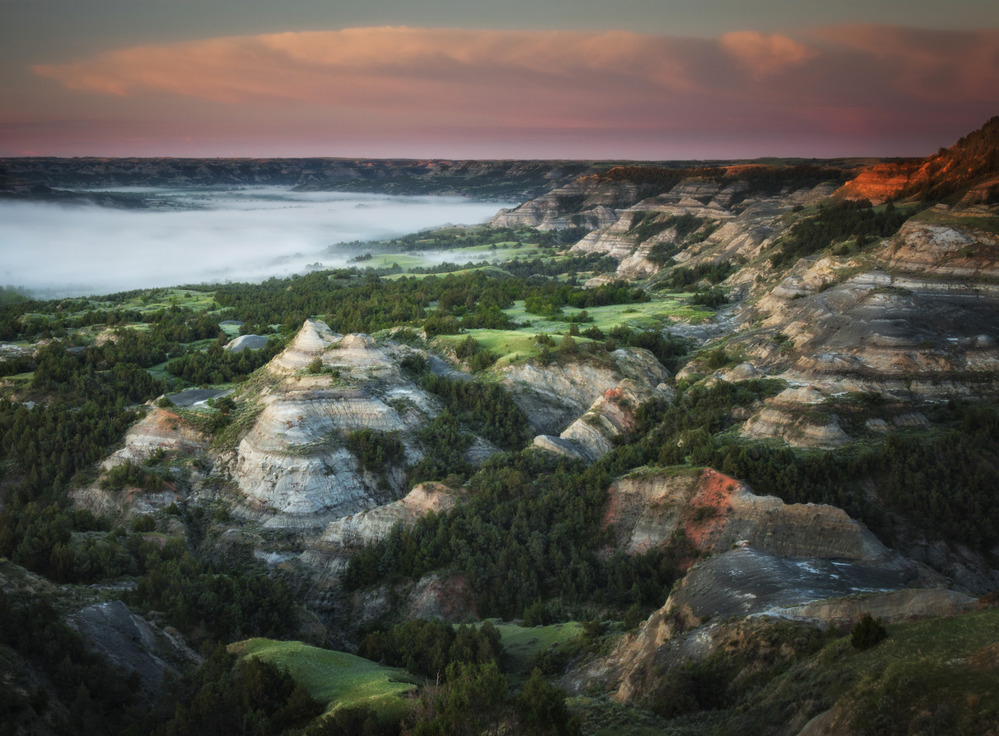
Choose Medora for the classic Theodore Roosevelt visit. It keeps the South Unit easy and leaves room for sunrise wildlife drives.
- Best for
- North Unit overlooks, quieter drives, and travelers entering from western North Dakota
- Tradeoff
- Long drive if your main list is in the South Unit.
Planning detail
Use Watford City when the North Unit is the priority. It cuts the empty approach time and makes sunrise or evening overlooks realistic.
- Best for
- Wildlife drives, night sky, budget trips, and staying inside the badlands rhythm
- Tradeoff
- Services are basic, and summer heat or storms can be exposed.
Planning detail
Cottonwood serves South Unit plans; Juniper serves the North Unit. Choose by unit, then use dawn and dusk for wildlife viewing.
Do not commute both daily
If you want both main units, split nights or accept a long transfer day.
Use the edges
Wildlife and badlands light are best early and late, so lodging close to the right unit pays off.
Camping reservations
Camping reservations
Reserve Cottonwood or Juniper on Recreation.gov; nothing is first-come anymore.
Cottonwood Campground along the Little Missouri River, 5 miles from Medora, is the South Unit's only campground and the natural first choice. As of May 1, 2026, every site in both park campgrounds is reservation-only through Recreation.gov, and Cottonwood fills to capacity each afternoon from mid-May through mid-September.
Reviewed June 11, 2026
Booking window
Standard sites at Cottonwood release on Recreation.gov up to 6 months ahead; group sites and the Roundup horse camp open each year on the first business day in March at 8 am MST.
- The old first-come half of these campgrounds is gone: beginning May 1, 2026 all sites at Cottonwood and Juniper are by reservation at Recreation.gov.
- Both campgrounds are primitive: no hookups, no showers, and potable water is seasonal.
- Cell service in the North Unit is poor to nonexistent, so book Juniper before you arrive, not from the entrance road.
- Backcountry camping is free with a permit from the North or South Unit visitor centers; there are no developed backcountry sites.
Where to book or verify
Official NPS page for all three campgrounds with the current reservation rules.
Standard Cottonwood sites; the group site books separately on Recreation.gov.
The park's only horse camp, reserved by one group at a time.
Check for federal campground, backcountry, tour, and permit inventory tied to this park.
Use this for wilderness permits, timed systems, tours, and other park-specific reservations.
Campgrounds to know
Cottonwood Campground
Details- Booking
- Reserve up to 6 months ahead on Recreation.gov.
- Season
- Open year-round; potable water and staff are seasonal.
- Sites
- 76 sites: tent, RV (no hookups), walk-in, and 1 group site.
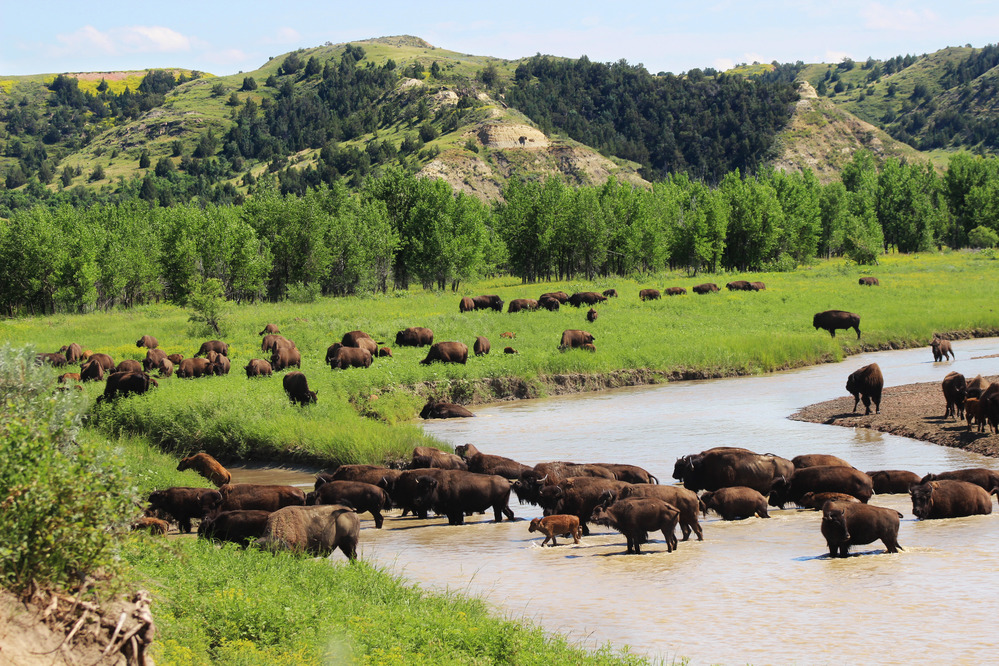
- The South Unit base 5 miles from Medora, with bison regularly wandering the riverside loops; it fills every summer afternoon.
Juniper Campground
Details- Booking
- Reserve on Recreation.gov before you arrive; North Unit cell service is unreliable.
- Season
- Open year-round; dump station and water are seasonal.
- Sites
- 50 sites: tent and most fit RVs (no hookups), plus 1 group site.
- The only campground in the quiet North Unit, 5 miles off US 85; far emptier than Cottonwood and handy for the Caprock Coulee loop.
Roundup Group Horse Camp
Details- Booking
- Reservations open the first business day in March at 8 am MST.
- Season
- Seasonal; check the NPS page for current dates.
- Sites
- 1 group site for up to 20 people with 20 horses, or 30 people without horses.
- The park's only camp where horses are allowed, 12 miles from Medora in the South Unit.
Getting there and practical info
Build the arrival around the reservation.
Entry windows, permit pickups, and drive time should be checked before the itinerary gets crowded.
Getting there
Get to Theodore Roosevelt with the required window already protected.
- Nearest airport
- Dickinson Theodore Roosevelt Regional (DIK), about 40 minutes east of the South Unit; Bismarck (BIS) is the larger hub, roughly 2 hours 15 minutes east.
- Access rhythm
- Plan the last mile
- Region
- North Dakota
Car strategy
Most visitors drive Interstate 94 to Medora for the South Unit, which sits right off exit 27; Painted Canyon is a quick stop at exit 32.
Car strategy
The North Unit is about 70 miles north on US Highway 85, roughly 15 minutes south of Watford City and a separate 60-to-70-minute drive from the South Unit.
Fly in
Fly into Dickinson (DIK) for the closest airport, about 40 minutes away, or Bismarck (BIS) for more flight options and rent a car, since there is no transit to or within the park.
Book ahead
- Rental cars at Dickinson Theodore Roosevelt Regional (DIK)Paid link, Economybookings
- Guided tours in Theodore RooseveltPaid link, Viator
Paid links: we may earn a commission if you book, at no extra cost to you.
Pair this with lodging: choose the base that keeps the reservation or permit pickup from becoming the hardest part of the day.
Plan your trip
Build one complete pack brief from Theodore Roosevelt's season, activity, and trip length. Fine-tune an individual calculation only if you need it.
Fine-tune water, pack size, warmth, or stove fuel
Build around conditions
Let season, elevation, and weather set the plan.
Plan your trip
4 quick tools, already seeded for Theodore Roosevelt. Tune the numbers around temperature swings, footing, layers, and how much margin the route needs.
What to pack
Start with the gear decisions Theodore Roosevelt changes: water, footing, weather, and overnight needs. The checklist is there once your route and dates are set.
Kit Authority
Theodore Roosevelt packing list
0 of 22 packed. Check items as you pack, then take this list to the store, trailhead, or campsite.
Pack planning
Decide what Theodore Roosevelt asks of your kit before you start checking boxes.
Use this as a constraint check while you are still shaping the trip. The active checklist becomes useful once your route, dates, and sleep plan are set.
- First constraintHydration and exposureWater, Electrolyte mix, hat, sunscreen, sunglasses, 4 more
- Route realityFooting and tractionHiking boots, Hiking socks, Trekking poles
- Load choicePack and carry systemBackpacking pack
- If overnightSleep and shelterBackpacking tent, Sleeping bag, Sleeping pad, 1 more
Checklist mode
22 items, grouped for the trip you are actually taking.
- Dates and season are set.
- Primary route, campground, or lodge is chosen.
- Water, footwear, and overnight needs are sized.
One researched pick
The first gear decision for Theodore Roosevelt
Offline maps, photos, and long drives make a high-capacity power bank a practical trip backup.
We may earn a commission from links on this page, at no extra cost to you. Product prices and availability are accurate as of the date/time indicated and are subject to change. Any price and availability information displayed on Amazon at the time of purchase will apply to the purchase of this product.
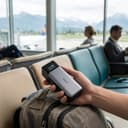
THE POWER PICK
Anker 737 PowerCore 24K
Best Overall
Kit Score 8.8/10
$109.99 Price checked Oct 23, 6:22 AM CDT
Best for: Travelers who carry a USB-C laptop and want high output, a live power display, and substantial capacity below the common 100Wh threshold.
- Smart digital display shows exact battery percentage, input/output wattage in real time
- At 1.39 lb it is noticeably heavier than phone-only banks, not a featherlight day-trip option
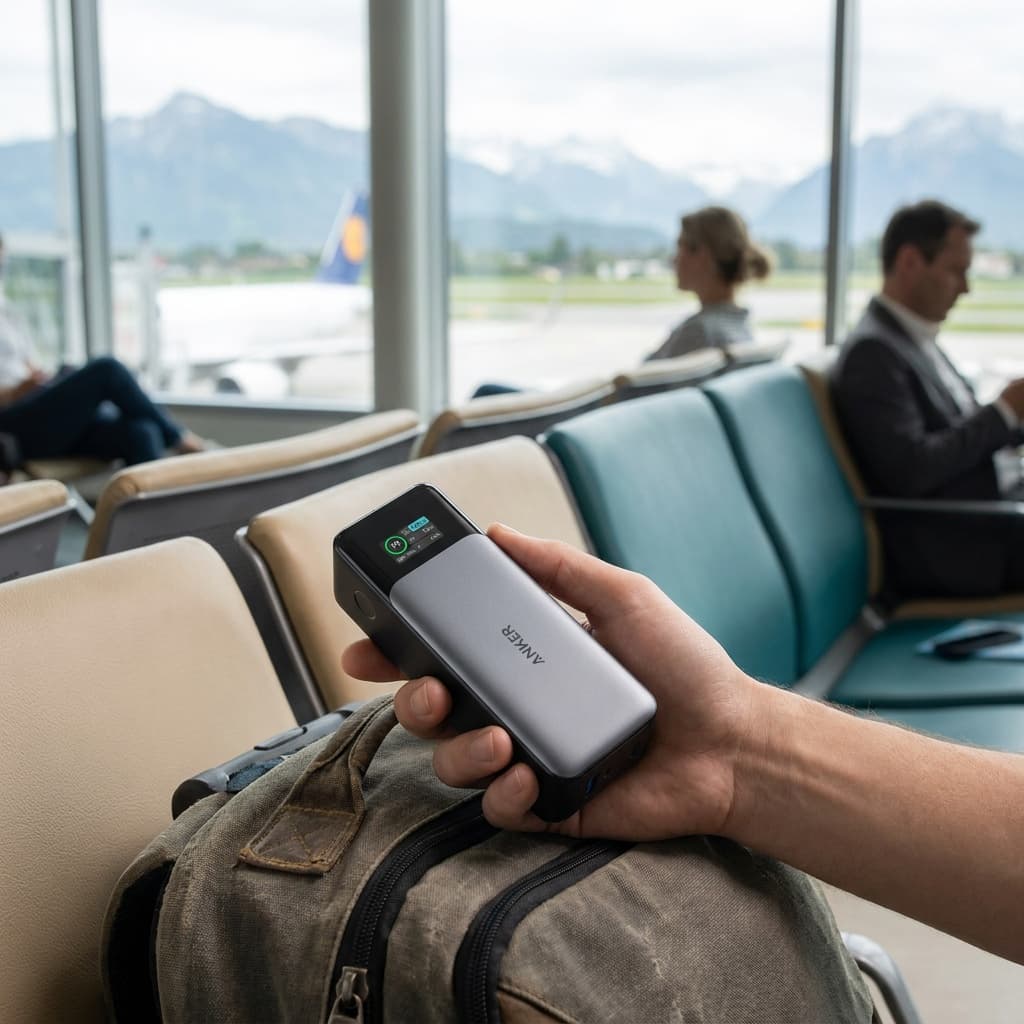
- Capacity
- 24,000mAh (86.4Wh)
- Max Output
- 140W (USB-C PD 3.1)
- Ports
- 2× USB-C, 1× USB-A
- Weight
- 1.39 lb (630g)
- Dimensions
- 6.13 × 2.15 × 1.95 in
- Airline Status
- 86.4Wh; below the common 100Wh limit
About this pick
The Anker 737 combines a printed 86.4Wh rating, up to 140W USB-C PD 3.1 output, three ports, and a real-time smart display. Its capacity sits below the common 100Wh threshold, while airline count, storage, and onboard-use rules still apply.
Strengths
- Smart digital display shows exact battery percentage, input/output wattage in real time
- 140W PD 3.1 output is fast enough for most laptops at full speed
- Its printed 86.4Wh rating leaves 13.6Wh of headroom below the common 100Wh threshold
- Two USB-C ports and one USB-A port can serve three devices within the 140W total-output ceiling
Weaknesses
- At 1.39 lb it is noticeably heavier than phone-only banks, not a featherlight day-trip option
- No built-in cable, and the boxed cable varies by seller (Amazon listing: 140W USB-C to C; Anker support page: short USB-A to C)
Kit Score breakdown
Gear for Theodore Roosevelt
The buying guides that match what Theodore Roosevelt asks of your kit. Each one has our current top picks across budget and use case.
Can you photograph here? Permit and drone rules
Theodore Roosevelt follows the standard EXPLORE Act rules: eight or fewer with hand-carried gear means no permit; larger or supported shoots apply through the park.
- Permit
- Usually fine for personal shoots; commercial or large productions can need a permit
- Drones
- Effectively banned: launching, landing, or operating a drone within park boundaries is prohibited
- Land
- Yes for personal and editorial photography throughout the park
From our photography sister site, Aperture Authority. Verified 2026-07-01.
Frequently asked questions
Do you need a reservation to visit Theodore Roosevelt National Park?
No. The park does not use timed-entry or any advance reservation system. You can drive up and pay the entrance fee at a station or visitor center any day of the year. Reservations are only needed for campsites at Cottonwood or Juniper campgrounds during busy stretches.
Is Theodore Roosevelt National Park worth visiting?
Yes, especially if you want dramatic scenery without the crowds of bigger parks. You can reliably see bison, wild horses, and prairie dogs from the scenic drive, hike colorful badlands, and walk the same country Theodore Roosevelt ranched in the 1880s. A day or two covers the South Unit highlights comfortably.
How many units does the park have and how far apart are they?
There are three: the popular South Unit at Medora, the quieter North Unit near Watford City, and the small Elkhorn Ranch Unit in between. The South and North units are about 70 miles apart, a 60-to-70-minute drive on US Highway 85, so most short trips focus on one unit.
When is the best time to visit Theodore Roosevelt National Park?
Late May through June and September into early October are the sweet spots: mild temperatures, active wildlife, and fewer people than peak summer. July and August are warm and busiest. Winter is cold and beautiful but some park roads close or go unplowed.
Keep planning
Compare with another park
Nearby parks
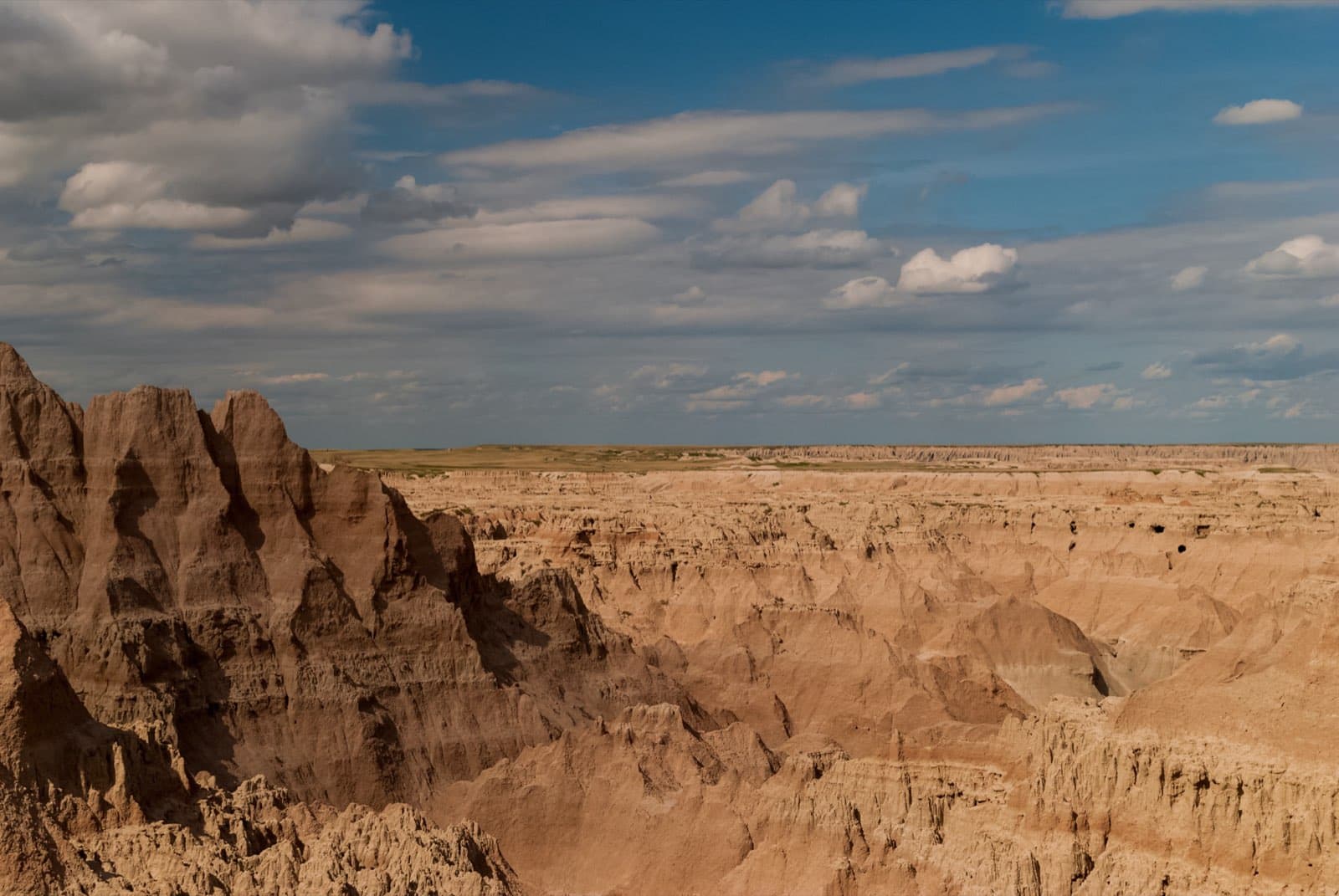 BadlandsA maze of striped buttes and spires rising out of South Dakota prairie, with bison, bighorns, and huge dark skies.
 Wind CaveOne of the world's longest caves under wide-open bison prairie, with free park entry and ticketed underground tours.
 YellowstoneThe world's first national park: geysers, canyons, and the densest wildlife show in the Lower 48.