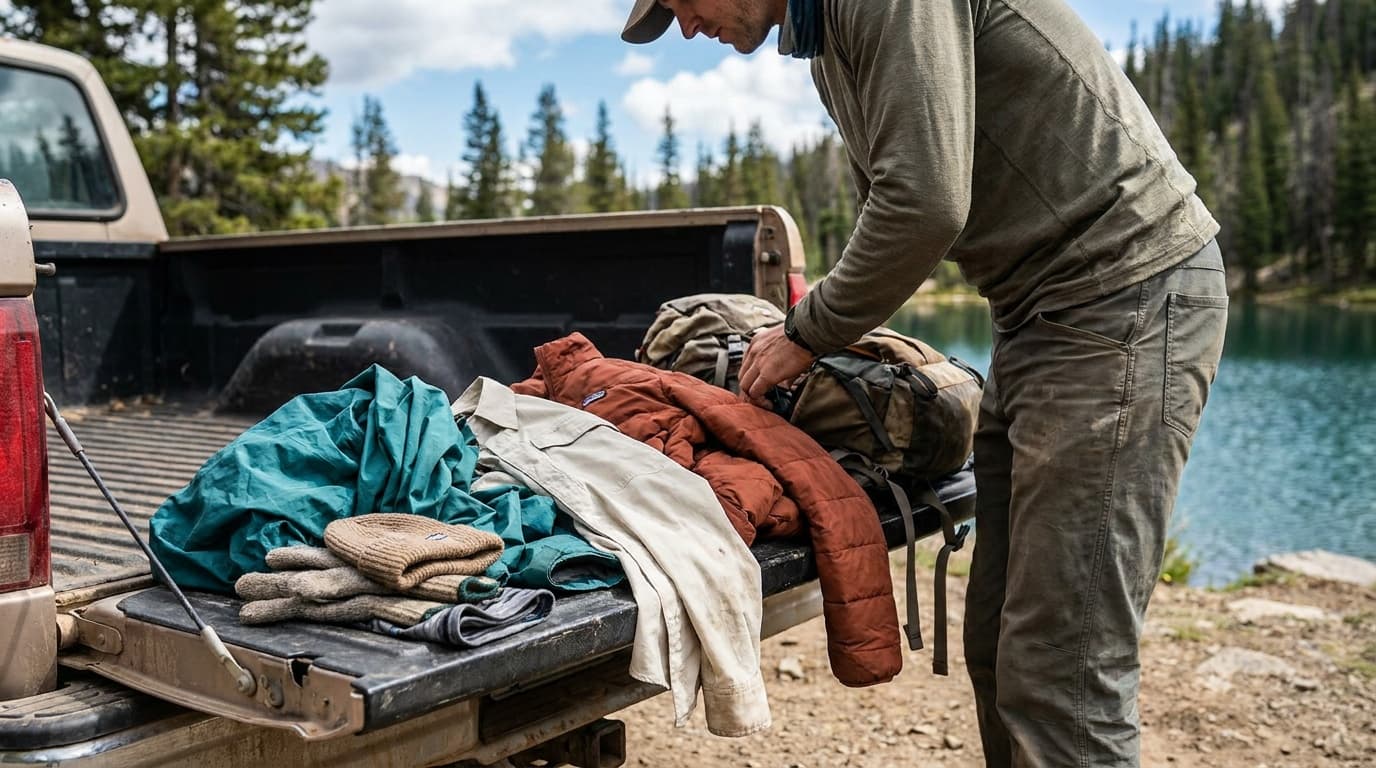
Down and synthetic insulated jackets are built around completely different physics, which is why the right answer depends on where you hike more than on any spec number. Here is what actually separates them.
Warmth-to-weight: down's core advantage
Fill power measures how many cubic inches one ounce of down expands to occupy. Premium hiking jackets like the Patagonia Down Sweater Hoody use 750–850 fill power goose down; expedition gear reaches 900 and above. A higher fill power number means better warmth per ounce, so the jacket needs less total down to hit a given temperature rating. That efficiency is why quality down jackets weigh noticeably less than synthetic alternatives at the same warmth level.
One thing worth understanding: fill power alone does not determine how warm a jacket is. Total fill weight (how much down is actually inside the baffles) and baffle construction both matter equally. A 600-fill jacket with generous fill weight can outperform an 850-fill jacket that uses very little down. The fill power number tells you how efficiently each ounce of down is working, not how much insulation the jacket contains.
No synthetic insulation currently matches high-fill-power down on warmth per ounce in dry conditions. That gap is real and meaningful for backpackers counting grams.
Packability: the grapefruit versus the cantaloupe
800-plus fill-power down compresses to roughly the size of a grapefruit. A synthetic jacket of equivalent warmth packs closer to the size of a cantaloupe. That volume gap is easy to ignore until you are loading a 40-liter pack for a multi-day trip, at which point every liter matters.
Synthetic jackets do compress, but the polyester fiber structure does not collapse as tightly as down clusters. If you are hiking in reliably dry conditions and packability is important, down is the clear winner here.
Wet performance: where synthetic earns its reputation
This is where the choice gets consequential. Conventional down absorbs water into the down clusters themselves, which causes the clusters to mat together and collapse. The result is roughly 5–10% of the jacket's dry warmth retained when thoroughly wet. That is not a small difference. It is the difference between functional insulation and a wet wad of material against your skin.
Synthetic polyester fibers are hydrophobic at the molecular level. Moisture sits between the fibers rather than inside them, which preserves loft. High-performance synthetics retain 60–90% of their warmth when wet and continue insulating even when soaked.
Hydrophobic down (DWR-treated down) closes part of that gap. It retains up to 60–70% of its loft after brief water exposure and dries 30–50% faster than untreated down. For a dry alpine environment with the occasional unexpected shower, hydrophobic down performs well. The limitation is durability: the DWR coating degrades over roughly 15–30 wash cycles, and once it degrades, the down behaves much like conventional down. Refreshing it with a wash-in DWR product (Nikwax Down Proof works well) extends the life of the treatment, but it does require maintenance.
In genuinely wet climates or on hard-output days where you are sweating heavily, synthetic insulation is not a compromise. It is the technically correct tool.
Sweat matters as much as rain
Rain is the obvious threat to down, but perspiration is just as damaging and easier to overlook. During aerobic cold-weather activity, such as ski touring, snowshoeing, or fast hiking with significant elevation gain, moisture builds inside the jacket from the inside out. Down absorbs that moisture and begins to lose loft before any rain has touched the shell.
Synthetic fibers do not absorb moisture, so sweat sits between fibers and the jacket continues insulating. If your hiking tends toward the aerobic end, particularly in shoulder-season conditions where you are working hard and temperatures are variable, synthetic insulation is the more forgiving choice.
Longevity and care: down rewards the diligent
A well-maintained down jacket can hold its performance for 10–20 years. Synthetic insulation typically shows meaningful loft degradation after 3–7 years of regular use and wash cycles as polyester fibers break down under repeated compression.
That longevity advantage for down comes with a condition: it requires the right maintenance.
How to care for a down jacket
Use the right cleaner
Down-specific detergent (not standard detergent, which leaves residue that mats down clusters). Wash on a gentle, warm cycle.
Dry completely
Low heat with clean tennis balls or dryer balls to break up clumps and restore loft. Run multiple cycles until the interior is fully dry. Damp down inside baffles promotes mildew and long-term damage.
Store it right
Hang loosely or store in a large breathable bag. Do not leave it compressed in a stuff sack long-term.
Refresh hydrophobic coatings
For DWR-treated down or a DWR shell, reapply a wash-in DWR product every 15–20 washes or when water stops beading on the surface.
Synthetic insulation is more forgiving in care. It tolerates standard washing and drying better than down, which is part of why it tends to degrade faster mechanically. The same process that makes it easier to wash also accelerates fiber breakdown over time.
Cost: down costs more because quality down is constrained
Down jackets commonly exceed $250–$400 at the technical hiking level, with premium options going higher. Quality synthetic jackets typically come in under $300, with solid entry-level options under $100. The cost difference reflects supply reality: high-quality goose down is a limited, labor-intensive material to source and process.
For budget-conscious buyers, or for people who expect heavy use and frequent washing (where synthetic's longevity gap narrows and its lower cost becomes more compelling), synthetic often delivers better value per year of service.
Which should you buy
The honest answer is that conditions determine the winner, not a universal ranking.
For dry alpine routes, high-altitude hiking, and long-distance backpacking where pack weight is a priority, high-fill-power down like the Mountain Hardwear Ghost Whisperer Hoody is hard to beat. You will carry less weight for equivalent warmth, pack it smaller, and if you maintain it, it will outlast a synthetic alternative.
For the Pacific Northwest, coastal ranges, shoulder-season hiking with sustained rain or mud, or any activity where you are working hard and sweating heavily, synthetic insulation is the safer and more reliable choice. It will keep insulating in conditions that would leave a down jacket nearly useless.
For mixed conditions and moderate budgets, hydrophobic down is a reasonable compromise, but treat it as a best-of-both rather than a full answer to wet conditions, and budget for refreshing the DWR treatment.
For picking specific models, see our guide to the best down jackets for a curated look at current options across fill powers and price points.
Is down or synthetic warmer?
Down is warmer per ounce in dry conditions. An 800-fill-power down jacket needs significantly less fill weight to match a synthetic jacket's temperature rating, which is why down pieces are lighter and more packable for equivalent warmth. Once wet, the equation flips: conventional down can lose 90% or more of its warmth, while synthetic retains 60–90%. So "warmer" depends entirely on conditions.
What is fill power and does a higher number always mean a better jacket?
Fill power measures how many cubic inches one ounce of down expands to occupy. 600 fill is solid for everyday use; 750–850 is the range for technical hiking and backpacking gear; 900 and above is expedition-grade. Higher fill power means better warmth-per-ounce efficiency, so less down is needed for the same warmth. But fill power alone does not determine jacket warmth. Total fill weight (how much down is in the jacket) and baffle design matter equally. A 600-fill jacket with generous fill weight can be warmer than a 900-fill jacket that uses very little down.
How do I care for a down jacket to make it last?
Use a down-specific cleaner rather than standard detergent, which leaves residue that clumps down clusters. Wash on a gentle, warm cycle. Dry on low heat with clean tennis balls or dryer balls to break up clumps and restore loft, and run multiple drying cycles until completely dry. Damp down inside baffles promotes mildew and long-term damage. Store loosely hung or in a large breathable bag, not compressed in a stuff sack. For hydrophobic down or a DWR shell, reapply a wash-in DWR product (such as Nikwax Down Proof) every 15–20 washes or when water stops beading on the surface.
Browse all hike gear guides or learn more about how we research and rate gear at Kit Authority.
Recommended gear
Our current top picks from the Best down jackets for hiking: 4 picks for every budget guide, if you are ready to buy.
MOUNTAIN HARDWEAR
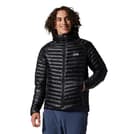
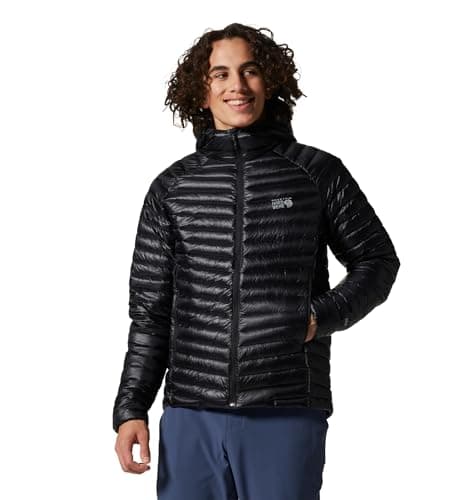
Mountain Hardwear Ghost Whisperer Hoody
Best Overall
Kit Score 8.1/10
$375.57 Price checked Oct 23, 4:16 PM CDT
Best for: Ultralight backpackers and thru-hikers who prioritize packability and warmth-to-weight and are willing to handle the shell with care.
- 10.7 oz with a hood and two zippered hand pockets, and it packs into its own pocket
- Ultralight 10-denier shell snags and abrades more easily than heavier alternatives
- Fill power
- 800-fill RDS-certified down, 3 oz fill (men's M)
- Jacket weight
- 10.7 oz / 302 g (men's medium, Mountain Hardwear)
- Shell fabric
- Whisperer 10D x 10D recycled ripstop
- Cuffs
- First cuff baffle filled with synthetic insulation to resist wetting out
- Adjustments
- Rear hood cinch and drawcord hem
- Packability
- Stuffs into its own hand pocket, with a carabiner clip loop
About this pick
At 10.7 oz for a hooded men's medium, the Ghost Whisperer Hoody is one of the lightest down hoodies available, with 800-fill RDS down inside a 10-denier recycled ripstop shell. OutdoorGearLab names it the best down jacket for ultralight adventures, and it stuffs into its own hand pocket.
Strengths
- 10.7 oz with a hood and two zippered hand pockets, and it packs into its own pocket
- OutdoorGearLab's best down jacket for ultralight adventures
- Synthetic-filled cuff baffles keep the cuffs from wetting out
Weaknesses
- Ultralight 10-denier shell snags and abrades more easily than heavier alternatives
- Only 3 oz of down, so it is less warm at rest than heavier jackets
Kit Score breakdown
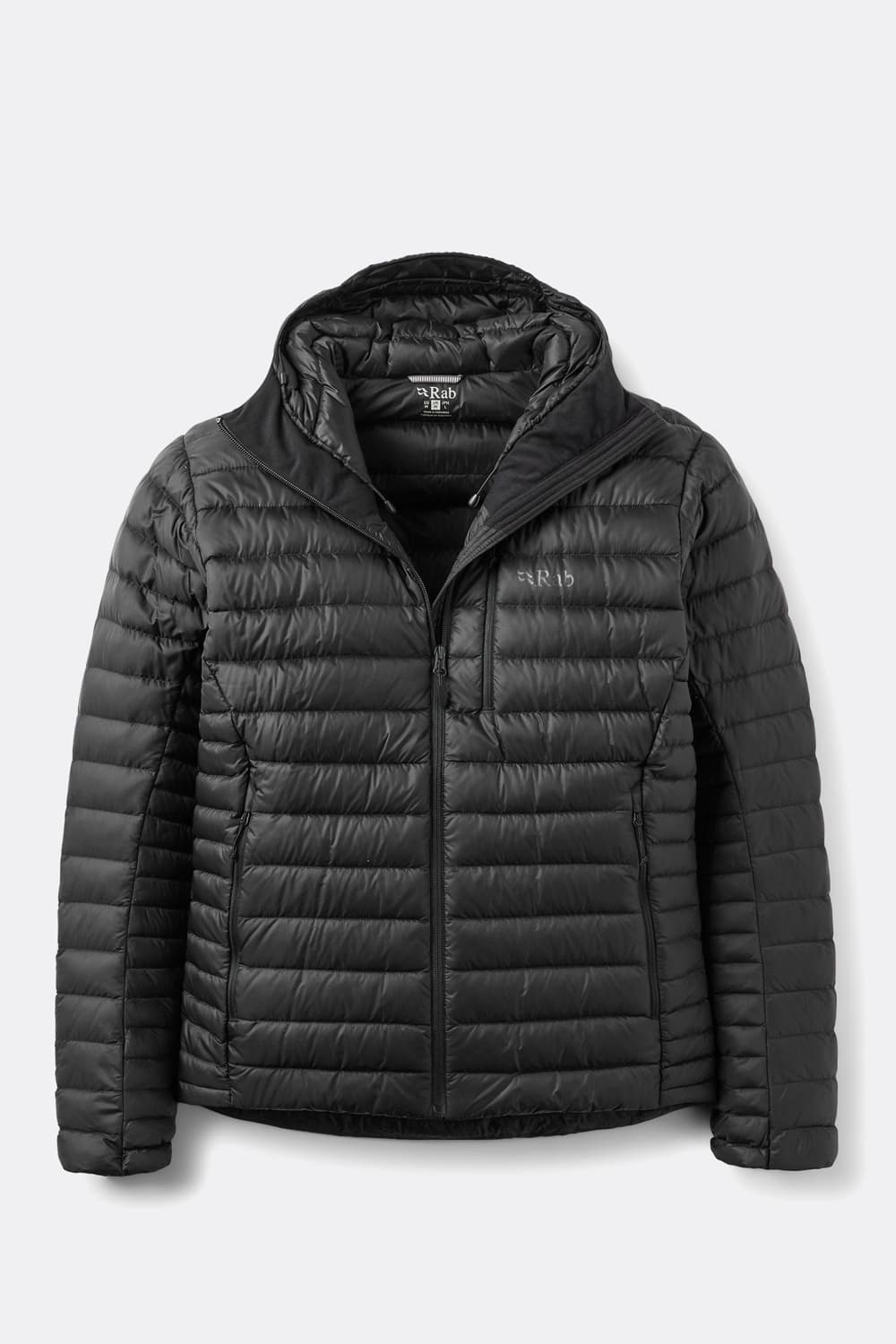
Best for: All-conditions hikers and alpinists who want reliable weather protection and genuine warmth without paying premium-tier prices.
- Hydrophobic down and a fluorocarbon-free DWR shell for extra weather resistance
- Heavier than ultralight competitors at roughly 15 oz; not the pick if pack weight is paramount
- Fill power
- 700-fill recycled down with Grangers hydrophobic finish
- Down weight
- 5.3 oz / 152 g (men's M)
- Jacket weight
- 15.09 oz / 428 g (men's medium)
- Shell fabric
- 30D Pertex Quantum, recycled
- DWR treatment
- Fluorocarbon-free DWR on shell plus hydrophobic down
- Baffle construction
- Zoned: micro baffles front and back, nano baffles under arms for venting
About this pick
The Microlight Alpine pairs a windproof 30D Pertex Quantum shell with 5.3 oz of hydrophobic 700-fill recycled down in zoned baffles, so it blocks wind and handles light precipitation better than most jackets at its price. OutdoorGearLab credits its DWR coating and hydrophobic down with extra weather resistance.
Strengths
- Hydrophobic down and a fluorocarbon-free DWR shell for extra weather resistance
- Zoned baffles: smaller under the arms for mobility, larger across the core for warmth
- More down than the Ghost Whisperer/2 at a lower list price
Weaknesses
- Heavier than ultralight competitors at roughly 15 oz; not the pick if pack weight is paramount
- 30D shell and zoned baffles add bulk compared with ultralight hoodies
Kit Score breakdown
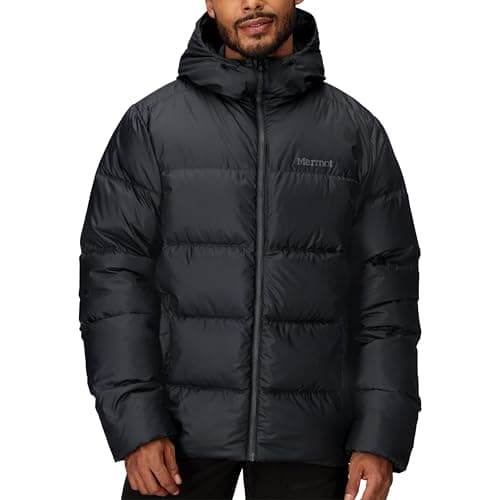
Best for: Cold-weather campers, belayers, and winter day hikers who want maximum warmth at rest and do not mind carrying the weight.
- Big, overstuffed baffles built for warmth at rest
- 1 lb 10 oz and bulky; Marmot says it does not pack as small as lightweight jackets
- Fill power
- 700-fill blend: 80% recycled down, 20% Ceiba flower down
- Jacket weight
- 1 lb 10 oz / 741 g (Marmot)
- Shell fabric
- 100% recycled polyester ripstop with C0 DWR
- Pockets
- Two zippered hand pockets and a zippered chest pocket
- Hood, cuffs, and hem
- Adjustable fixed hood, elastic-bound cuffs, adjustable drawcord hem
- Packability
- No stuff sack or self-stowing pocket (Marmot)
About this pick
The Guides Down 2.0 Hoody is Marmot's big-baffle puffy for cold, slow days: a 700-fill blend of recycled down and Ceiba flower fiber inside a 100% recycled polyester ripstop shell with a C0 DWR finish. At 1 lb 10 oz it is the heaviest jacket here, and the warmest for belays, summit breaks, and camp.
Strengths
- Big, overstuffed baffles built for warmth at rest
- Adjustable hood and drawcord hem seal out cold air
- Tough recycled polyester ripstop shell for rough use around camp
Weaknesses
- 1 lb 10 oz and bulky; Marmot says it does not pack as small as lightweight jackets
- Elastic-bound cuffs have no adjustment, and there is no stuff sack or stow pocket
Kit Score breakdown
See all picks in Best down jackets for hiking: 4 picks for every budget
Keep going
Related guides


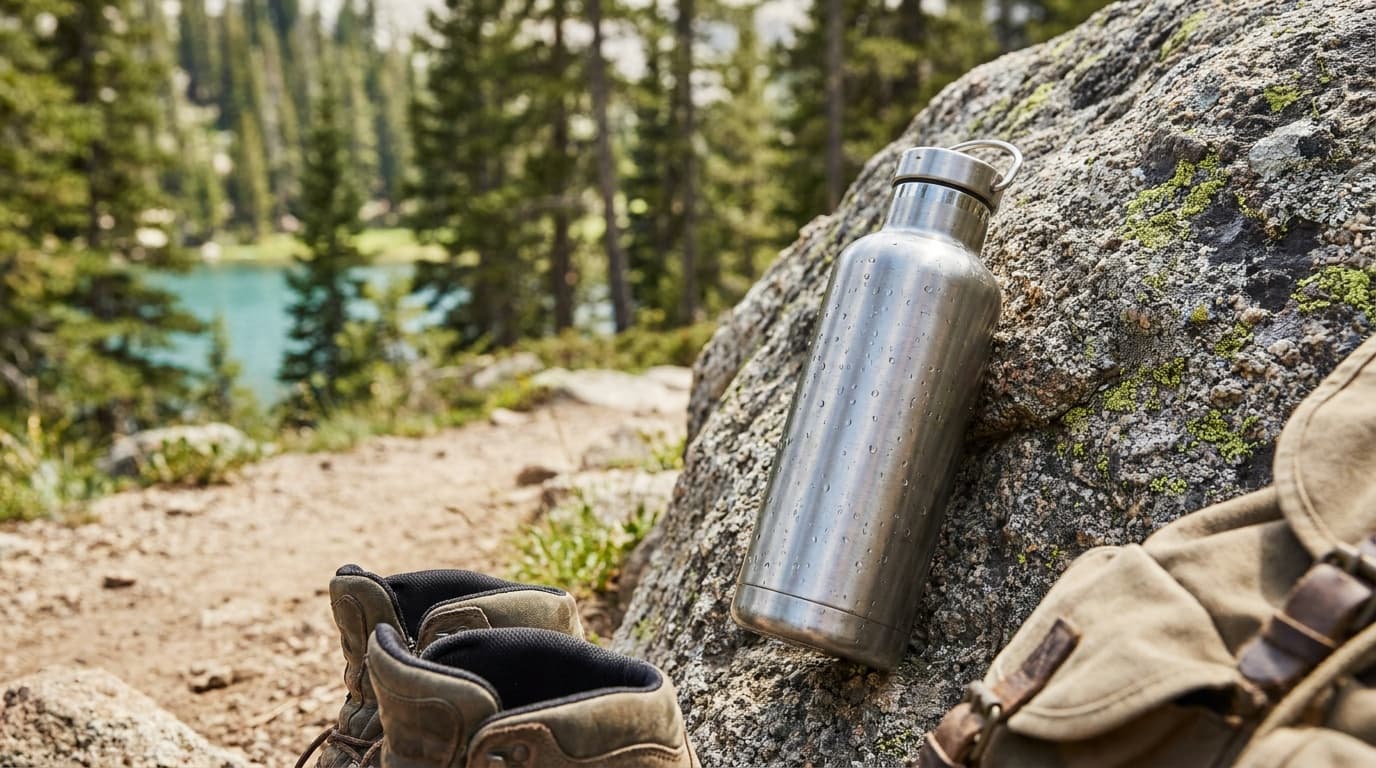
 Complete hike loadoutDay hike kitBuild the complete kit
Researched, not hands-on tested
Updated Jun 3, 2026Our recommendations draw on manufacturer documentation, retailer listings, owner feedback, and comparisons with alternatives.
As an Amazon Associate I earn from qualifying purchases. We may earn a commission from links here, at no extra cost to you. How we research →