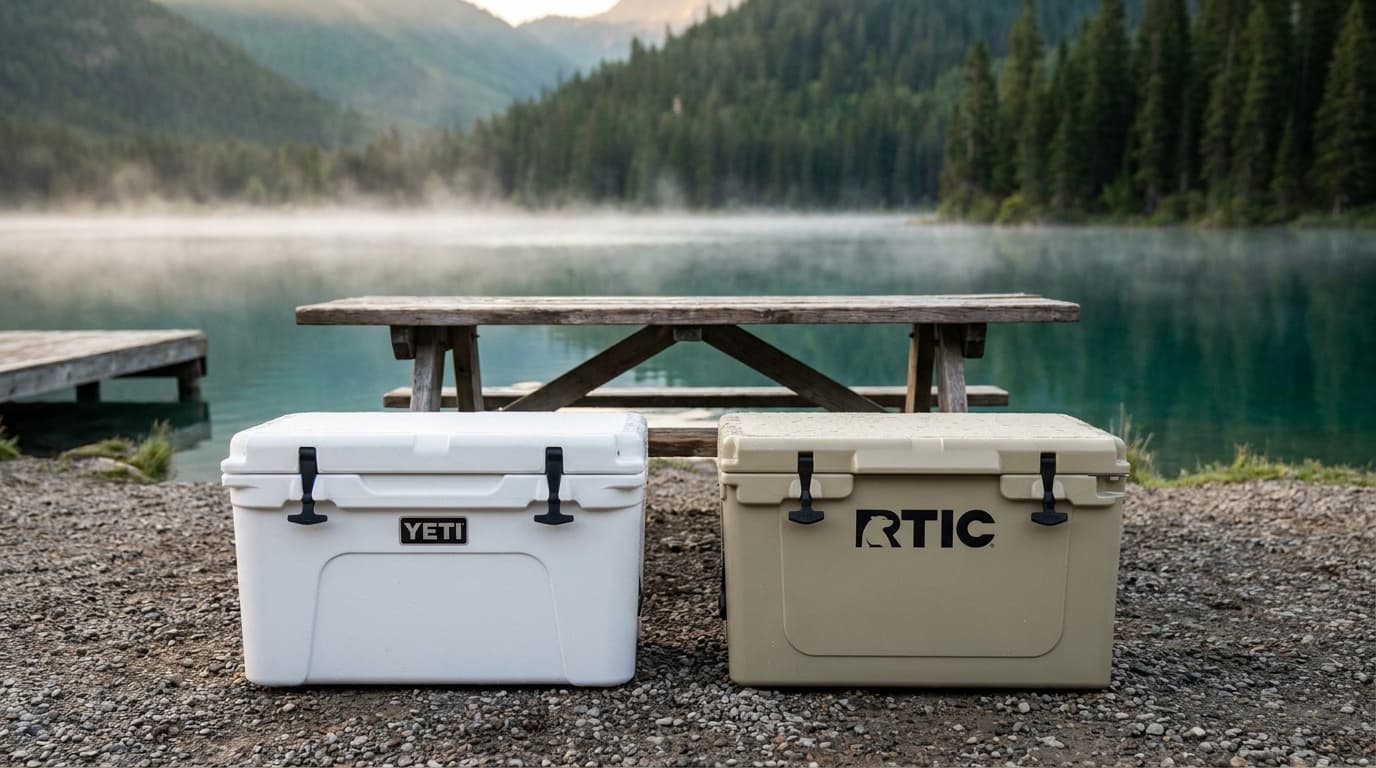
Yeti and RTIC are the two names that come up in almost every hard cooler conversation. Both use rotomolded construction, both keep ice for days, and both cost more than a Coleman. What actually separates them comes down to four things: ice retention margin, build finish, warranty coverage, and price.
Ice retention: close, but Yeti holds a real edge on long trips
The most rigorous published test ran 45-quart coolers for 337 hours (14 days). At the end, the Yeti Tundra 45 measured 52°F of water temperature; the RTIC 45 measured 55°F. A 3-degree difference after two weeks of melting.
For a 3-to-5-day camping trip, both coolers do the job. The 3-degree advantage becomes meaningful only on extended expeditions or in sustained high heat, where every degree of retained cold translates to fewer bag changes and less food risk.
Build quality: same method, different execution
Both Yeti and RTIC are rotomolded. That means a single-piece polyethylene shell with no seams to crack. Both use roughly 2.9–3 inches of closed-cell foam insulation. The core engineering is identical in concept.
Where they differ is in finish details. Yeti's lid gasket is thicker and seals fully around the perimeter. RTIC's rubber gasket is thinner and leaves a small gap where the two ends meet at the join point. That gap is minor in moderate conditions. Over years of use, in sustained heat, it can affect long-term ice performance and how well the cooler sheds exterior moisture.
Rotomolded construction is the floor, not the ceiling. Both coolers are built to outlast cheaper alternatives by years. The build quality differences are in the details: gasket thickness, hinge feel, latch tension.
Neither cooler will crack, warp, or dent under normal outdoor use. Both will handle truck bed vibration, dock scrapes, and the occasional drop. The Yeti finish is tighter; the RTIC finish is good enough for most users.
The price gap: real, but not half price
Early RTIC marketing positioned the brand as "half the price of Yeti." That was accurate in their launch years. Current pricing tells a different story.
The gap is roughly 35–40% less for RTIC, not 50%. Still a meaningful difference, especially at larger sizes where the dollar amounts grow. But the framing of "half the price" no longer holds at current retail.
Spread over a typical 5-to-7-year cooler lifespan, the extra cost for a Yeti works out to $15–$20 per year. Whether that math makes sense depends almost entirely on how you weigh warranty protection (next section) and how hard you plan to use the cooler.
Warranty: the strongest argument for paying more
This is where the comparison tips most clearly toward Yeti.
Yeti covers hard coolers under a 5-year limited warranty against defects in materials and workmanship. RTIC covers hard coolers under a 1-year limited warranty.
If a latch cracks, a hinge pin pulls out, or a gasket degrades in year 2 or year 3, Yeti will replace or repair it. RTIC will not. For a cooler you plan to use heavily for years, that warranty gap is a concrete financial argument, not a brand preference.
For light or occasional use, where the cooler comes out a few weekends per summer and lives in a climate-controlled garage otherwise, a 1-year warranty is probably sufficient. For someone camping 30-plus days per year, the Yeti coverage is worth real money.
Bear certification: niche but non-negotiable when it applies
Most campers do not need a bear-certified cooler. But in designated wilderness areas and some national parks, bear-resistant certified storage is required by permit. If you camp in grizzly or black bear country where certification is a legal requirement, verify the specific model before buying. RTIC has one certified model; Yeti has 18. The flexibility to choose a size that fits your kit is almost entirely in Yeti's column here.
How to decide: a simple framework
Picking the right cooler for your use case
Car camping and tailgating
RTIC handles trips of 3–5 days with no practical performance gap. The $100–$125 savings buys a quality set of ice packs or covers a weekend of ice replenishment.
Multi-day backcountry trips
Yeti's better gasket seal and slightly superior ice retention become meaningful at 5-plus days. The 5-year warranty also matters more when the cooler is taking hard daily use.
Bear country camping
Check the permit requirements for your specific destination. If bear-certified storage is required, Yeti's 18 certified models give you real size options. Confirm the model number against the current IGBC list before your trip.
Budget-limited but wants quality
RTIC is not a compromise pick. It outperforms any non-rotomolded cooler and will last years of normal use. The Yeti premium buys warranty coverage and a small performance edge, not a fundamentally different cooler.
Long-term ownership mindset
If you want one cooler for 7-plus years of hard use, the Yeti warranty and build finish make the price difference easier to justify. The math is roughly $18 per year more over a 7-year lifespan.
What both brands get right
Neither Yeti nor RTIC should be compared to cheaper alternatives at this tier. Both will out-insulate and outlast Coleman and most Igloo models by a significant margin. Both use construction methods that make cracking and warping essentially non-issues under normal outdoor conditions.
The competition between these two brands is genuinely close. A 3-degree final temperature gap after 337 hours of testing is not a dramatic performance difference; it is the kind of number that matters to someone doing a 10-day river expedition, not a family camping trip.
For most people shopping in this category, the real decision is whether the Yeti warranty and build finish are worth $100–$125 more, not whether one brand "works" and the other does not. Both work.
Does RTIC keep ice as long as Yeti?
Close, but not quite. In a 14-day controlled test of matched 45-quart models, Yeti's water temperature was 52°F at the end versus RTIC's 55°F, a 3-degree difference after 337 hours. For a 3-to-5-day camping trip, both coolers handle the job. The gap becomes more noticeable only on very long trips or in extreme heat, where Yeti's slightly better gasket seal gives it a real edge.
Is RTIC really half the price of Yeti?
Not anymore. That claim was accurate in RTIC's early years. Current pricing puts the Yeti Tundra 45 at around $325 and the RTIC 45 at $199–$220, a gap of roughly $100–$125. Still a meaningful difference, but closer to 35–40% less than Yeti rather than half.
Which cooler has the better warranty?
Yeti by a wide margin. Yeti covers hard coolers for 5 years against defects in materials and workmanship. RTIC covers hard coolers for 1 year. If anything fails in years 2 through 5, a cracked hinge, a degraded gasket, a broken latch, Yeti will cover it and RTIC will not. That warranty gap is one of the strongest arguments for paying the Yeti premium if you plan to use the cooler heavily for years.
For more context on how these two brands compare against other options at this price point, see our guide to the best camping coolers. Browse all camp gear or read how we research and rate gear at Kit Authority.
Recommended gear
Our current top picks from the Best coolers for car camping: real ice retention, from $55 guide, if you are ready to buy.
Best for: Weekend and multi-night car camping trips where ice retention, usable capacity, and a lifetime warranty matter more than the brand name.
- Unique rotomolded kayak plastic feels noticeably grippy and rugged
- Availability can be inconsistent, especially for specific colorways
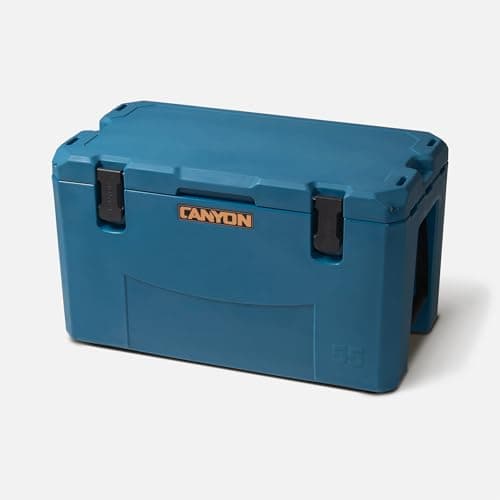
- Capacity
- 55 qt (Canyon: 48 cans with ice for max retention, 72 cans max)
- Ice retention (sub-40°F)
- 5.2 days
- Weight
- 26 lb (Canyon spec; OutdoorGearLab measured 27.4 lb)
- Exterior dimensions
- 28.5 x 15.5 x 16.75 in
- Bear certification
- IGBC certified
- Warranty
- Lifetime
About this pick
The Canyon Outfitter 55 V2 earns its Editors' Choice from OutdoorGearLab with an exceptional balance of build quality, usability, and price. Its grippy rotomolded construction, lifetime warranty, and 5+ day ice life deliver premium-tier performance in a mid-market package.
Strengths
- Unique rotomolded kayak plastic feels noticeably grippy and rugged
- FAT CAM family-friendly latches are effortless for all ages
- Handles are proportioned so you don't bang your hands when carrying
- IGBC bear-resistant certification useful for wilderness camping
Weaknesses
- Availability can be inconsistent, especially for specific colorways
- No integrated wheels, a wheeled option like the Yeti Roadie 48 is easier to haul long distances
Kit Score breakdown
Best for: Campers who want the gold-standard name and durability for long trips, want bear certification, or already own YETI accessories.
- Industry-benchmark rotomolded build, widely regarded as the standard all others are measured against
- Most expensive hard cooler in this roundup by dollar per quart
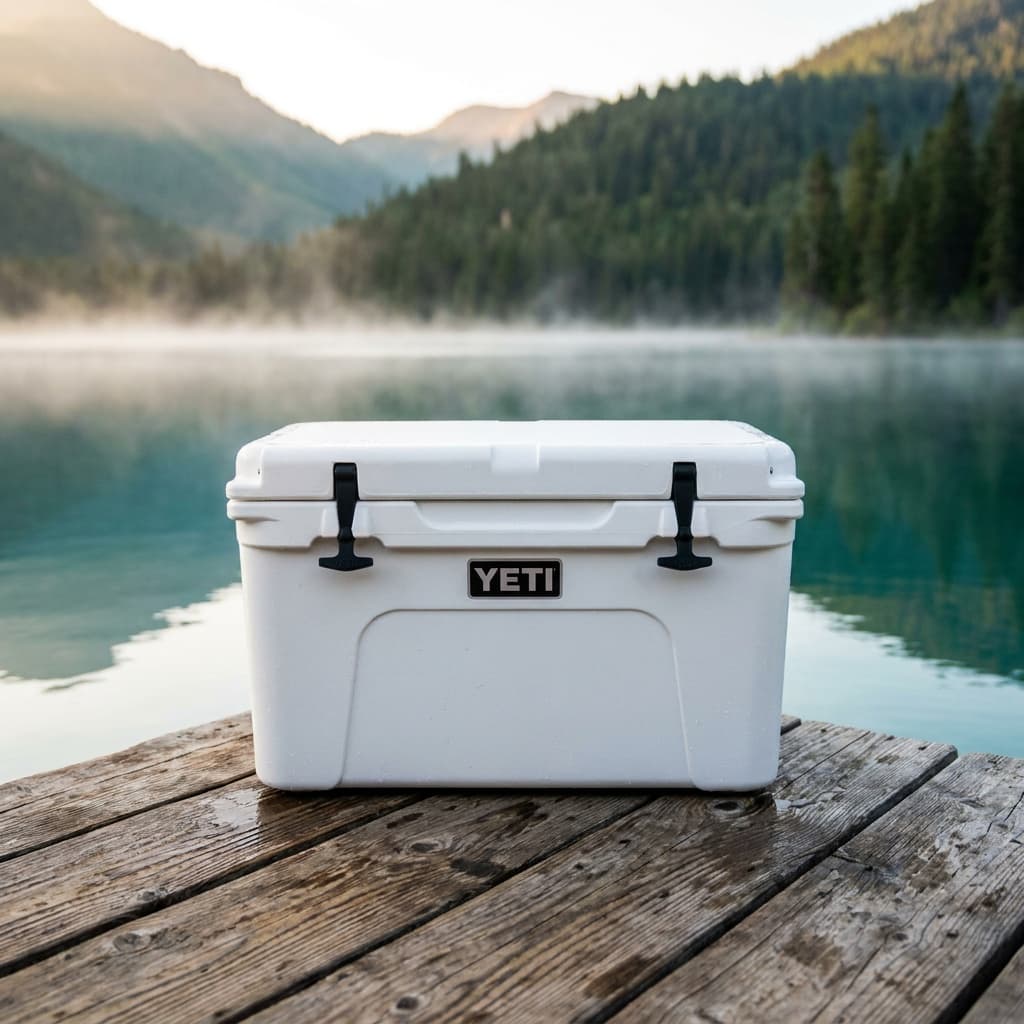
- Capacity
- 45 qt (up to 26 cans at 2:1 ice ratio)
- Ice retention
- Not published by YETI; 4.1 days below 40°F in OutdoorGearLab's chamber test
- Construction
- Rotomolded polyethylene
- Bear certification
- IGBC certified
- Warranty
- 5-year
- Current Amazon price
- ~$325
About this pick
The YETI Tundra 45 is the cooler that defined the premium hard-cooler category, rotomolded, IGBC-certified, and backed by thousands of verified long-term owners. It's the right pick when you want the last cooler you'll ever need to buy.
Strengths
- Industry-benchmark rotomolded build, widely regarded as the standard all others are measured against
- IGBC bear-resistant certification, T-Rex lid latches, and freezer-grade gasket seal
- Enormous owner review base with consistently high ratings and long-term durability reports
- Interchangeable with the full YETI accessory ecosystem (dry goods baskets, dividers, bottle openers)
Weaknesses
- Most expensive hard cooler in this roundup by dollar per quart
- 45 qt is on the smaller side for groups larger than 2–3 people over multiple nights
- No wheels, the Tundra Haul adds them but at significantly higher cost
Kit Score breakdown
COLEMAN
Xtreme 5 50 Qt Wheeled Cooler
Best Budget
Kit Score 7.5/10
$74.99 Price checked Oct 23, 6:22 AM CDT
Best for: Occasional campers, day trips, and anyone who needs a functional wheeled cooler without spending more than $60.
- Lowest price of any wheeled cooler in this roundup by a wide margin
- No lid gasket, water can slosh and leak, and insulation degrades faster than premium alternatives
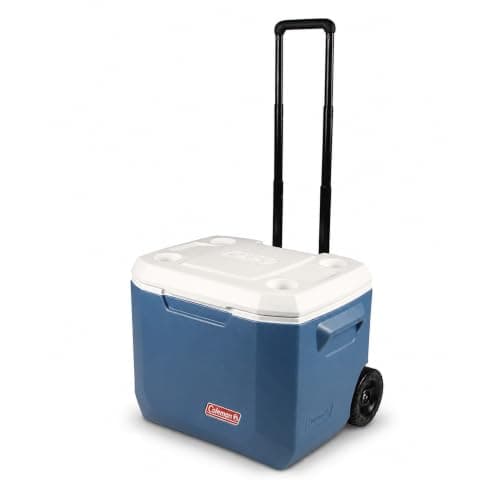
- Capacity
- 50 qt (fits ~90 cans)
- Ice retention (sub-40°F)
- ~4 days
- Weight
- 12.5 lbs empty
- Exterior dimensions
- 22.8" x 17.8" x 17.6"
- Wheels
- Yes, telescoping handle
- Warranty
- 3-year limited
About this pick
The Coleman Xtreme 5 50 Qt Rolling Cooler is the undisputed value king at under $60 with wheels. It delivers adequate ice retention for weekend trips and outsizes premium coolers on portability-per-dollar, though it won't last as long or keep ice as reliably in heat.
Strengths
- Lowest price of any wheeled cooler in this roundup by a wide margin
- Lightweight 12.5 lbs empty, far easier to lift than premium rotomolded options
- Lid cup holders and large capacity for the price
- Wheels handle most terrain types acceptably well for campsite use
Weaknesses
- No lid gasket, water can slosh and leak, and insulation degrades faster than premium alternatives
- Build quality is noticeably lower; handle and hinge longevity are legitimate concerns for heavy use
- Ice melts roughly 1.6x faster than in top-tier coolers, meaningful for 3+ day trips in heat
Kit Score breakdown
See all picks in Best coolers for car camping: real ice retention, from $55
Keep going
Complete loadoutCamp kitchen kitA durable base-camp cooking setup built around heat, cookware, coffee, cold storage, workspace, and water.
Researched, not hands-on tested
Updated Jun 4, 2026Our recommendations draw on manufacturer documentation, retailer listings, owner feedback, and comparisons with alternatives.
As an Amazon Associate I earn from qualifying purchases. We may earn a commission from links here, at no extra cost to you. How we research →