The most common cooler mistake is not buying too small. It is buying too big, packing it half-full, and wondering why the ice is gone by noon on day two. Getting the size right is a short math exercise with a few numbers worth memorizing.
The formula that covers most trips
Two quarts of cooler capacity per person per day. That is the widely used baseline, and it bakes in the ice share so you do not have to think about it separately on the first pass.
Run it for a few common scenarios:
- Solo, 2-day weekend trip: 4 quarts minimum by formula, but real-world packing (drinks, full meals) puts most solo campers in the 20–30 quart range.
- Couple, 2–3 day trip: 8–12 quarts by formula, practical target around 45 quarts.
- Family of 4, 3 days: 24 quarts by formula, real-world landing zone 60–65 quarts.
- Group of 6, extended weekend: 36+ quarts by formula, practical range 75–125 quarts.
Use the formula as a floor, not an exact target. Drinks especially add volume fast.
Why the ice ratio matters more than most buyers expect
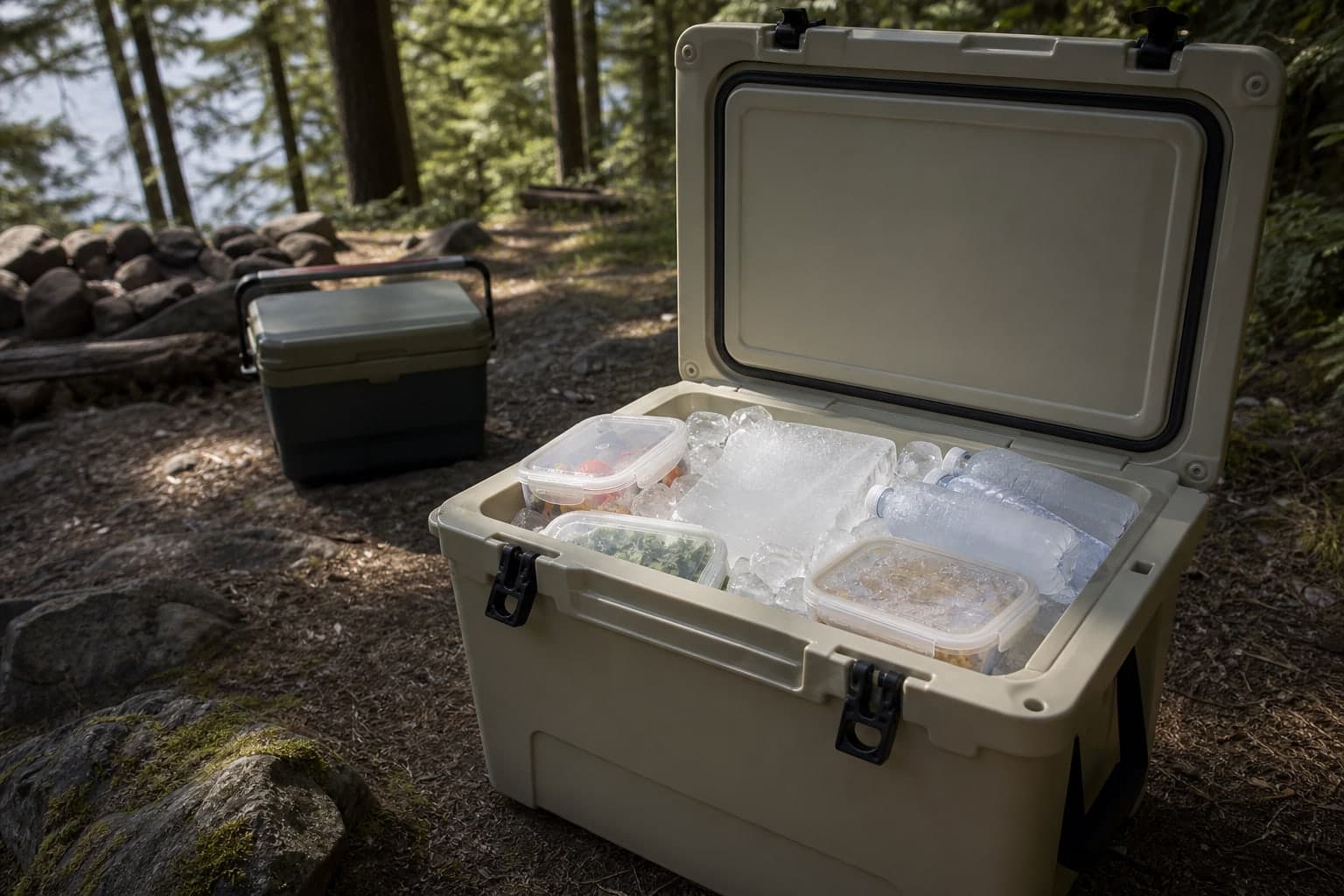
The 2:1 ice-to-content ratio is the most important number to internalize before you buy. Two-thirds of the cooler's interior volume should be ice. One-third is food and drinks.
That means a 60-quart cooler realistically holds about 20 quarts of actual food and drink. If you sized your cooler around your grocery list and forgot to account for ice, you will either run out of cold or have no room for food.
The practical fix: take your food-and-drink volume estimate and multiply by roughly 1.5, then round up to the next standard cooler size. That 50% margin is the ice.
A properly packed smaller cooler with minimal air space outperforms a cavernous one that is half-empty. Air gaps are the enemy of ice retention, not the size of the cooler.
Fill any dead space with frozen water bottles. They extend ice life and eventually become drinking water.
Trip length changes the math more than group size does
A solo camper on a 7-day backcountry resupply needs a substantially larger cooler than two people on a Saturday-night trip. The longer the trip, the more ice volume you need to carry from the start (or the more insulation quality you need to reduce how fast you burn through it).
Two paths for longer trips:
More ice volume: size up to a cooler where the 2:1 ratio still leaves you enough food space, and plan for one ice resupply at or before the halfway mark.
Better insulation: premium rotomolded coolers like the Canyon Outfitter 55 V2 can retain ice for 5 or more days, sometimes close to a week under good conditions. That ice-retention gain directly reduces the cooler size you need for a 4 to 7-day trip, because you are not trying to carry ice for the whole run on day one.
Size your cooler by trip length
Weekend trip (1–2 nights)
Use the 2-quarts-per-person-per-day formula. Most solo and couple trips land in the 20–45 quart range. A soft-sided cooler often works here.
3-day trip
Apply the formula, then size up one tier to account for full meals and more drinks. Families typically land 60–65 quarts; couples around 45.
4–5 day trip
Either size up for more ice volume, or invest in a premium rotomolded cooler with 5-plus-day retention. A mid-size premium cooler often beats a larger budget model on a trip this length.
6–7 day trip
Plan around the cooler's rated ice retention. A quality 65–75 quart rotomolded cooler with block ice plus cubed can cover a week without a resupply under reasonable conditions. Size up only if the group is large.
Longer expedition
Add a resupply plan rather than adding more cooler volume. A 125-quart cooler fully packed with ice and food exceeds 300 lbs and is difficult to move even across flat ground.
Block ice vs. cubed ice: the combination that extends retention without upsizing
Block ice lasts significantly longer than cubed ice because it has less surface area exposed to warm air. Cubed ice chills contents faster because it distributes around food more efficiently.
The combination gives you both: a block or two on the bottom for longevity, cubed ice on top and around food for rapid chilling. Using this approach extends ice life without requiring a larger cooler. It is one of the most effective free upgrades available before a trip.
Pre-chilling the cooler the night before departure is equally important. A room-temperature cooler burns through its first batch of ice in hours just bringing itself down to temperature. Run a bag of sacrificial ice in the empty cooler overnight to drop its internal walls before you pack food.
Car camping vs. carry-in camping: weight becomes the constraint
For car camping, the practical constraint is whether the cooler fits in the vehicle and whether two people can reasonably move it when full. A 65-quart wheeled cooler at around 75 lbs when packed is manageable for most drive-up campsites (the wheeled Coleman Xtreme 5 50 Qt is the budget version of this format).
For any trip that requires carrying the cooler: to a boat, down a trail, across a beach, or through a campground loop, weight becomes the real limit, not volume. A 125-quart expedition cooler weighs 300-plus pounds when fully loaded. That is not a carry-in cooler at any skill level.
Anyone carrying a cooler to a site should prioritize weight first and work backward to the largest volume they can reasonably move. A 20–45 quart soft-sided cooler like the Engel HD30 or a mid-size hard cooler is the practical ceiling for most carry situations.
For two-cooler setups on group trips longer than 3 days: keep one cooler strictly for food (opened rarely) and one for drinks (opened constantly). Every time a lid opens, warm air rushes in and accelerates ice melt. Splitting the load keeps the food cooler sealed longer and reduces total ice consumption across the trip.
The oversizing mistakes worth avoiding
Buying the largest cooler that fits in the truck bed. A loosely packed large cooler has more air volume to cool down and more dead space that warm air fills every time you open the lid. It also weighs more to haul around camp.
Sizing for food volume without accounting for ice. The 2:1 ratio is not optional on a multi-day trip. Forgetting it leads to a cooler that either runs warm or has no room for what you actually planned to bring.
Solo campers buying group-size coolers. Solo campers consistently overestimate how much food they need chilled. A 20–30 quart hard cooler is the right ceiling for most solo overnight and weekend trips. Going larger adds weight and creates dead-air space that accelerates ice melt.
Ignoring the weight of a full cooler. Volume specs are printed on every box. Packed weight is not. Calculate roughly 1 lb of weight for every quart of capacity when ice-and-food-loaded, then ask whether you can move it.
For specific model recommendations across every size tier, see our guide to the best camping coolers.
Browse more camp gear or read how we research and rate products at Kit Authority.
How many quarts of cooler do I need per person?
A reliable baseline is 2 quarts of cooler capacity per person per day, which accounts for both food and the ice needed to keep it cold. For a 2-person weekend trip over 2 days, that is 8 quarts minimum by formula, but most real-world packs land closer to 45 quarts once you add drinks and full meals. Use the formula as a floor, not an exact target. Solo campers typically land in the 20–30 quart range; couples on a 2 to 3-day trip around 45 quarts; a family of 4 over 3 days around 60–65 quarts.
Why does the ice-to-food ratio affect which size cooler I buy?
Because ice takes up a substantial portion of the cooler's usable interior. The widely recommended 2:1 ratio means two-thirds of the cooler holds ice and one-third holds food and drinks. A 60-quart cooler realistically holds only about 20 quarts of food and drink under this ratio. If you size your cooler around your grocery list without accounting for ice volume, you will either run out of cold or run out of room. A practical rule: take your estimated food-and-drink volume, multiply by roughly 1.5, and round up to the next standard cooler size to ensure you have enough ice space.
Is it better to bring one big cooler or two smaller ones?
Two coolers often make more practical sense for groups on trips longer than 3 days. Keep one cooler strictly for food, opened only at mealtimes, and one for drinks, which gets opened constantly. Every time a lid opens, warm air enters and accelerates ice melt. Keeping the food cooler sealed between meals means significantly less ice used over the trip. Two smaller coolers are also easier to manage in terms of carry weight than one 75-plus-quart box, and a single cooler failure does not compromise everything at once.
Recommended gear
Our current top picks from the Best coolers for car camping: real ice retention, from $55 guide, if you are ready to buy.
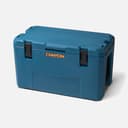
Best for: Weekend and multi-night car camping trips where ice retention, usable capacity, and a lifetime warranty matter more than the brand name.
- Unique rotomolded kayak plastic feels noticeably grippy and rugged
- Availability can be inconsistent, especially for specific colorways
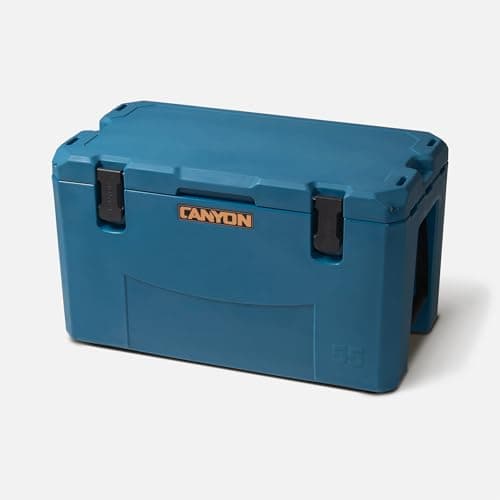
- Capacity
- 55 qt (Canyon: 48 cans with ice for max retention, 72 cans max)
- Ice retention (sub-40°F)
- 5.2 days
- Weight
- 26 lb (Canyon spec; OutdoorGearLab measured 27.4 lb)
- Exterior dimensions
- 28.5 x 15.5 x 16.75 in
- Bear certification
- IGBC certified
- Warranty
- Lifetime
About this pick
The Canyon Outfitter 55 V2 earns its Editors' Choice from OutdoorGearLab with an exceptional balance of build quality, usability, and price. Its grippy rotomolded construction, lifetime warranty, and 5+ day ice life deliver premium-tier performance in a mid-market package.
Strengths
- Unique rotomolded kayak plastic feels noticeably grippy and rugged
- FAT CAM family-friendly latches are effortless for all ages
- Handles are proportioned so you don't bang your hands when carrying
- IGBC bear-resistant certification useful for wilderness camping
Weaknesses
- Availability can be inconsistent, especially for specific colorways
- No integrated wheels, a wheeled option like the Yeti Roadie 48 is easier to haul long distances
Kit Score breakdown
Best for: Campers who want the gold-standard name and durability for long trips, want bear certification, or already own YETI accessories.
- Industry-benchmark rotomolded build, widely regarded as the standard all others are measured against
- Most expensive hard cooler in this roundup by dollar per quart
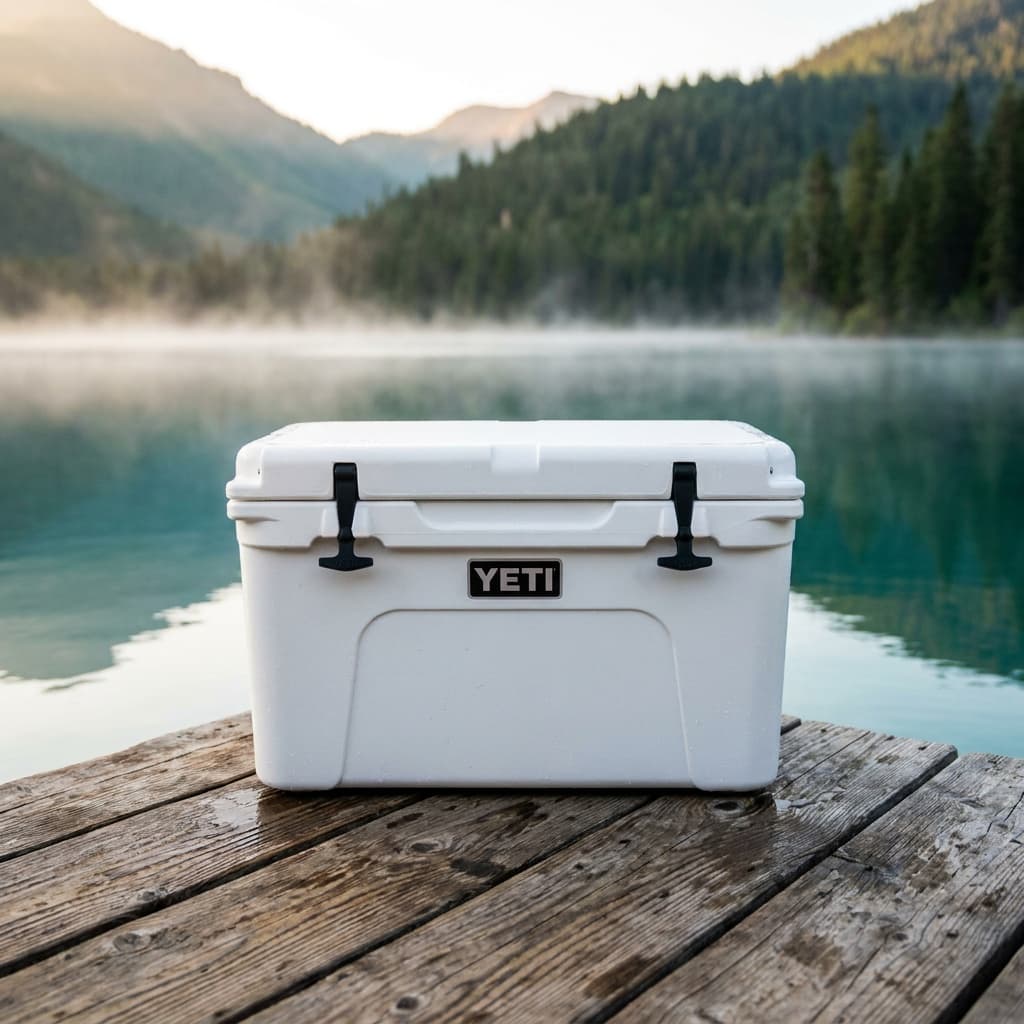
- Capacity
- 45 qt (up to 26 cans at 2:1 ice ratio)
- Ice retention
- Not published by YETI; 4.1 days below 40°F in OutdoorGearLab's chamber test
- Construction
- Rotomolded polyethylene
- Bear certification
- IGBC certified
- Warranty
- 5-year
- Current Amazon price
- ~$325
About this pick
The YETI Tundra 45 is the cooler that defined the premium hard-cooler category, rotomolded, IGBC-certified, and backed by thousands of verified long-term owners. It's the right pick when you want the last cooler you'll ever need to buy.
Strengths
- Industry-benchmark rotomolded build, widely regarded as the standard all others are measured against
- IGBC bear-resistant certification, T-Rex lid latches, and freezer-grade gasket seal
- Enormous owner review base with consistently high ratings and long-term durability reports
- Interchangeable with the full YETI accessory ecosystem (dry goods baskets, dividers, bottle openers)
Weaknesses
- Most expensive hard cooler in this roundup by dollar per quart
- 45 qt is on the smaller side for groups larger than 2–3 people over multiple nights
- No wheels, the Tundra Haul adds them but at significantly higher cost
Kit Score breakdown
COLEMAN
Xtreme 5 50 Qt Wheeled Cooler
Best Budget
Kit Score 7.5/10
$74.99 Price checked Oct 23, 6:22 AM CDT
Best for: Occasional campers, day trips, and anyone who needs a functional wheeled cooler without spending more than $60.
- Lowest price of any wheeled cooler in this roundup by a wide margin
- No lid gasket, water can slosh and leak, and insulation degrades faster than premium alternatives
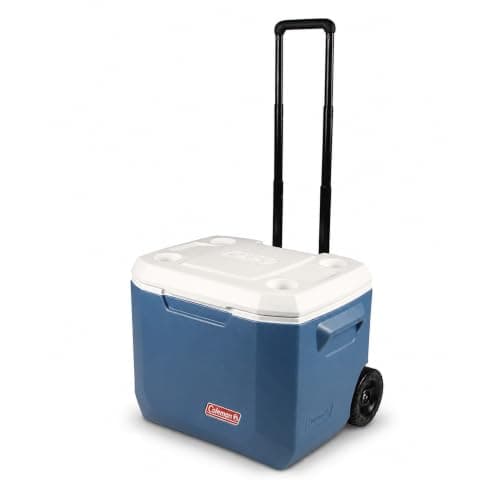
- Capacity
- 50 qt (fits ~90 cans)
- Ice retention (sub-40°F)
- ~4 days
- Weight
- 12.5 lbs empty
- Exterior dimensions
- 22.8" x 17.8" x 17.6"
- Wheels
- Yes, telescoping handle
- Warranty
- 3-year limited
About this pick
The Coleman Xtreme 5 50 Qt Rolling Cooler is the undisputed value king at under $60 with wheels. It delivers adequate ice retention for weekend trips and outsizes premium coolers on portability-per-dollar, though it won't last as long or keep ice as reliably in heat.
Strengths
- Lowest price of any wheeled cooler in this roundup by a wide margin
- Lightweight 12.5 lbs empty, far easier to lift than premium rotomolded options
- Lid cup holders and large capacity for the price
- Wheels handle most terrain types acceptably well for campsite use
Weaknesses
- No lid gasket, water can slosh and leak, and insulation degrades faster than premium alternatives
- Build quality is noticeably lower; handle and hinge longevity are legitimate concerns for heavy use
- Ice melts roughly 1.6x faster than in top-tier coolers, meaningful for 3+ day trips in heat
Kit Score breakdown
See all picks in Best coolers for car camping: real ice retention, from $55
Keep going
Complete loadoutCamp kitchen kitA durable base-camp cooking setup built around heat, cookware, coffee, cold storage, workspace, and water.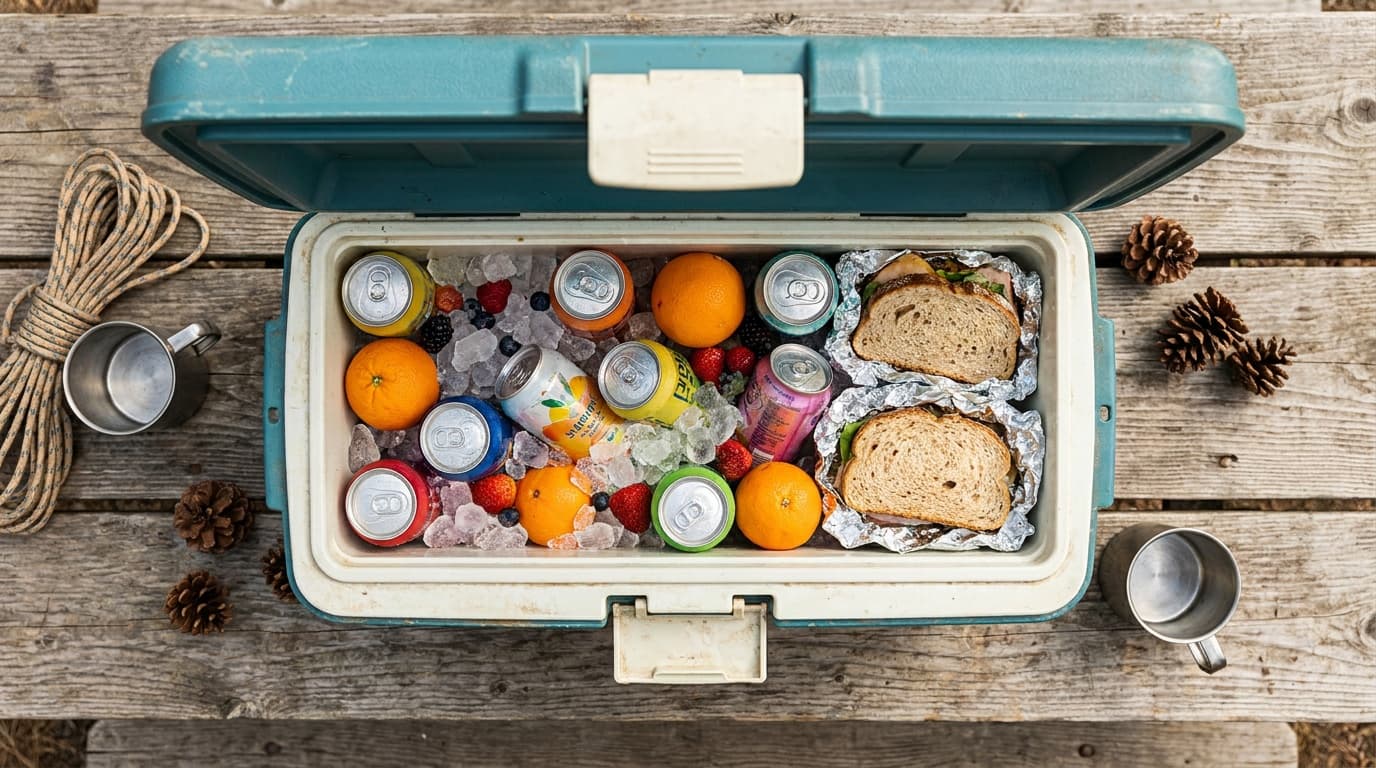
Researched, not hands-on tested
Updated Jun 4, 2026Our recommendations draw on manufacturer documentation, retailer listings, owner feedback, and comparisons with alternatives.
As an Amazon Associate I earn from qualifying purchases. We may earn a commission from links here, at no extra cost to you. How we research →