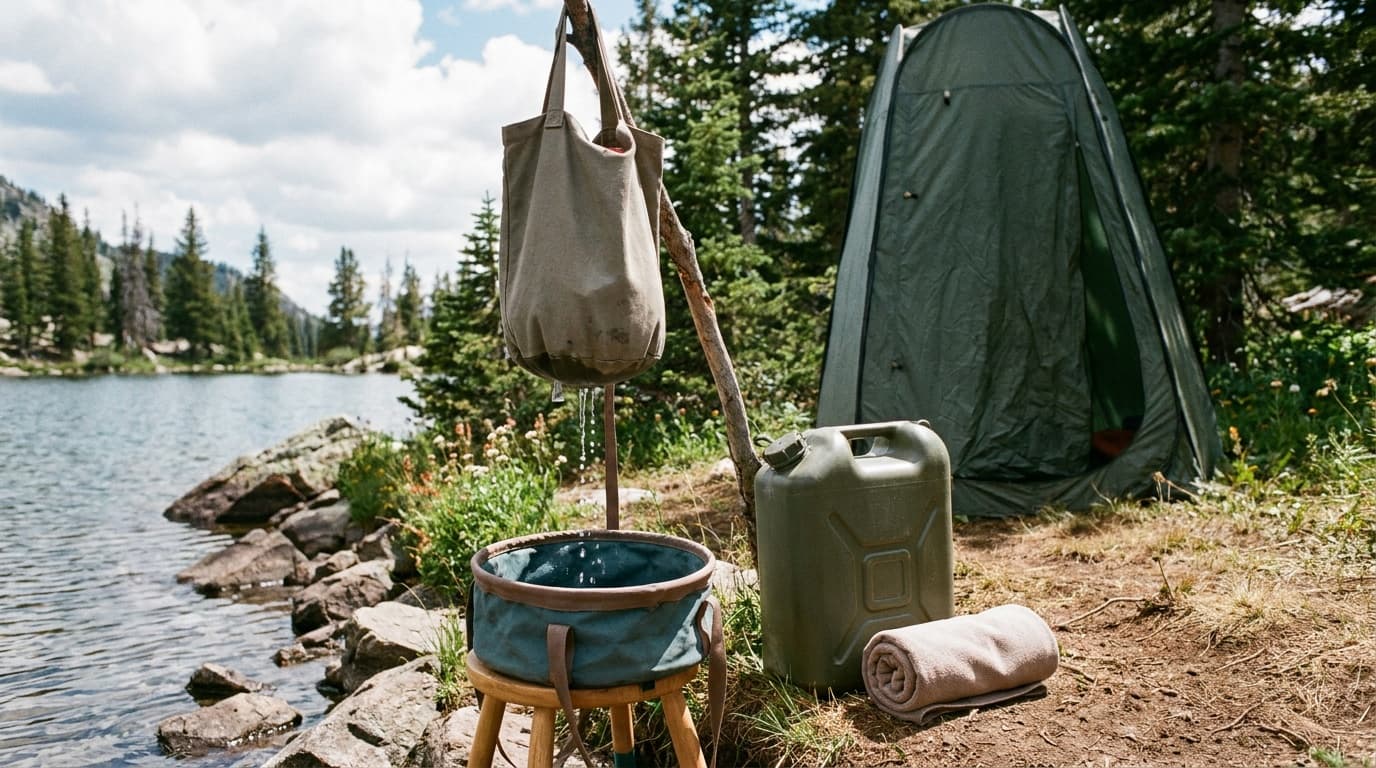
Getting clean in the backcountry is easier than most first-timers expect, and doing it responsibly takes only a few minutes of planning before you leave the trailhead.
Choosing the right shower system
Your shower setup should match your trip style. Backpacking demands the lightest option; car camping can absorb a propane heater and a folding enclosure.
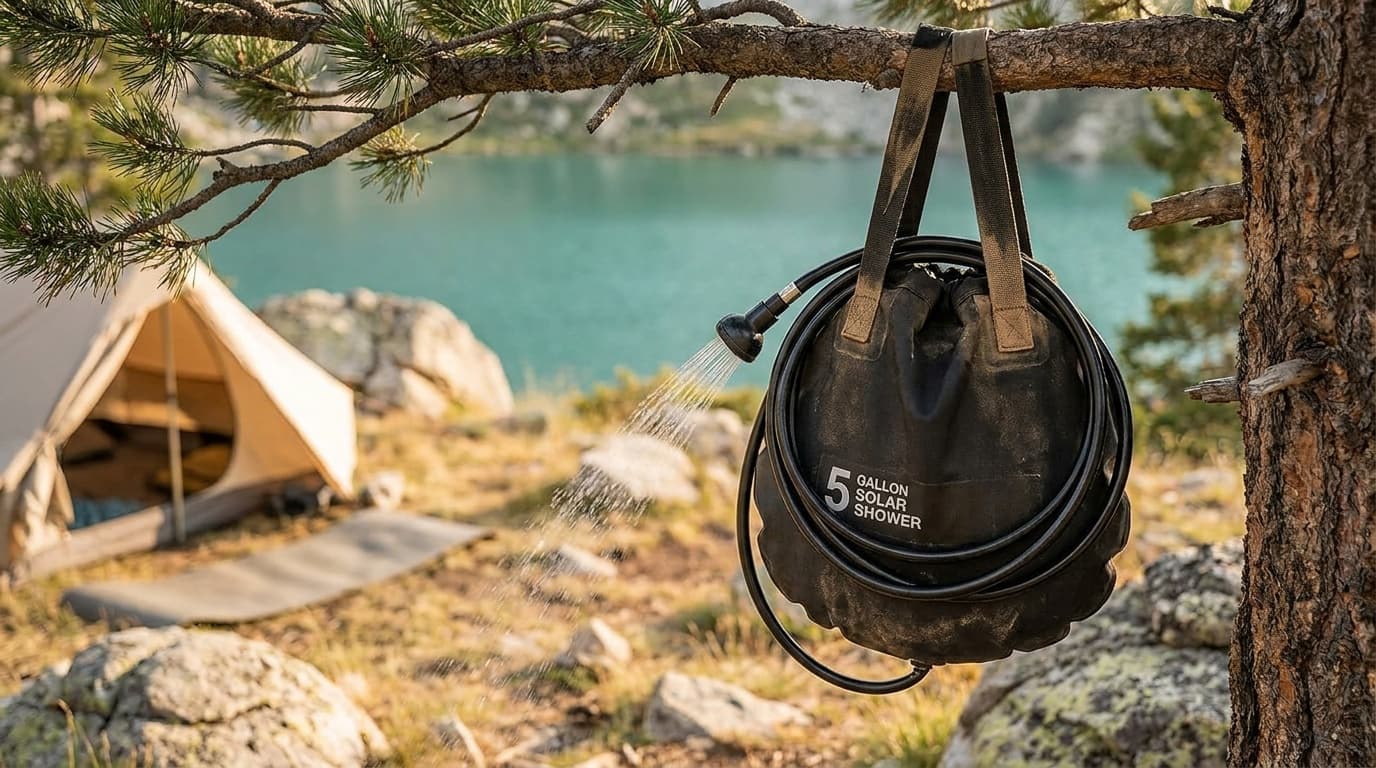
Solar bags are a black PVC or nylon bladder with a showerhead hose. Fill it, lay it in the sun, and gravity feeds the spray. Water temperature depends on sun intensity and ambient air: on a clear summer day at altitude, a dark bag reaches 90–100°F in 2–4 hours. On cloudy or cold days, lukewarm is the realistic ceiling.
Pump pressure sprayers (the same hardware as garden sprayers) let you pre-heat water at camp, pour it in, and pump up pressure for a consistent mist. A 1.5-gallon sprayer weighs almost nothing empty and delivers about 5 minutes of spray at a reasonable flow rate; purpose-built versions like the NEMO Helio LX Pressure Shower add a foot pump and a longer hose.
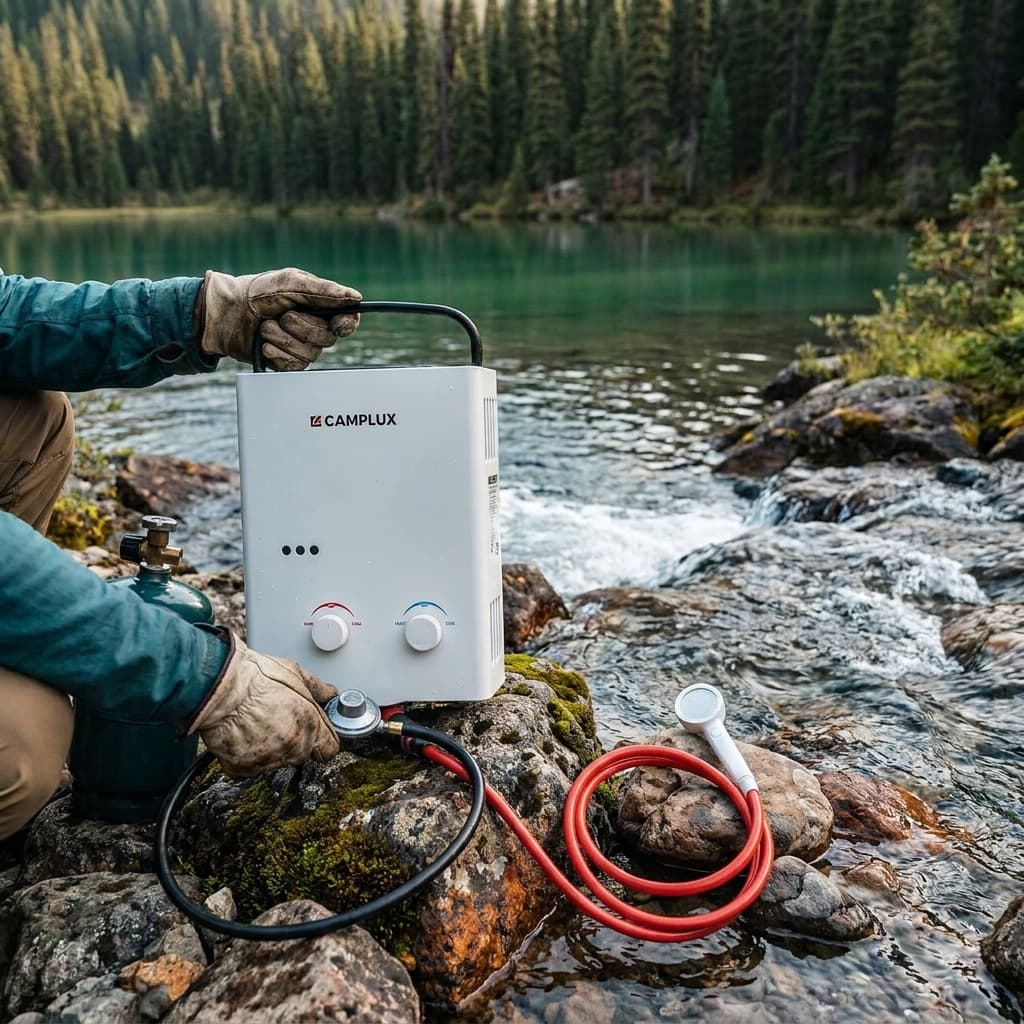
Propane on-demand heaters like the Zodi Outback Gear or Camplux AY132 heat water as it flows past a burner, the same principle as a tankless home water heater. They require a small propane canister, a 12V pump or a gravity feed, and a hose. The payoff is genuinely hot water on demand, which matters a lot on cold desert mornings or late-season trips.
Leave No Trace: the rules that actually matter
The Leave No Trace Center for Outdoor Ethics is explicit: all washing, including body washing, must happen at least 200 feet from any lake, stream, spring, or wetland. This is not a soft guideline. Even biodegradable soaps can disrupt aquatic ecosystems and oxygen levels in small water bodies.
LNT wash routine
Walk 200 feet
Count roughly 70 adult steps from the water's edge before stopping.
Carry water in a container
Never soap up directly in or at the water source.
Use the minimum soap
A few drops of biodegradable soap is enough; more does not clean better.
Scatter rinse water broadly
Disperse it over a wide area so it filters through soil rather than pooling.
Pack out wipes and packaging
Nothing gets buried or left on the ground.
Biodegradable soap options include Dr. Bronner's liquid castile soap, Sea to Summit's Wilderness Wash, and Campsuds. All break down in soil over time, but none are safe to use directly in water. "Biodegradable" describes what happens in soil, not in a stream.
Warming your water
Cold water is functional but miserable in most conditions. A few practical strategies:
- Sun heating: any dark container left in direct sun gains heat. Black solar bags are optimized for this. Even a black Nalgene left in the sun for an hour is noticeably warmer than ambient air.
- Stove heating: boil a pot of water and mix it with cold water in your bag or sprayer until it reaches a comfortable temperature. Test on your wrist the same way you would a baby bottle.
- Propane on-demand: the fastest and most comfortable option for car campers, but it requires fuel management and adds weight.
- Body heat in the tent: in a pinch, a water bag left inside a tent on a warm day warms up meaningfully, especially if the tent is fully sunlit.
The fastest warm shower at camp is two minutes of stove-heated water mixed into a solar bag, not waiting all day for weak sun to do the work.
Privacy setups
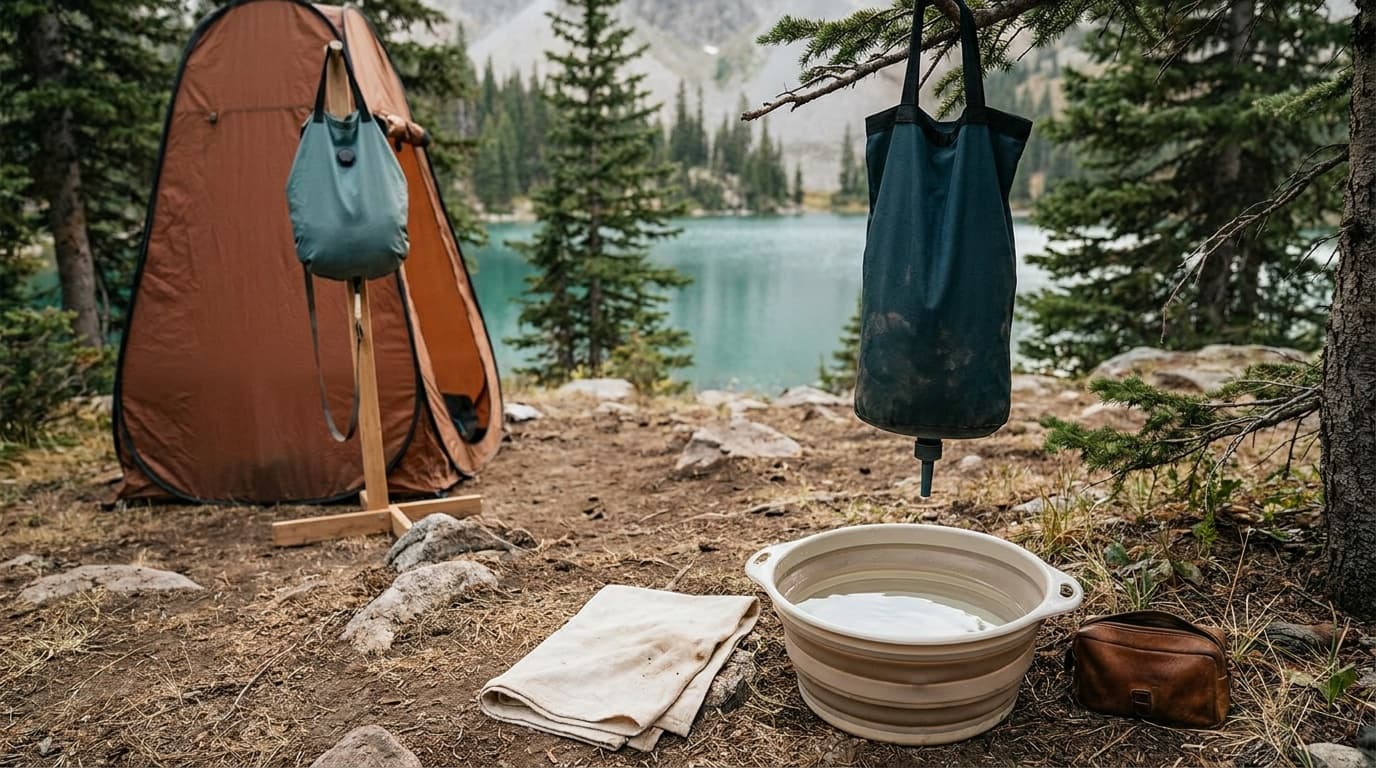
For car camping, pop-up shower enclosures weigh 3–6 pounds and set up in under a minute. They typically use fiberglass or steel poles and a fabric shell with a floor drain or open bottom. Look for one tall enough to stand in (most are 7 feet or taller) and with a reinforced hanging point for a solar bag.
For backpacking, privacy is usually situational: a secluded stand of trees, a boulder field, or a schedule shift to early morning when campmates are still in their tents. A lightweight tarp rigged between trees adds modesty with no dedicated gear weight.
The no-shower wipe-down: underrated and effective
For trips of 3 days or fewer, a thorough wipe-down is often more practical than a full shower. Focus on the areas that generate odor and bacteria: underarms, groin, feet, and neck.
What works:
- Unscented baby wipes or purpose-made camp wipes (Sea to Summit Wilderness Wipes, Action Wipes)
- A small quick-dry camp towel dampened with a cup of water and a drop of biodegradable soap
- Foot powder to reduce moisture and odor in boots between washings
Pack all used wipes out. They do not biodegrade on any trail-relevant timescale, even the ones marketed as flushable.
Frequently asked questions
Can I use regular soap while camping if I'm far from water?
Biodegradable soap is always the better choice outdoors, even at 200 feet from water. Conventional soaps contain synthetic surfactants and fragrances that persist in soil and can harm soil microorganisms. Dr. Bronner's, Sea to Summit Wilderness Wash, and similar camp soaps are widely available and inexpensive. Save the hotel shampoo bottles for home.
How much water do I actually need for a camp shower?
A disciplined 2-minute military-style rinse uses about 2 gallons. A relaxed 5-minute shower uses a full 5-gallon solar bag. For backpacking, plan on 1.5–2 gallons per person per shower day and factor that into your water carry and cache strategy. In arid terrain, a wipe-down is often the responsible choice over a full rinse.
Are propane camp shower heaters safe to use in a tent or enclosure?
No. All propane combustion appliances produce carbon monoxide and must be used outdoors in open air, never inside a tent, vestibule, or enclosed pop-up shower with little ventilation. Use an on-demand propane heater outside the enclosure and run the hose through the door, or heat water on your stove and transfer it to a solar bag or sprayer before stepping into the enclosure.
For specific picks across all price points, see our guide to the best portable camping showers. Browse all camp guides or read how we research and rate gear.
Recommended gear
Our current top picks from the Best portable camping showers of 2026 guide, if you are ready to buy.
IVATION
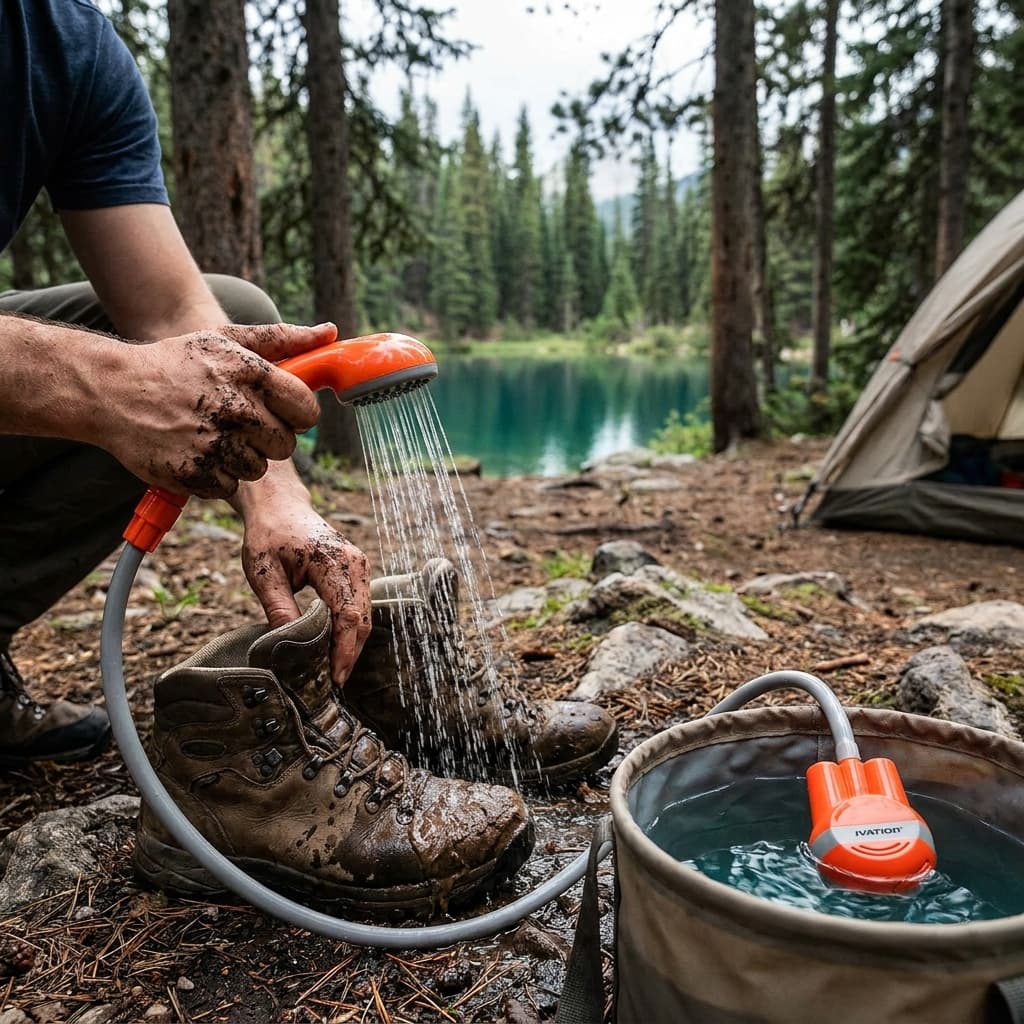
Ivation Portable Outdoor Shower
Best Value
Kit Score 6.9/10
$39.99 Price checked Oct 23, 4:16 PM CDT
Best for: Car campers and overlanders who want a no-fuss battery shower and are fine pre-heating water in a pot or solar bag.
- Steady, consistent pressure from the first minute to the last, with no fading as the bucket empties
- No water heating: you supply warm water separately or use cold
- Power source
- Built-in 2200 mAh rechargeable lithium battery (USB charge)
- Flow rate
- 1.2 gal/min (0.66 gal/min rated average)
- Runtime
- ~60 minutes continuous on a full charge
- Hose length
- 5 ft 9 in
- Showerhead diameter
- 2.5 in
- Weight
- 1.3 lbs
About this pick
A compact pump showerhead that drops into any bucket or container and delivers steady, consistent pressure for around 60 minutes per charge. Owner feedback consistently highlights the even spray throughout the whole battery life, with no pressure drop-off as the bucket empties.
Strengths
- Steady, consistent pressure from the first minute to the last, with no fading as the bucket empties
- Wide 2.5-inch showerhead gives comfortable coverage similar to a home shower
- Draws from any water source: bucket, stream, jug, or collapsible tank
Weaknesses
- No water heating: you supply warm water separately or use cold
- Durability concerns flagged by multiple owners, including reports of the hose connection cracking and the unit separating from hoses
Kit Score breakdown
Best for: Car campers and overlanders who want genuine shower pressure and solar-heated water with zero reliance on batteries or propane.
- Human-powered pressure means no batteries, no fuel, and no infrastructure needed, so it works anywhere
- Foot pump requires stopping spray to re-pressurize mid-shower, which owners find awkward
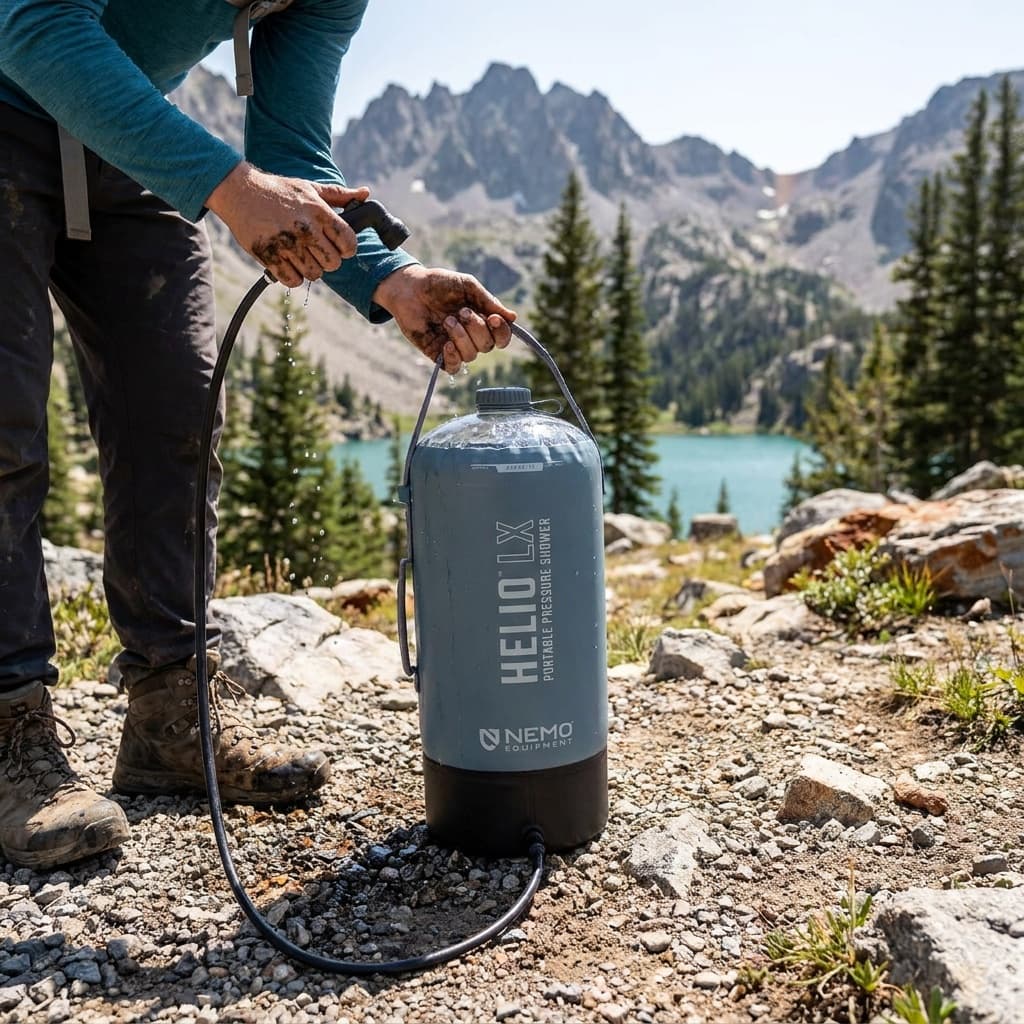
- Capacity
- 5.8 gallons (22 L)
- Pressurization
- Foot pump (no battery or electricity needed)
- Flow rate
- Up to 1.0 gal/min at max pressure
- Runtime
- 7 to 10 minutes continuous at full fill
- Hose length
- 7 ft (neoprene)
- Weight
- 2 lbs 1 oz empty
About this pick
A foot-pump pressure shower with a 5.8-gallon tank that stands upright on the ground and solar-warms the water in about three hours. The seven-foot hose and two-stage nozzle give you real shower pressure at eye and head height without needing a tree branch, a battery pack, or a fuel canister.
Strengths
- Human-powered pressure means no batteries, no fuel, and no infrastructure needed, so it works anywhere
- 7-foot neoprene hose puts the showerhead at a usable height without hanging the tank
- 5.8-gallon capacity and 7 to 10 minutes of runtime handles a full body wash and a hair rinse
Weaknesses
- Foot pump requires stopping spray to re-pressurize mid-shower, which owners find awkward
- No drain plug means standing water inside if not fully inverted to empty, a mold concern for long trips
Kit Score breakdown
CAMPLUX
Camplux AY132 Portable Propane Tankless Water Heater
Best Premium
Kit Score 8.1/10
$135.99 Price checked Oct 23, 4:16 PM CDT
Best for: Overlanders, group car camps, and anyone who wants unlimited on-demand hot water and is willing to carry propane and assemble a pump system.
- Instant, continuous hot water regardless of sun or ambient temperature, including cold-weather camps and shoulder-season overlanding
- Requires a separate propane tank and a water pump or gravity feed, making it the most expensive and complex full system to assemble
- Heat output
- 34,000 BTU/hr
- Flow rate
- 1.32 GPM (5 L/min)
- Fuel
- Propane (20 lb tank common; tank sold separately)
- Ignition
- Two D-cell batteries (no electricity needed)
- Min. inlet pressure
- 2.5 PSI
- Weight
- 10 lbs
About this pick
A propane tankless water heater that delivers genuinely hot water on demand at 1.32 GPM, with no waiting for solar heating and no runtime limit beyond your propane supply. Pair it with a 12V pump or gravity feed and you have a full camp shower system that works in cold weather and under heavy demand.
Strengths
- Instant, continuous hot water regardless of sun or ambient temperature, including cold-weather camps and shoulder-season overlanding
- 1.32 GPM flow rate is the highest of any option here, with a real home-shower feel at full pressure
- CSA-certified safety features: overheat cutoff, flame failure device, and anti-freeze protection
Weaknesses
- Requires a separate propane tank and a water pump or gravity feed, making it the most expensive and complex full system to assemble
- Certain early AY132 units manufactured before September 2021 were subject to a CPSC recall for a gas regulator fire hazard; verify the serial number on older used units
Kit Score breakdown
Keep going
Related guides
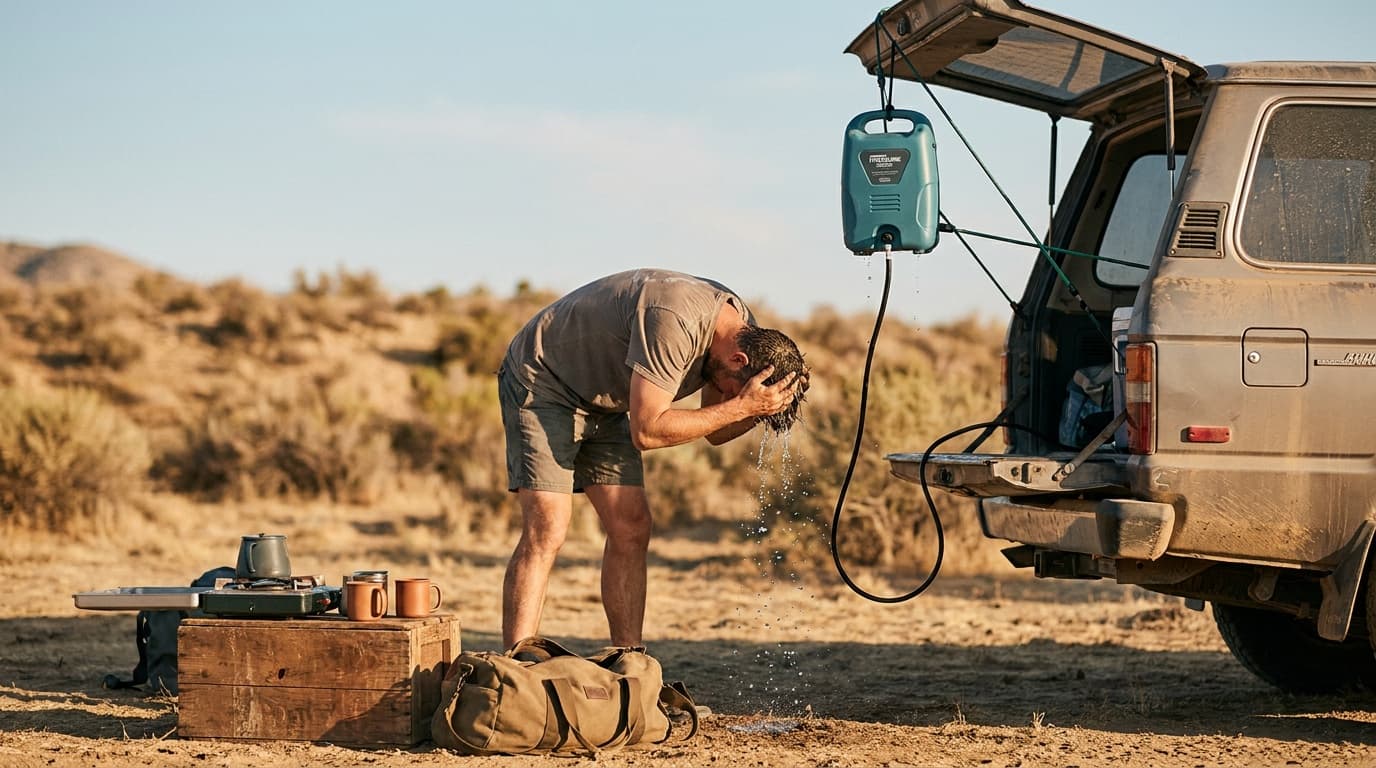
 Complete camp loadoutCar-camping starter kitBuild the complete kit
Researched, not hands-on tested
Updated Jun 4, 2026Our recommendations draw on manufacturer documentation, retailer listings, owner feedback, and comparisons with alternatives.
As an Amazon Associate I earn from qualifying purchases. We may earn a commission from links here, at no extra cost to you. How we research →