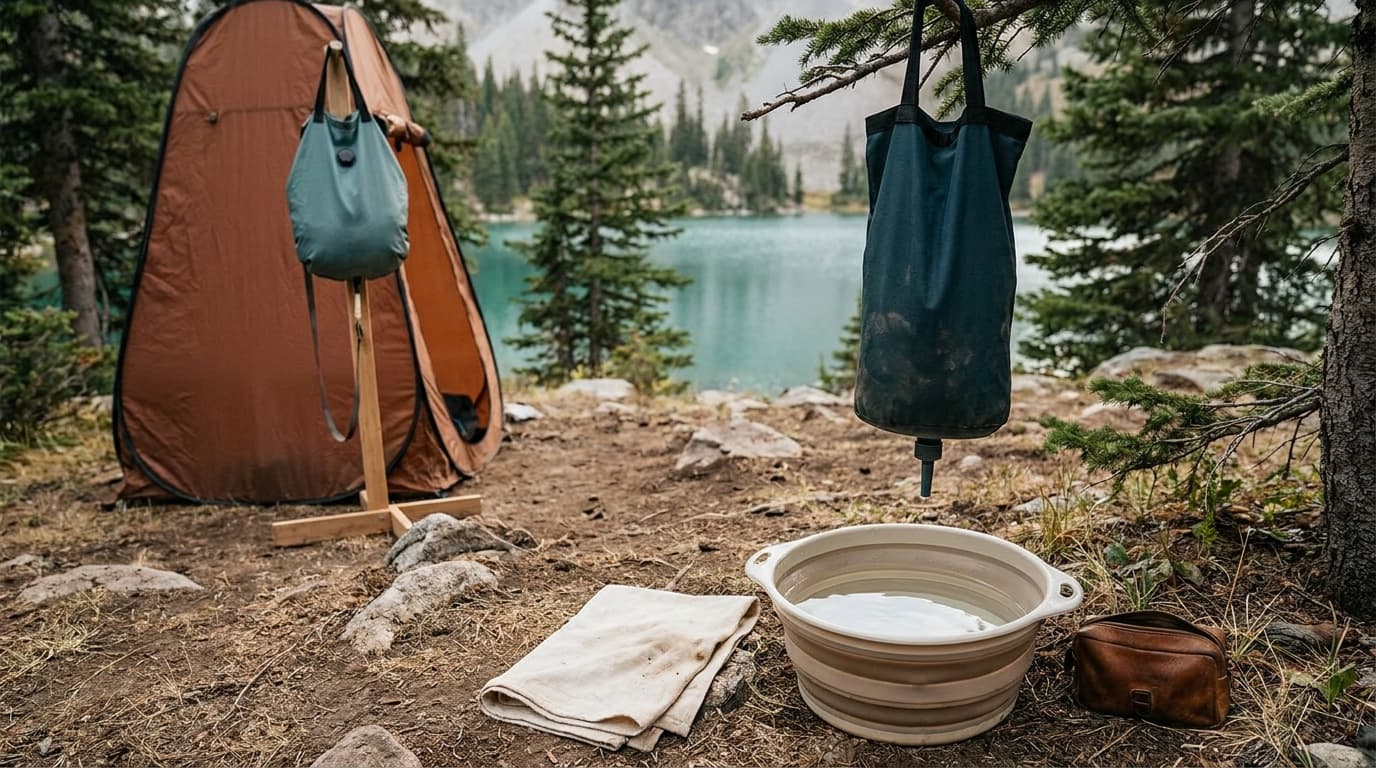
A solar camping shower is one of the simplest pieces of outdoor gear ever made: a dark-colored bag that turns sunlight into warm water. Understanding exactly how it works helps you plan around its real strengths and honest limits.
How the bag absorbs heat
The physics are straightforward. Dark colors absorb a broad spectrum of solar radiation and convert it to thermal energy. A black polyethylene or PVC-free (TPU) bag laid flat and exposed to direct sun will absorb significantly more energy than a clear or silver bag would. The water inside is a good thermal mass: it holds heat longer than the thin bag material alone.
The outer bag material matters beyond just color. Traditional bags use PVC, which is inexpensive and flexible but can leach trace plasticizers into warm water. Newer PVC-free bags use TPU (thermoplastic polyurethane) or EVA, which are considered safer choices for food-adjacent water contact. Either material works on the same solar principle; the difference is chemistry, not heating performance.
The bag is both the solar collector and the water reservoir: simplicity is the whole design.
Heating time and achievable temperature
Realistic heating benchmarks depend on three variables: ambient air temperature, sun intensity (angle and cloud cover), and starting water temperature. Here are real-world reference points you can plan around.
On a clear summer day with the bag angled toward the sun, most 5-liter bags reach comfortably warm water (95–105°F) in three to five hours. Starting with water that is already warm, such as creek water on a hot afternoon, shortens that window. Starting with cold snowmelt water lengthens it noticeably.
A useful rule of thumb: lay the bag out by late morning, and it will be ready by mid-afternoon. Don't expect hot-shower temperatures. You're aiming for warm and comfortable, not scalding.
Hanging and gravity flow
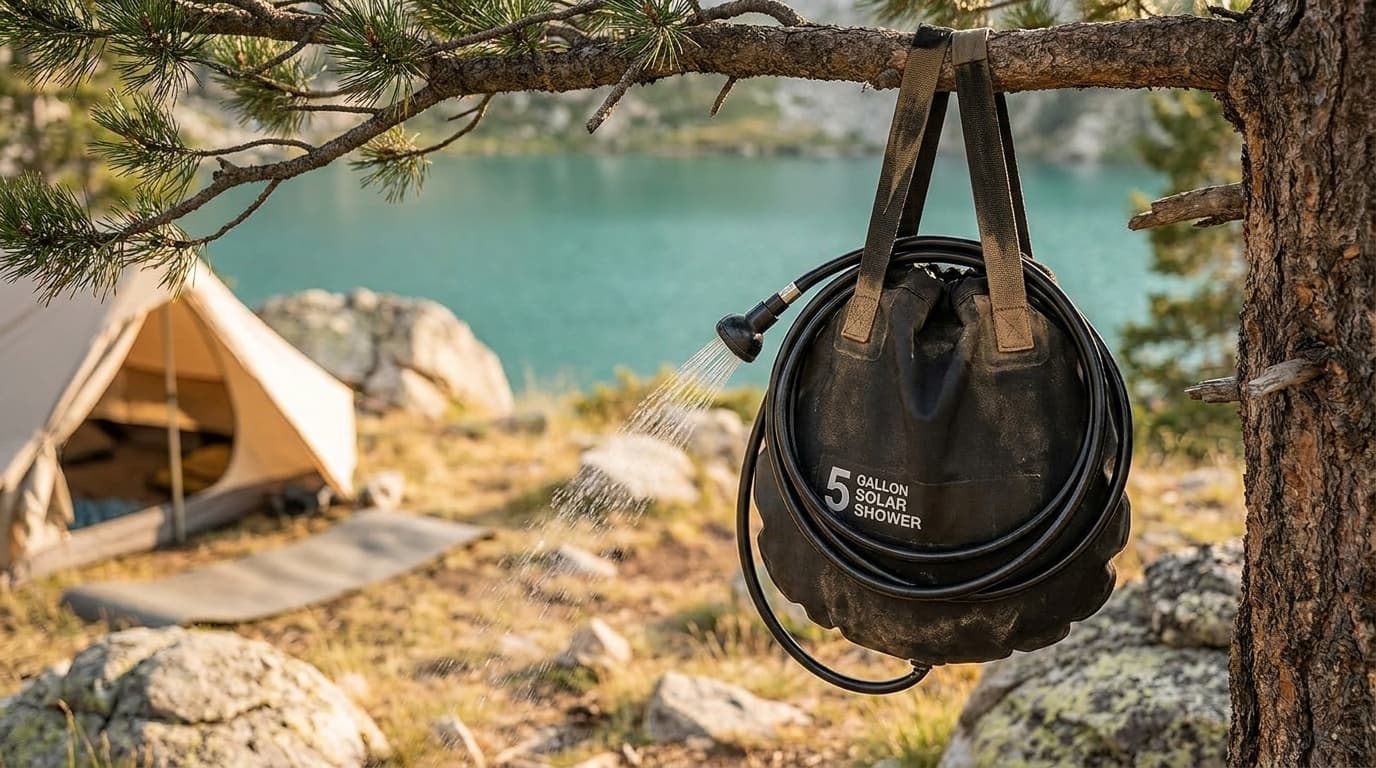
Every solar shower bag has a hook or loop for hanging. Gravity does the work: once the bag is elevated above your head, water flows through a short hose and a shutoff valve to a basic showerhead nozzle. There is no pump, no pressure tank, and no battery.
Getting the most from hanging height
Find a sturdy branch or hook
Aim for 6–8 feet of elevation; higher hang gives slightly better flow pressure.
Angle the bag before hanging
Lay it flat and tilted toward the sun while heating, then hang when ready to use.
Keep the hose kinked until ready
Prevents heat loss while you undress and set up your camp footprint.
Use the shutoff valve in short bursts
Wet your body, close the valve, lather, then rinse; conserves every liter.
Warm the hose in the sun too
A cold hose bleeds the first few ounces of warm water before the bag water reaches you.
Flow rate from a gravity shower is low by household standards, typically around 0.5–1 liter per minute. That is actually an advantage: it extends your shower time and stretches a small bag further than you might expect.
Maximizing heat: sun angle and dark surfaces
A solar shower bag is a passive collector, so positioning is everything. The bag absorbs the most energy when it faces the sun perpendicularly, meaning the bag's flat surface is at a right angle to incoming sunlight, not lying flat on the ground at midday.
Other heat-maximizing moves: place the bag on a dark rock or dark tarp rather than grass or sand, which reflects and conducts heat back into the water from below. Keep the bag out of the wind while heating; wind pulls heat away from the surface. And top up with the warmest available water source before laying out.
Cloudy days and honest limits
This is where you earn the right to a good coach-level answer: solar showers underperform on cloudy days, and you should plan accordingly. Thin or hazy cloud cover cuts solar input by 20–50%. Heavy overcast can cut it by 80% or more. On a genuinely cloudy day, expect lukewarm water (70–80°F) at best, even after a full afternoon of exposure.
At altitude, sun intensity is higher, which helps. But air temperature is lower and wind is stronger, which works against you. The net result varies; a calm, high-elevation afternoon in July can actually outperform a humid, hazy lowland day.
If you're going somewhere reliably overcast (the Pacific Northwest in shoulder season, for example), a solar shower is a gamble. Bring a backup plan: a collapsible bucket with water warmed over a camp stove, or a battery-powered camp shower pump like the Ivation Portable Outdoor Shower.
Frequently asked questions
How much water do I actually need for a solar camping shower?
A conservative camp shower uses 5–7 liters if you follow a wet-lather-rinse routine with the valve closed between steps. A 5-liter bag is enough for one person. If two people are sharing, look for a 10-liter bag or plan to refill and reheat for the second shower.
Is the water from a solar shower bag safe to drink?
No. Solar shower bags are not rated or designed as drinking water containers. Even PVC-free bags can impart taste and should not be used for potable water. Heat accelerates off-gassing from any polymer. Keep your cooking and drinking water in containers rated for that purpose.
Can I use a solar shower in cold weather or winter camping?
Technically yes, but practically limited. If the air temperature is below 40°F (4°C), the bag may not reach comfortable shower temperature even in direct sun, because ambient heat loss offsets solar gain. Insulating the back of the bag with a dark blanket or foam pad can help retain heat on cold days. Most cold-weather campers treat a solar shower as a seasonal tool and rely on heated water from a stove instead.
For specific picks across price points and bag sizes, see our guide to the best portable camping showers. Browse all camp guides or read how we research and rate gear.
Recommended gear
Our current top picks from the Best portable camping showers of 2026 guide, if you are ready to buy.
IVATION
Ivation Portable Outdoor Shower
Best Value
Kit Score 6.9/10
$39.99 Price checked Oct 23, 6:22 AM CDT
Best for: Car campers and overlanders who want a no-fuss battery shower and are fine pre-heating water in a pot or solar bag.
- Steady, consistent pressure from the first minute to the last, with no fading as the bucket empties
- No water heating: you supply warm water separately or use cold
- Power source
- Built-in 2200 mAh rechargeable lithium battery (USB charge)
- Flow rate
- 1.2 gal/min (0.66 gal/min rated average)
- Runtime
- ~60 minutes continuous on a full charge
- Hose length
- 5 ft 9 in
- Showerhead diameter
- 2.5 in
- Weight
- 1.3 lbs
About this pick
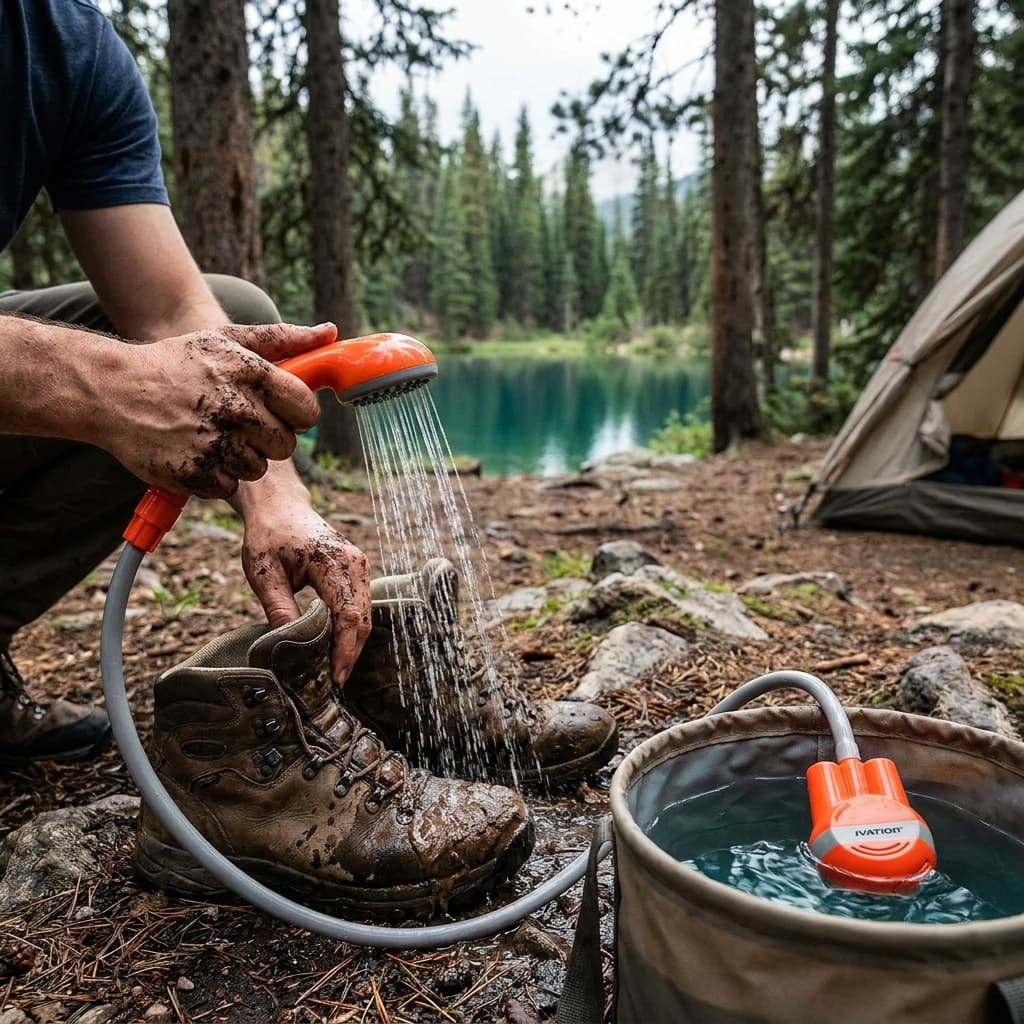
A compact pump showerhead that drops into any bucket or container and delivers steady, consistent pressure for around 60 minutes per charge. Owner feedback consistently highlights the even spray throughout the whole battery life, with no pressure drop-off as the bucket empties.
Strengths
- Steady, consistent pressure from the first minute to the last, with no fading as the bucket empties
- Wide 2.5-inch showerhead gives comfortable coverage similar to a home shower
- Draws from any water source: bucket, stream, jug, or collapsible tank
Weaknesses
- No water heating: you supply warm water separately or use cold
- Durability concerns flagged by multiple owners, including reports of the hose connection cracking and the unit separating from hoses
Kit Score breakdown
Best for: Car campers and overlanders who want genuine shower pressure and solar-heated water with zero reliance on batteries or propane.
- Human-powered pressure means no batteries, no fuel, and no infrastructure needed, so it works anywhere
- Foot pump requires stopping spray to re-pressurize mid-shower, which owners find awkward
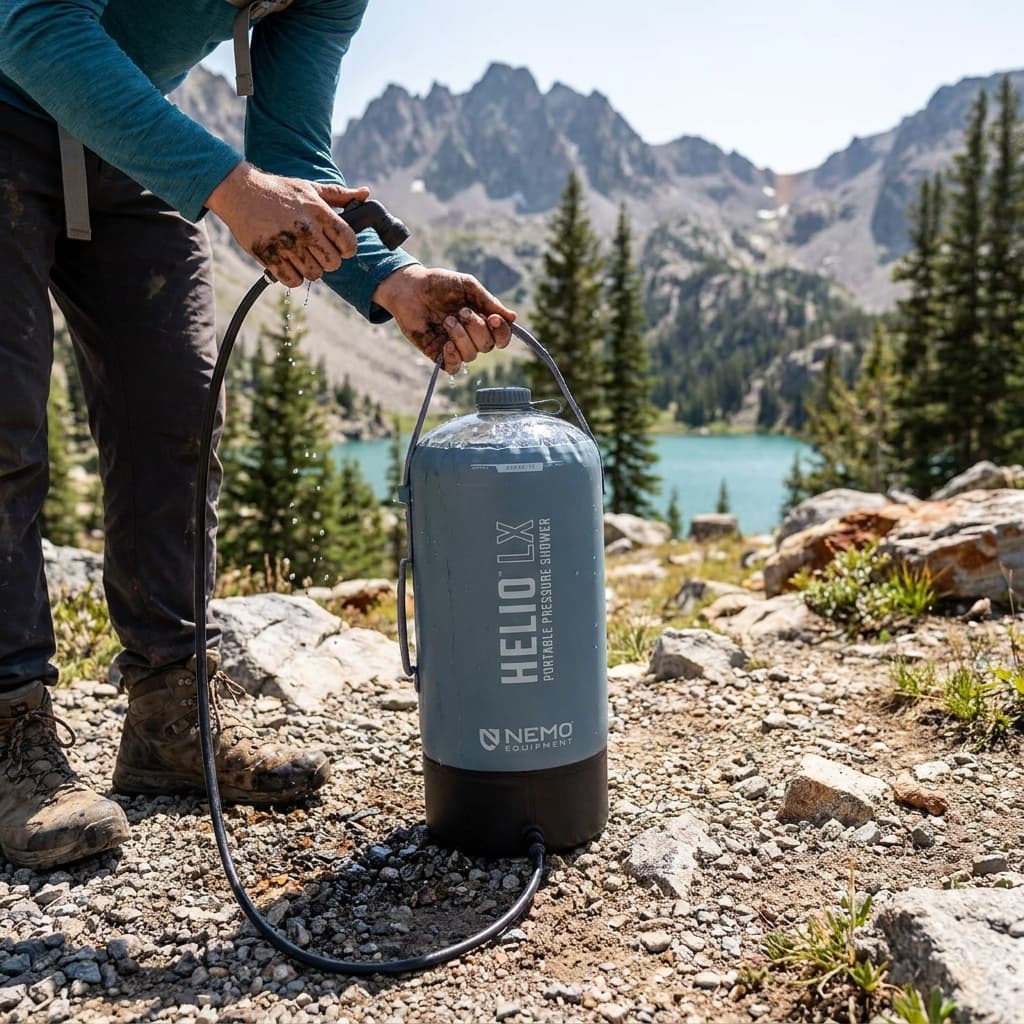
- Capacity
- 5.8 gallons (22 L)
- Pressurization
- Foot pump (no battery or electricity needed)
- Flow rate
- Up to 1.0 gal/min at max pressure
- Runtime
- 7 to 10 minutes continuous at full fill
- Hose length
- 7 ft (neoprene)
- Weight
- 2 lbs 1 oz empty
About this pick
A foot-pump pressure shower with a 5.8-gallon tank that stands upright on the ground and solar-warms the water in about three hours. The seven-foot hose and two-stage nozzle give you real shower pressure at eye and head height without needing a tree branch, a battery pack, or a fuel canister.
Strengths
- Human-powered pressure means no batteries, no fuel, and no infrastructure needed, so it works anywhere
- 7-foot neoprene hose puts the showerhead at a usable height without hanging the tank
- 5.8-gallon capacity and 7 to 10 minutes of runtime handles a full body wash and a hair rinse
Weaknesses
- Foot pump requires stopping spray to re-pressurize mid-shower, which owners find awkward
- No drain plug means standing water inside if not fully inverted to empty, a mold concern for long trips
Kit Score breakdown
CAMPLUX
Camplux AY132 Portable Propane Tankless Water Heater
Best Premium
Kit Score 8.1/10
$159.99 Price checked Oct 23, 6:22 AM CDT
Best for: Overlanders, group car camps, and anyone who wants unlimited on-demand hot water and is willing to carry propane and assemble a pump system.
- Instant, continuous hot water regardless of sun or ambient temperature, including cold-weather camps and shoulder-season overlanding
- Requires a separate propane tank and a water pump or gravity feed, making it the most expensive and complex full system to assemble
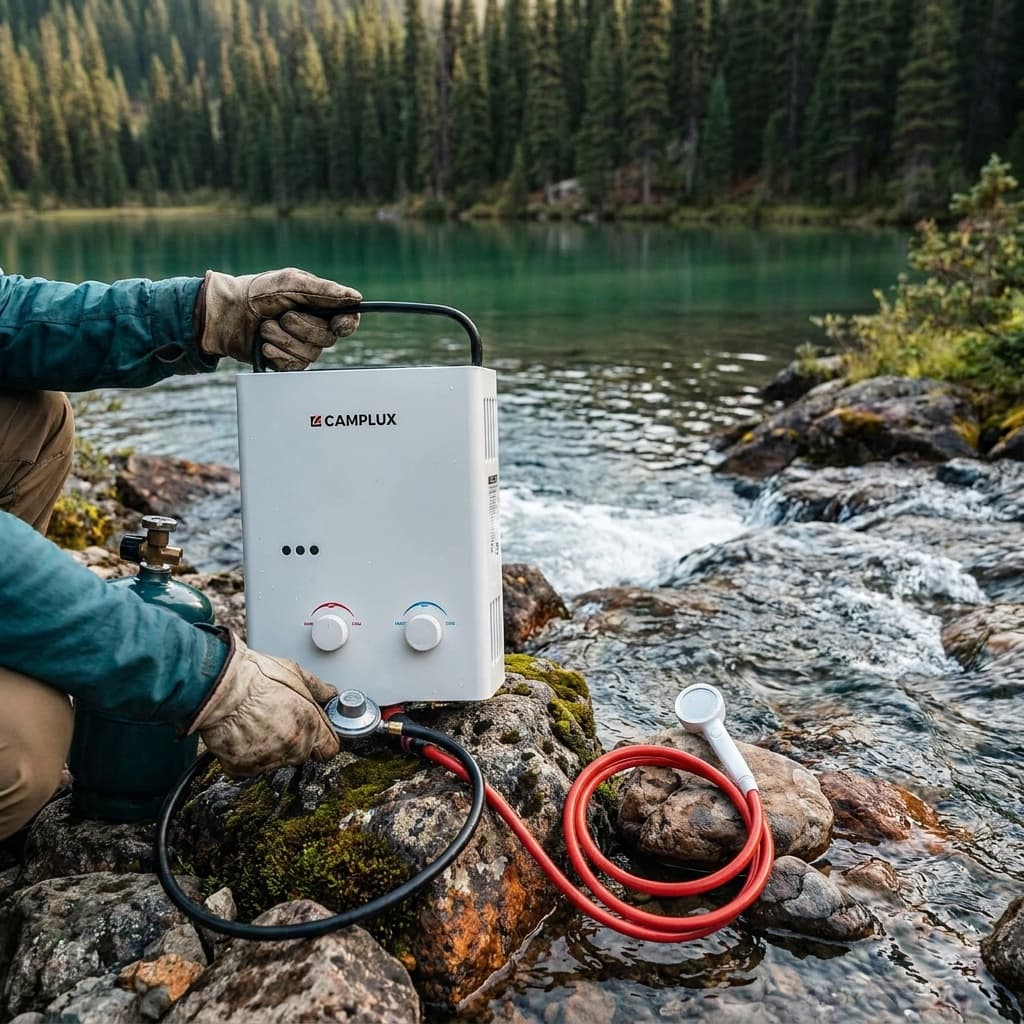
- Heat output
- 34,000 BTU/hr
- Flow rate
- 1.32 GPM (5 L/min)
- Fuel
- Propane (20 lb tank common; tank sold separately)
- Ignition
- Two D-cell batteries (no electricity needed)
- Min. inlet pressure
- 2.5 PSI
- Weight
- 10 lbs
About this pick
A propane tankless water heater that delivers genuinely hot water on demand at 1.32 GPM, with no waiting for solar heating and no runtime limit beyond your propane supply. Pair it with a 12V pump or gravity feed and you have a full camp shower system that works in cold weather and under heavy demand.
Strengths
- Instant, continuous hot water regardless of sun or ambient temperature, including cold-weather camps and shoulder-season overlanding
- 1.32 GPM flow rate is the highest of any option here, with a real home-shower feel at full pressure
- CSA-certified safety features: overheat cutoff, flame failure device, and anti-freeze protection
Weaknesses
- Requires a separate propane tank and a water pump or gravity feed, making it the most expensive and complex full system to assemble
- Certain early AY132 units manufactured before September 2021 were subject to a CPSC recall for a gas regulator fire hazard; verify the serial number on older used units
Kit Score breakdown
Keep going
Related guides
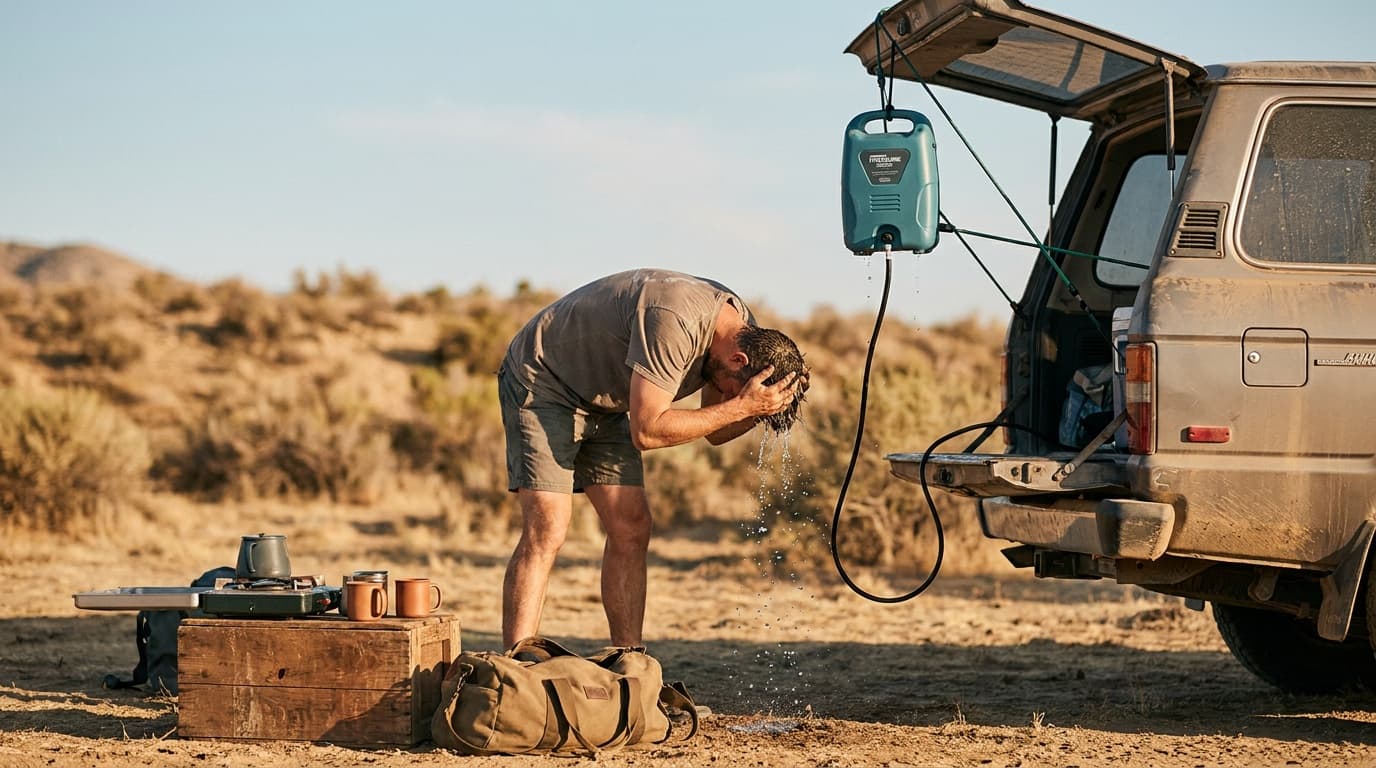
 Complete camp loadoutCar-camping starter kitBuild the complete kit
Researched, not hands-on tested
Updated Jun 4, 2026Our recommendations draw on manufacturer documentation, retailer listings, owner feedback, and comparisons with alternatives.
As an Amazon Associate I earn from qualifying purchases. We may earn a commission from links here, at no extra cost to you. How we research →