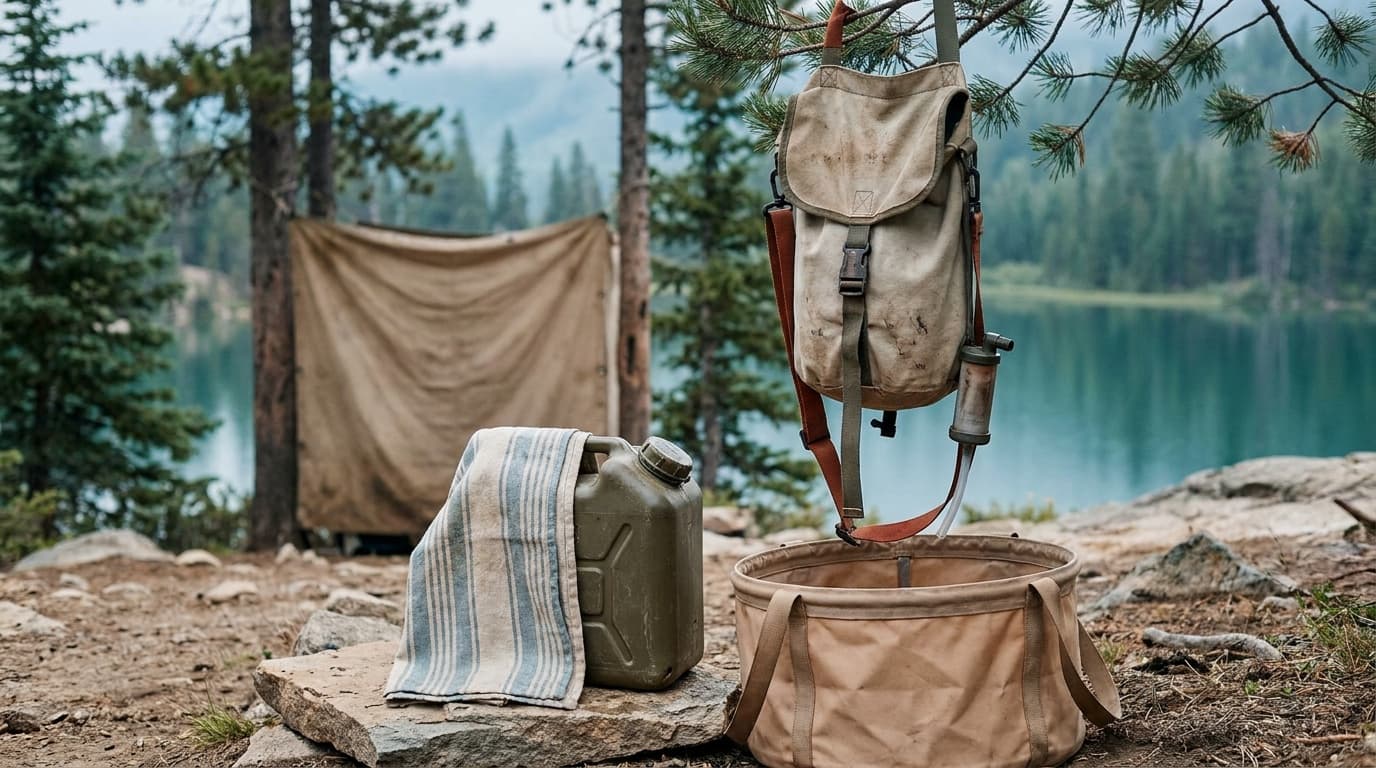
Drinking untreated backcountry water is the fastest way to lose two weeks of fitness to a stomach bug. The good news: modern filters and purifiers make safe water easy to get anywhere you can find a source.
Filter vs. purifier: what each one actually removes
These terms get used interchangeably, but they mean different things.
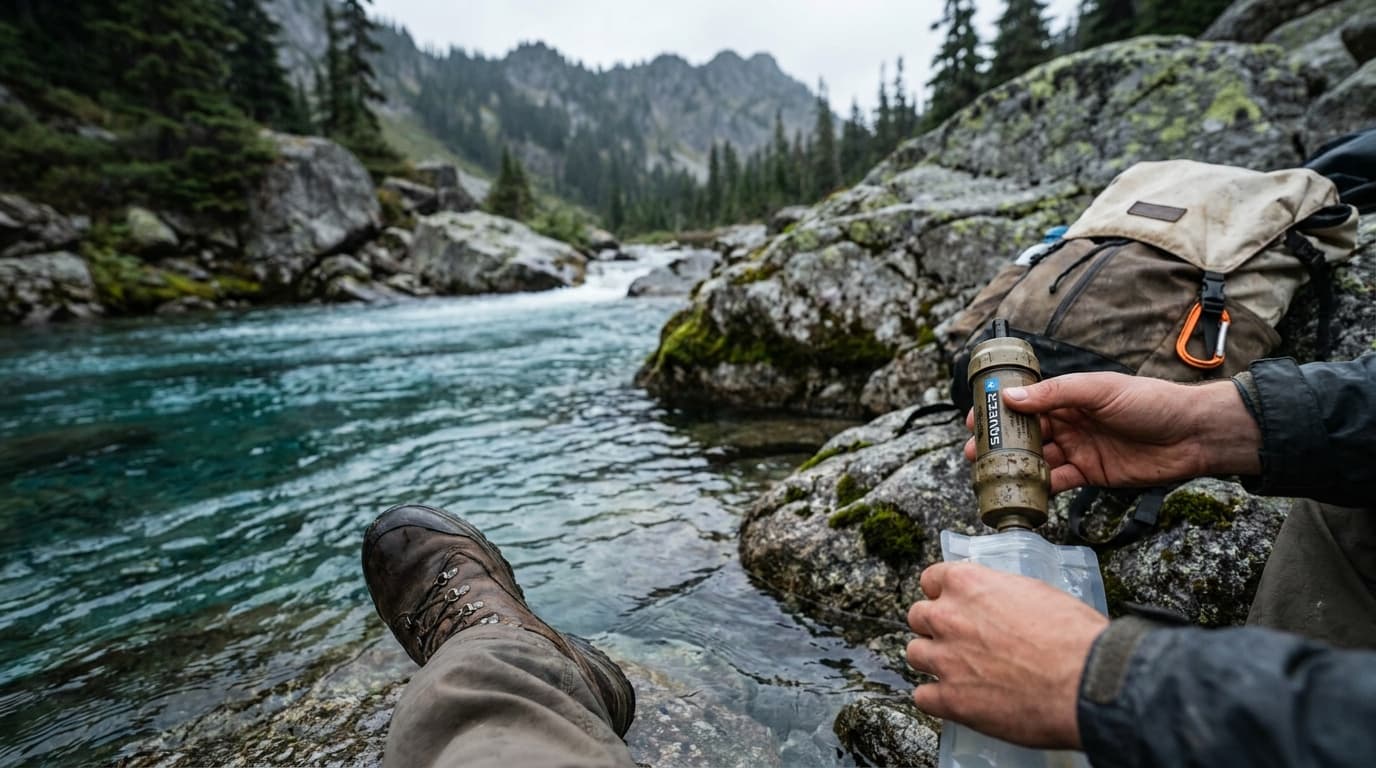
A microfilter like the Sawyer Squeeze is a hollow-fiber membrane with pores around 0.2 microns. That stops protozoa and bacteria comfortably:
- Giardia cysts: 8–14 microns
- Cryptosporidium oocysts: 4–6 microns
- Bacteria (E. coli): 1–2 microns
Viruses, however, measure just 0.02–0.1 microns. Norovirus and Hepatitis A pass straight through a 0.2-micron membrane. A microfilter gives you no protection against them.
A purifier closes that gap. Physical purifiers use finer membranes (down to 0.02 microns); chemical treatments like chlorine dioxide tablets and UV light devices kill viruses that mechanical filtration cannot reach.
For most backcountry travel in the U.S. and Canada, a microfilter is adequate. Viruses cause illness primarily through human fecal contamination, so risk drops sharply in low-traffic wilderness. If you are camping near heavily used sites, crossing international borders, or traveling anywhere with poor sanitation, add a purifier or chemical backup.
Source selection: start before you treat
No filter makes a bad source good. Where you collect water changes how hard your filter works and how safe the output is.
- Collect from moving water when possible. Still pools accumulate more organic load and sediment.
- Stay upstream of campsites, trails, and meadows where animals congregate. Even in wilderness, a cow crossing 200 meters upstream changes the risk profile.
- Clear water is not safe water. Giardia and Cryptosporidium are colorless and odorless. Crystal-clear water from a high alpine lake can still carry both.
- Pre-filter turbid water through a bandana, buff, or coffee filter before running it through your main filter. Sediment clogs hollow-fiber membranes quickly, and particles physically block UV light from reaching pathogens.
Clear water looks safe. It is not. Giardia and Cryptosporidium are invisible, odorless, and present in many wilderness sources. Filter every drop, every time.
How to use the main treatment methods
Treating water in the field
Collect carefully
Choose moving water upstream of any campsite, animal area, or trail crossing. Fill bottles at the surface, not the bottom, to minimize sediment.
Pre-filter if needed
For cloudy or silty water, pour through a bandana or coffee filter into a separate vessel before treatment. This protects your filter membrane and is required before UV treatment.
Run through your filter
Hollow-fiber squeeze and inline filters: force water through the membrane per manufacturer instructions. Flow is slower when the filter is cold or partially clogged.
Backflush if flow slows
Push clean treated water backward through the membrane to clear debris. Do this in the field whenever output slows noticeably, and again before storage at season end.
Add chemical or UV for viruses
If virus risk is a concern, follow with chlorine dioxide (per label timing, usually 30 minutes) or a UV pen (one pass in clear water, per device instructions). Never rely on UV in turbid water.
Boil as a universal backup
No filter, no chemicals, no power? Boil. A rolling boil for 1 minute handles all pathogens at normal elevation. At or above 6,500 feet (2,000 m), boil for 3 minutes.
Backflushing: the maintenance step most people skip
A hollow-fiber filter's flow rate, whether a squeeze unit or a gravity system like the Platypus GravityWorks 4L, drops as particles accumulate in the membrane. Backflushing pushes water backward through the filter, driving debris back out the intake end. It takes about 30 seconds and restores most of the lost flow.
When to backflush:
- Any time flow slows noticeably in the field
- After filtering in silty or high-sediment water
- Before packing the filter away at the end of a trip or season
Backflush with clean, already-treated water when possible. In the field, the filtered output side of your filter is the cleanest water available, so use that. After backflushing, run a small amount of water through in the normal direction before drinking from it.
Cold-weather care: the one mistake that breaks a filter invisibly
Freezing is the most dangerous thing that can happen to a hollow-fiber filter. When water inside the membrane freezes, it expands and cracks the fibers. The filter looks identical afterward. It may still pass water at roughly normal speed. But it is no longer filtering.
A cracked membrane can pass unfiltered water without any sign of damage. You will not taste it, smell it, or see it.
How to protect your filter in cold conditions:
- Filter all the water you need for the night before temperatures drop.
- Remove the filter element from any inline position in your hydration system.
- Store it in a sealed zip bag inside your sleeping bag overnight.
- In the morning, warm the element in a jacket pocket for several minutes before use. Cold, stiff membranes flow poorly and can give a false impression of clogging.
- If you suspect a filter has frozen, treat it as compromised. Boil or use chemical treatment until you can test or replace it.
When to combine methods
A filter plus a chemical or UV treatment is the standard approach for any source with elevated virus risk:
- Filter first to remove sediment, protozoa, and bacteria, and to clarify the water for UV treatment.
- Treat second with chlorine dioxide or UV to cover viruses and any residual bacteria.
This combination is the right choice for international travel, heavily trafficked campsites, and any source with visible evidence of heavy animal or human use. For typical North American backcountry, it is optional insurance. For international travel, it is the baseline.
Chlorine dioxide tablets are the lightest weight option and have a long shelf life. UV pens are faster (about 90 seconds per liter) but require battery power and fail in turbid water. Neither replaces filtration for removing protozoa, sediment, or improving taste.
For gear recommendations across all these categories, see our guide to the best water filters for backpacking.
Do I need a purifier or will a filter work for backpacking in the U.S.?
For most North American backcountry trips, a microfilter is sufficient. Viruses that cause human illness come primarily from human fecal contamination, so in low-traffic wilderness areas the risk is low. Use a purifier or add chlorine dioxide tablets if you are camping near heavily used sites, or traveling internationally where sanitation infrastructure is limited.
How do I keep my filter working in cold or freezing weather?
Never let a hollow-fiber filter freeze. Once a membrane cracks from ice expansion, it can pass unfiltered water without any visible sign of damage. If overnight temperatures may drop below freezing, filter your water for the night before it gets cold, then remove the filter element and sleep with it inside your sleeping bag in a sealed zip bag. In the morning, warm the element in a jacket pocket before using it.
Why does my filter slow down, and how do I fix it?
Flow rate drops as sediment and organic particles accumulate in the hollow fibers. Backflushing clears most blockages: force clean water backward through the filter to push debris out the intake end. Do this in the field whenever flow noticeably slows. Sourcing the clearest water available and pre-filtering through a bandana reduces how often you need to backflush.
Browse all camp gear guides, or read how we research and rate gear at Kit Authority.
Recommended gear
Our current top picks from the Best water filters for backpacking (2026): 4 top picks guide, if you are ready to buy.
SAWYER
Sawyer Squeeze Water Filtration System
Best Overall
Kit Score 8.7/10
$59.95 Price checked Oct 23, 4:16 PM CDT
Best for: Thru-hikers, solo backpackers, and anyone who wants one filter that covers day trips through long-distance routes without worrying about filter replacement.
- 100,000-gallon rated lifespan with backflush cleaning means a single filter can last a decade of regular use
- The new SP302 and SP303 bundle SKUs have limited review history; the original SP131 (the basis for the large review corpus) is no longer available as a standalone purchase
- Filter type
- Hollow fiber squeeze
- Pore size
- 0.1 micron absolute
- Weight (filter only)
- 3 oz
- Flow rate
- 1.7 L/min
- Lifespan
- 100,000 gallons
- Removes
- Bacteria, protozoa, microplastics
About this pick
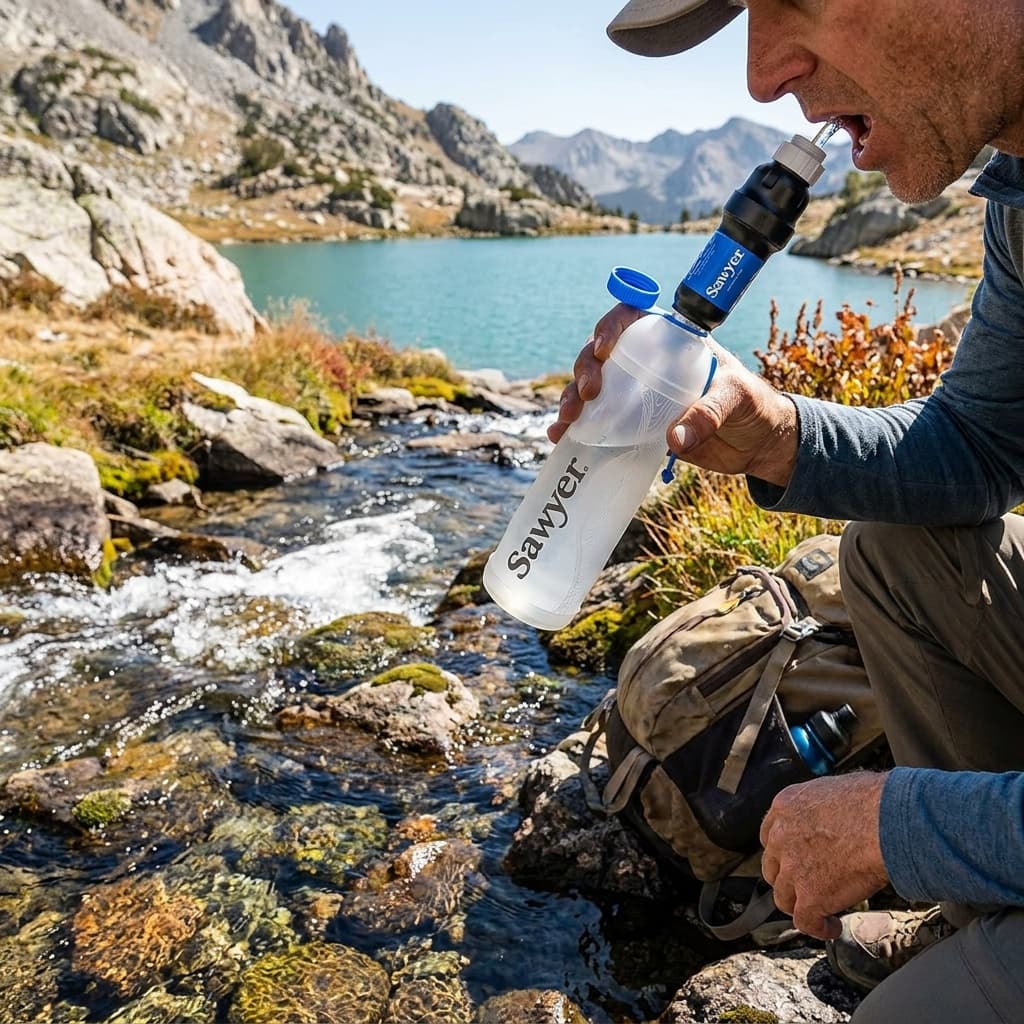
The Sawyer Squeeze is the most field-tested squeeze filter on the market, carried by a large share of PCT thru-hikers for its combination of fast flow, a practically unlimited lifespan, and three usable modes: squeeze, inline with a hydration bladder, or gravity-fed. It is the standard by which most other backpacking filters are measured.
Strengths
- 100,000-gallon rated lifespan with backflush cleaning means a single filter can last a decade of regular use
- Versatile three-mode operation: squeeze direct, attach inline to a hydration reservoir, or rig as a gravity system at camp
- Current SP302 kit ships with a CNOC TPU bottle rather than the flimsy standard pouches, addressing the most common long-term complaint about the original
Weaknesses
- The new SP302 and SP303 bundle SKUs have limited review history; the original SP131 (the basis for the large review corpus) is no longer available as a standalone purchase
- Freezing temperatures permanently damage the hollow fiber membrane, requiring careful storage in three-season and winter conditions
Kit Score breakdown
KATADYN
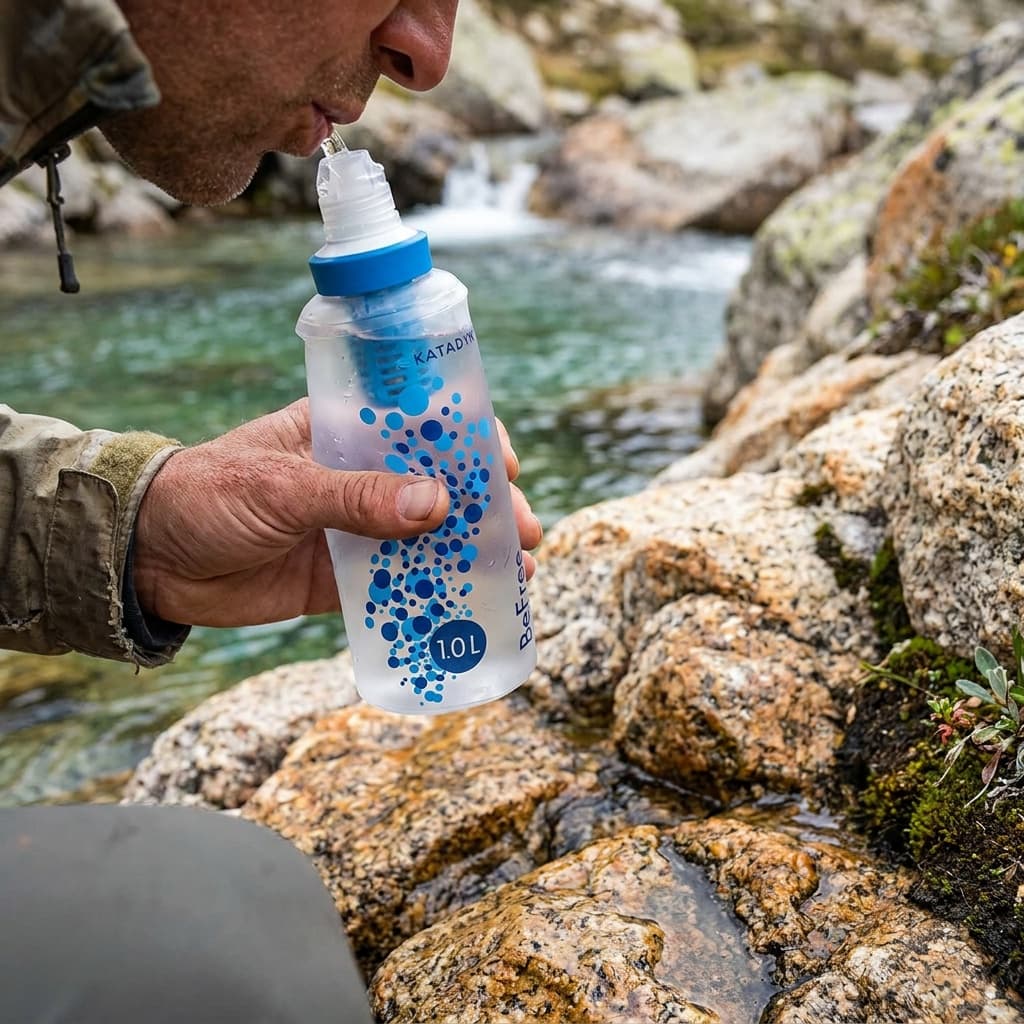
Katadyn BeFree 1.0L Collapsible Water Filter Bottle
Editor's Choice
Kit Score 7.6/10
$42.95 Price checked Oct 23, 4:16 PM CDT
Best for: Ultralight backpackers and fastpackers who prioritize the lightest possible setup and fastest fill time on clear mountain water sources.
- 2 L/min flow rate is the fastest in the personal-filter class, noticeably quicker than a Sawyer Squeeze in direct comparison
- Rated to 1,000 liters only (versus 100,000 gallons for the Sawyer Squeeze), making long-term cost higher for heavy users
- Filter type
- Hollow fiber squeeze (EZ-Clean membrane)
- Pore size
- 0.1 micron
- Weight (full kit)
- 2.3 oz
- Flow rate
- 2.0 L/min
- Lifespan
- 1,000 liters
- Removes
- Bacteria, protozoa, sediment
About this pick
The Katadyn BeFree pairs a 0.1-micron hollow fiber membrane with a collapsible 1-liter soft flask and delivers the fastest out-of-the-box flow rate of any personal squeeze filter in this category. Cleaning requires nothing more than swishing or shaking the filter in clean water, with no syringe needed.
Strengths
- 2 L/min flow rate is the fastest in the personal-filter class, noticeably quicker than a Sawyer Squeeze in direct comparison
- Field cleaning is genuinely simple: swish in clean water, no backflush syringe to carry or lose
- Lightest full-kit option in this roundup at 2.3 oz total, including the collapsible bottle
Weaknesses
- Rated to 1,000 liters only (versus 100,000 gallons for the Sawyer Squeeze), making long-term cost higher for heavy users
- Flow rate degrades noticeably in turbid or silty water; clogging in iron-heavy sources can be difficult to reverse without a syringe
Kit Score breakdown
MSR
MSR TrailShot Pocket-Sized Water Filter
Best Value
Kit Score 8.0/10
$62.99 Price checked Oct 23, 4:16 PM CDT
Best for: Trail runners, day hikers, and backpackers who want the fastest source-to-mouth setup without carrying or managing a separate dirty water container.
- Pickup tube means you can pull water from shallow sources, potholes, or trickle streams that squeeze-bottle filters struggle to reach
- Slower than squeeze filters (1 L/min) and the squeezing motion causes hand fatigue when filtering large volumes for groups or multi-day camps
- Filter type
- Hollow fiber squeeze-pump with intake tube
- Pore size
- 0.2 micron
- Weight
- 5.2 oz
- Flow rate
- 1.0 L/min
- Lifespan
- 2,000 liters
- Removes
- Bacteria (99.9999%), protozoa (99.9%), particulates
About this pick
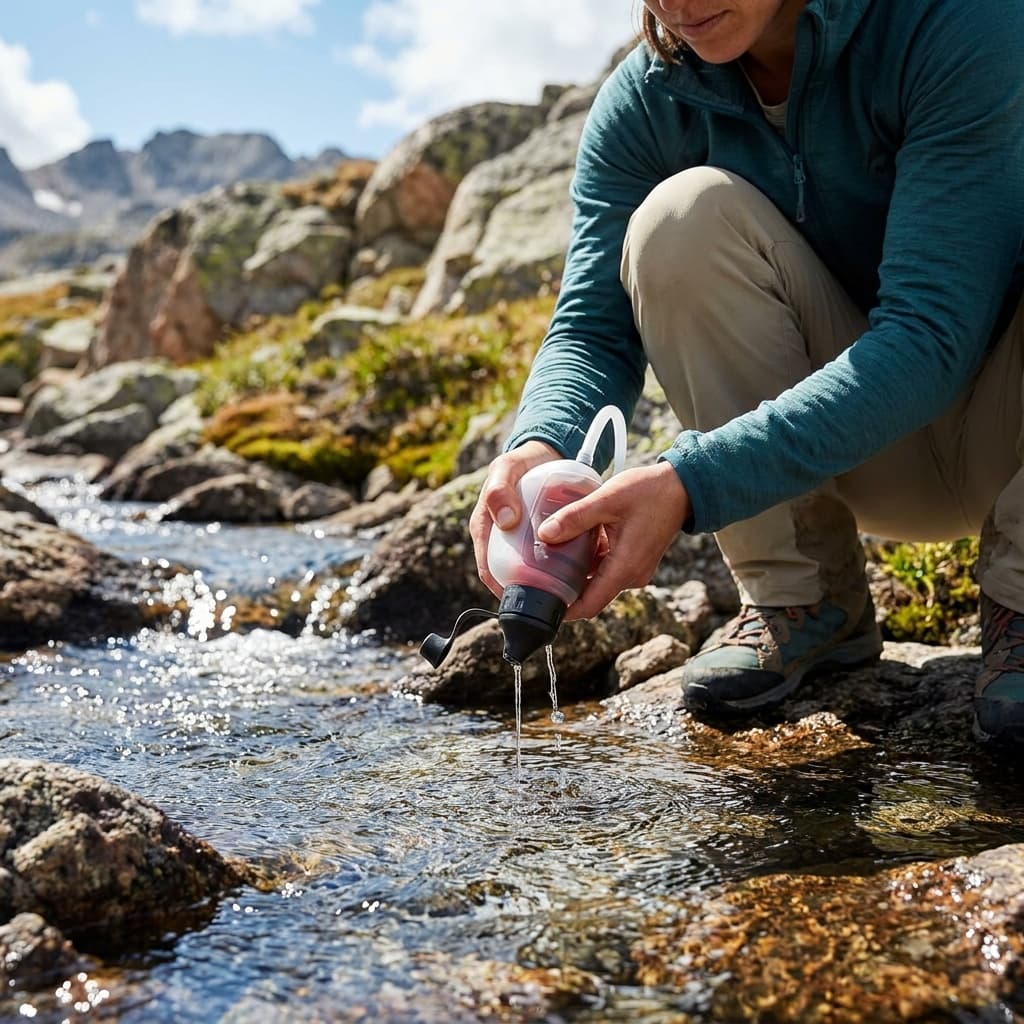
The MSR TrailShot ditches the traditional pump handle in favor of a one-handed squeeze mechanism and an attached pickup tube, letting you drink directly from the source or fill any bottle without kneeling in the dirt or dismantling your pack. Its compact footprint fits a jacket pocket, and it requires no setup beyond uncapping.
Strengths
- Pickup tube means you can pull water from shallow sources, potholes, or trickle streams that squeeze-bottle filters struggle to reach
- No dedicated dirty container required: draw directly from the source and fill any bottle, which simplifies the system for trail runners and day hikers
- Amazon 4.4-star rating; owners consistently praise the convenience and durability for high-mileage day use
Weaknesses
- Slower than squeeze filters (1 L/min) and the squeezing motion causes hand fatigue when filtering large volumes for groups or multi-day camps
- Slightly heavier than personal squeeze filters at 5.2 oz, a noticeable difference for gram-counting ultralight hikers
Kit Score breakdown
See all picks in Best water filters for backpacking (2026): 4 top picks
Keep going
Related guides
 Complete camp loadoutCar-camping starter kitBuild the complete kit
Researched, not hands-on tested
Updated Jun 3, 2026Our recommendations draw on manufacturer documentation, retailer listings, owner feedback, and comparisons with alternatives.
As an Amazon Associate I earn from qualifying purchases. We may earn a commission from links here, at no extra cost to you. How we research →