Showing up to a meeting or a dinner looking polished is part of the job when you travel, and the tool you pack makes a real difference in how fast and how well you get there.
Speed and ease of use
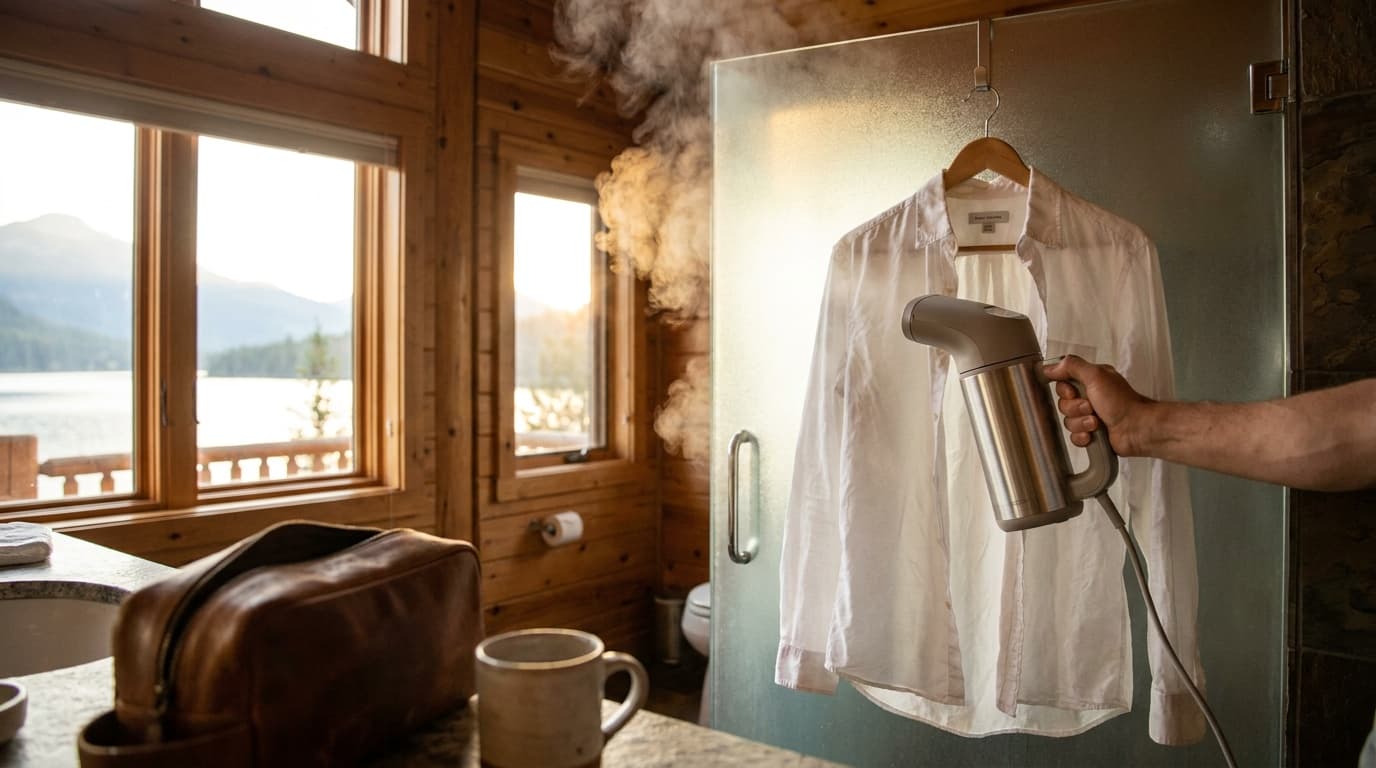
A travel steamer wins on pure speed for everyday wrinkling. Most compact units, like the Conair ExtremeSteam GSC24, heat up in 30–45 seconds. You hang the garment, pass the steamer head down the fabric in slow strokes, and a shirt is done in two to three minutes. There is no ironing board required, no flat surface to clear, and no risk of burning yourself by accidentally touching the plate.
A travel iron takes longer to heat (60–90 seconds for a quality unit) and requires a hard, padded surface. In a hotel room that usually means the ironing board from the closet, or a folded towel on the desk. The payoff is precision: you can press a collar flat, sharpen a trouser crease, and get crisp results that a steamer simply cannot replicate.
Crisp creases vs gentle de-wrinkling
This is the sharpest functional divide between the two tools.
Steam relaxes fabric fibers by introducing moisture and heat, which lets gravity and gentle pulling remove wrinkles. The result looks clean and refreshed but lacks structure. A blazer de-wrinkled with a steamer looks presentable; it does not look pressed.
An iron applies direct heat and pressure to the fabric surface. That combination reforms the fiber structure and holds it flat, which is how you get a sharp collar, a flat shirt placket, or a knife-edge trouser crease. For business formal dress, a steamer is a workaround. An iron is the right tool.
If your work wardrobe includes dress shirts with buttoned collars, a travel iron is the only way to get the result you are actually after.
Fabric safety
Steamers are the safer default for mixed packing lists. Because the head never contacts the fabric directly, the risk of scorching, shine marks, or flattening delicate textures is low. Silk, wool, cashmere, and embroidered pieces all respond well to steam. The main caution is water spotting on velvet or very fine silk if you hold the head too close.
Irons require more attention. Most fabrics tolerate a correctly set iron, but synthetic blends, acetate, and embellished pieces can scorch or melt quickly if the plate is too hot or makes contact too long. Travel irons with variable temperature controls and a steam-shot function narrow the gap, but they still demand more judgment than a steamer.
Matching the tool to the fabric
Dress shirts and trousers
Use an iron; steam alone will not hold the collar or crease.
Wool and cashmere
Steamer preferred; iron only with a pressing cloth and low heat.
Silk
Steamer, held 1–2 cm from the fabric; never iron silk directly without a cloth.
Linen
Either works; iron gives a crisper finish, steamer is faster for a relaxed look.
Synthetic blends
Steamer is safer; if ironing, use the lowest setting and test a hidden seam first.
Packability and weight
Both categories have converged around similar size and weight at the travel-specific end of the market. A compact travel iron typically weighs 300–450 g and collapses to roughly 22 × 8 × 4 cm. A dedicated travel steamer comes in at 200–350 g and a comparable folded size, though the water reservoir adds a few grams when filled.
The practical difference: a travel iron has a cord and a hard plate that needs protection (most ship with a heat-resistant pouch). A travel steamer has a water tank that must be emptied before you pack it to prevent leaks, and a fill cap that can fail if the unit is cheap. Neither is a burden in a carry-on; both become annoying if you are in a minimalist personal-item-only setup.
Hotel-room practicality and voltage
Hotel irons are inconsistent at best. Scorched non-stick coatings, broken steam valves, and missing units are common complaints. Carrying your own removes that variable entirely.
Voltage matters more than most travelers expect. North America runs on 110–120 V; most of the rest of the world runs on 220–240 V. A single-voltage travel iron or steamer brought from North America will burn out immediately on a European outlet, even with a plug adapter. Look specifically for dual-voltage (100–240 V) units like the OGHom Travel Steamer and Iron 2-in-1, which handle both automatically. This detail is usually in the fine print of the spec sheet; confirm it before you buy.
Both irons and steamers are TSA-permitted in carry-on bags. Neither contains flammable contents. The only thing to watch is that TSA officers occasionally flag the steamer water tank for a secondary check, so leave it empty until you reach your destination.
Frequently asked questions
Can a travel steamer replace an iron for business travel?
For most business casual wardrobes, yes. Chinos, blazers, knit polos, and soft-collar shirts all come out looking polished after a good steam. Where a steamer falls short is structured dress shirts with stiff collars and formal trousers that need a sharp crease. If those are core to your wardrobe, pack an iron or plan to use the hotel's.
What should I look for in a dual-voltage travel iron or steamer?
First, confirm the voltage range is printed as 100–240 V on the device itself, not just in the manual. Second, check the wattage: a 1000–1200 W travel iron heats faster and holds temperature better than a budget 700 W unit. For steamers, look for a water capacity of at least 30 ml (enough for one or two garments) and a continuous steam rate of 20–25 g/min. A cord storage channel and a heat-resistant travel pouch are worth paying a few dollars extra for.
Is it faster to use the shower steam method instead of packing either tool?
Hanging clothes in a steamy bathroom does relax light wrinkles, and it costs nothing in pack weight. But it takes 15–20 minutes, uses a lot of water, and works only on loose surface wrinkles in breathable fabrics. It will not press a collar or fix a badly creased sleeve. Think of it as a backup for casual pieces when you forgot to pack anything, not a substitute for a dedicated tool.
For specific picks, see our guide to the best travel steamers. Browse all travel guides or read how we research and rate gear.
Recommended gear
Our current top picks from the Best travel steamers 2026: dual voltage, under 1 pound guide, if you are ready to buy.
JACK & ROSE
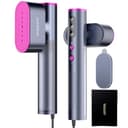
Jack & Rose K1 Travel Steamer
Best Overall
Kit Score 8.0/10
$39.99 Price checked Oct 23, 4:16 PM CDT
Best for: Frequent international travelers who need a genuinely fast heat-up and true dual voltage in a single compact unit.
- Fastest heat-up in its class at 15 seconds, useful when you have five minutes before a meeting
- Some owners note durability concerns after extended use, particularly with the hinge mechanism
- Wattage
- 1,000W
- Voltage
- 100–220V (auto-adapting)
- Heat-up time
- 15 seconds
- Water tank
- 150 ml (about 10 min runtime)
- Weight
- 1.6 lbs
- Steam temp
- 248°F, 18 g/min
About this pick
A 2-in-1 handheld steamer and dry iron that heats in 15 seconds and runs on any outlet from Tokyo to Turin, with a large ceramic heat panel and rotating steam head. Amazon's Choice in travel garment steamers with a 4.4-star average across verified ratings.
Strengths
- Fastest heat-up in its class at 15 seconds, useful when you have five minutes before a meeting
- Auto-adapting 100–220V circuit works worldwide with only a plug adapter
- Ceramic heat panel doubles as a light dry iron for collars and cuffs
Weaknesses
- Some owners note durability concerns after extended use, particularly with the hinge mechanism
- 150 ml tank delivers only about 10 minutes of continuous steam per fill
Kit Score breakdown
CONAIR
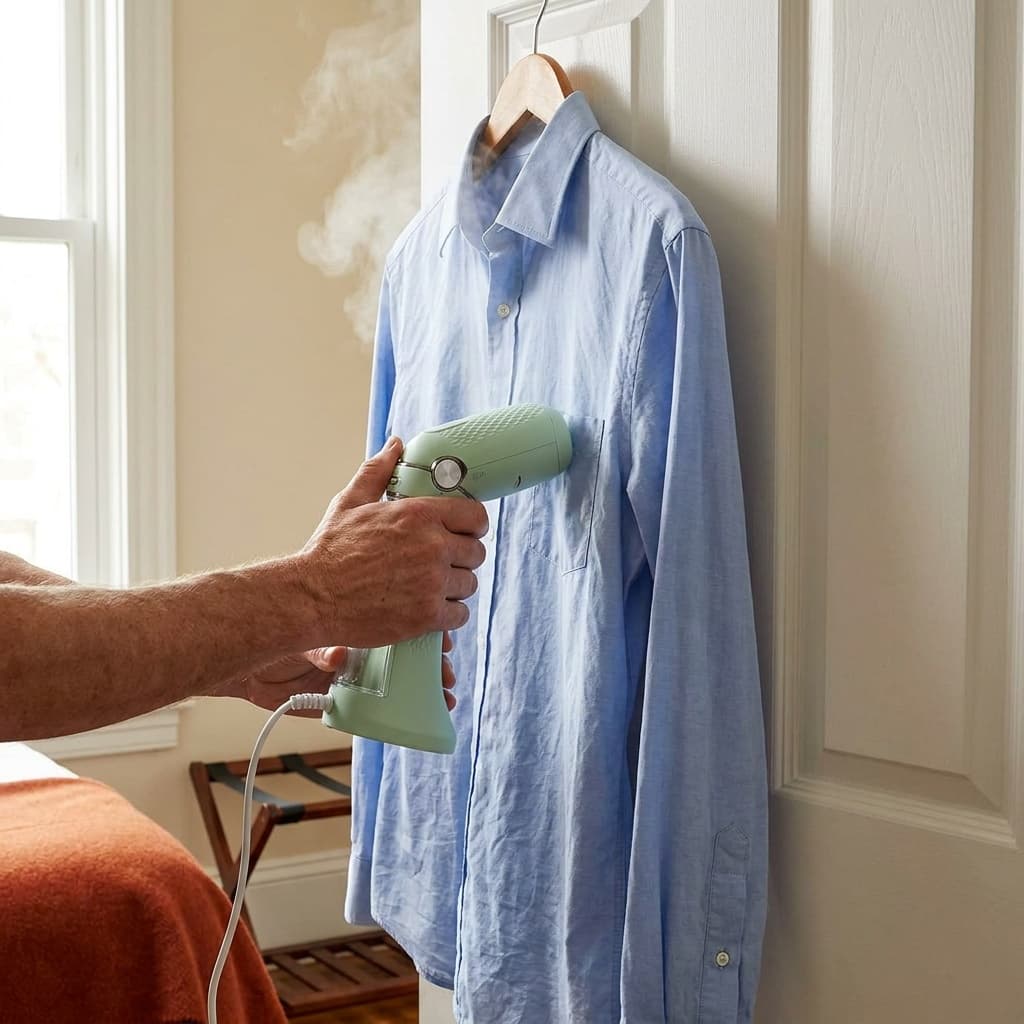
Conair ExtremeSteam Power Steam GSC24
Editor's Choice
Kit Score 8.6/10
$55.59 Price checked Oct 23, 4:16 PM CDT
Best for: Travelers who prioritize steam power and build quality over ultimate portability and who pack in checked luggage or a large carry-on.
- 1,200W output with an adjustable steam head removes stubborn wrinkles from cotton and heavier fabrics more reliably than lower-wattage travel units
- 80 ml tank is modest and will need a refill during a multi-garment session
- Wattage
- 1,200W
- Voltage
- 110–240V (auto-adapting dual voltage)
- Heat-up time
- 35 seconds
- Water tank
- 80 ml (removable)
- Weight
- 1.7 lbs
- Steam head
- Adjustable 3-position, folds flat
About this pick
Conair's most travel-focused high-power steamer pairs 1,200W of penetrating steam with automatic 110–240V voltage detection, a removable tank, and a fold-flat body sized for a carry-on side pocket. Reviewers and gear editors consistently rank it among the best performance-per-pound options for hotel-room use.
Strengths
- 1,200W output with an adjustable steam head removes stubborn wrinkles from cotton and heavier fabrics more reliably than lower-wattage travel units
- Removable water tank refills without inverting a hot unit
- Automatic dual-voltage circuit needs only a plug adapter abroad, no separate converter
Weaknesses
- 80 ml tank is modest and will need a refill during a multi-garment session
- 35-second heat-up is the slowest in this group
Kit Score breakdown
OGHOM
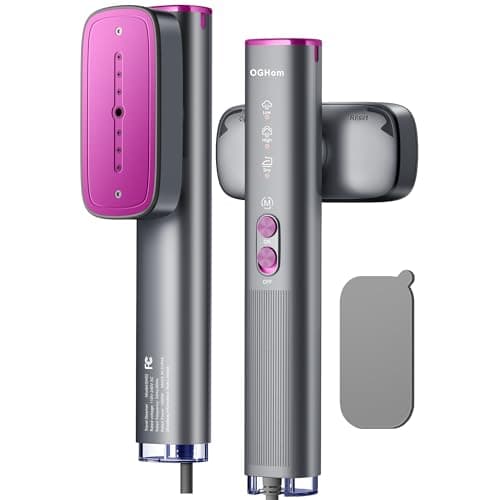
OGHom 110-240V Travel Steamer and Iron 2-in-1
Best Value
Kit Score 8.0/10
$35.99 Price checked Oct 23, 4:16 PM CDT
Best for: Budget-conscious travelers who need true international voltage compatibility and leak-proof steaming without spending on a premium brand.
- Leak-proof design and 90-degree rotating head allow horizontal steaming without drips, useful when hanging space is limited
- 120 ml tank is on the smaller side and will need a refill during a multi-garment session
- Wattage
- 1,000W
- Voltage
- 110–240V (dual voltage)
- Heat-up time
- 30 seconds
- Water tank
- 120 ml, quick-release pop-out design
- Weight
- 1.1 lbs
- Steam modes
- Dry, low steam, high steam; 90-degree rotating head
About this pick
A compact 2-in-1 travel steamer and dry iron built around a 110–240V auto-adapting circuit, a one-button pop-out water tank, and a leak-proof construction that handles steaming at any angle. Owner feedback highlights fast heating and effective wrinkle removal across cotton, synthetics, and delicate fabrics.
Strengths
- Leak-proof design and 90-degree rotating head allow horizontal steaming without drips, useful when hanging space is limited
- Full 110–240V dual voltage at a price well below most international-capable competitors
- Three steam modes (dry, low, high) give practical control over delicate fabrics like silk without scorching
Weaknesses
- 120 ml tank is on the smaller side and will need a refill during a multi-garment session
- Newer model with a smaller review base than established brands, so long-term durability data is limited
Kit Score breakdown
See all picks in Best travel steamers 2026: dual voltage, under 1 pound
Keep going
Researched, not hands-on tested
Updated Jul 8, 2026Our recommendations draw on manufacturer documentation, retailer listings, owner feedback, and comparisons with alternatives.
As an Amazon Associate I earn from qualifying purchases. We may earn a commission from links here, at no extra cost to you. How we research →