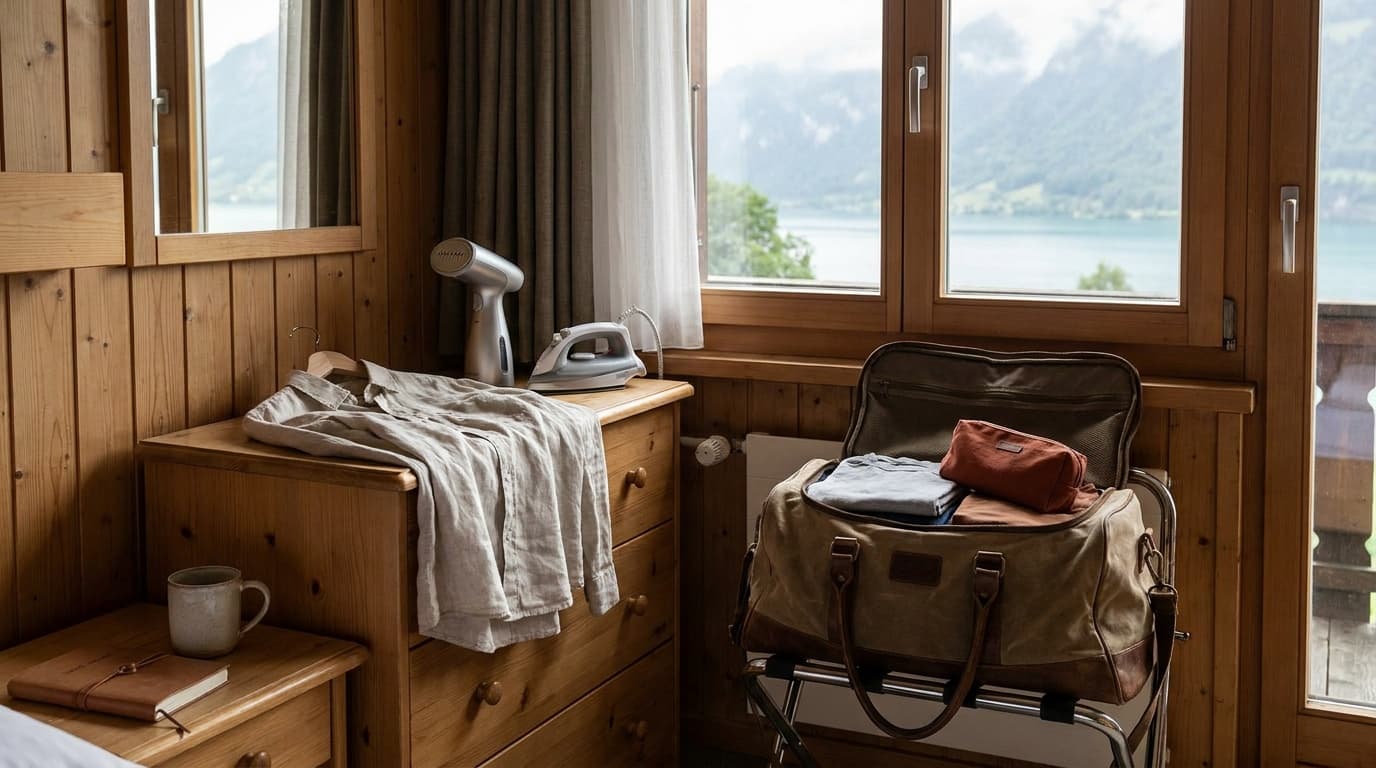
A travel steamer is one of the most useful things you can pack for a trip where presentation matters, but it only works well if you use it right.
Filling and heating your steamer
Fill the water tank with cold tap water up to the marked fill line. Most travel steamers, like the Conair Travel Smart Mini Steamer, hold between 100 ml and 200 ml. Filling beyond the line is the most common cause of spitting and water drips on fabric, so stop at the line. If your destination has very hard water, bottled water extends the life of the heating element, though tap water works fine for occasional travel use.
After filling, replace the cap firmly before you power on. Most travel steamers reach operating temperature in 30–90 seconds. Wait for the indicator light to signal ready, or for a steady stream of steam rather than sputtering bursts. Pressing the trigger before the unit is fully heated produces wet steam that dampens fabric instead of smoothing it.
Steaming vertically on a hanger
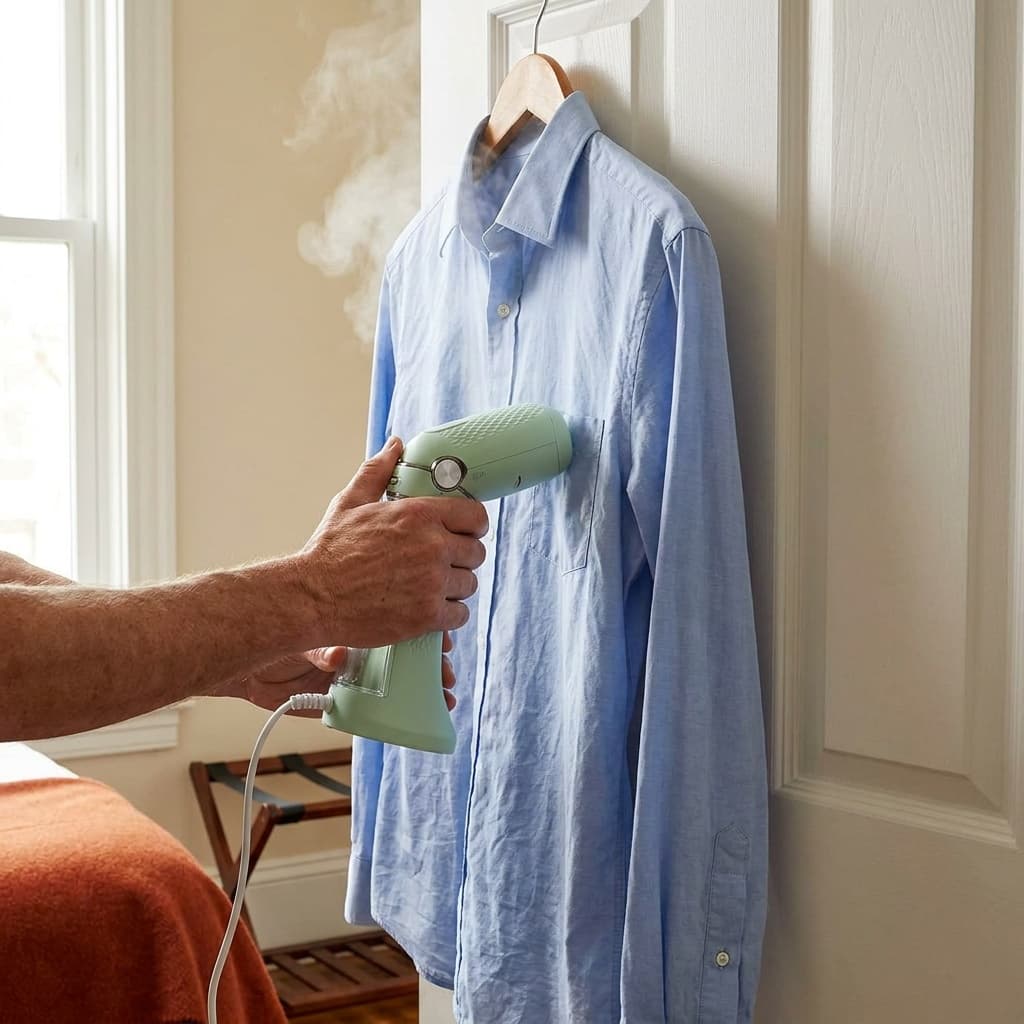
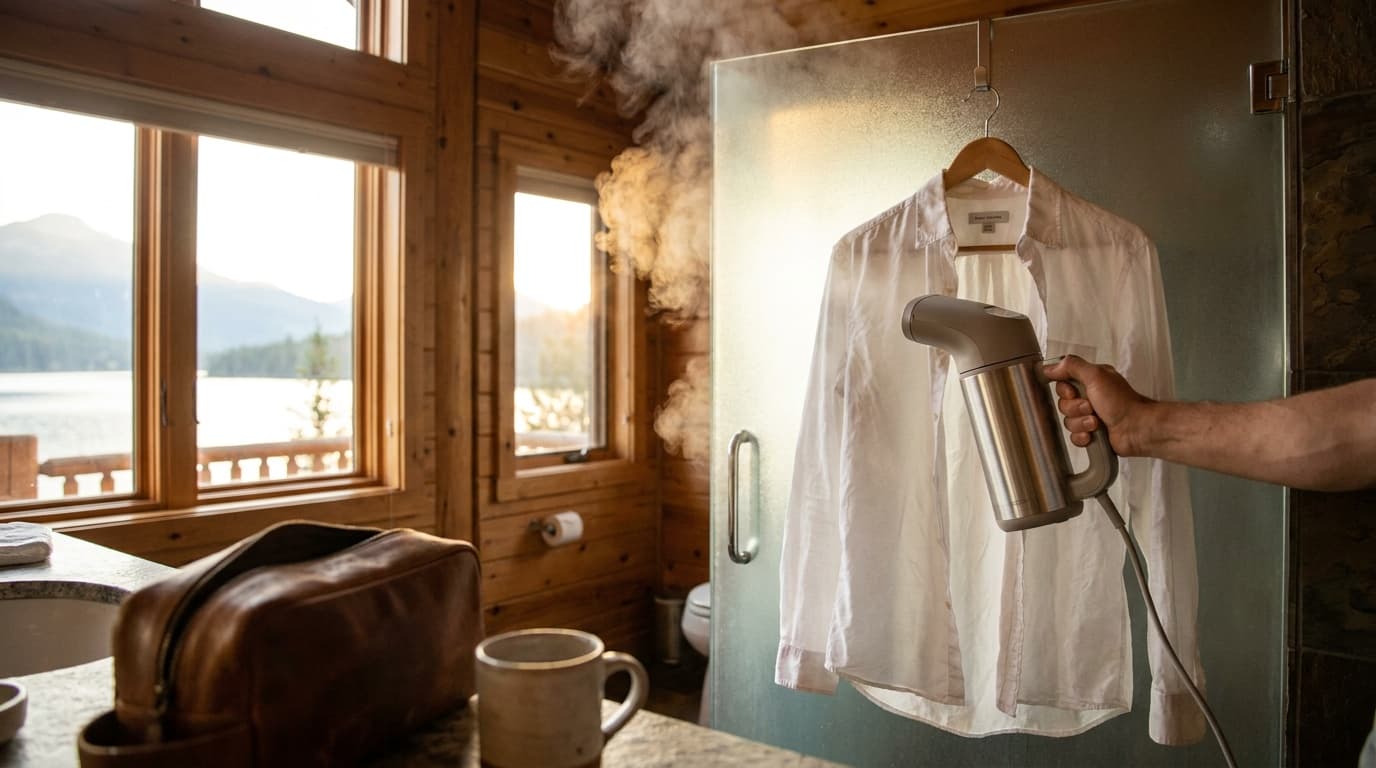
Hang the garment on a sturdy hanger at roughly shoulder height. A bathroom towel bar, a shower curtain rod, or an over-door hook all work. The vertical position is non-negotiable: steam rises, and gravity keeps the fabric weighted so wrinkles release without you fighting them.
Hold the steamer head face-up or at a slight angle toward the fabric. Move it slowly upward in long, continuous strokes. Downward strokes drag condensation back across fabric you have already smoothed. Overlapping each pass by about half keeps you from missing strips.
Steaming sequence
Hang the garment
Use a hanger at shoulder height so the fabric hangs freely with no bunching at the hem.
Heat fully
Wait for steady steam before touching fabric; wet bursts from a cold unit leave water marks.
Tension with your free hand
Pull the fabric gently taut from below the area you are steaming so the steam penetrates the weave.
Work top to bottom
Start at the collar or shoulders and move toward the hem in slow upward strokes.
Let the garment cool
Give the fabric 2–3 minutes to set before folding or wearing, especially with synthetic blends.
Keeping fabric taut and working top to bottom
Your free hand is as important as the steamer itself. Use it to hold the fabric under gentle tension below wherever the steamer head is traveling. Loose fabric folds away from the steam and the wrinkle survives. You do not need to pull hard, just enough to flatten the weave.
Always move from the collar down toward the hem. Working top to bottom prevents re-wrinkling the sections you have already done. On shirts, finish the body first, then lay the collar flat against your palm and run the steamer head across it at a slight angle.
Tension plus heat does the work; the steamer alone is only half the equation.
Which fabrics to steam and which to avoid
Steam is safe and effective on cotton, linen, wool, silk, rayon, and most polyester blends. These are the fabrics most likely to wrinkle in a suitcase and the ones that respond well to gentle moisture and heat.
Avoid steaming velvet by pressing the head directly against the pile; hold the steamer a few centimetres away and let the steam do the work without contact. Avoid steaming waxed fabrics, suede, or leather. Check care labels on structured items like blazers: the interfacing inside can delaminate if it gets very wet. For embellished pieces with glued-on beading or sequins, keep the steamer at least 5 cm away or skip it entirely.
The bathroom humidity trick
If your steamer runs out of water before you finish, or if you have a heavily wrinkled wool suit you want to relax overnight, hang the garment in the bathroom and run the shower on its hottest setting with the door closed for 5–10 minutes. The humidity loosens wrinkles in natural fibres without any direct heat. This does not replace a steamer for crisp results, but it is a reliable backup that costs nothing and works especially well on wool and cotton.
Be careful not to let the garment get wet from spray. Keep it on the far side of the curtain or at least 60 cm from the showerhead.
Emptying and storing the steamer
After you finish steaming, unplug the unit and let it cool for at least 5 minutes before opening the tank. Tip the steamer over a sink and drain all remaining water. Residual water sitting in a warm tank encourages mineral deposits that gradually clog the steam vents, and a full tank can leak through the nozzle during transport and wet everything in your bag.
Once drained and cooled, store the steamer with the cap off slightly or cap loosely fastened so any remaining moisture can escape. Pack it in its pouch or a small dry bag before it goes back in your luggage.
A note on voltage: most quality travel steamers, like the OGHom Travel Steamer and Iron 2-in-1, are dual voltage (100–240 V) and work worldwide with only a plug adapter. Check the label on the unit before you assume, especially with older or budget models. Using a 120 V-only steamer on a 240 V outlet without a converter will destroy the heating element instantly.
Frequently asked questions
Can I put the travel steamer in my carry-on?
Yes. The TSA and most international security agencies allow travel steamers in carry-on bags as long as the water tank is empty. Drain the tank completely before you pack it for the flight. A steamer with water in it may be flagged at the checkpoint.
Why does my steamer spit water instead of steam?
Spitting usually means one of three things: the tank is overfilled beyond the fill line, the unit has not fully heated yet and you triggered it too early, or there is mineral buildup clogging the vents. Drain to the fill line, wait for the ready indicator, and descale with a 50/50 white vinegar and water solution run through the tank if the spitting persists.
How long does a travel steamer take to dewrinkle a shirt?
A dress shirt with moderate wrinkles takes roughly 3–5 minutes once the steamer is at temperature. Heavily creased linen or a structured blazer may need 8–10 minutes. The technique matters as much as the time: slow passes with fabric under tension work faster than quick passes over loose cloth.
For specific picks, see our guide to the best travel steamers. Browse all travel guides or read how we research and rate gear.
Recommended gear
Our current top picks from the Best travel steamers 2026: dual voltage, under 1 pound guide, if you are ready to buy.
JACK & ROSE
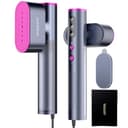
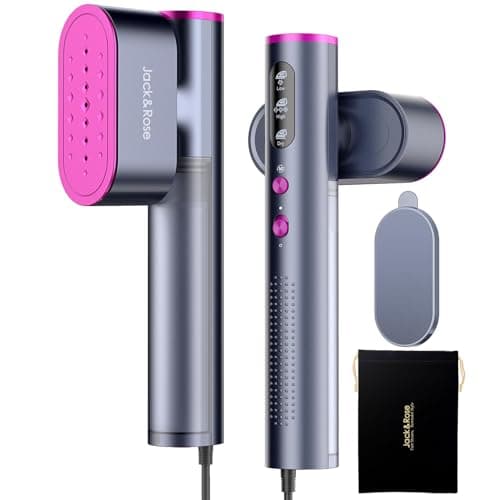
Jack & Rose K1 Travel Steamer
Best Overall
Kit Score 8.0/10
$39.99 Price checked Oct 23, 4:16 PM CDT
Best for: Frequent international travelers who need a genuinely fast heat-up and true dual voltage in a single compact unit.
- Fastest heat-up in its class at 15 seconds, useful when you have five minutes before a meeting
- Some owners note durability concerns after extended use, particularly with the hinge mechanism
- Wattage
- 1,000W
- Voltage
- 100–220V (auto-adapting)
- Heat-up time
- 15 seconds
- Water tank
- 150 ml (about 10 min runtime)
- Weight
- 1.6 lbs
- Steam temp
- 248°F, 18 g/min
About this pick
A 2-in-1 handheld steamer and dry iron that heats in 15 seconds and runs on any outlet from Tokyo to Turin, with a large ceramic heat panel and rotating steam head. Amazon's Choice in travel garment steamers with a 4.4-star average across verified ratings.
Strengths
- Fastest heat-up in its class at 15 seconds, useful when you have five minutes before a meeting
- Auto-adapting 100–220V circuit works worldwide with only a plug adapter
- Ceramic heat panel doubles as a light dry iron for collars and cuffs
Weaknesses
- Some owners note durability concerns after extended use, particularly with the hinge mechanism
- 150 ml tank delivers only about 10 minutes of continuous steam per fill
Kit Score breakdown
CONAIR
Conair ExtremeSteam Power Steam GSC24
Editor's Choice
Kit Score 8.6/10
$55.59 Price checked Oct 23, 4:16 PM CDT
Best for: Travelers who prioritize steam power and build quality over ultimate portability and who pack in checked luggage or a large carry-on.
- 1,200W output with an adjustable steam head removes stubborn wrinkles from cotton and heavier fabrics more reliably than lower-wattage travel units
- 80 ml tank is modest and will need a refill during a multi-garment session
- Wattage
- 1,200W
- Voltage
- 110–240V (auto-adapting dual voltage)
- Heat-up time
- 35 seconds
- Water tank
- 80 ml (removable)
- Weight
- 1.7 lbs
- Steam head
- Adjustable 3-position, folds flat
About this pick
Conair's most travel-focused high-power steamer pairs 1,200W of penetrating steam with automatic 110–240V voltage detection, a removable tank, and a fold-flat body sized for a carry-on side pocket. Reviewers and gear editors consistently rank it among the best performance-per-pound options for hotel-room use.
Strengths
- 1,200W output with an adjustable steam head removes stubborn wrinkles from cotton and heavier fabrics more reliably than lower-wattage travel units
- Removable water tank refills without inverting a hot unit
- Automatic dual-voltage circuit needs only a plug adapter abroad, no separate converter
Weaknesses
- 80 ml tank is modest and will need a refill during a multi-garment session
- 35-second heat-up is the slowest in this group
Kit Score breakdown
OGHOM
OGHom 110-240V Travel Steamer and Iron 2-in-1
Best Value
Kit Score 8.0/10
$35.99 Price checked Oct 23, 4:16 PM CDT
Best for: Budget-conscious travelers who need true international voltage compatibility and leak-proof steaming without spending on a premium brand.
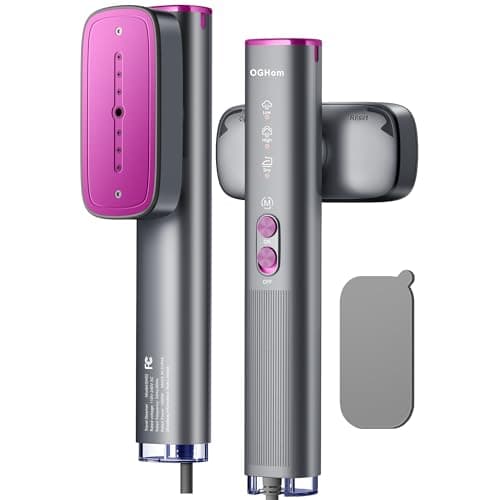
- Leak-proof design and 90-degree rotating head allow horizontal steaming without drips, useful when hanging space is limited
- 120 ml tank is on the smaller side and will need a refill during a multi-garment session
- Wattage
- 1,000W
- Voltage
- 110–240V (dual voltage)
- Heat-up time
- 30 seconds
- Water tank
- 120 ml, quick-release pop-out design
- Weight
- 1.1 lbs
- Steam modes
- Dry, low steam, high steam; 90-degree rotating head
About this pick
A compact 2-in-1 travel steamer and dry iron built around a 110–240V auto-adapting circuit, a one-button pop-out water tank, and a leak-proof construction that handles steaming at any angle. Owner feedback highlights fast heating and effective wrinkle removal across cotton, synthetics, and delicate fabrics.
Strengths
- Leak-proof design and 90-degree rotating head allow horizontal steaming without drips, useful when hanging space is limited
- Full 110–240V dual voltage at a price well below most international-capable competitors
- Three steam modes (dry, low, high) give practical control over delicate fabrics like silk without scorching
Weaknesses
- 120 ml tank is on the smaller side and will need a refill during a multi-garment session
- Newer model with a smaller review base than established brands, so long-term durability data is limited
Kit Score breakdown
See all picks in Best travel steamers 2026: dual voltage, under 1 pound
Keep going
Researched, not hands-on tested
Updated Jun 4, 2026Our recommendations draw on manufacturer documentation, retailer listings, owner feedback, and comparisons with alternatives.
As an Amazon Associate I earn from qualifying purchases. We may earn a commission from links here, at no extra cost to you. How we research →