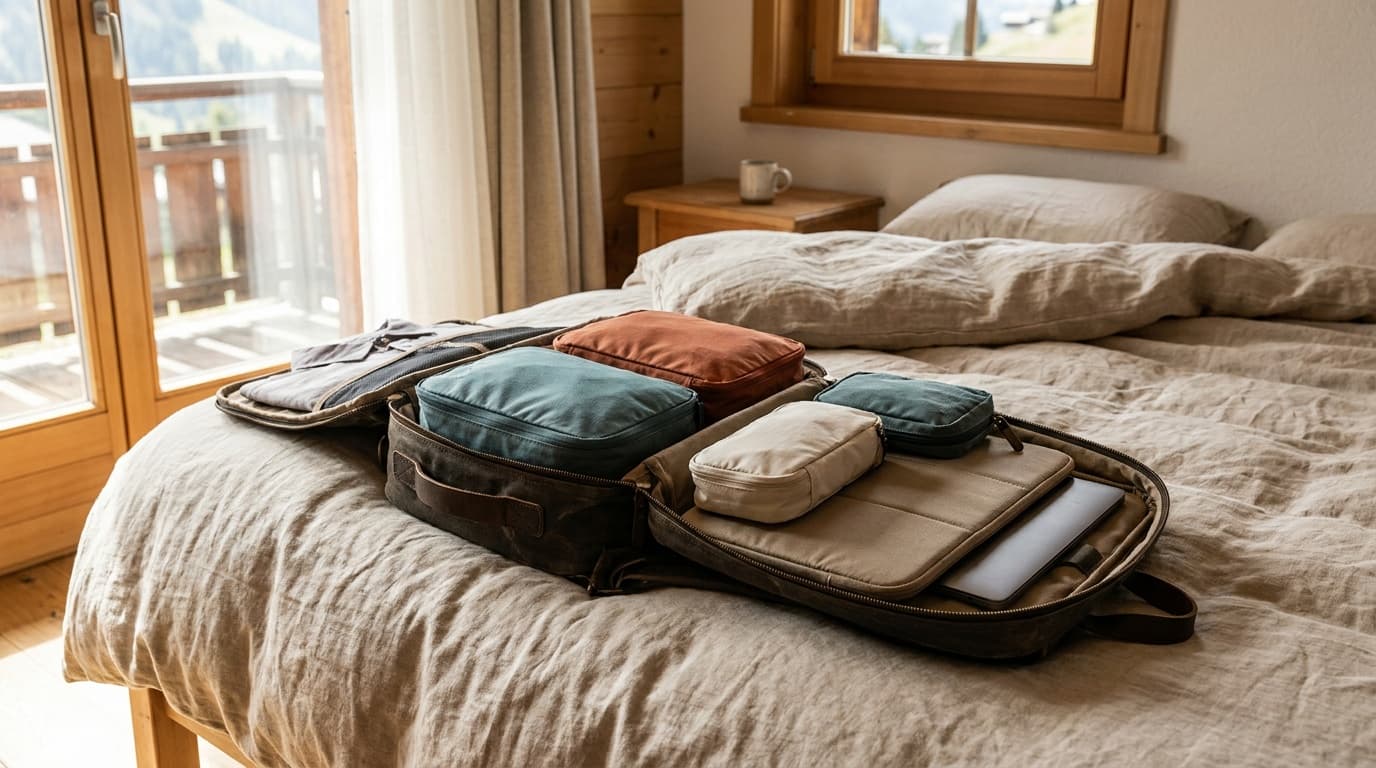
A packing folder gives folded shirts a supported place in your bag. Packing cubes divide clothes into compartments you can remove separately. Choose based on the clothes you need to protect and the shape of the space available; a large matching set can be more organizer than your trip needs.
If wrinkle control is the priority, compare our current best packing folders before choosing a size.
What packing folders actually do
A packing folder usually combines a folding board with a fabric envelope and adjustable flaps. The board guides the folds; the closed envelope holds the stack together. Designs and sizes vary, so follow the instructions for the folder you buy rather than assuming every model takes the same number of shirts.
Eagle Creek's garment-folder range illustrates this format. A folder is not necessarily a hard-shell case, and its flaps may tighten around the clothing. Its main purpose is to support folded garments and limit movement inside the bag.
Expect folds where you made them. Wrinkling also depends on the fabric, pressure, and time spent packed. A folder may help preserve a tidy stack, but it cannot promise a shirt will arrive pressed. Plan time to unpack and check clothes before a meeting or event.
What packing cubes actually do
Packing cubes are zippered pouches. A cube of shirts can go straight from your bag to a drawer, while socks remain together in a smaller cube. Standard cubes organize the load; their fabric and zippers also occupy some space and add weight.
Compression cubes add a zipper that tightens the packed compartment. The Eagle Creek Pack-It Isolate uses this approach. Eagle Creek explains the two-stage closure: close the main compartment, then work the compression zipper around while keeping fabric clear.
Soft layers can become less bulky under pressure. Dense or structured garments have less room to compress, and a tightly filled cube can bulge. No fixed percentage describes the space you will save across different clothes, cubes, and bags.
How to load packing cubes efficiently
Sort the clothes
Give each cube a clear purpose, such as shirts, underlayers, or a change of clothes for an overnight stop.
Try the shape
Roll soft items or fold them to match the cube. Leave collars and delicate details room to hold their shape.
Place by bag type
Keep dense cubes close to your back in a backpack. In a wheeled suitcase, place heavier items near the wheel end.
Keep contents identifiable
Face a mesh panel toward the opening, or use a label on an opaque cube.
Close before compressing
Close the main zipper easily before tightening the compression zipper. Repack if fabric catches or the closure needs force.
Wrinkle control: a direct comparison
For collared shirts, a folder supplies a folding surface and support around the stack. A regular cube offers less structure, although a shallow cube can still hold carefully folded shirts. Overpacking either format puts pressure on collars and folds.
If your bag already compresses its contents firmly, adding another compression layer may do little for the clothes you want to keep smooth. Put those garments somewhere with enough room and unpack them on arrival.
A folder like the Eagle Creek Pack-It Reveal Garment Folder is worth considering when keeping several shirts together solves a packing problem. For a single dinner shirt, first try folding it in the space your bag already provides.
Capacity and bag fit
Measure inside your empty bag, including the narrowest point around handle channels, lining, and curved corners. Exterior airline dimensions do not tell you how much room an organizer has inside.
| Check | Packing folder | Packing cube |
|---|---|---|
| Length and width | The board needs a flat area that fits without bending. | A soft cube has some give, but a full cube still needs room. |
| Packed depth | Allow for the entire clothing stack and closed flaps. | Use filled or expanded dimensions, not the empty cube's folded size. |
| Bag opening | Check that the folder passes through the opening. | Check that you can remove one cube without unloading the bag. |
| Remaining space | Leave room for shoes, toiletries, and electronics. | Account for gaps between cubes and the bag's curved edges. |
For a scale example, a rectangular organizer measuring 14 x 10 x 2 inches occupies about 4.6 liters of bounding-box volume: 280 cubic inches divided by approximately 61 cubic inches per liter. That is a geometry calculation, not a garment-capacity rating or a test of a particular folder.
A personal-item bag may fit several small cubes or a compact folder. Its advertised liter capacity alone cannot settle that question. Compare the individual dimensions and opening shape.
Who should pick which
Choose a folder when you regularly carry folded shirts or trousers and want to lift the whole stack out together. Check its packed size before adding it to a small carry-on.
Choose cubes when separating casual clothes or sharing a bag is the main job. Add compression only where a softer, thinner bundle fits your bag better.
For a conference followed by a weekend outdoors, one folder for work clothes and a cube for casual layers can make sense. Start with those two jobs, then add another organizer only if it solves a remaining problem.
You can also pack directly into the bag. That saves the cost and weight of organizers, particularly if the bag already has useful compartments. Bundle packing, which wraps garments around a central core, is another option, though retrieving an inner item means undoing the bundle.
Frequently asked questions
Can I use a packing folder for pants and blazers, not just shirts?
Possibly, if the folder fits the folded garment and closes without crushing it. Check the manufacturer's intended uses and dimensions. A structured blazer needs room for its shoulders and lapels; forcing it into a shirt-size folder can defeat the purpose.
Do packing cubes actually save space, or is that a myth?
Standard cubes mainly organize clothes. Compression cubes can reduce soft clothing bulk, but the amount depends on the load and cube. Neither removes the weight of those clothes, and a bulging cube may fit your bag worse than a flatter arrangement.
What fabrics hold up worst in both folders and cubes?
Linen and crisp cotton can show packing creases even when folded carefully. Silk and tailored garments need care suited to the specific fabric and construction. Leave them room, unpack promptly, and follow the garment's care label before ironing or steaming.
For specific picks, see our guide to the best packing folders. Browse all travel guides or read how we research and rate gear.
Recommended gear
Our current top picks from the Best packing folders for carry-ons: 3 picks by bag size guide, if you are ready to buy.
EAGLE CREEK
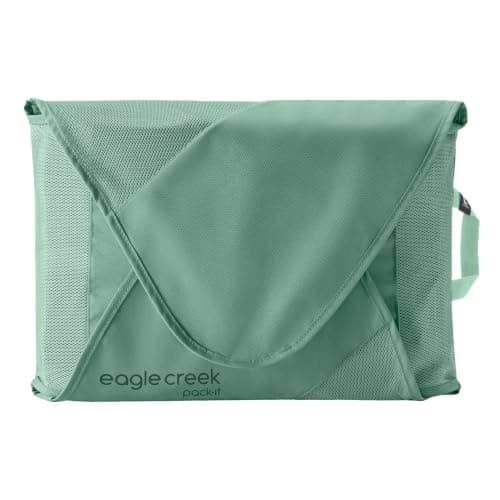
Eagle Creek Pack-It Reveal Garment Folder Large
Best Overall
Kit Score 8.5/10
$40.00 Price checked Oct 23, 4:16 PM CDT
Best for: Business travelers who want maximum wrinkle control for dress shirts and slacks on trips of three to seven nights in a carry-on.
- Adjustable mesh wings compress and hold the folded stack, dramatically reducing shirt-collar drift during transit
- At 14 oz it is heavier than ultralight alternatives, which matters in a strict carry-on weight budget
- Dimensions
- 17 x 12 in (43 x 30 cm)
- Weight
- 15 oz (425 g)
- Capacity
- 11 L (671 cu in); Amazon copy says up to 12 items
- Material
- 100% recycled 300D polyester with recycled double-diamond mesh wings
- Closure
- Adjustable hook-and-loop compression wings
- Warranty
- No Matter What lifetime warranty
About this pick
The Pack-It Reveal uses an instructional folding board plus adjustable mesh compression wings to keep dress shirts and slacks flat inside a standard carry-on. The see-through mesh panel shows contents without opening, and the recycled 300D polyester is water-resistant and washable.
Strengths
- Adjustable mesh wings compress and hold the folded stack, dramatically reducing shirt-collar drift during transit
- Holds up to 12 items and fits comfortably in most carry-on bags at 17 x 12 in
- Built-in folding board includes illustrated instructions, making the folding technique repeatable trip to trip
Weaknesses
- At 14 oz it is heavier than ultralight alternatives, which matters in a strict carry-on weight budget
- Folding board cannot be machine washed
Kit Score breakdown
EAGLE CREEK
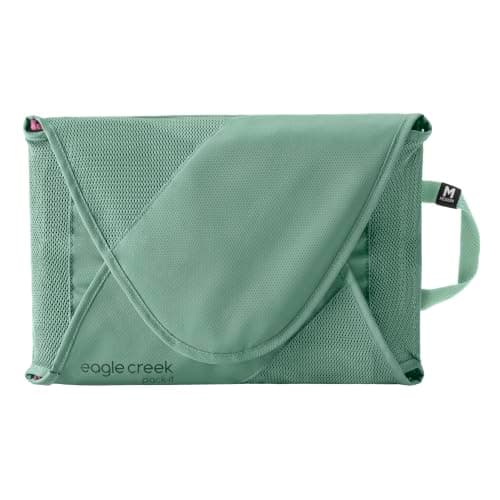
Eagle Creek Pack-It Reveal Garment Folder, Medium
Best For Carry-Ons
Kit Score 8.5/10
$35.00 Price checked Oct 23, 4:16 PM CDT
Best for: Carry-on travellers who want the top pick's build at carry-on proportions.
- Same build and lifetime warranty as our top pick, sized for carry-on reality
- Capacity is genuinely medium: a week of shirts needs the Large
- Dimensions
- 14 x 10 in (36 x 26 cm)
- Weight
- 9.5 oz (269 g)
- Volume
- 7 L (427 cu in)
- Material
- 100% recycled 300D polyester, poly mesh
- Board
- Folding board included
- Warranty
- Eagle Creek lifetime
About this pick
The Large Reveal is the right answer for a checked bag and the wrong shape for a carry-on. The Medium is the same folding board, fabric, and lifetime warranty, proportioned so it drops into a carry-on or underseat bag without dictating the packing around it.
Strengths
- Same build and lifetime warranty as our top pick, sized for carry-on reality
- Four to six shirts arrive wearable, which is the whole point of a folder
- Plays well with packing cubes instead of fighting them for space
Weaknesses
- Capacity is genuinely medium: a week of shirts needs the Large
- Costs nearly as much as the Large, so choose on bag size, not price
Kit Score breakdown
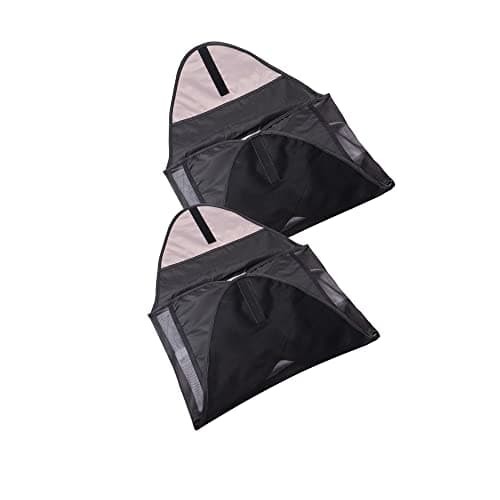
Best for: Trying the folder concept before committing to the Eagle Creek.
- Cheapest working version of the folder concept, a no-regret trial
- Fabric, stitching, and closures are built to the price; expect seasons, not decades
- Dimensions
- 17.1 x 12.2 in (2-pack)
- Material
- Polyester, 4 wrap wings
- Board
- Folding board included
- Job
- Wrinkle-managed shirts, entry price
About this pick
The trial-run folder: the same fold-around-a-board concept as the premium picks at a price where finding out it does not suit your packing style costs less than lunch.
Strengths
- Cheapest working version of the folder concept, a no-regret trial
- Light enough that carrying it empty on the return leg costs nothing
Weaknesses
- Fabric, stitching, and closures are built to the price; expect seasons, not decades
- No warranty story, where Eagle Creek's is lifetime
Kit Score breakdown
See all picks in Best packing folders for carry-ons: 3 picks by bag size
Keep going
Complete loadoutCarry-on travel kitA one-week suitcase system with the bag, organization, laundry, toiletries, security, scale, and power.Free tool: Packing Cube Fit Checker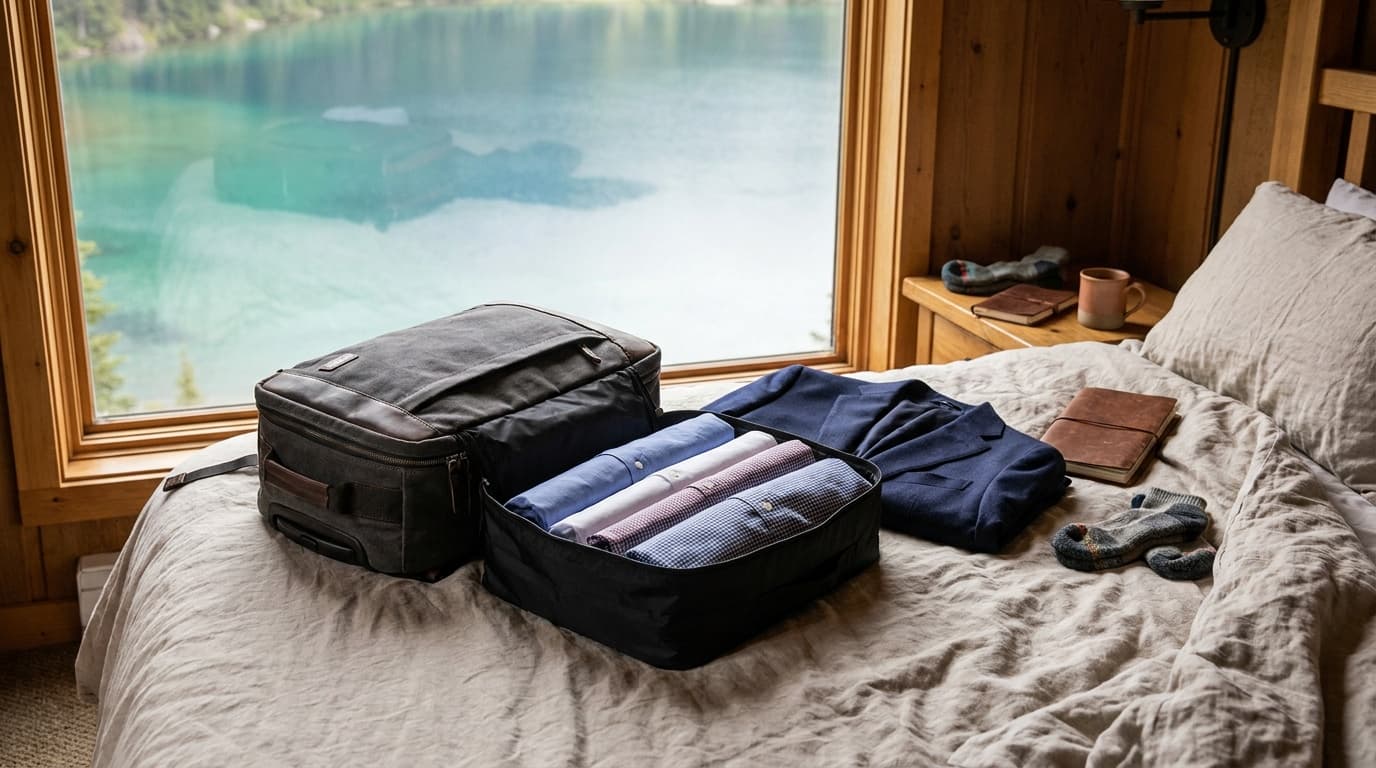
Researched, not hands-on tested
Updated Sep 8, 2026Our recommendations draw on manufacturer documentation, retailer listings, owner feedback, and comparisons with alternatives.
As an Amazon Associate I earn from qualifying purchases. We may earn a commission from links here, at no extra cost to you. How we research →