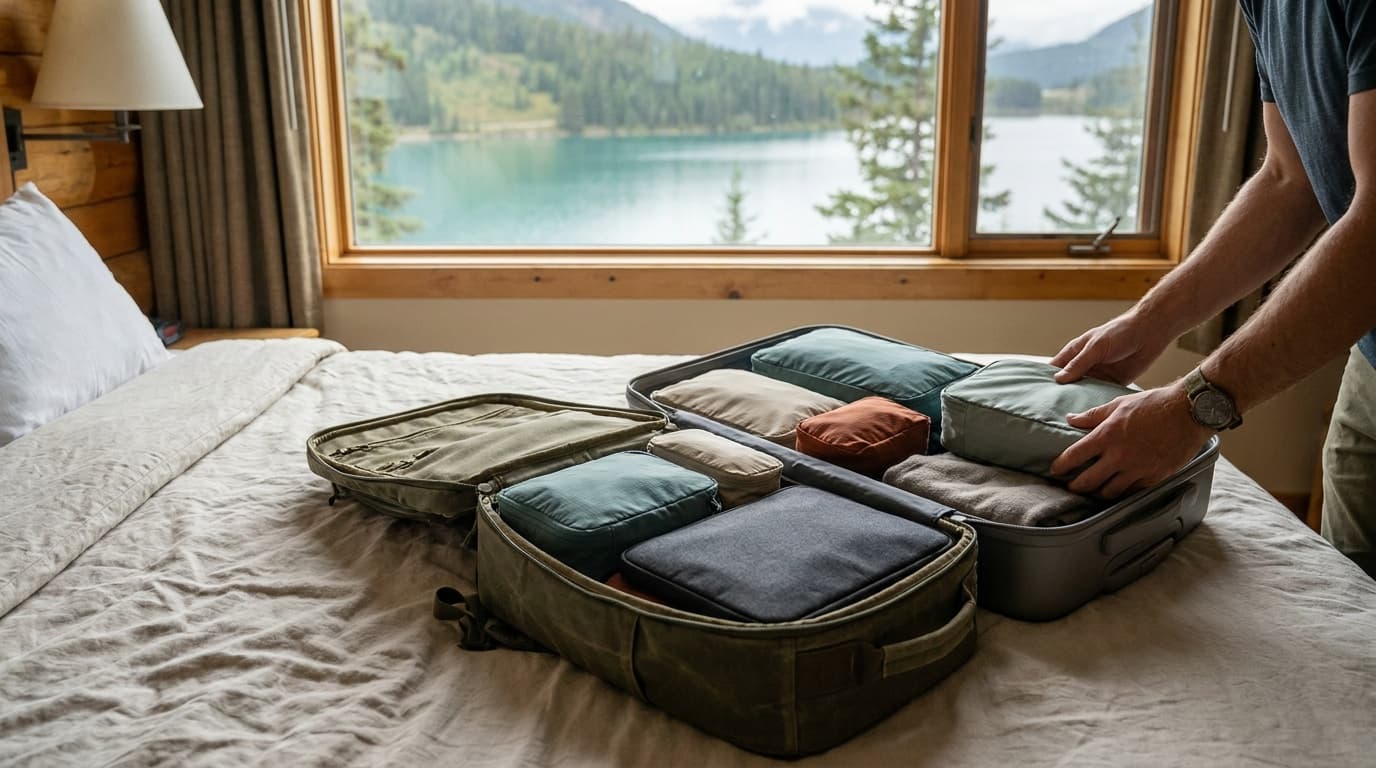
Start with the clothes you plan to take, then choose cubes that fit both that pile and your bag. Filling every cube in a matching set is an easy way to pack more than you need. Leave out any cube that has no useful job.
Category vs outfit: which system fits your trip
Pack by category when you expect to mix and rewear clothes. Put tops together, keep bottoms in another cube, and give socks and underwear a small cube. You can retrieve a clean shirt without disturbing tomorrow's trousers.
Outfit packing is useful when you need a particular change of clothes in one place. An overnight stop, a wedding outfit, or a child's spare clothes can each justify a separate cube. You can use this approach for just one part of a trip while organizing the rest by category.
For example, keep a first-night cube near the opening of your bag if you arrive late and leave early. Once you settle into a longer stay, unpack the other cubes into drawers or use them as removable compartments.
Roll vs fold: match the technique to the fabric
Try rolling T-shirts, sleepwear, and soft casual trousers. Small rolls let you see individual garments when you open a cube. Fold collared shirts and tailored pieces along their existing seams, allowing room for collars and details that should hold their shape.
There is no reliable percentage of extra suitcase space that rolling guarantees. Fabric thickness, the size of the fold or roll, and gaps between packed items all affect the result. Compare both arrangements with the same clothes before your trip.
Eagle Creek's packing instructions describe both rolling and folding, including stacking folded shirts vertically. That is a useful alternative when tight rolls leave awkward gaps in your cube.
How to pack a cube by fabric type
Separate delicate pieces
Set aside collared shirts, tailored clothing, and garments with details that could be crushed.
Arrange casual clothes
Roll or fold each item to suit the cube's shape. Keep pieces visible instead of burying small items under a thick stack.
Leave room for collars
Place structured garments in a shallow cube or packing folder where you can close the cover without flattening them.
Check the zipper
The main zipper should close without forcing the sides together. Remove an item if the fabric bulges into its path.
Compression cubes: what they actually do (and where they fall short)
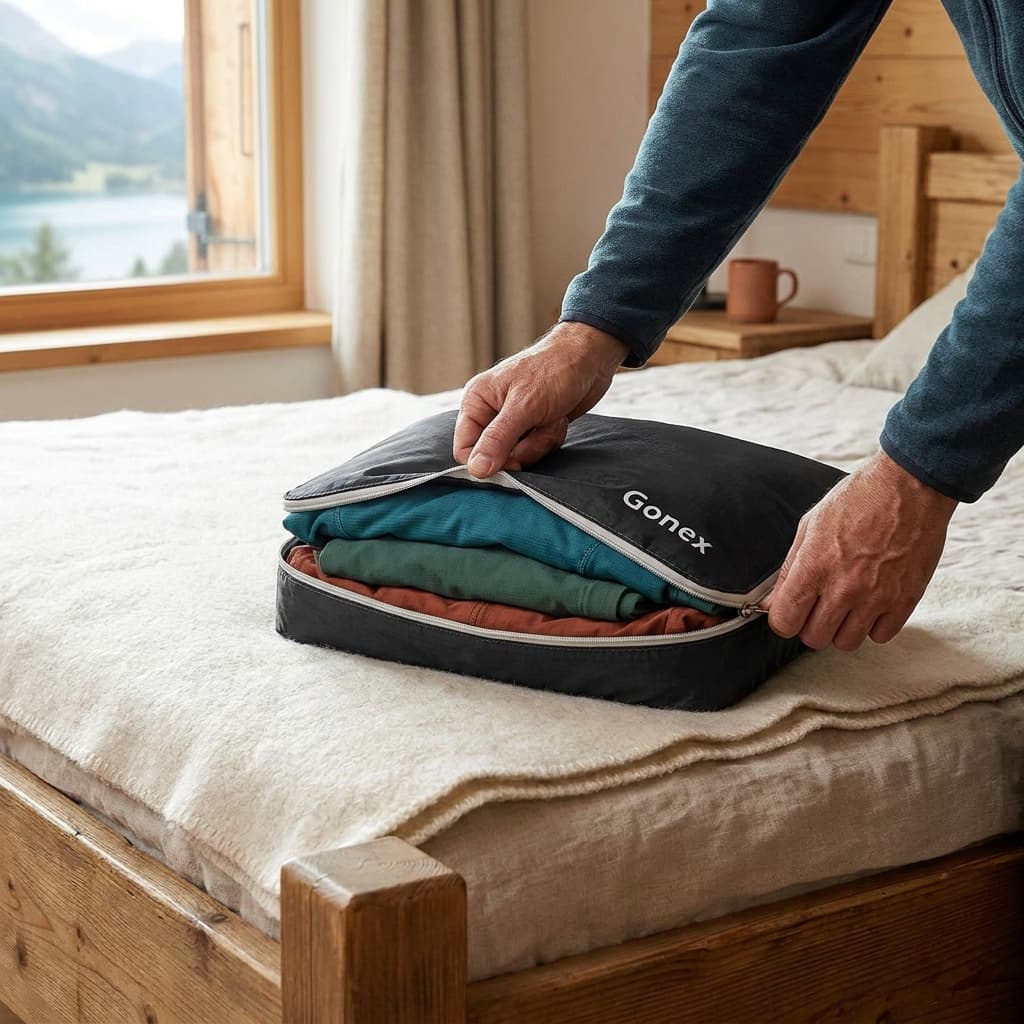
Compression cubes such as the Gonex Compression Packing Cubes use an additional zipper to reduce the packed cube's depth. Soft clothing can compress; shoes and rigid objects cannot. The result depends on the contents, so a brand's maximum space-saving claim should not become an expectation for your whole suitcase.
Close the main compartment first. Then draw the compression zipper around slowly, keeping loose fabric clear. Eagle Creek's compression guide specifically advises guarding against fabric snagging in that zipper. Stop and repack if it catches or needs force.
Try compression on one cube of casual clothes before buying a full set. Check whether the compressed cube fits your bag more neatly or bulges into neighboring compartments. Also weigh the packed bag: reducing clothing bulk leaves the clothing's weight unchanged.
Compression puts pressure on fabric, so unpack clothes promptly if creases matter. A cube keeps clothes together, but it cannot guarantee that they arrive ready to wear.
The four-cube carry-on system
The following is a sample layout to adapt. A mixed-size set such as the Osprey UL Packing Cube Set gives you options, but check the individual dimensions against your bag before choosing a set.
| Container | Example contents | Fit check |
|---|---|---|
| Larger clothing cube | T-shirts, base layers, sleepwear | Leave space beside it for shoes or your wash bag. |
| Medium clothing cube | Trousers and shorts | Try a flatter fold if rolls make the cube too deep. |
| Small clothing cube | Socks and underwear | Place it where you can reach it without lifting the large cube. |
| Optional slim pouch | Cables and adapters | Use an existing bag pocket if it already does this job. |
Lay the filled cubes in the bag with your other essentials before tightening any compression straps. Check that the lid closes easily and that you can retrieve the item you will need first. A smaller bag may work better with one clothing cube and its built-in pockets.
Choosing your cubes
For gear recommendations, see our guide to the best packing cubes, which covers compression vs standard options at different price points.
Should I organize packing cubes by category or by outfit?
Use categories for clothes you will mix and rewear. An outfit cube is useful for a specific change of clothes, such as an overnight stop or an event. Both methods can work in the same bag.
Do compression packing cubes actually save meaningful space?
They can reduce the bulk of soft clothing through a second zipper that tightens the cube. The saving depends on the fabric and how it was packed; there is no fixed percentage that applies to every load. Compression does not reduce luggage weight.
Is it better to roll or fold clothes inside packing cubes?
Try rolls for soft casual clothing and folds for collared or structured garments. Vertical stacks of folded shirts also work. Choose the arrangement that fits your cube without crushing details or forcing the zipper.
Browse all travel gear or see how we research and rate gear.
Recommended gear
Our current top picks from the Best packing cubes for travel in 2026 guide, if you are ready to buy.
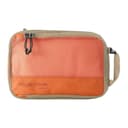
EAGLE CREEK
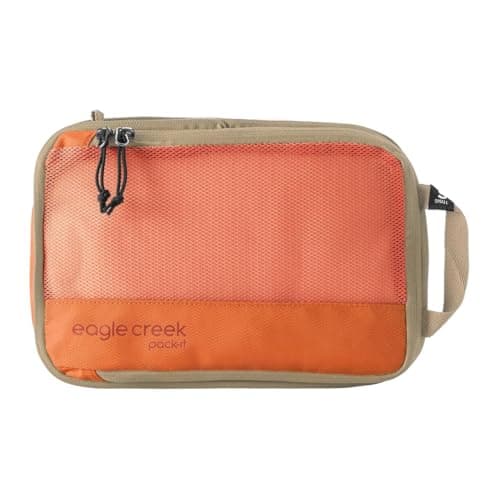
Eagle Creek Pack-It Isolate Compression Cube Set S/M
Best Overall
Kit Score 8.6/10
$34.22 Price checked Oct 23, 4:16 PM CDT
Best for: Carry-on travelers who want proven compression and a warranty that outlasts the trip.
- Compression zipper drops cube depth to 1 inch, freeing meaningful suitcase real estate
- Two-cube set covers carry-on trips well but may need a second set for checked-bag travel
- Set contents
- 2 cubes: Small and Medium
- Cube dimensions (Eagle Creek)
- Small: 10 x 7 x 3 in (1 in compressed), 3 L; Medium: 14 x 10 x 3 in (1 in compressed), 7 L
- Item weight
- 4.8 oz set (S 1.9 oz, M 2.9 oz)
- Material
- 70D ocean-recycled nylon, translucent
- Warranty
- No Matter What lifetime warranty
About this pick
Eagle Creek's Pack-It Isolate Compression Set pairs a lightweight translucent recycled nylon shell with a dedicated compression zipper that collapses each cube to roughly one-inch depth. The semi-structured sides hold a clean rectangle in the bag, and the lifetime warranty backs every stitch.
Strengths
- Compression zipper drops cube depth to 1 inch, freeing meaningful suitcase real estate
- Machine washable (gentle cycle) with Eagle Creek's No Matter What lifetime warranty against defects
- Two-cube set keeps the weight low and the system simple for carry-on travel
Weaknesses
- Two-cube set covers carry-on trips well but may need a second set for checked-bag travel
- Current price sits above $50, putting it at a premium relative to larger multi-cube sets
Kit Score breakdown
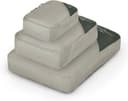
Best for: Backpackers and ultralight travelers who need organized separation across multiple categories without adding compression hardware weight.
- 2.5 oz for all three cubes combined is lighter than most single premium cubes from other brands
- No compression zipper: cubes organize but do not reduce volume, so a full suitcase stays full
- Set contents
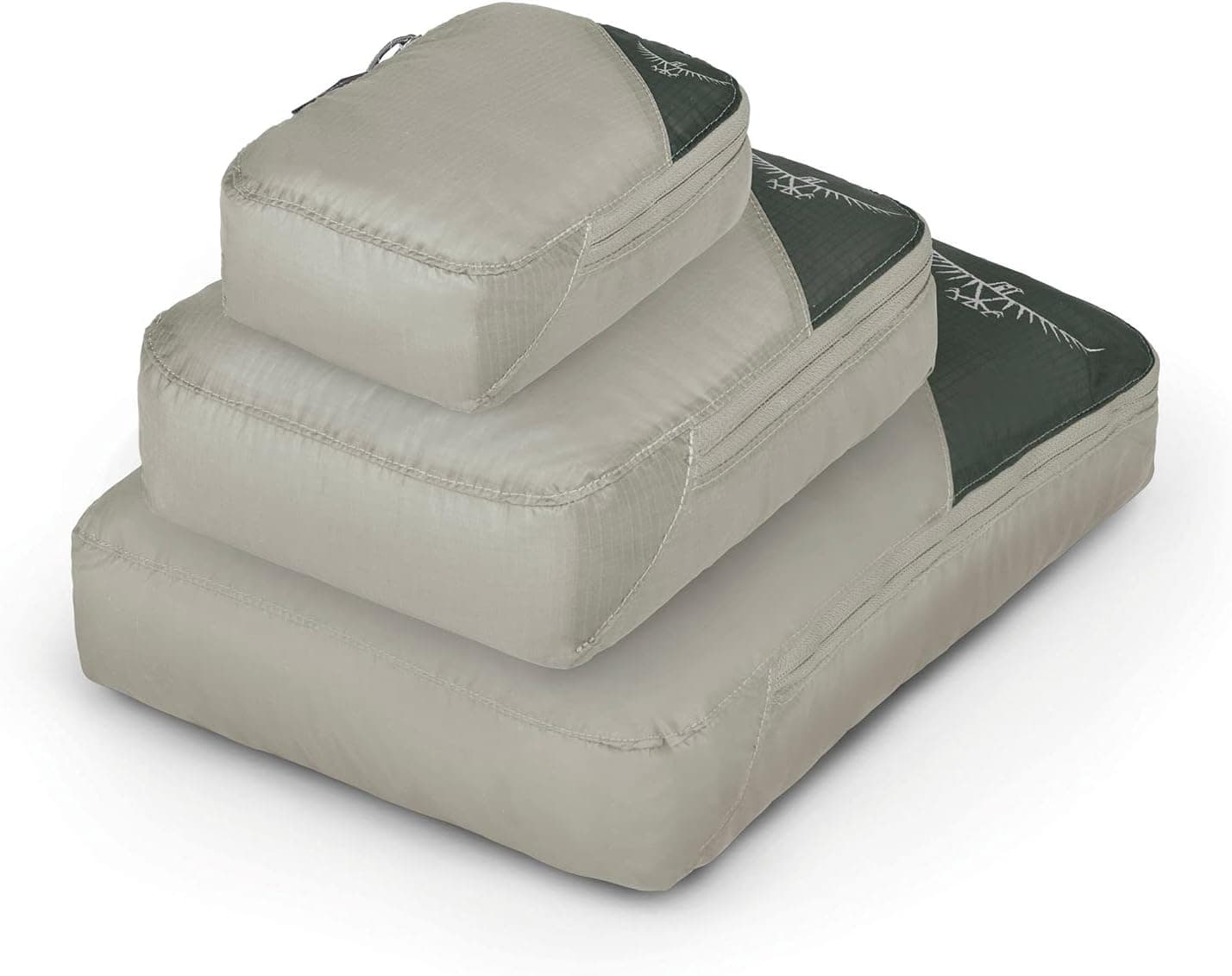
- 3 cubes: Small, Medium, Large
- Cube dimensions (Osprey)
- Small: 6.69 x 4.33 x 3.94 in, 2 L; Medium: 8.66 x 6 x 5 in, 4 L; Large: 12 x 7.87 x 6.69 in, 9 L
- Total set weight
- 2.5 oz
- Material
- 40D high-tenacity recycled nylon
- Compression
- None; organization only
About this pick
Three sizes, 2.5 oz combined, lightweight recycled nylon: Osprey's UL set is the go-to for backpackers and minimalists who prioritize weight savings over compression. The complete S/M/L sizing covers every category from socks to a fleece, and the durable nylon construction holds up to repeated stuffing without compression hardware to wear out.
Strengths
- 2.5 oz for all three cubes combined is lighter than most single premium cubes from other brands
- Three graduated sizes cover every packing category from accessories to bulky layers
- J-zip opening with double zipper pulls on each cube
Weaknesses
- No compression zipper: cubes organize but do not reduce volume, so a full suitcase stays full
- Amazon stock runs low in some colors; check Osprey.com or REI if your color is out
Kit Score breakdown
GONEX
Gonex Compression Packing Cubes, 4-Piece Set
Best Budget
Kit Score 7.4/10
$16.10 Price checked Oct 23, 4:16 PM CDT
Best for: First-time packing cube buyers or frequent budget travelers who want compression across four size categories without a premium spend.
- Four-size set (S/M/L/XL) covers more packing categories than most two or three-cube premium sets
- Amazon flags a newer model (ASIN B0CQP4MPY4) at $18.99 with a 4.7-star rating; worth comparing before buying
- Set contents
- 4 cubes: XL, L, M, S
- Dimensions (XL)
- 17.3 x 13 x 3.5 in
- Dimensions (L / M / S)
- L: 14.5 x 10.6 x 3.5 in; M: 11.8 x 8.9 x 3.5 in; S: 9.8 x 7.5 x 3.1 in
- Total set weight
- 11.78 oz
- Material
- Lightweight ripstop nylon
- Compression
- Double-zip: main zip to open, secondary zip cinches volume
About this pick
Four sizes from S to XL, double-zip compression, and a sub-$25 price tag make the Gonex set the most accessible entry point into compression packing. The ripstop nylon holds up better than polyester competitors at the same price, and the sizing lineup handles both a weekend duffel and a week-long suitcase.
Strengths
- Four-size set (S/M/L/XL) covers more packing categories than most two or three-cube premium sets
- Double-zip compression delivers meaningful volume reduction at a fraction of Eagle Creek pricing
- In stock and competitively priced under $25; 10,473 verified ratings at 4.6 stars confirms broad owner satisfaction
Weaknesses
- Amazon flags a newer model (ASIN B0CQP4MPY4) at $18.99 with a 4.7-star rating; worth comparing before buying
- Compression fabric can catch in the secondary zipper under heavy load; zippers are not YKK-grade
Kit Score breakdown
Keep going
Complete loadoutOne-bag travel kitBackpack-only travel with a capsule wardrobe, packing cubes, toiletries, tech, and a repeatable laundry plan.Free tool: Packing Cube Fit Checker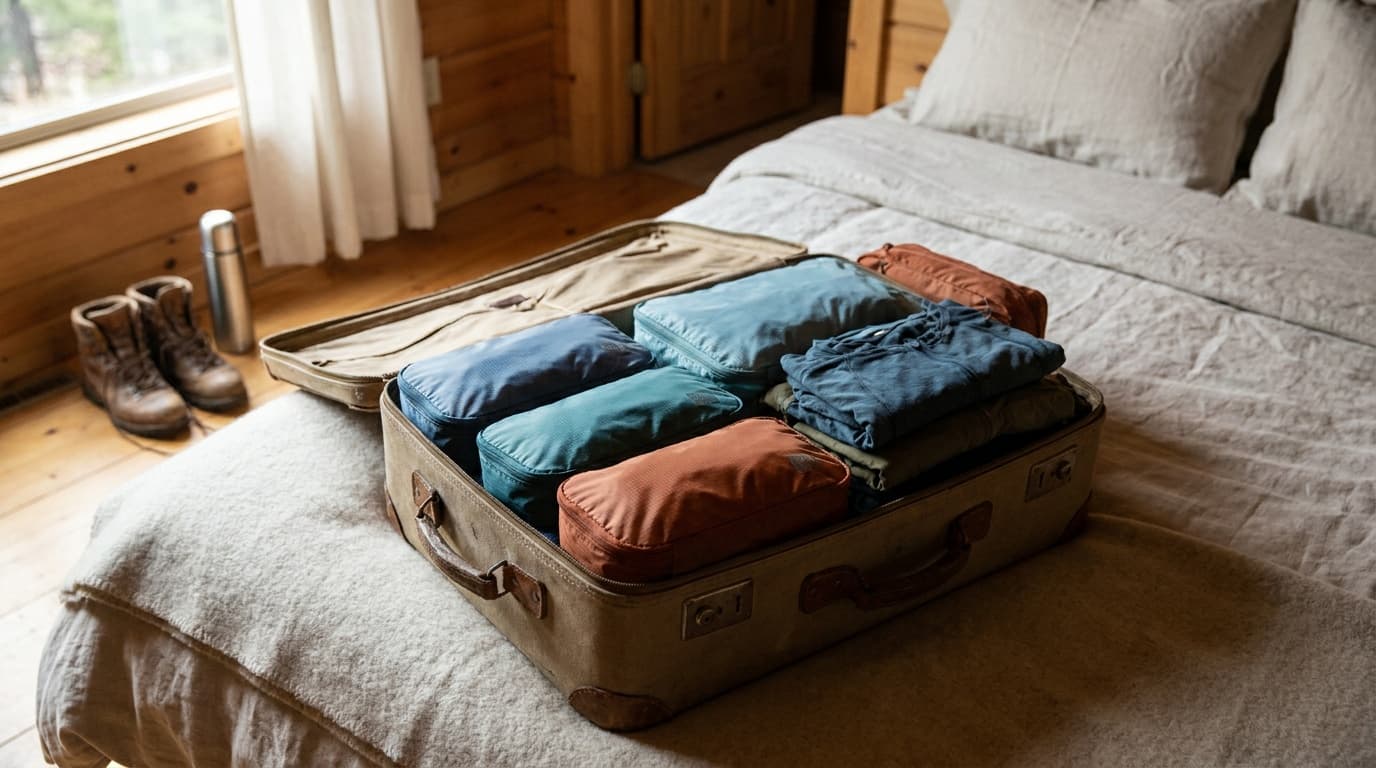
Researched, not hands-on tested
Updated Sep 8, 2026Our recommendations draw on manufacturer documentation, retailer listings, owner feedback, and comparisons with alternatives.
As an Amazon Associate I earn from qualifying purchases. We may earn a commission from links here, at no extra cost to you. How we research →